
Flies
Order Hymenoptera
The Flies (Order Hymenoptera) includes 5,194 species across 102 families and 1,491 genera in our directory.
About Flies
Hymenoptera includes over 150,000 described species of ants, bees, wasps, and sawflies. Earth harbors approximately 20 quadrillion (20×10^15) ants, with a combined biomass of ~12 megatons of dry carbon - exceeding the combined biomass of all wild birds and mammals (PNAS, 2022).
Economic Impact
Pollinators contribute $235-577 billion worth of annual global food production (FAO). In the U.S., bee pollination alone benefits crops valued at $18 billion annually, and honey bees are responsible for $5.4 billion in agricultural productivity. Between April 2023-2024, 55.1% of managed honey bee colonies were lost. The U.S. bee population dropped from 5 million to 2.5 million.
Ecological Role
About 35% of the world's food crops depend on animal pollinators. The chocolate industry, valued at over $100 billion, depends on pollinating flies and midges. Ants are the dominant soil engineers in most terrestrial ecosystems, turning more soil than earthworms in many habitats.
Families in Hymenoptera (102)
Species in Hymenoptera (5,194)
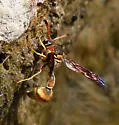
Eumenes americanus
Eumenes americanus
Identification: E. americanus is separable from E. smithii mainly by the male genitalia. In terms of color, may be similar to some variants of E. smithii (mostly from Mexico and further South), with black marks more developed mainly on the lateral fa
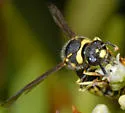
Eumenes consobrinus
Eumenes consobrinus
Identification: Shares with E. bollii the evenly rounded anterior edge of the pronotum, without a transverse carina. E. consobrinus is distinguished by a black scape (seldom with a basal yellow spot) and hairs on scape longer than 1 mid-ocellus diame
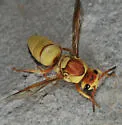
Euodynerus annulatus
Euodynerus annulatus
Identification: Compared to E. hidalgo it has a less angulate propodeum and it lacks the reflexed, lamellate margins of terga 2 and 3. It has two yellow spots on the scutellum, something not found in E. hidalgo . (Comment by Matthias Buck).
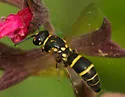
Euodynerus barberi
Euodynerus barberi
Identification: Distinctive within its genus: slender form, propodeum with strong dorsolateral carina. Scutum with a pair of comma-shaped spots, scutellum with paired spots, metanotum black.
Euodynerus crypticus
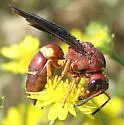
Euodynerus crypticus
Identification: Distinguished from all other species in the northeast by the lack of any black on the scapes and pedicels, lack of black on the pronotum, and scutellum with an uninterrupted ferruginous spot. The females in particular tend to only hav
Euodynerus fedoris
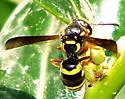
Euodynerus fedoris
Identification: Characters that separate this species from E. blakeanus are mentioned here
Euodynerus hidalgo
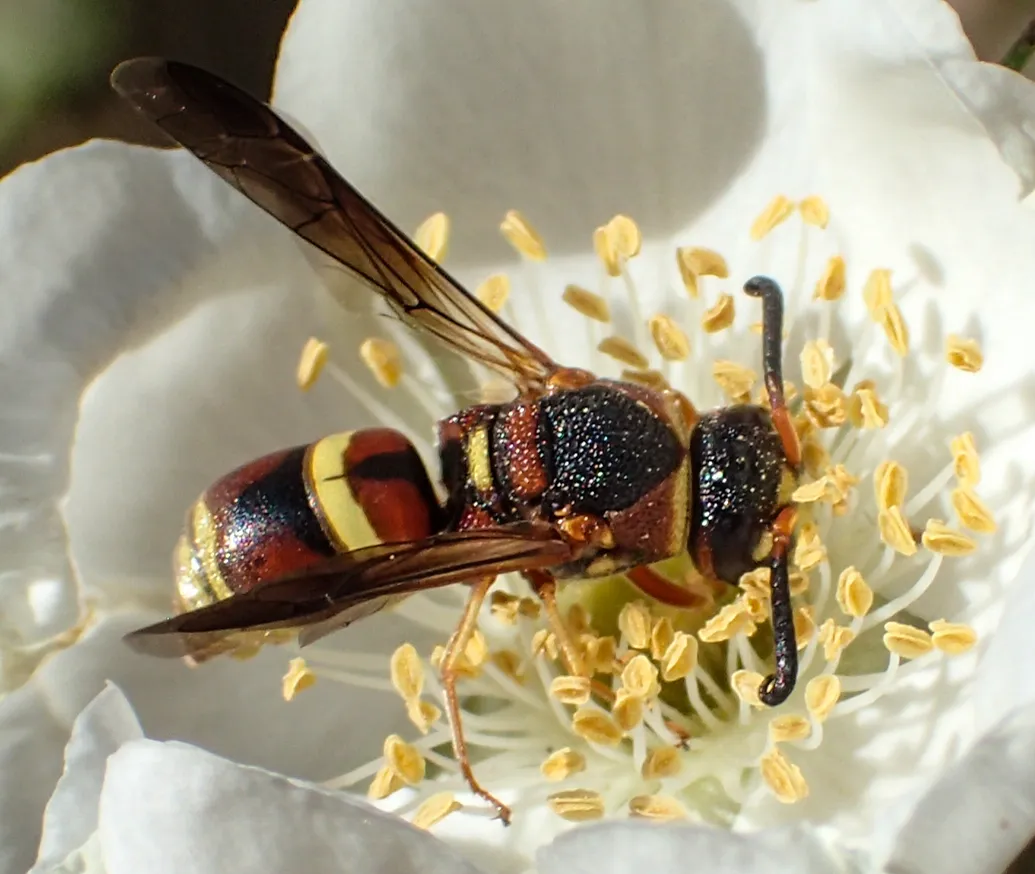
Euodynerus hidalgo
Identification: Thin, lamellate, reflexed hind margins of 2nd and 3rd tergites is diagnostic for this species. The amount of black is highly variable in this species and other vespids. The eastern subspecies (boreoorientalis) is mainly black. Some sp
Euodynerus megaera
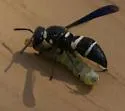
Euodynerus megaera
Identification: The female of the similar species schwarzi differs from megaera in having white tibial stripes, although schwarzi males are difficult to separate from megaera males because the latter can also have white tibial stripes.
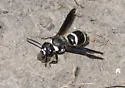
Euodynerus schwarzi
Euodynerus schwarzi
Identification: The female differs from Euodynerus megaera because of the white stripe on the tibiae. Males of E. schwarzi are difficult to separate from E. megaera .
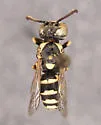
Euparagia scutellaris
Euparagia scutellaris
Constructs nests in the ground with a curved turret at the surface
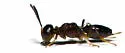
Eupelmus dryohizoxeni
Eupelmus dryohizoxeni
Identification: Wings of female naturally bent in an L-shape so that about the apical half sticks up vertically. Similar in habitus to another species, Eupelmus vesicularis (Retzius). In E. vesicularis the mesoscutum and scutellum are flat, but in E.
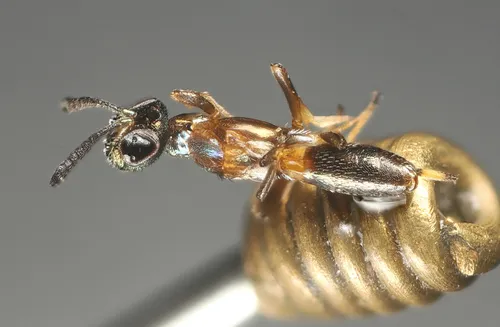
Eupelmus messene
Eupelmus messene
Identification: Females are brachypterous. The reduced fore wings are bent upright at a right angle at the level of the base of the abdomen. One of the most ubiquitous eupelmids in North America. It is thought to have been introduced into N. Am. from
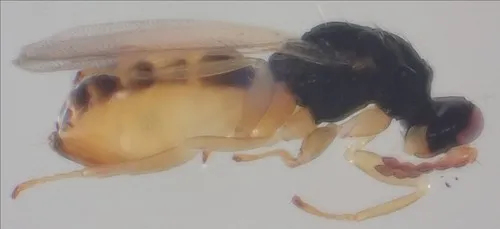
Euplectrus bicolor
Euplectrus bicolor
Length 2-3mm. Antenna with scape yellowish-brown with dorsal edge pale brown, pedicel and flagellomeres 1+2 yellowish-brown, flagellomeres 3–6 pale brown. Head black and shiny, lower face with median part yellowish-brown reaching laterally to level o
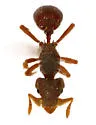
Eurhopalothrix floridana
Eurhopalothrix floridana
Identification: Larger size, very strange flat scapes, and stout triangular head separate it locally from similar looking Pyramica ( =Strumigenys )
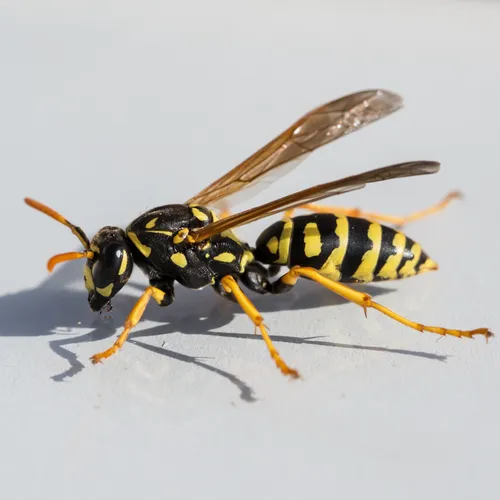
European Paper Wasp
Polistes dominula
The appearance falls between that of a true social (yellowjacket) wasp and a mason wasp, with males having the hooked antennal tips of mason wasps. However, the behaviour is social with differentiated workers serving a single queen, though queens, wo
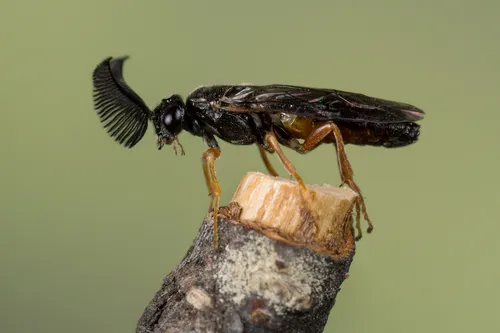
European Pine Sawfly
Neodiprion sertifer
Earliest record in our area: NJ 1925 During the late 1930s and 1940s, 2 European parasites were established in NJ. One was Dahlbominus fuscipennis and the other was Exenterus abruptorius . Neither species has provided adequate control.
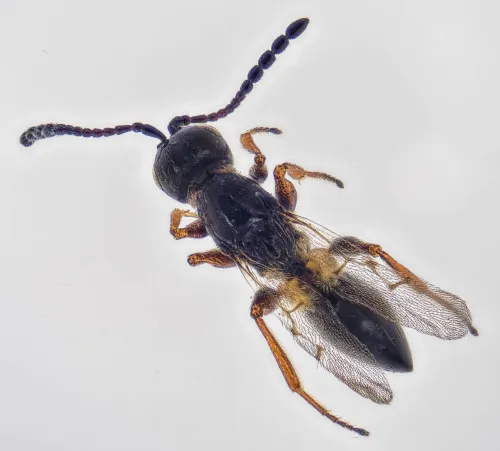
Eutrias tritoma
Eutrias tritoma
Small (~3mm) shiny black or dark brown wasp. Hairy ring on metasoma. Wing tip rounded, no notch, never brachypterous. Scutellum punctate posteriorly, with a posteriorly projecting median part. Unless identified by a recognized expert, requires micros
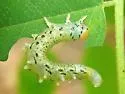
Euura hispidae 0
Euura hispidae
Identification: Dave Smith believes these photos represent this species: and probably For more information, see this page .
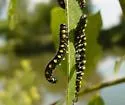
Euura ventralis
Euura ventralis
Identification: Adult - see original description by Say 1824 in print references below. All stages - see Howard 1888 in print references below. Includes illustration of adult. may be abundant on willow in c. US & Prarie Provinces
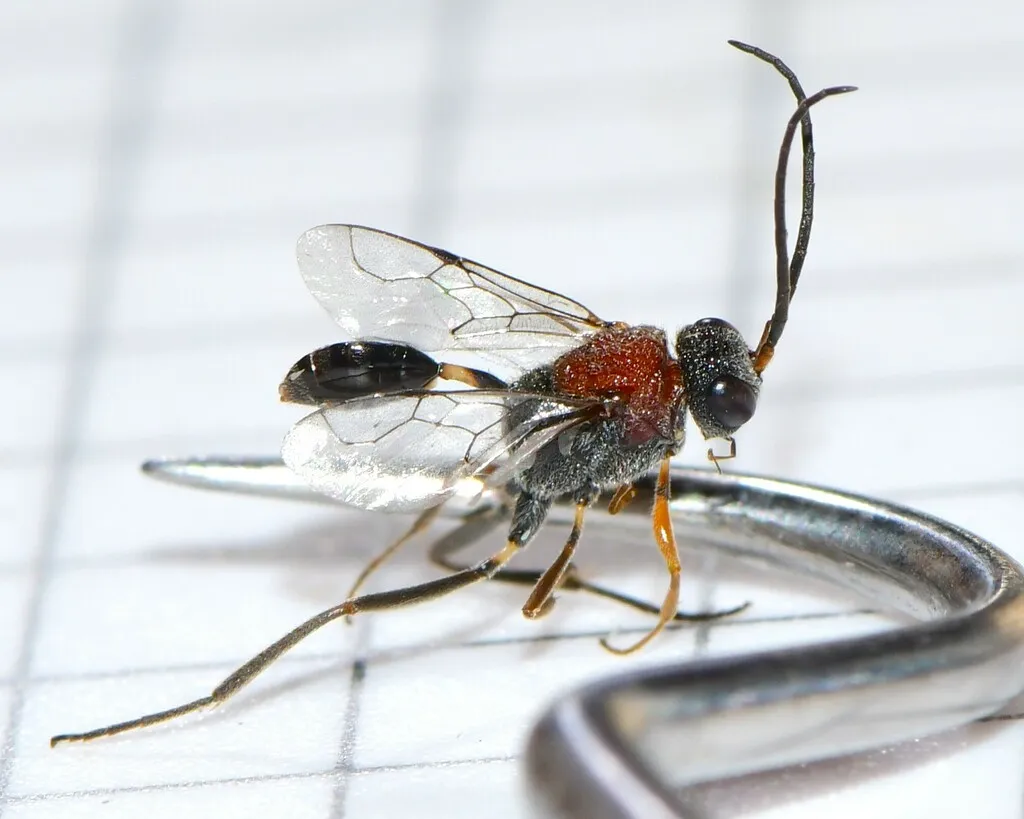
Evaniella semaeoda
Evaniella semaeoda
Identification: can be reddish or entirely black depending on sex and environmental temperature
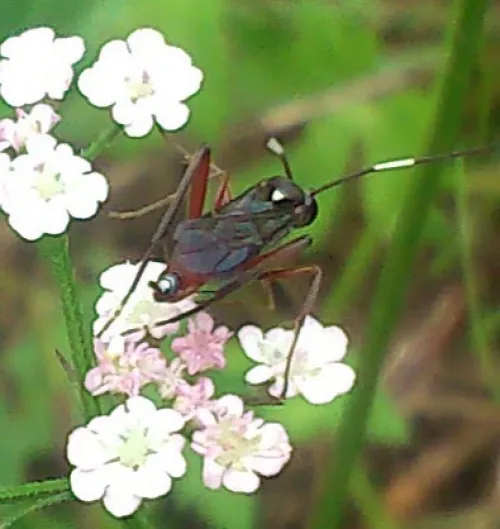
Exetastes adpressorius
Exetastes adpressorius
Good photographs required. It may be necessary to get expert confimation of species. No additional images available for this species.
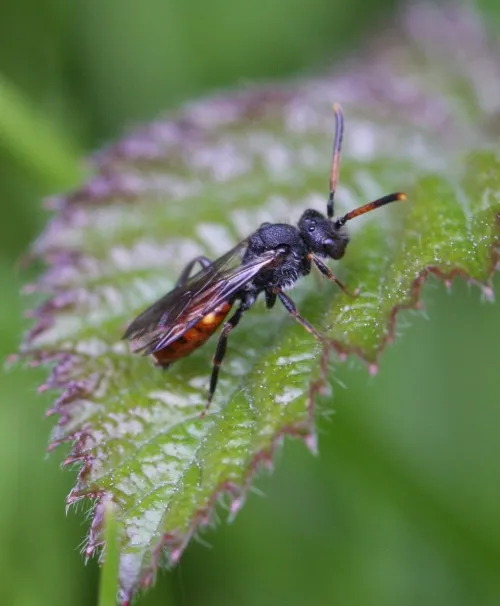
Fabricius' Nomad Bee
Nomada fabriciana
Females can be identified by their reddish antennae with several of the intermediate segments being black. This banded appearance is visible in the field. Both sexes have a reddish abdomen, often having small yellow spots. It also has bidentate mandi
False Terminal Mummy Wasp
Aleiodes pseudoterminalis
Identification: Very similar to A. terminalis . Differs in having T2 black (rarely entirely red) and the apices of the fore- and mid-femora black.
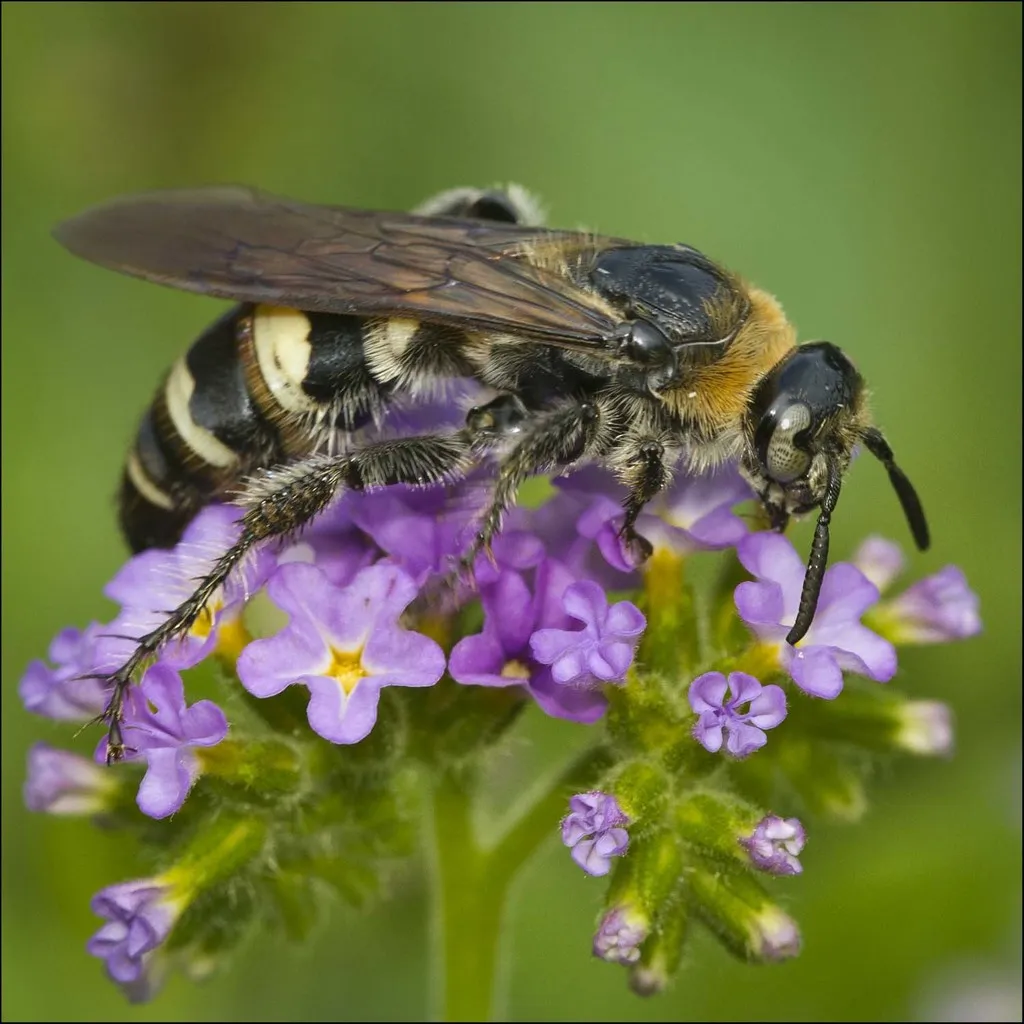
Feather-legged Scoliid Wasp
Dielis plumipes
Identification: Medium-sized, with long, white body setae; clypeus entirely black; pronotum entirely black; four abdominal bands of ivory to pale yellow. Female additionally with a thick collar of reddish to yellowish setae. D. plumipes confluenta -
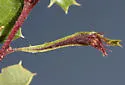
Fimbriate Gall Wasp
Andricus opertus
Identification: Larvae induce galls with shredded, fiber-like projections on various species of white oak in California. These are leaf galls but they often disrupt the growth of the leaf, in some cases quite completely.
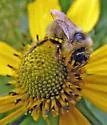
Flavid Cuckoo Bumble Bee
Bombus flavidus
Identification: Males often have a distinctive ring-like band of yellow on T4 more or less contrasting with the color of the other tergites (T1-T3 vary from mostly black to mostly yellow) and especially with T5 which is mostly black. Similar species
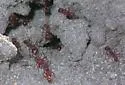
Florida Harvester Ant
Pogonomyrmex badius
Identification: nest considered by Louisiana to be a "Species of Greatest Conservation Need" (SGCN) The only known host of the wasp Kapala floridana .
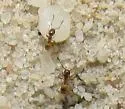
Forelius pruinosus
Forelius pruinosus
A common ant of sandy and other dryish, open, sparsely vegetated areas across the southern US and southward. --James Trager
Forest Bumble Bee
Bombus sylvicola
Identification: Hair coat long and shaggy with the yellow tending towards a grayish hue and the red typically dark (not orangey). Females have a black face with only a small pale spot of hairs on the lower face whereas in bifarius and huntii the face
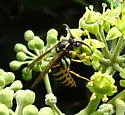
Forest Yellowjacket
Vespula acadica
Identification: Key to eastern Nearctic Vespula species in the Identification Atlas of the Vespidae of the Northeastern Nearctic Region . Key to Nearctic Vespinae genera in the Identification Atlas of the Vespidae of the Northeastern Nearctic Region
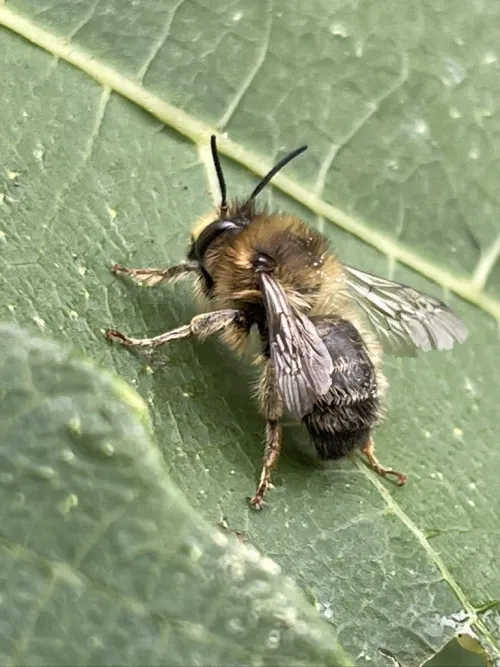
Fork Tailed Flower Bee
Anthophora furcata
A medium-sized (10 to14 mm), hairy solitary bee. Unusually for Anthophora the mandible is tridentate, with both an inner and outer subapical tooth. It has a long tongue, almost as long as the body length when extended, and brown eyes. The male is dar
Formica archboldi
Formica archboldi
Workers are adept at killing trap-jaw ants (Odontomachus), which they decapitate. The Odontomachus heads are stored in the F. archboldi nest. F. archboldi match the cuticular hydrocarbon profiles of the species of Odontomachus that they occur with.
Formica argentea
Formica argentea
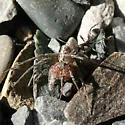
Identification: densely pubescent on first four gastric tergites Like other species in the Formica fusca group, these are subject to being raided and "enslaved" by the ant Polyergus breviceps
Formica az02
Formica undescribed-az-two
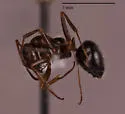
Identification: Wide head, sparse pubescence on gaster, dense pilosity on dorsum of mesosoma, smaller eyes, no erect pilosity on scapes Undescribed Arizona species in the neogagates-group AntWeb specimen
Formica biophilica
Formica biophilica
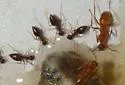
"This species is superficially quite similar to F. pallidefulva , but averages a bit larger, and characteristically exhibits notable size variation among the workers of its colonies. Under magnification, it sports numerous, long, curved bristles, lac
Formica difficilis
Formica difficilis
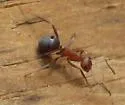
Identification: Workers recognized by sparse occurrence of short, spatulate or distally flattened and broadened hairs on pronotum and vertex ("occipital border") of head, and by having the head slightly shinier than the mesosoma. Queens uniform brown
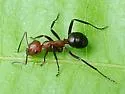
Formica fossaceps
Formica fossaceps
Identification: The bicolored pattern and high, "boxy" clypeal cross section are shared with the more common and widely distributed F. obscuripes , but F. fossaceps is easily ditinguished from the latter by the near absence of pilosity on the dorsal
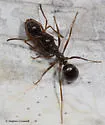
Formica gagatoides
Formica gagatoides
Identification: A weakly or partially shining species, including on the head, black with brown legs. Subarctic in NW NA.
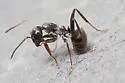
Formica glacialis
Formica glacialis
In the US Great Lakes Region and Midwest, this species is restricted to high-quality, spring-fed wetland areas of prairie or open woodlands, while in New England and eastern Canada, it is a yard and sidewalk ant. (James Trager) Preyed upon by Aphilan
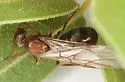
Formica gnava
Formica gnava
This is an aggressive species for the fusca group, which releases copious amounts of noisomely detectable formic acid and other chemicals when the nest is disturbed. Nonetheless, it is host to a Mexican and Arizonan Polyergus species, P. topoffi
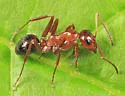
Formica incerta
Formica incerta
A common prairie ant, recognizable by its habitat, relatively short round head, and dingy yellow coloring. [comment by James C. Trager] Host species for Polyergus lucidus
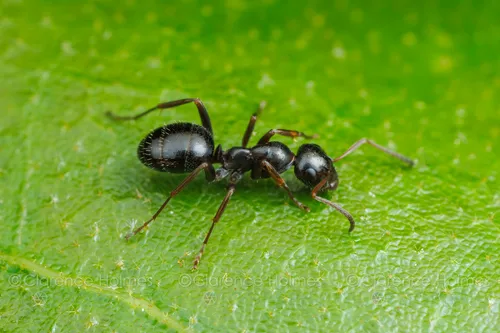
Formica lasioides
Formica lasioides
Identification: Formica neogagates, and F. lasioides, are the only two species in the neogagates group in New England . Both species are very similar, described as "uniformly brown, shiny" (p. 129, ) and "brown-to-black concolorous ants" in the key (
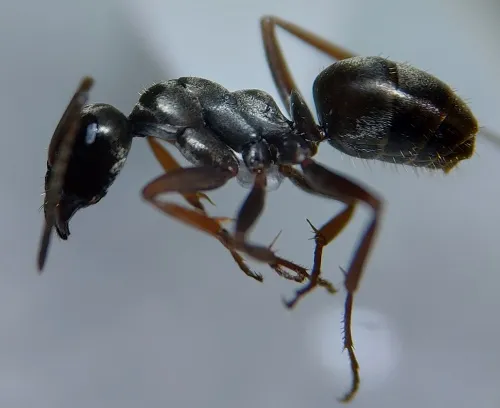
Formica lemani
Formica lemani
One of the large formica species commonly known as wood ants. This species is very similar in appearance, size and nesting habits to Formica fusca but was firmly described and keyed by Yarrow in 1954. Workers differ from those of F. fusca by the pres
Formica neogagates
Formica neogagates
Identification: Formica neogagates , and F. lasioides , are the only two species in the neogagates group in New England (ref. 2). Both species are very similar, described as "uniformly brown, shiny" (p. 129, ref. 2) and "brown-to-black concolorous an
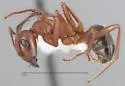
Formica obtusopilosa
Formica obtusopilosa
This ant shows morphological affinities to both the neogagates group and the sanguinea group, but does not clearly belong in either. (Comment by James Trager)
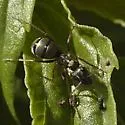
Formica podzolica
Formica podzolica
Identification: erect hairs on promesonotum separate podzolica from glacialis dense silvery pubescence on 1-3 This is a common and often conspicuous, mound-building, black-bodied, silvery-pubescent species in the western mountains of North America (l
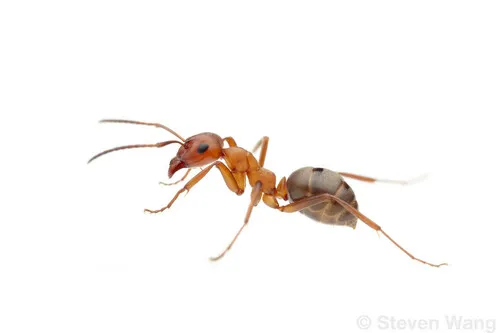
Formica subintegra
Formica subintegra
Identification: Easiest macroscopic identifying trait is the brownish base of the first gastral tergite. One of the slave-making species; workers of this species steal the pupae of Formica subsericea (or closely related F. podzolica, F. glacialis whe
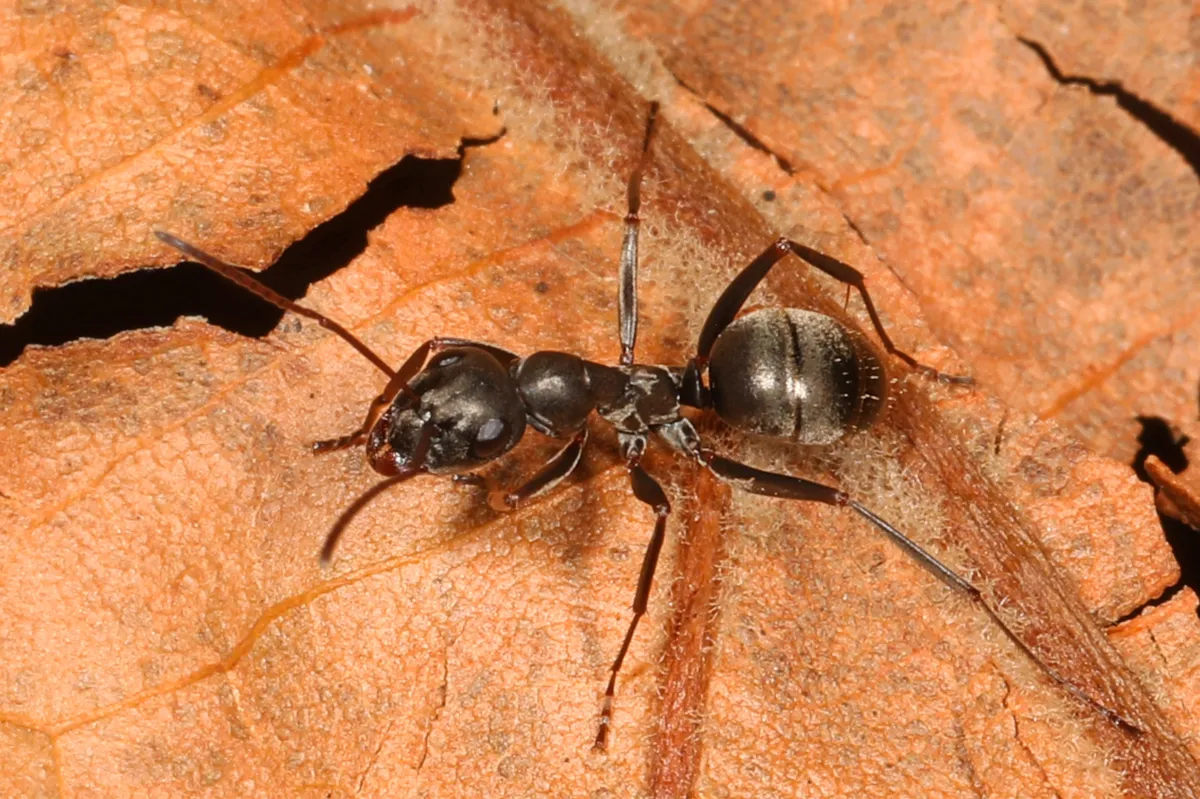
Formica subsericea
Formica subsericea
Identification: "Recognizable by its slightly silky sheen (as the specific epithet suggests) and rounded rear margin of the head." --James C. Trager Ellison et al. 2012 key Formica subsericea from F. glacialis and F. podzolica (for New England): "The
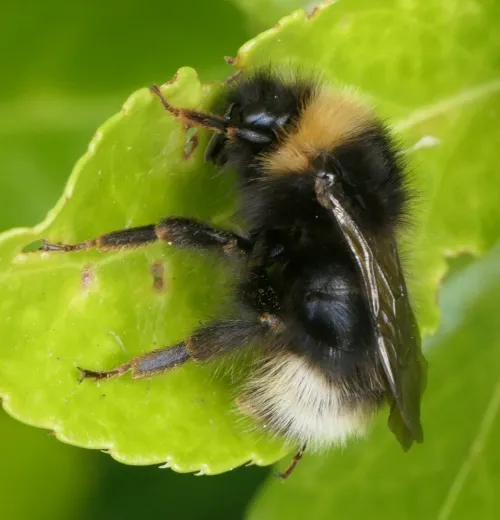
Four Coloured Cuckoo Bee
Bombus sylvestris
To be seen around the nests of Bombus pratorum. Cuckoo Bumblebee of Bombus pratorum. Males tend to patrol mating circuits within 1 m of the ground. Widespread and fairly frequent in Britain.
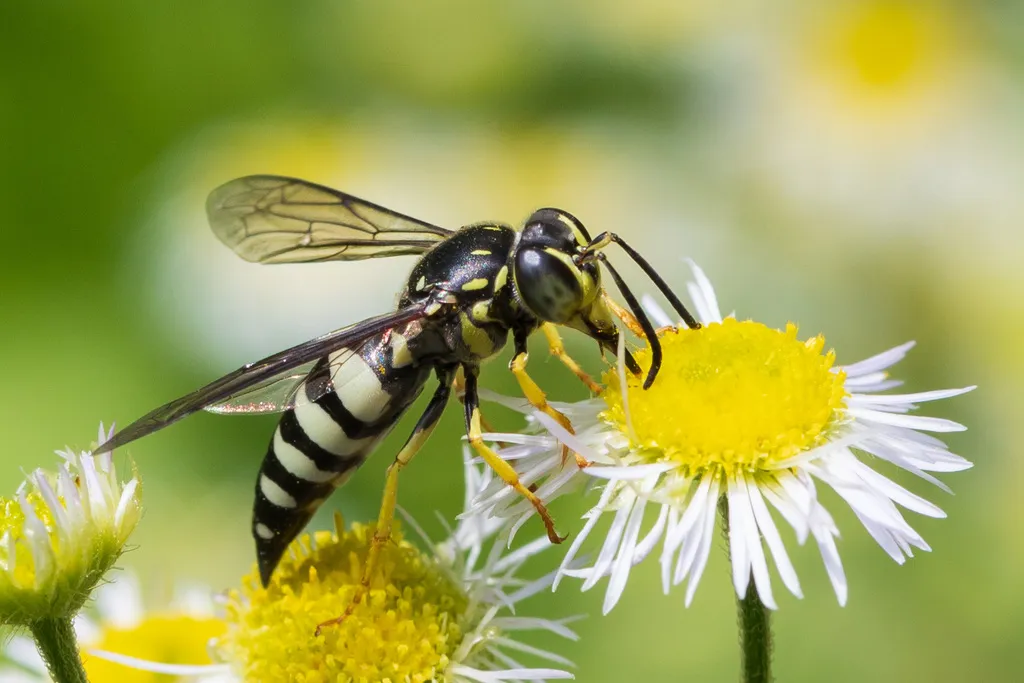
Four-banded Stink Bug Wasp
Bicyrtes quadrifasciatus
Identification: The increasing distance between the pairs of tergal bands posterad is diagnostic against other species in the genus.
Franklin's Bumble Bee
Bombus franklini
Has declined severely to the point where none at all have been seen by Robbin Thorp since 2006. Due to its very narrow historic range and lack of any recent records despite resurveys at known localities the conservation status of this species is of g
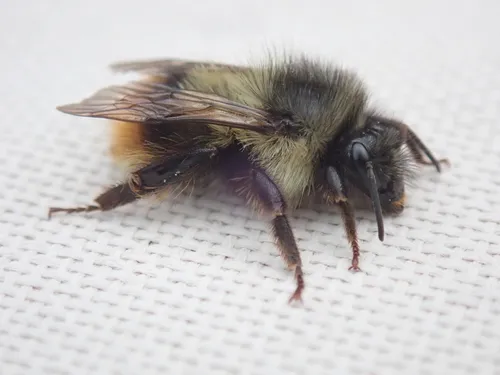
Fuzzy-horned Bumble Bee
Bombus mixtus
Identification: Red tail tip separated by black from pale hairs on T1 and T2 (at least mediobasally) in combination with some admixture of black hairs on the anterior scutum is distinctive. Males have a distinctive patch of dense hairs on basal segme
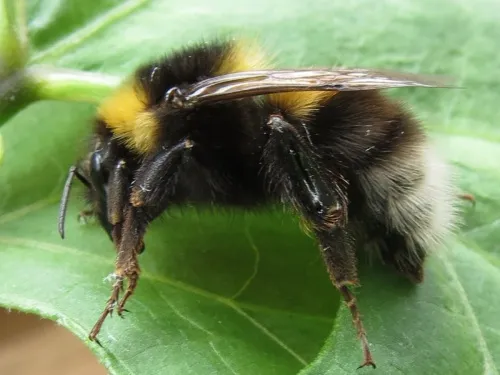
Garden Bumblebee
Bombus hortorum
A relatively large bee. Lengths, queen 17-20 mm, workers 11-16 mm, male 14-15 mm. Bombus hortorum has a long head and a slimmer body than some other Bombus species. The collar, scutellum and 1st abdominal segment are yellow, the tail is white. A rath
Gasteruption barnstoni
Gasteruption barnstoni
Identification: In eastern US, distinguished by the long ovipositor (~2.2x forewing) and black tegulae. Frequently not identifiable in photos.
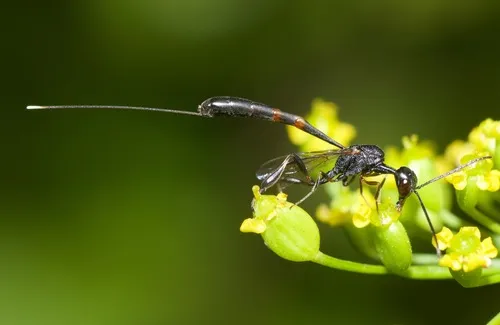
Gasteruption floridanum
Gasteruption floridanum
Identification: In eastern US, distinguished by the long ovipositor (~1.8x forewing), reddish tegula, entirely black pronotum, and no white stripe down the length of the fore and mid tibiae. Frequently not identifiable in photos.
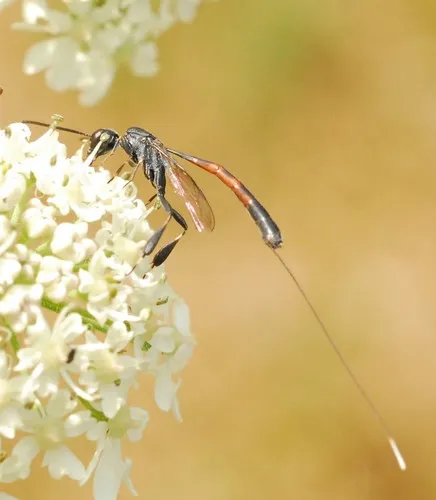
Gasteruption jaculator
Gasteruption jaculator
Length 10 to 18 mm. As with all species in this family, the abdomen is joined to the top of the thorax, in side view. The head and thorax are black. The abdomen which is broader at the posterior end is black with a broad orange band. A striking featu
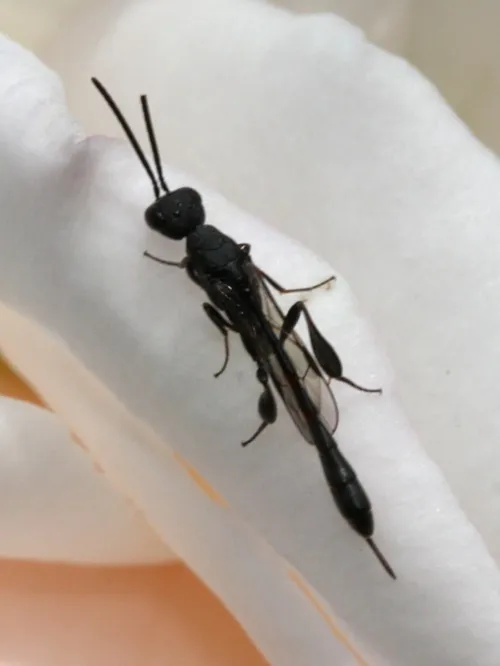
Gasteruption minutum
Gasteruption minutum
There are five Gasteruption species on the British checklist. The female Gasteruption minutum can be distinguished because of its short ovipositor. Female: Unless identified by a recognised expert, a photo is required showing the female ovipositor. F
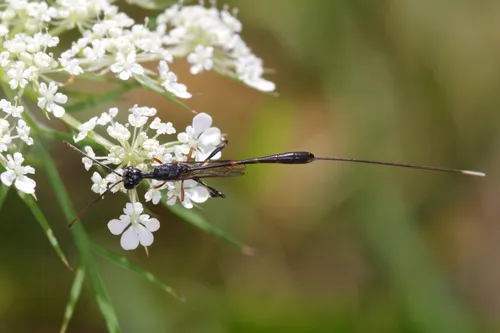
Gasteruption tarsatorium
Gasteruption tarsatorium
Identification: In eastern US, the nominate subspecies is distinguished by the long ovipositor (~ 2.1x forewing), reddish tegulae and posterior corners of pronotum, and white stripe down the length of the fore and mid tibiae. Frequently not identifia
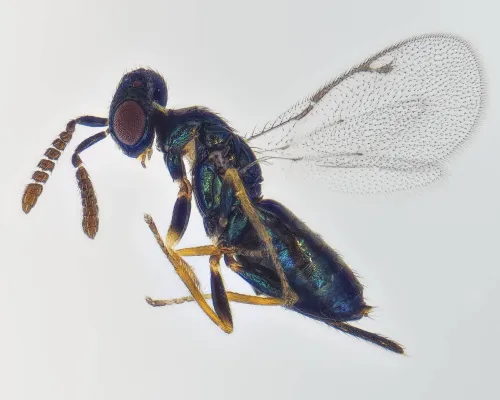
Gastrancistrus compressus
Gastrancistrus compressus
Scutellum is entirely smooth and unsculptured compared to the mesoscutum. Exserted portion of ovipositor sheaths, in profile, from two fifths to slightly more than half as long as the hind tibia. Unless identified by a recognised expert, a photo is r
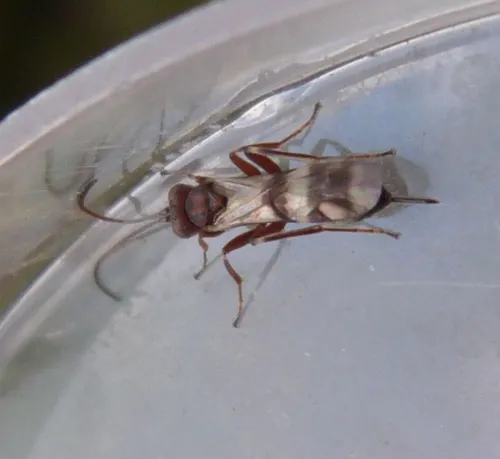
Gelis areator agg.
Gelis areator agg.
Despite its distinctive appearance, with dark banded milky white wings and an almost back thorax with red marking, this parasitic wasp is very difficult to identify to species as there are similar members of the genus, particularly Gelis cinctus . Fo
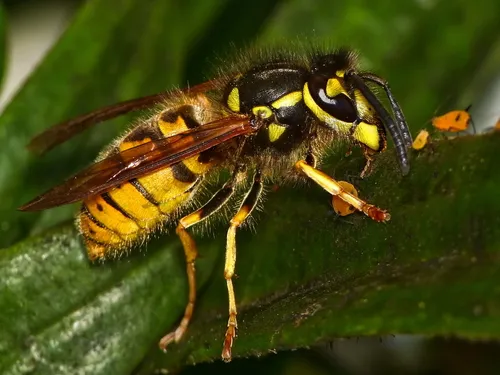
German Wasp
Vespula germanica
Very similar in appearance to the Common Wasp, though very slightly bigger. The best way of telling them apart is by looking at the face - there are usually three small black spots (rarely one). The top spot may be merged into a vertical bar. It is n
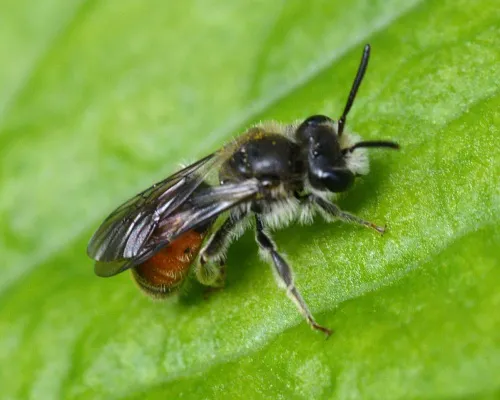
Girdled Mining Bee
Andrena labiata
Tergites 2 and 3 are a bright brick red. Most solitary bees and wasps are difficult to identify, and can rarely be identified from photos taken in the field. All red-rated records should include a photo or set of photos of the specimen, illustrating
Glenostictia pictifrons
Glenostictia pictifrons
Only G. pictifrons and G. emarginata are found east of the Mississippi. G. emarginata has very different abdominal and thoracic markings and preys on adult Lepidoptera. ‒Philip Careless
Globe Mallow Bee
Diadasia diminuta
They nest in colonies, in the ground. The entrances to the nests have turrets (little chimneys).
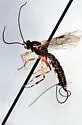
Glypta fumiferanae
Glypta fumiferanae
Adult life span 38 days average under laboratory conditions, less in nature.
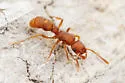
Gnamptogenys hartmani
Gnamptogenys hartmani
Identification: A rarely collected species. Distinguished from the only other US ectatommine species (Gnamptogenys triangularis) by its smaller size, lighter color, and lack of propodeal spines.
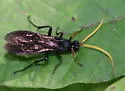
Gnamptopelta obsidianator
Gnamptopelta obsidianator
Identification: Very large blue-black Ichneumon with orange antennae. See images and comments there. Frequents flowers, presumably seeking nectar (?). Several other ichneumonids have this same general pattern (Eric Eaton--comments under various photo
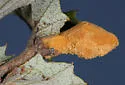
Golden Gall Wasp
Heteroecus melanoderma
Identification: This wasp galls Quercus chrysolepis (canyon live oak) and Quercus vacciniifolia (huckleberry oak) in California. Note that the hairs are shorter than those on Heteroecus dasydactyli . One way to tell the difference between the two typ
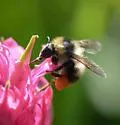
Golden-belted Bumble Bee
Bombus kirbiellus
Identification: Female color pattern as in Bombus frigidus, with golden-tan hairs on the thorax and T1-T2, scutum with well-defined black interalar band, and tail tip extensively bright red-orange. Unlike B. frigidus hairs of the head including verte
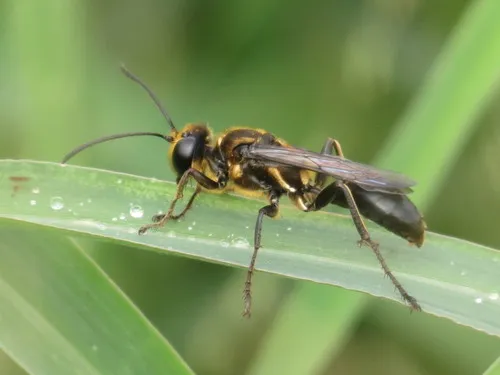
Golden-reined Digger Wasp
Sphex habenus
Identification: Vestiture is golden (as in S. ichneumoneus ), legs black, abdomen unicolorous (black or rarely red in female, red in male). Female (♀) Male (♂)
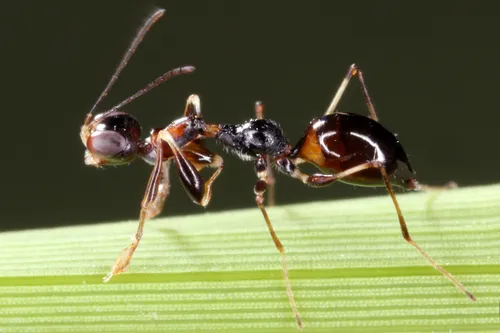
Gonatopus lunatus
Gonatopus lunatus
A solitary parasitoid wasp belonging to the family Dryinidae (Pincer Wasps). Wingless ant-like females have specialized, scissor-like front legs with raptorial claws used to capture and parasitize leafhopper or planthopper nymphs. The eggs are laid o
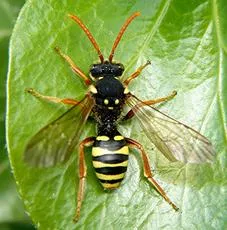
Gooden's Nomad Bee
Nomada goodeniana
Nomada goodeniana is a small species in the genus, and uses the nests of several large Andrena species. It has a bright yellow and black striped abdomen with no red patches. It has orange-red legs with darker femora. The antennae are orange, though i
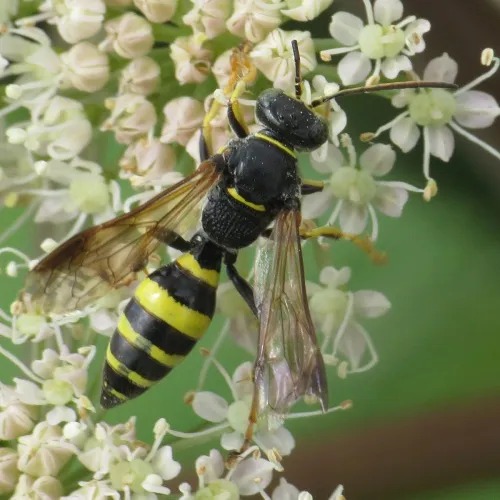
Gorytes laticinctus
Gorytes laticinctus
9 to 13mm. This is one of several very similar wasps in the family which require a specimen or excellent macro photos to identify. The first dorsal plate is straight-sided rather than bulged and the yellow on the second dorsal plate occupies not less
Gouty Oak Gall Wasp
Callirhytis quercuspunctata
The larvae inside the galls may take one or two years to reach maturity.
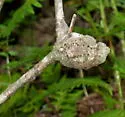
Gouty Stem Gall Wasp
Callirhytis quercussuttoni
Identification: This wasp creates globular, woody stem galls on oaks in the black oak group (including Quercus agrifolia and Q. wisizleni ) on the west coast. The stem galls contain the unisexual (all female) generation. Females from this generation
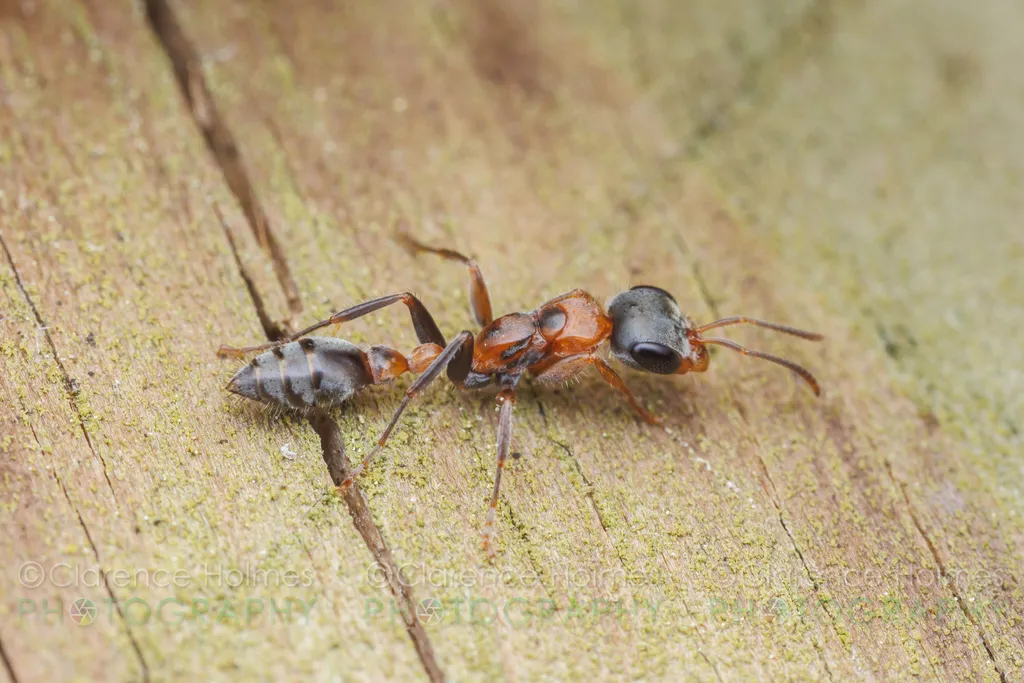
Graceful Twig Ant
Pseudomyrmex gracilis
Identification: A long, solitary, wasp-like ant. Large eyes, two segmented petiole, well developed sting. Color varies with geographic distribution, and can range from dark brown-black, to orange-brown, or a mixture of orange and brown [bicolored]. T
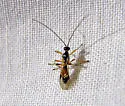
Granular Mummy Wasp
Aleiodes granulatus
Identification: At least head, pronotum and mesonotum black, mesosoma sometimes entirely black, mesopleuron and propodeum sometimes orange, antenna and mouthparts yellow. Metasoma with top of first segment orange, black, or bicolored (black basally,
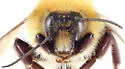
Great Yellow Bumble Bee
Bombus distinguendus
Identification: Difficult Few North American records.
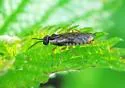
Green Alder Sawfly
Monsoma pulveratum
European species established in eastern Canada since the early 1990s, detected in Alaska in 2009 and Washington in 2010. Now in ten western WA counties (Clark to Whatcom). Larvae feed on alders in spring and early summer, and causes severe defoliatio
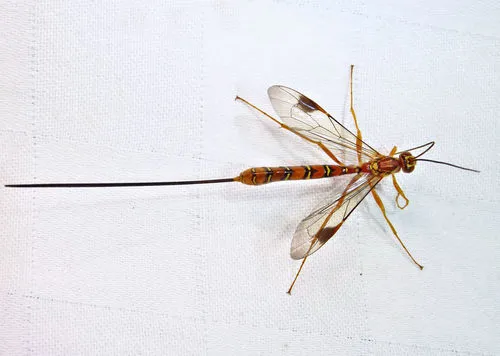
Greene's Giant Ichneumonid Wasp
Megarhyssa greenei
Identification: Females are distinguished from those of M. macrurus by having the forewing clear (unpigmented) along the basal vein (such that a single black spot is present) and by the shorter ovipositor length (the shortest in all US species of Meg
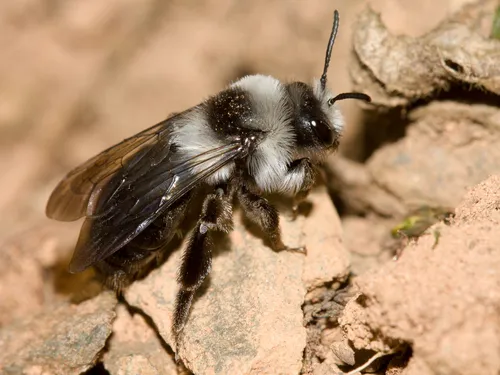
Grey Mining Bee
Andrena cineraria
The females are black, and have two broad ashy-grey hair bands across the thorax. The males are similar, but the thorax is entirely clothed with less dense grey hairs, and has a very pronounced tuft of white hairs on the lower face. The male has whit
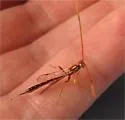
Grotea anguina
Grotea anguina
Identification: fore wing without apical spot, antennae yellow with black band at 0.7 of its length Female
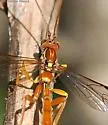
Grotea californica
Grotea californica
Identification: fore wing without apical spot, antennae entirely yellow Female (left) and male (right)
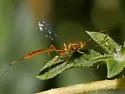
Grotea lokii
Grotea lokii
Identification: Almost identical to its eastern analogue, G. anguinea in coloration. Distinguished by a brownish spot in the forewing (either conspicuous or faint) and by the lack of a deep-orange dorsal band on the pronotum. Legs may be slightly mor
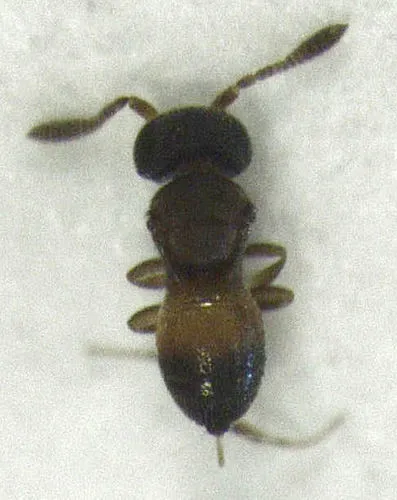
Gryon misellum
Gryon misellum
Small (1-1.5mm) wasps, brachypterous or macropterous. Eyes with minute hairs, mandible sub-tridentae, clypeus with prominent and divergent corners, cheeks near mandibular base with weak fan-like striae. Gryon misellum group: forewing submarginal, mar
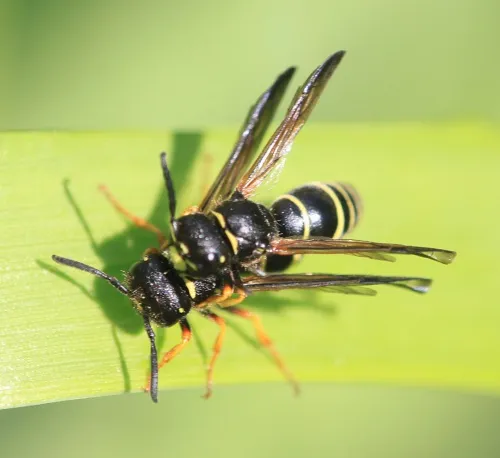
Gymnomerus laevipes
Gymnomerus laevipes
12-15mm. Black with yellow markings and with a conspicuous box-shaped head. The abdomen has a yellow band across the base of each tergite. The thorax is black except for a yellow collar behind the head. The head is black except for two small yellow s
Habrobracon hebetor
Habrobracon hebetor
After stinging a caterpillar the wasp sucks on the emerging juices before ovipositing. Four to seven wasps emerge in about ten days. Adults live about a month under favorable laboratory conditions. (See print references.)
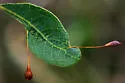
Hair Stalk Gall Wasp
Andricus pedicellatus
Identification: This wasp makes thin, stalked, pointed galls along margins of blue, valley, scrub, and Oregon oak leaves. Galls develop in early spring; adults emerge between April and June.
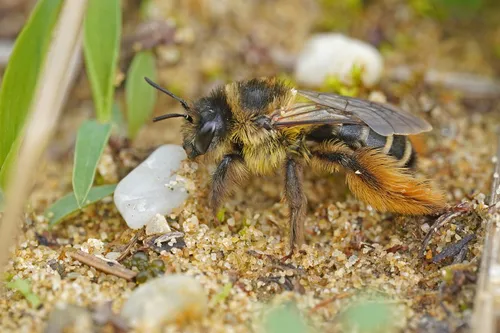
Hairy Legged Mining Bee
Dasypoda hirtipes
Females are pretty unmistakeable due to the oversized, bright yellow pollen baskets on the hind legs and the banded abdomen. They are fairly large with a body length of about 13mm. Males resemble oversized Melitta leporina males but have two rather t
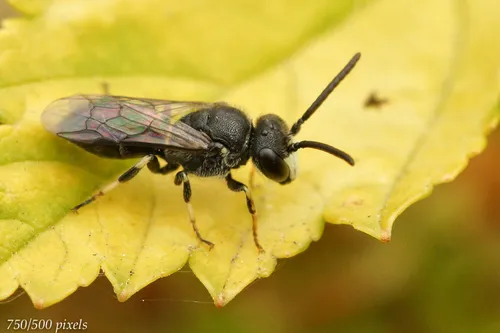
Hairy Yellow-face
Hylaeus hyalinatus
Length 5.5 to 7 mm. Males can be identified by the largely white (not really yellow) and hairy face. Females are harder to identify: they have a long face with two white triangles on the face, adjacent to the lower half of the eyes. The sides of terg
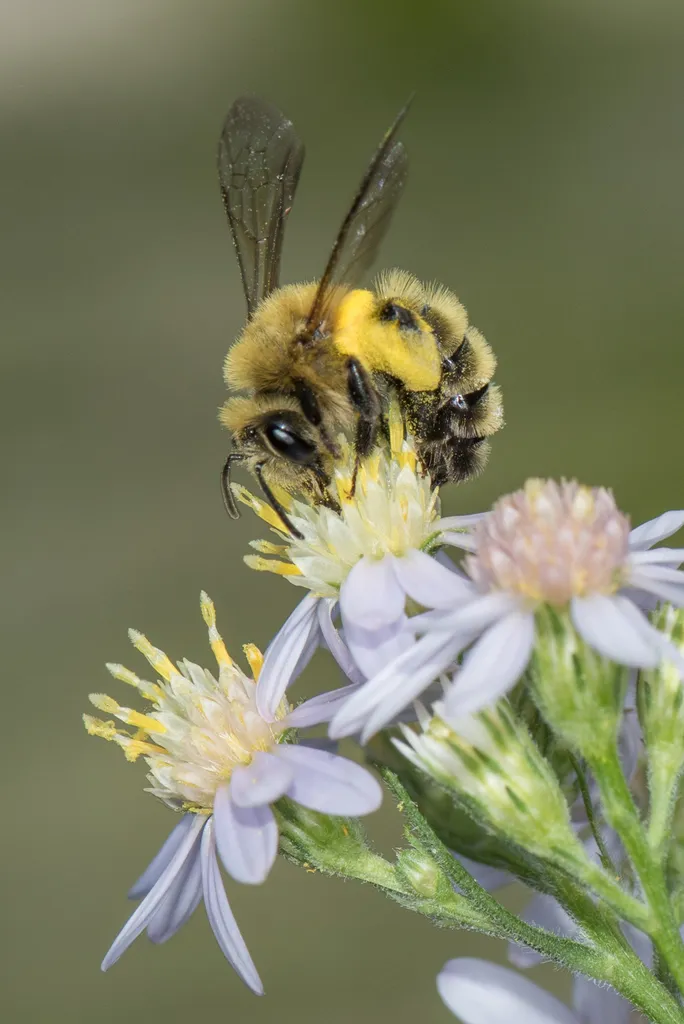
Hairy-banded Mining Bee
Andrena hirticincta
Identification: Most of its pubescence has a green-yellow tinge
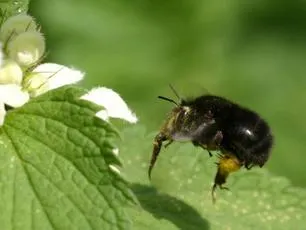
Hairy-footed Flower Bee
Anthophora plumipes
The male has long hairs on the lower parts of the middle legs, especially near the feet. Males and females are very different, with the male being orange and the female all-black. Confusion with other species is not likely in early spring as no commo
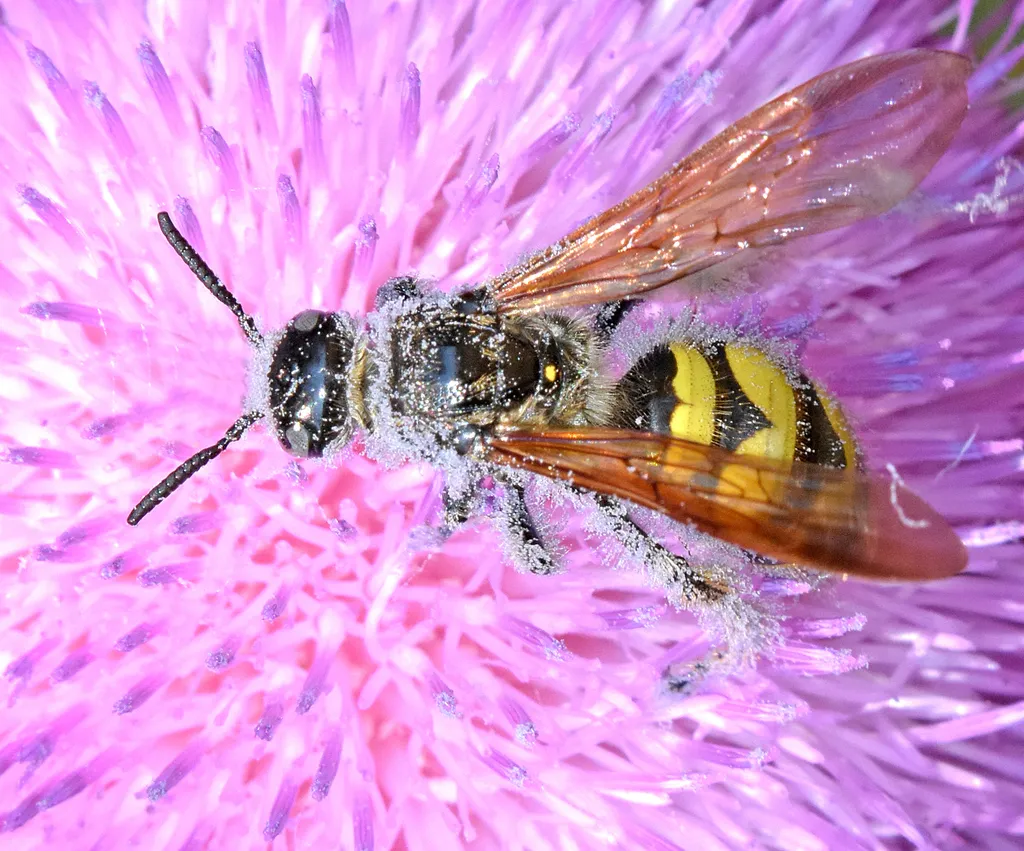
Hairy-footed Scoliid Wasp
Dielis pilipes
Identification: Female Dielis in our area are separated from other campsomerine genera by their white hairs, particularly on the face. Among western Dielis , females are separated from D. tolteca by their yellow-marked abdomens (orange in D. tolteca
Hairy-tailed Cellophane Bee
Colletes tectiventris
A host to the clepotoparasitic bee Epeolus basili . Onuferko, 2018
Half-black Bumble Bee
Bombus vagans
Identification: The anterior portion of bee (top of the head, thorax, and first two segments of the abdomen) is yellow, and the posterior half is black. Long malar space as in bimaculatus but clearly longer than in sandersoni or perplexus. Black hair
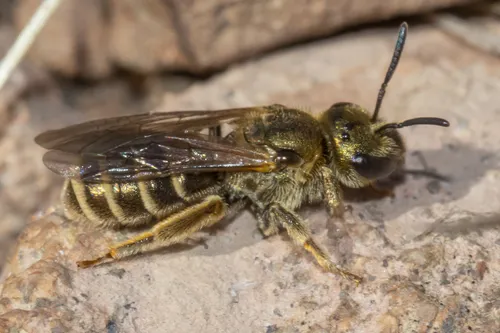
Halictus confusus
Halictus confusus
Identification: The integument (body, NOT HAIR) is greenish.
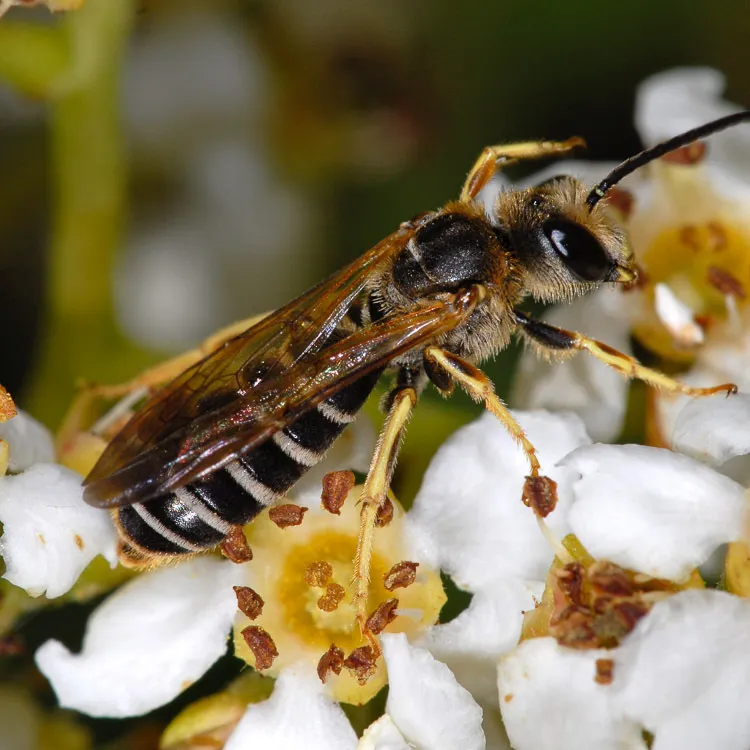
Halictus farinosus
Halictus farinosus
Identification: Key to western Halictus sp. found in
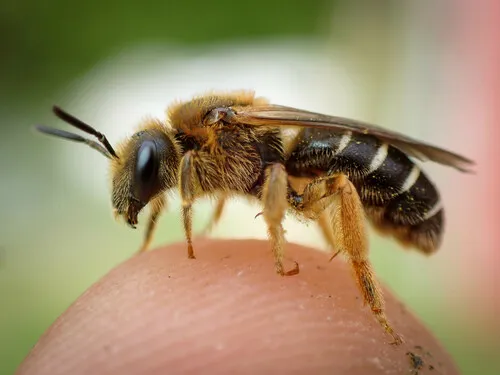
Halictus rubicundus
Halictus rubicundus
This small bee is a member of the family Halictidae known as sweat bees. It is small (about 1 cm) dark brown, with fine yellowy white bands across the apices of the abdominal segments, and a yellow fuzz of hairs on the tip of the abdomen. The legs ar
Halictus tectus
Halictus tectus
First US record in the early 2000's(2005?), introduced from Europe. Found in eastern US, usually in disturbed, even urban, areas.
Halictus virgatellus
Halictus virgatellus
Halictus virgatellus (Halictus virgatellus) is a species in the family Halictidae, commonly known as sweat, furrow, nomiine, and short-faced bees, belonging to the order Hymenoptera (Ants, Bees, Wasps and Sawflies). It is classified within the subfam