
Family Thread-waisted Wasps (Sphecidae)
Sphecidae is a family in the order Hymenoptera. Browse 63 named species recorded in this family, or open an individual profile for its available identification and natural-history information.
Species in Sphecidae (63)
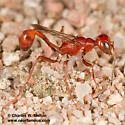
Ammophila formicoides
Ammophila formicoides
Identification: An ant-mimicking species identified by its elongated pronotum, two submarginal cells, and dark wingtips. Often darker than the related and more widespread A. wrightii .
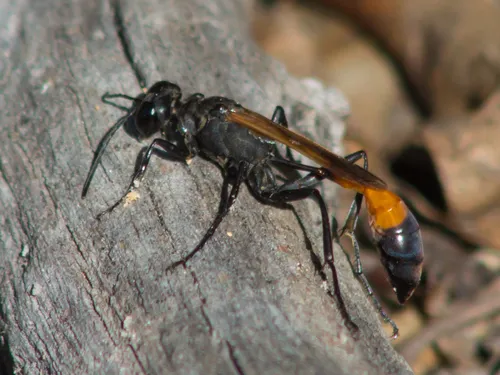
Ammophila pictipennis
Ammophila pictipennis
Identification: A very conspicuous eastern species with brightly-pigmented orange wings and no silvery markings on the thorax whatsoever. In the west, see also A. placida , which is separated by the structure of the male genitalia. Those of A. pictip
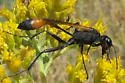
Ammophila placida
Ammophila placida
Identification: A very conspicuous western species with brightly-pigmented orange wings and no silvery markings on the thorax whatsoever. In the east, see also A. pictipennis , which is separated by the structure of the male genitalia. Those of A. pl
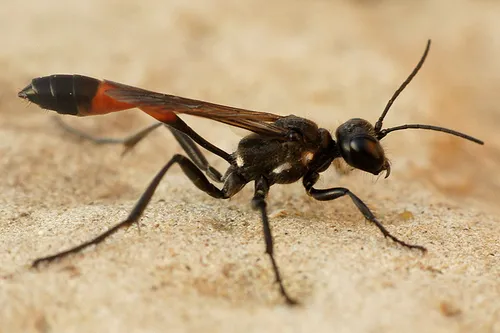
Red Banded Sand Wasp
Ammophila sabulosa
Ammophila sabulosa is a large (15 to 25 mm long) and striking solitary wasp with a very long narrow "waist" of two segments. The species can be told from A. pubescens (which is smaller, 12 to 20ÿmm long) as the waist widens out very gradually into th
Ammophila wrightii
Ammophila wrightii
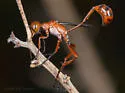
Identification: An ant-mimicking species identified by its elongated pronotum, two or three submarginal cells, and entirely clear wings.
Zimmermann's Mud-dauber Wasp
Chalybion zimmermanni
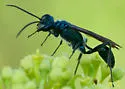
Identification: Males differ from californicum in part by having long white thorax and head pubescence and lighter wings. Separation of females is based on the morphology of the pleuron, which is usually impossible to do from images. 2 subspecies in
Isodontia apicalis
Isodontia apicalis
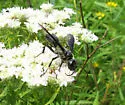
Identification: Very large head, stocky build; white hairs on thorax. Very similar to I. mexicana. For distinguishing characters see species page .
Brown-legged Grass-carrying Wasp
Isodontia auripes
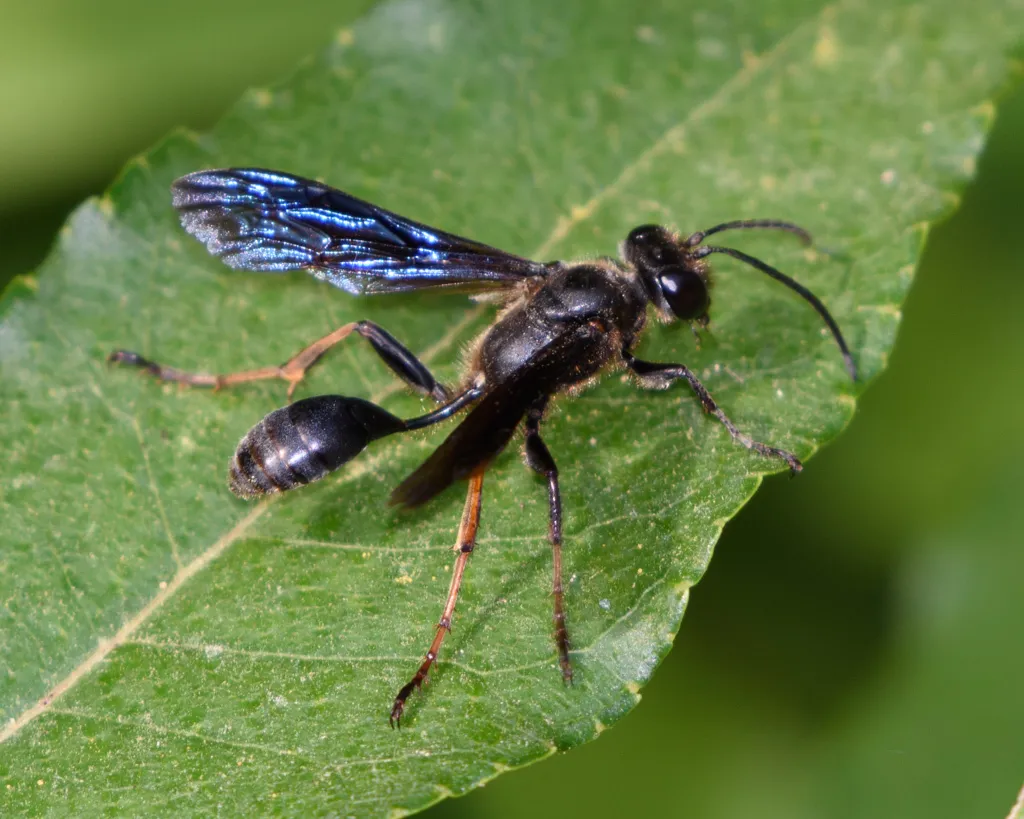
Identification: Brown legs are apparently distinctive, within this genus.
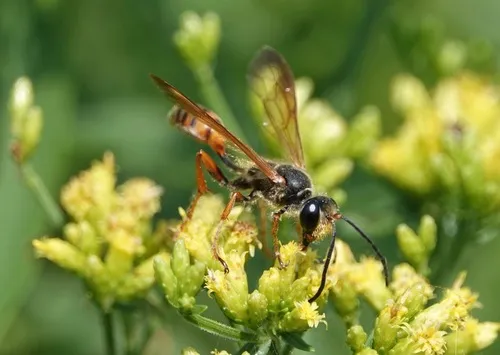
Elegant Grass-carrying Wasp
Isodontia elegans
Coloration is quite variable. At least part of the genus needs revision. It is possible that elegans (subenus Murrayella ) may eventually become a synonym of I. mexicana , or vice versa. (Comments by E. Eaton)
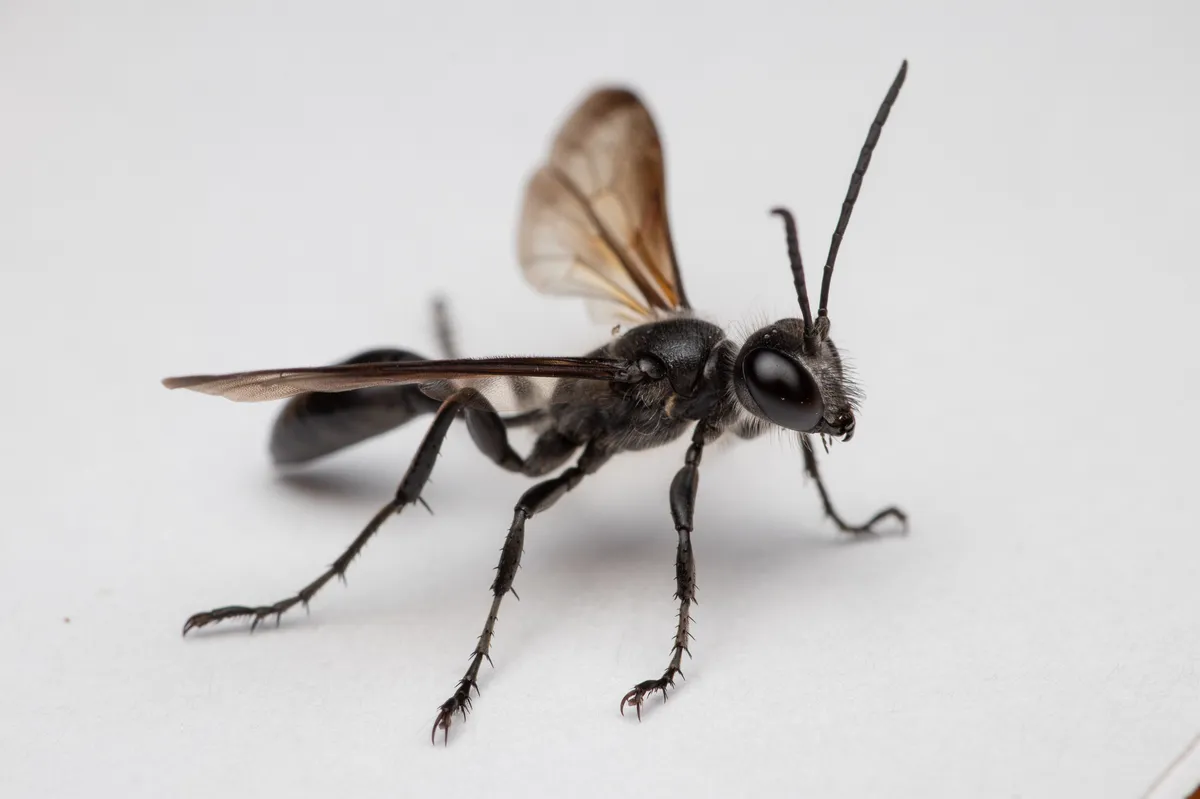
Mexican Grass-carrying Wasp
Isodontia mexicana
Identification: Body with pale instead of black hair (unlike philadelphica). Legs black (with reddish in auripes, exornata and elegans). Very similar to apicalis. The characters used in identification keys (3 vs. 2 mandibular teeth) are almost never
Isodontia philadelphica
Isodontia philadelphica
Identification: A stocky Isodontia , with heavy, black pubescence, and violet wings. Sphex pensylvanicus , is similar, but usually holds its wings folded parallel to body when nectaring (see comments on this image ):
Palmodes dimidiatus
Palmodes dimidiatus
Identification: Only member of genus in eastern North America.
Podalonia argentifrons 0
Podalonia argentifrons
Identification: This species has previously been confused with others in the same genus. Identification from images alone is not possible and requires study of very subtle morphological characters under the microscope.
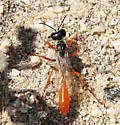
Podalonia argentipilis
Podalonia argentipilis
Identification: Notable for its red legs and red abdomen, especially prominent in females. The hairs on both the head and thorax are white to silvery (never black).
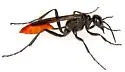
Podalonia pubescens
Podalonia pubescens
Identification: Male abdomen: first segment red with a black dorsal stripe, second and third segments red, rest of abdomen black with a dark blueish tint. Female abdomen: all red
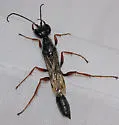
Podium rufipes
Podium rufipes
Identification: Head, thorax, and abdomen black with bluish reflections; apical three-fourths (or less) of femora, tibiae, and tarsi reddish; wings clear except for clouding of second submarginal cell; erect white hair of head and thorax. ; in the we
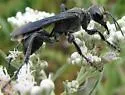
Prionyx atratus
Prionyx atratus
Identification: Female: Wings dark brown/purple; Clypus with gold/silver appressed hairs; Clypus erect hairs black; scutum dull, shagreened; scutellum dull. Male: Same as above plus - Abdomen black; Scutellum dull; Antennal segment 6 with flat area e
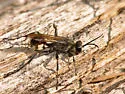
Prionyx canadensis
Prionyx canadensis
Identification: Female with thorax mostly glabrous as opposed to the silvery pubescence of P. parkeri and P. thomae .
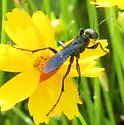
Prionyx fervens
Prionyx fervens
Identification: Large size, lack of silvery markings on thorax and head plus dark, violaceous wings separates this species easily from all others. Females of this species are *very* large.
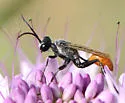
Prionyx thomae
Prionyx thomae
Identification: Female with maxillary palp longer than labial palp, which may be obsolescent. Silvery band of pubescence on the mesopleuron; less silvery in the similar P. parkeri and P. thomae :
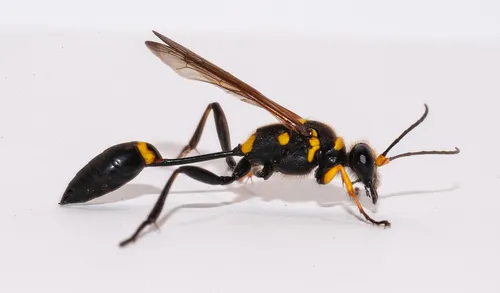
Clayman's Mud Dauber Wasp
Sceliphron assimile
Identification: hind legs mostly black; in S. caementarium , the basal half of metatibia and most of the tarsi are yellow (males of S. assimile can sometimes have a yellow streak on the inner margin of the tibia, and yellowish tarsi)
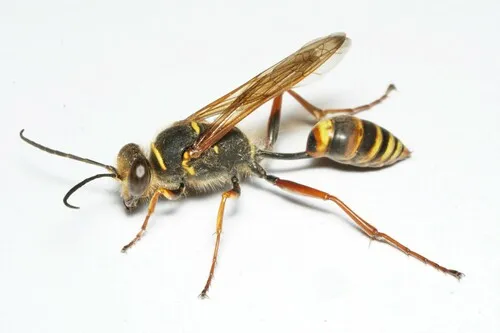
Asian Mud-dauber Wasp
Sceliphron curvatum
Identification: According to Christian Schmid-Egger (Aug 12, 2019: pers. comm. to Matthias Buck), the photos on BugGuide clearly show S. curvatum , not S. deforme (up to this point there was doubt about the species). Schmid-Egger (2005) provides a ke
Sphex dorsalis
Sphex dorsalis
Identification: Females have a black head and thorax, with golden pubescence on these segments. The legs are red apart with the exception of the final tarsus and claws. The abdomen has T1-3 and T6 red and T4-5 black. They also can be separated from S
Sphex flavovestitus
Sphex flavovestitus
Identification: can be identified by black body, orange tibiae and tarsi, and strong golden pubescence (including on lateral areas of scutum): Sphex nudus also has tan legs but thorax dark without golden lateral marks on scutum, pubescence lighter-co
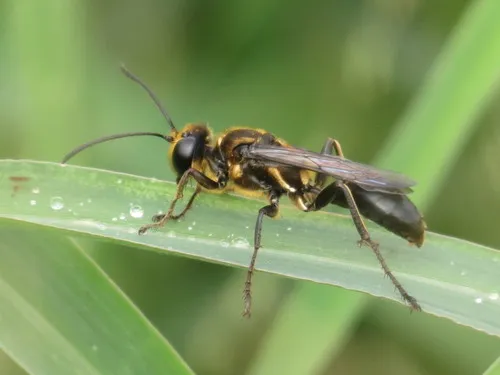
Golden-reined Digger Wasp
Sphex habenus
Identification: Vestiture is golden (as in S. ichneumoneus ), legs black, abdomen unicolorous (black or rarely red in female, red in male). Female (♀) Male (♂)
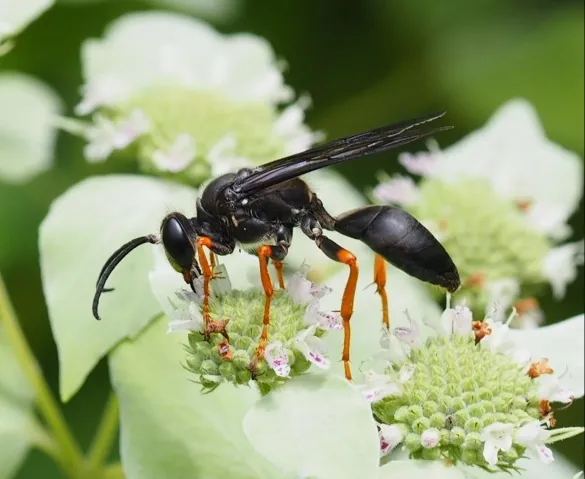
Katydid Wasp
Sphex nudus
Identification: can be separated from S. flavovestitus by lighter body pubescence and lack of golden pubescence along lateral margins of scutum
Sphex texanus
Sphex texanus
Identification: Females have a black head and thorax, with silvery-yellow pubescence on these segments. The legs are fully black, and the wingtips are darkened. The abdomen has T1-3 red and T4-6 black. Males are black with clear wings and yellowish-s
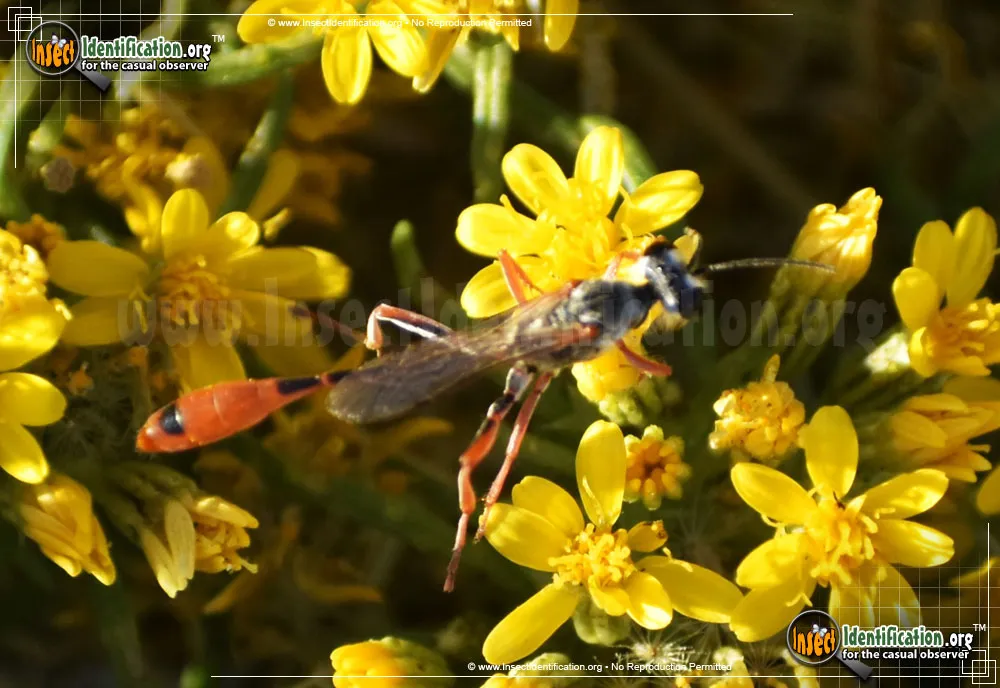
Thread-waisted Wasp -A. aberti
Ammophila aberti
Ammophila aphrodite
Ammophila aphrodite
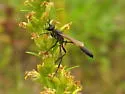
Ammophila azteca
Ammophila azteca
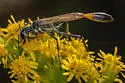
Ammophila cleopatra
Ammophila cleopatra
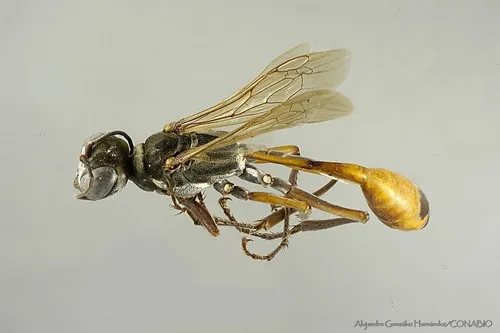
Ammophila femurrubra
Ammophila femurrubra
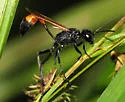
Ammophila fernaldi
Ammophila fernaldi
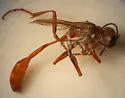
Ammophila ferruginosa
Ammophila ferruginosa
Ammophila juncea
Ammophila juncea
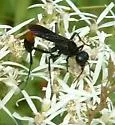
Ammophila nigricans
Ammophila nigricans
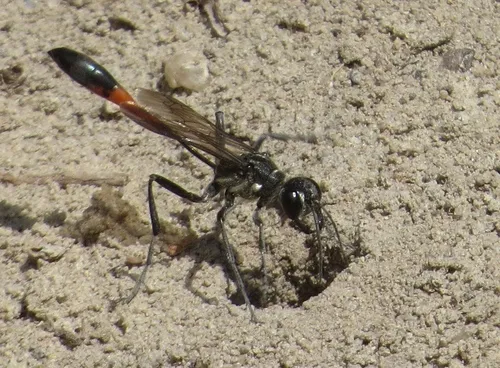
Thread-waisted Wasp
Ammophila procera
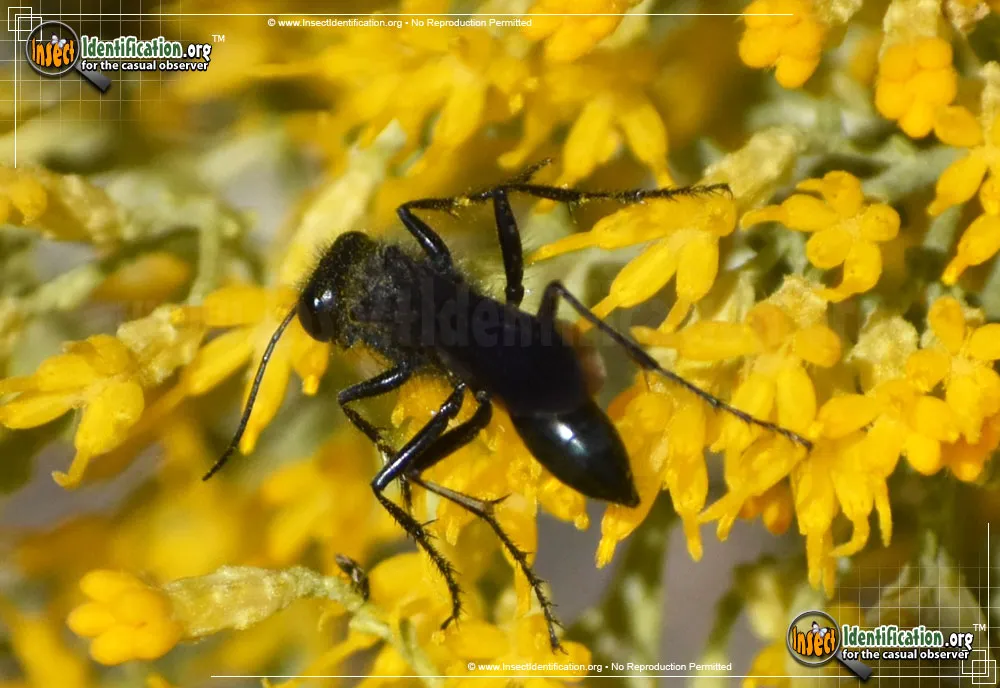
Common Blue Mud Dauber
Chalybion californicum
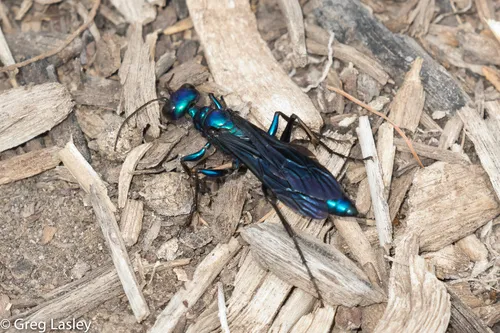
Steel-blue Cricket Hunter
Chlorion aerarium
Iridescent Cockroach-hunter Wasp
Chlorion cyaneum
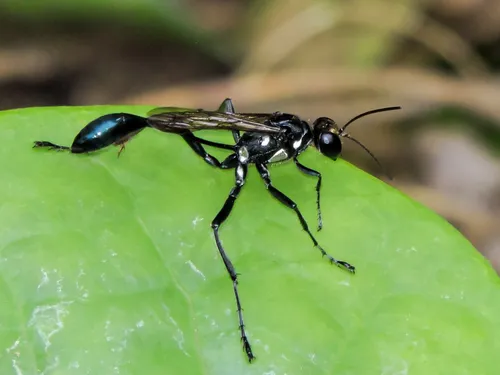
Gold-marked Thread-waisted Wasp
Eremnophila aureonotata
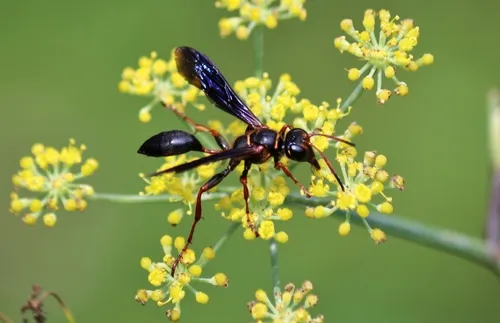
Isodontia exornata
Isodontia exornata
Palmodes praestans
Palmodes praestans
Podalonia luctuosa
Podalonia luctuosa
Podalonia melaena
Podalonia melaena
Podalonia robusta
Podalonia robusta
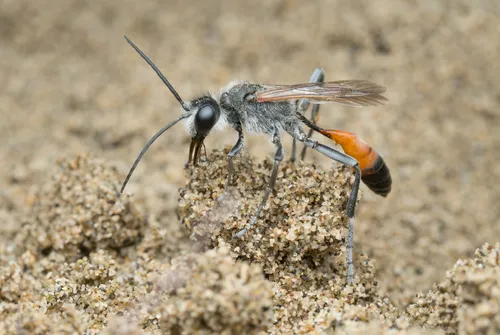
Tyde's Sand Wasp
Podalonia tydei
Podium krombeini
Podium krombeini
Podium luctuosum
Podium luctuosum
Prionyx foxi
Prionyx foxi
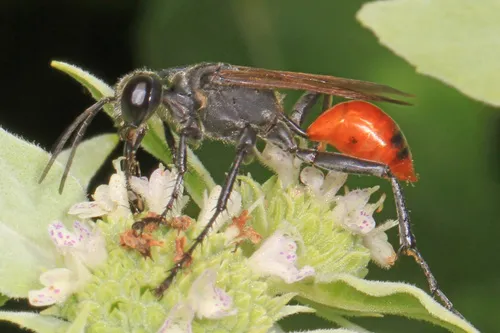
Prionyx parkeri
Prionyx parkeri
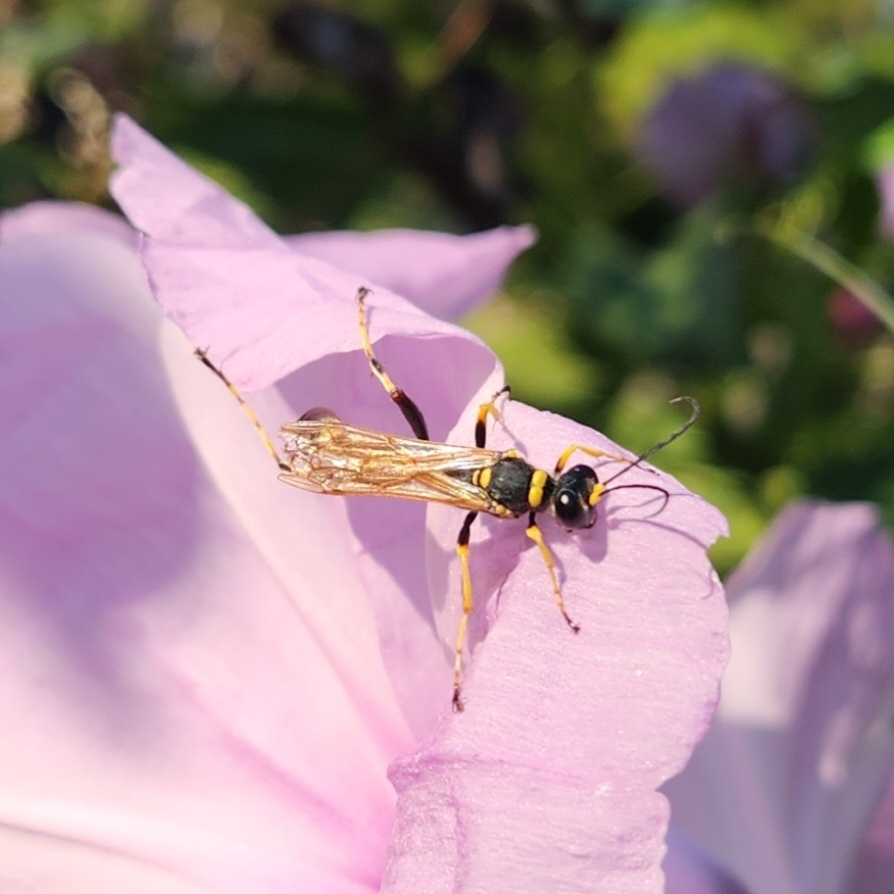
Black and Yellow Mud Dauber
Sceliphron caementarium
(c) Newt Knorpp, some rights reserved (CC BY)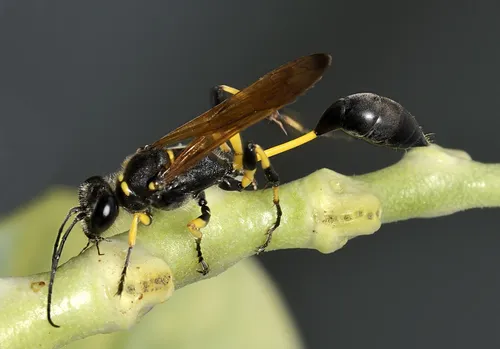
Sceliphron madraspatanum
Sceliphron madraspatanum
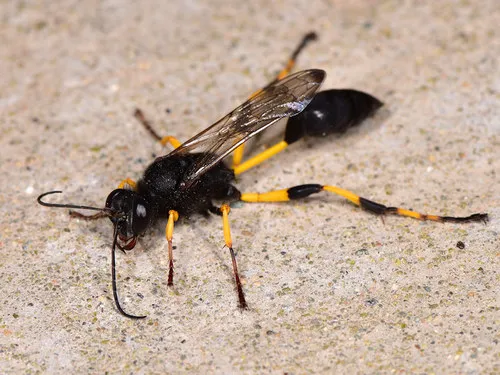
Sceliphron spirifex
Sceliphron spirifex
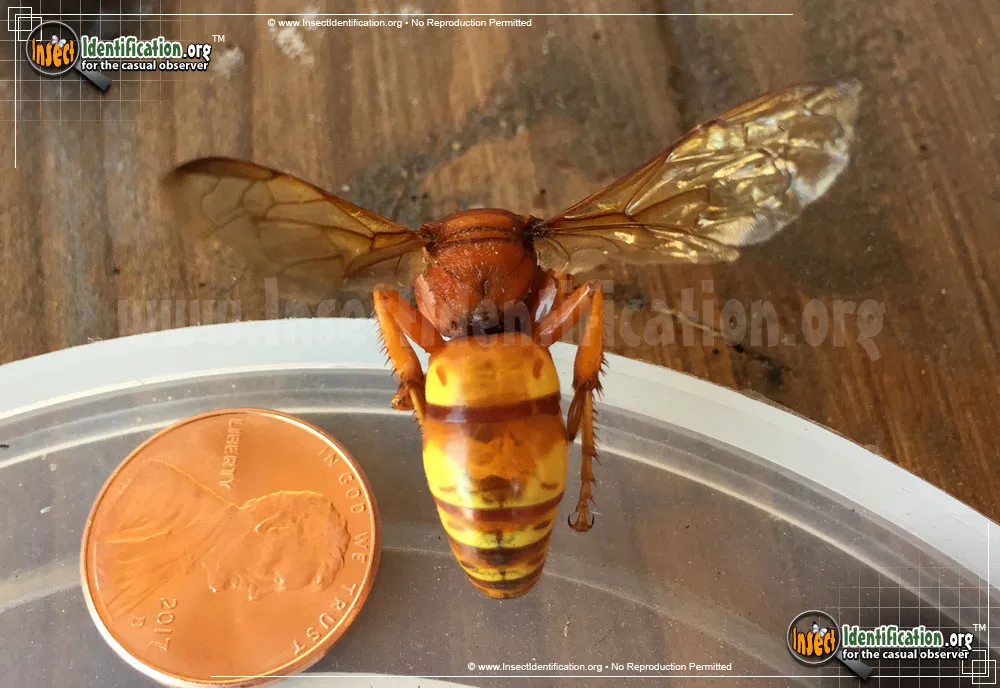
Western Cicada Killer
Sphecius grandis
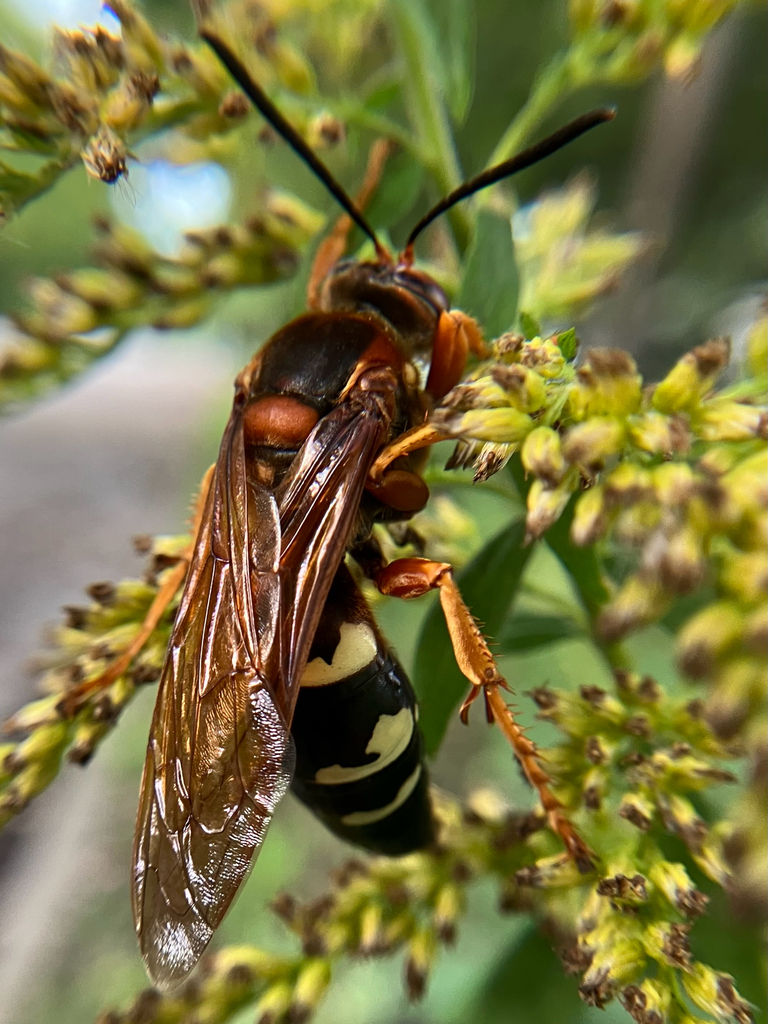
Cicada Killer
Sphecius speciosus
(c) Tobias Thrien, some rights reserved (CC BY)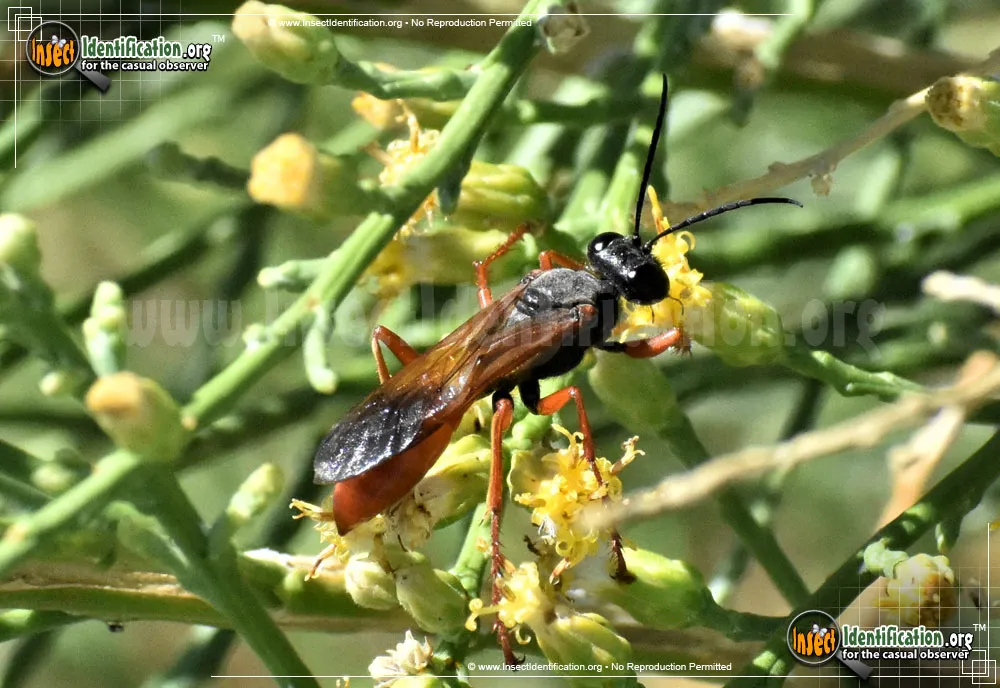
Ashmead's Digger Wasp
Sphex ashmeadi
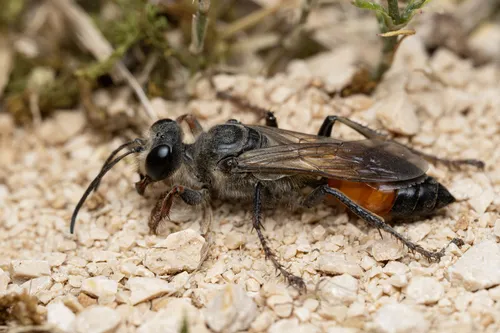
Golden Digger Wasp
Sphex funerarius
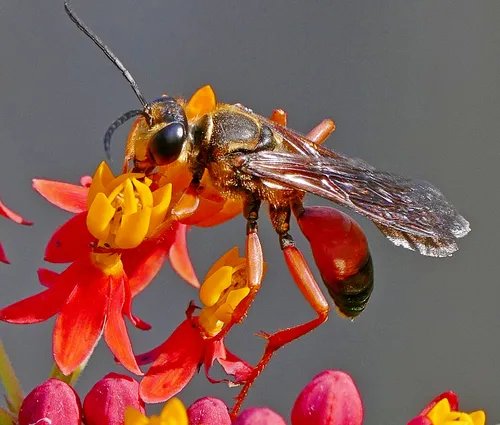
Great Golden Digger Wasp
Sphex ichneumoneus
Jamaican Digger Wasp
Sphex jamaicensis
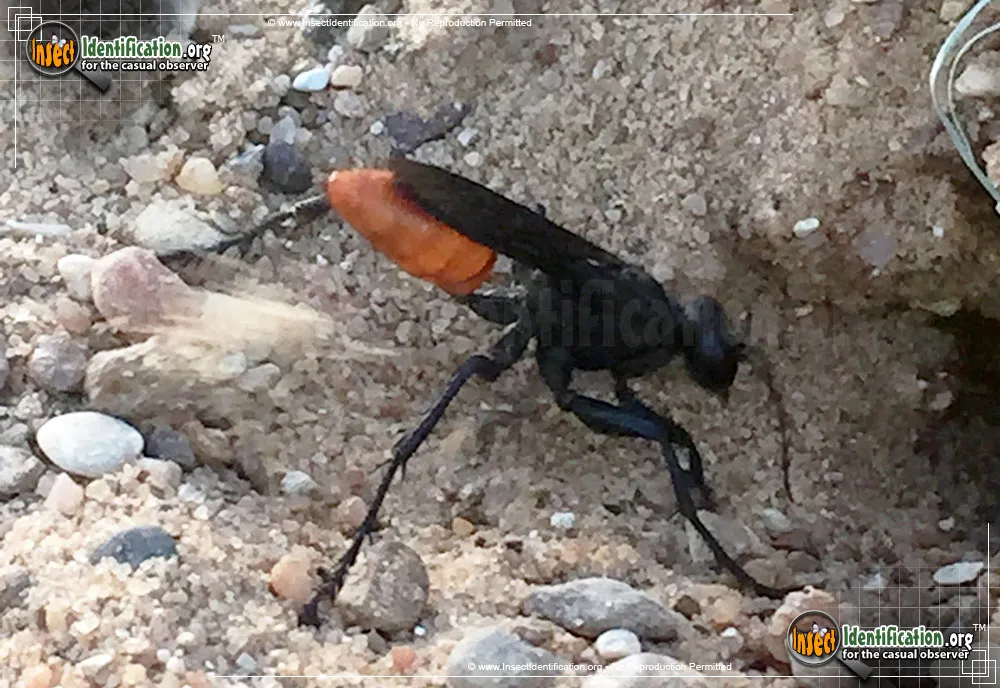
Thread-waisted Wasp -Sphex lucae
Sphex lucae
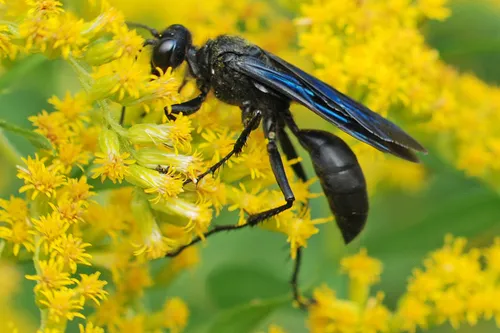
Great Black Wasp
Sphex pensylvanicus
Sphex tepanecus
Sphex tepanecus