
Family Cuckoo, Carpenter, Digger, Bumble, and Honey Bees (Apidae)
Apidae is a family in the order Hymenoptera. Browse 343 named species recorded in this family, or open an individual profile for its available identification and natural-history information.
Guides
Species in Apidae (343)
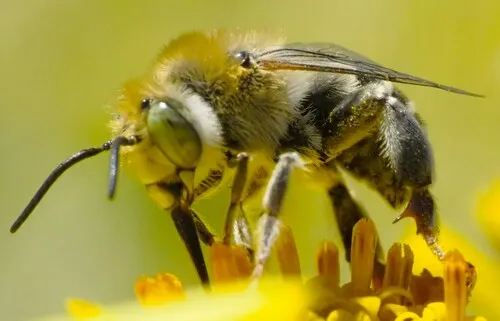
California Digger Bee
Anthophora californica
Identification: White metasomal bands are integumental (vs. white hair bands in A. urbana) Eye color in life usually greenish (vs. blue-gray in A. urbana) Male with hind tibia red and modified, with a projection (vs. unmodified and whitish in color i
Anthophora curta
Anthophora curta
Has been considered conspecific with A. squammulosa but now recognized as distinct based on a study by Michael Orr and colleagues of BBSL.
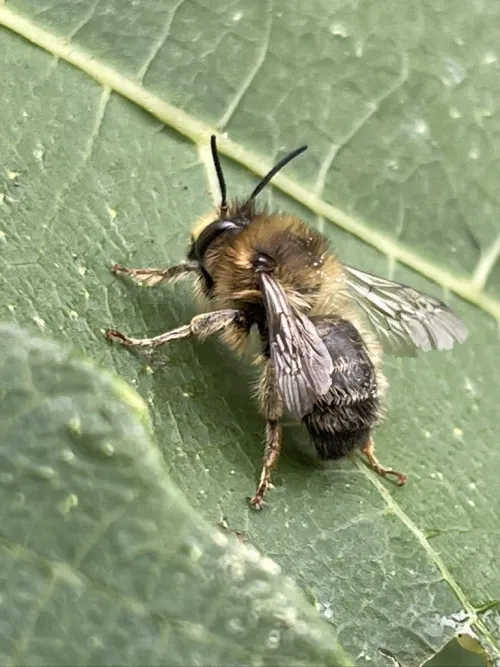
Fork Tailed Flower Bee
Anthophora furcata
A medium-sized (10 to14 mm), hairy solitary bee. Unusually for Anthophora the mandible is tridentate, with both an inner and outer subapical tooth. It has a long tongue, almost as long as the body length when extended, and brown eyes. The male is dar
Anthophora marginata
Anthophora marginata
Identification: Cream not pure white apical margins to terga; grizzled black and gray thoracic hairs
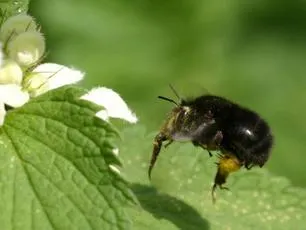
Hairy-footed Flower Bee
Anthophora plumipes
The male has long hairs on the lower parts of the middle legs, especially near the feet. Males and females are very different, with the male being orange and the female all-black. Confusion with other species is not likely in early spring as no commo
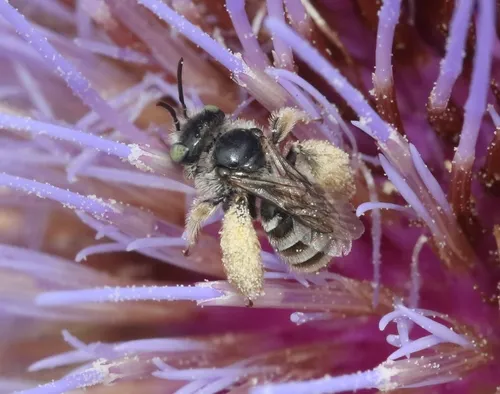
Anthophorula albicans
Anthophorula albicans
This page was set up based on examination of one female specimen, depicted below:
Anthophorula completa
Anthophorula completa
Probably the most common exomalopsine apid in Texas. (John L. Neff, Central Texas Melittological Institute, pers. comm., 2011)
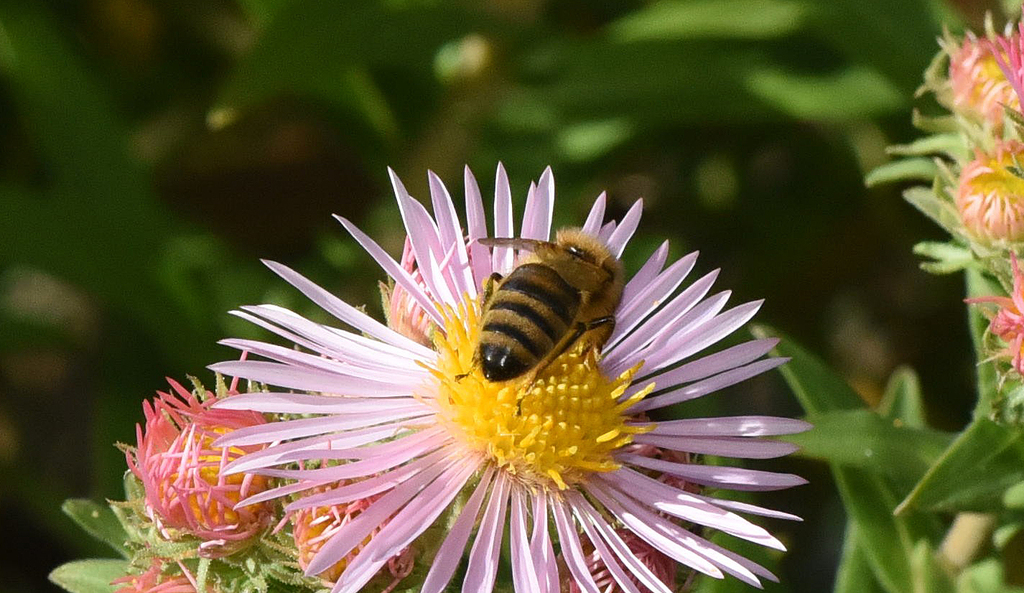
Honey Bee
Apis mellifera
(c) Marcel_Pepin, some rights reserved (CC BY)Body thick, marked with yellow and brown, the eyes are hairy. The body is covered in short hairs. Average length about 12 mm. Frequent visitors to flowers in various habitats, but frequent in gardens and parks. Native wild honeybees are no longer bel
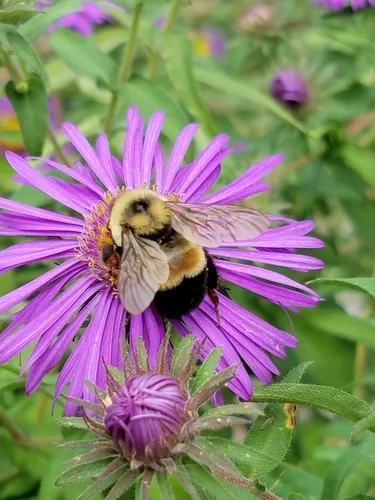
Rusty-patched Bumble Bee
Bombus affinis
Identification: Queens have a similar color pattern to B. vagans , with a yellow thorax and yellow T1 and T2 but in affinis the face and malar is much shorter, the hairs of the face are all black, and the coat is shorter and more uniform in length. W
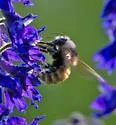
White-shouldered Bumble Bee
Bombus appositus
Identification: Similar to Bombus borealis but in appositus the anterior of the scutum is usually noticeably paler than the posterio of the scutum. Unlike fervidus the facial hairs are extensively yellow. Beware of worn centralis in which T3-T4 can a
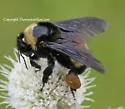
Black-and-gold Bumble Bee
Bombus auricomus
Identification: Mullerian mimic of B. pensylvanicus . Note the following: See detailed descriptions Males with large eyes strongly convergent above and modified antennae. This species is variable in hair color with dark females readily confused with
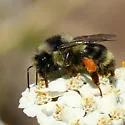
Colorado Black-notched Bumble Bee
Bombus bifarius
Identification: In both sexes the most distinctive feature is the medial notch of black hairs bisecting the scutellum more conspicuous than in other species (approached but not matched in ternarius and sylvicola). Facial hairs of female extensively y
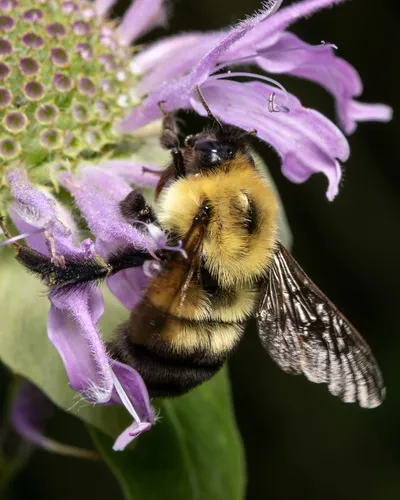
Two-spotted Bumble Bee
Bombus bimaculatus
Identification: see detailed description of queen and male at discoverlife.org ; worker is very similar to queen but smaller. In female the yellow of second abdominal tergum (T2) extends in a deep "U" nearly to the apex of the segment medially but th
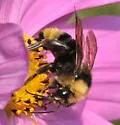
California Bumble Bee
Bombus californicus
Identification: Color pattern of typical Californian females as in vosnesenskii but with all black hairs on head instead of extensive yellow hairs. Also malar space long and legs gangly. In the eastern portion of its range its color converges on ferv
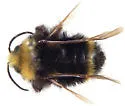
Bombus caliginosus
Bombus caliginosus
Identification: Nearly identical in color pattern to B. vosnesenskii but females usually have lateral pale fringes on S4 and a longer malar space. Males are separated by antennal proportions. Relatively few confirmed recent records reflect in part se
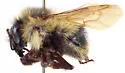
Cockerell's Bumble Bee
Bombus cockerelli
Identification: Color patterns resembles some populations of the eastern B. sandersoni with a black interalar band The known distribution covers only about 777 km2, giving it the smallest known range of any bumblebee in the world. Most of the known s
Cryptic Bumble Bee
Bombus cryptarum
B. lucorum sensu lato comprises several cryptic species now recognized as distinct based on new evidence including DNA barcodes (Williams et al., 2012).
Great Yellow Bumble Bee
Bombus distinguendus
Identification: Difficult Few North American records.
Flavid Cuckoo Bumble Bee
Bombus flavidus
Identification: Males often have a distinctive ring-like band of yellow on T4 more or less contrasting with the color of the other tergites (T1-T3 vary from mostly black to mostly yellow) and especially with T5 which is mostly black. Similar species
Yellow-fronted Bumble Bee
Bombus flavifrons
Identification: The typical form is very similar to B. centralis in that a yellow T1-T2 contrast with a red T3-T4, but flavifrons has a longer malar space and black hairs intermixed on the scutum anterior to the black interalar band.
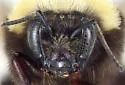
Franklin's Bumble Bee
Bombus franklini
Has declined severely to the point where none at all have been seen by Robbin Thorp since 2006. Due to its very narrow historic range and lack of any recent records despite resurveys at known localities the conservation status of this species is of g
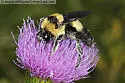
Southern Plains Bumble Bee
Bombus fraternus
Identification: Black interalar band broad and well defined. T3 black (as opposed to yellow in auricomus and sonorus). T2 entirely yellow-tan (lacking the black apicolateral corners typical of griseocollis). see detailed description of queen and male
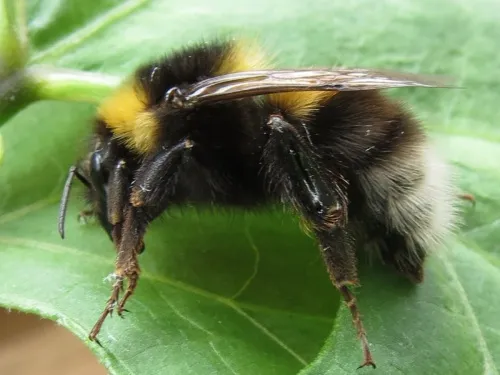
Garden Bumblebee
Bombus hortorum
A relatively large bee. Lengths, queen 17-20 mm, workers 11-16 mm, male 14-15 mm. Bombus hortorum has a long head and a slimmer body than some other Bombus species. The collar, scutellum and 1st abdominal segment are yellow, the tail is white. A rath
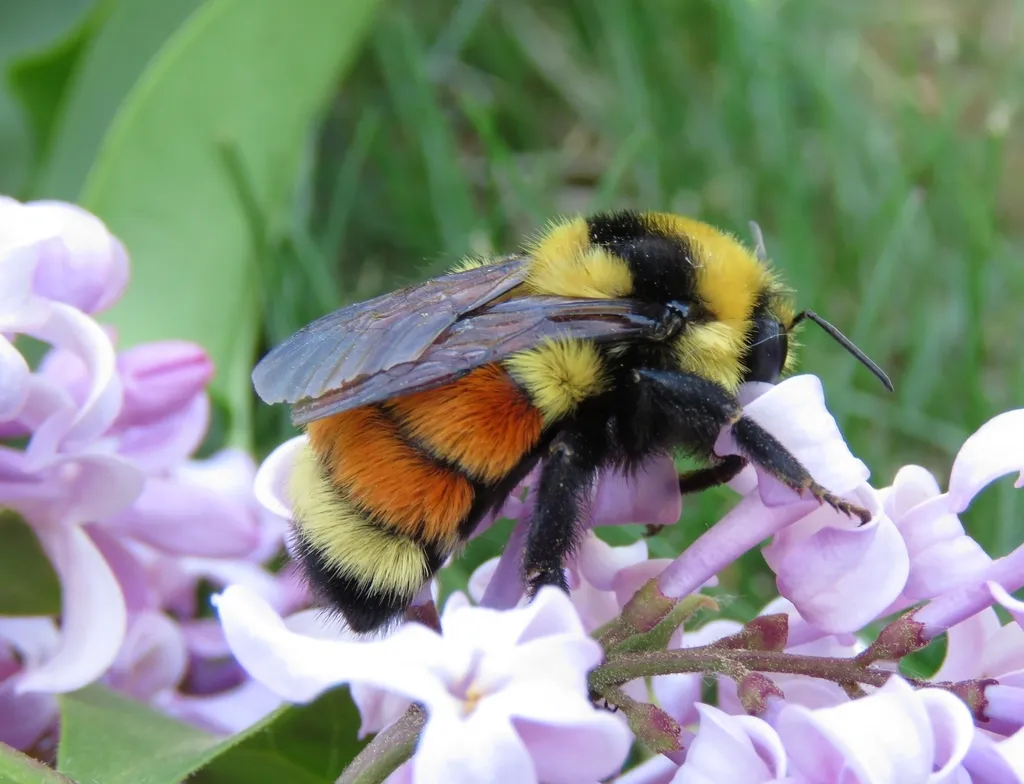
Hunt's Bumble Bee
Bombus huntii
Identification: Yellow hairs on face. Bombus centralis looks similar but B. centralis females usually have T2 yellow and T4 orange, whereas B. huntii has T2 orange and T4 yellow.
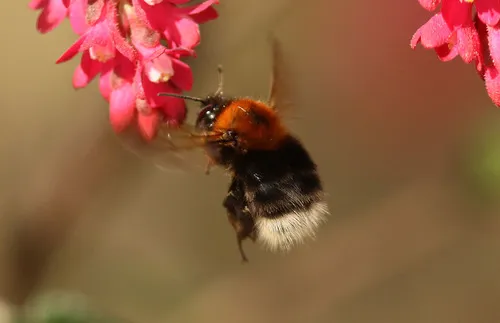
Tree Bumblebee
Bombus hypnorum
Queens, workers and males all tend to have black heads, tawny or darker gingery brown thorax, and a blackish abdomen with a white tail. There is considerable variation with some very dark examples whilst others are predominantly tawny. April to July
Golden-belted Bumble Bee
Bombus kirbiellus
Identification: Female color pattern as in Bombus frigidus, with golden-tan hairs on the thorax and T1-T2, scutum with well-defined black interalar band, and tail tip extensively bright red-orange. Unlike B. frigidus hairs of the head including verte
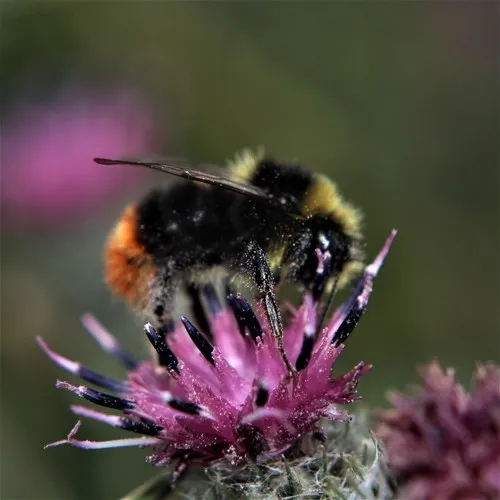
Red-tailed Bumblebee
Bombus lapidarius
Lengths queen 20-22 mm, workers 11-16 mm, male 14-16 mm. Bombus lapidarius is probably the most easily recognised bumblebee species, with its black body and bright orange tail. The workers have the same colouring as the queen but are much smaller. Th
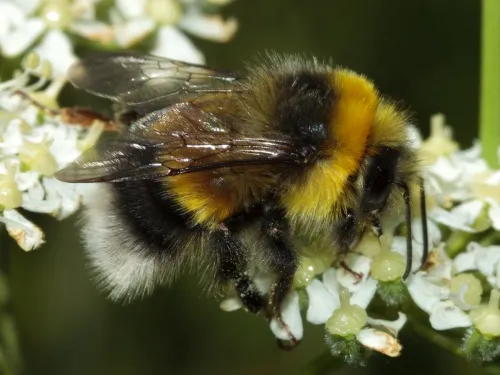
White-tailed Bumblebee
Bombus lucorum agg.
Lengths: Queen 19 to 20 mm, worker 11 to 17 mm, male 14 to16 mm. The Queens have a white tip to the abdomen. The species is slightly smaller than Bombus terrestris . In comparison, the yellow hair bands of B. terrestris appear more mustard-yellow whi
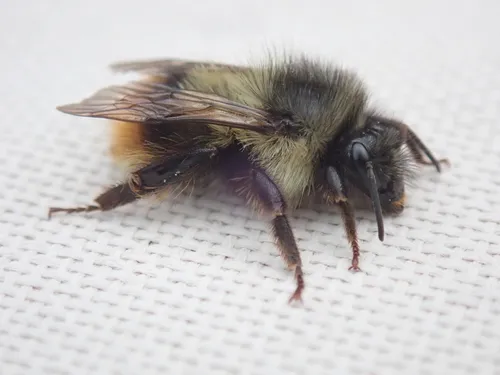
Fuzzy-horned Bumble Bee
Bombus mixtus
Identification: Red tail tip separated by black from pale hairs on T1 and T2 (at least mediobasally) in combination with some admixture of black hairs on the anterior scutum is distinctive. Males have a distinctive patch of dense hairs on basal segme
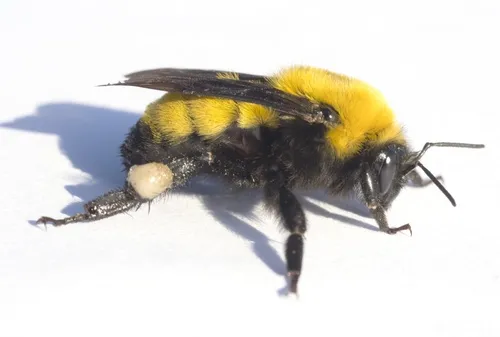
Morrison's Bumble Bee
Bombus morrisoni
Identification: Resembles B. nevadensis but in morrisoni the coat is a brighter more golden (less brown) hue, the vertex has more extensive yellow hairs, and the scutum is uniformly covered in yellow hairs without a conspicuous medial spot. The eyes
High Nearctic Bumble Bee
Bombus natvigi
High Arctic Bumble Bee is holarctic. Discover Life Map Separated from Bombus hyperboreus as evidenced by gene coalescents by Williams et al. (2015)
Bombus neoboreus
Bombus neoboreus
now interpreted as a composite of two cryptic species with overlapping distributions (Williams et al. 2015)
Nevada Bumble Bee
Bombus nevadensis
Identification: Females resemble Bombus morrisoni but usually has fewer yellow hairs on the vertex, a conspicuous spot in the middle of the scutum (formed by a bare area and also black hairs), and a darker hue to the yellow coat.
Western Bumble Bee
Bombus occidentalis
Identification: White tail tip distinctive. Usually but not always with yellow band centered on T3 but this can be lacking or yellow of the metasoma may extend to other terga. Has declined in the Pacific states including California. In the San Franci
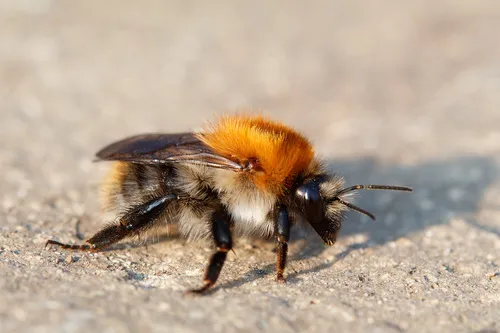
Common Carder Bumblebee
Bombus pascuorum
The Common Carder Bumblebee is one of two common bumblebees to have a ginger thorax. The other, the Tree Bumblebee has a white 'tail'. There are other less-common carder bees. Although the abdomen also has ginger bands but the hairless black bands te
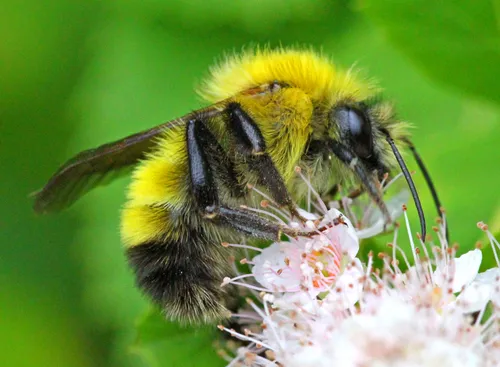
Perplexing Bumble Bee
Bombus perplexus
Identification: see detailed description of queen, male, worker at discoverlife.org Tongue length: medium The hue of the coat averages more golden than in other species. Darker females are recognized by contrast between golden-yellow hairs on the tho
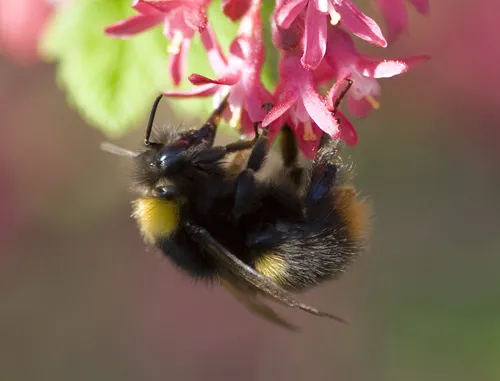
Early Bumblebee
Bombus pratorum
Queen 15-17 mm, workers 10-14 mm, male 11-13 mm. The workers and the males are a little smaller than those of the Common Carder Bee. The front of the thorax is covered with yellow hairs, and it may be covered with yellow hairs entirely, especially in
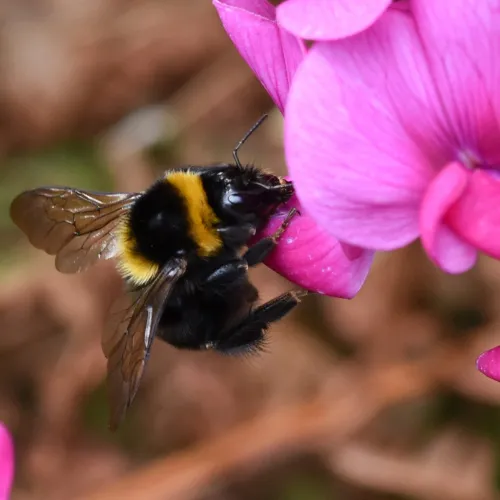
Large Garden Bumblebee
Bombus ruderatus
A large bumblebee with a very long tongue, which is often held outstretched as the bee approaches a flower. Separating B. ruderatus and its close relative B. hortorum is very difficult, and there is considerable variability in the extent and brightne
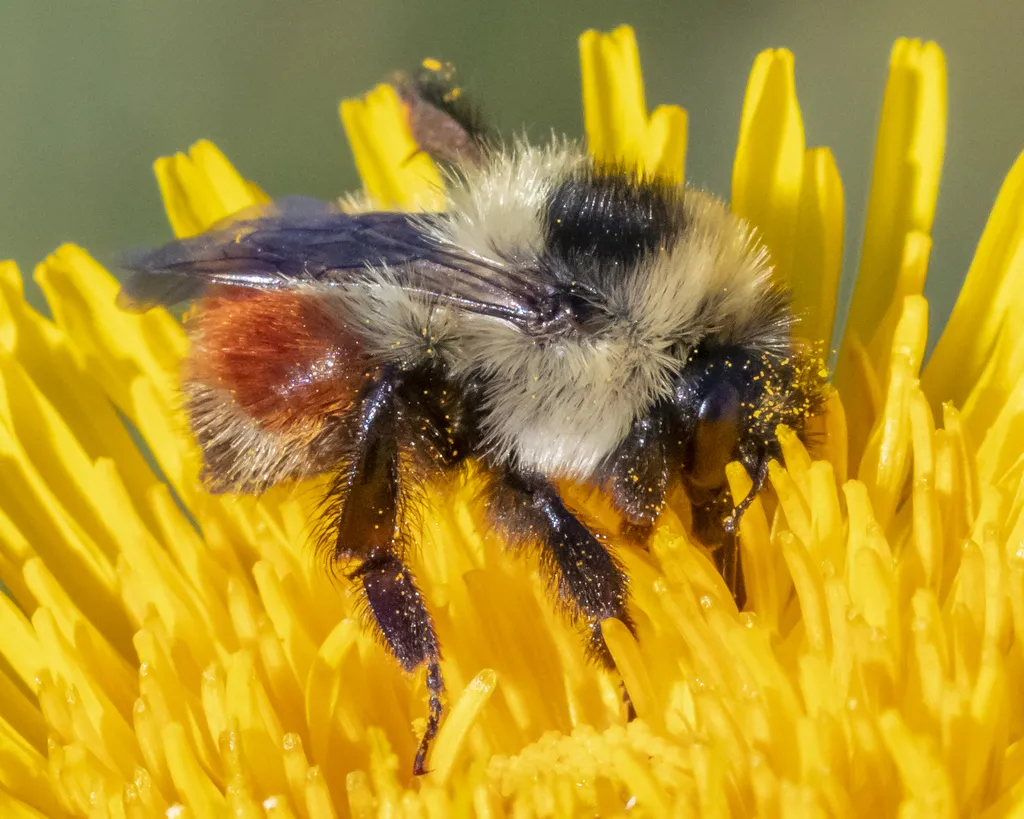
Red-belted Bumble Bee
Bombus rufocinctus
Identification: Those with red on the metasoma are often confused with various Pyrobombus whereas those without can be confused with Bombus bimaculatus and various other species, but in rufocinctus the malar space is exceptionally short. In females w
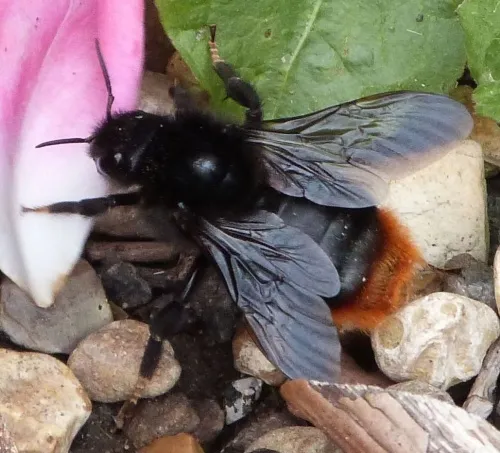
Hill Cuckoo Bee
Bombus rupestris
Body lengths, female 22 mm, male 16 mm. The queens are large with a black body with a 'tail' of red hairs at the tip of the abdomen. The wings are suffused dark brown. Males are smaller with clear wings and many have some dull yellow hairs on the fro
Sitka Bumble Bee
Bombus sitkensis
Identification: Very similar to the sympatric dimidiatus form of B. flavifrons but with a darker scutellum and a conspicuous buff tip to the abdominal apex. More common in the northern part of its range, such as Washington State, than in the southern
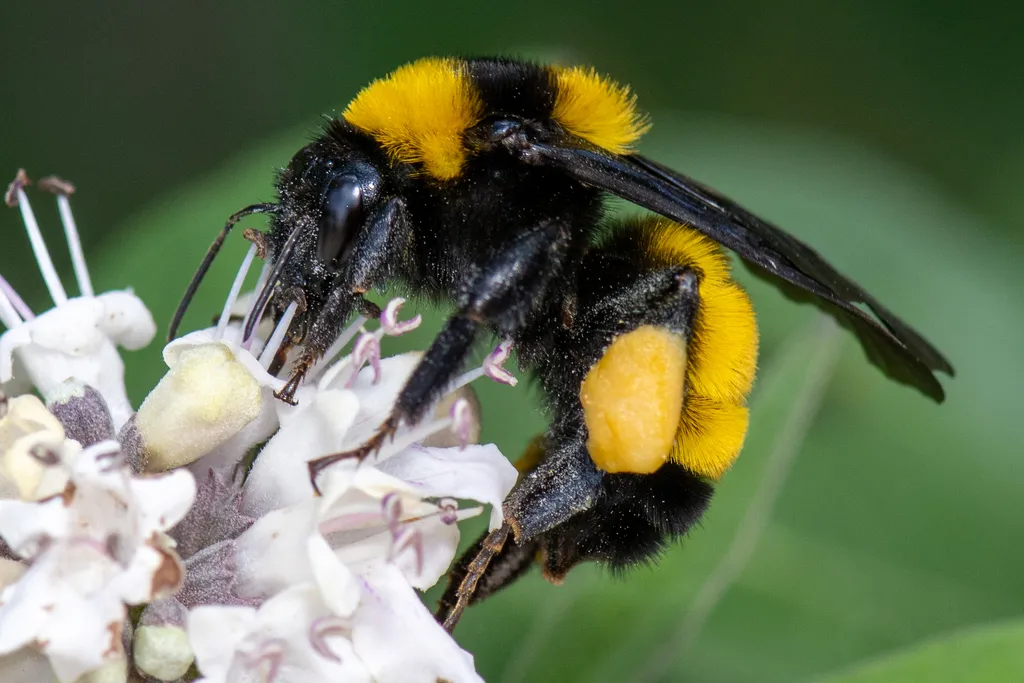
Sonoran Bumble Bee
Bombus sonorus
Identification: Similar to the very closely related B. pensylvanicus , but in B. sonorus the dorsum of the thorax is yellow posteriorly and there is a distinct black interalar band, whereas in typical B. pensylvanicus , the dorsum of the thorax is la
Suckley's Cuckoo Bumble Bee
Bombus suckleyi
Identification: Hairs of female face black unlike insularis. Lateral projections of female sterna more pronounced than in other species. A photo identified as a female suckleyi in the Williams et al. identification guide appears to be fernaldae inste
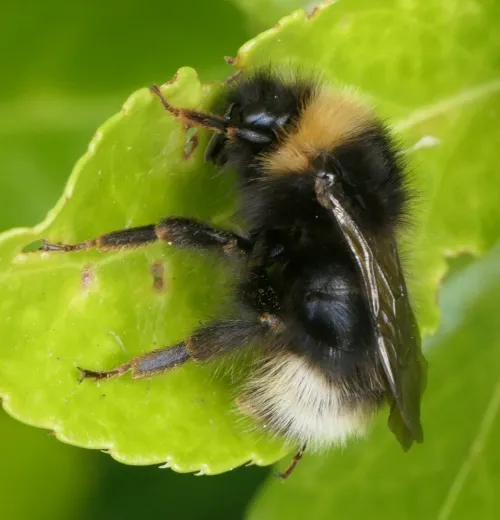
Four Coloured Cuckoo Bee
Bombus sylvestris
To be seen around the nests of Bombus pratorum. Cuckoo Bumblebee of Bombus pratorum. Males tend to patrol mating circuits within 1 m of the ground. Widespread and fairly frequent in Britain.
Forest Bumble Bee
Bombus sylvicola
Identification: Hair coat long and shaggy with the yellow tending towards a grayish hue and the red typically dark (not orangey). Females have a black face with only a small pale spot of hairs on the lower face whereas in bifarius and huntii the face
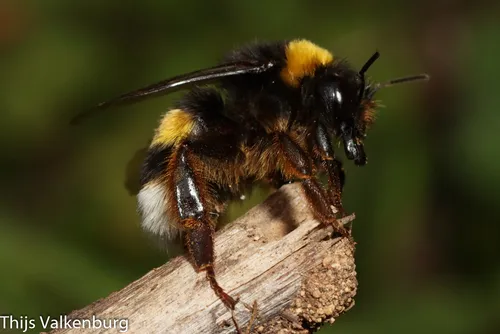
Buff-tailed Bumblebee
Bombus terrestris
Possibly the earliest bee to be seen and the largest to visit gardens. The queen is 2 cm or more, the workers and drones are of a more common bumblebee size: 14 to 17 mm in length. Whilst similar to Bombus lucorum , queens can be distinguished by the
Yellow-banded Bumble Bee
Bombus terricola
Identification: see discoverlife.org for detailed descriptions of queen and male; worker resembles queen in general, but pubescence relatively longer **Listed as Vulnerable by the IUCN Red List of Threatened Species ** Declines of this species were f
Half-black Bumble Bee
Bombus vagans
Identification: The anterior portion of bee (top of the head, thorax, and first two segments of the abdomen) is yellow, and the posterior half is black. Long malar space as in bimaculatus but clearly longer than in sandersoni or perplexus. Black hair
Van Dyke's Bumble Bee
Bombus vandykei
Identification: Females resemble the sympatric and generally more numerous vosnesenskii, but in vandykei the yellow band is on T3 rather than T4. This character is often hard to observe in the field so this species is under-recorded in visual and pho
Variable Cuckoo Bumble Bee
Bombus variabilis
Identification: Similar to Bombus insularis but with more extensive black hairs. Males of the southwestern population, e.g, those from southern Arizona, can be difficult to separate. Although Bombus pensylvanicus persists in relatively good numbers i
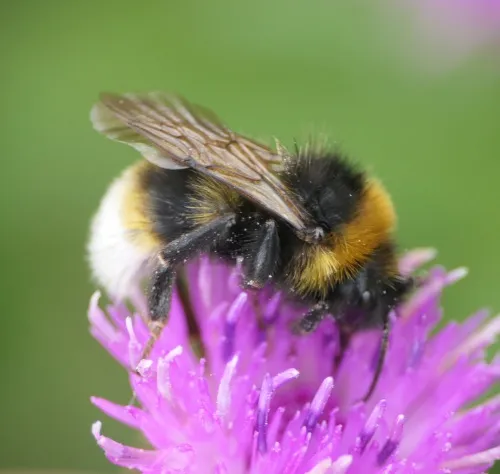
Vestal Cuckoo Bee
Bombus vestalis
Female length: 20-24 mm Male length: 15-19 mm [12 antennal segments = female /13 = male]. Cuckoo Bumblebees are identified by the lack of pollen baskets on the legs and they usually have tinted wings. Cuckoo bumbles tend to have less dense hair [shin
Brachymelecta californica
Brachymelecta californica
Identification: Scopa lacking (as in all Melectini); terga with medially broken bands of appressed white (rarely pale brown) pubescence. See also Internet Reference (DiscoverLife) Parasite of Anthophora
Centris atripes
Centris atripes
Often the most numerous Centris encountered in SE Arizona during late summer
Centris pallida
Centris pallida
"puts on spectacular displays of mating behavior in the spring around nests in desert washes in Arizona" ( Fact sheet )
Centris rhodopus
Centris rhodopus
Identification: It has red legs. More information here
Ceratina dallatorreana
Ceratina dallatorreana
Introduced, originally from Europe and Middle East. First found in Sacramento Valley of California in 1949. It has spread southward.
Ceratina dupla
Ceratina dupla
Hard to tell apart from C. calcarata from photos and even more similar to the recently described Ceratina mikmaqi Rehan and Sheffield, 2011
Ceratina strenua
Ceratina strenua
Identification: It has a yellow or white stripe (not spot) on front tibia. Types: Holotype as Ceratina strenua male by Smith, 1879. Type Locality: Texas. In the British Museum of Natural History, London, England. Holotype as Ceratina metallica male b
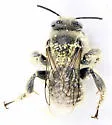
Globe Mallow Bee
Diadasia diminuta
They nest in colonies, in the ground. The entrances to the nests have turrets (little chimneys).
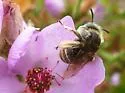
Diadasia laticauda
Diadasia laticauda
Identification: apical rim of clypeus thickened in females
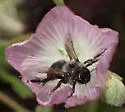
Diadasia nigrifrons
Diadasia nigrifrons
Identification: A dark-haired Diadasia in which Females possess front femurs with acute thorn-shaped process basiventrally; and males possess hind tibiae with inner apical thorn-shaped process.
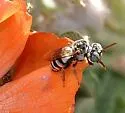
Epeolus americanus
Epeolus americanus
Identification: Fore wing commonly has two submarginal cells
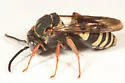
Epeolus autumnalis
Epeolus autumnalis
Identification: Head: Black. Lower face has pale yellowish hairs, denser on inner eye margin. Male lower face has more dense whiter hairs. Antenna: Black – females 10 segments, males 11. Thorax: Black, all segments more or less outlined in pale yello
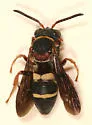
Epeolus bifasciatus
Epeolus bifasciatus
Identification: Male and female similar. Abdomen has only 2 yellowish stripes. Thorax segment 2 (scutellum) entirely red. Head: White hairs faintly circle antenna bases in female. Cheeks very narrow. Antenna: Scape and segment 1 reddish, rest of segm
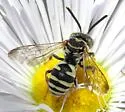
Epeolus canadensis
Epeolus canadensis
Identification: Black bee with white to yellowish bands, lines and patches. Head: Dense whitish hairs around bases of antennae, more so on male. Cheeks half as wide as eye width. Mandibles reddish-yellow. Antenna: Black. Thorax: Collar stripe interru
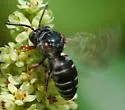
Epeolus lectoides
Epeolus lectoides
Identification: Male and female similar. Head: Black, covered with very short, silvery hair. Lower face (clypeus) dark and bare. Cheeks very narrow about 1/3 eye width. Mandibles red, base and tips black. Antenna: Black. Underside of base (scape) and
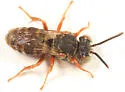
Epeolus pusillus
Epeolus pusillus
Widespread but usually less common than E. scutellaris in the northeastern USA. Types: Holotype female by Cresson, 1874. #9204193. Locality: Massachusetts. In Smithsonian, no photos. Lectotype: #2228 with right antenna off beyond joint three. In Aca
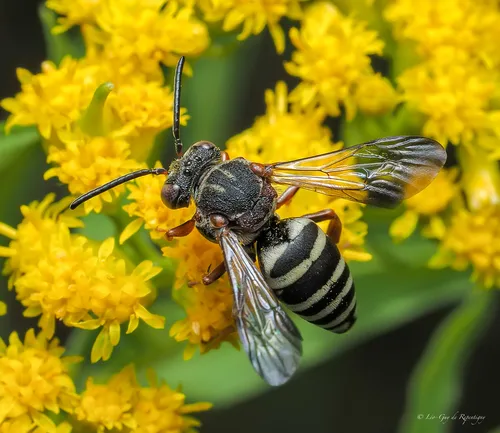
Epeolus scutellaris
Epeolus scutellaris
Identification: . . . shape of pygidial plate is diagnostic of Epeolus. Head: Black with yellowish hair around antenna bases in female; across mid-face in male. Cheeks narrow, about half as wide as eye width; males only ¼ as wide as eye width. Mandib
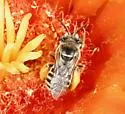
Epimelissodes duplocinctus
Epimelissodes duplocinctus
Epimelissodes duplocinctus (Epimelissodes duplocinctus) is a species in the family Apidae, commonly known as cuckoo, carpenter, digger, bumble, and honey bees, belonging to the order Hymenoptera (Ants, Bees, Wasps and Sawflies). It is classified with
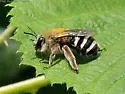
Eucera cordleyi
Eucera cordleyi
Identification: Very similar to E. (S.) edwardsii but with narrow white band on T2 especially laterally (see Timberlake, 1969)
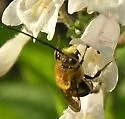
Eucera rosae
Eucera rosae
Identification: Very similar to atriventris . With fulvous pubescence
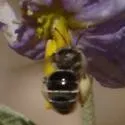
Solanum Exomalopsis
Exomalopsis solani
Nest communally in hard packed horizontal ground. There is evidence of cooperativity.
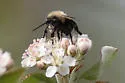
Blueberry Digger Bee
Habropoda laboriosa
A good pollinator of blueberries. It is estimated that each female visits nearly 50,000 Vaccinium ashei flowers in its lifetime, producing over 6,000 ripe blueberries with a fresh market value of $20 U.S.
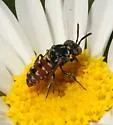
Holcopasites calliopsidis
Holcopasites calliopsidis
Identification: has spots ( illinoiensis has bands)
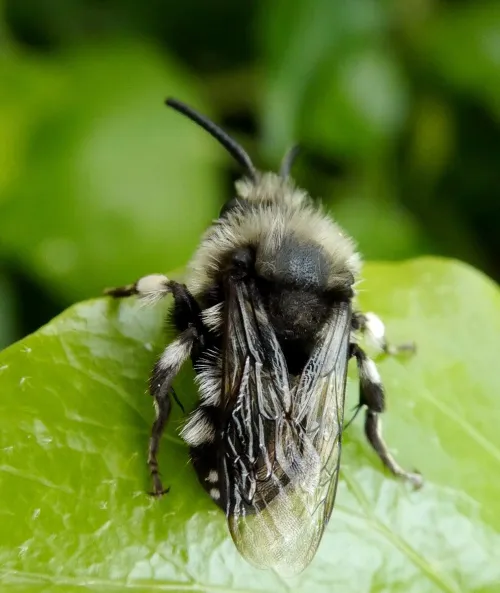
Common Mourning Bee
Melecta albifrons
Length about 13mm. This is a distinctive spring bee, with the head and body entirely black in the female except for a pair of lateral patches of white appressed hairs on most of the gastral tergites (top surface of the abdomen) and on the legs. Howev
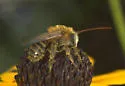
Melissodes agilis
Melissodes agilis
Identification: Male - Base of mandible with yellow spot. Labrum mostly yellow, with some black or brown. F1 short, ~1/7th F2. Distal (apical) portion of tergites clear. Antennae reaching stigma in repose.
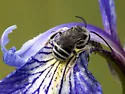
Melissodes apicatus
Melissodes apicatus
Identification: Apical hair bands and association with Pontederia
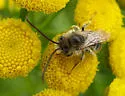
Melissodes druriellus
Melissodes druriellus
M. rustica (Say) is now known as M. druriellus (Kirby).
Melissodes rivalis
Melissodes rivalis
Identification: similar to M. desponsa but occurs further west
Melissodes trinodis
Melissodes trinodis
Identification: Wing veins darker than in the similar M. agilis. Also the pale spot at the base of the mandible (males only) is usually smaller (or absent), the thoracic hairs darker orange (not paler yellowish), dark hairs more obvious on the top of
Nomada articulata
Nomada articulata
Identification: Abdomen in females all red, no yellow spots
Nomada bella
Nomada bella
Identification: All black scutellum and broad yellow tergal bands (John Ascher) "This species is a cleptoparasite of Andrena (including A. imitatrix I suspect) commonly seen in the New England forest understory in early spring." -- John Ascher
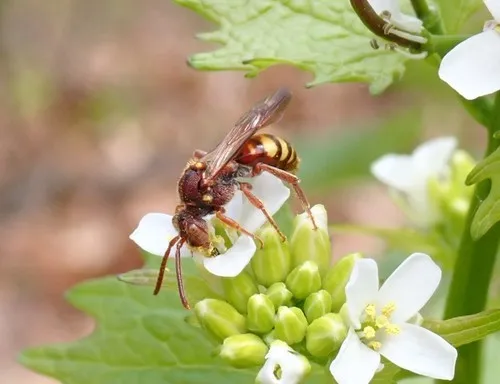
Nomada bethunei
Nomada bethunei
Types: Holotype male by Cockerell, 1903; #2174 and #13159. Locality: Canada (from Baker collection). In U.S. National Museum, Smithsonian - photos. Holotype female as Nomada (Xanthidium) pseudops by Cockerell, 1905 #0000107. Locality: Wisconsin by Gr
Nomada cuneata sensu Mitchell
Nomada cuneata
Gibbs et al. (2017) reported that the lectotype does not match this species as recognized by Mitchell (1962) and most subsequent authors.
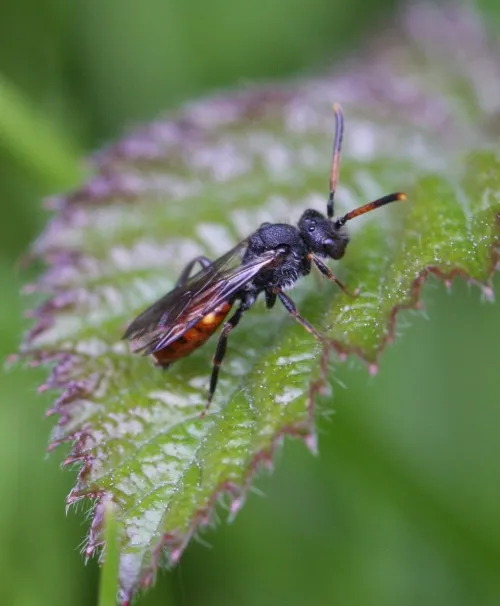
Fabricius' Nomad Bee
Nomada fabriciana
Females can be identified by their reddish antennae with several of the intermediate segments being black. This banded appearance is visible in the field. Both sexes have a reddish abdomen, often having small yellow spots. It also has bidentate mandi
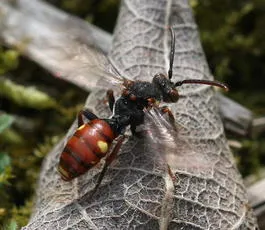
Nomada ferruginata
Nomada ferruginata
This Nomad bee has a red abdomen with yellow flashes at the sides. It has dull yellow legs with dark femora. It lacks stripes on the thorax and has a pair of bright yellow tubercles on the pronotum near to the wing bases. These tubercles and the enti
Nomada fervida
Nomada fervida
Identification: females have a high number and density of spine-like hairs lining the outer apical margin of the hind tibia (Discover Life). Visit Bidens , Ceanothus , Melilotus and Polygonum .
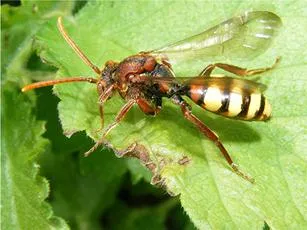
Nomada flava
Nomada flava
Nomada species are cuckoo bees, laying their eggs in the nests of other species - usually Andrena bees. Wing length: 7.5-10mm. N. flava has a yellow abdomen crossed by broad black stripes and with red patches at the front end. Females have red stripe
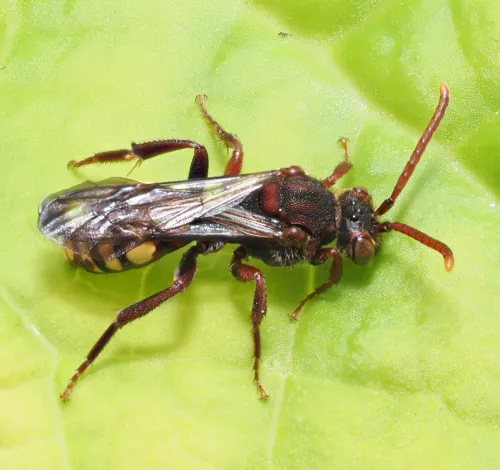
Small Nomad Bee
Nomada flavoguttata
This is one of the smallest species of Nomada. A small reddish nomad usually with small yellow spots on the sides of tergite 2 and 3. Females have extensive red markings on the head (usually surrounding the eyes), and the sides of the thorax, plus a
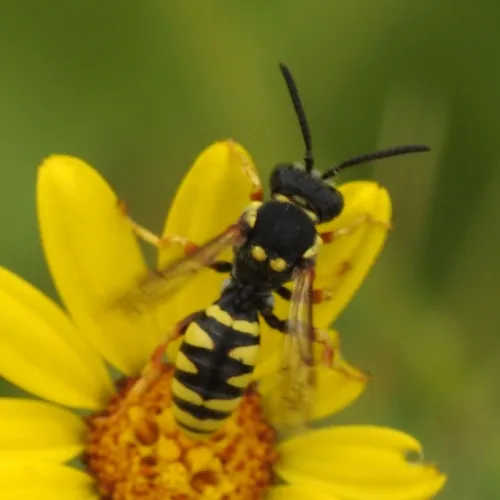
Blunthorn Nomad Bee
Nomada flavopicta
Length 8-11mm. This a medium sized black and yellow Nomad Bee. The abdomen has yellow markings almost merging on T1, then widely separated on T2 and T3. There are two yellow marks on the scutellum, and the tegulae, pronotal turbercles and collar are
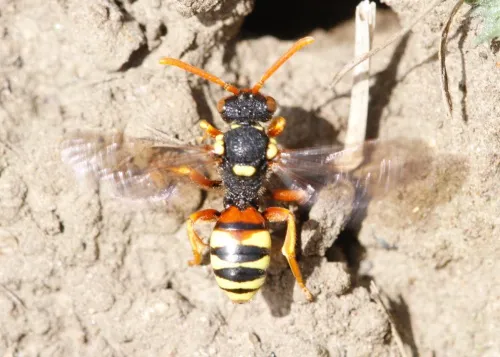
Painted Nomad Bee
Nomada fucata
A medium-sized Nomada with an overall pattern of yellow and dark brown stripes on the abdomen. The first tergite is a clear reddish brown. Most solitary bees and wasps are difficult to identify, and can rarely be identified from photos taken in the f
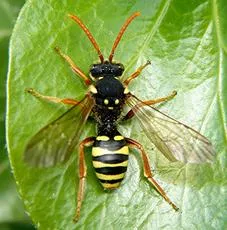
Gooden's Nomad Bee
Nomada goodeniana
Nomada goodeniana is a small species in the genus, and uses the nests of several large Andrena species. It has a bright yellow and black striped abdomen with no red patches. It has orange-red legs with darker femora. The antennae are orange, though i
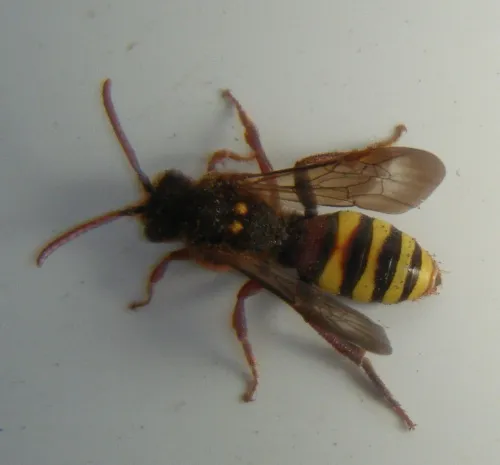
Nomada lathburiana
Nomada lathburiana
Length 7-9mm. Mainly with black and yellow bands except for tergite one which is extensively red. The male has a yellow face whereas the female has a red lower face. The male antennal segments have tiny protuberances on the hind face. Most solitary b
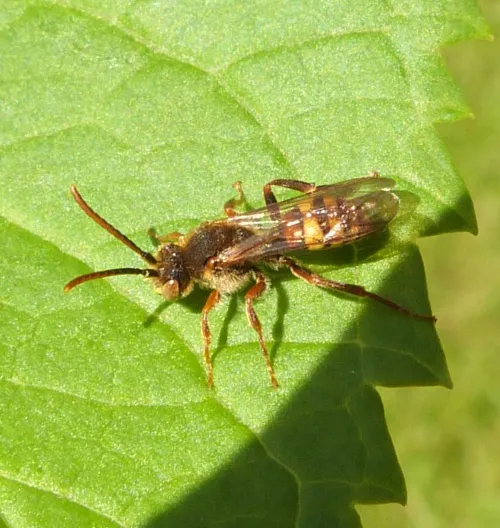
Nomada leucophthalma
Nomada leucophthalma
This is a large cuckoo bee (12 mm) with dark red, orange-tipped antennae (instead of just orange in the case of Nomada flava ) and dark legs. It has a yellow and black striped abdomen with a red band at the front. It also has a thick pile of orange h
Spotted Nomad Bee
Nomada maculata
Identification: Male with mostly black thorax and head. Extensive yellow spots on distal terga. Kleptoparasite of Andrena (Melandrena) vicina and also likely related species
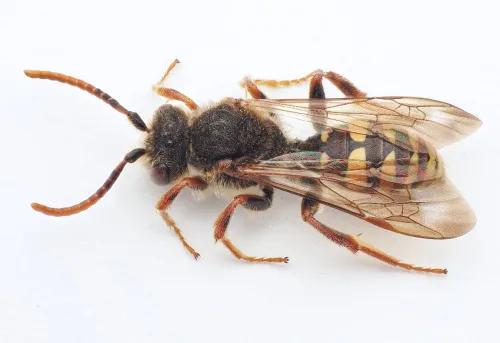
Marsham's Nomad Bee
Nomada marshamella
Length 7-10mm. A small cuckoo bee with just yellow and black stripes and no red markings, the spots on tergite 2 clearly separated. The female has two yellow tubercles on the thorax which are absent in males. Male lower face yellow. Female antennae a
Nomada placida
Nomada placida
Identification: Rectangular patch of yellow on scutellum (consolidated, i.e. not two spots as in other Nomada with yellow on the scutellum)
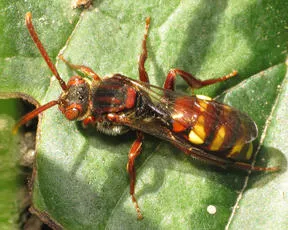
Common Bee Wasp
Nomada ruficornis
Wing length: 6.5-8mm. As with many bees, males and females are quite different, but both have a mixture of yellow, black and red on the abdomen. It is best identified by its bifid mandibles - a feature only shared with N. fabriciana which is darker a
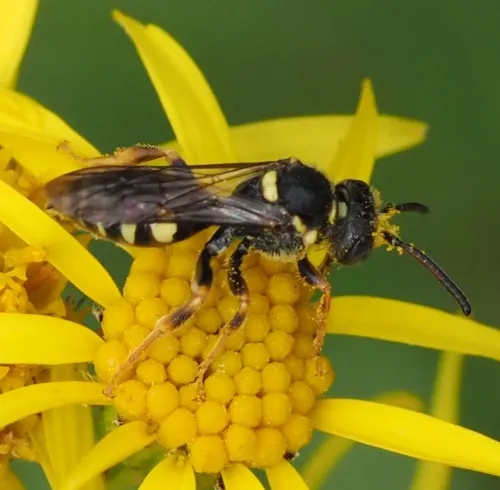
Black-horned Nomad Bee
Nomada rufipes
This is a medium-sized bee which is yellow and black, although some females may be red, yellow and black. For further details see the ‘Further info:’ links below. Most solitary bees and wasps are difficult to identify, and can rarely be identified fr
Nomada vicina
Nomada vicina
"Most common fall Nomada in New England." -- John Ascher Kleptoparasite, probably of Andrena hirticincta .