
European Paper Wasp
Polistes dominula
This record describes Polistes dominula (species). Recorded family: Vespidae. Recorded order: Hymenoptera.
Identification and Appearance
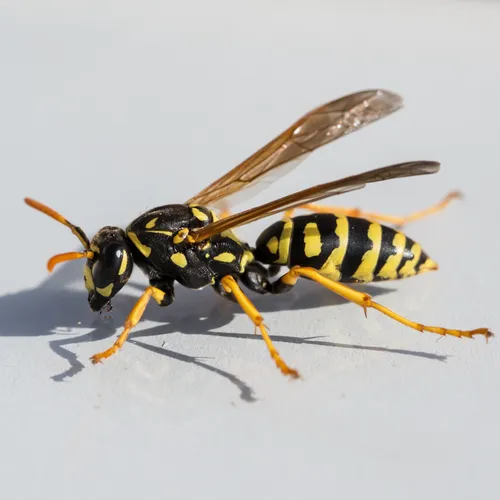
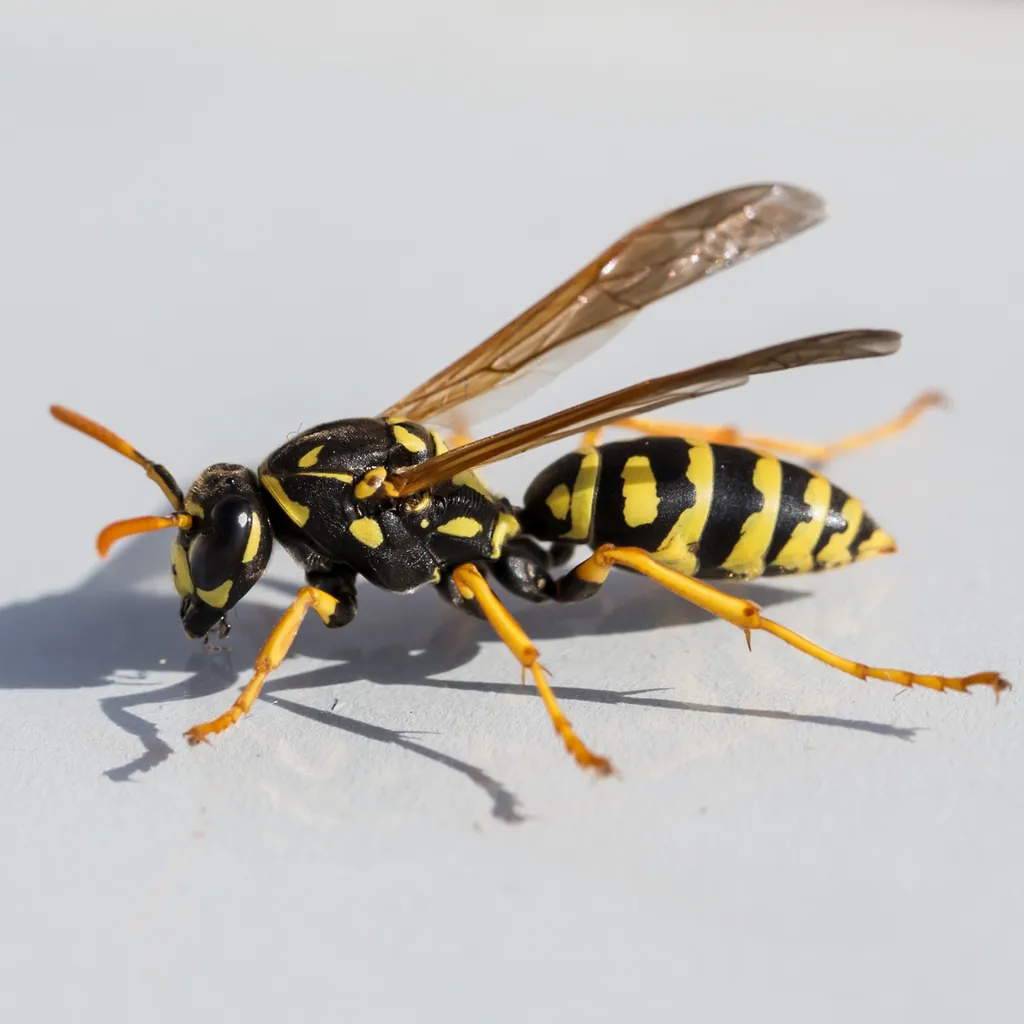
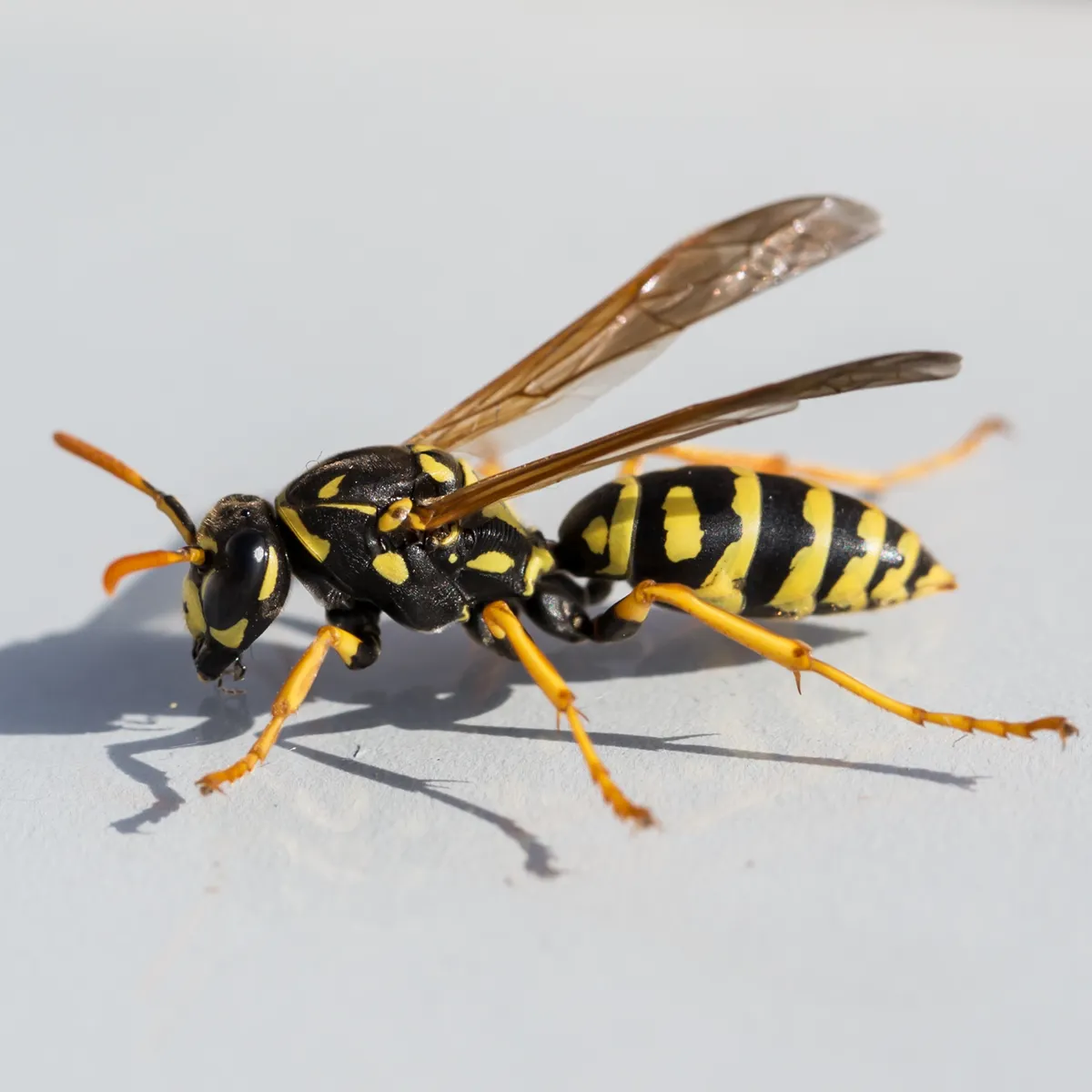
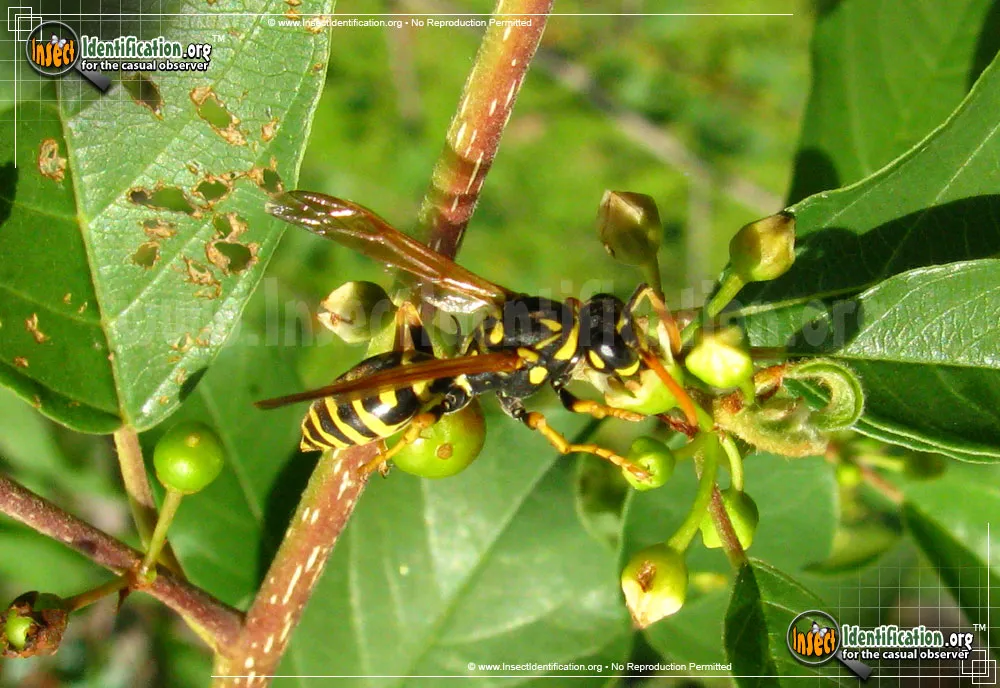
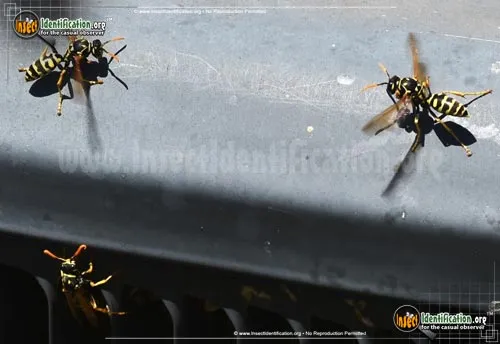
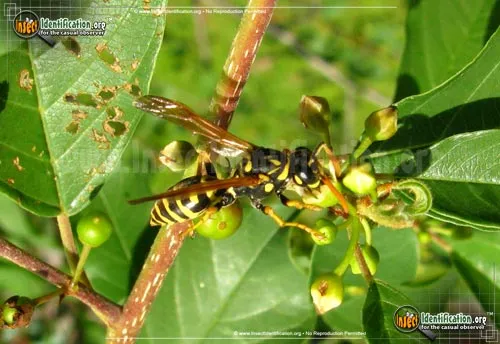
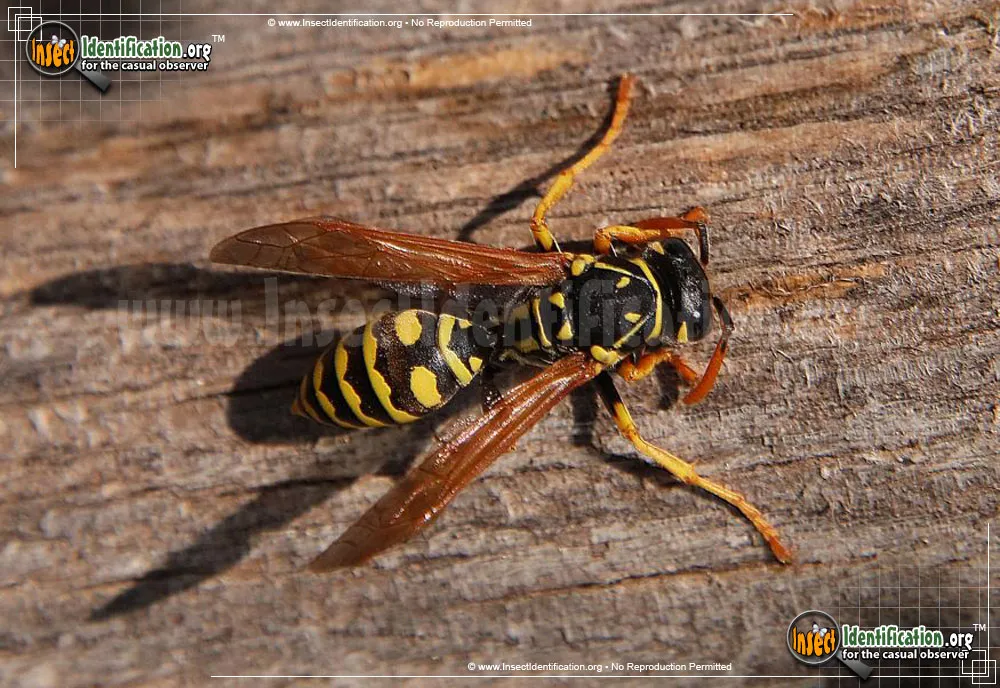
The appearance falls between that of a true social (yellowjacket) wasp and a mason wasp, with males having the hooked antennal tips of mason wasps. However, the behaviour is social with differentiated workers serving a single queen, though queens, workers and males all look remarkably similar in the field. Structures such as outhouses and bridges where it often builds it's nest Most likely to be encountered when nest building (see Life History below). Nests are constructed of wood pulp with the hexagonal cells arranged in a round cluster rather than in flat combs, and there is no outer casing to the nest. Nests are often suspended from the ceilings of outhouses and bridges. Workers will defend their nests vigorously. If the queen dies, one of the workers can apparently assume that role (unlike true social wasps). Nest cells are stocked with insect prey of many sorts. Adults will also visit a wide variety of flowers. P. dominula is resident in the Channel Islands but seemingly just a transient visitor on the British mainland where nesting has been reported on a number of occasions but no permanent populations seem to exist. No additional images available for this species.
| Color terms |
|
|---|---|
| Activity terms |
|
| Other recorded terms |
|
Terms from the source record, grouped for readability. Broad terms such as size or location are not measurements or a confirmed range.
Wikipedia reference for Polistes dominula: http://en.wikipedia.org/wiki/Polistes_dominula.
Classification
- Kingdom
- Animalia
- Phylum
- Arthropoda
- Class
- Insecta
- Order
- Hymenoptera (Ants, Bees, Wasps and Sawflies)
- Superfamily
- Vespoidea
- Family
- Vespidae
- Subfamily
- Polistinae
- Genus
- Polistes (Umbrella Paper Wasps)
Imported taxonomy record. Source availability varies; see the source references and editorial policy below.
Habitat and Range
Habitat
Structures such as outhouses and bridges where it often builds it's nest
Seasonal Activity
Most likely to be encountered when nest building (see Life History below).
Diet and Behavior
Life History
Nests are constructed of wood pulp with the hexagonal cells arranged in a round cluster rather than in flat combs, and there is no outer casing to the nest. Nests are often suspended from the ceilings of outhouses and bridges. Workers will defend their nests vigorously. If the queen dies, one of the workers can apparently assume that role (unlike true social wasps). Nest cells are stocked with insect prey of many sorts. Adults will also visit a wide variety of flowers.
Additional species information
Recorded status
P. dominula is resident in the Channel Islands but seemingly just a transient visitor on the British mainland where nesting has been reported on a number of occasions but no permanent populations seem to exist.
About Flies: the wider group
Order-level background for Hymenoptera, the group containing Polistes dominula. Species-specific details appear above.
Group overview
Hymenoptera includes over 150,000 described species of ants, bees, wasps, and sawflies. Earth harbors approximately 20 quadrillion (20×10^15) ants, with a combined biomass of ~12 megatons of dry carbon - exceeding the combined biomass of all wild birds and mammals (PNAS, 2022).
Ecological role of the group
About 35% of the world's food crops depend on animal pollinators. The chocolate industry, valued at over $100 billion, depends on pollinating flies and midges. Ants are the dominant soil engineers in most terrestrial ecosystems, turning more soil than earthworms in many habitats.
Economic and practical significance of the group
Pollinators contribute $235-577 billion worth of annual global food production (FAO). In the U.S., bee pollination alone benefits crops valued at $18 billion annually, and honey bees are responsible for $5.4 billion in agricultural productivity. Between April 2023-2024, 55.1% of managed honey bee colonies were lost. The U.S. bee population dropped from 5 million to 2.5 million.
Recorded sources for this group: FAO, USDA, EPA, PNAS (2022), US Fish & Wildlife Service. Imported estimates may describe particular regions or reporting periods.
Photos of European Paper Wasp (10)
Frequently Asked Questions About European Paper Wasp
What is European Paper Wasp?
European Paper Wasp (Polistes dominula) is a species in the family Vespidae, within the order Hymenoptera.
How big is European Paper Wasp?
18mm to 22mm (0.70" to 0.86")
Where is European Paper Wasp found?
Habitat: Structures such as outhouses and bridges where it often builds it's nest
When is European Paper Wasp active?
European Paper Wasp: seasonal activity - Most likely to be encountered when nest building (see Life History below)..
What is the life cycle of a European Paper Wasp?
Nests are constructed of wood pulp with the hexagonal cells arranged in a round cluster rather than in flat combs, and there is no outer casing to the nest. Nests are often suspended from the ceilings of outhouses and bridges. Workers will defend their nests vigorously. If the queen dies, one of the workers can apparently assume that role (unlike true social wasps). Nest cells are stocked with insect prey of many sorts. Adults will also visit a wide variety of flowers.