
Flies
Order Hymenoptera
The Flies (Order Hymenoptera) includes 5,194 species across 102 families and 1,491 genera in our directory.
About Flies
Hymenoptera includes over 150,000 described species of ants, bees, wasps, and sawflies. Earth harbors approximately 20 quadrillion (20×10^15) ants, with a combined biomass of ~12 megatons of dry carbon - exceeding the combined biomass of all wild birds and mammals (PNAS, 2022).
Economic Impact
Pollinators contribute $235-577 billion worth of annual global food production (FAO). In the U.S., bee pollination alone benefits crops valued at $18 billion annually, and honey bees are responsible for $5.4 billion in agricultural productivity. Between April 2023-2024, 55.1% of managed honey bee colonies were lost. The U.S. bee population dropped from 5 million to 2.5 million.
Ecological Role
About 35% of the world's food crops depend on animal pollinators. The chocolate industry, valued at over $100 billion, depends on pollinating flies and midges. Ants are the dominant soil engineers in most terrestrial ecosystems, turning more soil than earthworms in many habitats.
Families in Hymenoptera (102)
Species in Hymenoptera (5,194)
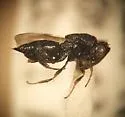
Haltichella rhyacioniae
Haltichella rhyacioniae
Identification: look at tergite 1 to separate the two common California spp.: if smooth => H. xanticles ; if punctulate => H. rhyacioniae
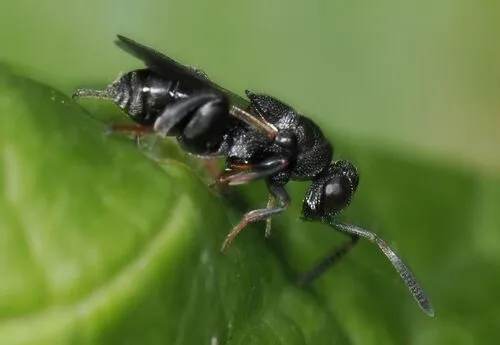
Haltichella rufipes
Haltichella rufipes
Unless identified by a recognised expert, a photo is required and the specimen should be examined with a microscope. In the comments box, state the key or ID method used and describe the size and identifying characters. No additional images available
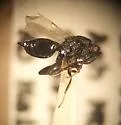
Haltichella xanticles
Haltichella xanticles
Identification: When trying to separate the two common California species you look at tergite 1. If it is smooth then you have Haltichella xanticles . If its punctulate then you have H. rhyacioniae .
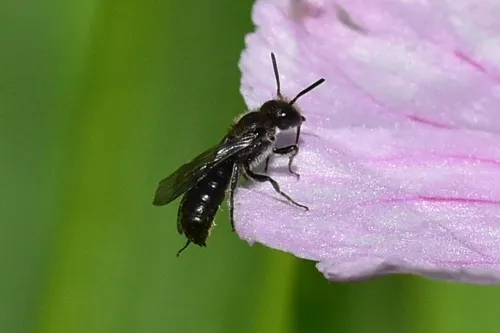
Harebell Carpenter Bee
Chelostoma campanularum
A tiny, narrow bodied, black bee. It has white pollen collecting hairs on underside of abdomen. Most solitary bees and wasps are difficult to identify, and can rarely be identified from photos taken in the field. All red-rated records should include
Hawthorn Mining Bee
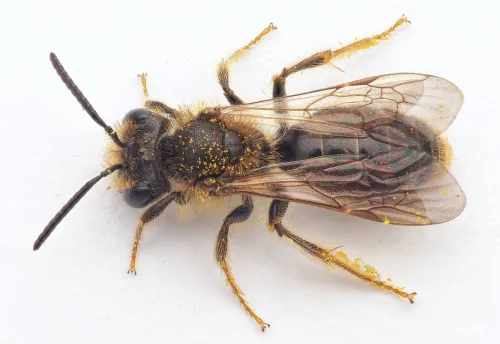
Andrena chrysosceles
Females 6-8mm, males 6-7mm. Females have dull brown thorax, orange hind tibiae and bare abdomen with white bands. Males have partly orange tibiae. There is a ginger tuft at the tip of the abdomen. Most solitary bees and wasps are difficult to identif
Hedgehog Gall Wasp
Acraspis erinacei
Forms galls on white oak ( Quercus alba ). The sexual generation forms galls on the buds, and the agamic generation forms the distinctive "hedgehog" galls (ellipsoid, up to 13 mm in diameter, covered with red hairs, with 3-5 larval cells inside) on l
Hedychrum niemelai
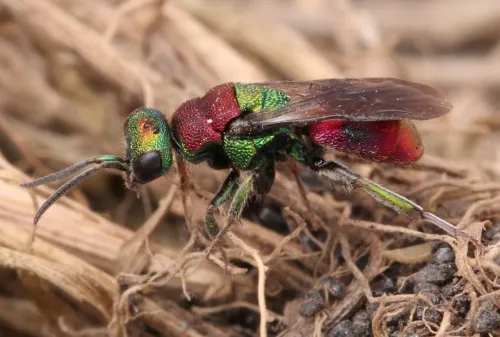
Hedychrum niemelai
A spectacular species with metallic reds and blue-greens. The female has red thorax, the male thorax is blue-green. Open sandy localities: lowland heaths, coastal dunes, cliffs with sandy deposits, and other disturbed locations, for exampleÿsandpits,
Helorus ruficornis
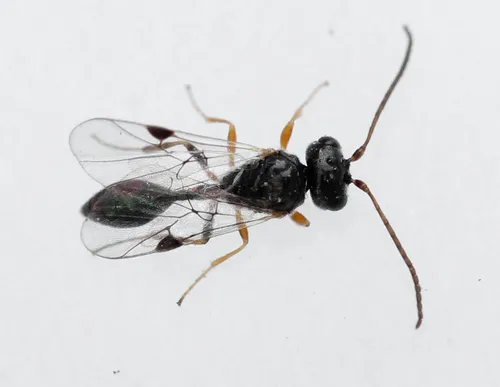
Helorus ruficornis
Identification: Pterostigma 2.1‒2.5 as long as wide. T1 not raised dorso-basally. Antennae brownish.
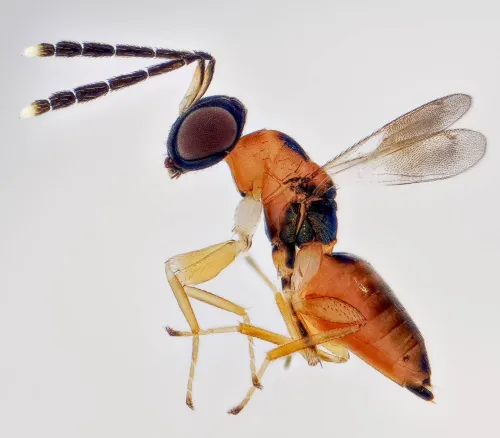
Hemiptarsenus fulvicollis
Hemiptarsenus fulvicollis
Female clava with only terminal segment whitish; scutellum about as long as broad, slightly longer in some males (female brachypterous with discal fuscous cloud), thorax of female ranging from entirely metallic to almost entirely orange-yellow. In He
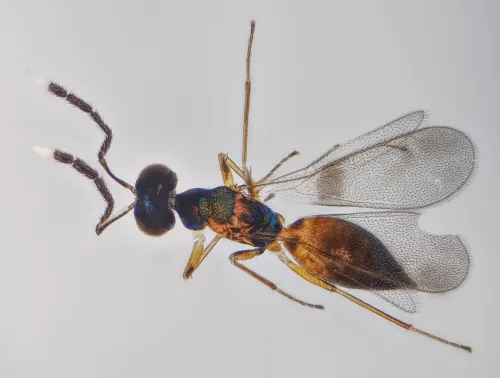
Hemiptarsenus ornatus
Hemiptarsenus ornatus
Female antennal club entirely whitish, thus showing black scape, pedicel and four further segments before the white club. Scutellum longer than broad. Females with 2-3 darkened bands. Thorax of female marked with yellow-orange at the sides and usuall
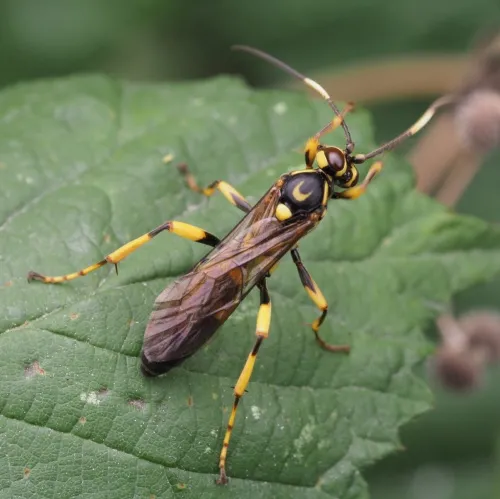
Hepiopelmus variegatorius
Hepiopelmus variegatorius
This is a fairly large (approximately 15mm long) and distinctively marked black and yellow Ichneumon with yellow u-shape on the mesonotum, thick yellow band along inner margin of eye, yellow marks only on front part of metasoma. Various habitats, oft
Hercules Carpenter Ant
Camponotus herculeanus
In New Brunswick can be superficially similar to C. novaeboracencis
Hercus fontinalis
Hercus fontinalis
Found in Europe Checklist of ichneumonid parasitoid wasps in Switzerland (Hymenoptera, Ichneumonidae): 470 species new for the country and an appraisal of the alpine diversity.
Heteropelma datanae
Heteropelma datanae
Similar in coloration to both Therion nigripes and T. tenuipes among the Anomaloninae. Both species have a less elongate first tarsomere and longer following tarsomeres. Each also has some degree of yellow facial markings. The Ophionine species Thyre
Hibiscus Sawfly
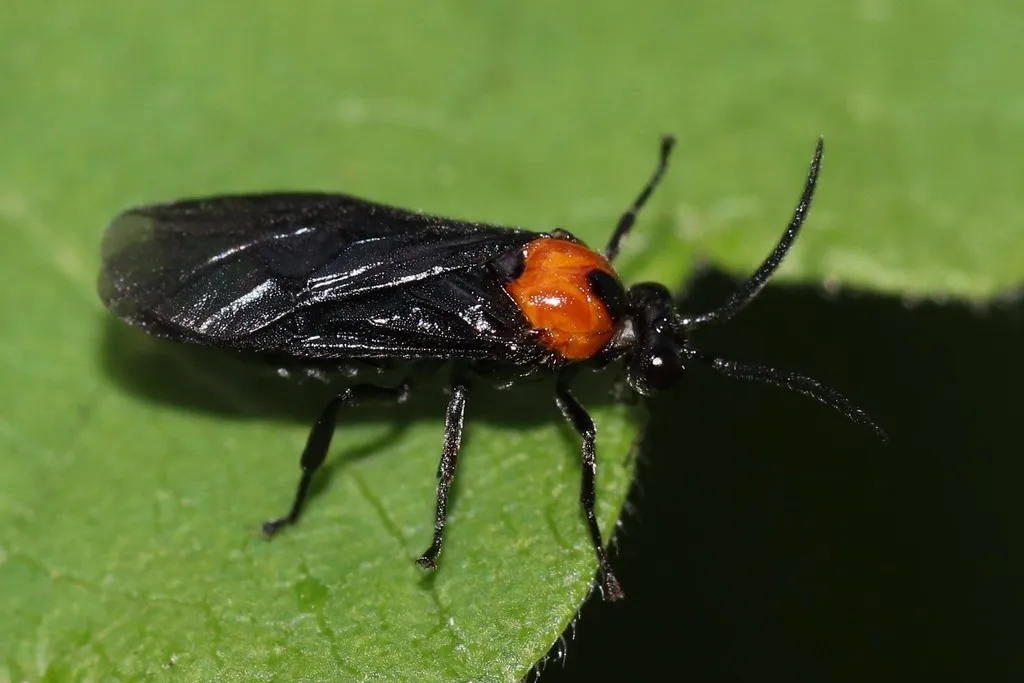
Atomacera decepta
can damage hibiscus, marshmallow, buttonbush & some other perennials
Hibiscus Turret Bee
Ptilothrix bombiformis
Identification: Arolia are absent. In the female, the scopa of the hind tibiae and the basitarsi is of finely plumose, elongate hairs. Ground nesters. Entrance to nests have a turret.
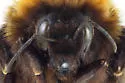
High Nearctic Bumble Bee
Bombus natvigi
High Arctic Bumble Bee is holarctic. Discover Life Map Separated from Bombus hyperboreus as evidenced by gene coalescents by Williams et al. (2015)
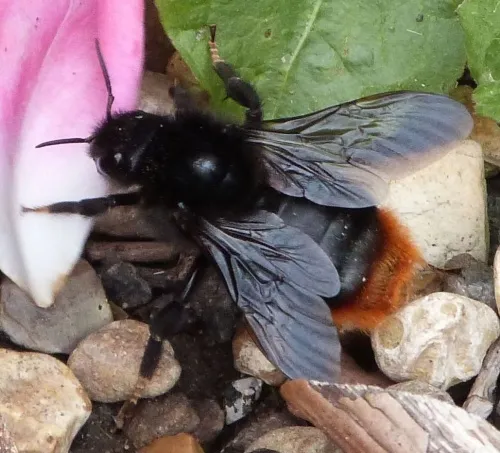
Hill Cuckoo Bee
Bombus rupestris
Body lengths, female 22 mm, male 16 mm. The queens are large with a black body with a 'tail' of red hairs at the tip of the abdomen. The wings are suffused dark brown. Males are smaller with clear wings and many have some dull yellow hairs on the fro
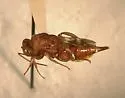
Hockeria rubra
Hockeria rubra
Identification: This is the largest of the North American Hockeria .
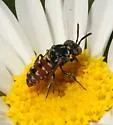
Holcopasites calliopsidis
Holcopasites calliopsidis
Identification: has spots ( illinoiensis has bands)
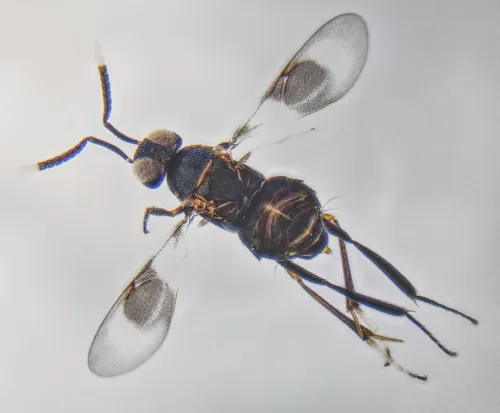
Homalotylus hemipterinus
Homalotylus hemipterinus
There are two UK species in this genus. In Homalotylus flaminius the hind tarsus is white, the clava either dark on the basal third and whitish on the distal two-thirds, or black with a paler tip Unless identified by a recognised expert, a photo is r
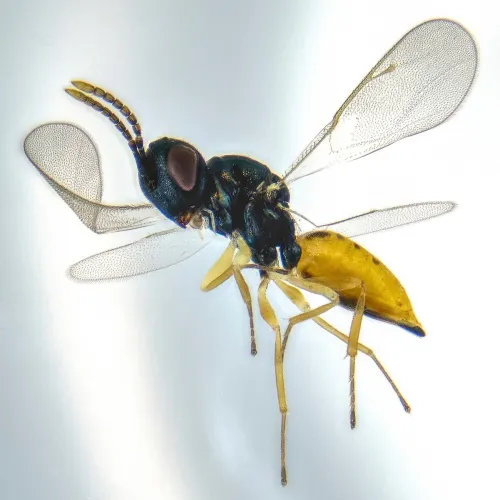
Homoporus gibbiscuta
Homoporus gibbiscuta
Head and thorax metallic, abdomen and legs yellow. Antennal clava without a terminal stylus. Postmarginal vein of forewing as long as the marginal vein. Malar space only about one third the length of an eye. Scutellum strongly convex seen in profile.
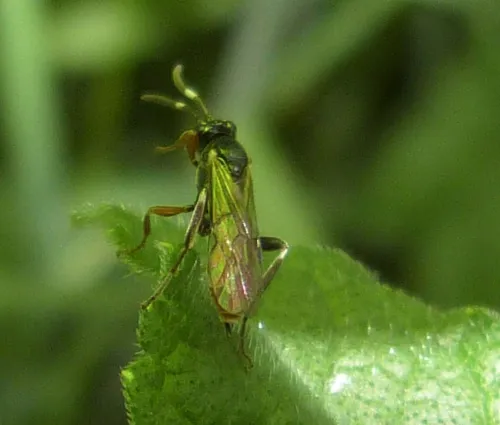
Homotherus locutor
Homotherus locutor
Unless identified by a recognised expert, a photo is required and the specimen should be examined with a microscope. In the comments box, state the key or ID method used and describe the size and identifying characters. Larva is a parasite of Geometr
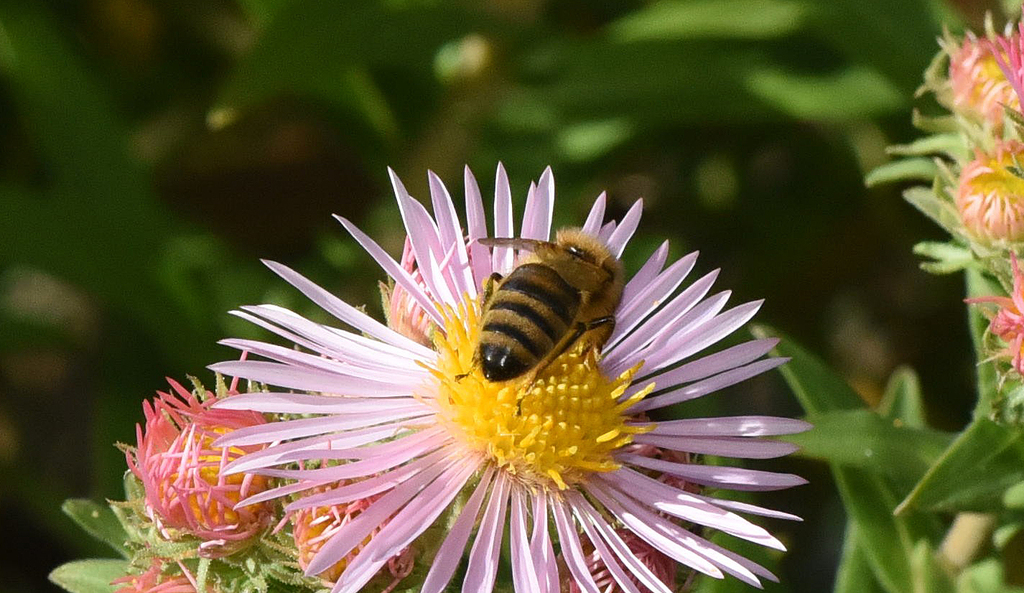
Honey Bee
Apis mellifera
(c) Marcel_Pepin, some rights reserved (CC BY)Body thick, marked with yellow and brown, the eyes are hairy. The body is covered in short hairs. Average length about 12 mm. Frequent visitors to flowers in various habitats, but frequent in gardens and parks. Native wild honeybees are no longer bel
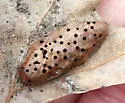
Honeycomb Leaf Gall Wasp
Callirhytis favosa
Forms galls on black ( Quercus velutina ) and pin ( Quercus palustris ) oak leaves. According to Felt : "Flattened, many-celled leaf galls projecting from both surfaces, diameter 1/4 to 1 inch, the upper and lower surfaces resembling a honeycomb." We
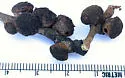
Honeydew Gall Wasp
Disholcaspis eldoradensis
Gall is known to produce honeydew which attracts various insects. In California, a large population of D. eldoradensis galls on Quercus lobata produced so much honeydew that domesticated honey bees could collect 30-40 lbs per hive from the galls. [Se
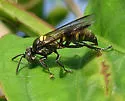
Hoplisoides semipunctatus
Hoplisoides semipunctatus
Identification: Color pattern very distinctive: only first three terga with yellow bands; both scutellum and metanotum largely yellow.
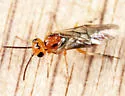
Hoplocampa marlatti
Hoplocampa marlatti
Identification: They vary from nearly all orange to nearly all black.
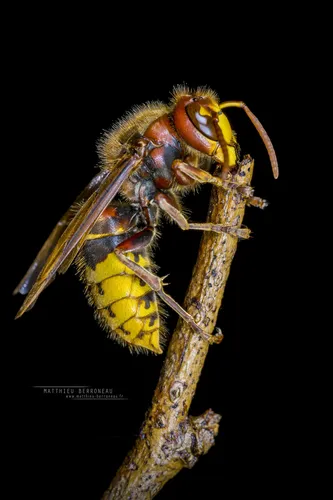
Hornet
Vespa crabro
Size 25 to 35 mm. The hornet is an impressive insect and is Britain's largest social wasp. Queens (reproductive females) are larger than the males and workers (non-reproductive females). The thorax area is brown and it has alternating bright orange-y
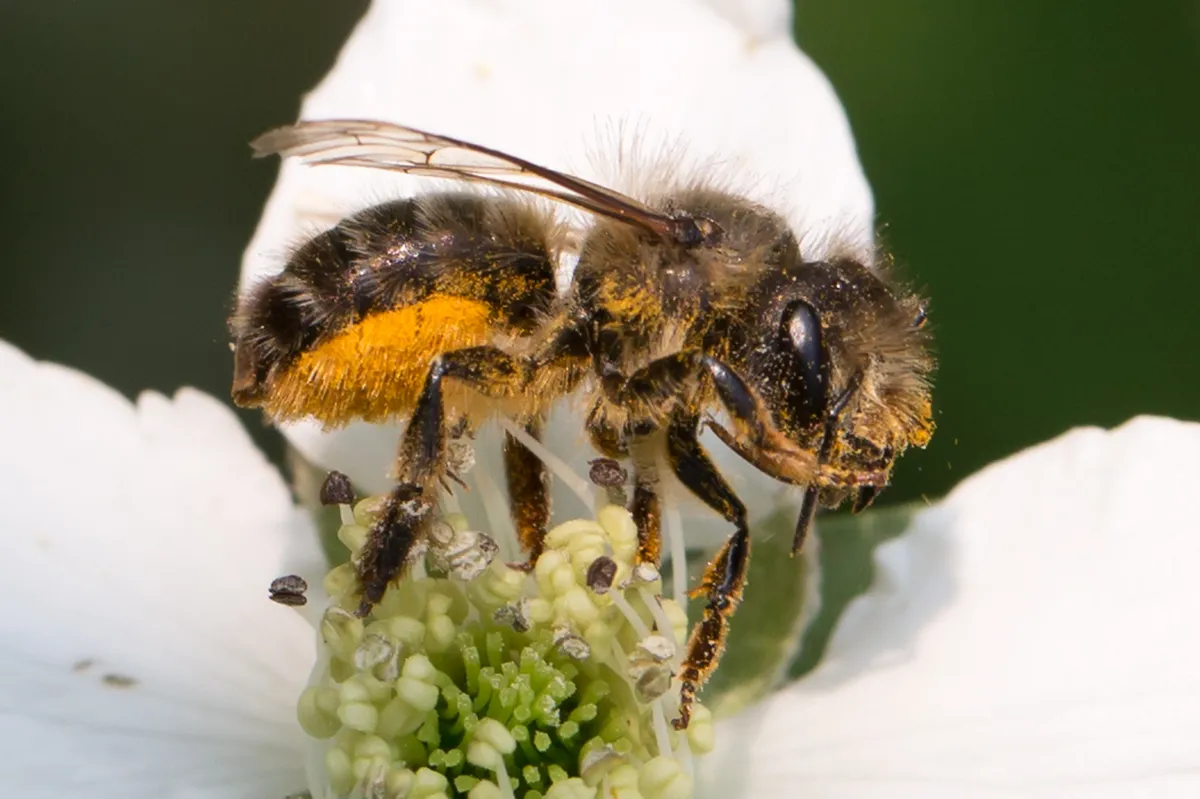
Hornfaced Bee
Osmia cornifrons
They are used in Japan to pollinate apple trees and were deliberately introduced to the United States by USDA scientists in the 1970s for the same purpose, even though the very similar native species Osmia lignaria occurs here and can be managed in a
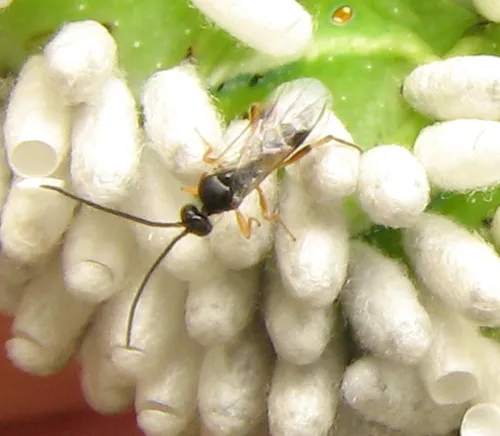
Hornworm Parasitoid Wasp
Cotesia congregata
The most significant parasitoid of the tobacco hornworm, Manduca sexta "Our field studies are beginning to show that these Cotesia species are highly host-specific, and that some similar-looking species that attack related hosts may actually be genet
Horse Guard Wasp
Stictia carolina
"a really big sand wasp (just behind the cicada killer). They get their name by hanging out around equines and pouncing on tabanids which they paralyze and stuff into their burrows for their offspring." -Eric R. Eaton "The horse-guard ( Monedula caro
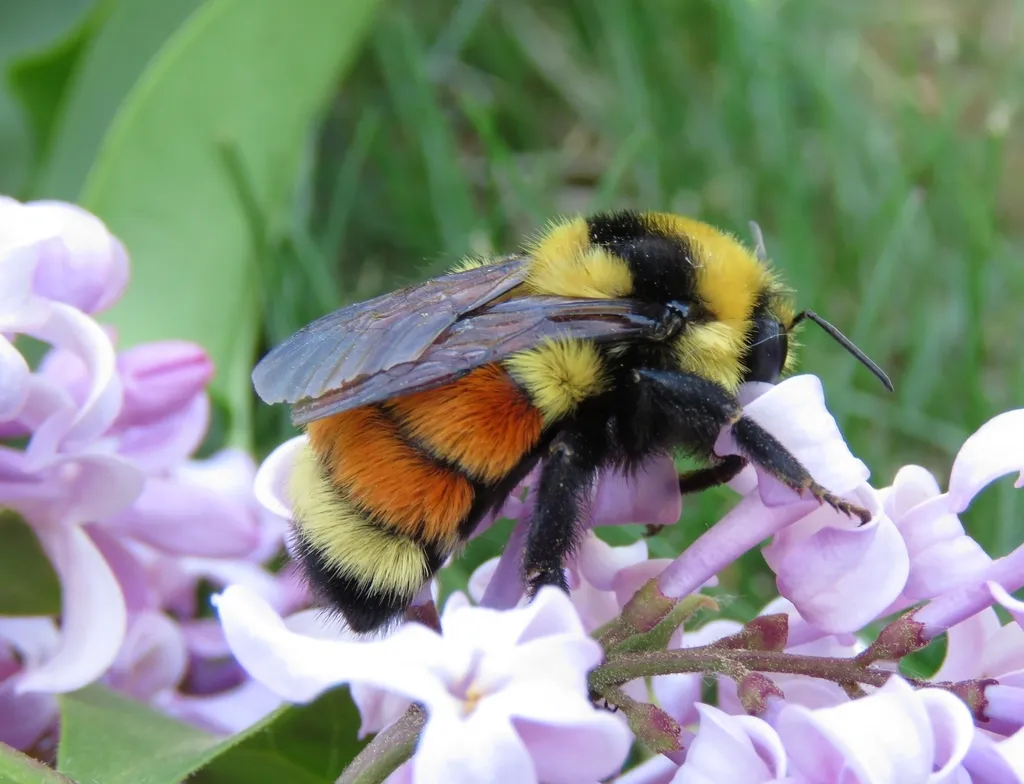
Hunt's Bumble Bee
Bombus huntii
Identification: Yellow hairs on face. Bombus centralis looks similar but B. centralis females usually have T2 yellow and T4 orange, whereas B. huntii has T2 orange and T4 yellow.
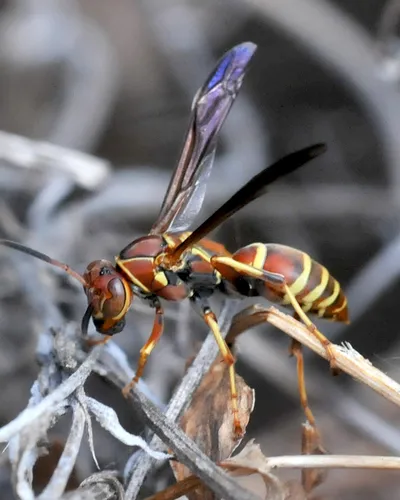
Hunter's Little Paper Wasp
Polistes dorsalis
Identification: P. dorsalis dorsalis - Propodeum usually with two stripes; abdomen yellow-striped and lacking spots. ♀ ♂ P. dorsalis californicus - Propodeum with two stripes; abdomen with yellow spots fused with the stripes, essentially forming broa
Hylaeus affinis
Hylaeus affinis
Identification: "... note yellow on scape and breadth of yellow markings above on male." (Comment by John Ascher)
Hylaeus schwarzii
Hylaeus schwarzii
Identification: See Discover Life reference for complete description and cited references
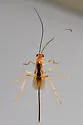
Hymenochaonia delicata
Hymenochaonia delicata
Identification: Excerpt copied verbatim: "♂♀ Slender, pale honey-yellow; spot enclosed by ocelli, and tips of mandibles blackish; eyes prominent, black; antennae longer than body, very, slender, curled at tips, base more or less dusky, incisures of j
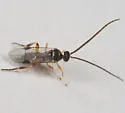
Hypomicrogaster zonaria
Hypomicrogaster zonaria
According to Jim Whitfield this is probably a complex of several cryptic species with narrower host ranges.
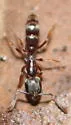
Hypoponera opaciceps
Hypoponera opaciceps
Identification: The largest of our Hypoponera , with a rather broad head with rounded sides in dorsal view; front and rear faces of petiole parallel, vertical in side view. Probably non-native in our area
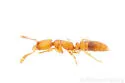
Hypoponera parva
Hypoponera parva
Identification: A very small Hypoponera species. Distinguished from our other minute yellow ponerine species Ponera exotica by the less pronounced antennal club and the absence of a subpetiolar tooth.
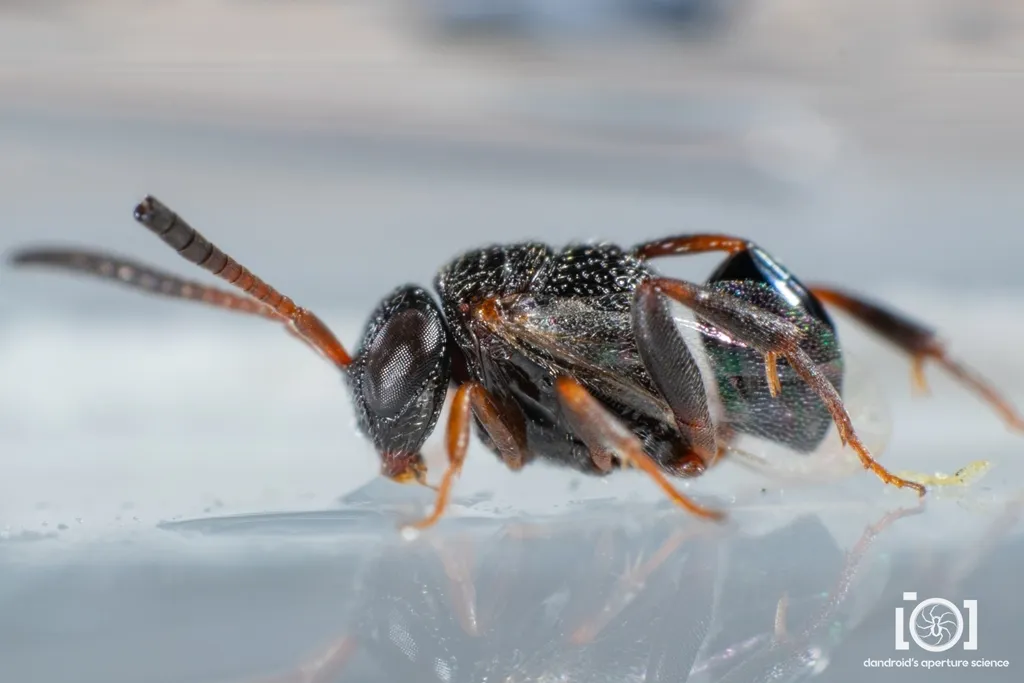
Hyptia floridana
Hyptia floridana
Identification: Very small, mesosoma about 1 mm long in lateral view. See key by Townes.
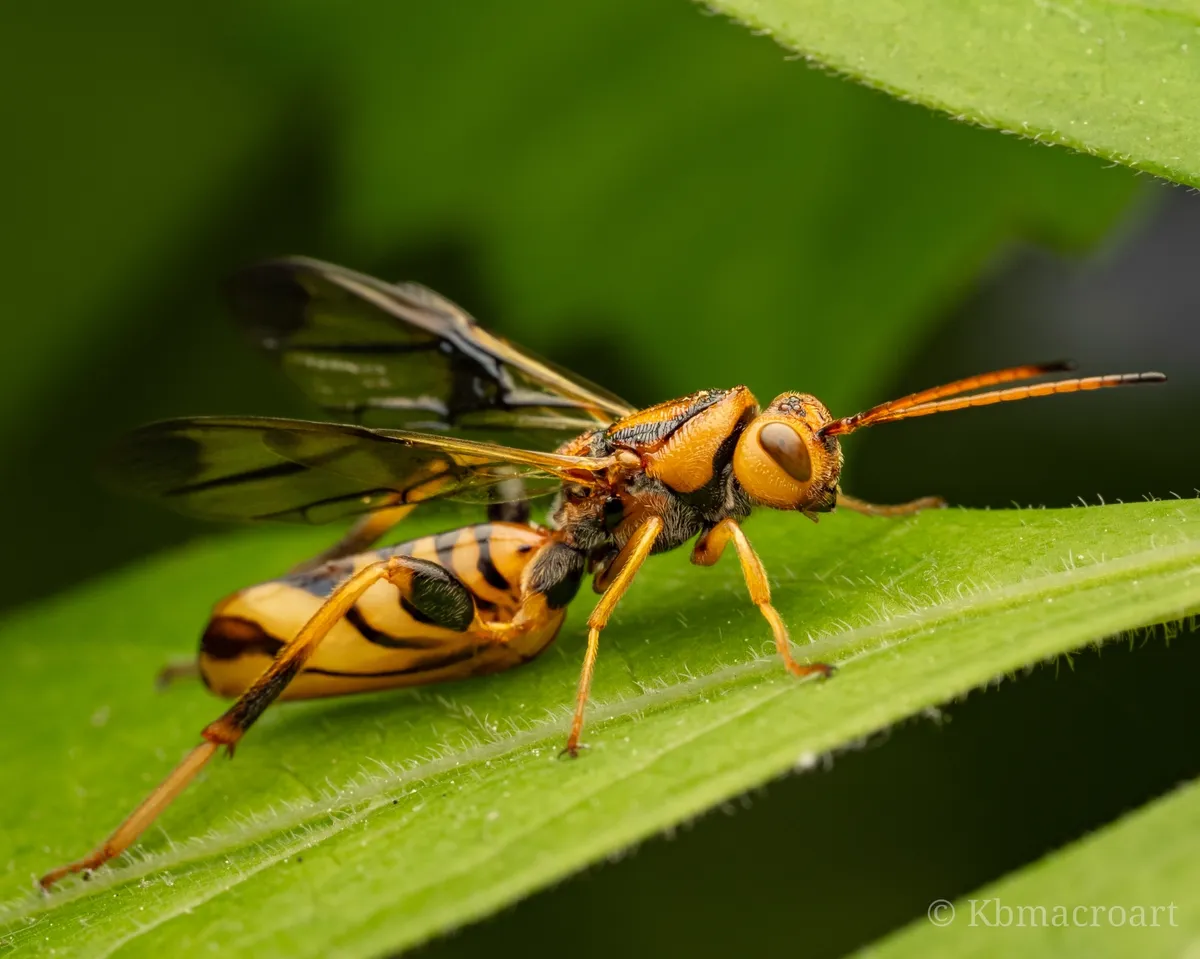
Ibalia anceps
Ibalia anceps
Identification: predominantly yellow with black markings on head, thorax, and abdomen; first hind tarsal segment longer than remaining segments combined; 2nd hind tarsal segment has long apical process extending to tip of 4th tarsal segment; abdomen
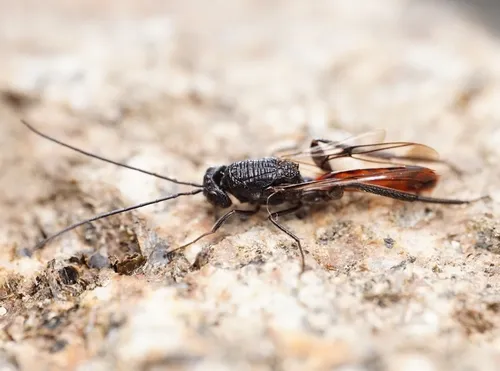
Ibalia leucospoides
Ibalia leucospoides
Identification: Black head and thorax, and an unmarked dark red abdomen.
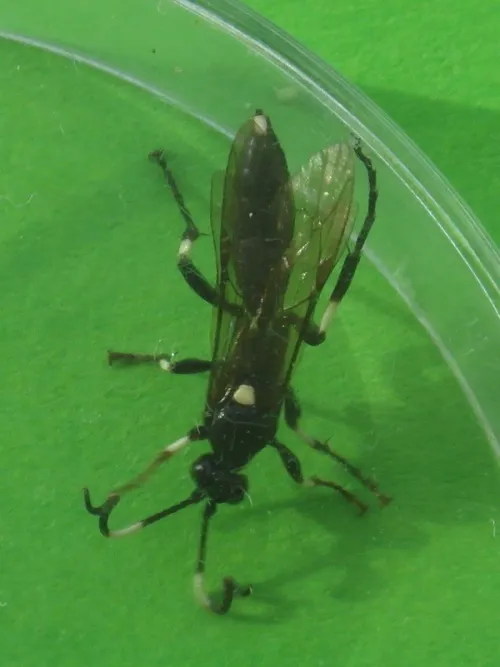
Ichneumon deliratorius
Ichneumon deliratorius
Length 14 to 20 mm. This is a mainly black species. The female has a broad pale band across the otherwise dark antennae; there is also a pale spot on the scutellum and at the tip of the abdomen. The larvae of Coelichneumon deliratorius are parasitic
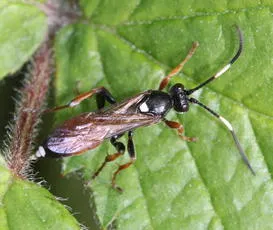
Ichneumon extensorius
Ichneumon extensorius
Length: 8-16 mm. A sexually dimorphic species. The female has a white tip to the abdomen, a white mark at the base of the thorax, and white banded antennae. The male is markedly different with yellow and black legs and abdomen, a bright yellow scutel
Ichneumon feralis
Ichneumon feralis
Identification: Scutellum white, abdomen with complete white band on T2 and white anal mark on T5-7, hind tarsi reddish-brown. Most similar-looking relatives lack the pale marks on metasomal tergites 5, 6, and 7. See comment by Bob Carlson here . Bel
Ichneumon feriens
Ichneumon feriens
Identification: Scutellum white, abdomen with complete white band on T2 and white anal mark on T6-7, tibiae with broad white stripes, hind tarsi blackish.
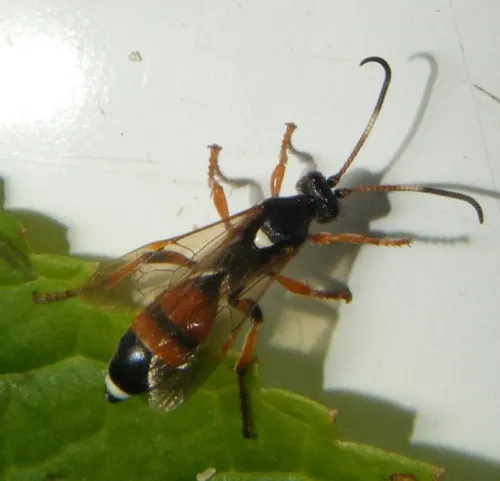
Ichneumon sarcitorius
Ichneumon sarcitorius
Length female about 10 mm and male about 14 mm. The male and female of this species are sexually dimorphic but the size, shape and precise colour patterns are distinctive to this species. The female has a wide red band followed by a narrower black ba
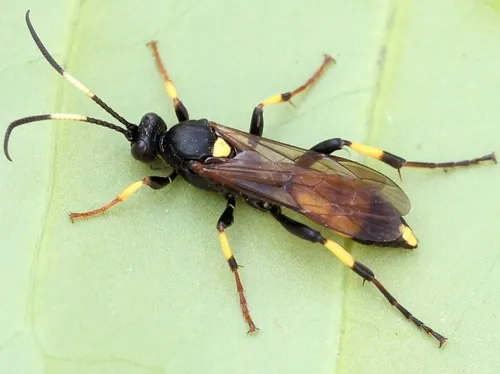
Ichneumon stramentor
Ichneumon stramentor
Length 13 to18 mm. Female - Long tapered abdomen, first half yellow and rear half black, with yellow spot at the tip (both on the top and beneath. Legs have black femora; tibiae are half yellow blending into brown that exceeds to the tarsi. Black tho
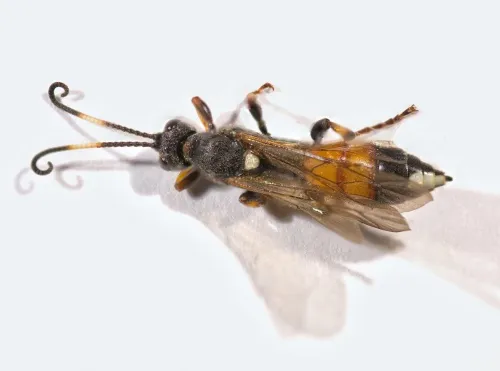
Ichneumon suspiciosus
Ichneumon suspiciosus
Approximately 16 mm long. One of many ichneumon wasps that look very similar. Males and females have different colours and patterns. Females have a band of orange-yellow on the abdomen with a black tip that has white spots on the last three segments.
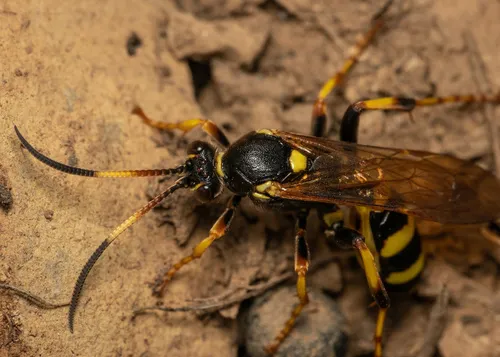
Ichneumon xanthorius
Ichneumon xanthorius
Length 14-16 mm. Both males and females of this species have a black and yellow banded abdomen but are very different. Males have yellow on the first three abdominal segments, then black. Other similar species have black on the first abdominal segmen
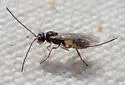
Idiogramma comstockii
Idiogramma comstockii
Identification: From Ross Hill: "...the yellow face and frontal orbits, and the length of the ovipositor sheath are suggestive for this species".
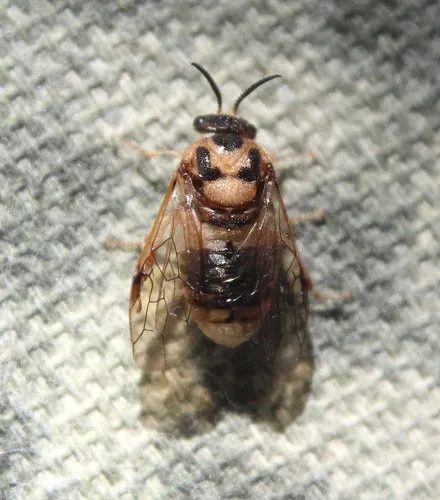
Introduced Pine Sawfly
Diprion similis
First reported in our area: CT 1914 Although a serious pest at times, it normally stunts rather than kills its hosts. It can be a more serious problem with young trees and in cases such as Christmas trees where appearance is important. It has natural
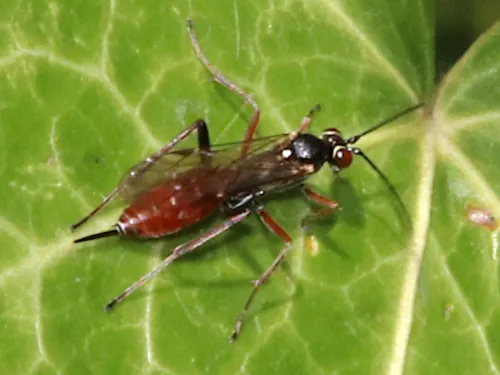
Ischnus inquisitorius
Ischnus inquisitorius
This species is sexually dimorphic, males and females look distinctly different. Females are easily recognised by the short but stout ovipositor. They have a red abdomen, white-ringed eyes and characteristic white markings on the scutellum. The white
Isodontia apicalis
Isodontia apicalis
Identification: Very large head, stocky build; white hairs on thorax. Very similar to I. mexicana. For distinguishing characters see species page .
Isodontia philadelphica
Isodontia philadelphica
Identification: A stocky Isodontia , with heavy, black pubescence, and violet wings. Sphex pensylvanicus , is similar, but usually holds its wings folded parallel to body when nectaring (see comments on this image ):
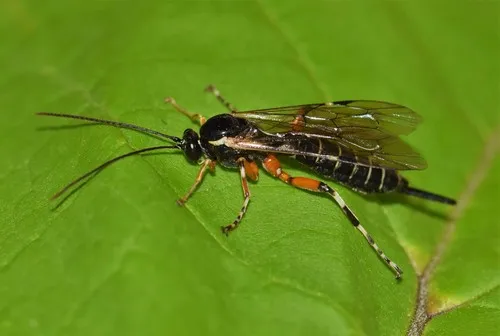
Itoplectis conquisitor
Itoplectis conquisitor
Identification: Female with forelegs fulvous. often whitish above; middle legs fulvous, tibiae often darker above, with a premedian white band, tarsi white with dark apices; hind legs with the femora fulvous, tibiae dark with a submedian white band,
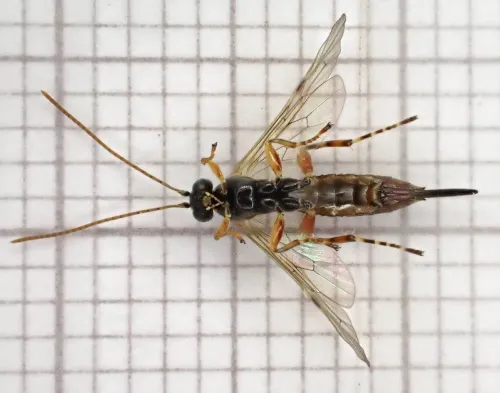
Itoplectis maculator
Itoplectis maculator
Length 5 to 10 mm. A largely black bodied insect with striking red thighs on its rear legs. There are other very similar species in this genus which means that detailed examination of an actual specimen is generally needed to identify the exact speci
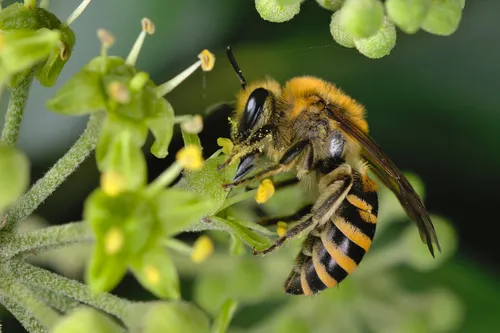
Ivy Bee
Colletes hederae
The largest of the UK banded Colletes species. The forewing of the female measures 9.5-10mm, the male 8-8.5mm. The broad buff-coloured bands and orange thorax of a freshly emerged female are distinctive, though care needs to be taken with males or fa
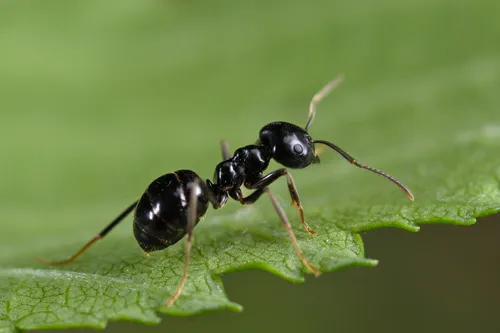
Jet Ant
Lasius fuliginosus
This ant is shiny jet black in colour with a heart-shaped head. Workers are about 4 to 6 mm long, females are larger and small males reach a length of 4.5 to 5 mm. Unless identified by a recognised expert, a photo is required and the specimen should
Jewel Oak Gall Wasp
Acraspis quercushirta
Larva develops in an oval or rounded, 2.5-4 mm, one-celled, pale green or yellowish gall on a vein on the underside of a bur oak ( Quercus macrocarpa ) leaf. The surface is fissured, and each facet has a short, hard point. The former Acraspis macroca
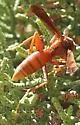
Kaibab Paper Wasp
Polistes kaibabensis
Identification: Distinctive: a brown wasp with contrastingly coloured antennae and yellow on abdominal segments 3 or 4 to 6.
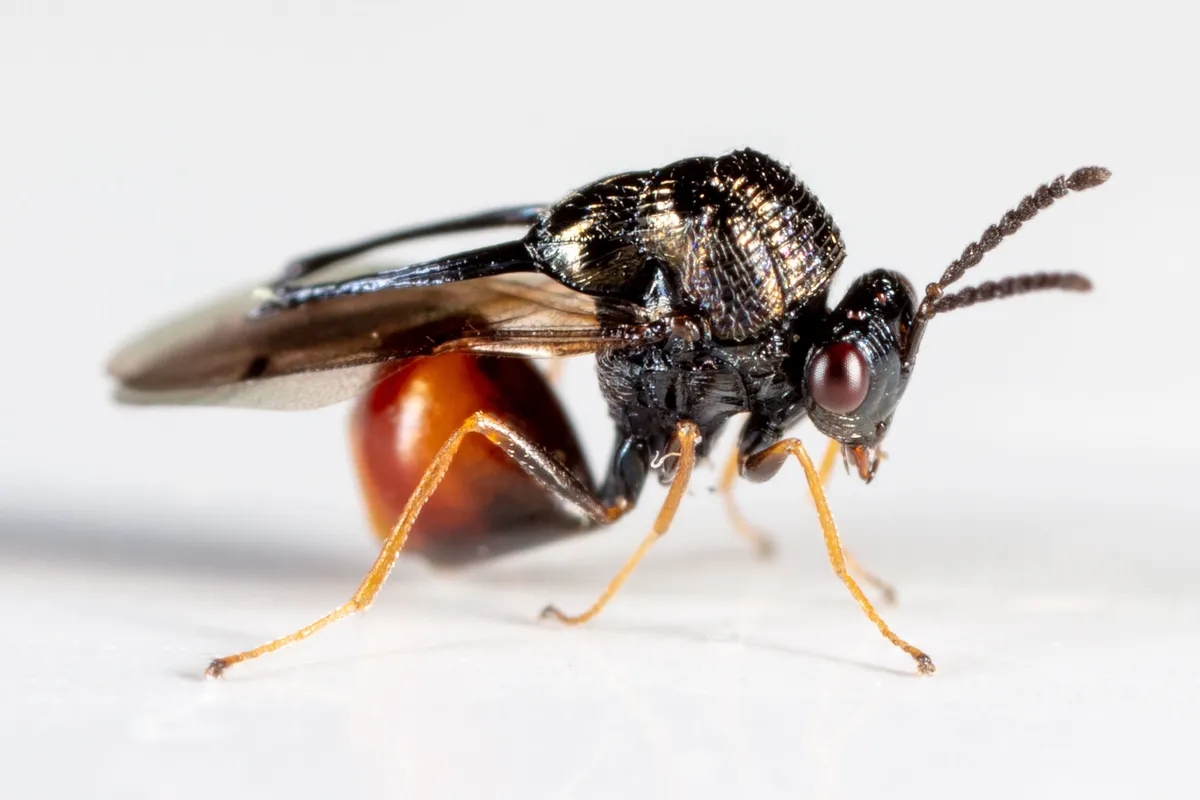
Kapala floridana
Kapala floridana
Identification: Only described Kapala species present in Florida north of Lake Okeechobee. Another undescribed/undetermined species is known from south Florida . See .
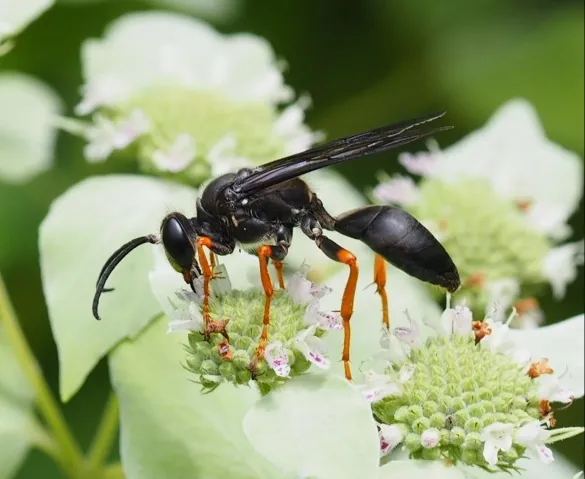
Katydid Wasp
Sphex nudus
Identification: can be separated from S. flavovestitus by lighter body pubescence and lack of golden pubescence along lateral margins of scutum
Kernel Flower Gall Wasp
Callirhytis serricornis
Identification: Larvae of this wasp induce galls on black oaks in California. A summer, unisexual generation induces galls on the veins on the underside of leaves. A spring, bisexual generation induces kernel-like galls on catkin flowers.
Keyhole Wasp
Pachodynerus nasidens
Identification: Not readily distinguishable from P. pulverulentus , with which it co-occurs in TX & AZ. Separating the two requires comparison of the density of punctation on the second segment of the abdomen ( P. nasidens has punctation throughout t
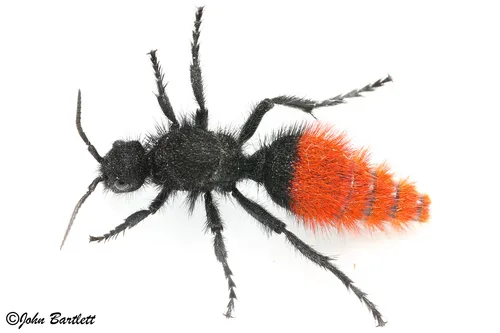
Klug's Velvet Ant
Dasymutilla klugii
Identification: Easily recognized in Texas among similarly colored species by its large size (never under half inch) and head narrower than the thorax. It is separated from the desert southwest D. magnifica , which doesn't occur in Texas, by the blac
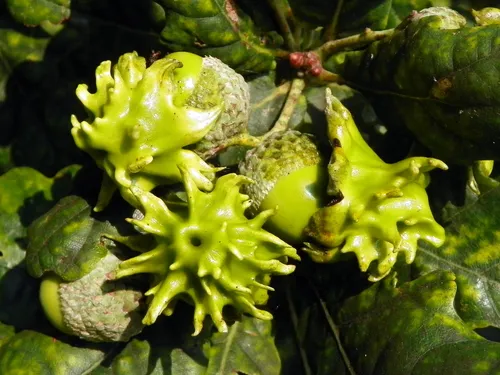
Knopper Oak Gall Wasp
Andricus quercuscalicis
A Cynipid gall wasp that causes common and familiar Knopper galls to form on the acorns of various oaks. [Note that parasitoids and inquilines may also emerge from knopper galls] There are many similar species of gall wasp A recent introduction to th
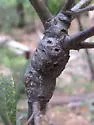
Kokkocynips coxii
Kokkocynips coxii
Identification: Induces stem swelling galls on Quercus emoryi and hypoleucoides.
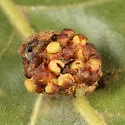
Kokkocynips decidua
Kokkocynips decidua
Larvae develop in galls on the undersides of the midveins of leaves in the red oak group, splitting the midvein as the galls grow.
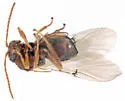
Kokkocynips rileyi
Kokkocynips rileyi
"After the galls drop in October the fleshy knob at top shrivels leaving a hilum-like scar." Adult female: Inquiline:
Labena grallator
Labena grallator
Identification: Apical ~0.3 of antennae blackish, wings often conspicuously darkened. Color variable: eastern specimens primarily red, western specimens always conspicuously yellow-marked. Female (left) and male (right) Highly variable in terms of ye
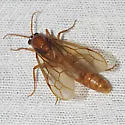
Labidus coecus
Labidus coecus
Identification: Males are found at lights and are larger than Neivamyrmex: Workers can be found conducting subterranean raids underneath rocks and logs set in the ground: Both males and workers (and likely queens) have a small tooth on the concave su
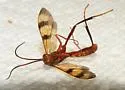
Lanugo cestus
Lanugo cestus
Identification: One of only two species in the genus found east of Texas. Females are readily distinguished from L. retentor by the banded wings of subhyaline and fuscous. Males are unknown.
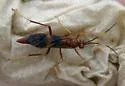
Lanugo retentor
Lanugo retentor
Identification: Distinguished from other members of the genus by the almost uniformly dark forewings (lacking orange banding) and black at the basal third of the third abdominal segment. The coxae range from infuscate to entirely black. Males may hav
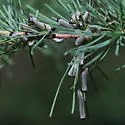
Larch Sawfly
Pristiphora erichsonii
Earliest record in our area: 1880[cite:] Repeated defoliations make trees susceptible to deadly attacks by Dendroctonus simplex Overwintering coccoons are destroyed by small mammals, especially shrews and voles. Two parasites have been imported: an i
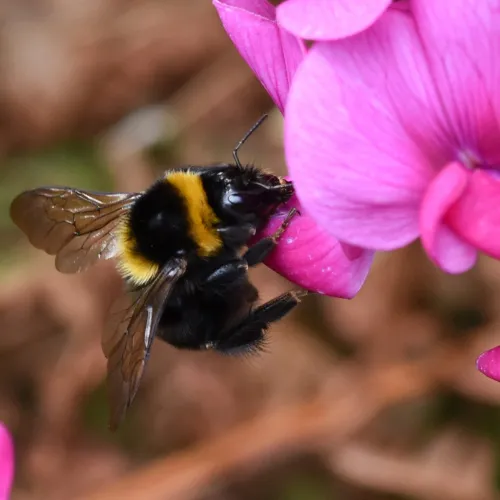
Large Garden Bumblebee
Bombus ruderatus
A large bumblebee with a very long tongue, which is often held outstretched as the bee approaches a flower. Separating B. ruderatus and its close relative B. hortorum is very difficult, and there is considerable variability in the extent and brightne
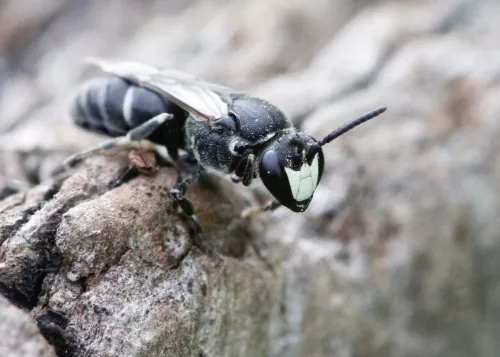
Large Yellow-face Bee
Hylaeus signatus
A largely black species, the males with a striking pale yellow face. Most solitary bees and wasps are difficult to identify, and can rarely be identified from photos taken in the field. All red-rated records should include a photo, or set of photos,
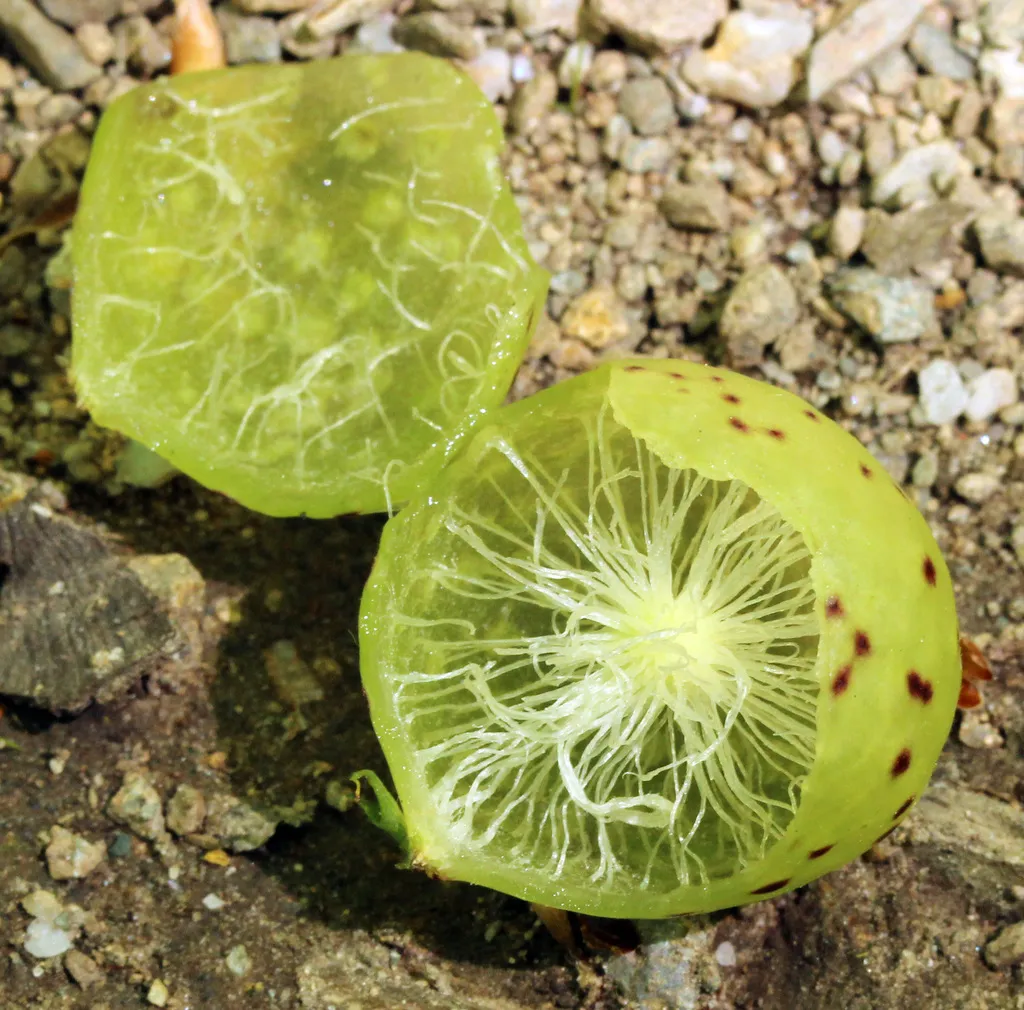
Larger Empty Oak Apple Wasp
Amphibolips quercusinanis
Forms detachable galls on oak leaves. "Produced singly on under side of leaf, 18-32 mm in dia., light green, spotted. June." "Globose, bright green with red spots, becoming yellowish-brown, slightly nippled, thin-shelled, glossy, the central larval c
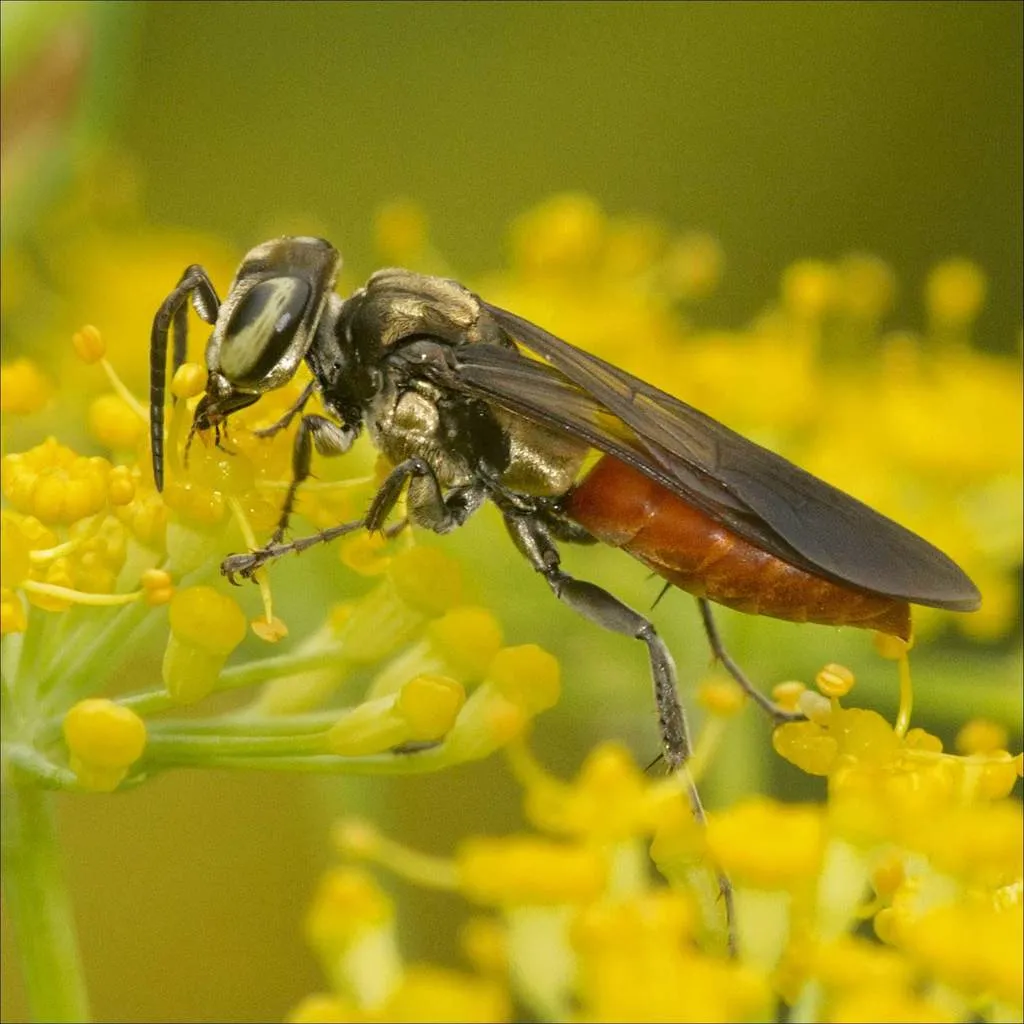
Larra bicolor
Larra bicolor
Introduced intentionally in Florida from Bolivia in 1988 and again in 1989 for control of Neoscapteriscus mole crickets, which are also introduced from South America.
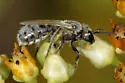
Lasioglossum actinosum
Lasioglossum actinosum
Identification: "note the white hairs covering most of the metasoma, pale wings, etc. This species resembles semicaeruleum but is greener (rather than blue)" - Comment from John Ascher here .
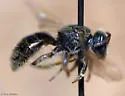
Lasioglossum admirandum
Lasioglossum admirandum
Uncommon "Most L. admirandum have the head and mesosoma primarily green but some individuals have stronger blue reflections."
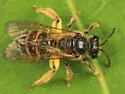
Lasioglossum coriaceum
Lasioglossum coriaceum
Identification: "broad gena and black distitarsi" (John Ascher's comment here )
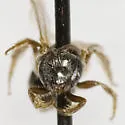
Lasioglossum imitatum
Lasioglossum imitatum
Identification: Females can be recognized by their small size and the distinct course hair on T3 and T4.
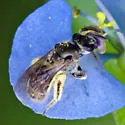
Lasioglossum lepidii
Lasioglossum lepidii
Identification: Note modified tegula - Comment from Dr. Ascher
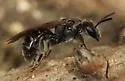
Lasioglossum macoupinense
Lasioglossum macoupinense
Lasioglossum macoupinense (Lasioglossum macoupinense) is a species in the family Halictidae, commonly known as sweat, furrow, nomiine, and short-faced bees, belonging to the order Hymenoptera (Ants, Bees, Wasps and Sawflies). It is classified within
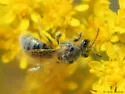
Lasioglossum marinum
Lasioglossum marinum
Identification: Tegula enlarged, distinctly punctate with strong posterior angle, and metasomal terga with metallic reflections. Uncommon
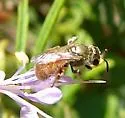
Lasioglossum nymphale
Lasioglossum nymphale
Lasioglossum nymphale (Lasioglossum nymphale) is a species in the family Halictidae, commonly known as sweat, furrow, nomiine, and short-faced bees, belonging to the order Hymenoptera (Ants, Bees, Wasps and Sawflies). It is classified within the subf
Lasioglossum oceanicum
Lasioglossum oceanicum
Identification: "rather shiny scutum, relatively short flagellomeres" JSA ( ref. ) Common
Lasioglossum oenotherae
Lasioglossum oenotherae
Types: Holotype as Halictus (Evylaeus) oenotherae female by Stevens. Type #12033 and #23848. Locality: Blue Rapids, Kansas, June 20, 1919. In the U. S. National Museum of Natural History, Smithsonian. Holotype as Halictus ralenci female by Crawford.
Lasioglossum ovaliceps
Lasioglossum ovaliceps
Identification: Bright red metasoma and long face are distinct among the Lasioglossum (Hemihalictus) sp.
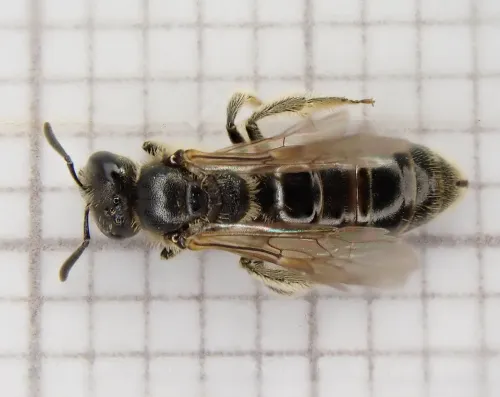
Lasioglossum pauxillum
Lasioglossum pauxillum
A small dark bee. Males have long antennae and short hairs beneath sternite 2 but are difficult to distinguish from related species. In females the inner spur of the hind tibiae is distinctive with 4 broad projections. Most solitary bees and wasps ar
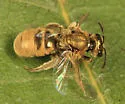
Lasioglossum pilosum
Lasioglossum pilosum
Identification: Distinctive features of pilosum sensu lato include an elongate head, densely punctate scutum, and dense tan hairs covering most of the terga. Lasioglossum pilosum sensu stricto differs only subtly from L. leucocomum. The former averag
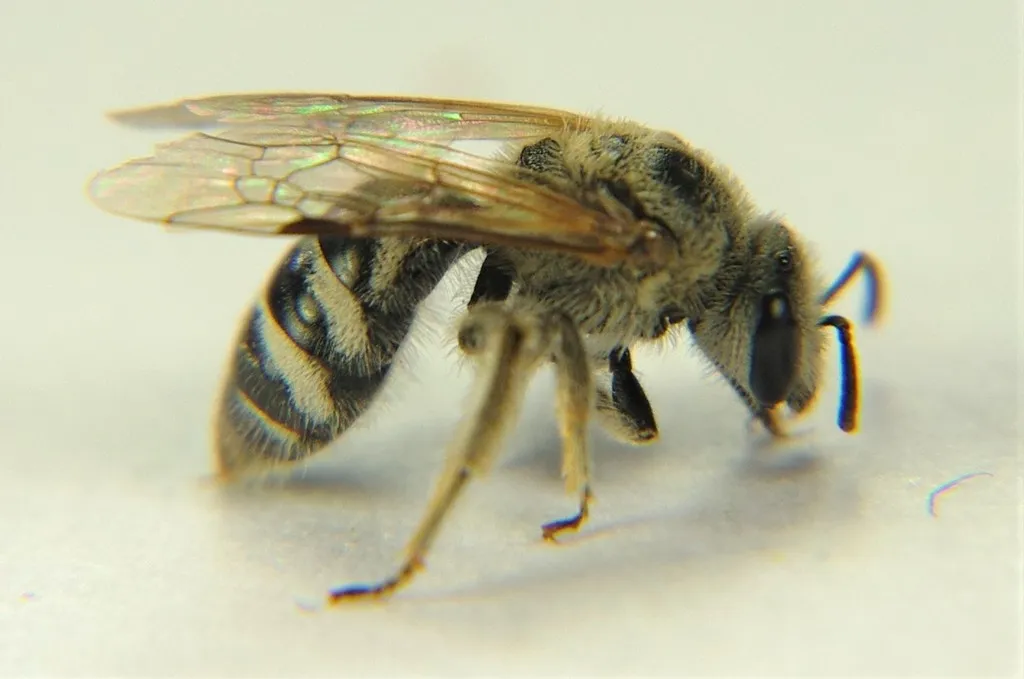
Lasioglossum sisymbrii
Lasioglossum sisymbrii
Identification: T1 has a complete basal hair band which has sometimes been worn off. Most common and widespread Lasioglossum sp. in the west.
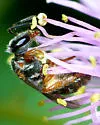
Lasioglossum tarponense
Lasioglossum tarponense
Identification: Both sexes can be ID'd by the combination of: Legs and Clypeus yellow/orange and mesepisternum punctate.
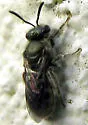
Lasioglossum tegulare
Lasioglossum tegulare
Identification: "modified black tegula and densely punctate scutum" -- John S. Ascher Visible in this photo:
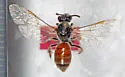
Lasioglossum texanum
Lasioglossum texanum
Identification: The ocelli are so large that the gap between the eye and the lateral ocellus is less than half of one ocellus. The compound eye is also much larger than other Lasioglossum species in the East Flies at dusk or at night by moon light. F
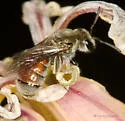
Lasioglossum tuolumnense
Lasioglossum tuolumnense
This species is part of the L. petrellum species group.
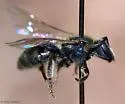
Lasioglossum versatum
Lasioglossum versatum
This is L. rohweri as used sensu Mitchell, 1960, which is the true L. versatum. L. versatum as understood by previous workers is now known as L. callidum (but there is likely also a similar undescribed species); see Gibbs (2010). Common
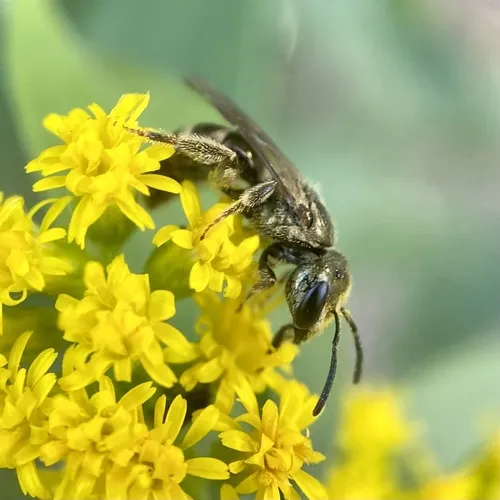
Lasioglossum zephyrus
Lasioglossum zephyrus
It can be primitively eusocial or solitary. Video of nest aggregation Nest behaviors can determine individuals. Nudging of other bees in the nest is done most often by the queen. If the queen nudges a bee, it normally turns to face the queen then fol