
Gooden's Nomad Bee
Nomada goodeniana
This record describes Nomada goodeniana (species). Recorded family: Apidae. Recorded order: Hymenoptera.
Identification and Appearance
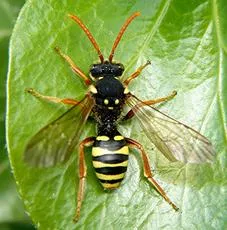
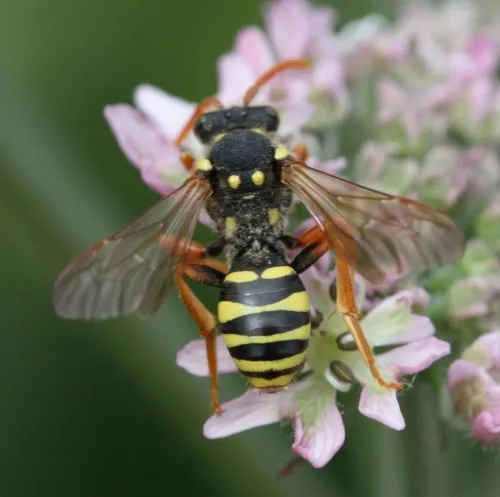
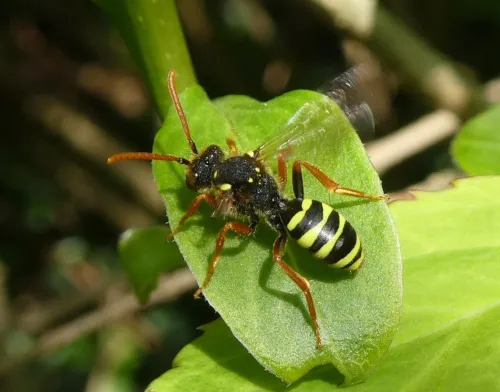
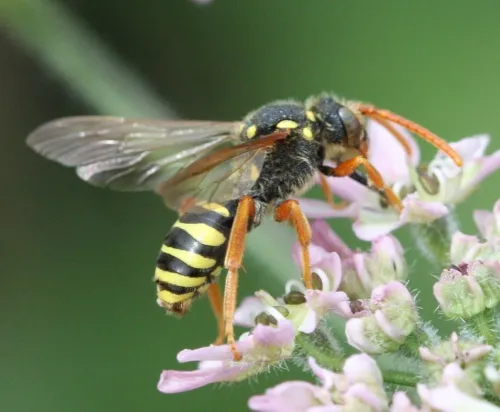
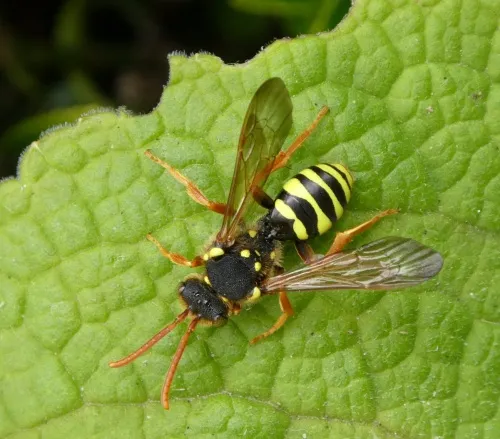
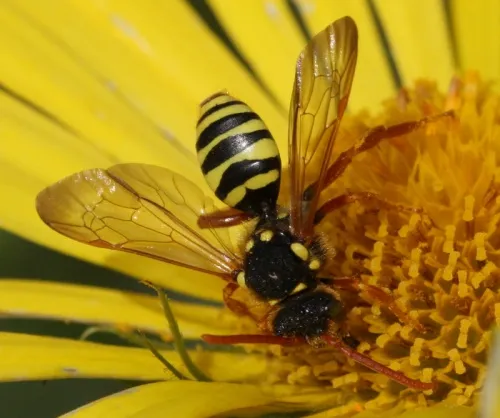
Nomada goodeniana is a small species in the genus, and uses the nests of several large Andrena species. It has a bright yellow and black striped abdomen with no red patches. It has orange-red legs with darker femora. The antennae are orange, though in males the basal half is darker on the hind surface. There is a yellow pronotal collar behind the head. Males have yellow on the lower face which can also extend up the eye margins. The second abdominal yellow band is unbroken . It can be distinguished from other yellow/black Nomada species by the second abdominal yellow band being unbroken. In N. marshamella the second yellow band is divided by a narrow black mid-line and in N. rufipes the black is very broad such that the yellow is restricted to patches towards the sides of the abdomen. Anywhere that the host Andrena nests are found. The adults are free-living and feed on nectar; the larvae consume the pollen provision of the host bee ( Andrena sp). Instead of digging its own underground nest site, the female Nomada goodeniana waits until an Andrena female has excavated a nest tunnel and has provisioned a nest cell with pollen for her larva. This will take many pollen gathering trips and the Nomada female will take advantage of the host's absence to visit the cell and lay her own egg in it. Fairly common with most records coming from southern Britain.
Classification
- Kingdom
- Animalia
- Phylum
- Arthropoda
- Class
- Insecta
- Order
- Hymenoptera
- Family
- Apidae
- Genus
- Nomada
Imported taxonomy record. Source availability varies; see the source references and editorial policy below.
Habitat and Range
Habitat
Anywhere that the host
Seasonal Activity
April to June.
Diet and Behavior
Life History
The adults are free-living and feed on nectar; the larvae consume the pollen provision of the host bee (
Additional species information
Recorded status
Fairly common with most records coming from southern Britain.
About Flies: the wider group
Order-level background for Hymenoptera, the group containing Nomada goodeniana. Species-specific details appear above.
Group overview
Hymenoptera includes over 150,000 described species of ants, bees, wasps, and sawflies. Earth harbors approximately 20 quadrillion (20×10^15) ants, with a combined biomass of ~12 megatons of dry carbon - exceeding the combined biomass of all wild birds and mammals (PNAS, 2022).
Ecological role of the group
About 35% of the world's food crops depend on animal pollinators. The chocolate industry, valued at over $100 billion, depends on pollinating flies and midges. Ants are the dominant soil engineers in most terrestrial ecosystems, turning more soil than earthworms in many habitats.
Economic and practical significance of the group
Pollinators contribute $235-577 billion worth of annual global food production (FAO). In the U.S., bee pollination alone benefits crops valued at $18 billion annually, and honey bees are responsible for $5.4 billion in agricultural productivity. Between April 2023-2024, 55.1% of managed honey bee colonies were lost. The U.S. bee population dropped from 5 million to 2.5 million.
Recorded sources for this group: FAO, USDA, EPA, PNAS (2022), US Fish & Wildlife Service. Imported estimates may describe particular regions or reporting periods.
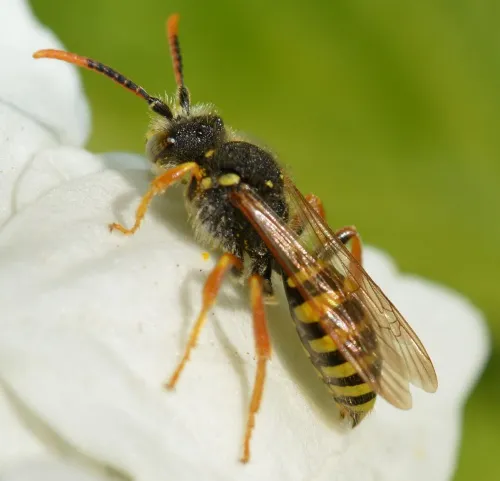
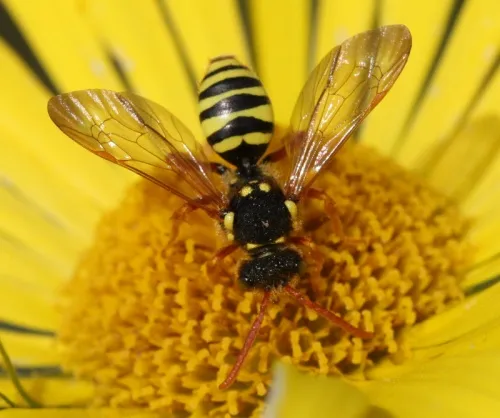
Photos of Gooden's Nomad Bee (10)
Frequently Asked Questions About Gooden's Nomad Bee
What is Gooden's Nomad Bee?
Gooden's Nomad Bee (Nomada goodeniana) is a species in the family Apidae, within the order Hymenoptera.
Where is Gooden's Nomad Bee found?
Habitat: Anywhere that the host
When is Gooden's Nomad Bee active?
Gooden's Nomad Bee: seasonal activity - April to June..
What is the life cycle of a Gooden's Nomad Bee?
The adults are free-living and feed on nectar; the larvae consume the pollen provision of the host bee (