
Family Rose Gall Wasps (Cynipidae)
Cynipidae is a family in the order Hymenoptera. Browse 276 named species recorded in this family, or open an individual profile for its available identification and natural-history information.
Species in Cynipidae (276)
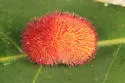
Hedgehog Gall Wasp
Acraspis erinacei
Forms galls on white oak ( Quercus alba ). The sexual generation forms galls on the buds, and the agamic generation forms the distinctive "hedgehog" galls (ellipsoid, up to 13 mm in diameter, covered with red hairs, with 3-5 larval cells inside) on l
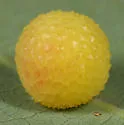
Oak Pea Gall Wasp
Acraspis pezomachoides
Forms galls on veins of white oak ( Quercus alba ). "Spherical or ellipsoidal, naked and faceted to spiny, young galls light green, rose-tinted, becoming yellow or brown, spines when present purplish red, diameter 1/4 inch, two-celled." Parasitoids:
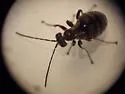
Jewel Oak Gall Wasp
Acraspis quercushirta
Larva develops in an oval or rounded, 2.5-4 mm, one-celled, pale green or yellowish gall on a vein on the underside of a bur oak ( Quercus macrocarpa ) leaf. The surface is fissured, and each facet has a short, hard point. The former Acraspis macroca
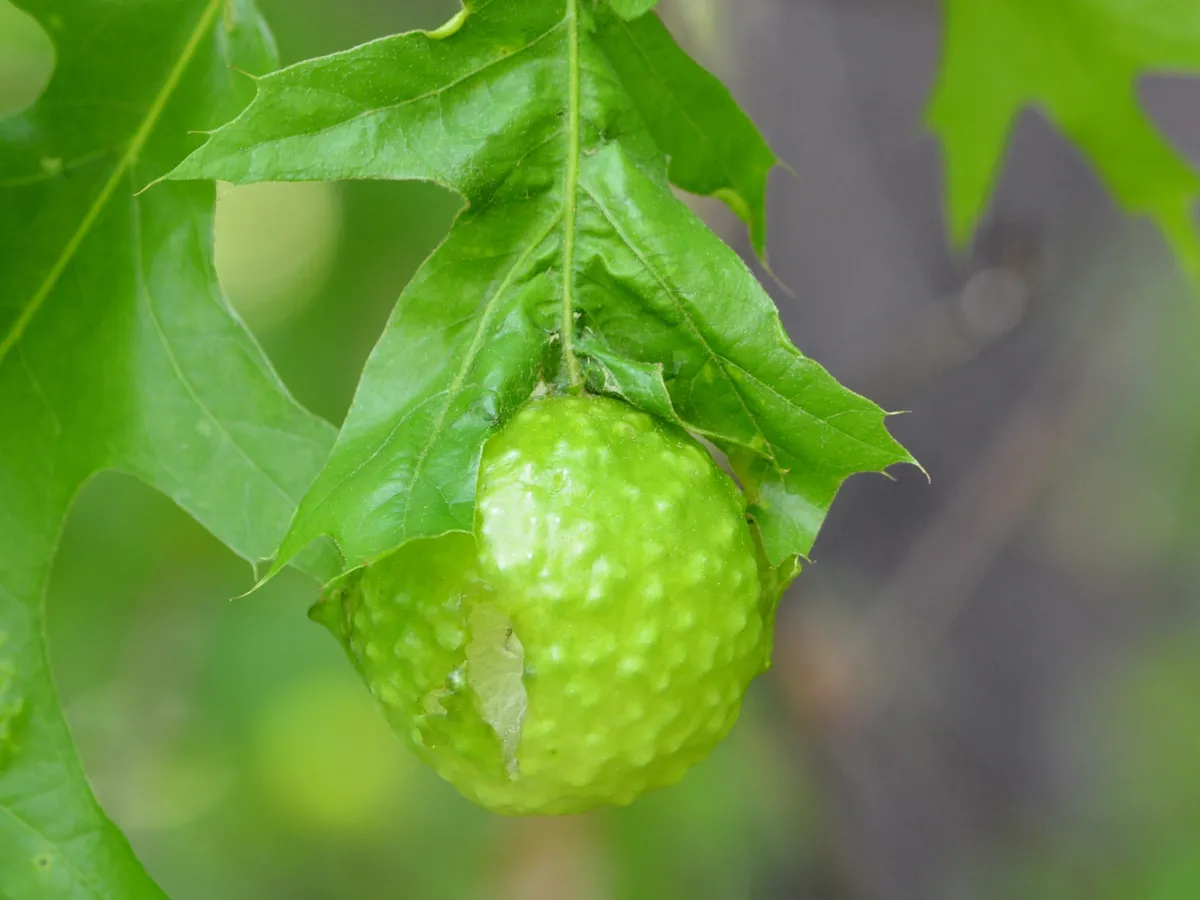
Spongy Oak Apple Gall Wasp
Amphibolips confluenta
Identification: Adults are small and dark cynipid wasps with oval, compressed abdomen. Larvae are small and globe-shaped. Galls are green at first, become tan and papery thin on the outside.
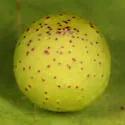
Amphibolips cookii
Amphibolips cookii
Forms spherical, spotted "oak apple" galls, 11-25 mm in diameter, protruding from buds of red oaks. They drop in September when full grown.
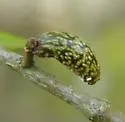
Amphibolips ellipsoidalis
Amphibolips ellipsoidalis
Identification: A bud gall of early spring as new growth is starting. Spindle-shaped, blunt at both ends, up to 14 mm. long by 5 mm. in diameter, smooth, mottled with white when fresh, falling to ground when mature. Produced from weak lateral buds.
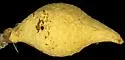
Amphibolips fusus
Amphibolips fusus
Identification: Induces elongate spindle-shaped galls on Quercus emoryi and hypoleucoides in the US, and on other oaks in Mexico. The galls are similar to those of Amphibolips nassa, which are found on the same host plants, but the tip is drawn out t
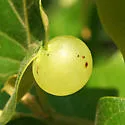
Translucent Oak Gall Wasp
Amphibolips nubilipennis
Identification: Description of translucent leaf-gall: "This is a beautiful, spherical, soft, succulent gall about 1/2 to 3/4 inch in diameter and has a very striking resemblance to a large white grape. There is a single larval chamber in the center."
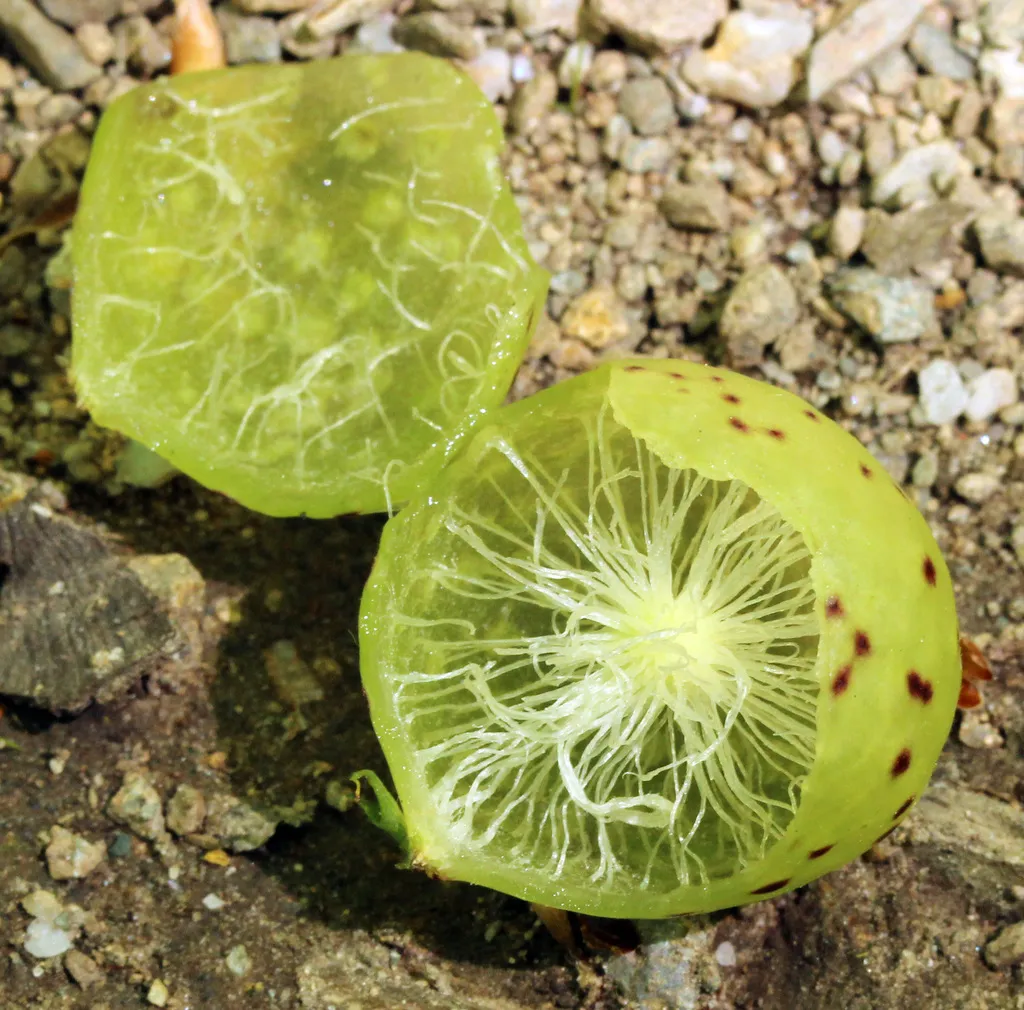
Larger Empty Oak Apple Wasp
Amphibolips quercusinanis
Forms detachable galls on oak leaves. "Produced singly on under side of leaf, 18-32 mm in dia., light green, spotted. June." "Globose, bright green with red spots, becoming yellowish-brown, slightly nippled, thin-shelled, glossy, the central larval c
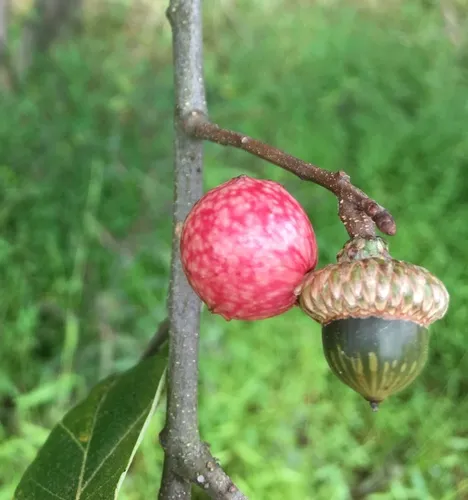
Acorn Plum Gall Wasp
Amphibolips quercusjuglans
Forms "large, globose, thick-walled, hard, mottled, brownish or reddish galls on the side of the acorn cup, easily detached and dropping to the ground in the fall, always on red oaks. . . Pink when fresh, becoming yellow and then blood-red, diameter
Small Oak Apple Gall Wasp
Amphibolips quercusostensackenii
Develops in galls on leaves of the red oak group: "Small oak apple, 7-9 mm, projecting on both sides of leaf, larval cell supported by fibers." Weld lists Q. coccinea, velutina, palustris, falcata, and imbicaria as hosts. "Globose, somewhat oblong, h
Amphibolips quercusspongifica
Amphibolips quercusspongifica
Felt describes Amphibolips confluenta as follows: "Globular, smooth, shining or opaque leaf gall, internally a juicy, white, spongy substance and a large central, larval cell, green, turning with age to light brown, diameter 1 1/4 to 2 inches, usuall
Andricus burnetti
Andricus burnetti
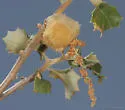
Identification: Larvae create golden, hairy polythalamous bud or petiole galls on Quercus palmeri (Palmer's oak) in California.
Andricus callidoma
Andricus callidoma
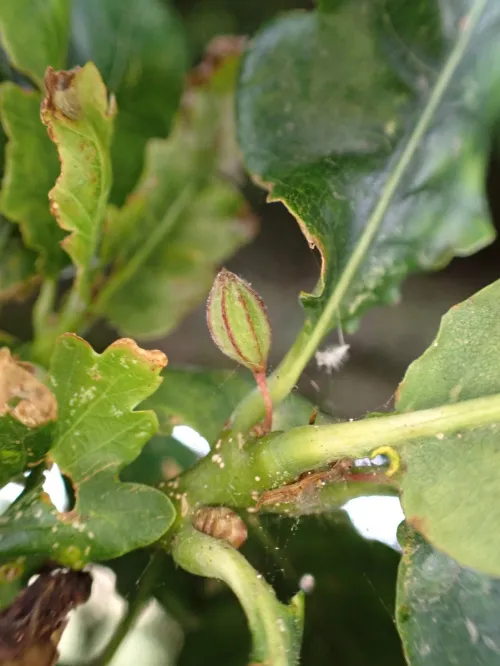
The larvae of the gall wasp Andricus callidoma cause galls to form on Oak. The asexual gall emerges from an unopened bud. The stalk is 3 to 5 mm long and can be much longer, the gall itself is approximately 2 x 4 mm with a pointed tip. The sexual gal
Small Oak Spindle Gall Wasp
Andricus chinquapin
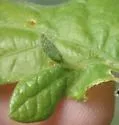
Produces stalked galls emerging from veins of leaves in the white oak group ( Quercus bicolor, Q. alba, Q. prinus, Q. stellata ; Felt also lists Q. macrocarpa ). Adults emerge from galls in spring.
Andricus coconinoensis
Andricus coconinoensis
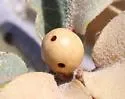
Identification: Induces smooth, glabrous bud galls on Quercus turbinella and oblongifolia, and maybe other species of southwestern oaks.
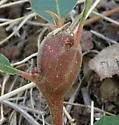
Club Gall Wasp
Andricus coortus
Identification: Wasps induce integral, polythalamous galls on the tips of new branches. Hosts are Quercus garryana , Quercus berberidifolia (and maybe other closely related scrub oaks), and Quercus douglasii .
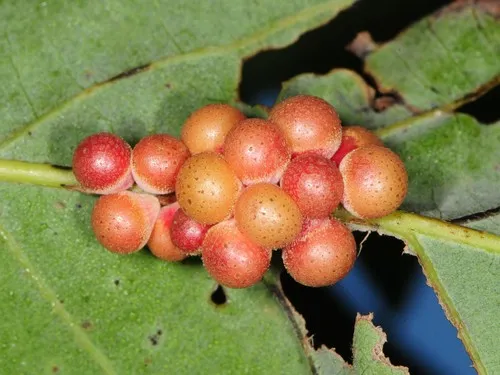
Clustered Midrib Gall Wasp
Andricus dimorphus
Forms galls on leaves in the white oak group. "Galls in rounded masses, a few to 30 in each, closely packed, clustered on the under side of the midrib or petiole, one-celled, globose, pointed basally, greenish, tinged with pink when fresh, grayish wh
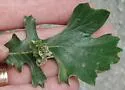
Andricus foliaformis
Andricus foliaformis
Causes bract-bearing midrib swellings, containing 1-6 cells, in leaves of the white oak group. Originally described from white oak ( Quercus alba ); the holotype and gall are lost. The description of adult and gall agree with Andricus foliosus Weld,
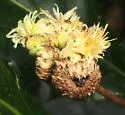
Andricus incertus
Andricus incertus
Forms fringed galls on acorns of swamp white oak ( Quercus bicolor ). "Galls drop in early Sept. and adults emerged the second and third springs in late March and April. A similar gall occurs on nine other white oaks where the recess in the cup is no
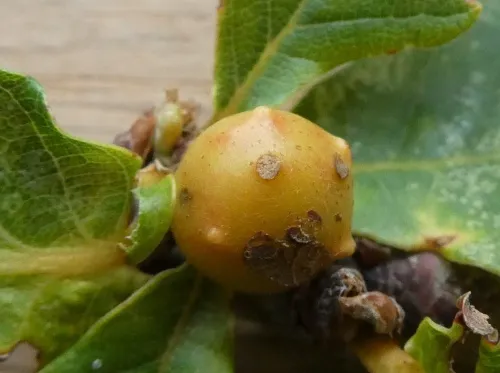
Dyer's Gall
Andricus infectorius
The agamic form is a medium-sized gall on oak buds. Rounded and may be nearly spherical, up to 15mm diameter, with a narrow attachment to a lateral or terminal bud on oak. Green then becoming reddish or orangey brown, often with light brown warty lum
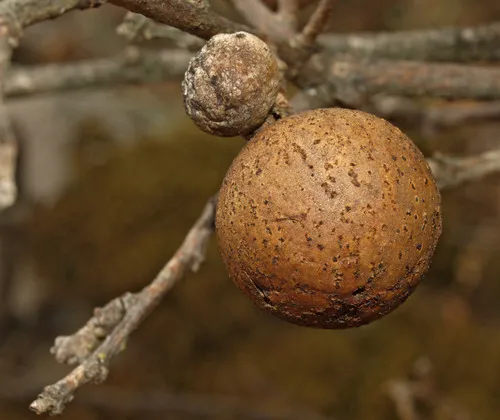
Marble Gall wasp
Andricus kollari
Length 1.5 to 2mm. The male wasp is very dark brown to black on the head has a hunched thorax, with a black abdomen. The legs are yellowy brown and the antennae are a translucent yellow/brown colour. The female has a dark brown appearance overall. [N
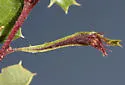
Fimbriate Gall Wasp
Andricus opertus
Identification: Larvae induce galls with shredded, fiber-like projections on various species of white oak in California. These are leaf galls but they often disrupt the growth of the leaf, in some cases quite completely.
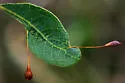
Hair Stalk Gall Wasp
Andricus pedicellatus
Identification: This wasp makes thin, stalked, pointed galls along margins of blue, valley, scrub, and Oregon oak leaves. Galls develop in early spring; adults emerge between April and June.
Andricus pilularis
Andricus pilularis
Identification: Induces leaf galls on Quercus arizonica, gambelli, oblongifolia, rugosa, toumeyi, and turbinella. They are small and integral to the leaf, with the bottom half of the gall protruding on the ventral side of the leaf. The gall causes th
Knopper Oak Gall Wasp
Andricus quercuscalicis
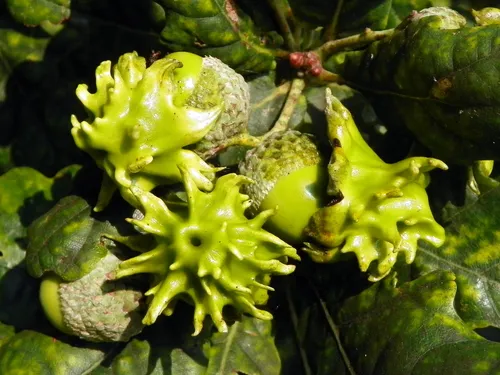
A Cynipid gall wasp that causes common and familiar Knopper galls to form on the acorns of various oaks. [Note that parasitoids and inquilines may also emerge from knopper galls] There are many similar species of gall wasp A recent introduction to th
California Gall Wasp
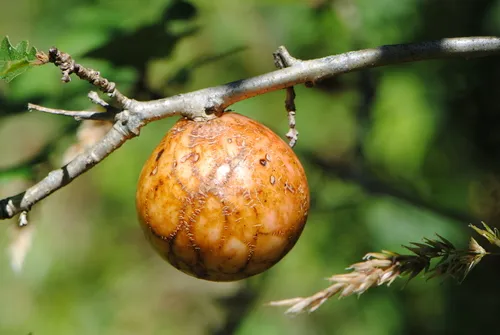
Andricus quercuscalifornicus
Many other insects, especially other wasp species, are parasites, inquilines, and hyperparasites of this wasp.
Andricus quercusfrondosus
Andricus quercusfrondosus
Galls are "globular, smooth, surrounded by bracts which persist and enlarge after gall drops in June. . . Galls attacked by guests [inquilines] do not drop, the bud scales enlarge and this 'frondosa' mass is conspicuous in winter but yields only gues
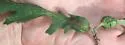
Oak Petiole Gall Wasp
Andricus quercuspetiolicola
Larvae develop in petiole galls in various white oaks. The galls are globose, hard, and project equally above and below the petiole or midrib.
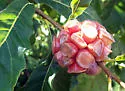
Andricus quercusstrobilanus
Andricus quercusstrobilanus
Identification: Larvae induce a cluster of wedge-shaped galls on on Quercus bicolor, macrocarpa, and lyrata . The galls are green or red/pink when they are young and turn brown as they get older.
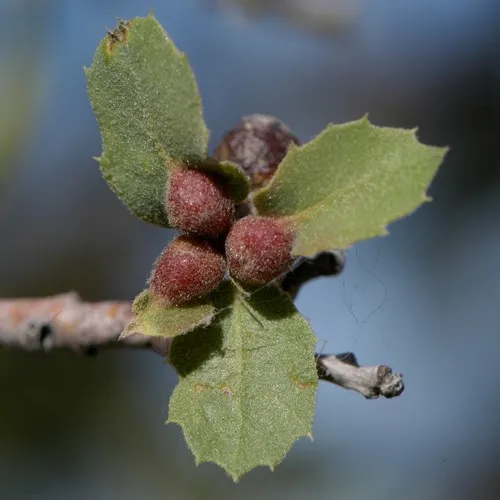
Andricus reticulatus
Andricus reticulatus
Identification: Induces integral petiole galls on Quercus ajoensis, arizonica, dumosa, engelmannii, gambelli, oblongifolia, rugosa, toumeyi, and turbinella. These galls are brown and covered rather sparsely with short white hairs. They consume the le
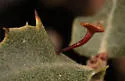
Stellar Gall Wasp
Andricus stellulus
Identification: Larvae induce stalked, cuplike galls on Quercus cornelius-mulleri (Muller's scrub oak), Quercus turbinella (shrub live oak), and Quercus dumosa (Nuttall's scrub oak). There is one larva per gall. Little is known about this wasp.
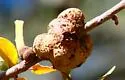
Andricus wheeleri
Andricus wheeleri
Identification: This species induces large, lobed, integral stem galls on Quercus arizonica, onlongifolia, toumeyi, and turbinella. These galls are green when fresh and turn brown when older. They can have a pink hue as well. They are very abrupt on
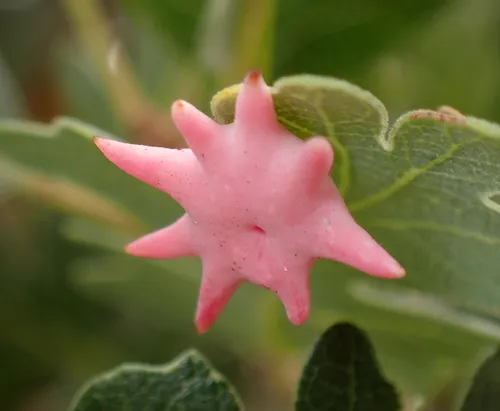
Spined Turbaned Gall Wasp
Antron douglasii
Identification: Gall occurring on white oaks ( Quercus lobata , engelmannii , douglasii , and various "scrub" oaks.)
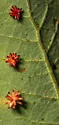
Urchin Gall Wasp
Antron quercusechinus
Identification: These wasps produce summer/fall leaf galls resembling spiny red or pink sea urchins. Galls are on blue and scrub oaks. Adults emerge in November or soon after, and parthenogenic females lay eggs in leaf buds. A bisexual generation (ma
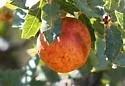
Atrusca brevipennata
Atrusca brevipennata
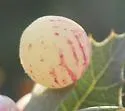
Identification: Induces sphere shaped oak-apple galls on leaves of Quercus turbinella, grisea, gambelli, and Quercus x undulata. The galls are usually light yellow with red vein-like stripes running vertical from the top of the gall. The similar Atru
Atrusca capronae
Atrusca capronae
Identification: Galls have thin, pale outer layer with purple or red stripes. Larval chamber floats in the center of the gall, attached to out layer by many radiating fibers.
Atrusca cubitalis
Atrusca cubitalis
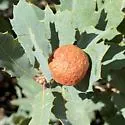
This short-winged species, cubitalis, is the producer of all the oak apples found in Colorado west of the Continental Divide. There is no species of the Atrusca bella complex in that area. On the eastern slopes of the Colorado Rockies oak climbs hard
Spotted Oak Apple Gall Wasp
Atrusca quercuscentricola
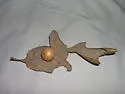
Larvae develop in galls on the underside of post oak ( Quercus stellata ) leaves in the fall: "Globular, thin-shelled leaf gall, spotted and sometimes tinged with pink and covered with a white bloom, internally a filament supported cell, diameter 1/2
Aulacidea hieracii
Aulacidea hieracii
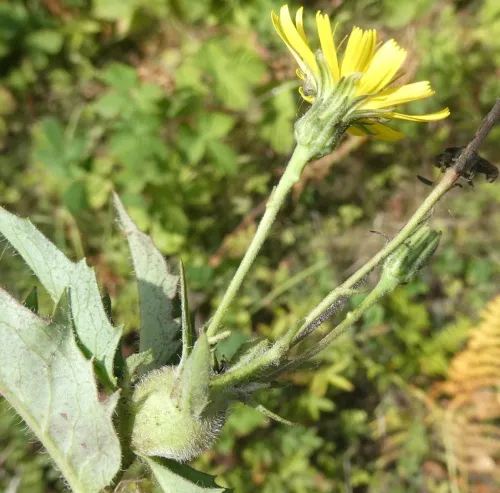
The larvae of the Cynipid gall wasp Aulacidea hieracii gall the stems of Hieracium species. The galls are rounded swellings up to 4 cm long. The part of the plant above the gall is usually strongly suppressed. The gall may be smooth, but can also be
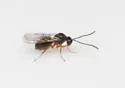
Aulacidea podagrae
Aulacidea podagrae
Identification: best recognized by galls rather than adult wasps. Galls occur on Lactuca canadensis on the stems.
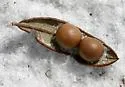
Belonocnema fossoria
Belonocnema fossoria
Identification: Spur on the anterior side of fore tibia longer than basitarsus and tibial spurs. Middle tibia with a smaller spur. Found on Quercus geminata in Georgia and Florida . Similar galls in Georgia/Florida could be from this species (exclusi
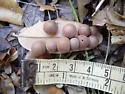
Belonocnema kinseyi
Belonocnema kinseyi
Identification: Spur on the anterior side of fore tibia shorter than basitarsus, approximately the same length as tibial spurs. Middle tibia without a spur. Asexual generation (Antennae with 14 in females or 15 in males with F1 excavated segments) sc
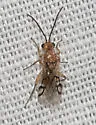
Belonocnema treatae
Belonocnema treatae
Identification: Spur on the anterior side of fore tibia shorter than basitarsus, approximately the same length as tibial spurs. Middle tibia without a spur. Asexual generation (Antennae with 14 in females or 15 in males with F1 excavated segments) sc
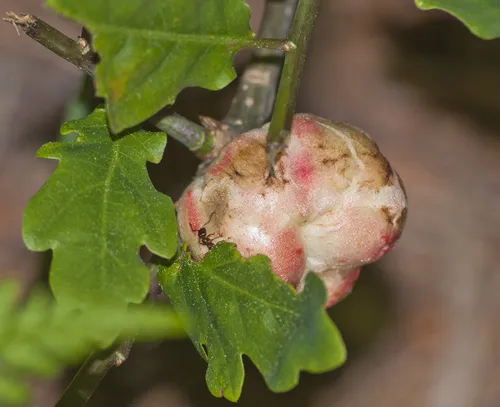
Oak Apple Gall Wasp
Biorhiza pallida
Size 2 to 3.5 mm, the sexual generation male and females wasps are a golden chestnut colour. The agamic wasps are larger, and wingless. Oak-apple galls are caused by the sexual gneration of wasps. They are large and spongy, pale green becoming cream/
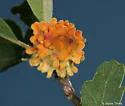
Coral Gall Wasp
Burnettweldia corallina
Identification: Larvae make summer galls on Quercus douglasii (blue oak). Galls are round with 2mm clublike projections.
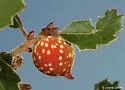
Beaked Twig Gall Wasp
Burnettweldia plumbella
Identification: Larvae make galls in the late spring and summer on blue ( Quercus douglasii ), scrub ( Q. berberidifolia ), shrub live ( Q. turbinella ), and leather ( Q. durata ) oaks. Galls are up to 15mm in diameter and are red or green with yello
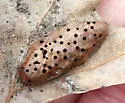
Honeycomb Leaf Gall Wasp
Callirhytis favosa
Forms galls on black ( Quercus velutina ) and pin ( Quercus palustris ) oak leaves. According to Felt : "Flattened, many-celled leaf galls projecting from both surfaces, diameter 1/4 to 1 inch, the upper and lower surfaces resembling a honeycomb." We
Callirhytis flavipes
Callirhytis flavipes
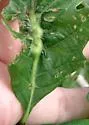
Forms galls in bur oak ( Quercus macrocarpa ) leaves: "Elongated, bare, fleshy midrib swelling in June, containing several cells." A few Lasioptera gall midges have been reared from similar galls, but they were probably all inquilines in galls initia
Callirhytis furva
Callirhytis furva
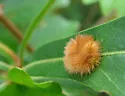
Forms galls on leaves of Quercus nigra and Q. paiustris ; "probably on all the red oaks" : "Small cluster of globular galls, 3-4 mm, each covered with short, straight brown hairs, upper side, fall" . Note from Charley Eiseman, 12/6/2009: The images i
Callirhytis lanata
Callirhytis lanata
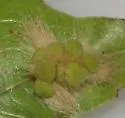
Forms woolly, detachable galls on leaves of various species in the red oak group. The galls drop in October and adults may emerge in the second, third, or fourth spring.
Callirhytis piperoides
Callirhytis piperoides
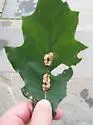
Images in this section are placed here tentatively; two unrelated species apparently form similar galls on leaves of the red oak group. Callirhytis piperoides forms a "cluster on [the] upper or lower side, each spherical, red, pubescent, 1-4 mm" in d
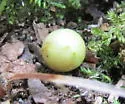
Oak Flower Gall Wasp
Callirhytis pulchra
Produces galls on catkins of red, black, and scarlet oak: "Green when fresh, the size of red currants, containing 4-5 cells, dropping in June." "Galls drop in late May and shrivel slightly; adults emerged June 10-20 (Chicago); May 28-June 6 (DC)." Fe
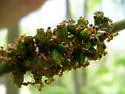
Ribbed bud gall
Callirhytis quercusgemmaria
Causes detachable stem galls on "all the red oaks." Typical galls look like this; they secrete honeydew and drop to the ground when mature: Galls containing "guests" do not drop. They enlarge and become woody, remaining on the tree over the winter. T
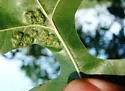
Callirhytis quercusmodesta
Callirhytis quercusmodesta
Forms galls on pin ( Quercus palustris ), red ( Q. rubra ), and black ( Q. velutina ) oaks. , "Hard confluent parenchyma thickenings projecting on both sides of leaf."
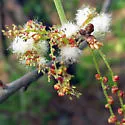
Woolly Catkin Gall Wasp
Callirhytis quercusoperator
Produces galls on flowers in the red oak group: "Oval masses 2 to 3 inches in diameter, hairs greenish white or rose tinted, sometimes deep red, there may be 150 or more cells each less than 1/10 of an inch in diameter."
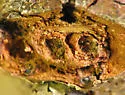
Gouty Oak Gall Wasp
Callirhytis quercuspunctata
The larvae inside the galls may take one or two years to reach maturity.
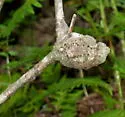
Gouty Stem Gall Wasp
Callirhytis quercussuttoni
Identification: This wasp creates globular, woody stem galls on oaks in the black oak group (including Quercus agrifolia and Q. wisizleni ) on the west coast. The stem galls contain the unisexual (all female) generation. Females from this generation
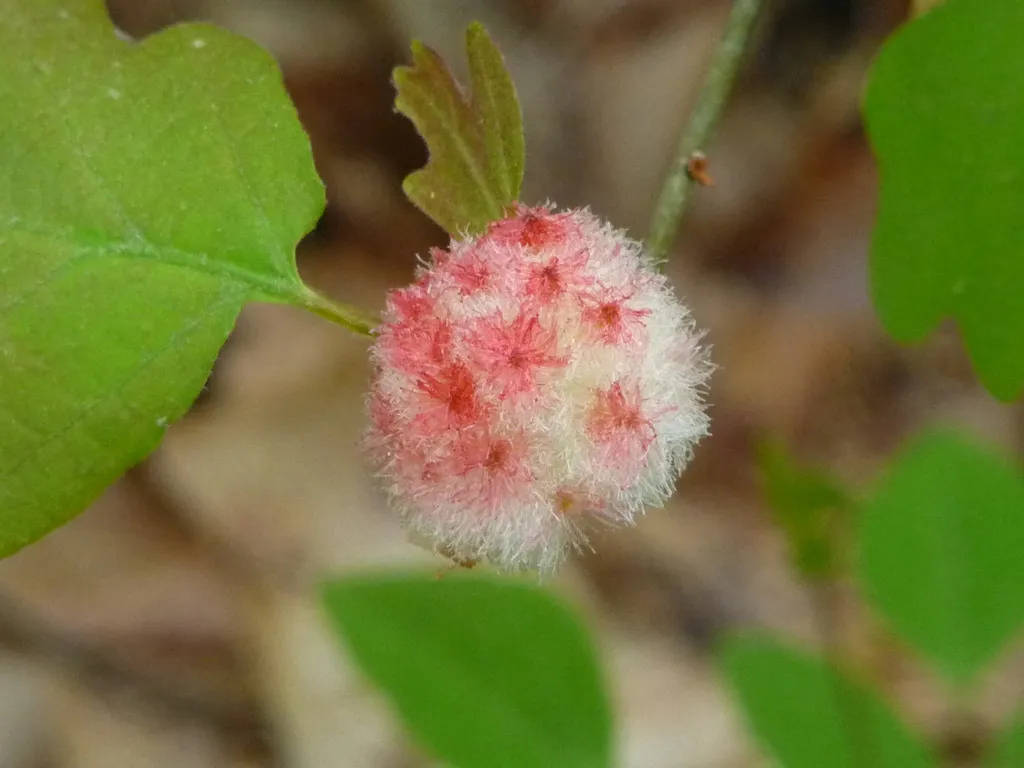
Wool Sower Gall Wasp
Callirhytis seminator
Identification: White with pink spots detachable stem gall on Quercus alba . Many celled. The gall has a distinctly stick surface when fresh and droplets have been observed. Parasitoid:
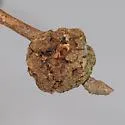
Callirhytis seminosa
Callirhytis seminosa
Identification: Woody stem galls in red oak, "abrupt, surface very irregular, cells near surface and very numerous."
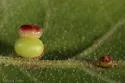
Kernel Flower Gall Wasp
Callirhytis serricornis
Identification: Larvae of this wasp induce galls on black oaks in California. A summer, unisexual generation induces galls on the veins on the underside of leaves. A spring, bisexual generation induces kernel-like galls on catkin flowers.
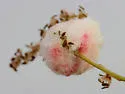
Water Oak Woolly Catkin Gall Wasp
Callirhytis turnerii
Identification: Felt says: "Globular, wooly gall, diameter 1/2 inch, on water oak, gall wasp." Weld describes in a key, summarized here: " Quercus nigra - Water Oak - > Flower galls - > Callirhytis turnerii (Ashm.). 484. Woolly, globular, as large as
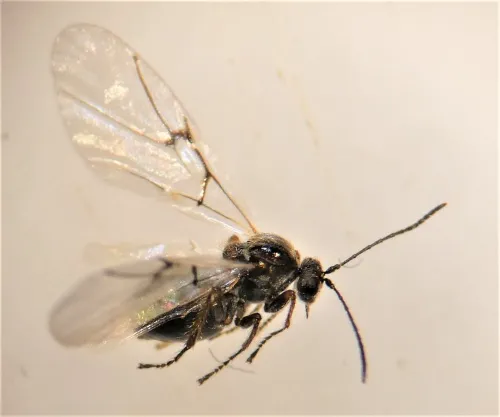
Cynips longiventris
Cynips longiventris
The agamic generation are produced from striped pea galls on oak. No additional images available for this species.
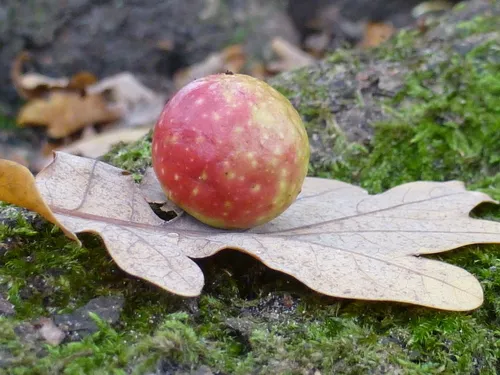
Cherry Gall Wasp
Cynips quercusfolii
Cynips quercusfolii is a small black gall wasp. The agamic generation emerges from cherry galls on the leaves of some species of oak. Asexual wasps emerge form cherry galls in late winter/autumn. No additional images available for this species.
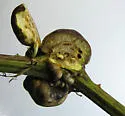
Blackberry Knot Gall Wasp
Diastrophus nebulosus
Induces galls in blackberry stems: "Rounded or long stem swellings, sometimes with 4 or 5 deep longitudinal furrows, length 2 to 6 inches." Parasitoids include this eurytomid:
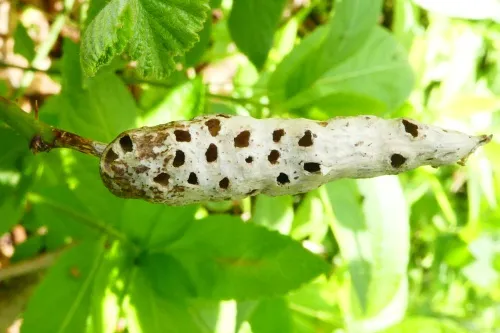
Diastrophus rubi
Diastrophus rubi
Diastrophus rubi is a gall wasp which affects Bramble ( Rubus fruticosus agg.). The galls is an elongated swelling, usually causing the stem to bend, with a bumpy surface, each bump containing a separate gall chamber. Often the old, vacated galls are
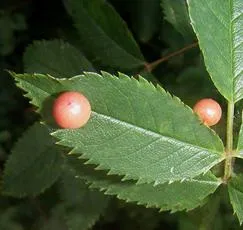
Smooth Pea Gall Wasp
Diplolepis eglanteriae/nervosa
The smooth rose pea gall is caused either by cynipid wasp Diplolepis nervosa or by Diplolepis eglanteriae on the leaves of the Dog-rose ( Rosa canina ). The galls are identical and Diplolepis eglanteriae cannot be recorded from the gall; adults have
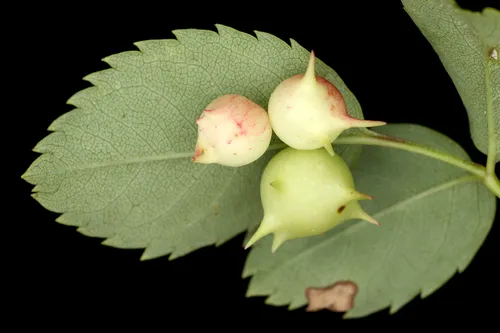
Sputnik Gall Wasp
Diplolepis nervosa
The cynipid wasp Diplolepis nervosa causes spiked 'sputnik' galls on the petioles, midrib or leaf blades of wild roses, usually underside but occasionally on the upper surface. It also forms smooth pea-galls, but these cannot be distinguished from th
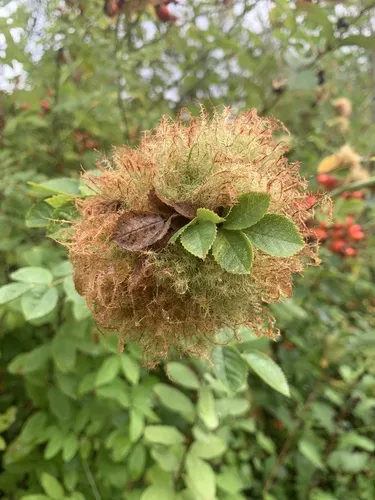
Bedeguar Gall Wasp
Diplolepis rosae
The female insects are about 4 mm long; parts of their abdomens and legs are an amber/chestnut colour, while the rest of the body is black. The male (length of about 3 mm) is very rare. It is black and its legs are bi-coloured. The gall is more likel
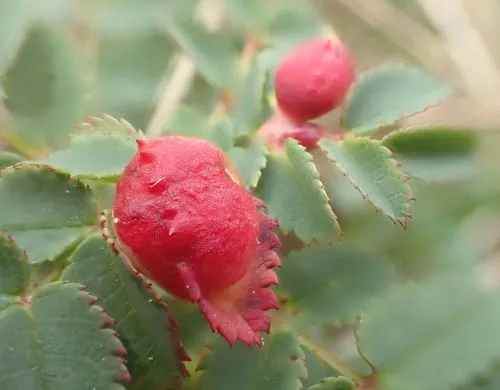
Diplolepis spinosissimae
Diplolepis spinosissimae
The larvae of the gall wasp cause Diplolepis spinosissimae cause galls to form on various rose species, being most frequent on Burnet Rose (Rosa spinosissima) , but also found on other rose species including Dog-rose and Sweet-briar. The galls are sm
Disholcaspis bassetti
Disholcaspis bassetti
Forms twig galls on bur ( Quercus macrocarpa ) and swamp white ( Q. bicolor ) oaks in the fall: "Globose, usually with a produced curving apex, single or clustered twig gall, green, turning to brown."
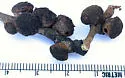
Honeydew Gall Wasp
Disholcaspis eldoradensis
Gall is known to produce honeydew which attracts various insects. In California, a large population of D. eldoradensis galls on Quercus lobata produced so much honeydew that domesticated honey bees could collect 30-40 lbs per hive from the galls. [Se
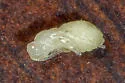
Disholcaspis lacuna
Disholcaspis lacuna
Identification: This wasp induces globular "bullet" galls on Quercus gambelli stems. They are tinged with pink when fresh and turn uniformly brown with age. These galls are always found in clusters of 3 or more.
Disholcaspis perniciosa
Disholcaspis perniciosa
Identification: Induces globular "bullet" galls on stems of Quercus gambelii, grisea, and Quercus x undulata.
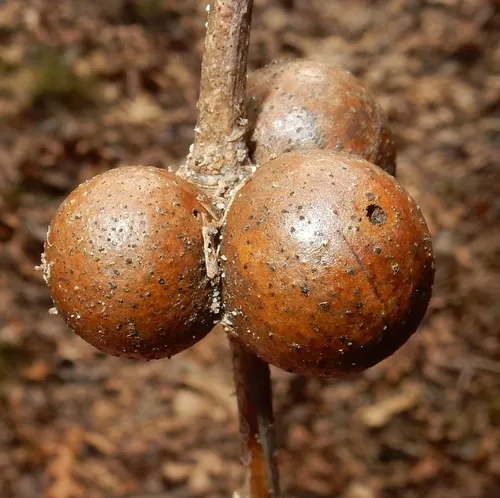
Round Bullet Gall Wasp
Disholcaspis quercusglobulus
Forms round, detachable twig galls, 8-15 mm in diameter, singly or in small clusters, on white oak ( Quercus alba ).
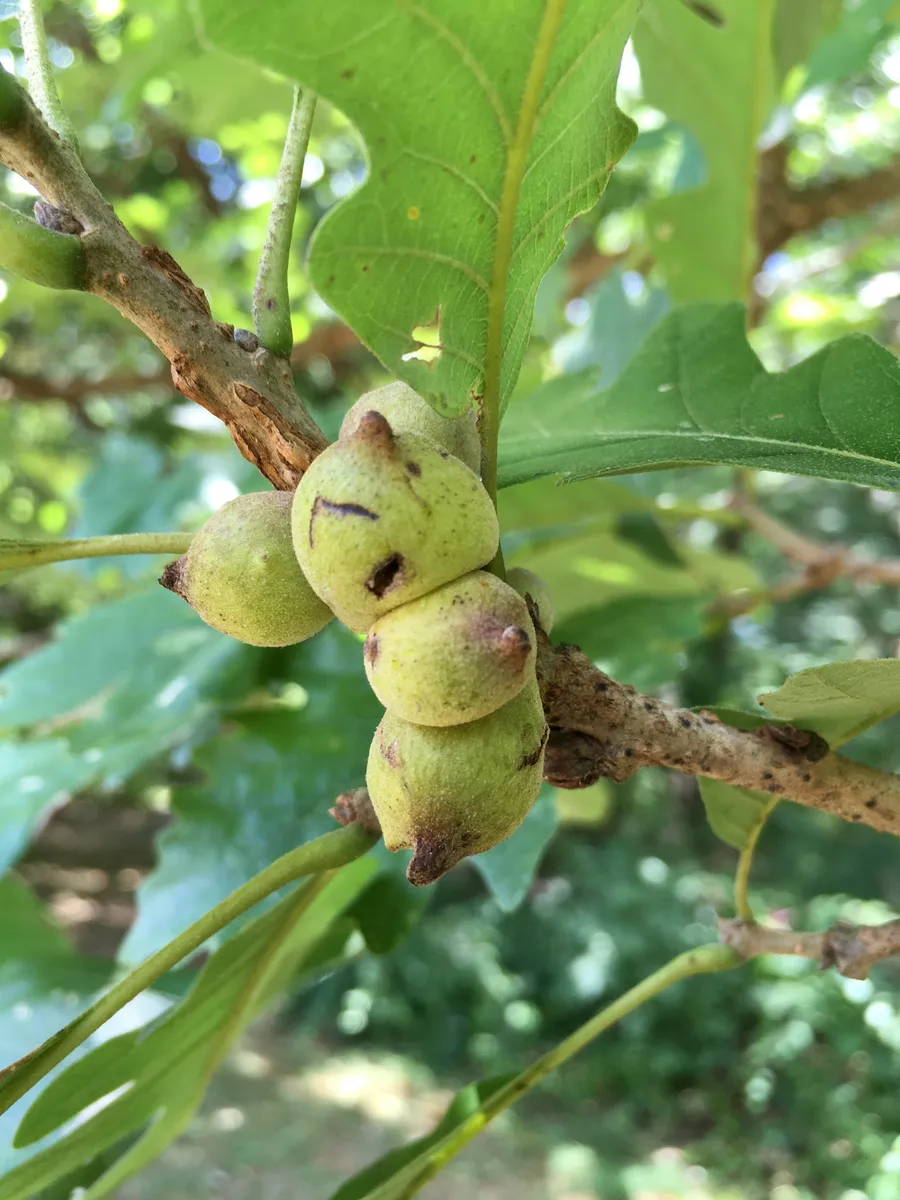
Oak Rough Bullet Gall Wasp
Disholcaspis quercusmamma
Identification: Galls are "globose, obscurely pointed, green [or] bright red, turning to brown or dark red." (Felt 1940) Parasitoids include 5 Sycophila spp. (Eurytomidae), one of which is pictured here:
Disholcaspis rubens
Disholcaspis rubens
Identification: This wasp induces round bullet galls on Quercus arizonica, fendleri, gambelli, oblongifolia, rugosa, toumeyi, and Quercus x undulata. The galls are yellow and red when young, and with age turn brown but often keep the red tinge. The g
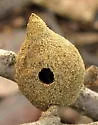
Dried Peach Gall Wasp
Disholcaspis simulata
Identification: This wasp created bud galls on scrub, leather, blue, Oregon, and Englemann oaks. The monothalamous galls contain a floating larval chamber.
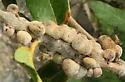
Disholcaspis spissa
Disholcaspis spissa
Identification: Induces cylindrical-globular stem galls on Quercus arizonica, fendleri, havardii, oblongifolia, rugosa, and turbinella. The galls almost always are found in groups of 4 or more. They can rarely become coalesced and turn into a large c
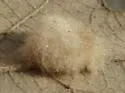
Druon ignotum
Druon ignotum
Forms galls on the undersides of veins of leaves in the white oak group, composed of seedlike cells in groups, covered by wool. Felt describes the galls as "oval, rather thick-shelled, brown leaf vein gall, at first woolly, later naked, length 1/8 in
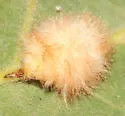
Andricus pattoni
Druon pattoni
Galls similar to those of Andricus quercusflocci , but on post oak ( Quercus stellata ), sand/dwarf post oak ( Q. margaretta ), and shallow-lobed oak ( Q. breviloba ).
Andricus quercusflocci
Druon quercusflocci
Forms galls on leaves of white ( Quercus alba ) and chestnut ( Q. prinus ) oaks: "Woolly, dirty white, of 2-10 seed-like bodies attached by one end on midrib on upper or lower side, in fall."
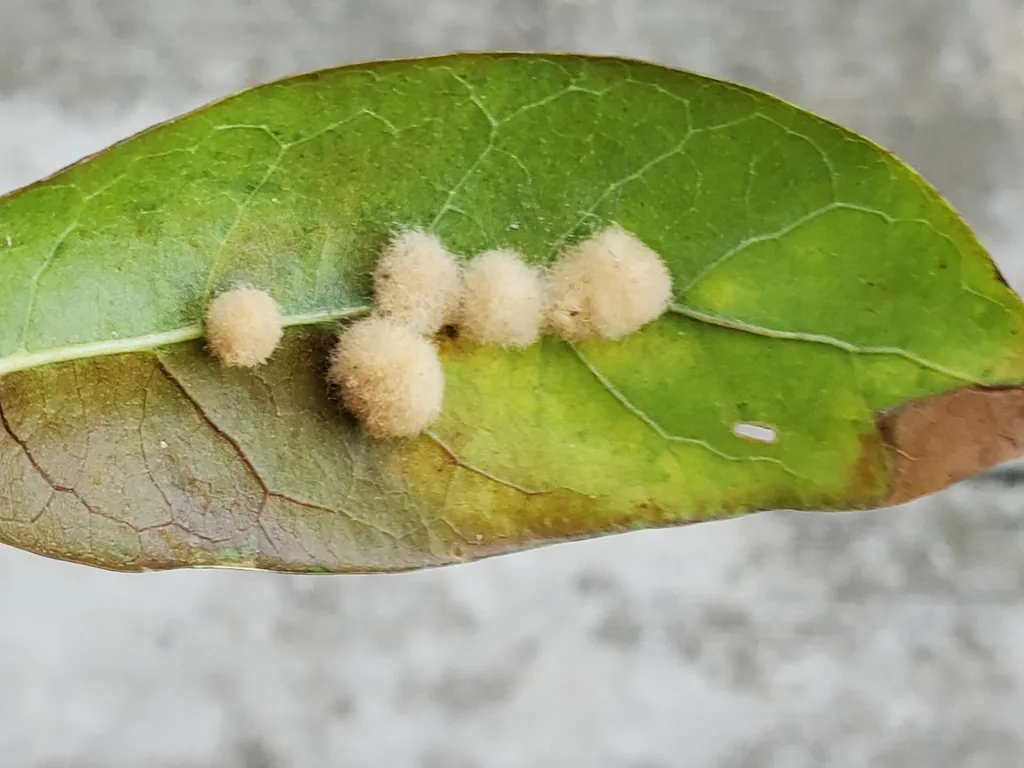
Wool-bearing Gall Wasp
Druon quercuslanigerum
Forms galls on live oak leaves ( Quercus virginiana and Q. geminata ). "Hemispherical or irregular tufts 1/2 inch long of rather long, whitish or reddish wool covering, 2 to 6 irregular brown, seed-like kernels on under side of midrib, diameter 1/12
Dryocosmus floridensis
Dryocosmus floridensis
The gall is a rosette of green bracts with a larval cell in the center, found "on all the red oaks in early spring."
Pumpkin Gall Wasp
Dryocosmus minusculus
Identification: From Russo : "This cynipid wasp induces tiny, 1 mm wide, pumpkin-shaped galls on the upper surface of the leaves of coast live, interior live and California black oaks. When fresh in late spring and summer, these monothalamous galls a
Succulent Oak Gall Wasp
Dryocosmus quercuspalustris
Galls are fleshy walled and hollow, except for the free-rolling cell about 2.5mm in diameter
Andricus amphorus
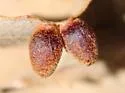
Feron amphorus
Identification: This wasp induces urn shaped galls on leaves of Quercus arizonica, gambelli, grisea, oblongifolia, turbinella, and Quercus x undulata. The galls are red and yellow, and stand erect from the leaf. The side getting the most exposure to
Andricus caepula
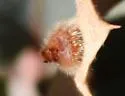
Feron caepula
Identification: This species induces vase shaped galls on Quercus turbinella and oblongifolia. The galls are reddish-yellow when young and turn brown with age, and are always covered by long, bristle-like hairs.
Red Cone Gall Wasp
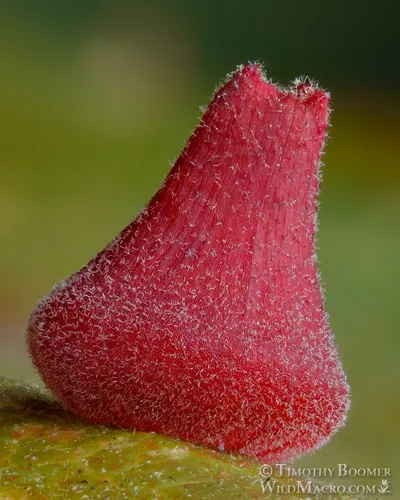
Feron kingi
Galls normally cause only minor damage to the host plant
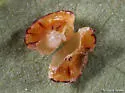
Disc Gall Wasp
Feron parmula
Identification: Only females are known for this species. Their galls are glossy and detachable, occurring on both sides of most white oaks.
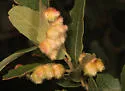
Andricus sulfureus
Feron sulfureum
Identification: Forms detachable leaf galls on Quercus arizonica and Q. oblongifolia .
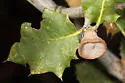
Lyon's Gall Wasp
Heteroecus lyoni
Identification: The larvae of this wasp induce stem galls on Quercus palmeri (Palmer's oak) in California. It's not known to induce galls on any other oak species.
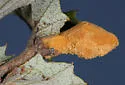
Golden Gall Wasp
Heteroecus melanoderma
Identification: This wasp galls Quercus chrysolepis (canyon live oak) and Quercus vacciniifolia (huckleberry oak) in California. Note that the hairs are shorter than those on Heteroecus dasydactyli . One way to tell the difference between the two typ
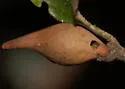
Beaked Spindle Gall Wasp
Heteroecus pacificus
Lyon(1963) noted that the presence of inquilines (e.g. Synergus sp. ) usually deforms the shape of the summer generation galls into a more blunt & swollen-tipped form (e.g. see here and here )...whereas galls free of inquilines typically retain a nar
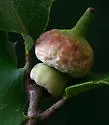
Mushroom Gall Wasp
Heteroecus sanctaeclarae
Identification: This wasp makes a bud gall on canyon live oaks and huckleberry oaks.
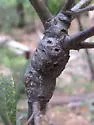
Kokkocynips coxii
Kokkocynips coxii
Identification: Induces stem swelling galls on Quercus emoryi and hypoleucoides.
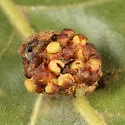
Kokkocynips decidua
Kokkocynips decidua
Larvae develop in galls on the undersides of the midveins of leaves in the red oak group, splitting the midvein as the galls grow.
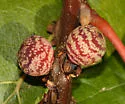
Banded Bullet Gall Wasp
Kokkocynips imbricariae
Causes galls on twigs of the red oak group: "Globose, hard, brown or mottled light and dark green, twig galls, diameter 1/4 to nearly 1/2 inch, occurring several together in fissures, on scarlet, black, black jack, blue jack, turkey, pin, willow, shi
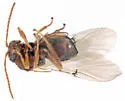
Kokkocynips rileyi
Kokkocynips rileyi
"After the galls drop in October the fleshy knob at top shrivels leaving a hilum-like scar." Adult female: Inquiline:
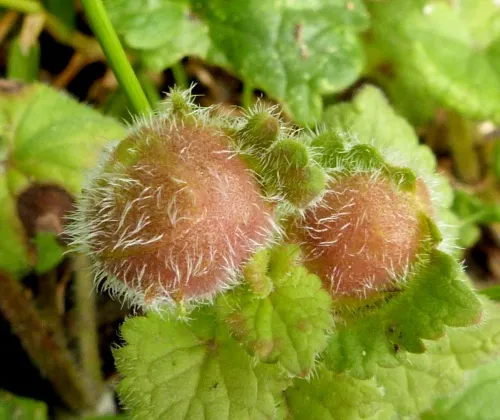
Liposthenes glechomae
Liposthenes glechomae
Liposthenes glechomae is a cynipid gall wasp that causes galls to form on Ground-ivy. The galls are globular hairy swellings on the undersides of leaves or apparent on both sides of the stem. They are green or reddish in sunlight, soft at first becom