
Gorytes laticinctus
This record describes Gorytes laticinctus (species). Recorded family: Crabronidae. Recorded order: Hymenoptera.
Identification and Appearance
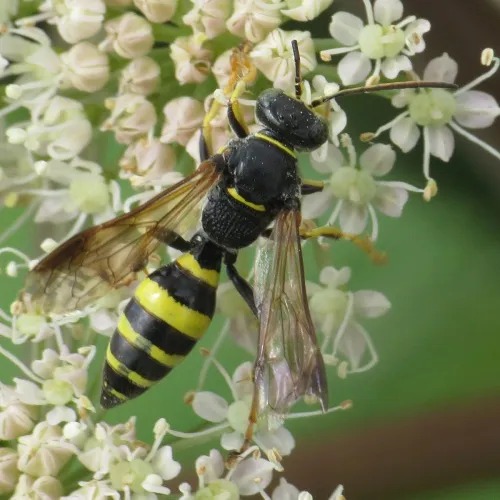
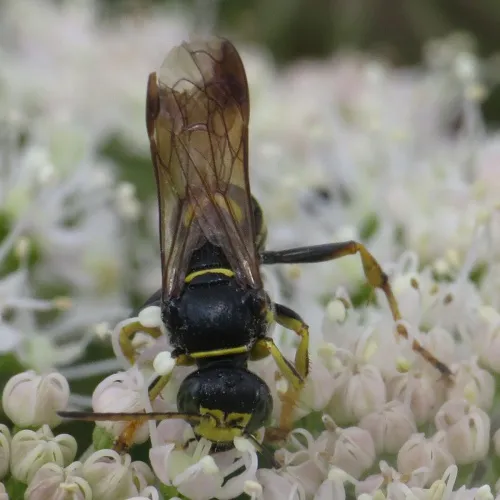
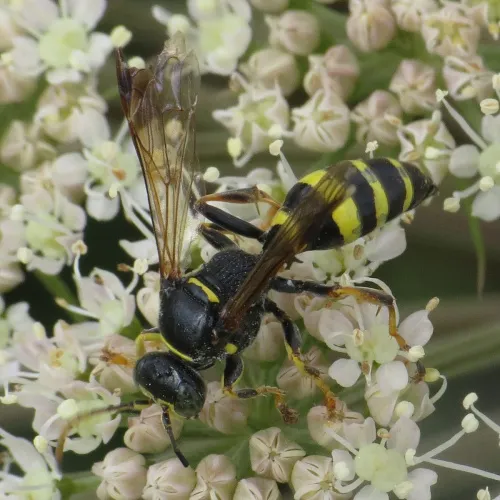
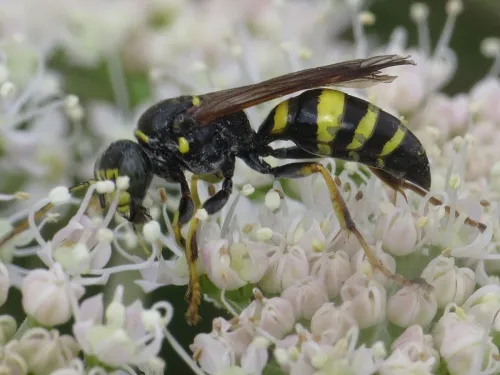
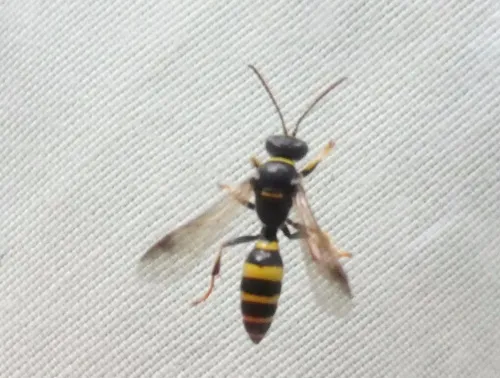
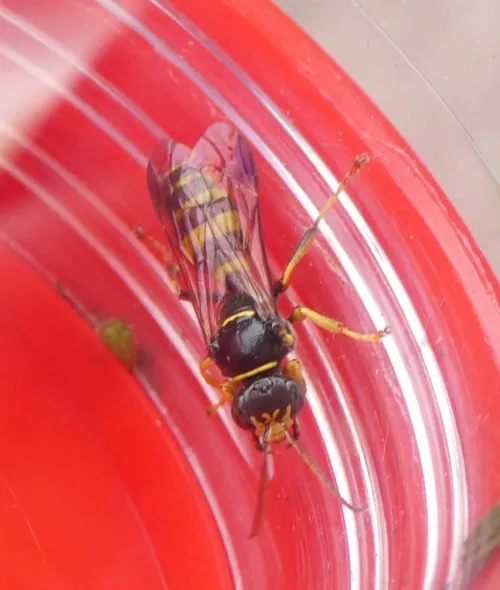
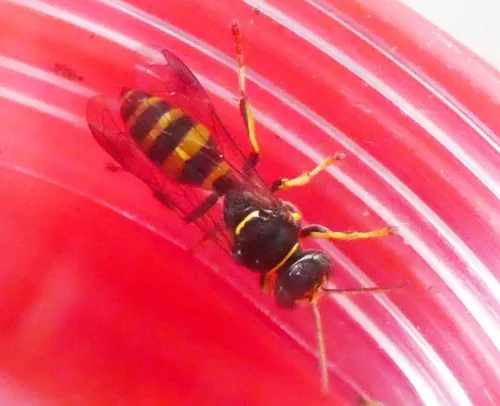
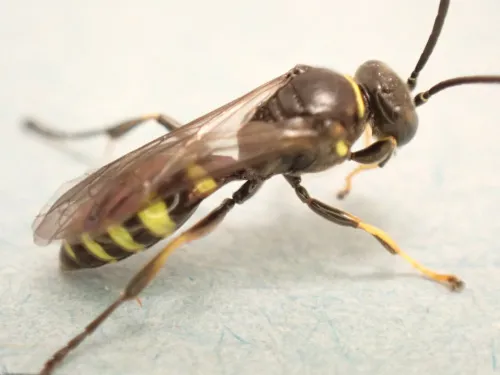
9 to 13mm. This is one of several very similar wasps in the family which require a specimen or excellent macro photos to identify. The first dorsal plate is straight-sided rather than bulged and the yellow on the second dorsal plate occupies not less than 1/3 of its length. The face is largely yellow, extending above the level of the antennal insertions. Most solitary bees and wasps are difficult to identify, and can rarely be identified from photos taken in the field. All red-rated records should include a photo or set of photos of the specimen, illustrating the key characters taken from a standard key, which should also be referenced (e.g. ‘Falk, 2015’). The full set of key characters are generally not visible in field photos and photos are rarely sharp enough. To aid in the verification of your records, please include face shot, side, top and wings. The notes should state whether male or female, and explain how the specimen met the key characters. Although NS may not be able to identify the species even if these reference photos are provided, the photos will be stored with the record and may allow it be identified in future. Alternatively, NS will accept records identified by a recognised local or national expert, or that have been identified via BWARS Facebook Group . If you have obtained this advice, please note the name of the person/organisation identifying the record in the ‘determiner’ field (e.g. ‘Stuart Roberts, BWARS Facebook’) rather than just a comment of ‘BWARS Facebook’. Usually associated with rough vegetation such as brambles in open situations. Typically observed running over brambles and other low herbage. Mid-June to mid-August, sometimes extending into September. Females excavate nest burrows in the ground. The cells are provisioned with froghoppers (Philaenus spumarius) or similar bugs. The adult wasps will visit umbellifers to feed. Rare (RDB3). Sparsely distributed south of a line from the Severn Estuary to the Wash. http://www.bwars.com/index.php?q=wasp/crabronidae/nyssoninae/gorytes-la… http://www.wbrc.org.uk/WORCRECD/36/Skirrow_Martin--Trevis_Geoff--0Solit…
Classification
- Kingdom
- Animalia
- Phylum
- Arthropoda
- Class
- Insecta
- Order
- Hymenoptera
- Family
- Crabronidae
- Genus
- Gorytes
Imported taxonomy record. Source availability varies; see the source references and editorial policy below.
Habitat and Range
Habitat
Usually associated with rough vegetation such as brambles in open situations. Typically observed running over brambles and other low herbage.
Seasonal Activity
Mid-June to mid-August, sometimes extending into September.
Diet and Behavior
Life History
Females excavate nest burrows in the ground. The cells are provisioned with froghoppers (Philaenus spumarius) or similar bugs. The adult wasps will visit umbellifers to feed.
Additional species information
Recorded status
Rare (RDB3). Sparsely distributed south of a line from the Severn Estuary to the Wash.
About Flies: the wider group
Order-level background for Hymenoptera, the group containing Gorytes laticinctus. Species-specific details appear above.
Group overview
Hymenoptera includes over 150,000 described species of ants, bees, wasps, and sawflies. Earth harbors approximately 20 quadrillion (20×10^15) ants, with a combined biomass of ~12 megatons of dry carbon - exceeding the combined biomass of all wild birds and mammals (PNAS, 2022).
Ecological role of the group
About 35% of the world's food crops depend on animal pollinators. The chocolate industry, valued at over $100 billion, depends on pollinating flies and midges. Ants are the dominant soil engineers in most terrestrial ecosystems, turning more soil than earthworms in many habitats.
Economic and practical significance of the group
Pollinators contribute $235-577 billion worth of annual global food production (FAO). In the U.S., bee pollination alone benefits crops valued at $18 billion annually, and honey bees are responsible for $5.4 billion in agricultural productivity. Between April 2023-2024, 55.1% of managed honey bee colonies were lost. The U.S. bee population dropped from 5 million to 2.5 million.
Recorded sources for this group: FAO, USDA, EPA, PNAS (2022), US Fish & Wildlife Service. Imported estimates may describe particular regions or reporting periods.
Photos of Gorytes laticinctus (10)
Frequently Asked Questions About Gorytes laticinctus
What is Gorytes laticinctus?
Gorytes laticinctus is a species in the family Crabronidae, within the order Hymenoptera.
Where is Gorytes laticinctus found?
Habitat: Usually associated with rough vegetation such as brambles in open situations. Typically observed running over brambles and other low herbage.
When is Gorytes laticinctus active?
Gorytes laticinctus: seasonal activity - Mid-June to mid-August, sometimes extending into September..
What is the life cycle of a Gorytes laticinctus?
Females excavate nest burrows in the ground. The cells are provisioned with froghoppers (Philaenus spumarius) or similar bugs. The adult wasps will visit umbellifers to feed.