
Family Ichneumonid Wasps (Ichneumonidae)
Ichneumonidae is a family in the order Hymenoptera. Browse 581 named species recorded in this family, or open an individual profile for its available identification and natural-history information.
Species in Ichneumonidae (581)
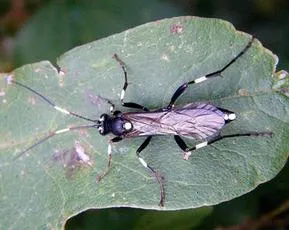
Achaius oratorius
Achaius oratorius
This is a medium-sized species (11–15mm) and has a black body with white spots. The precise pattern of white around the inner margin of the eyes, the white bands on each pair of legs together with the white band on the first abdominal segment are dis
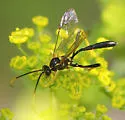
Acroricnus stylator
Acroricnus stylator
Identification: Overview of Subspecies Subspecies are separated as follows: 1. A. s. aequatus : Hind femur black, hind tibia entirely yellow. Propodeum, metapleurum, hind coxae, and scutellum either black or yellow. 2. A. s. edwardsii : Abdomen promi
Agonocryptus discoidaloides
Agonocryptus discoidaloides
Identification: Black with prominent white abdominal bands and thoracic spots. The eyes are black with white rings. The black antennae are long with white bands in the median area. The legs are orange with the basitarsomere orange, subsequent tarsome
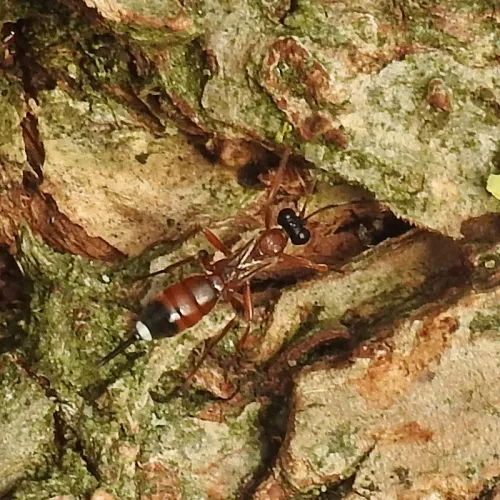
Agrothereutes abbreviatus
Agrothereutes abbreviatus
A brachypterous (short-winged) species having a basically reddish colour with a dark final third to the abdomen and a white tip. The hind femora are dark in the apical third and the hind tibia are white at the base. The head is black and the thorax m
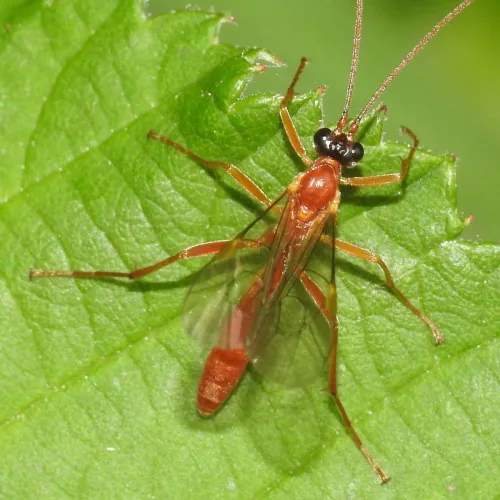
Alexeter nebulator
Alexeter nebulator
This ichneumon is entirely orange in colour apart from the dark head and the darkened antennal tips. It has large eyes and ocelli to aid it in its nocturnal lifestyle. It sometimes turns up in light traps. The species is nocturnal and is a parasitoid
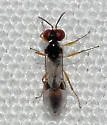
Allophrys divaricata
Allophrys divaricata
Identification: Head for the greater part dark brown. Eyes of males very large. Thorax black, rarely lateral part of pronotum and mesopleurum tinged with brown. Gaster for the greater part black, petiole usually yellowish brown or brown, posterior pa
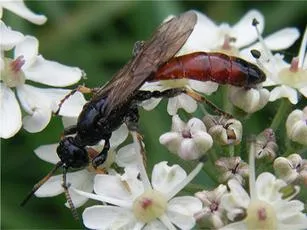
Alomya debellator
Alomya debellator
Medium sized (10–18mm) black wasp with broad orange bands on the abdomen and orange on the lower leg joints. In females the antenna is pale at the base and the hind tarsus is a dark reddish brown. Males have a darkly tipped third tibia and the abdome
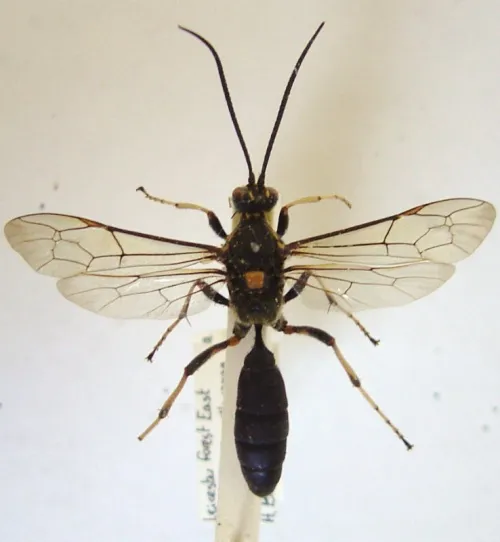
Amblyjoppa proteus
Amblyjoppa proteus
A large (20–25mm), mainly jet-black species with a small yellow/cream spot on the back of the thorax. This species has dusky borders to the tips of the wings. Males have white bands on the hind legs and entirely black antennae, females have entirely
Amblyteles armatorius
Amblyteles armatorius
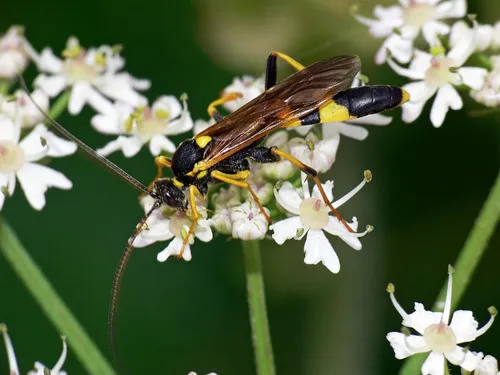
One of the many medium to large (15mm) black-and-yellow banded species. The spine on the top of the thorax together with a precise colour pattern on the abdomen in both sexes distinguishes them from the many other very similar species. Watch out for
Anomalon picticorne
Anomalon picticorne
Identification: Distinctive among the Anomalonini in having a white band (annulus) on the antennae. See Viereck, 1912, for full description of female in Print References below.
Apechthis compunctor
Apechthis compunctor
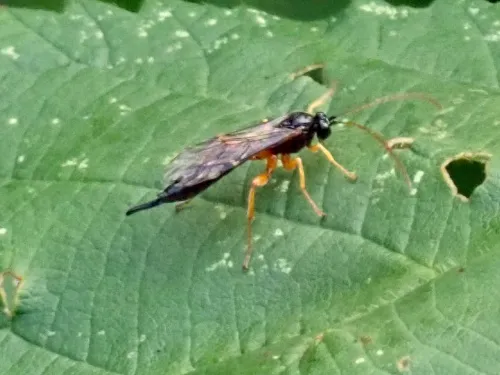
A small to medium (7 to 15 mm) black bodied species. It has orange legs without cream banding on the hind tibia. Similar to Pimpla rufipes but in Apechthis compunctor the female ovipositor has a downward curved tip. Photographs required showing the t
Apechthis rufata
Apechthis rufata
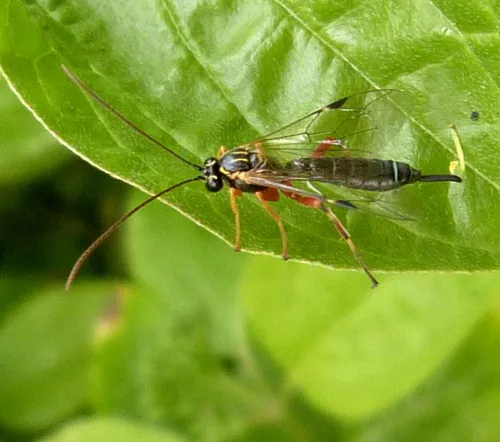
Length up to 15 mm. Quite a striking ichneumon, although there are similar species and expert help is needed with identification. Unless identified by a recognised expert, a photo is required and the specimen should be examined with a microscope. In
Apsilops hirtifrons
Apsilops hirtifrons
Per Judd, 1953: " Apsilops hirtifrons (Ashm.).-One wasp emerged in Cage 4 on August 9. Hart (1896), referring to the species as Cryptus cyaneiventris Riley, reports that in Illinois it was common in July on floating leaves of Potamogeton natans , ass
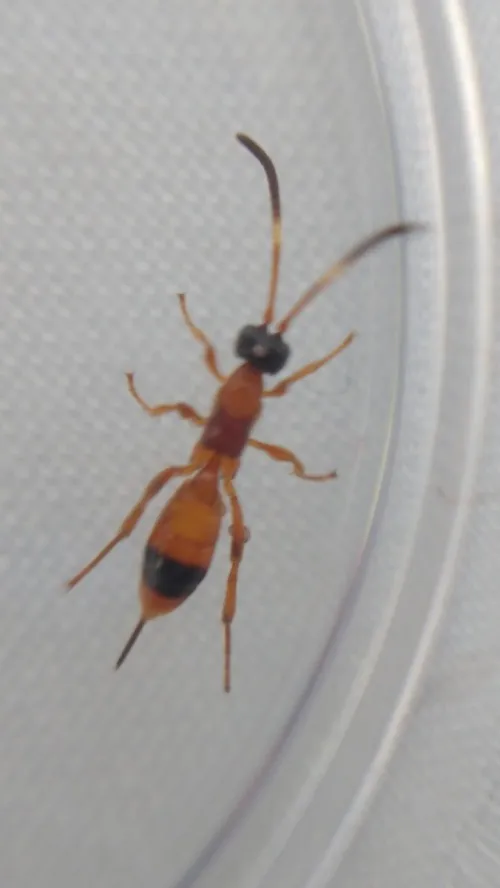
Aptesis nigrocincta
Aptesis nigrocincta
Length 3 to 8 mm. Females are significantly smaller than males and nearly wingless. A distinctive ichneumon, the abdomen and legs are orange, the abdomen has a broad black band. Unless identified by a recognised expert, photos are required from above
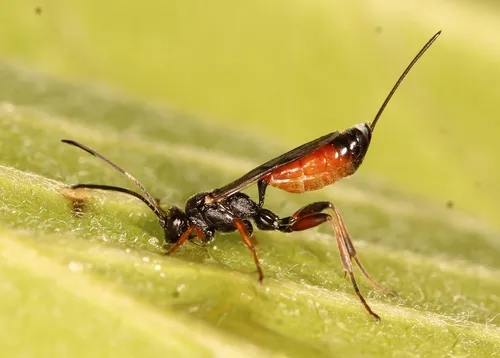
Aritranis director
Aritranis director
Length up to 10 mm. The head and thorax are black. The bulk of the abdomen is orange-red but the final part is black. The female also has a small white band at the tip of the abdomen, immediately before the ovipositor. Unless identified by a recognis
Arotes melleus
Arotes melleus
Identification: The female is largely ferrugineous with stramineous markings on the scutellum, postscutellum, trochanters, tibial bases, tarsi, underneath of the pedicel, and subgenital plate. The wings are hyaline with a black stigma and a broadly c
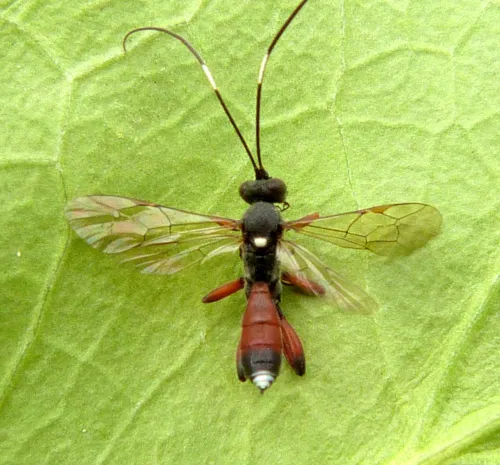
Asthenolabus vitratorius
Asthenolabus vitratorius
A red and black nocturnal wasp with long antennae typical of members of the Platylabini tribe. The red abdomen darkens towards the tip and finishes with white tailstripes which may also be helpful in determining species. Several other members of the
Baryceros candidus
Baryceros candidus
Identification: Our only member of Baryceros with a red abdomen. The white band on the antenna is interrupted below, the coxae and trochanters are white with the fore- and mid- coxae with dark basal and apical marks and the white mark of the hind cox
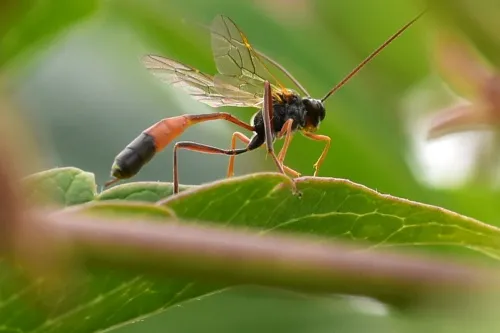
Barylypa propugnator
Barylypa propugnator
13 to 20 mm. Fairly large orange and black Ichneumon. Unless identified by a recognised expert, a photo is required. If the photo doesn't show the key ID features then in the comments box describe the size and identifying characters you have observed
Bathyplectes curculionis
Bathyplectes curculionis
A Paleartic species introduced in NA in 1911 to control Hypera postica , the alfalfa [leaf] weevil and Hypera brunnipennis Egyptian alfalfa weevil.
Bathyplectes infernalis
Bathyplectes infernalis
Like its host, the clover leaf weevil, this species is a European immigrant. Although it is generally thelytokous (i.e. females only), I have seen males from NJ, PA, MD, and VA. Males are perhaps even rarer in Europe because in a 1974 revision of t
Brachycyrtus pretiosus
Brachycyrtus pretiosus
Identification: Distinguished from allies by its fulvous thorax, white markings, lighter hind trochanter, apex of hind tibia dark, darker-marked hind femur, and dark lines on the tarsi
Buathra laborator
Buathra laborator
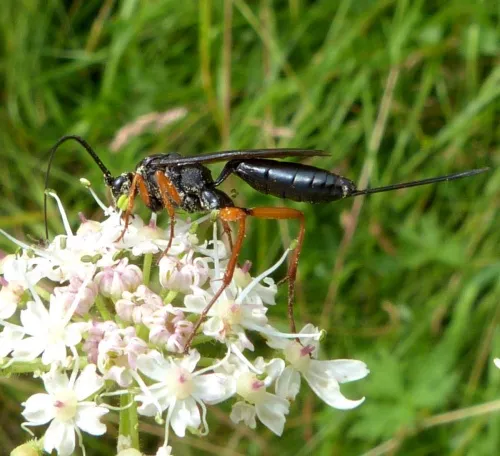
Quite a large blackish insect with mainly orange legs. There are other similar species and expert help is needed with identification. The images that appear in a red box are representative of this species, but have not been subject to detailed expert
Buathra perplexa
Buathra perplexa
Identification: thorax and abdomen black; coxae and scapes red
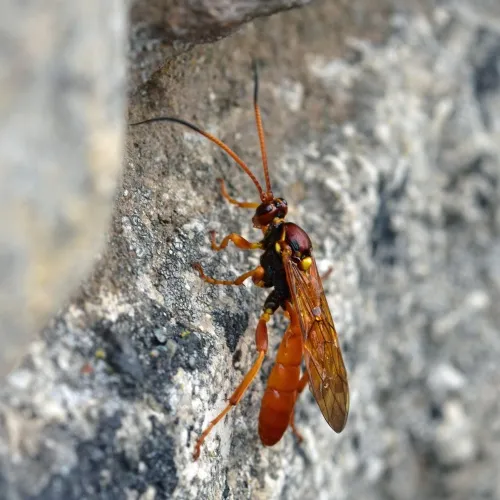
Callajoppa cirrogaster
Callajoppa cirrogaster
Callajoppa cirrogaster is very similar to Callajoppa exaltatoria. They are two of the largest Ichneumonidae in Britain but can be hard to tell apart. Both are similar in coloration and have pale markings at the base of the antennae as well as yellow
Calliephialtes ferrugineus
Calliephialtes ferrugineus
Identification: A brilliantly-colored species of Calliephialtes with a reddish head, thorax, and abdomen and with white legs having minor black markings.
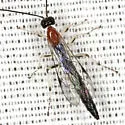
Calliephialtes grapholithae
Calliephialtes grapholithae
Identification: A distinct and prominent species of Calliephialtes with a black head, mostly reddish-orange thorax, black propodeum, white legs with minor black markings, and black abdomen with slight white bands on the apical segments. Female (left)
Calliephialtes notandus
Calliephialtes notandus
Identification: Denoted among Calliephialtes by the combination of uniformly fulvous femora, pale fulvous (not white) fore coxa of the female, and entirely black (not white) scape of the male.
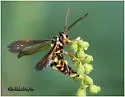
Ceratogastra ornata
Ceratogastra ornata
Mimic of Poecilopompilus . "There is considerable regional variation in color. Specimens from New England and adjacent parts of New York are darkest, from which area the populations are progressively paler toward the west and south. Darker individual
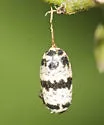
Charops annulipes
Charops annulipes
Type Locality: Missouri. Described from one specimen in the Charles Valentine Riley Collection . (Ashmead 1890)
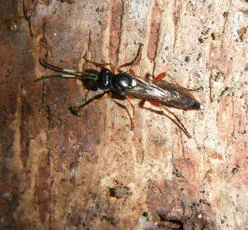
Chasmias paludator
Chasmias paludator
It has a white spot at the base of the thorax and another at the tip of the abdomen but is otherwise mainly black with red legs. The antennae have a broad white band at about halfway. Detailed examination required, or expert assistance with id. True
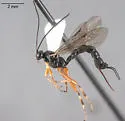
Clistopyga atrata
Clistopyga atrata
Identification: This species is identified within its genus by its almost entirely black body to dark brown and its complete submetapleural carina. The female has an entirely coarse-punctated metapleuron and a slender, only weakly upwardly-curved ovi
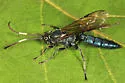
Coelichneumon sassacus
Coelichneumon sassacus
Identification: The body is conspicuously metallic blue throughout. White markings are usually restricted to lateral marks on the scutellum, with the face, pronotum, and subalarum usually entirely unmarked. The scopa is large. The flagellum is modera
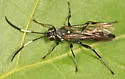
Coelichneumon vitalis
Coelichneumon vitalis
Identification: Female has bluish tint on metasomal terga but not on mesosoma and propodeum.
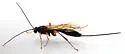
Coleocentrus pettiti
Coleocentrus pettiti
Identification: Separated from similarly-colored Coleocentrus by the darkened hind tibiae and ovipositor length of 1.08x forewing length.
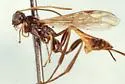
Collyria coxator
Collyria coxator
Palearctic species introduced in NA to control the European wheat stem-sawfly ( Cephus pygmaeus ; despite repeated attempts to establish it in w. Canada in the 1930's on the native Cephus cinctus , it apparently no longer occurs there ; the 1935-1940
Colpotrochia texana
Colpotrochia texana
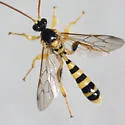
Identification: "The angle of the nervellus of the hindwing appears to be "postfurcal" (with the end that joins vein M+Cu farther from the wing base than the end that joins vein 1A) and it is "vertical" in crassipes. In addition, crassipes has a more
Compsocryptus calipterus
Compsocryptus calipterus
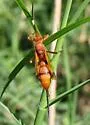
Identification: Females are colored much like C. texensis except the ground color of the body is slightly lighter, the flagellum often has a white annulus (sometimes reduced or absent), and the wings typically have narrower black markings. Males are
Compsocryptus fasciipennis
Compsocryptus fasciipennis
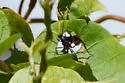
Identification: Body almost entirely bluish black apart from slight fulvous tinges on the head, antennae strongly yellow with the apex black, forewing black with but a single yellowish-orange band. Our only Compsocryptus that isn't fulvous to ferrugi
Compsocryptus texensis
Compsocryptus texensis
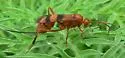
Identification: Female with the base of the flagellum uniformly ferruginous and lacking any sign of a white annulus. Male with the first flagellomere entirely fulvous (not fuscous above), T4 basally darkened, hind femur entirely red, hind tibia black
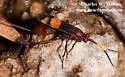
Compsocryptus xanthostigma
Compsocryptus xanthostigma
Identification: Distinct in North America by the combination of extensively black wings with only 2 orange bands (no orange at the base) and black mid and hind legs.
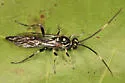
Cratichneumon sublatus
Cratichneumon sublatus
Identification: ♀ Head and thorax with sparse white markings (including inner orbits), abdomen entirely black; hind coxae without scopa. ♂ Considered very closely related to C. viator acerbus by Heinrich.
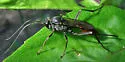
Cryptus albitarsis
Cryptus albitarsis
Identification: Males are most readily diagnosed and are noted for their prominent white hind tarsi and red abdomens. Females have entirely black bodies and legs apart from a red abdomen and typically with wings subhyaline to weakly infuscate. Though
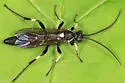
Ctenichneumon minor
Ctenichneumon minor
Identification: Scutellum white, fore tibae entirely white, female with white annulus extensive and basal segments with disconnected white marks, abdomen entirely black
Cymodusa distincta
Cymodusa distincta
Identification: Basal flagellomeres of female white on inner side, black on outer side.
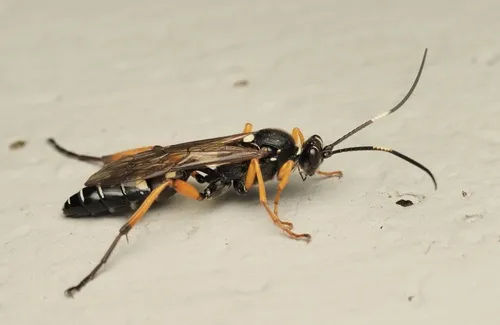
Diphyus quadripunctorius
Diphyus quadripunctorius
A large and distinctively marked black and yellow species with the femora (thighs) on the rear legs being orange in the female and yellow in the male. The species is sexually dimorphic with females having a pale section on their antennae and very dif
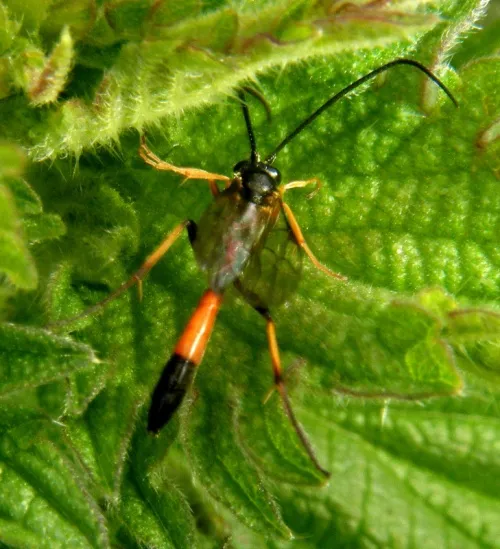
Dusona circumspectans
Dusona circumspectans
This ichneumon is about 7 or 8 mm long and has a black head and thorax. The abdomen is also black but has a wide orange band. The legs are mainly orange, but the femurs of the rear legs are black. Thought to parasitise small caterpillars.
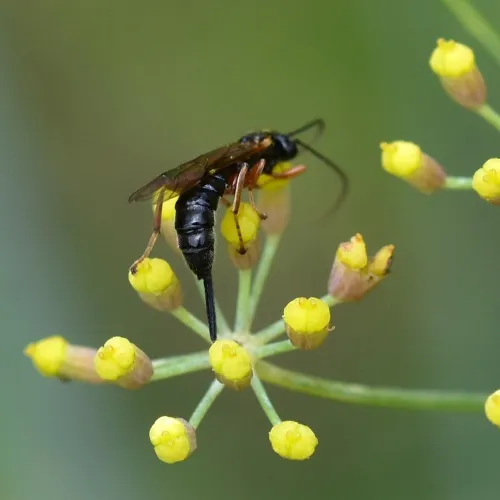
Endromopoda detrita
Endromopoda detrita
A black bodied ichneumon with red-brown coloured legs. Unless identified by a recognised expert, a photo is required and the specimen should be examined with a microscope. In the comments box, state the key or ID method used and describe the size and
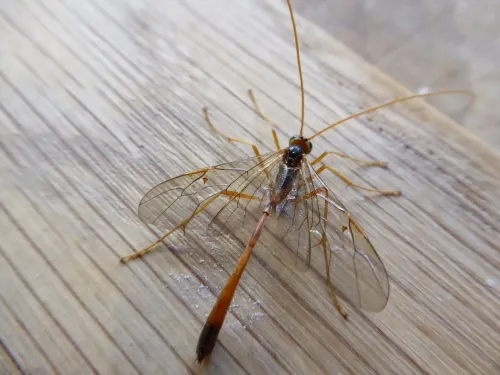
Enicospilus combustus
Enicospilus combustus
Pronotum, mesopleuron, mesocutum and propodeum with dark patches in this species. Unless identified by a recognised expert, a photo is required. If the photo doesn't show the key ID features, then in the comments box describe the size and identifying
Enicospilus cubensis
Enicospilus cubensis
Identification: Central sclerite crescentic, positioned close to a slender proximal sclerite which is of only slightly larger surface area
Enicospilus glabratus
Enicospilus glabratus
Identification: Forewing with discosubmarginal cell bearing a cluster of closely interspaced hairs in anterodistal corner (the forehead of the horse-head shaped cell)
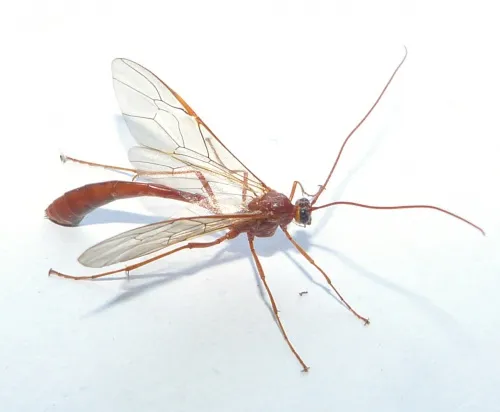
Enicospilus inflexus
Enicospilus inflexus
A large orange-bodied wasp it is similar to other Ophioninae species and care is needed with identification. Unless confirmed by a recognised expert, a photo is required and the specimen should be examined with a microscope. In the comments box, stat
Enicospilus peigleri
Enicospilus peigleri
named after Ric Peigler (reared Ophioninae for Gauld)
Enicospilus purgatus
Enicospilus purgatus
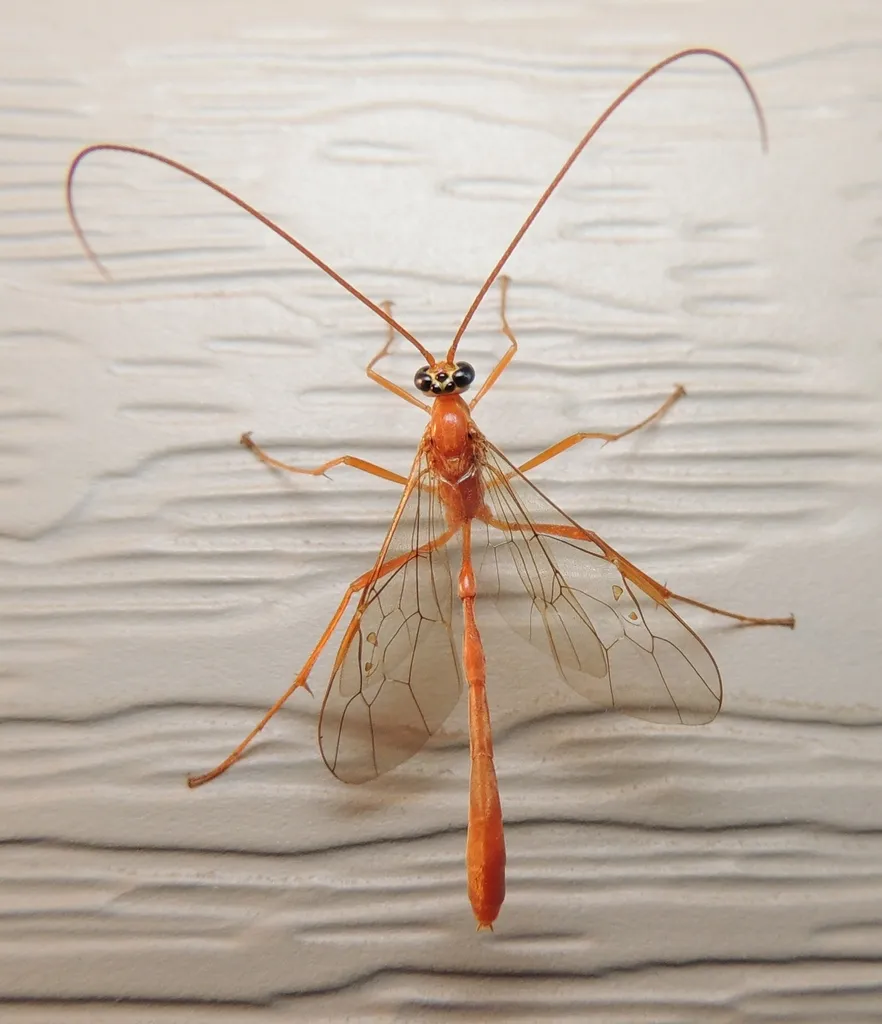
Identification: Recognized by the pattern of sclerites in the discosubmarginal cell of the fore wing: proximal and central sclerite prominent but distal sclerite reduced to a thin crescent. Mandible with a longitudinal furrow which bears setae.
Enicospilus texanus
Enicospilus texanus
Identification: Forewing WITHOUT discosubmarginal cluster of close hairs in anterodistal corner. Forewing length 15 mm+; forewing with Rs+2r weakly sinuous, straightened before joining Rs.
Ephialtes manifestator
Ephialtes manifestator
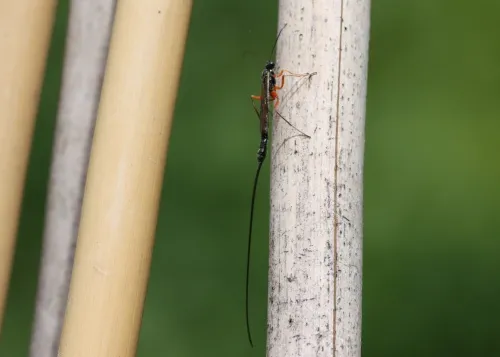
An entirely black species with orange legs. The female has an extremely long ovipositor (up to 6 cm) for probing the nest of solitary bees and wasps, together with the wide, pale brown clypeus on the lower face. Males are not as conspicuous, but can
Eriborus terebrans
Eriborus terebrans
Palearctic species introduced in NA to control the European corn borer ( Ostrinia nubilalis ) Introduced repeatedly from 1927 through 1940.
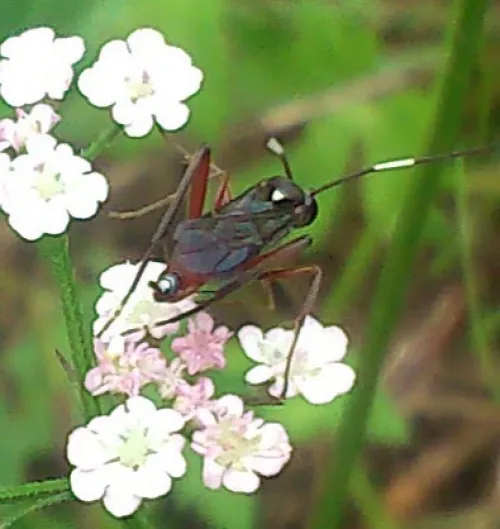
Exetastes adpressorius
Exetastes adpressorius
Good photographs required. It may be necessary to get expert confimation of species. No additional images available for this species.
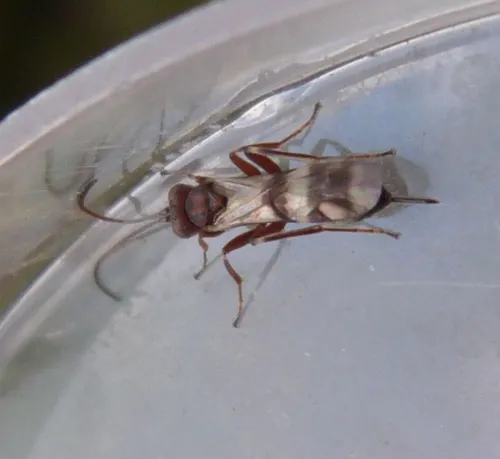
Gelis areator agg.
Gelis areator agg.
Despite its distinctive appearance, with dark banded milky white wings and an almost back thorax with red marking, this parasitic wasp is very difficult to identify to species as there are similar members of the genus, particularly Gelis cinctus . Fo
Glypta fumiferanae
Glypta fumiferanae
Adult life span 38 days average under laboratory conditions, less in nature.
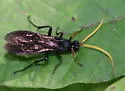
Gnamptopelta obsidianator
Gnamptopelta obsidianator
Identification: Very large blue-black Ichneumon with orange antennae. See images and comments there. Frequents flowers, presumably seeking nectar (?). Several other ichneumonids have this same general pattern (Eric Eaton--comments under various photo
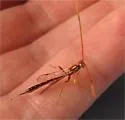
Grotea anguina
Grotea anguina
Identification: fore wing without apical spot, antennae yellow with black band at 0.7 of its length Female
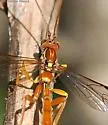
Grotea californica
Grotea californica
Identification: fore wing without apical spot, antennae entirely yellow Female (left) and male (right)
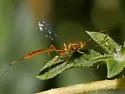
Grotea lokii
Grotea lokii
Identification: Almost identical to its eastern analogue, G. anguinea in coloration. Distinguished by a brownish spot in the forewing (either conspicuous or faint) and by the lack of a deep-orange dorsal band on the pronotum. Legs may be slightly mor
Hepiopelmus variegatorius
Hepiopelmus variegatorius
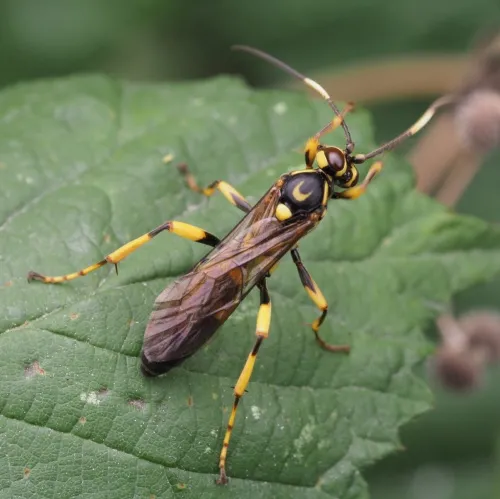
This is a fairly large (approximately 15mm long) and distinctively marked black and yellow Ichneumon with yellow u-shape on the mesonotum, thick yellow band along inner margin of eye, yellow marks only on front part of metasoma. Various habitats, oft
Hercus fontinalis
Hercus fontinalis
Found in Europe Checklist of ichneumonid parasitoid wasps in Switzerland (Hymenoptera, Ichneumonidae): 470 species new for the country and an appraisal of the alpine diversity.
Heteropelma datanae
Heteropelma datanae
Similar in coloration to both Therion nigripes and T. tenuipes among the Anomaloninae. Both species have a less elongate first tarsomere and longer following tarsomeres. Each also has some degree of yellow facial markings. The Ophionine species Thyre
Homotherus locutor
Homotherus locutor
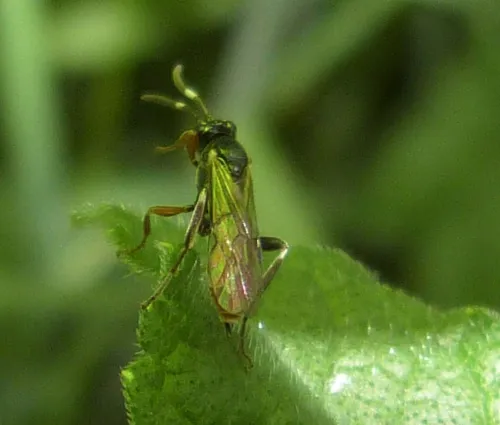
Unless identified by a recognised expert, a photo is required and the specimen should be examined with a microscope. In the comments box, state the key or ID method used and describe the size and identifying characters. Larva is a parasite of Geometr
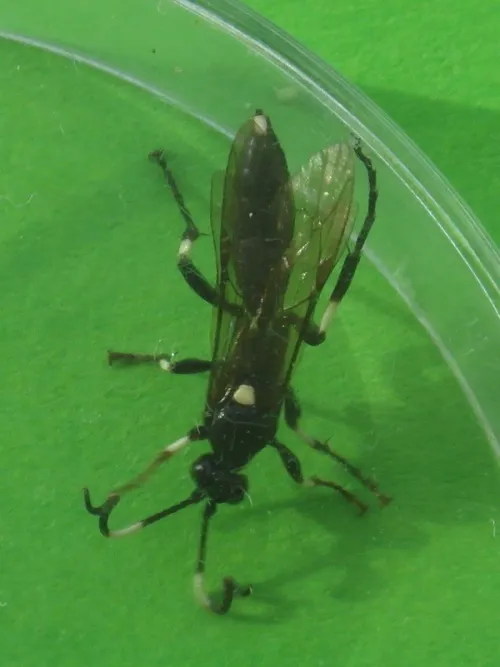
Ichneumon deliratorius
Ichneumon deliratorius
Length 14 to 20 mm. This is a mainly black species. The female has a broad pale band across the otherwise dark antennae; there is also a pale spot on the scutellum and at the tip of the abdomen. The larvae of Coelichneumon deliratorius are parasitic
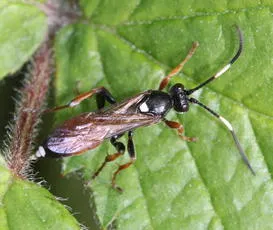
Ichneumon extensorius
Ichneumon extensorius
Length: 8-16 mm. A sexually dimorphic species. The female has a white tip to the abdomen, a white mark at the base of the thorax, and white banded antennae. The male is markedly different with yellow and black legs and abdomen, a bright yellow scutel
Ichneumon feralis
Ichneumon feralis
Identification: Scutellum white, abdomen with complete white band on T2 and white anal mark on T5-7, hind tarsi reddish-brown. Most similar-looking relatives lack the pale marks on metasomal tergites 5, 6, and 7. See comment by Bob Carlson here . Bel
Ichneumon feriens
Ichneumon feriens
Identification: Scutellum white, abdomen with complete white band on T2 and white anal mark on T6-7, tibiae with broad white stripes, hind tarsi blackish.
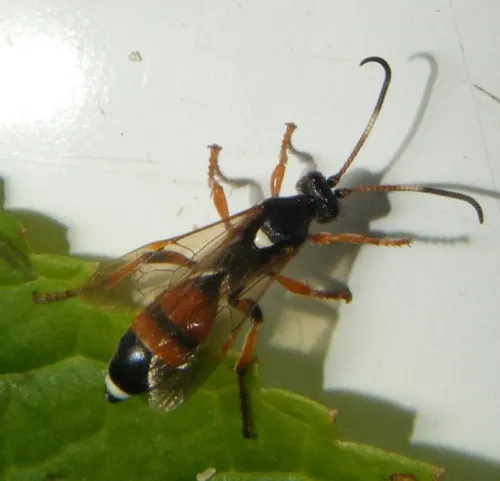
Ichneumon sarcitorius
Ichneumon sarcitorius
Length female about 10 mm and male about 14 mm. The male and female of this species are sexually dimorphic but the size, shape and precise colour patterns are distinctive to this species. The female has a wide red band followed by a narrower black ba
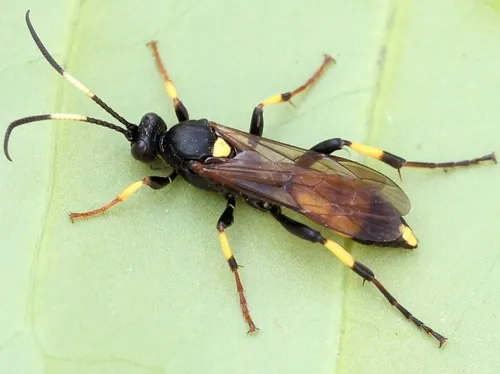
Ichneumon stramentor
Ichneumon stramentor
Length 13 to18 mm. Female - Long tapered abdomen, first half yellow and rear half black, with yellow spot at the tip (both on the top and beneath. Legs have black femora; tibiae are half yellow blending into brown that exceeds to the tarsi. Black tho
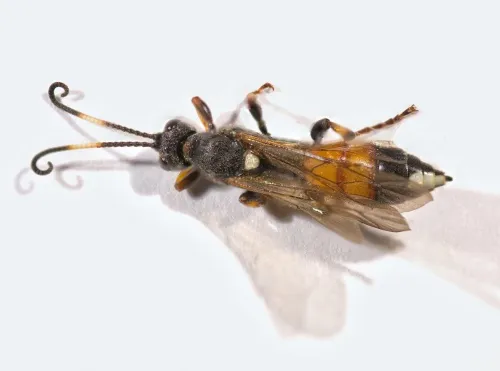
Ichneumon suspiciosus
Ichneumon suspiciosus
Approximately 16 mm long. One of many ichneumon wasps that look very similar. Males and females have different colours and patterns. Females have a band of orange-yellow on the abdomen with a black tip that has white spots on the last three segments.
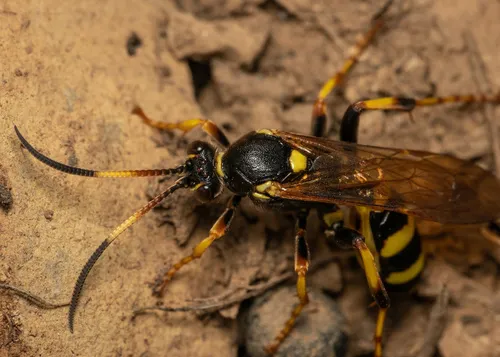
Ichneumon xanthorius
Ichneumon xanthorius
Length 14-16 mm. Both males and females of this species have a black and yellow banded abdomen but are very different. Males have yellow on the first three abdominal segments, then black. Other similar species have black on the first abdominal segmen
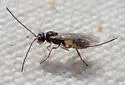
Idiogramma comstockii
Idiogramma comstockii
Identification: From Ross Hill: "...the yellow face and frontal orbits, and the length of the ovipositor sheath are suggestive for this species".
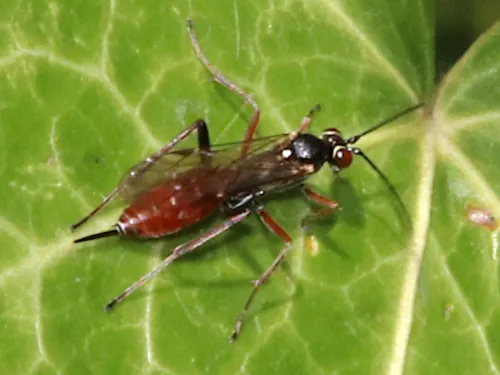
Ischnus inquisitorius
Ischnus inquisitorius
This species is sexually dimorphic, males and females look distinctly different. Females are easily recognised by the short but stout ovipositor. They have a red abdomen, white-ringed eyes and characteristic white markings on the scutellum. The white
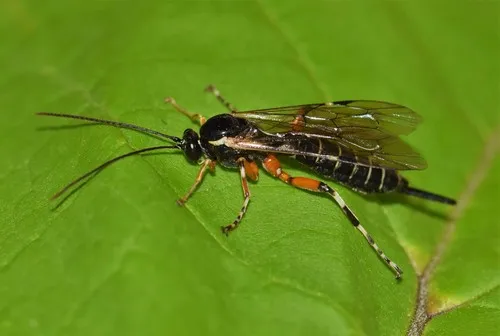
Itoplectis conquisitor
Itoplectis conquisitor
Identification: Female with forelegs fulvous. often whitish above; middle legs fulvous, tibiae often darker above, with a premedian white band, tarsi white with dark apices; hind legs with the femora fulvous, tibiae dark with a submedian white band,
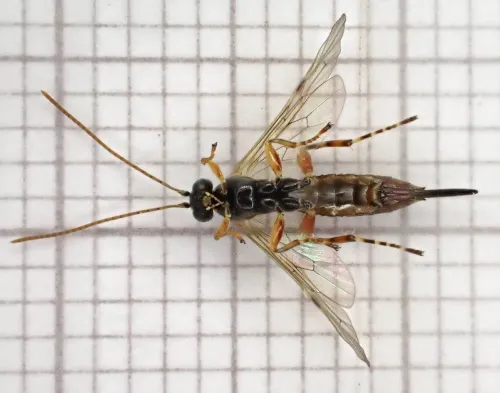
Itoplectis maculator
Itoplectis maculator
Length 5 to 10 mm. A largely black bodied insect with striking red thighs on its rear legs. There are other very similar species in this genus which means that detailed examination of an actual specimen is generally needed to identify the exact speci
Labena grallator
Labena grallator
Identification: Apical ~0.3 of antennae blackish, wings often conspicuously darkened. Color variable: eastern specimens primarily red, western specimens always conspicuously yellow-marked. Female (left) and male (right) Highly variable in terms of ye
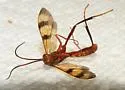
Lanugo cestus
Lanugo cestus
Identification: One of only two species in the genus found east of Texas. Females are readily distinguished from L. retentor by the banded wings of subhyaline and fuscous. Males are unknown.
Lanugo retentor
Lanugo retentor
Identification: Distinguished from other members of the genus by the almost uniformly dark forewings (lacking orange banding) and black at the basal third of the third abdominal segment. The coxae range from infuscate to entirely black. Males may hav
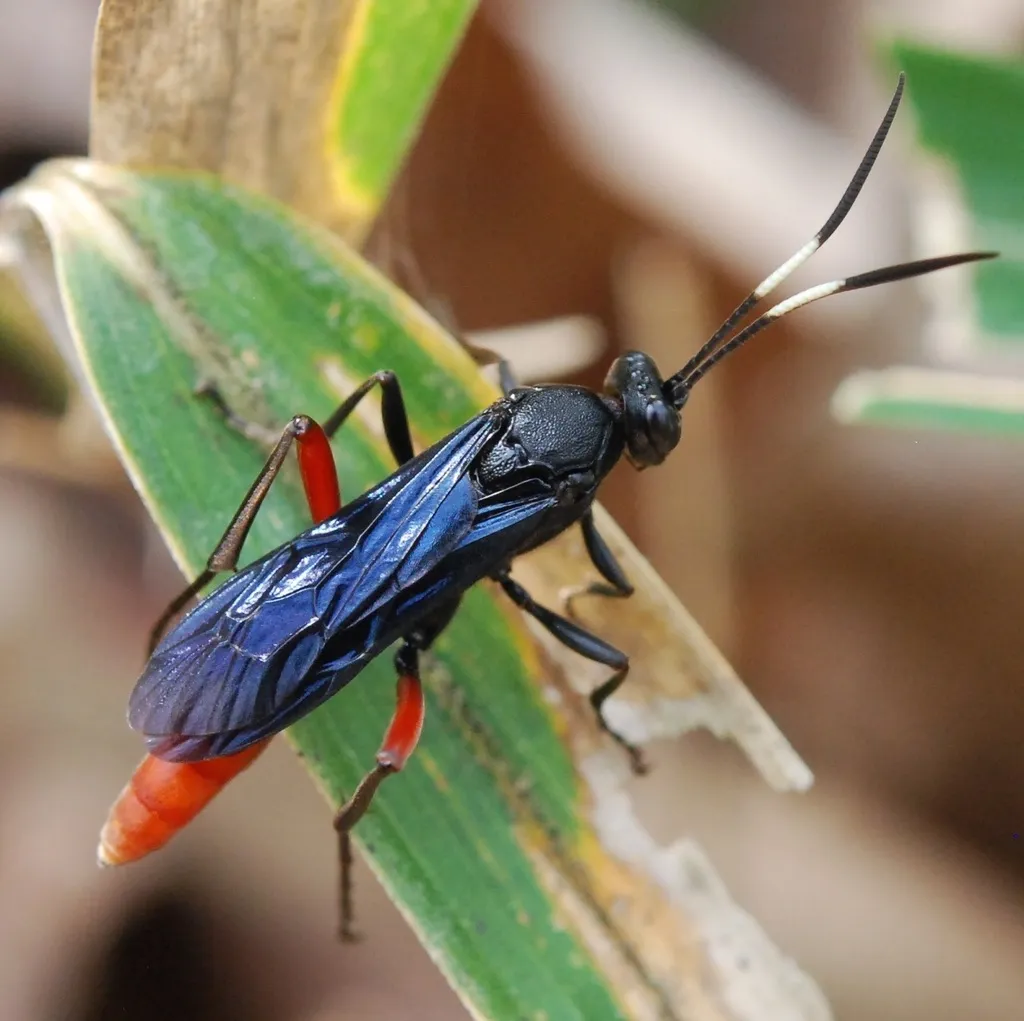
Limonethe maurator
Limonethe maurator
Identification: A distinctive species recognized by its black ground color, red hind femora, red abdomen, and white bands on the antennae.
Listrodromus nycthemerus
Listrodromus nycthemerus
Unless identified by a recognised expert, a photo is required. If the photo doesn't show the key ID features then in the comments box describe the size and identifying characters you have observed. A specialist parasitoid of the Holly Blue butterfly.
Lymeon orbus
Lymeon orbus
Identification: Mesoscutum with two longitudinal stripes; hind coxa usually tricoloured (anteriorly reddish with weak black marks in females; black marks more prominent in males). L. orbus can be separated from similar species of Baryceros in part by
Greene's Giant Ichneumonid Wasp
Megarhyssa greenei
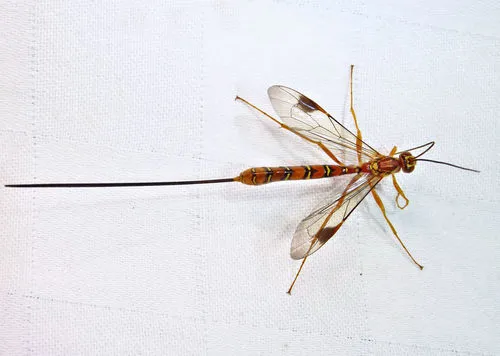
Identification: Females are distinguished from those of M. macrurus by having the forewing clear (unpigmented) along the basal vein (such that a single black spot is present) and by the shorter ovipositor length (the shortest in all US species of Meg
Melanichneumon disparilis
Melanichneumon disparilis
Identification: ♂ ♀ Note: Females of Melanichneumon indecoroatus overlap significantly in terms of coloration with those of M. indecoroatus and may not be reliably separated in photos.
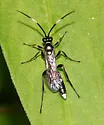
Melanichneumon pluto
Melanichneumon pluto
Identification: Male similar in coloration to that of Vulgichneumon brevicinctor , but vertical orbits, facial orbits, pronotum ("collar"), and fore and middle tibiae and femora with with markings in addition to those of the antennae, the scutellum,
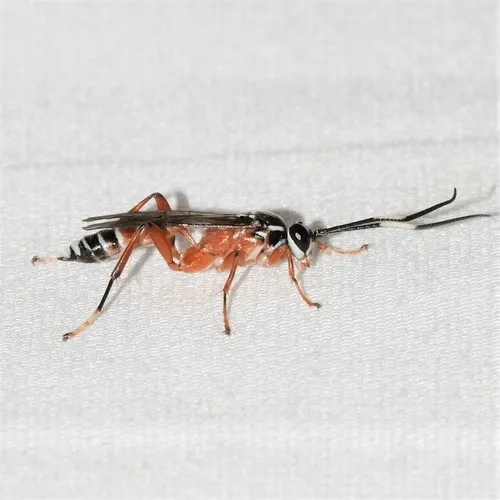
Menkokia blandii
Menkokia blandii
Identification: Photos previously identified as Menkokia blandii as determined by Dr. Bob Carlson are apparently a mismatch. Those specimens differ in terms of both coloration and morphology from true M. blandii and have been grouped together under S
Mesostenus gracilis
Mesostenus gracilis
Identification: Postscutellum black rather than white, hind tarsi close to the color of the color of the tibia rather than lighter. Males have entirely black antennae. ♀ ♂
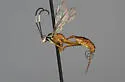
Mesostenus sicarius
Mesostenus sicarius
Identification: Very similar in appearance to M. thoracicus , sharing a white scutellum. Most noticeably differs from both M. thoracicus and M. gracilis by the white markings on and adjacent to the mesopleuron (always one on at the upper part of the
Neotypus nobilitator
Neotypus nobilitator
Identification: ♀ ♂ "The species [...] had been regarded as an invader here, but I wasn't aware of any host records when I did the ichneumonids in the 1979 catalog, but I now find that the Asian subspecies has been reared from Cupido argiades . This
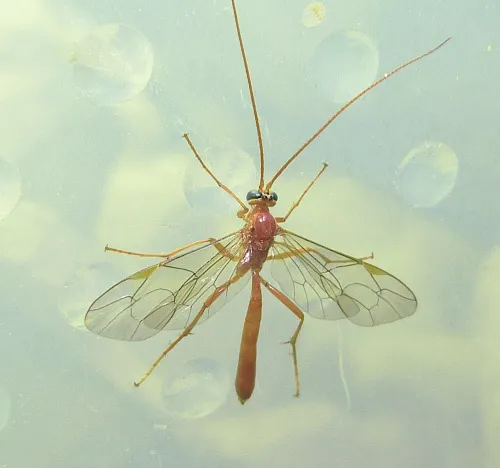
Netelia cristata
Netelia cristata
Variable in size, wing length usually c.14mm but occasionally as small as 8mm. Propodeum with lateral sections of transverse ridges, if these are lacking then with at least a slightly elevated ridge, propodeum medially with faint transverse striation
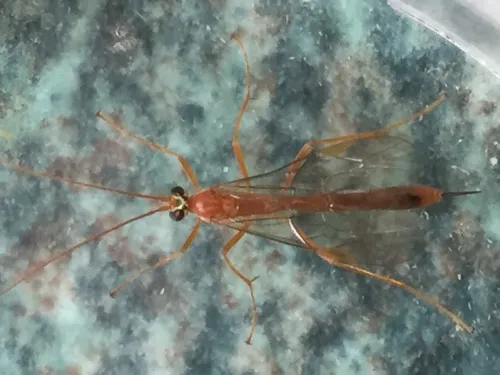
Netelia inedita
Netelia inedita
Netelia can be distinguished from the very similar Ophion species by the presence of an areolet in the wing (a tiny, roughly circular cell). Netelia inedita is a nocturnal ichneumon and is a pale orangey-brown colour including the legs and antennae.
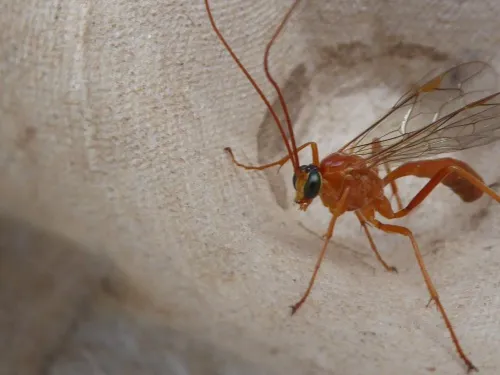
Netelia infractor
Netelia infractor
The genus Netelia can be distinguished from the very similar Ophion species by the present of an areolet in the wing - a tiny, roughly circular cell. Netelia infractor is largely orange and has a black stemmaticum (area between the ocelli) and a rath
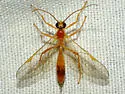
Netelia johnsoni
Netelia johnsoni
Identification: Distinguished from other species by the lack of an areolet and lack of occipital carina.
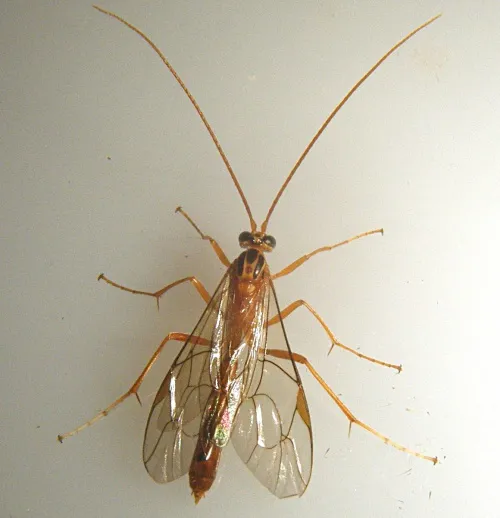
Netelia virgata
Netelia virgata
A medium sized largely orange-brown Ichneumon. The legs, antennae and wing stigmas are all pale orangey-brown in colour. Sometimes drawn to moth traps where its larval food species may occur. Fairly frequent in Britain, though not well recorded. No a
Odontocolon mellipes
Odontocolon mellipes
Odontocolon mellipes (Odontocolon mellipes) is a species in the family Ichneumonidae, commonly known as ichneumonid wasps, belonging to the order Hymenoptera (Ants, Bees, Wasps and Sawflies). It is classified within the subfamily Xoridinae, superfami
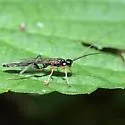
Odontocolon vicinum
Odontocolon vicinum
Identification: The male has fore and mid legs yellow and hind legs black except for trochanters and sometimes the bases of femora. "The female is distinct in its black abdomen, pale fulvous legs, strongly flaring temples, sparsely punctate lower hal