
European Pine Sawfly
Neodiprion sertifer
This record describes Neodiprion sertifer (species). Recorded family: Diprionidae. Recorded order: Hymenoptera.
Identification and Appearance
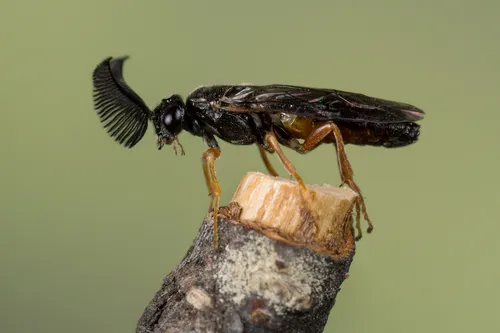
Earliest record in our area: NJ 1925 During the late 1930s and 1940s, 2 European parasites were established in NJ. One was Dahlbominus fuscipennis and the other was Exenterus abruptorius . Neither species has provided adequate control.
Wikipedia reference for Neodiprion sertifer: http://en.wikipedia.org/wiki/Neodiprion_sertifer.
Classification
- Kingdom
- Animalia
- Phylum
- Arthropoda
- Class
- Insecta
- Order
- Hymenoptera (Ants, Bees, Wasps and Sawflies)
- Family
- Diprionidae (Conifer Sawflies)
- Genus
- Neodiprion
Imported taxonomy record. Source availability varies; see the source references and editorial policy below.
Habitat and Range
Geographic Range
native to Europe, adventive in NA
Diet and Behavior
Diet: Feeds on: mugho and table top pines. It also feeds on Scotch, red, Jack, and Japanese pines. It rarely feeds on white, Austrian, Ponderosa, shortleaf and pitch pines.
Life History
Usually only one generation per year. Prefers to oviposit on pine trees with high resin acid content as it provides protection from natural enemies. The regurgitated resin serves as an effective defense against parasitoids. Overwinters as an egg Eggs are laid on clusters near the end of a branch. 6-8 eggs are laid in a single needle and about 10-12 needles in a single cluster are targeted. The larvae feed gregariously on previous year's foliage and devour all the needles before moving to the next branch. New needles are never eaten but larvae may feed on bark of new shoots. Full-grown larvae either drop to the ground and spin tough, light to dark golden brown cocoons in the duff or they spin them in protected locations on the tree. Pupation occurs in early Sept to late fall.
Additional species information
Species notes from the sources
Etymology: Neodiprion sertifer (Geoffroy 1785)
About Flies: the wider group
Order-level background for Hymenoptera, the group containing Neodiprion sertifer. Species-specific details appear above.
Group overview
Hymenoptera includes over 150,000 described species of ants, bees, wasps, and sawflies. Earth harbors approximately 20 quadrillion (20×10^15) ants, with a combined biomass of ~12 megatons of dry carbon - exceeding the combined biomass of all wild birds and mammals (PNAS, 2022).
Ecological role of the group
About 35% of the world's food crops depend on animal pollinators. The chocolate industry, valued at over $100 billion, depends on pollinating flies and midges. Ants are the dominant soil engineers in most terrestrial ecosystems, turning more soil than earthworms in many habitats.
Economic and practical significance of the group
Pollinators contribute $235-577 billion worth of annual global food production (FAO). In the U.S., bee pollination alone benefits crops valued at $18 billion annually, and honey bees are responsible for $5.4 billion in agricultural productivity. Between April 2023-2024, 55.1% of managed honey bee colonies were lost. The U.S. bee population dropped from 5 million to 2.5 million.
Recorded sources for this group: FAO, USDA, EPA, PNAS (2022), US Fish & Wildlife Service. Imported estimates may describe particular regions or reporting periods.
Photos of European Pine Sawfly (2)
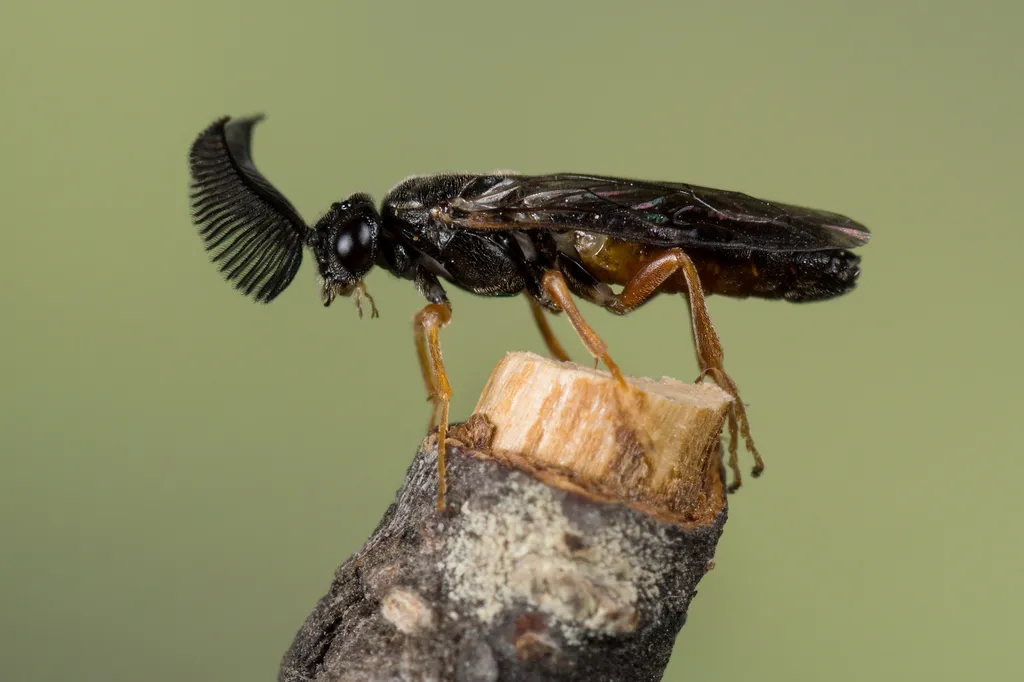
Photo credits: Contributed by Charley Eiseman; Additional contributions by Beatriz Moisset , v belov , Marci Hess
Frequently Asked Questions About European Pine Sawfly
What is European Pine Sawfly?
European Pine Sawfly (Neodiprion sertifer) is a species in the family Diprionidae, within the order Hymenoptera.
Where is European Pine Sawfly found?
Range: native to Europe, adventive in NA
What does European Pine Sawfly eat?
The diet of the European Pine Sawfly includes Feeds on: mugho and table top pines. It also feeds on Scotch, red, Jack, and Japanese pines. It rarely feeds on white, Austrian, Ponderosa, shortleaf and pitch pines..
What is the life cycle of a European Pine Sawfly?
Usually only one generation per year. Prefers to oviposit on pine trees with high resin acid content as it provides protection from natural enemies. The regurgitated resin serves as an effective defense against parasitoids. Overwinters as an egg Eggs are laid on clusters near the end of a branch. 6-8 eggs are laid in a single needle and about 10-12 needles in a single cluster are targeted. The larvae feed gregariously on previous year's foliage and devour all the needles before moving to the next branch. New needles are never eaten but larvae may feed on bark of new shoots. Full-grown larvae either drop to the ground and spin tough, light to dark golden brown cocoons in the duff or they spin them in protected locations on the tree. Pupation occurs in early Sept to late fall.