
Family Miner, Fairy, Allied Panurgine, and Oxaeine Bees (Andrenidae)
Andrenidae is a family in the order Hymenoptera. Browse 223 named species recorded in this family, or open an individual profile for its available identification and natural-history information.
Species in Andrenidae (223)
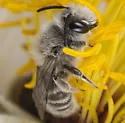
Ancylandrena atoposoma
Ancylandrena atoposoma
The species was originally named as a junior primary homonym of Andrena heterodoxa Pérez, 1903 (correct name is Andrena Bicolor ).
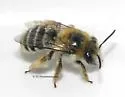
Ancylandrena larreae
Ancylandrena larreae
Identification: Original description by Timberlake (1951) on pp. 411-413 as Megandrena (Ancylandrena) larreae Parasitized by Hexepeolus rhodogyne .(Rozen, 1992)

Andrena auricoma
Andrena auricoma
Identification: Detail description is available at Discover Life .
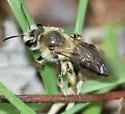
Andrena barbara
Andrena barbara
Identification: Superficially resembles Andrena perplexa but lacks the pronotal angles of subgenus Tylandrena. Distinctive features include its entirely pale hairs (unlike carlini), relatively strongly and densely punctate metasomal terga which is sh
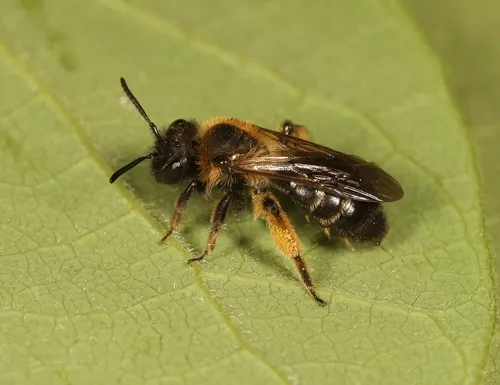
Andrena bicolor
Andrena bicolor
This is a small solitary mining bee. The females are about 9 to 11 mm, and the males are slightly smaller. Females have back hairs on the face, gingery hairs on the top of the thorax and at the front of each side - the remainder has black hairs. The
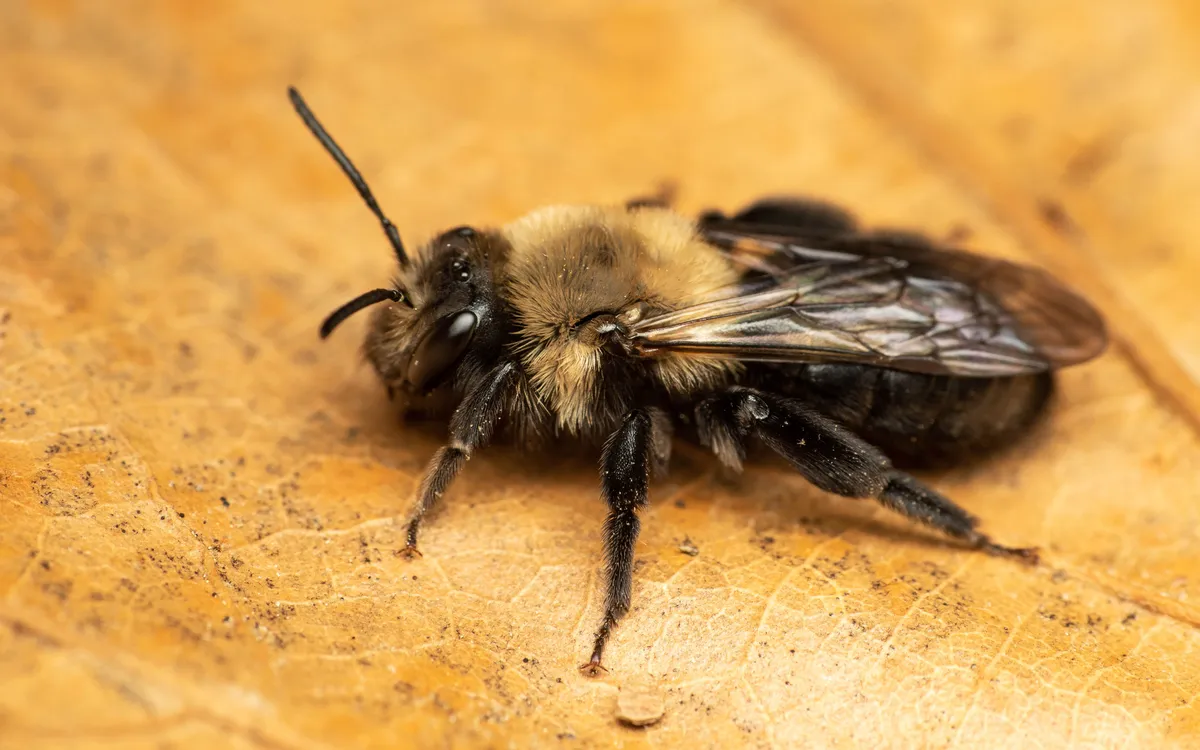
Carlinville Miner Bee
Andrena carlini
Identification: Very similar to vicina which also has a black tibial scopa. In carlini the thoracic hair is longer, denser, and grayer (as opposed to shorter, sparser so as not to fully obscure integument, and more tan in color in vicina). A. carlini
Andrena cerasifolii
Andrena cerasifolii
Identification: larger than most other Andrena in the western North America with a metallic blue integument; three submarginal cells whereas blue species of subgenus Diandrena have two. Detailed wing venation characters illustrate in post below:
Hawthorn Mining Bee
Andrena chrysosceles
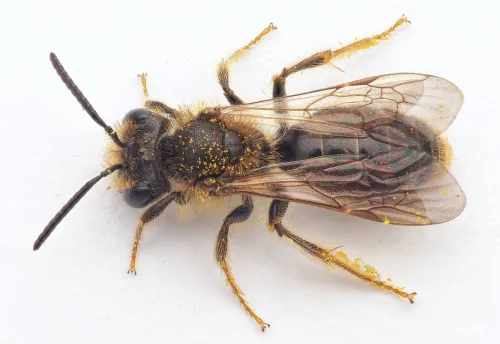
Females 6-8mm, males 6-7mm. Females have dull brown thorax, orange hind tibiae and bare abdomen with white bands. Males have partly orange tibiae. There is a ginger tuft at the tip of the abdomen. Most solitary bees and wasps are difficult to identif
Grey Mining Bee
Andrena cineraria
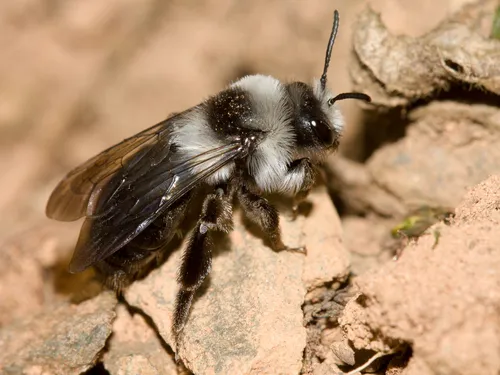
The females are black, and have two broad ashy-grey hair bands across the thorax. The males are similar, but the thorax is entirely clothed with less dense grey hairs, and has a very pronounced tuft of white hairs on the lower face. The male has whit
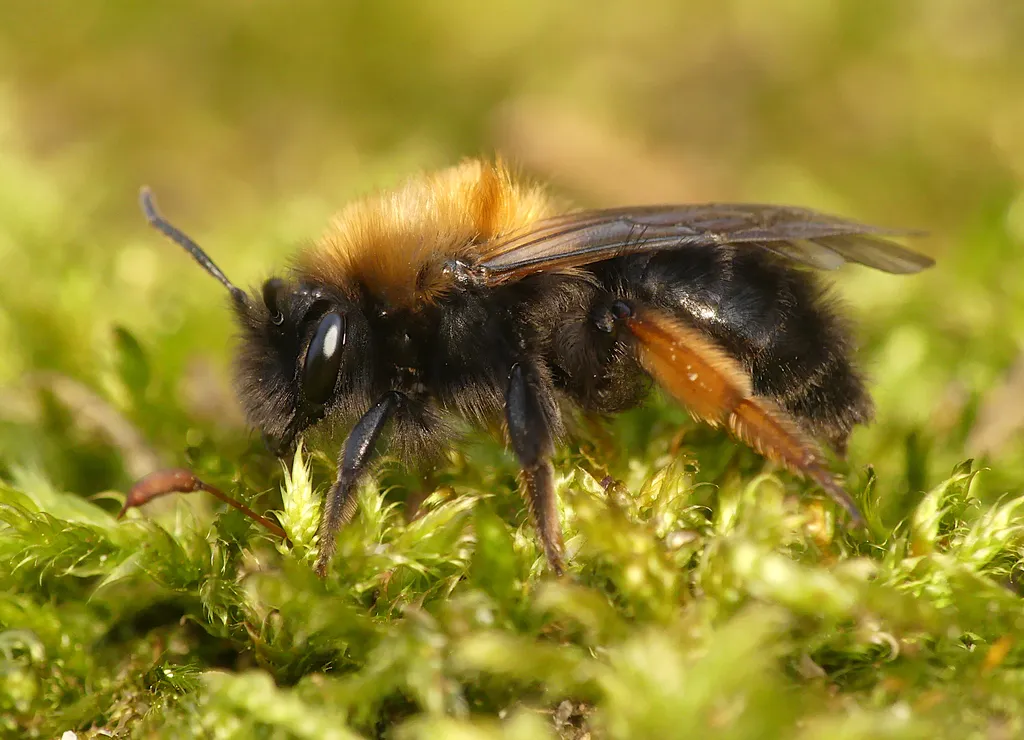
Andrena clarkella
Andrena clarkella
The female is a robust, medium sized mining bee. Fresh specimens are quite distinctive and with experience can be recognised in the field. Almost always found on willow (Salix) flowers in early spring. The face (clypeus) has dense black hairs across
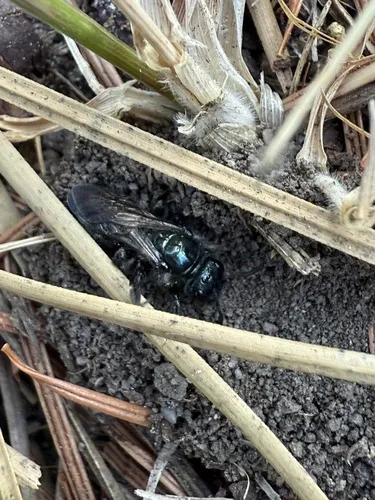
Andrena cleodora
Andrena cleodora
Identification: "The female of cleodora is similar to that of cupreotincta in the black scopae, black hairs of the head and abdomen, long apical tergal areas and coarse sculpture. The female of cleodora can be distinguished from that of cupreotincta
Azalea Miner Bee
Andrena cornelli
Identification: A female Andrena in the eastern United States carrying Rhododendron pollen will very likely prove to be this species. The widely spaced scopal hairs of the hind leg are distinctive.
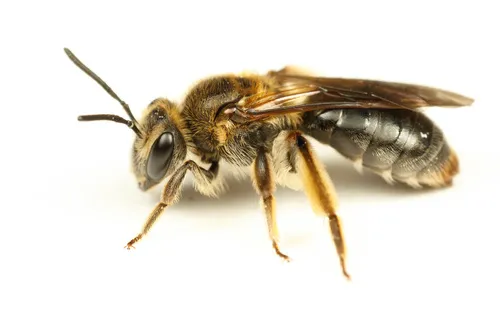
Andrena crataegi
Andrena crataegi
Identification: Dark wings, recurved S6, relatively small head and narrow gena. Not closely related to any of the other Plastandrena of North America.
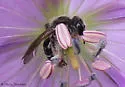
Andrena distans
Andrena distans
Geranium maculatum , also on Heracleum lanatum and Polymonium reptans .
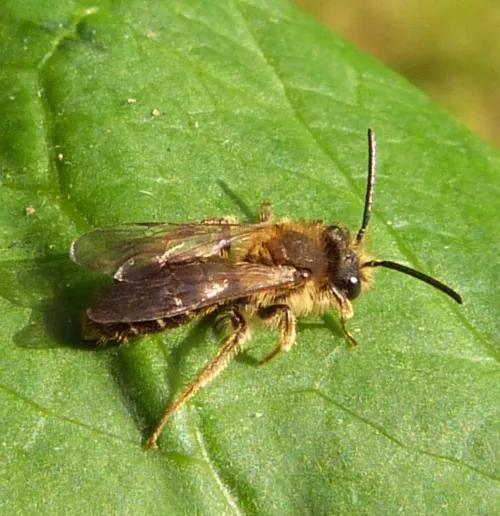
Andrena dorsata
Andrena dorsata
Females are easily recognised by the broad hind tibiae with a very short dorsal hair fringe coupled with the largely glabrous abdomen bearing white hair fringes along the hind margin of tergites 2-4. Males resemble small slim females and can be disti
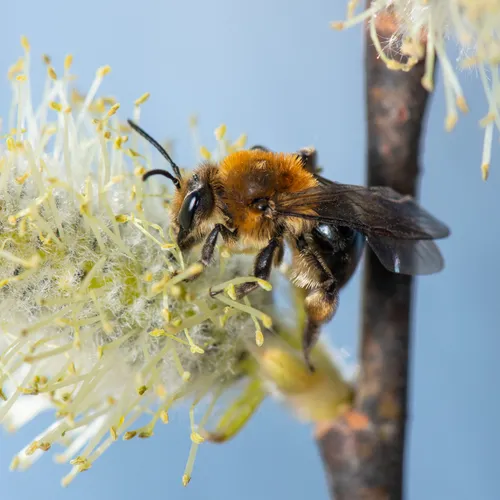
Andrena dunningi
Andrena dunningi
Identification: thoracic hairs a brighter and darker orangish than in other similar species such as A. vicina. Metasomal terga are smooth and the vertex is relatively short (cf. the larger nivalis).
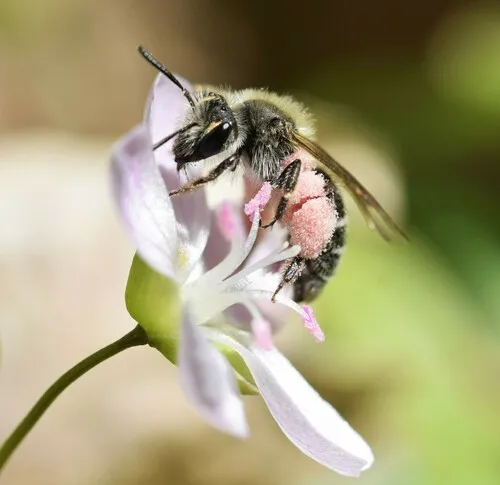
Spring Beauty Mining Bee
Andrena erigeniae
Identification: Male S8 distinctively bifurcating at its apex. Facial foveae thin. Host plant has pink pollen. Visits flowers of Claytonia virginica and other Claytonia spp. for pollen. It also visits Erigenia bulbosa and other flowers for nectar.
Andrena erythrogaster
Andrena erythrogaster
Identification: Note that in the eastern USA many A. erythrogaster have largely dark metasomas with only limited areas of red. Mitchell (1960) treated called the darker form of A. erythrogaster subspecies subaustralis , but A. subaustralis is now kno
Trout-lily Mining Bee
Andrena erythronii
Identification: Both sexes can be distinguished from those of barbilabris by the more distinct pronotal humeral angles and dorsoventral ridges and by the very weak terga fasciae. The female of erythronii is marked by a labral process distinctly broad
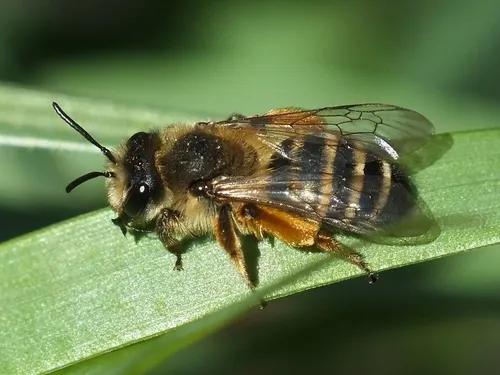
Yellow-legged Mining Bee
Andrena flavipes
The males look different to the females. They are slimmer, covered in sparser hair and lack the dense brush of orange-yellow hairs on the hind leg. Nests in exposed banks and cliffs, tended lawns, flower beds, roadside verges and in sparsely vegetate
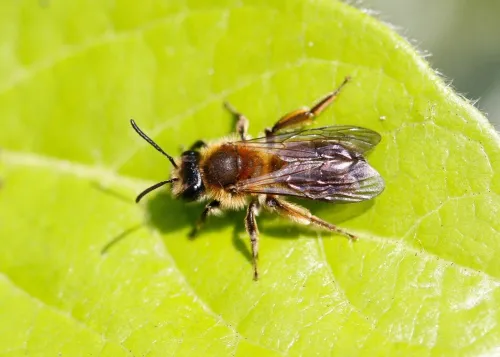
Painted Mining Bee
Andrena fucata
Females most resemble A. varians and A. lapponica but have a white-haired face, white hair fringes on the sternites and brown rather than blackish hairs on the pollen brushes of the hind legs. Males are one of the species with very long mandibles tha
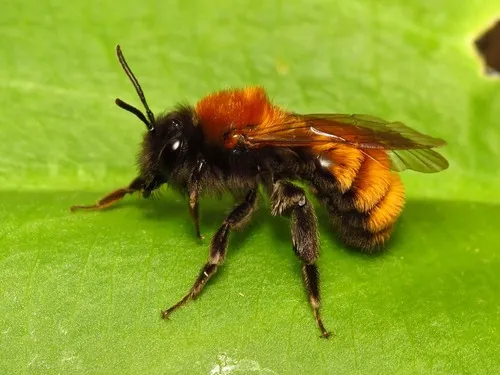
Tawny Mining Bee
Andrena fulva
The males are 10 to 12 mm and the females 8 to 10 mm long. The females are covered with fox red hair on their backs and black on the underside, whilst the males are more slender and yellower in appearance. Gardens on Currants, Gooseberries and other
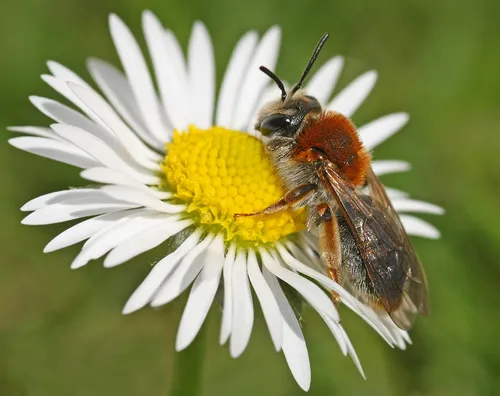
Early Mining Bee
Andrena haemorrhoa
Length 8 to 11 mm. The thorax is foxy brown on top; the abdomen is black with few hairs, except for prominent orange hairs at the tip. The male is much smaller than the female and its hairs are much lighter colour, tending to grey or even white. Arou
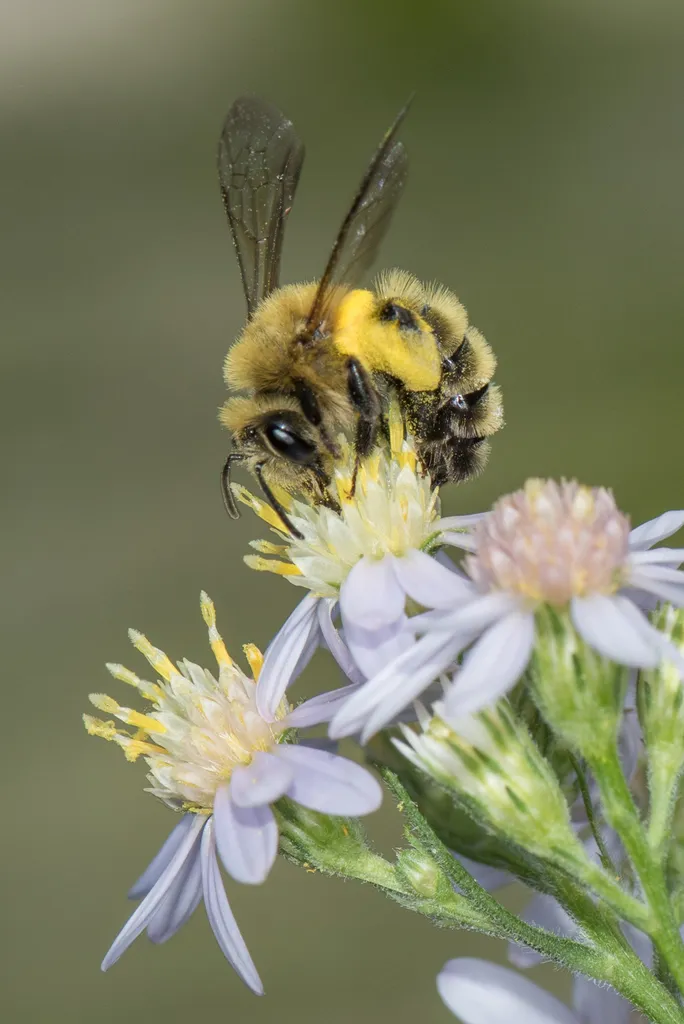
Hairy-banded Mining Bee
Andrena hirticincta
Identification: Most of its pubescence has a green-yellow tinge
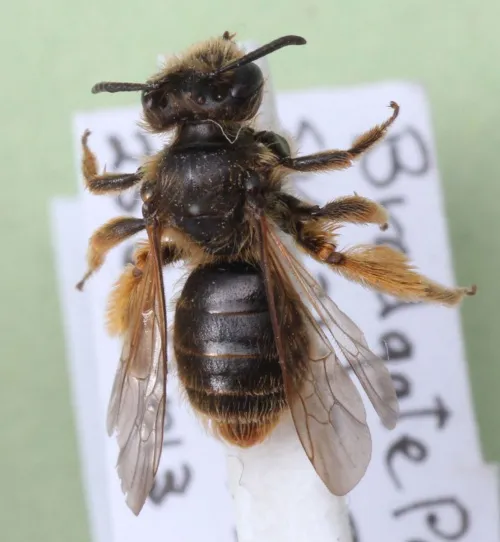
Andrena humilis
Andrena humilis
Length 10 to 12 mm. This species of solitary bee has a rather gingery, slightly hairy appearance. Most solitary bees and wasps are difficult to identify, and can rarely be identified from photos taken in the field. All red-rated records should includ
Andrena integra
Andrena integra
Identification: very short and sparse thoracic hair
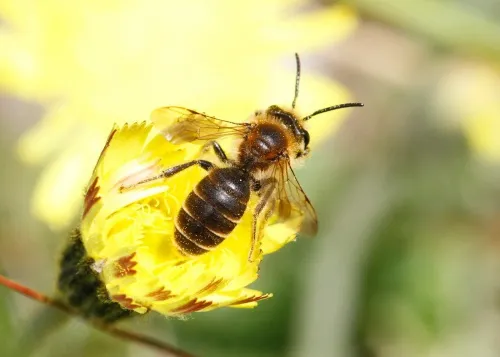
Andrena labialis
Andrena labialis
Forewing 7.5-9mm A dullish, fairly robust Andrena species. Females have buff hairs on the face and legs and a densely punctate thorax and tergites. Males have extensive yellow facial markings. Most solitary bees and wasps are difficult to identify, a
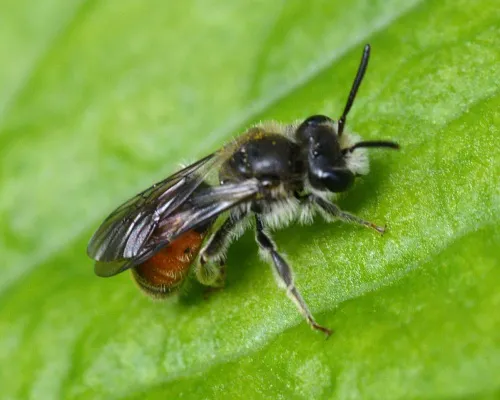
Girdled Mining Bee
Andrena labiata
Tergites 2 and 3 are a bright brick red. Most solitary bees and wasps are difficult to identify, and can rarely be identified from photos taken in the field. All red-rated records should include a photo or set of photos of the specimen, illustrating
Andrena malacothricidis
Andrena malacothricidis
Identification: Andrena malacothricidis Thorp, 1969 (see reference), is closely related to A. subchalybea (Please see the Discover Life site for the distinguishing characters). ID by Dr. Robbin Thorp (UC Davis), based on a female specimen.
Andrena melliventris
Andrena melliventris
Identification: Yellow clypeus , broad dark basitarsis, metasoma red anterior and blackened posteriorly.
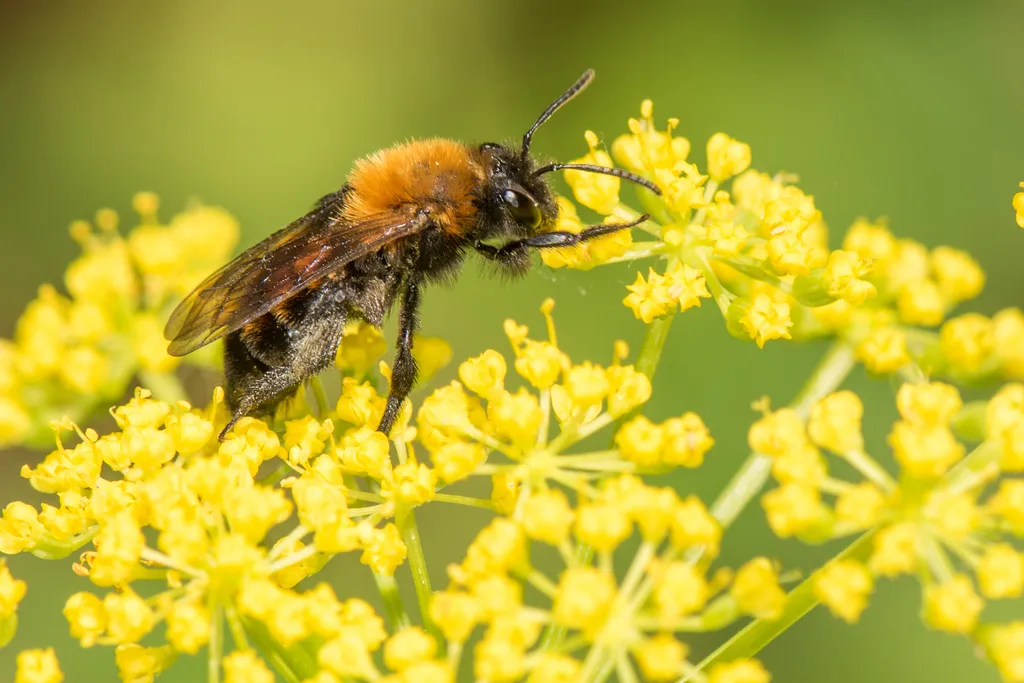
Milwaukee Miner Bee
Andrena milwaukeensis
Identification: In females, combination of elongate fox-colored "fur coat" extending to basal metasomal terga (variable) and black tibial scopa is distinctive Often encountered, but rarely in large numbers
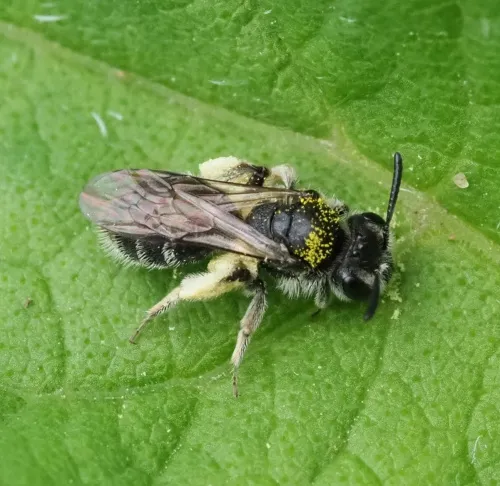
Andrena minutula
Andrena minutula
Length 5 to 7 mm. This is a small mainly black bee with sparse silvery grey hairs. Most solitary bees and wasps are difficult to identify, and can rarely be identified from photos taken in the field. All red-rated records should include a photo, or s
Andrena miserabilis
Andrena miserabilis
Identification: The female as a noteably smooth clypeus. The male has a yellow clypeus in combination with broad cheeks and pale lower surface of the flagellar segments.
Andrena nasonii
Andrena nasonii
Identification: broadened tibia; strong hair bands on T2-4 but not T1 short F1 ( ref. )
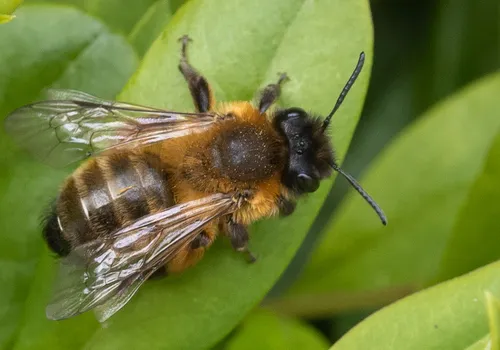
Andrena nigroaenea
Andrena nigroaenea
Females are the size of a Honey Bee with dense brown hairs on the thorax and slightly paler hairs covering all of abdominal tergites 1-4, which contrast with the darker, blackish hairs on tergite 5 (which is often dark under the hairs). The pollen br
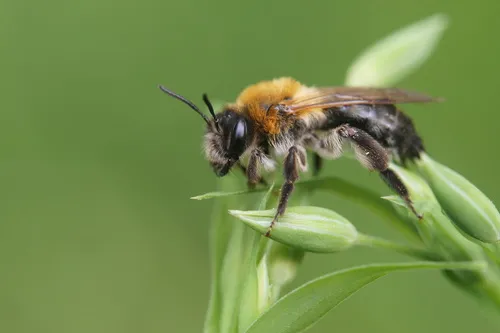
Andrena nitida
Andrena nitida
Larger than a honeybee with bright, foxy-brown hair on the thorax and a polished black abdomen. Females have patches of white pubescence on the sides of abdominal segments 1 to 3, and males have copious white facial hair. May be found in a variety of
Cloudy-winged Miner Bee
Andrena nubecula
Identification: It is distinguished by the absence of apical hair on metasomal tergum 1 with the wings strongly darkened apically and in the marginal cell; and the males with the posterior margin of the gena rounded or with a weak spine. According to
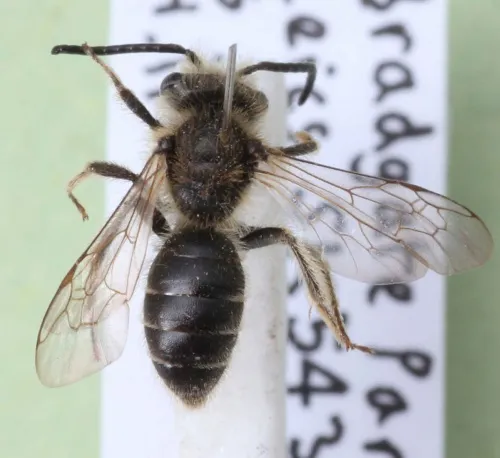
Andrena ovatula
Andrena ovatula
Length 7 to 11 mm. This is a small, dark species of solitary mining bee. There are several similar species and detailed examination is necessary. The females are the easiest sex to identify. The hind margin of tergite 3 with a complete band in fresh
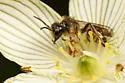
Parnassia Mining Bee
Andrena parnassiae
Identification: Female has extensive dark hair on the scutum and face, with pale scopal hairs and pale hair on sides of thorax. White hair bands present on far sides of tergites. Overall a very dark-looking bee. Not easily mistaken for other species,
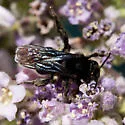
Andrena pertristis
Andrena pertristis
Identification: Nominative subspecies Andrena (Melandrena) pertristis pertristis has entirely dark vestiture in females. Subspecies carliniformis has pale hair on thoracic dorsum, superficially resembling A. (Melandrena) carlini . Males of both subsp
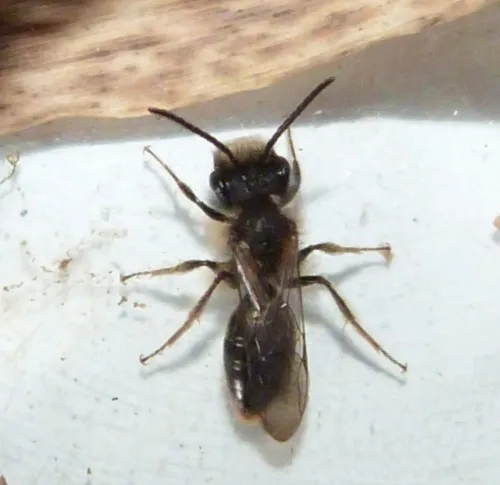
Andrena praecox
Andrena praecox
Length 8 to 11 mm. This is a blackish bee with grey hairs. The female having more body hairs than the male. Most solitary bees and wasps are difficult to identify, and can rarely be identified from photos taken in the field. All red-rated records sho
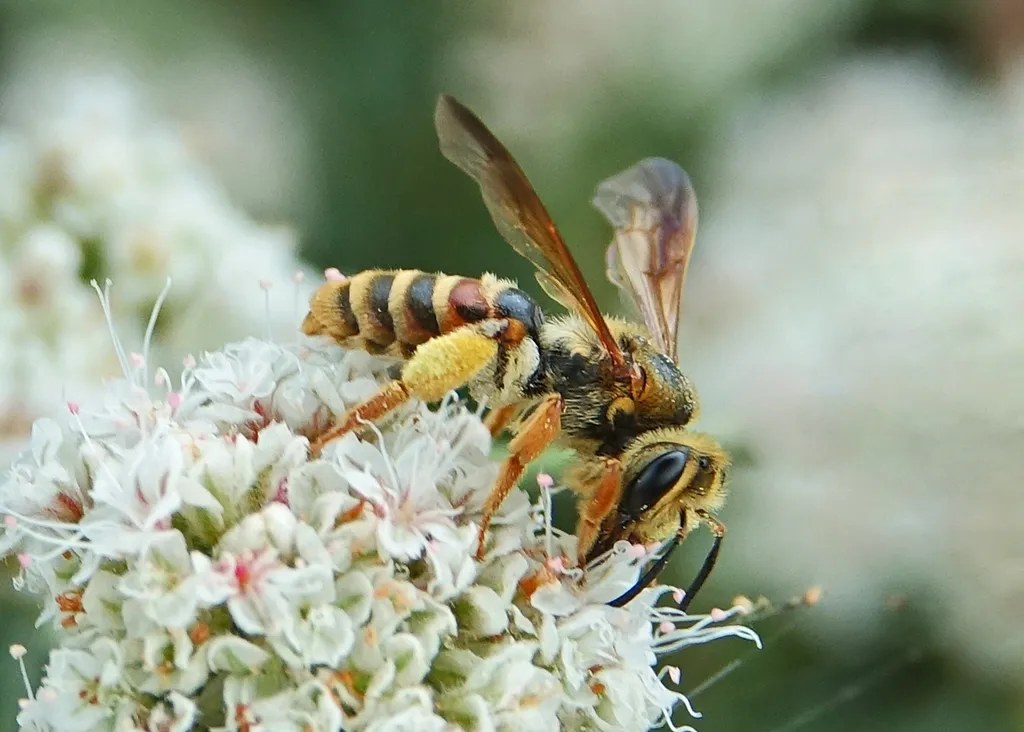
Andrena prunorum
Andrena prunorum
Identification: Variable in color across its range. The darkened wingtip is a helpful trait. Males often with the clypus yellow.
Andrena regularis
Andrena regularis
Identification: Female: Clypeus uniformly punctate, lacking median impunctate line (such a line conspicuous in carlini) and pygidial plate strongly narrowed (broader in carlini)
Andrena rugosa
Andrena rugosa
Identification: Facial fovea of the female extremely narrow below and separated from the inner margin of the compound eye by more than twice the width of the fovea (at the level of the greatest separation from the eye). Coarse punctures of scutum.
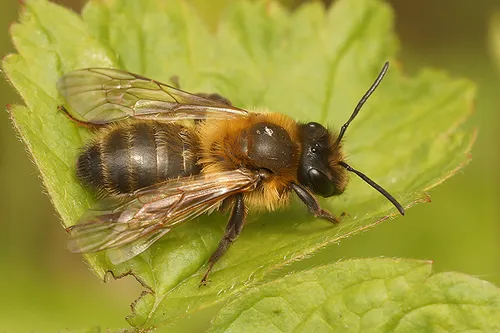
Andrena scotica
Andrena scotica
Andrena scotica is a mining bee and at 10 to 14 mm is one of the larger species, the male being slightly smaller than the female. The abdomen is all dark with no red markings and with pale upright hairs along the tergite margins. Tergite 1 has clear
Andrena sperryi
Andrena sperryi
Identification: Species description on Discover Life
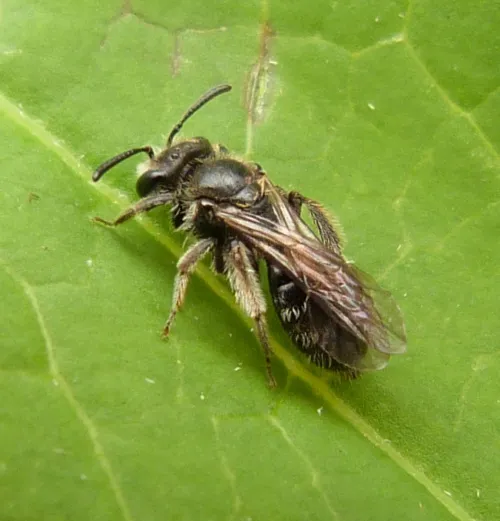
Andrena subopaca
Andrena subopaca
A very small and rather dark blackish bee. Most solitary bees and wasps are difficult to identify, and can rarely be identified from photos taken in the field. All red-rated records should include a photo, or set of photos, showing the key characters
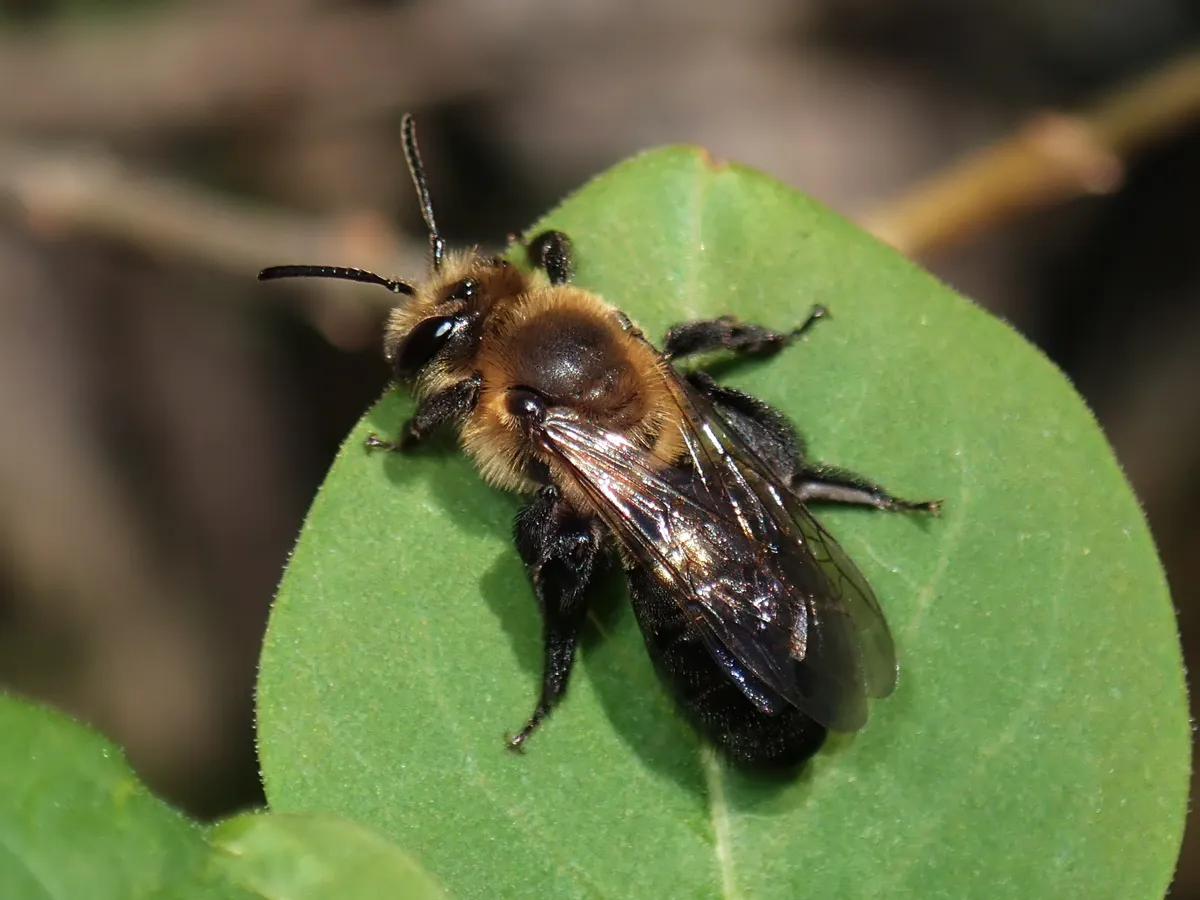
Andrena vicina
Andrena vicina
Identification: Combination of relatively large size, black tibial scopa, all pale thoracic hairs (including ventral surfaces, unlike the otherwise similar A. carlini and A. regularis ), and all black metasoma is distinctive. The similar A. dunningi
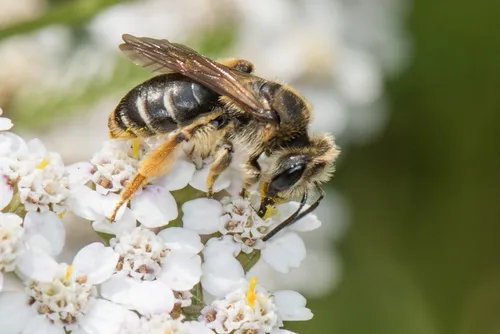
Andrena wilkella
Andrena wilkella
Introduced long ago from Europe, possibly from transportation of its ground nests in ships' ballast. It flies into summer, when few native Andrena are flying.
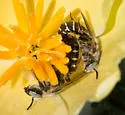
Calliopsis obscurella
Calliopsis obscurella
Regarding flower data, Rozen ( ) writes that "Although this species has been captured on many different kinds of plants, females carrying pollen have been recorded only from Eschscholzia californica . These data are numerous enough to assume that the
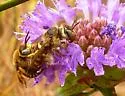
Calliopsis zonalis
Calliopsis zonalis
Identification: unique among Calliopsis (Nomadopsis) in having extremely long mouthparts and preponderance of yellow markings on head, legs, and metasoma of both sexes
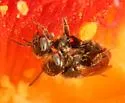
Barrel Cactus Goblin Bee
Macrotera echinocacti
a member of the subg. Macroteropsis (6 spp., all in our area )
Perdita chamaesarachae
Perdita chamaesarachae
Differentiation from P. lenis requires hi-res photos or specimens under a microscope
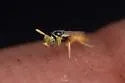
Perdita nasuta
Perdita nasuta
Identification: shape of projecting male clypeus distinguishes this sp. from congeners
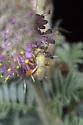
Perdita perpallida
Perdita perpallida
Identification: Large variation in color in this species; piceous areas much reduced or entirely absent; ground color becoming pale yellow.
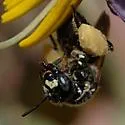
Protandrena mexicanorum
Protandrena mexicanorum
They use sonication to gather pollen from Solanaceae.
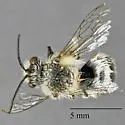
Ancylandrena koebelei
Ancylandrena koebelei
Ancylandrena rozeni
Ancylandrena rozeni
Andrena ablegata
Andrena ablegata
Andrena accepta
Andrena accepta
Andrena aliciae
Andrena aliciae
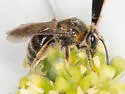
Andrena alleghaniensis
Andrena alleghaniensis
Andrena anatolis
Andrena anatolis
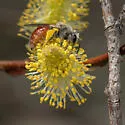
Andrena andrenoides
Andrena andrenoides
Andrena androfovea
Andrena androfovea
Andrena anisochlora
Andrena anisochlora
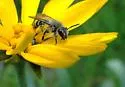
Andrena apacheorum
Andrena apacheorum
Andrena argemonis
Andrena argemonis
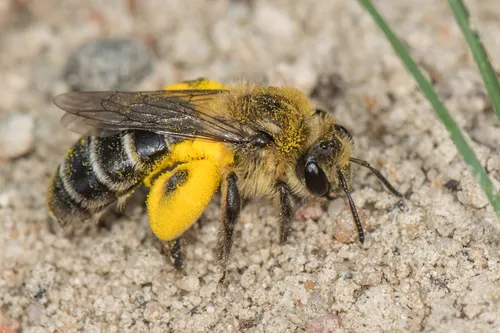
Aster Miner Bee
Andrena asteris
Death Camas Miner Bee
Andrena astragali
Banks' Miner Bee
Andrena banksi
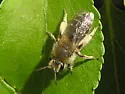
Andrena barbilabris
Andrena barbilabris
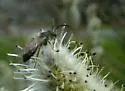
Andrena bisalicis
Andrena bisalicis
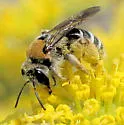
Andrena biscutellata
Andrena biscutellata
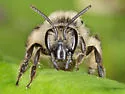
Andrena bradleyi
Andrena bradleyi
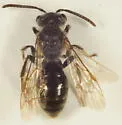
Andrena brevipalpis
Andrena brevipalpis
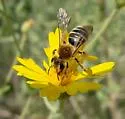
Andrena brooksi
Andrena brooksi
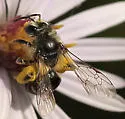
Andrena canadensis
Andrena canadensis
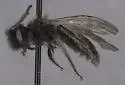
Andrena candida
Andrena candida
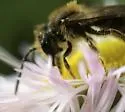
Andrena cerebrata
Andrena cerebrata
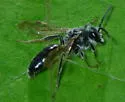
Andrena confederata
Andrena confederata
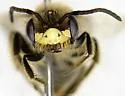
Andrena cressonii
Andrena cressonii
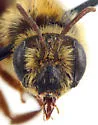
Andrena crinita
Andrena crinita
Andrena cuneilabris
Andrena cuneilabris
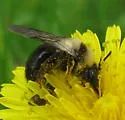
Andrena cyanura
Andrena cyanura
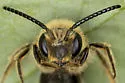
Andrena forbesii
Andrena forbesii

Andrena fracta
Andrena fracta
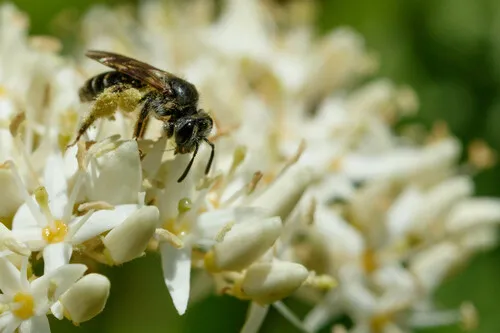
Fragile Miner Bee
Andrena fragilis
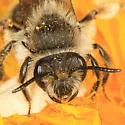
Andrena frigida
Andrena frigida
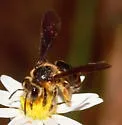
Andrena fulvipennis
Andrena fulvipennis
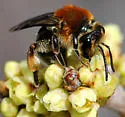
Andrena fuscicauda
Andrena fuscicauda
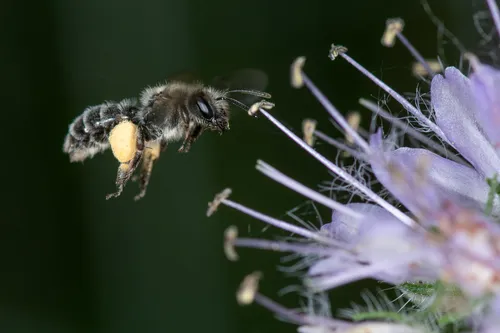
Andrena geranii
Andrena geranii
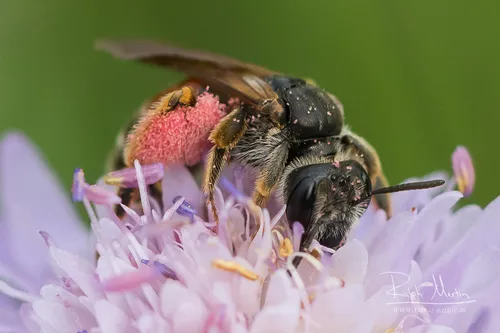
Large Scabious Mining Bee
Andrena hattorfiana
Andrena haynesi
Andrena haynesi
Sunflower Miner Bee
Andrena helianthi
Andrena hilaris
Andrena hilaris
Andrena hippotes
Andrena hippotes
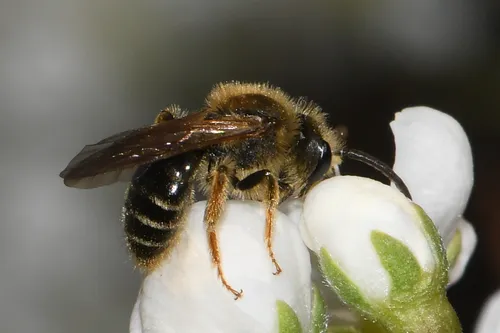
Andrena imitatrix
Andrena imitatrix
Andrena impolita
Andrena impolita
Andrena jessicae
Andrena jessicae