
Family Square-headed Wasps, Sand Wasps, and Allies (Crabronidae)
Crabronidae is a family in the order Hymenoptera. Browse 294 named species recorded in this family, or open an individual profile for its available identification and natural-history information.
Guides
Species in Crabronidae (294)
Alysson guignardi
Alysson guignardi
Identification: Dorsum of scape and lower inner eye margins yellow. Clypus black. See Ascher and Buck comments here .
Alysson melleus
Alysson melleus
Identification: The only species of Alysson in the northeast with red mesosoma. (Buck comment here )
Alysson triangulifer
Alysson triangulifer
Identification: Eastern A. triangulifer have the legs mostly red. (Buck comment here )
Aphilanthops frigidus
Aphilanthops frigidus
Identification: Males and females similar. Marks, stripes and spots can be either yellow or white. Head: Black with 3 wide yellow stripes: one each along inner eye margin, and one median stripe. Median stripe progressively narrows beyond antenna base
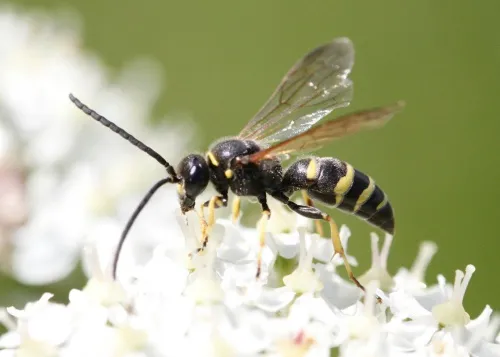
Argogorytes fargeii
Argogorytes fargeii
The scarcer and smaller of our two Argogorytes wasps, but seemingly with a similar biology to A. mystaceus. It is black and yellow banded and care is needed with identification due to similarity with other species. Most solitary bees and wasps are di
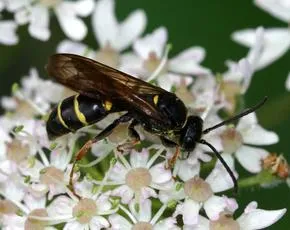
Argogorytes mystaceus
Argogorytes mystaceus
Argogorytes mystaceus is a sand wasp, the male has unusually long antennae for this genus; the female has a short comb. The 1st abdominal segment is almost semi-circular. Most solitary bees and wasps are difficult to identify, and can rarely be ident
Bembecinus quinquespinosus
Bembecinus quinquespinosus
Identification: Males are highly variable and can range from largely pale to mostly black: Females are always dark
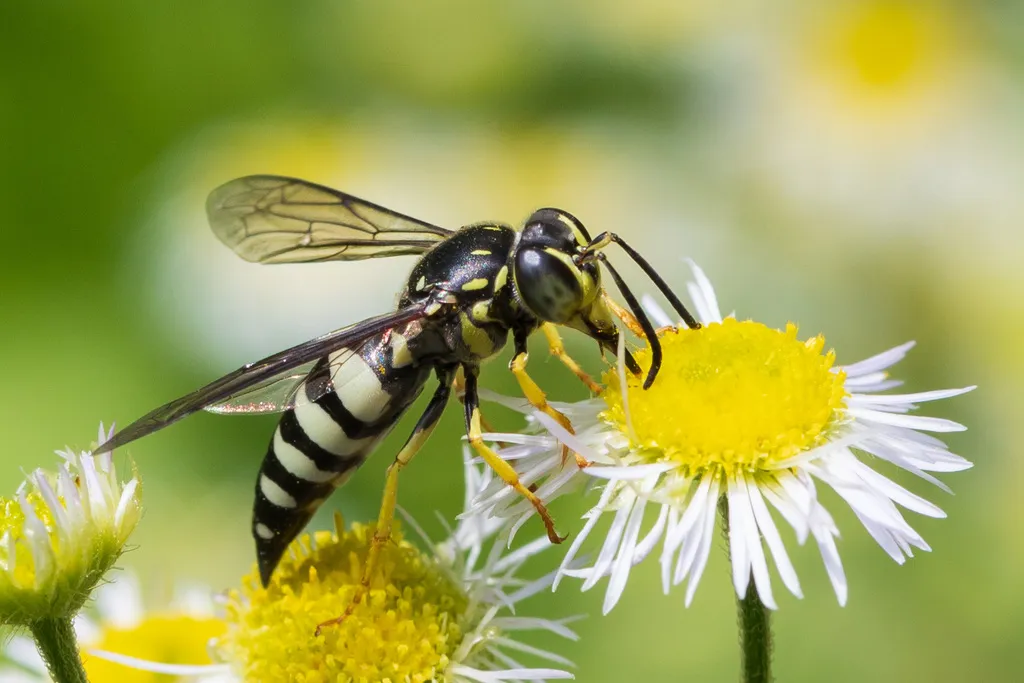
Four-banded Stink Bug Wasp
Bicyrtes quadrifasciatus
Identification: The increasing distance between the pairs of tergal bands posterad is diagnostic against other species in the genus.
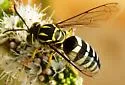
Bicyrtes variegatus
Bicyrtes variegatus
Identification: Scutum with long pale spots. Scutellar spots closely approximated anteriorly. Xanthic B. quadrifasciatus can be similar but have spots on tergum 5 more separated.
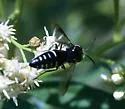
Bicyrtes viduatus
Bicyrtes viduatus
Identification: Submarginal cell 1 conspicuously clouded, wings otherwise largely clear.
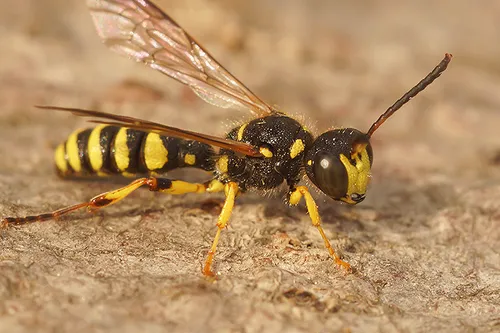
Sand Tailed Digger Wasp
Cerceris arenaria
A large species similar in size and markings to the Bee Wolf (Philanthus triangulum). Most solitary bees and wasps are difficult to identify, and can rarely be identified from photos taken in the field. All red-rated records should include a photo or
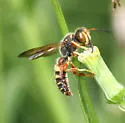
Cerceris bicornuta
Cerceris bicornuta
Identification: Body coloration slightly variable (John Ascher) ♂ ♀ Mating pair:
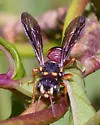
Cerceris blakei
Cerceris blakei
Identification: Note humped tegulae (Matthias Buck) ♂ ♀
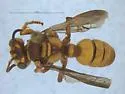
Cerceris californica
Cerceris californica
Identification: Body coloring slightly variable across the range ♂ ♀ Mating pair
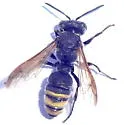
Cerceris dilatata
Cerceris dilatata
Identification: Colour pattern very characteristic. T1 black or brick red.
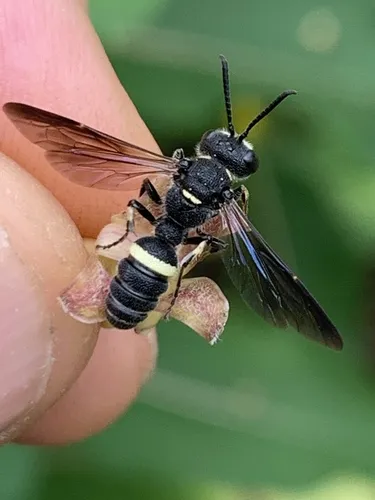
Smoky-winged Beetle-bandit
Cerceris fumipennis
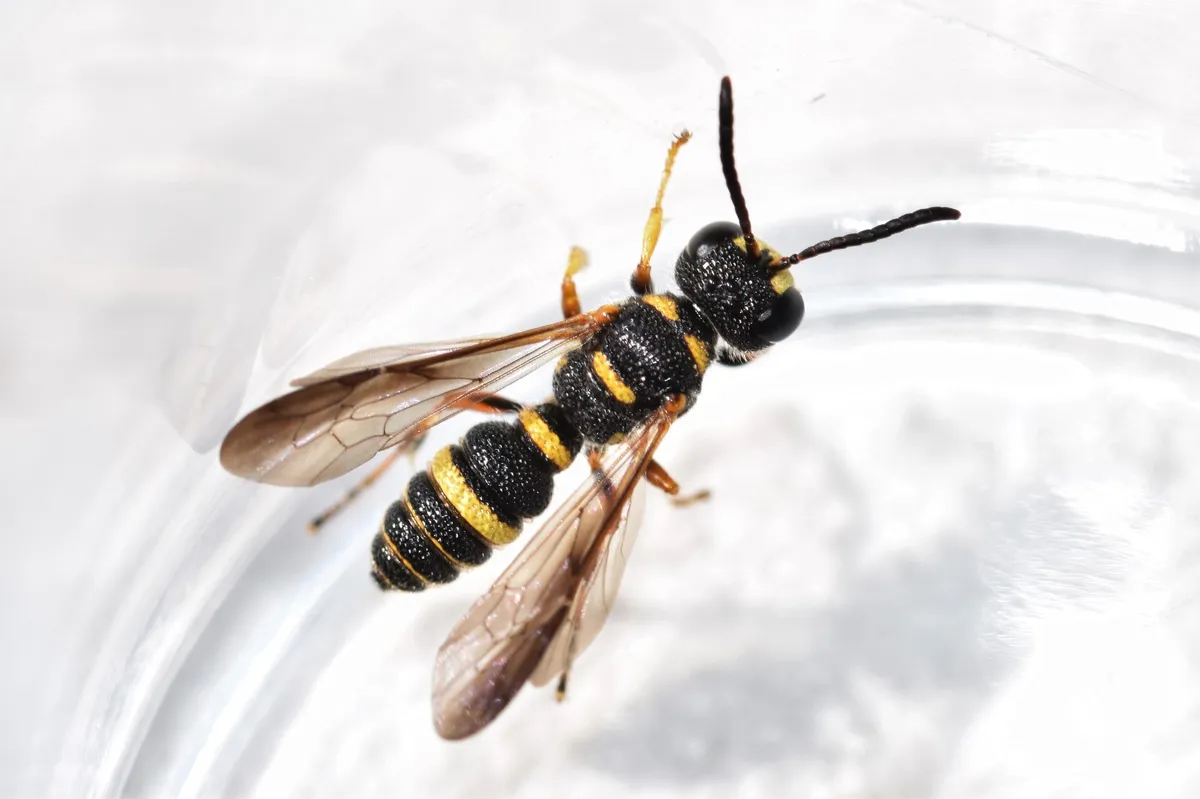
Identification: Smoky brown wings, a creamy yellow band on T2, 3 pale spots on face in females, 2 in the males ♂ ♀ Mating preys mostly on Buprestidae. The wasp is used to detect EAB presence ( Careless et al. 2009 )
Cerceris insolita
Cerceris insolita
Identification: all-black T2 diagnostic (Matthias Buck) ♂ ♀ Mating
Cerceris kennicottii
Cerceris kennicottii
Identification: abdominal pattern distinctive (interrupted yellow band on T3, complete on T2 and T4). (Matthias Buck) ♂ ♀
Cerceris rufopicta
Cerceris rufopicta
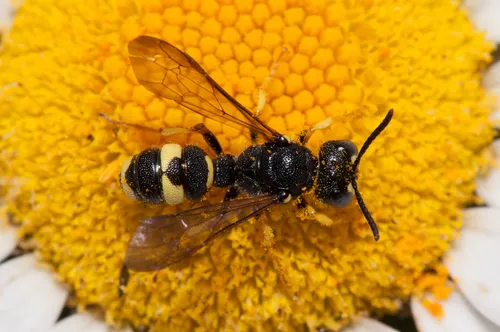
Identification: female clypeal process distinctive; FL specimens marked with red ♂ ♀
Ornate Tailed Digger Wasp
Cerceris rybyensis
A black and yellow banded species which is similar to several others. Care is needed with identification. Most solitary bees and wasps are difficult to identify, and can rarely be identified from photos taken in the field. All red-rated records shoul
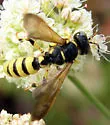
Cerceris sextoides
Cerceris sextoides
Identification: pygidial plate nearly parallel-sided; female clypeal projection two-pointed (a feature shared with a few other species) ♀ ♂
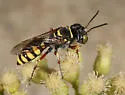
Clypeadon taurulus
Clypeadon taurulus
Identification: Male: clypeus with lateral spots; female: shape of clypeal horn diagnostic
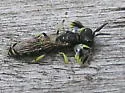
Crabro latipes
Crabro latipes
"The male's front tibiae are greatly expanded into shields. He covers the female's eyes with those things during mating. The plates don't blind her, but apparently filter light in such a way that she recognizes this is a male of her own species." Com
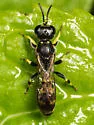
Crabro snowii
Crabro snowii
Identification: A member of the hilaris species group, in which males have no tibial shield.
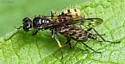
Crossocerus binotatus
Crossocerus binotatus
Identification: Differs from all North American species by the unusual colour pattern (metasoma richly marked with yellow but spots on tergum 2 much smaller than on following terga; tergum 1 with yellow sides) and the unusually slender first metasoma
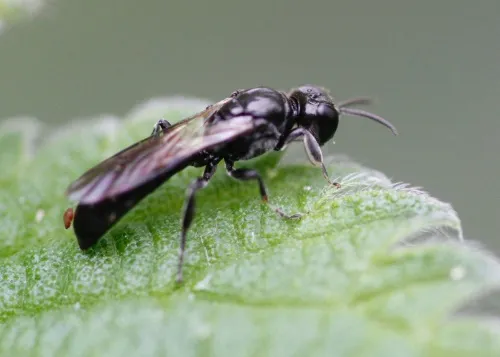
Crossocerus cetratus
Crossocerus cetratus
Another small, predominantly black wasp - the swollen front leg is distinctive in this species. There are several similar species and care is needed with identification. Most solitary bees and wasps are difficult to identify, and can rarely be identi
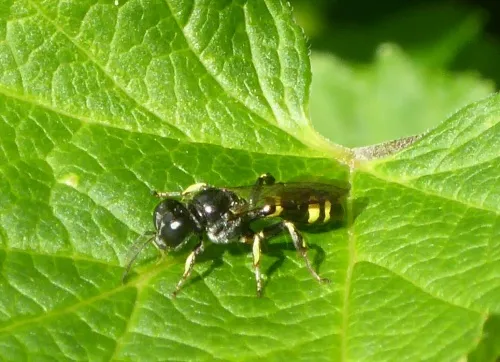
Blunt Tailed Digger Wasp
Crossocerus dimidiatus
One of the larger British Crossocerus with yellow-spotted gasters, resembling Crabro and Ectemnius, rather than the smaller, darker Crossocerus more typical of the British fauna. “Most solitary bees and wasps are difficult to identify, and can rarely
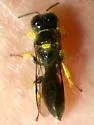
Crossocerus impressifrons
Crossocerus impressifrons
Identification: The absence of yellow spots on the abdomen separate this species from Ectemnius and Lestica . Yellow bands on the pronotum and scutellum and the yellow tibiae make this one of the few readily recognisable species in the genus. … Matth
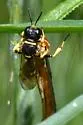
Crossocerus maculipennis
Crossocerus maculipennis
Identification: distinguished by the conspicuous yellow lateral spots on abdominal segments 2-5 and the presence of a precoxal tubercle on the mesopleuron C. maculipennis and C. nitidiventris are the only New World Crossocerus having the metasoma bla
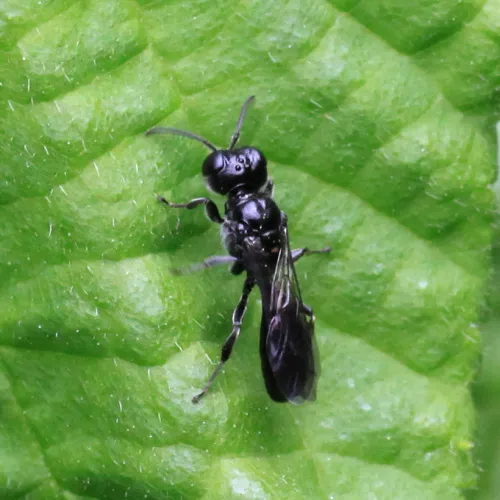
Crossocerus megacephalus
Crossocerus megacephalus
Unless identified by a recognised expert, a photo is required and the specimen should be examined with a microscope. In the comments box, state the key or ID method used and describe the size and identifying characters. May be recorded from a wide ra
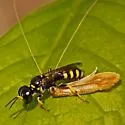
Crossocerus nitidiventris
Crossocerus nitidiventris
Identification: It is an unusual species in its genus because of the yellow markings on the abdomen (only present in one other species). What makes this this wasp distinctive is: yellow spots on smooth area of propodeum, yellow prepectus (that's the
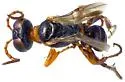
Diploplectron peglowi
Diploplectron peglowi
species page creation based on identification of this image by Matthias Buck here: https://inaturalist.ca/observations/135856842
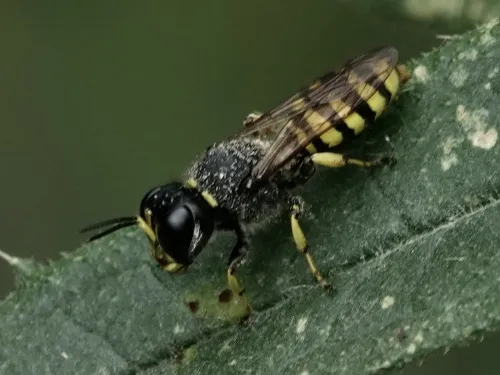
Ectemnius cavifrons
Ectemnius cavifrons
At 11-16.5mm this is one of the largest Ectemnius species. They are very hard to identify from photographs and a specimen is usually required. The males can sometimes be identified from a good view of the nobbly antennae. The females require an even
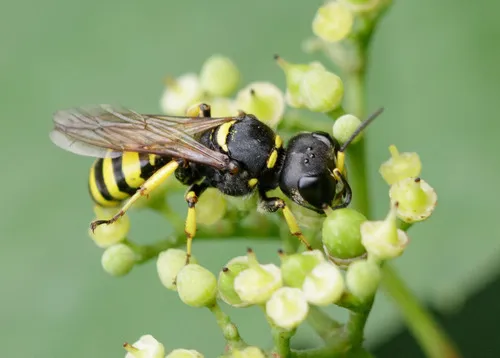
Ectemnius cephalotes
Ectemnius cephalotes
One of the larger Ectemnius species species (9-15 mm) and with the familiar black and yellow abdomen. The thorax is dull and both sexes have transverse striae in the front half of the mesonotum and longitudinal striae in the rear half. Most solitary
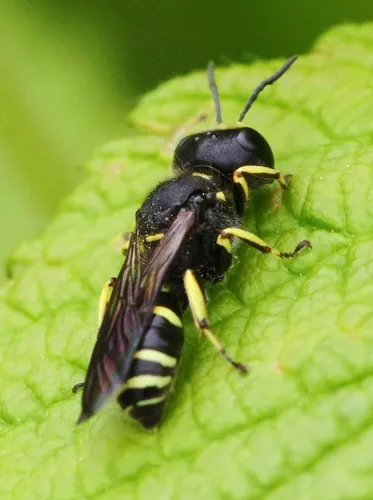
Ectemnius continuus
Ectemnius continuus
8-14mm. The largest and most common of the British Ectemnius species. Generally black, yellow markings on tergites 1 and 3 are much reduced or absent, all yellow tibiae. Ectemnius species are difficult to separate so care needs to be taken with ident
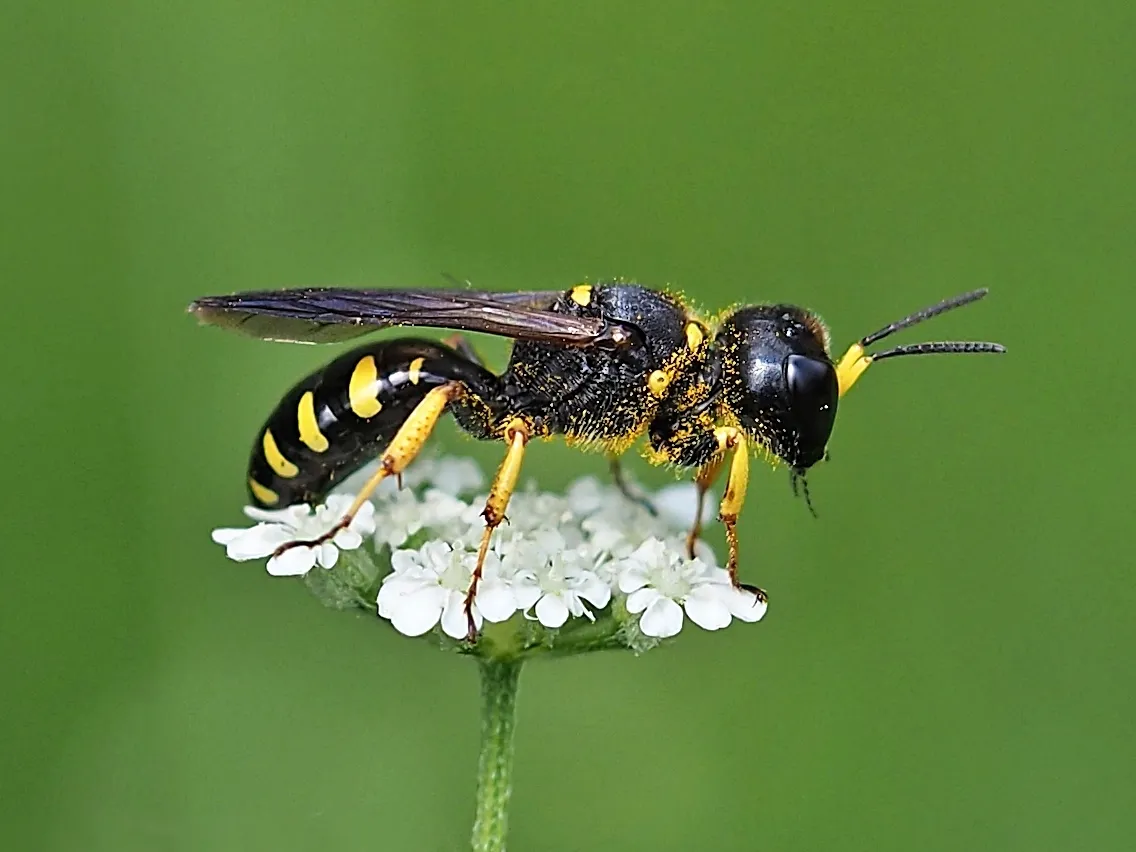
Ectemnius maculosus
Ectemnius maculosus
Identification: "Male of this species quite distinctive because of the narrowing of the head behind the eyes." -- Matthias Buck
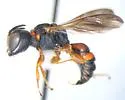
Ectemnius rufipes
Ectemnius rufipes
Identification: The typical form (TX, OK, AL, northern FL, to the Carolinas), T-II and IV-VI are yellow marked. In the south Florida form, these markings (and sometimes T-I) are reddish.
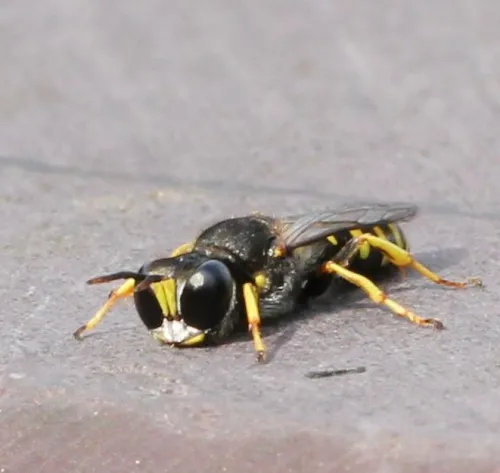
Ectemnius sexcinctus
Ectemnius sexcinctus
A large Ectemnius species with yellow and black wasp like markings and closely resembling the more common Ectemnius continuus. Most solitary bees and wasps are difficult to identify, and can rarely be identified from photos taken in the field. All re
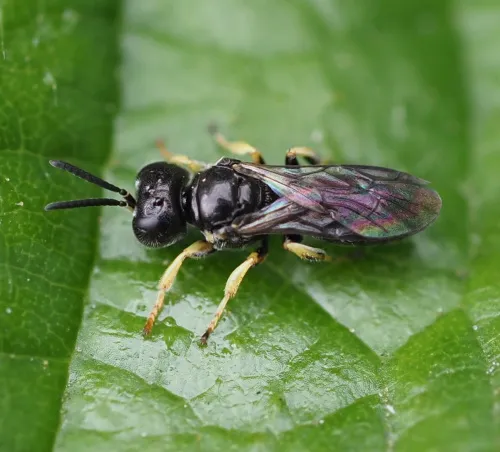
Entomognathus brevis
Entomognathus brevis
A small, black wasp superficially resembling Lindenius species, but with pronounced hairy eyes. Most solitary bees and wasps are difficult to identify, and can rarely be identified from photos taken in the field. All red-rated records should include
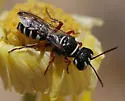
Eucerceris arenaria
Eucerceris arenaria
The original description of Eucerceris arenaria , written in 1948 by Herman Scullen, is very detailed and accompanied by Figs. 6a-f .
Eucerceris zonata
Eucerceris zonata
Identification: Extent of yellow markings highly variable (Scullen, 1939)
Glenostictia pictifrons
Glenostictia pictifrons
Only G. pictifrons and G. emarginata are found east of the Mississippi. G. emarginata has very different abdominal and thoracic markings and preys on adult Lepidoptera. ‒Philip Careless
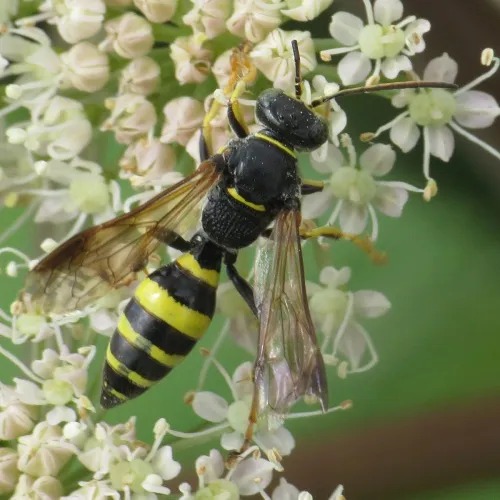
Gorytes laticinctus
Gorytes laticinctus
9 to 13mm. This is one of several very similar wasps in the family which require a specimen or excellent macro photos to identify. The first dorsal plate is straight-sided rather than bulged and the yellow on the second dorsal plate occupies not less
Hoplisoides semipunctatus
Hoplisoides semipunctatus
Identification: Color pattern very distinctive: only first three terga with yellow bands; both scutellum and metanotum largely yellow.
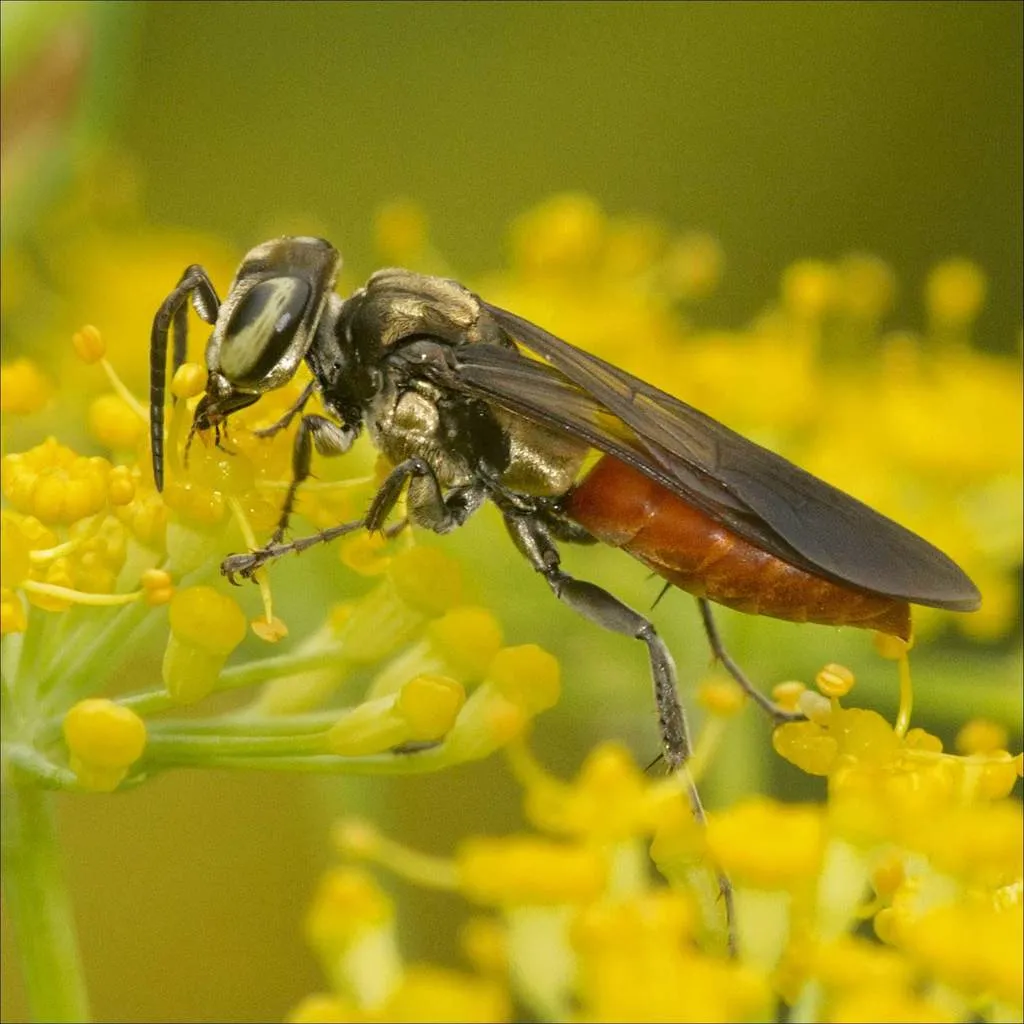
Larra bicolor
Larra bicolor
Introduced intentionally in Florida from Bolivia in 1988 and again in 1989 for control of Neoscapteriscus mole crickets, which are also introduced from South America.
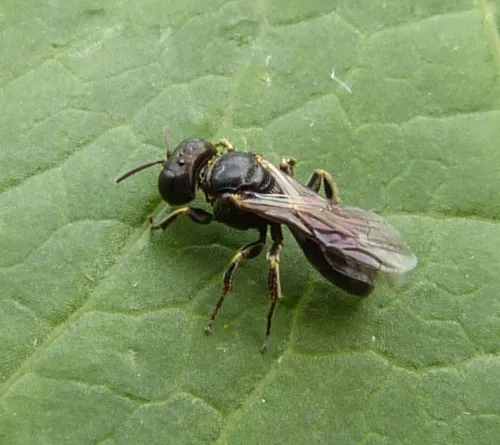
Lindenius albilabris
Lindenius albilabris
A small, slim bodied, black solitary wasp. Most solitary bees and wasps are difficult to identify, and can rarely be identified from photos taken in the field. All red-rated records should include a photo or set of photos of the specimen, illustratin
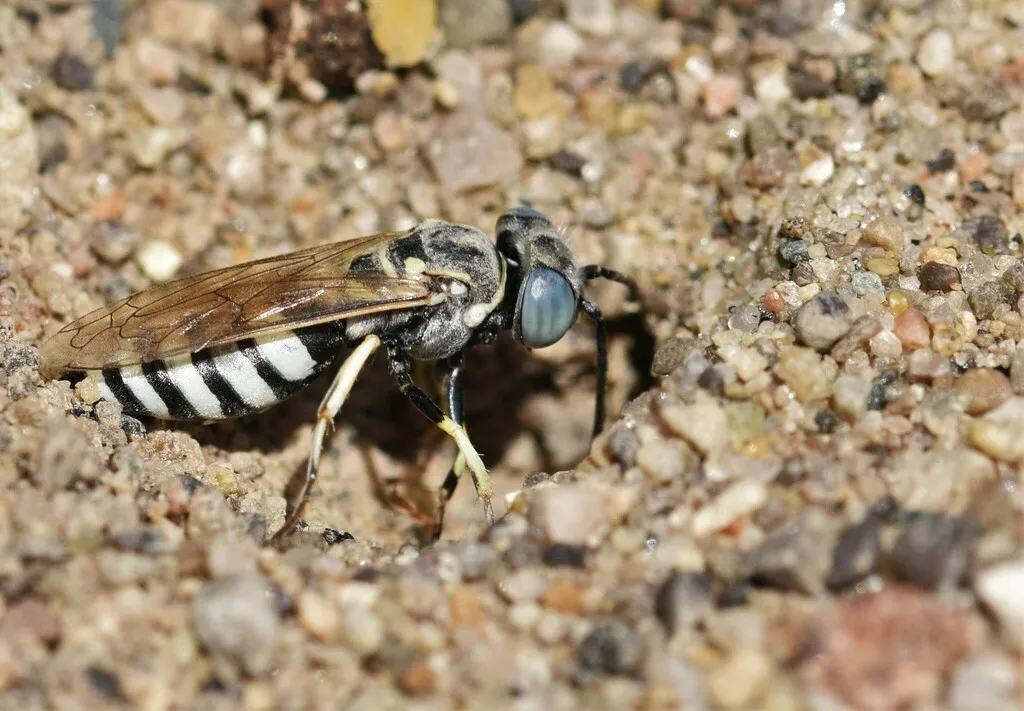
Microbembex monodonta
Microbembex monodonta
Identification: The only species east of the 100th meridian. M. aurata , M. hirsuta , and M. nigrifrons all occur along the 100th meridian, so the identity of individuals near the line should be checked.
Mimumesa clypeata
Mimumesa clypeata
Identification: One of only two North American Mimumesa species with partially red abdomen (all others have a completely black abdomen). Therefore very similar to Mimesa species (most of which also have a partially red abdomen). Only separable from M
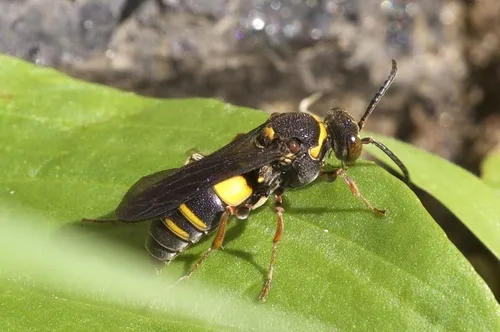
Nysson plagiatus
Nysson plagiatus
Identification: Separated from the similar N. aequalis by the broader yellow stripe on the first segment of the gaster (roughly 2x as wide) Individuals with reddish parts of the metasoma are known to occur in Texas. --Matthias Buck
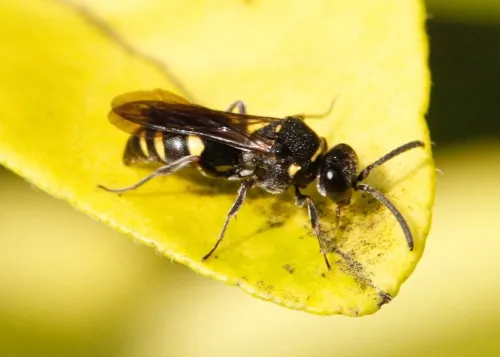
Nysson trimaculatus
Nysson trimaculatus
One of several similar black and yellow banded wasps. Care is needed with identification. Most solitary bees and wasps are difficult to identify, and can rarely be identified from photos taken in the field. All red-rated records should include a phot
Oxybelus cressonii
Oxybelus cressonii
Identification: The female of this species is very distinctive because of its all-yellow antennae.
Pemphredon (Cemonus) inornata
Pemphredon inornata
a member of the subg. Cemonus Panzer 1806 (6 spp. in our area)
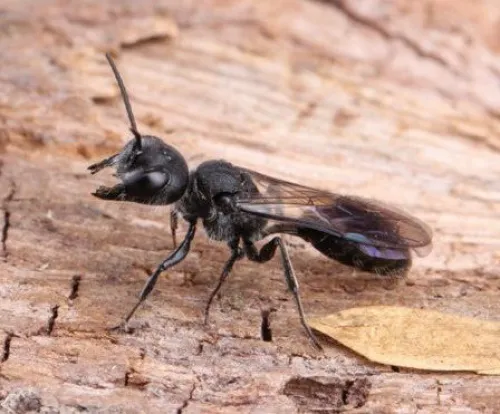
Mournful Wasp
Pemphredon lugubris
Length up to 12 mm. There are other very similar species in this family and care is needed with identification. Most solitary bees and wasps are difficult to identify, and can rarely be identified from photos taken in the field. All red-rated records
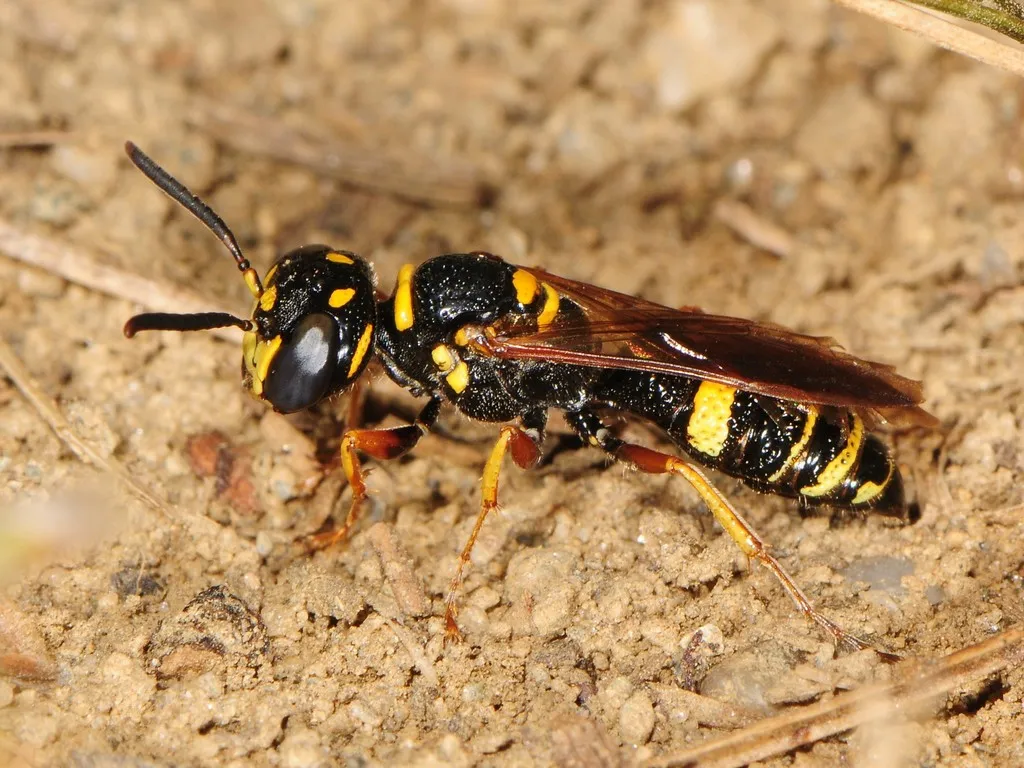
Philanthus gibbosus
Philanthus gibbosus
Each female raises its own brood. However several wasps have been seen sharing one burrow's entrance
Philanthus multimaculatus
Philanthus multimaculatus
Identification: females less variable in coloration and pattern than males. female: males:
Philanthus solivagus
Philanthus solivagus
Identification: Fine punctation of terga and continuous yellow bands on all terga (broad on T1). (Mathias Buck's comment) Abdominal segments T6 & T7 (on males) do not usually have yellow bands. Abdominal segment T6 (on females) may have a small yello
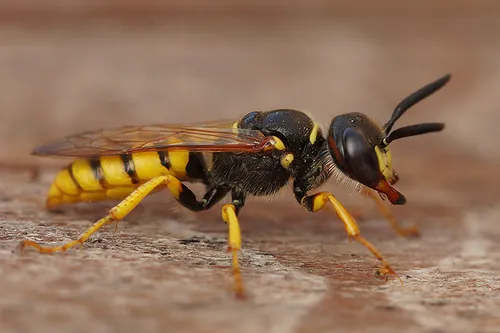
Bee Wolf
Philanthus triangulum
The Bee Wolf is one of the largest (up to 17 mm) and most spectacular solitary wasp species in Britain. It can be distinguished by the unfolded wings and thickened antennae. The abdomen and face are extensively yellow and the back of the head behind
Pison koreense
Pison koreense
Non-native, from Asia. Until recently it was present only in the East but it has also been reported from the West.
Pisonopsis birkmanni
Pisonopsis birkmanni
Rohwer's original 1909 description of this species appears on pg. 129 of the Trans. Amer. Ent. Soc. paper cited below ( direct link here ).
Psammaletes mexicanus
Psammaletes mexicanus
Specimens from southern locations have considerably more red markings (nearly absent in specimens from NE U.S., execept on legs).
Pseneo punctatus
Pseneo punctatus
Preys on sharpshooters ( Cicadellinae ), and has appeared in California with the incursion of the glassy-winged sharpshooter, Homalodisca vitripennis (formerly H. coagulata ). (based on pers. communication with Doug Yanega; HW; see also reference on
Pseneo simplicicornis
Pseneo simplicicornis
Identification: Separated from other members of its genus by the following combination of traits: clypeus with silvery vestiture, antennal scapes dark, scutellum punctate, petiole black (rarely with reddish tinge in teneral individuals), legs black w
Pacific Cicada-killer Wasp
Sphecius convallis
Identification: In females: Punctation density in the middle of T2 is less dense compared to T1. In the similarly-colored S. grandis , this is approximately equal. In males: Antennal segments II-IV are not curved ventrally (at the tyloids/ sensory or
Horse Guard Wasp
Stictia carolina
"a really big sand wasp (just behind the cicada killer). They get their name by hanging out around equines and pouncing on tabanids which they paralyze and stuff into their burrows for their offspring." -Eric R. Eaton "The horse-guard ( Monedula caro
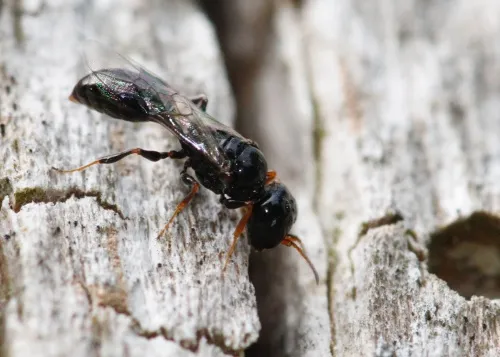
Stigmus pendulus
Stigmus pendulus
Most solitary bees and wasps are difficult to identify, and can rarely be identified from photos taken in the field. All red-rated records should include a photo or set of photos of the specimen, illustrating the key characters taken from a standard
Stizus brevipennis
Stizus brevipennis
Identification: This species looks superficially quite like Sphecius speciosus (the eastern cicada-killer wasp), but the abdominal banding is much less "ornate". These markings lack a hooked structure and are overall broader and smoother. The scutell
Stizus occidentalis
Stizus occidentalis
Identification: One of 4 western species and 2 extensively yellow species, S. occidentalis and S. iridis (range: UT, CA, AZ) share a largely yellow, red, and black coloration. S. occidentalis can be separated from S. iridis by its straighter margin o
Tachysphex pechumani
Tachysphex pechumani
Identification: Our only member of the genus in which the female has orange antennae
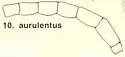
Tachytes aurulentus
Tachytes aurulentus
Identification: The males have the basal antennae segments F2 to F4 slightly convex, on the ventral side. ♂ Compare with Tachytes grisselli (below)
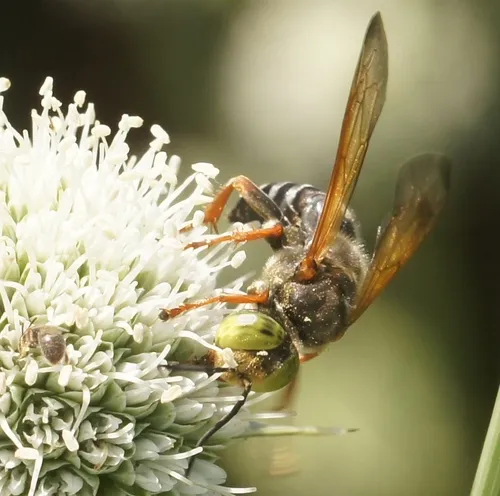
Tachytes distinctus
Tachytes distinctus
Identification: Hind femora have no patches of long hairs on ventral side. Hind femora are mostly red or mostly black, depending on variety/gender. (males have mostly black) Hind tibiae are mostly red or all-red. Mandibles are light-colored. Body all
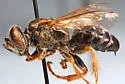
Tachytes grisselli
Tachytes grisselli
Identification: Males have the basal antennae segments highly curved, on the ventral side. ♂
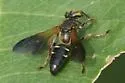
Tachytes guatemalensis
Tachytes guatemalensis
Identification: ♂ ♀ Mating pair: ♀♂ "One of the more easily recognized Tachytes species: reddish wing base, only two abdominal segments with silvery bands (female), scutum without silvery pubescence." --Matthias Buck ( comments )
Tachytes pennsylvanicus
Tachytes pennsylvanicus
Identification: Most members of the pepticus species group are very difficult to identify to species, from an image alone. (both genders) Some females of the pepticus species group are not identifiable to species, without dissection or DNA verificati
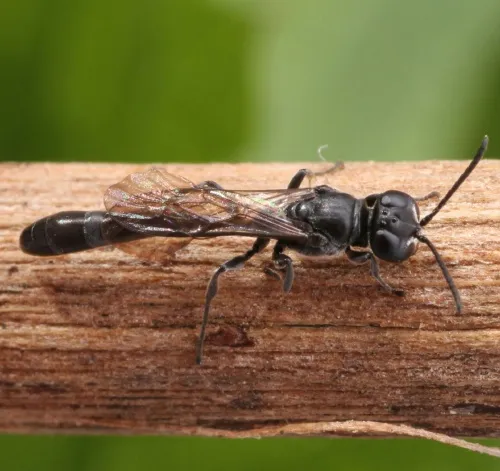
Slender Wood Borer Wasp
Trypoxylon attenuatum
Length about 8 mm. A blackish, slender bodied wasp. Most solitary bees and wasps are difficult to identify, and can rarely be identified from photos taken in the field. All red-rated records should include a photo or set of photos of the specimen, il
Trypoxylon lactitarse
Trypoxylon lactitarse
Identification: Shining black body with pale hairs on the thorax and hind tarsi partly white.
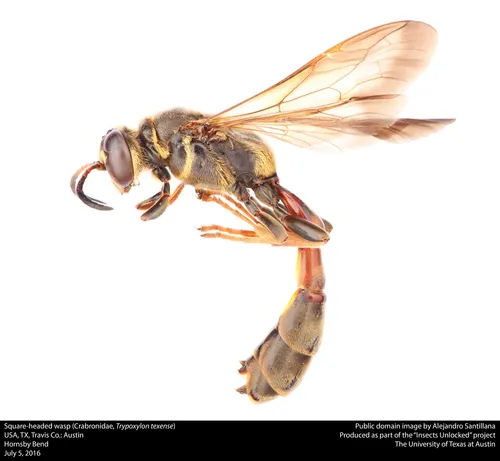
Trypoxylon texense
Trypoxylon texense
Identification: This species is rather distinctive for the combination of its bright golden pubescence and reddish basal (4-6) antennal segments. The ground color of the body is black, with orange to reddish markings on the antennae (as above), mandi
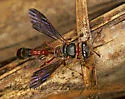
Trypoxylon tridentatum
Trypoxylon tridentatum
Identification: The only species of Trypoxylon in our area with a pair of spines on the propodeum.
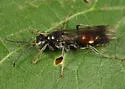
Alysson oppositus
Alysson oppositus
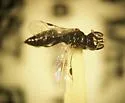
Ammoplanops vierecki
Ammoplanops vierecki
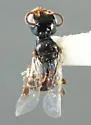
Ammoplanus chemehuevi
Ammoplanus chemehuevi
Ammoplanus quabajai
Ammoplanus quabajai
Anacrabro ocellatus
Anacrabro ocellatus
Aphilanthops hispidus
Aphilanthops hispidus
Aphilanthops subfrigidus
Aphilanthops subfrigidus
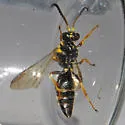
Argogorytes nigrifrons
Argogorytes nigrifrons
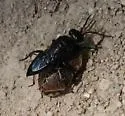
Astata occidentalis
Astata occidentalis
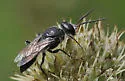
Astata unicolor
Astata unicolor
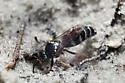
Bembecinus floridanus
Bembecinus floridanus
Bembecinus nanus
Bembecinus nanus
Bembecinus neglectus
Bembecinus neglectus
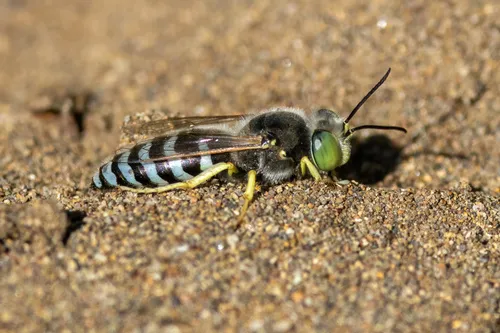
Bembix americana
Bembix americana
Bembix amoena
Bembix amoena
Bembix belfragei
Bembix belfragei
Bembix dentilabris
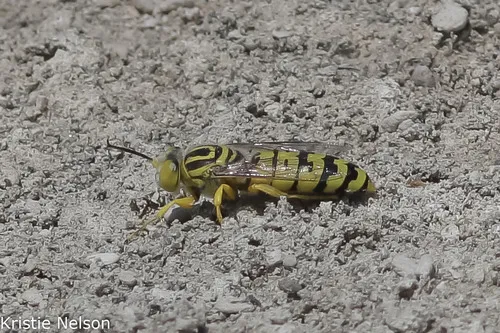
Bembix dentilabris
Bembix nubilipennis
Bembix nubilipennis
Bembix oculata
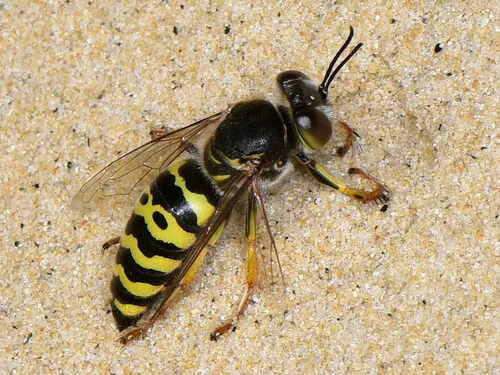
Bembix oculata
Bembix pallidipicta
Bembix pallidipicta
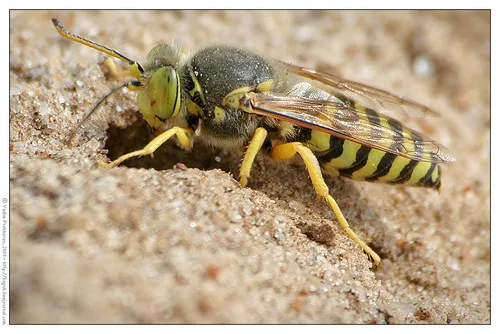
Bembix rostrata
Bembix rostrata
Bembix rugosa
Bembix rugosa
Bembix sayi
Bembix sayi