
Family Ants (Formicidae)
Formicidae is a family in the order Hymenoptera. Browse 564 named species recorded in this family, or open an individual profile for its available identification and natural-history information.
Guides
Species in Formicidae (564)
Anochetus mayri
Anochetus mayri
Identification: Back of head lacking dark apophyseal lines
Aphaenogaster ashmeadi
Aphaenogaster ashmeadi
Identification: Most similar to A. treatae but the lobe at the base of scape takes up 1/5 or less of the scape in ashmeadi and 1/4 of the scape in treatae. Both species are arenicolous but A. ashmeadi is relatively constricted to the southeastern Uni
Aphaenogaster boulderensis
Aphaenogaster boulderensis
Identification: concolor, otherwise similar to A. smithi (bicolored)
Aphaenogaster carolinensis
Aphaenogaster carolinensis
Identification: Typical color pattern is red-brown with yellow legs
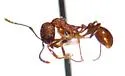
Aphaenogaster mariae
Aphaenogaster mariae
Identification: Striations fanning out from the base of the gaster:
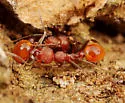
Tennessee Collared Ant
Aphaenogaster tennesseensis
Identification: " Aphaenogaster tennesseensis is relatively large Aphaenogaster species whose workers are dark reddish-brown, with heavy sculpture, long curved propodeal spines, and have the postpetiole broader than long and suboval in shape. The que
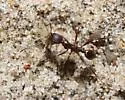
Aphaenogaster treatae
Aphaenogaster treatae
Identification: Large, flat lobe at base of scape of antenna.
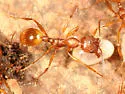
Aphaenogaster N22b
Aphaenogaster undescribed-near-rudis
This page is for the undescribed species labeled as "Aphaenogaster N22b" in Dr. Gary Umphrey's 1996 paper on the fulva-rudis-texana complex. Aphaenogaster N22b is similar to Aphaenogaster rudis, but paler and nesting in rocky outcroppings, bluffs, pr
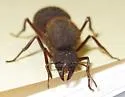
Texas Leaf-cutting Ant
Atta texana
Identification: - Queen; - Male Photo of all castes (note, female reproductive has larger head than male) - Forestry Images Atta texana Photos - Alex Wild, The Diversity of Insects Leaf-cutting ants live in large colonies of up to 2 million.
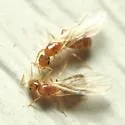
Brachymyrmex depilis
Brachymyrmex depilis
Workers of this species are tiny, about 1.25 mm in length, until they fill up their crops with honeydew from subterranean aphids, etc. and expand to nearly 2.0 mm. [comment by James C. Trager] Queens are much larger, and judging by the number of ima
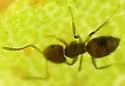
Brachymyrmex obscurior
Brachymyrmex obscurior
Identification: Very similar to B. patagonicus . The eyes are smaller. Introduced, originally from Central and South America.
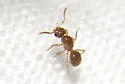
Tiny Queen Brachymyrmex
Brachymyrmex species-d
Identification: These queens are very small and only slightly larger than workers of Brachymyrmex depilis , in contrast to B. depilis queens which are much larger.
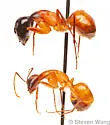
Camponotus acutirostris
Camponotus acutirostris
Identification: One of the US's largest worker Camponotus , similar to C. ocreatus and C. vicinus in size. US queens of Tanaemyrmex however are often slightly smaller than other species in the Camponotus subgenus, even in the largest species. Triangu
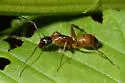
Camponotus americanus
Camponotus americanus
Identification: Tan with a dark head. The abdomen may have mottling or a spot on it unlike the similar C. castaneus, that has a light colored head, and no mottling. Since these ants live in the soil, they aren't considered to be harmful pests.
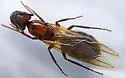
Tropical Carpenter Ant
Camponotus atriceps
Identification: In our area, similar to Camponotus floridanus but with a darker head and ranging only in Texas.
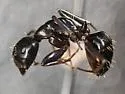
Camponotus caryae
Camponotus caryae
Identification: [OY] In the northeastern US, it is easily distinguishable from its congeners (nearcticus), but where it overlaps with C. discolor it is more difficult to separate and ID relies on coloration and the length of the types of malar setati
Chestnut Carpenter Ant
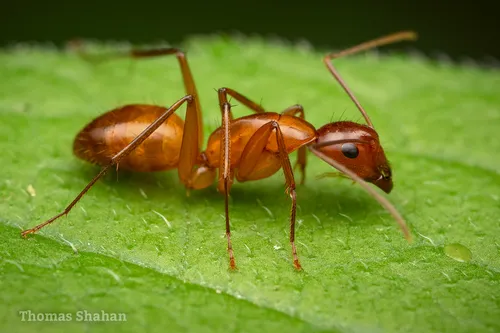
Camponotus castaneus
Identification: Typical Carpenter Ant, large and uniformly reddish orange. See Mississippi Entomological Museum . [OY] Its sister species, C. americanus, is in the Camponotus sensu stricto, and it fits well inside that group. No doubt this species wi
Camponotus essigi
Camponotus essigi
Identification: The yellow coloration on the first (or more) tergite(s) is diagnostic, but in some workers it is not apparent.
Hercules Carpenter Ant
Camponotus herculeanus
In New Brunswick can be superficially similar to C. novaeboracencis
Camponotus hyatti
Camponotus hyatti
Identification: The deeply incised metanotal suture is diagnostic for this species.
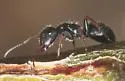
Camponotus mina
Camponotus mina
Identification: One of two Camponotus (Myrmobrachys) in the southwestern US. The similar species Camponotus trepidulus can be distinguished by different head and eye proportions in all castes.
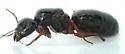
Camponotus modocnr
Camponotus modocnr
Identification: Has shiny queens (head shiny in larger majors, smaller workers apparently identical to modoc)
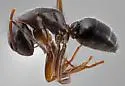
Camponotus nearcticus
Camponotus nearcticus
Identification: small, mostly black and shiny, very few apparent hairs; there is a form with an orange/red mesosoma. in the NE one of 3 spp. with a distinct notch in the clypeus
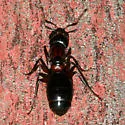
New York Carpenter Ant
Camponotus novaeboracensis
Identification: Relatively shiny, large carpenter ant worker with distinctly red mesosoma is unique over most of its range. In the western part, where it overlaps with C. vicinus , the unkeeled clypeus and relatively shorter limbs are technical chara
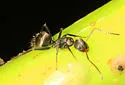
Camponotus novogranadensis
Camponotus novogranadensis
Identification: Similar to Camponotus planatus but usually more darkly colored with light areas around mandible bases and a strongly keeled clypeus. Color can be variable but clypeus trait is distinctive.
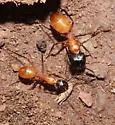
Camponotus ocreatus
Camponotus ocreatus
Identification: Very large major workers, among the largest Camponotus in the US based on worker size. US queens of Tanaemyrmex however are often slightly smaller than other species in the Camponotus subgenus, even in the largest species. Seems to be
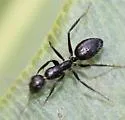
Six-Spotted Carpenter Ant
Camponotus sexguttatus
Identification: The dark reddish brown to blackish color, abundant whitish erect setae, and cream colored lateral spots on at least tergite 2 are unique among the North American Camponotus . Natural range is Argentina to Central America. Florida popu
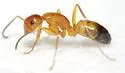
Camponotus snellingi
Camponotus snellingi
Identification: Malar area bare, bright red head and mesosoma, dark gaster with at least the first tergite flavate Author of the species - Bolton 1995
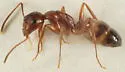
Camponotus subbarbatus
Camponotus subbarbatus
Identification: According to Richard Vernier: "Such a striped gaster is a hallmark for South-Eastern populations of this species of the subgenus Myrmentoma. This distinctive pattern makes it quite unmistakeable." Part of the Subgenus Myrmentoma
Camponotus ulcerosus
Camponotus ulcerosus
Identification: A dark black Camponotus in the Southwest with white hairs. Majors have a truncated yellow colored portion of the head.
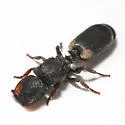
Texas Turtle Ant
Cephalotes texanus
This is a northern member of a moderately large Neotropical genus.
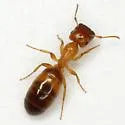
Colobopsis etiolata
Colobopsis etiolata
Described from numerous specimens of all four phases taken at Austin, Texas, in the woody galls of Disholcaspis cinerosus (Cynipidae) on the live-oaks ( Quercus virginiana ).
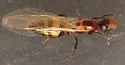
Colobopsis impressa
Colobopsis impressa
Identification: Heavily sculptured, These are the famous plug-headed ants, whose majors use their bizzarre head shape to block the nest entrance, allowing entry only to nestmates reurning form foraging.
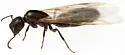
Colobopsis papago
Colobopsis papago
Identification: A dark Colobopsis with similar coloration on all female castes. Out of range of all other Colobopsis in our area other than Colobopsis cerberula , which it differs from by having a non-keeled clypeus on majors and queens, less numerou
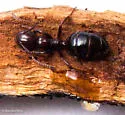
Colobopsis riehlii
Colobopsis riehlii
Identification: This species is found in mangrove thickets and has a very angular, almost triangular propodeum (when viewed from the side).
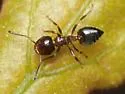
Crematogaster ashmeadi
Crematogaster ashmeadi
they are the most important source of food for the endangered red-cockaded woodpecker, Picoides borealis , and therefore warrant further research (Tschinkel 2002).
Crematogaster lineolata
Crematogaster lineolata
A rather common mid-latitude eastern and southeastern US species; mostly replaced by C. cerasi to the north.
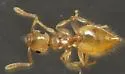
Crematogaster minutissima
Crematogaster minutissima
Identification: Propodeal spines less upturned and farther apart compared to Crematogaster missouriensis , the only other yellow Crematogaster in the US.
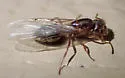
Crematogaster mutans
Crematogaster mutans
Identification: Buren (1968) notes the subpetiolar process of this species as "strikingly large," a character in combination with a postpetiole which is wider anteriorly and has straight sides, which sets C. mutans from the rest of the western Cremat
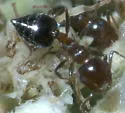
Crematogaster pilosa
Crematogaster pilosa
Identification: Note the suberect pilosity visible on the rear margin of the head. It's also on the scapes and legs, but not as clearly visible in this photo.… James C. Trager, 2 January, 2013
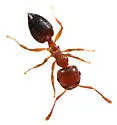
Crematogaster pinicola
Crematogaster pinicola
Identification: Morphologically identical to Crematogaster ashmeadi , but is strongly red and black bicolored in freshly collected specimens whereas ashmeadi is black or dark brown. ashmeadi nests in hardwoods, while pinicola nests in pines. The two
Cryptopone gilva
Cryptopone gilva
Identification: A bit larger than the Hypoponera and Ponera species in the area and more orange colored. Base of the mandible containing a circular pit as seen in this key .
Cyphomyrmex minutus
Cyphomyrmex minutus
Identification: Part of the Cyphomyrmex rimosus group but smaller than Cyphomyrmex rimosus , without a deep hairless furrow on the dorsum of the postpetiole or only a faint short furrow. C. minutus C. rimosus
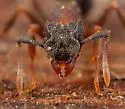
Cyphomyrmex rimosus
Cyphomyrmex rimosus
Identification: Similar to Cyphomyrmex minutus but larger and more widespread, with a deep hairless furrow on the dorsum of the postpetiole extending well into the first gastric tergite. C. minutus C. rimosus
Dolichoderus mariae
Dolichoderus mariae
Can be locally abundant but populations can be spotty, particularly in the southern most portions of its range
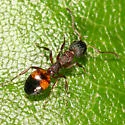
Dolichoderus plagiatus
Dolichoderus plagiatus
Identification: The four orange marks on the gaster are distinctive when separated and not blended together. See also comments on
Dolichoderus taschenbergi
Dolichoderus taschenbergi
Identification: An unmistakable species of this genus in North America, as it is the only one with a jet black color "In the spring, workers of this species will form a mass of ants in exposed areas to warm themselves"
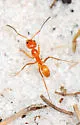
Dorymyrmex bureni
Dorymyrmex bureni
Identification: This species is can be identified in the field by its yellowish coloration, long legs and scapes, fast movement, and by its preference for sandy soils. (MacGown 2012) Dorymyrmex bureni (Trager) Det. M. A. Quinn, 2012 " Dorymyrmex bure
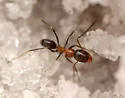
Dorymyrmex flavopectus
Dorymyrmex flavopectus
Identification: Bicolored with a dark brown to black head and gaster and a orange thorax. Similar to Dorymyrmex bossutus , but with many appressed hairs on the gaster instead of shiny.
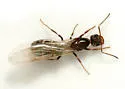
Dorymyrmex insanus
Dorymyrmex insanus
In the mild, but summer-dry climate of southern California, they fly in warm, sunny spells during the winter rainy season. ( comment made by James C. Trager)
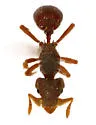
Eurhopalothrix floridana
Eurhopalothrix floridana
Identification: Larger size, very strange flat scapes, and stout triangular head separate it locally from similar looking Pyramica ( =Strumigenys )
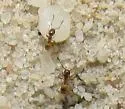
Forelius pruinosus
Forelius pruinosus
A common ant of sandy and other dryish, open, sparsely vegetated areas across the southern US and southward. --James Trager
Formica archboldi
Formica archboldi
Workers are adept at killing trap-jaw ants (Odontomachus), which they decapitate. The Odontomachus heads are stored in the F. archboldi nest. F. archboldi match the cuticular hydrocarbon profiles of the species of Odontomachus that they occur with.
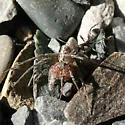
Formica argentea
Formica argentea
Identification: densely pubescent on first four gastric tergites Like other species in the Formica fusca group, these are subject to being raided and "enslaved" by the ant Polyergus breviceps
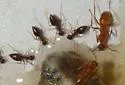
Formica biophilica
Formica biophilica
"This species is superficially quite similar to F. pallidefulva , but averages a bit larger, and characteristically exhibits notable size variation among the workers of its colonies. Under magnification, it sports numerous, long, curved bristles, lac
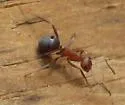
Formica difficilis
Formica difficilis
Identification: Workers recognized by sparse occurrence of short, spatulate or distally flattened and broadened hairs on pronotum and vertex ("occipital border") of head, and by having the head slightly shinier than the mesosoma. Queens uniform brown
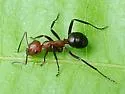
Formica fossaceps
Formica fossaceps
Identification: The bicolored pattern and high, "boxy" clypeal cross section are shared with the more common and widely distributed F. obscuripes , but F. fossaceps is easily ditinguished from the latter by the near absence of pilosity on the dorsal
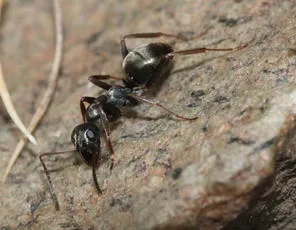
Negro Ant
Formica fusca
This wood ant is dark brown to black in colour. The worker can be up to 6mm long. This species is very similar to Formica lemani , which can be differentiated from F. fusca by the presence of short, stubby hairs on the promesonotal dorsum. Unless ide
Formica gagatoides
Formica gagatoides
Identification: A weakly or partially shining species, including on the head, black with brown legs. Subarctic in NW NA.
Formica glacialis
Formica glacialis
In the US Great Lakes Region and Midwest, this species is restricted to high-quality, spring-fed wetland areas of prairie or open woodlands, while in New England and eastern Canada, it is a yard and sidewalk ant. (James Trager) Preyed upon by Aphilan
Formica gnava
Formica gnava
This is an aggressive species for the fusca group, which releases copious amounts of noisomely detectable formic acid and other chemicals when the nest is disturbed. Nonetheless, it is host to a Mexican and Arizonan Polyergus species, P. topoffi
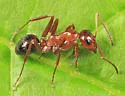
Formica incerta
Formica incerta
A common prairie ant, recognizable by its habitat, relatively short round head, and dingy yellow coloring. [comment by James C. Trager] Host species for Polyergus lucidus
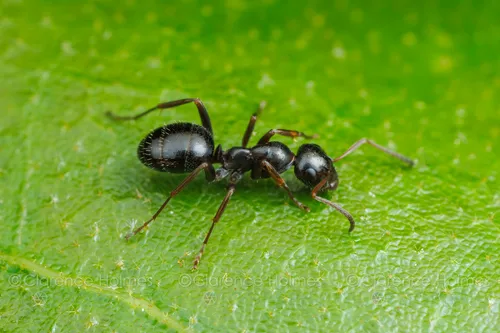
Formica lasioides
Formica lasioides
Identification: Formica neogagates, and F. lasioides, are the only two species in the neogagates group in New England . Both species are very similar, described as "uniformly brown, shiny" (p. 129, ) and "brown-to-black concolorous ants" in the key (
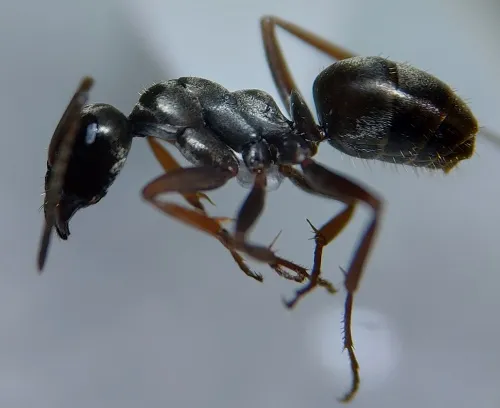
Formica lemani
Formica lemani
One of the large formica species commonly known as wood ants. This species is very similar in appearance, size and nesting habits to Formica fusca but was firmly described and keyed by Yarrow in 1954. Workers differ from those of F. fusca by the pres
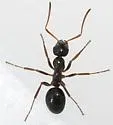
Formica neogagates
Formica neogagates
Identification: Formica neogagates , and F. lasioides , are the only two species in the neogagates group in New England (ref. 2). Both species are very similar, described as "uniformly brown, shiny" (p. 129, ref. 2) and "brown-to-black concolorous an
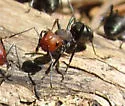
Thatching ant
Formica obscuripes
Identification: - workers weakly polymorphic, with narrow headed, uniformly dark colored minors and major workers with a broad, and contrastingly bright red head - bristles on all surfaces of hind tibiae (but few or none on scapes (cf. F. oreas ) - c
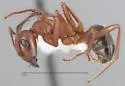
Formica obtusopilosa
Formica obtusopilosa
This ant shows morphological affinities to both the neogagates group and the sanguinea group, but does not clearly belong in either. (Comment by James Trager)
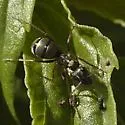
Formica podzolica
Formica podzolica
Identification: erect hairs on promesonotum separate podzolica from glacialis dense silvery pubescence on 1-3 This is a common and often conspicuous, mound-building, black-bodied, silvery-pubescent species in the western mountains of North America (l
Red Wood Ant
Formica rufa
Large red and black ant that builds large mound nests in woodland. One of the most conspicuous ant species in Europe.
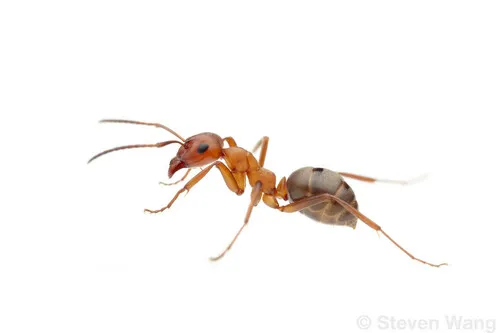
Formica subintegra
Formica subintegra
Identification: Easiest macroscopic identifying trait is the brownish base of the first gastral tergite. One of the slave-making species; workers of this species steal the pupae of Formica subsericea (or closely related F. podzolica, F. glacialis whe
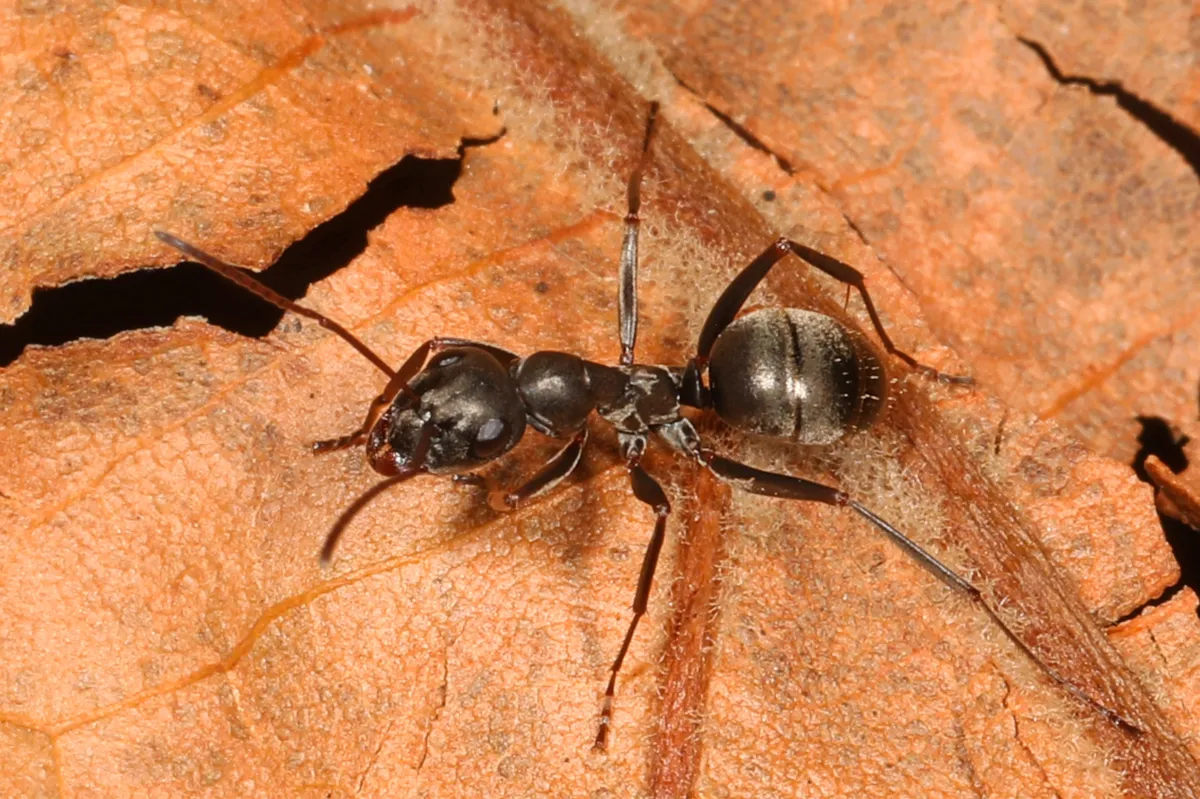
Formica subsericea
Formica subsericea
Identification: "Recognizable by its slightly silky sheen (as the specific epithet suggests) and rounded rear margin of the head." --James C. Trager Ellison et al. 2012 key Formica subsericea from F. glacialis and F. podzolica (for New England): "The
Formica az02
Formica undescribed-az-two
Identification: Wide head, sparse pubescence on gaster, dense pilosity on dorsum of mesosoma, smaller eyes, no erect pilosity on scapes Undescribed Arizona species in the neogagates-group AntWeb specimen
Gnamptogenys hartmani
Gnamptogenys hartmani
Identification: A rarely collected species. Distinguished from the only other US ectatommine species (Gnamptogenys triangularis) by its smaller size, lighter color, and lack of propodeal spines.
Hypoponera opaciceps
Hypoponera opaciceps
Identification: The largest of our Hypoponera , with a rather broad head with rounded sides in dorsal view; front and rear faces of petiole parallel, vertical in side view. Probably non-native in our area
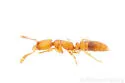
Hypoponera parva
Hypoponera parva
Identification: A very small Hypoponera species. Distinguished from our other minute yellow ponerine species Ponera exotica by the less pronounced antennal club and the absence of a subpetiolar tooth.
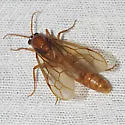
Labidus coecus
Labidus coecus
Identification: Males are found at lights and are larger than Neivamyrmex: Workers can be found conducting subterranean raids underneath rocks and logs set in the ground: Both males and workers (and likely queens) have a small tooth on the concave su
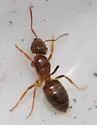
Lasius aphidicola
Lasius aphidicola
Lasius umbratus has long been applied to the Nearctic population. Schar, et al 2018 (see print references) at long last elevated this species out of the Eurasian taxon.
formerly Lasius flavus
Lasius brevicornis
At the beginning of the colony there are several queens which groom each other and prevent fungal infections that might kill solitary queens. But when the first workers eclose and start foraging, the extra queens are eliminated; mature colonies gene
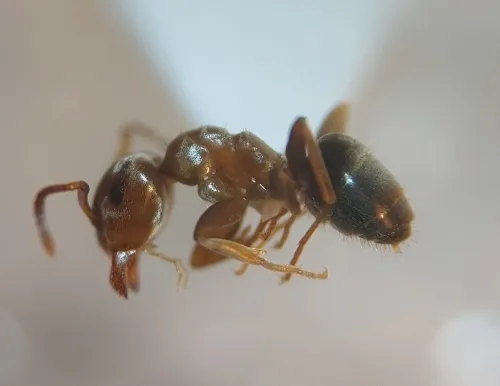
Lasius brunneus
Lasius brunneus
Workers of this species look superficially like the common black garden ant Lasius niger but can be distinguished by, amongst other characters, their lighter brownish-red head and alitrunk contrasting with a dark/black gaster Can be confused with Las
Smaller Yellow Ant
Lasius claviger
Identification: Pale, yellow-orange color and strong lemon-verbena smell Most references are under the name Acanthomyops claviger This is the most widely distributed and common of the eastern species of "citronella ants"
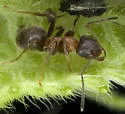
Lasius emarginatus
Lasius emarginatus
Identification: Combination of: - Contrasting orange-brown alitrunk (apparent thorax, i.e. actually thorax + propodaeum) and - Long scapi (1rst antennal segments) overreaching the vertex. Introduced very recently from the Mediterranean and central Eu
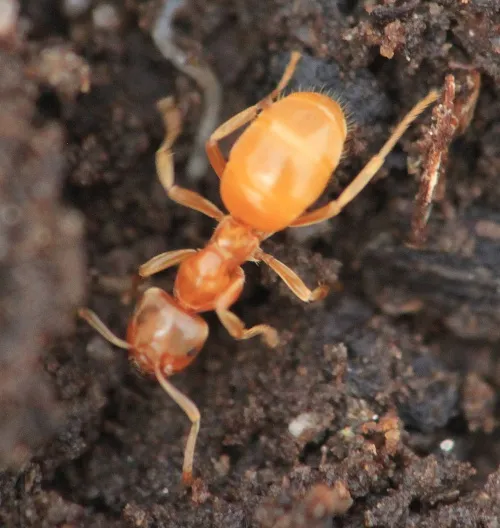
Yellow Meadow Ant
Lasius flavus
The Yellow Meadow Ant is, as the name suggests, yellowish brown in colour. A number of features distinguish it from other similar species of ant, including the fact that the lower sections of the antennae and the tibiae lack hairs. The workers are ar
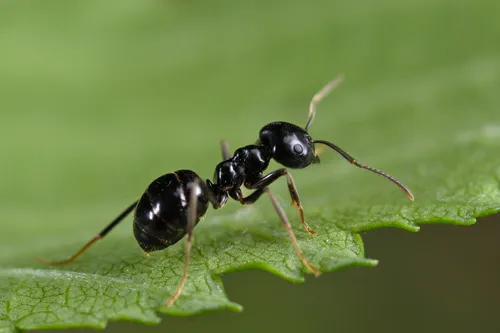
Jet Ant
Lasius fuliginosus
This ant is shiny jet black in colour with a heart-shaped head. Workers are about 4 to 6 mm long, females are larger and small males reach a length of 4.5 to 5 mm. Unless identified by a recognised expert, a photo is required and the specimen should
Lasius nearcticus
Lasius nearcticus
Identification: key characters include: long maxillary palps, small eyes. Separated from L. brevicornis by the relative length of the last segment of maxillary palp, longer than penultimate in nearcticus, shorter in brevicornis
Cornfield ant
Lasius neoniger
Identification: Workers are dull, usually yellowish brown (sometimes darker). 4 or (usually) more erect hairs in a row on the lower edge of the hind tibia. Dorsal surface pubescent from head to abdominal apex. Host to Lasius latipes
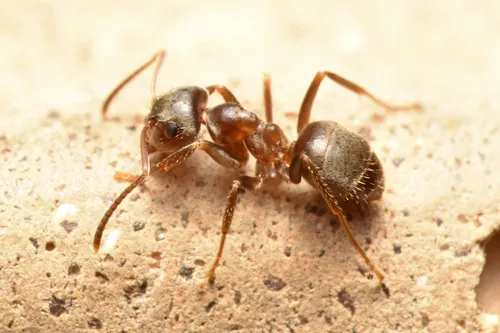
Small Black Ant
Lasius niger
Worker length: 3.4 - 5 mm, male length: 3.5 - 4.7 mm, queen length: 8 - 9 mm. Workers (non-reproductive females) are blackish-brown in colour and covered in small hairs. Winged reproductive females (queens) are almost twice as big as the workers, are
Leptogenys elongata
Leptogenys elongata
Identification: female & male This species lacks a winged queen caste, but the ergatoid (worker-like) queens are still morphological distinguishable from the workers by their shorter and wider petiole and usually distended abdomen:
Slender Ant
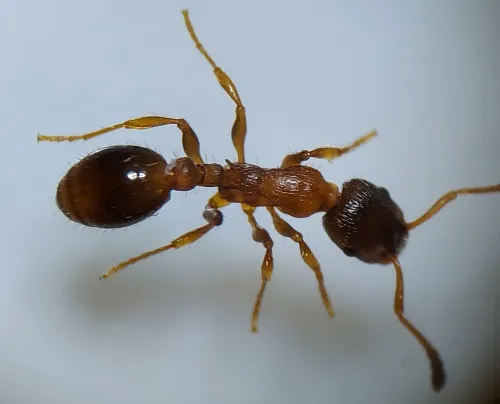
Leptothorax acervorum
A small myrmicine ant with distinct propodeal spines and three-segmented antennal clubs. Reddish to brownish yellow with the head and gaster appearing much darker. Adult workers are typically 3 to 3.5 mm total in length. Can be confused with Temnotho
formerly Leptothorax muscorum
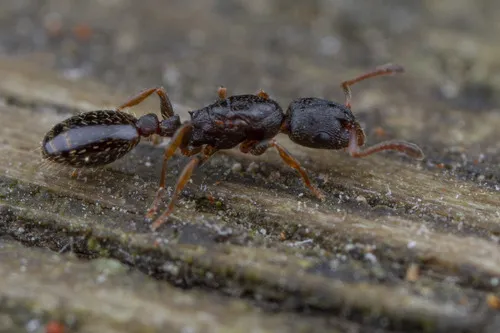
Leptothorax canadensis
Common but inconspicuous. It is essentially boreal and montane in distribution. Ellison et al. recognize 2 unnamed spp. from NewEngland: -AF-can is a large black species with short (less than 0.04 mm) erect hairs on the mesosoma and no subpostpetiola
Argentine Ant
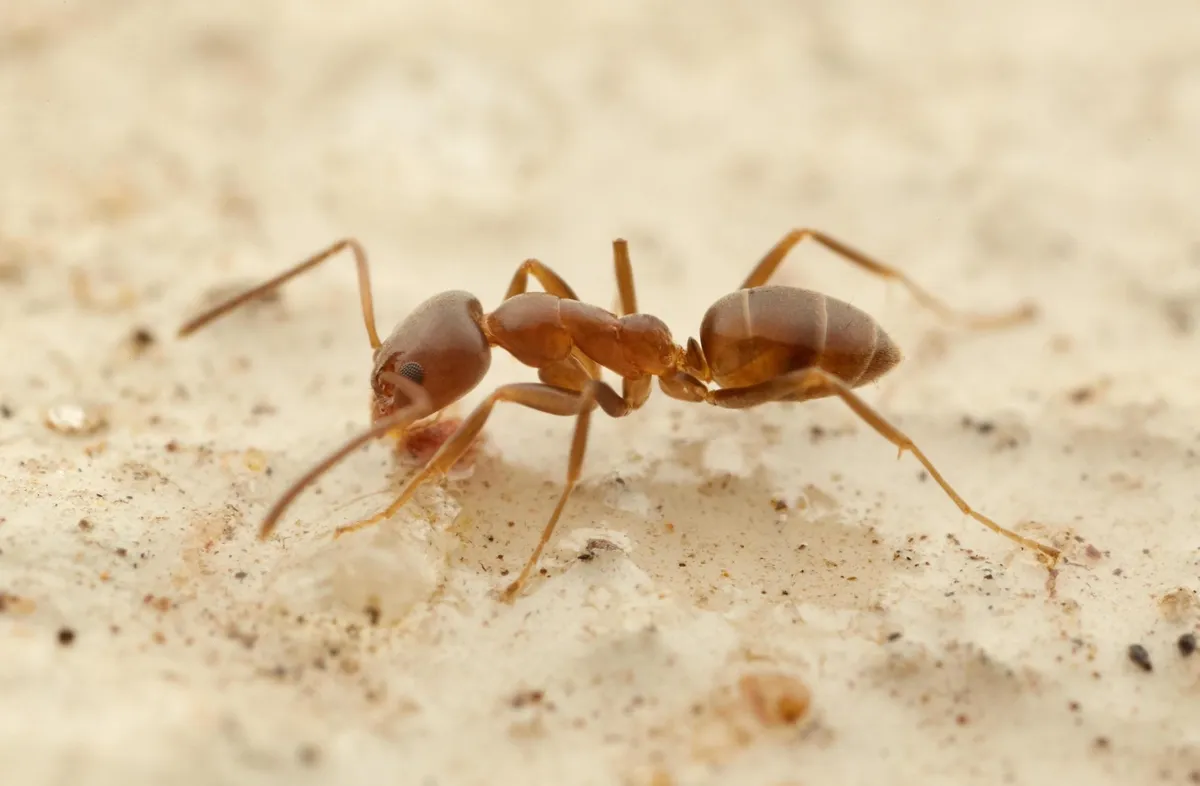
Linepithema humile
Identification: worker usually uniformly light to medium brown (can seem almost black if not viewed up close); body slender; head oval to triangular-shaped; mandibles with two large apical teeth followed by series of denticles; alitrunk dorsum normal
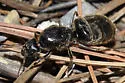
Liometopum apiculatum
Liometopum apiculatum
common from AZ to wTX to se Mexico, dominant ant in most oak forests in sw US; can be easily found foraging on the sides of oak trees. Staphylinids, including Sceptobius dispar and Dinardilla liometopi are found in nests, often taking food from the a
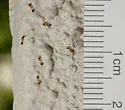
Monomorium floricola
Monomorium floricola
Identification: M. floricola is recongnized by its slender shininess, yellowish mesosoma contrasting with the rest dark brown to black, pointy gaster apex, and runnning in Pharaoh ant like trails (and is another introduced congener of the latter).
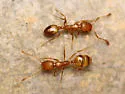
Pharaoh Ant
Monomorium pharaonis
Not native. Seems to have a very spotty distribution across most of its introduced US range, and populations can stay localized, though infestations can reach very high densities. Does not seem to be particularly great at invading native habitat, sin
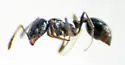
Monomorium viridum
Monomorium viridum
Identification: Queens are more brown than green, and the queen's head and mesosoma are noticeably sculptured.
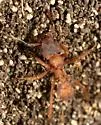
Trachymyrmex turrifex
Mycetomoellerius turrifex
Identification: Identification of eastern species is relatively straight-forward using this key: Trachymyrmex of SE US
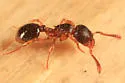
Myrmecina americana
Myrmecina americana
Identification: Two pairs of propdeal spines, larger pair dorsal, smaller pair lower posterior, are unique in the N.A. fauna.
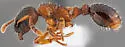
Myrmica alaskensis
Myrmica alaskensis
Identification: Keys to couplet 9b in Ellison et al., 2012 "Field Guide to Ants of New England". Separated from couplet 9a> incompleta Not mentioned in the key is the dorsal surface of the postpetiole which is diagnostic for separating incompleta fro
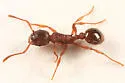
Myrmica americana
Myrmica americana
Identification: A very abundant grassland species, typically "red", i.e., brownish red, but often with the head and gaster a little to significantly darker brown. Base of antennal scape almost right-angular, with a narrow spatulate process on the out
Myrmica incompleta
Myrmica incompleta
Identification: Keys to couplet 9a in Ellison et al., 2012 "Field Guide to Ants of New England". Separated from couplet 9b> alaskensis Not mentioned in the key is the dorsal surface of the postpetiole which is diagnostic for separating incompleta fro
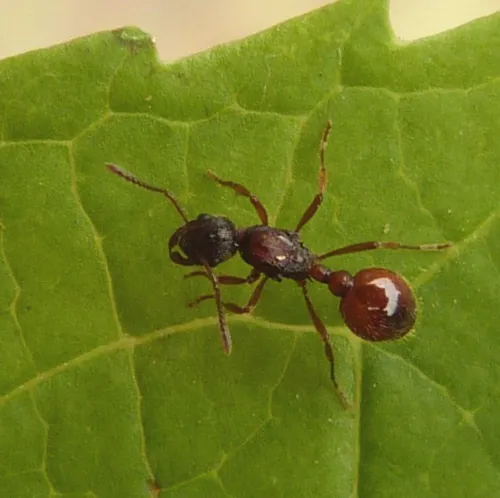
Common Red Ant
Myrmica rubra
Approximately 6 mm long. They are mainly red in colour, with slightly darker pigmentation on the head. The males are a little darker than the others. Lasius always have just a single segment waist, whereas Myrmica have two segments. M. rubra can be d