
Family Leafcutter, Mason, and Resin Bees, and allies (Megachilidae)
Megachilidae is a family in the order Hymenoptera. Browse 194 named species recorded in this family, or open an individual profile for its available identification and natural-history information.
Species in Megachilidae (194)
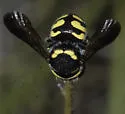
Anthidiellum ehrhorni
Anthidiellum ehrhorni
Identification: marked with a pale cream to bright yellow pattern on black
Anthidium banningense
Anthidium banningense
Identification: Females - T6 with long, acute lateral angle and terga densely punctate.
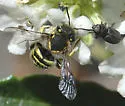
Anthidium emarginatum
Anthidium emarginatum
A discussion of " Anthidium emarginatum , its Life-history and Parasites" appears in Davison(1895) .
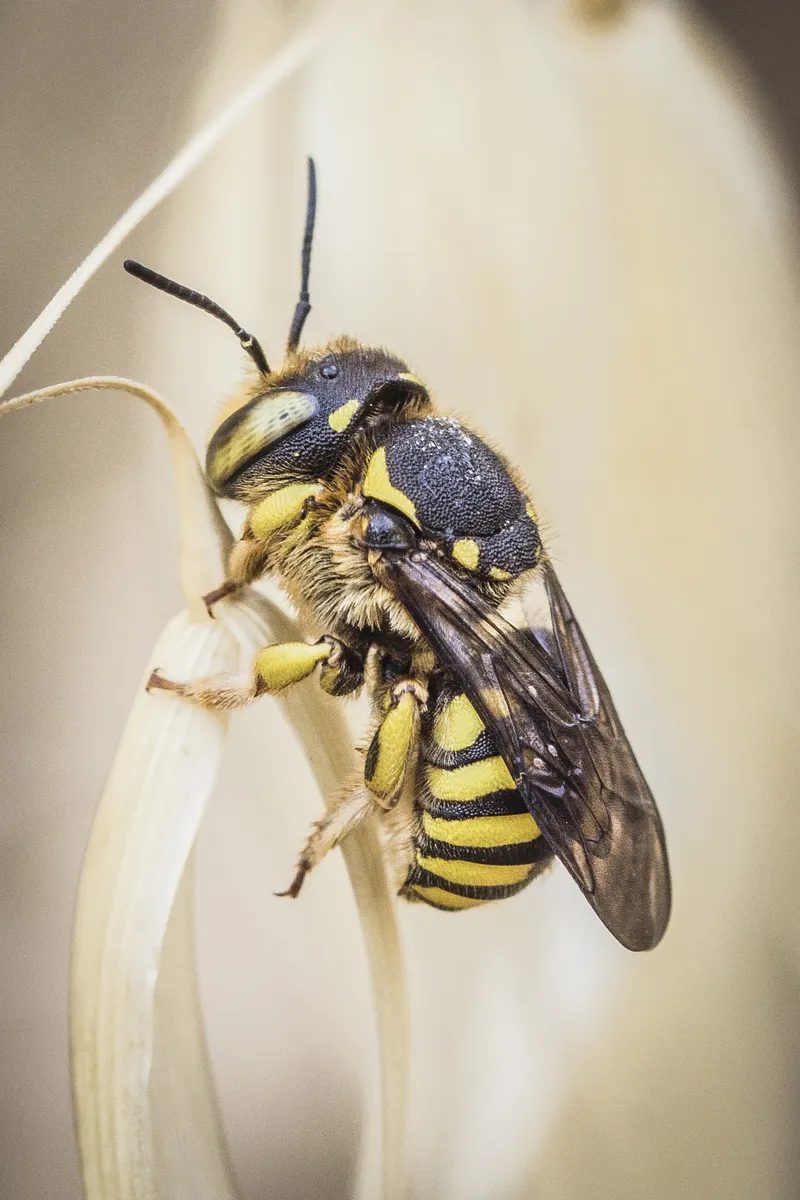
Anthidium florentinum
Anthidium florentinum
Identification: Very similar to A. manicatum in size and coloration. Considered an efficient pollinator of alfalfa.
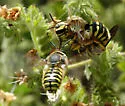
Anthidium illustre
Anthidium illustre
Identification: T-VII of males with a short, blunt center spine (Grigarick & Stange):
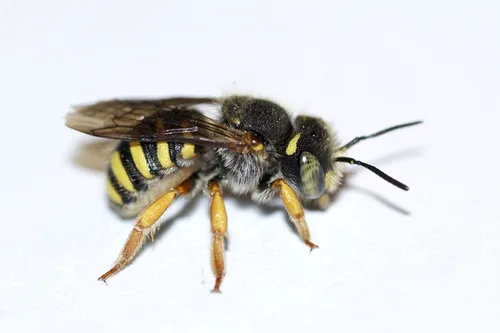
Oblong Wool-carder Bee
Anthidium oblongatum
Identification: Distinguished from A. maculatum by orange tegulae [comment at ] earliest NA record: e. PA 1995
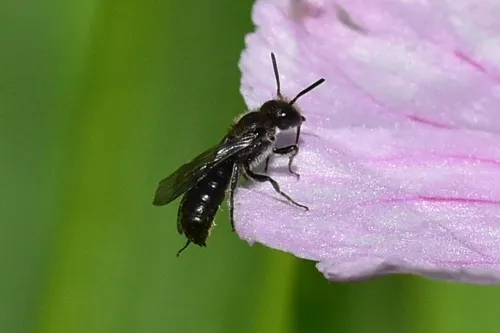
Harebell Carpenter Bee
Chelostoma campanularum
A tiny, narrow bodied, black bee. It has white pollen collecting hairs on underside of abdomen. Most solitary bees and wasps are difficult to identify, and can rarely be identified from photos taken in the field. All red-rated records should include
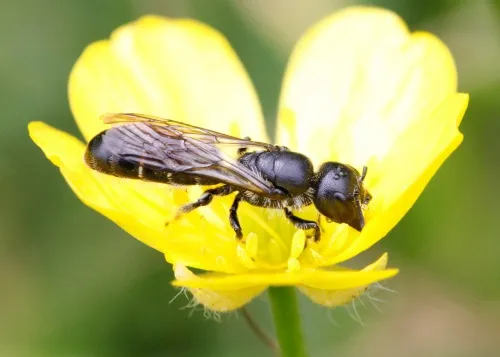
Sleepy Carpenter Bee
Chelostoma florisomne
A larger version of the more frequently encountered C. campanularum ; of the same general long, thin cylindrical shape, but with distinctive white bands of short hairs on the apices of the abdominal segments. The males also have a two-pronged peg on
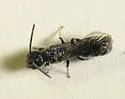
Chelostoma philadelphi
Chelostoma philadelphi
Identification: Chelostoma are longer than most Osmini because of their elongated thorax. Identifying this genus means noticing where the tegula lie in relation to the thorax. Pretend you are drawing a "+" on the thorax. The ends of Chelostoma tegula
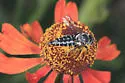
Coelioxys alternatus
Coelioxys alternatus
Medler (1964) reported rearing Coelioxys alternatus from trap nests provisioned by Megachile pugnata . (Baker J. R. 1975 and Mitchell, T.B. 1962)
Coelioxys banksi
Coelioxys banksi
Medler and Koerber (1958) reported rearing Coelioxys banksi from nests of Megachile relativa.
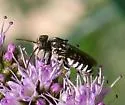
Coelioxys coturnix
Coelioxys coturnix
Non native, from Europe, where it is rather uncommon. Introduced very recently.
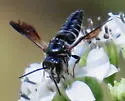
Coelioxys dolichos
Coelioxys dolichos
The host is Megachile xylocopoides (per comment by John S. Ascher here ).
Coelioxys edita
Coelioxys edita
Texas Bee expert Jack Neff has noted that in both sexes, the axilla is carinate. [This information is confirmed in the reference below.]
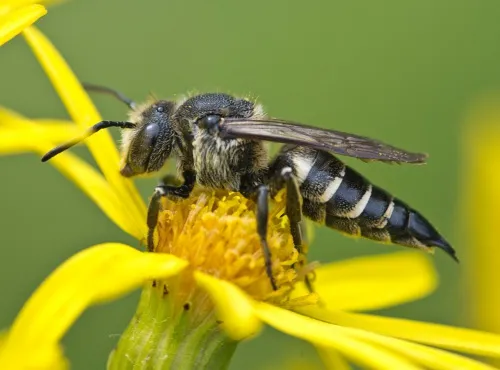
Coelioxys elongata
Coelioxys elongata
This is a darkly coloured bee 11 to 15 mm in length with narrow, sharply defined bands of pale hairs on the abdomen, hairy eyes and a toothed scutellum. As with all species in this genus, the female has a distinctively pointed end to the abdomen, whi
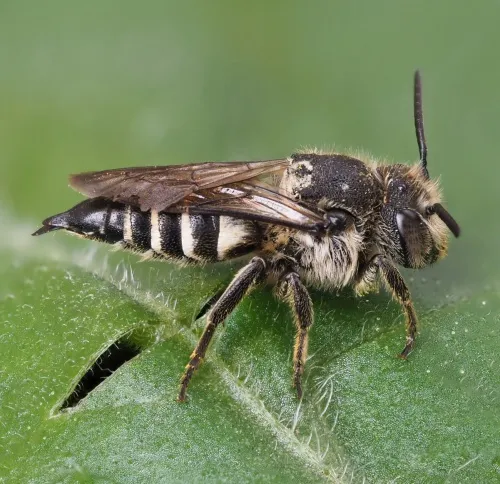
Shiny-vented Sharp-tail Bee
Coelioxys inermis
One of three Coelioxys species with similar tips to the female's sternite 6 (two sharp teeth on either side near apex). Females are more easily determined than males and can be separated from female C. mandibularis by the shape of the mandibles; from
Coelioxys modestus
Coelioxys modestus
Coelioxys modestus hosts include Megachile centuncularis and M. campanulae wilmingtoni . (Mitchell, T.B., 1962)
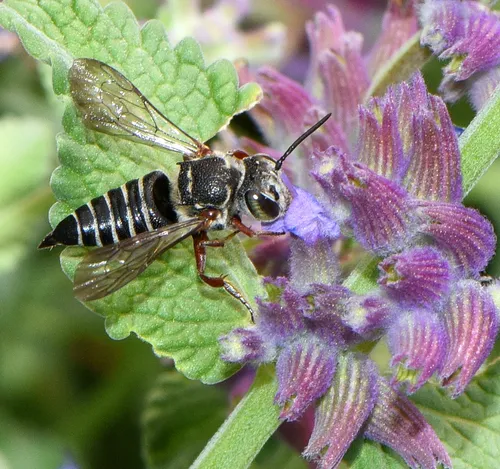
Coelioxys octodentatus
Coelioxys octodentatus
Identification: Octodentatus can be difficult to distinguish from sayi , especially in the males. Separating characters include: 1- The distance from the lateral ocelli to the vertex margin is larger than the distance between the lateral ocelli 2- Th
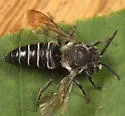
Coelioxys porterae
Coelioxys porterae
Megachile relativa and M. frigida have been recorded as hosts of Coelioxys porterae . (Baker J. R., 1975)
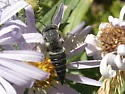
Coelioxys rufitarsis
Coelioxys rufitarsis
Cleptoparasite of Megachile latimanus and M. melanophaea . (Mitchell, T.B., 1962)
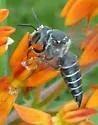
Coelioxys sayi
Coelioxys sayi
Identification: bilobed clypeus ( ref. ) Medler (1965) reported Megachile mendica to he a host of Coelioxys sayi and K. V. Krombein has reared Coelioxys sayi from nests of Megachile mendica at Lake Placid, Fla. This bee has also been recovered from
Coelioxys texanus
Coelioxys texanus
"Krombein (1967) reported rearing Coelioxys texanus from trap nests provisioned by Megachile policaris ." (Baker J. R., 1975)
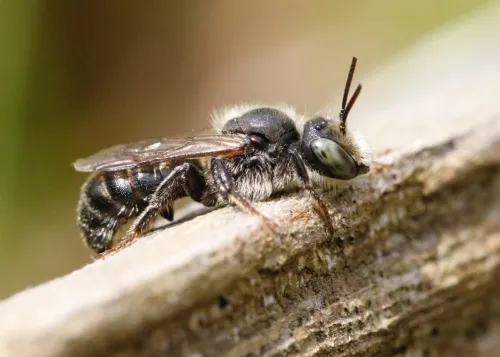
Welted Lesser Mason Bee
Hoplitis claviventris
A smallish mason bee closely resembling an Osmia species. Length 4-6mm, shiny blue black abdomen, pollen brush beneath abdomen is cream/white (c.f. Osmia spp, pollen brush black or orange). Forewing with 3 submarginal cells, tarsi with an arolium bet
Lithurgopsis apicalis
Lithurgopsis apicalis
Identification: Some populations have conspicuous bright orange hairs at the tip of the metasoma
Mediterranean Wood-boring Bee
Lithurgus chrysurus
Identification: Distinctive red color of the female. Tridentate mandible with the middle tooth being longest. Non-native. First discovered in this country in Phillipsburg, Warren County, NJ in 1978. The second time this species was recorded in the Un
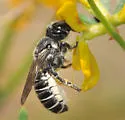
Megachile angelarum
Megachile angelarum
The most common member of subgenus Chelostomoides in cismontane California. Cavity nester, collects resins and gums.
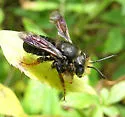
Megachile bahamensis
Megachile bahamensis
Identification: Note the ferruginous mid and hind tarsi (blackish in the otherwise similar M. xylocopoides ).
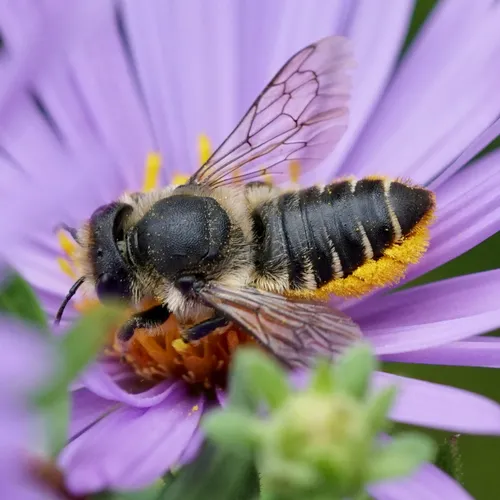
Megachile centuncularis
Megachile centuncularis
A medium-sized bee (10 to 12 mm long). The abdomen is dark brown above, but the female has an orange pollen brush underneath. Most solitary bees and wasps are difficult to identify, and can rarely be identified from photos taken in the field. All red
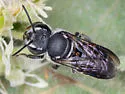
Megachile chichimeca
Megachile chichimeca
Identification: According to references below, some hallmark traits of Megachile chichimeca are: it is small and slender; there are prominent tufts of white hairs located near the base of the bee’s wings; the back edge of the bee’s thorax is fringed
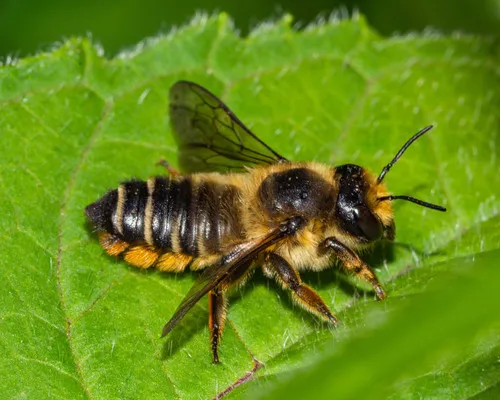
Megachile frigida
Megachile frigida
Identification: It has dark front tibiae unlike M. latimanus Nests underground.
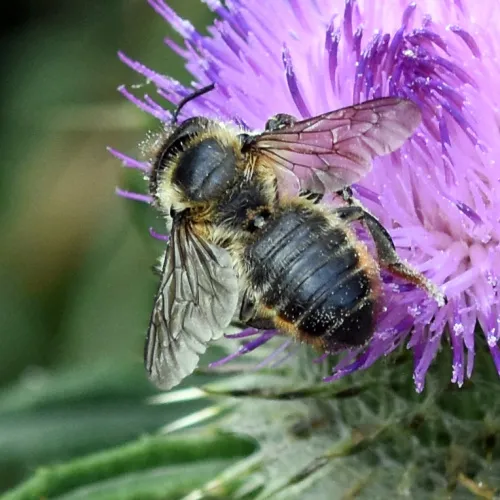
Megachile ligniseca
Megachile ligniseca
One of a suite of eight superficially similar species. All are medium to large sized solitary bees. Most solitary bees and wasps are difficult to identify, and can rarely be identified from photos taken in the field. All red-rated records should incl
Megachile montivaga
Megachile montivaga
It collects petals, rather than leaves, for nest building.
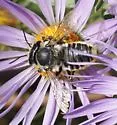
Megachile parallela
Megachile parallela
Identification: "The female of M. parallela is distinct, and can be recognized by apex of S6, which has a bare, slightly upturned rim projecting slightly beyond the dense fringe of short, dark hairs." [this character also present in other species in
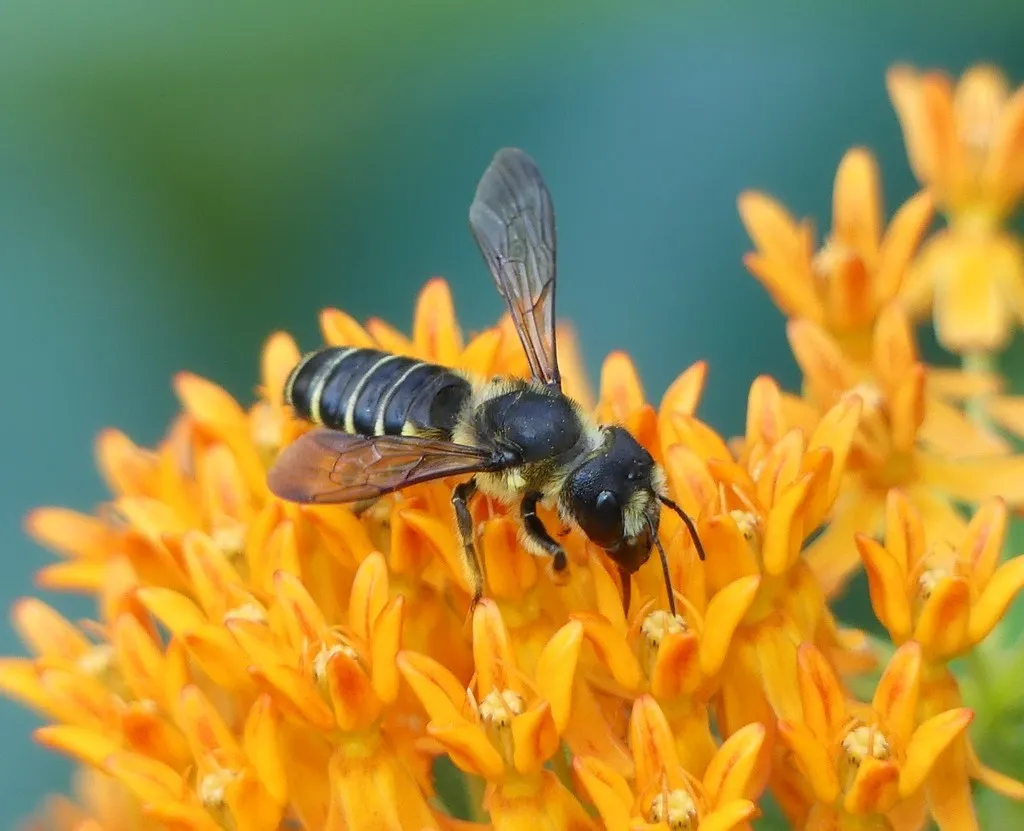
Pugnacious Leafcutter Bee
Megachile pugnata
Identification: In the female the clypeus is shortened and thickened producing a vertical face.
Megachile pusilla
Megachile pusilla
Introduced, probably from southern Europe or North Africa
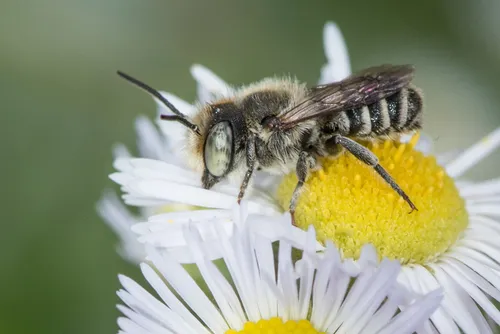
Alfalfa Leaf-cutter Bee
Megachile rotundata
Identification: Narrow white sternal hair bands. Introduced from the Old World sometime after the 1930s.
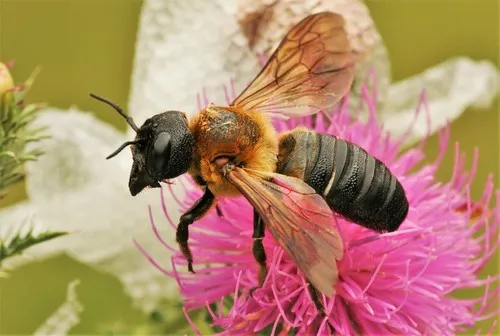
Sculptured Resin Bee
Megachile sculpturalis
Identification: body cylindrical, 14-24 mm in length (longer than most bees in NA), females usually larger than males; head and abdomen black, thorax covered with dense yellowish-brown hairs, wings dark but transparent Mangum & Bambara They are oppor
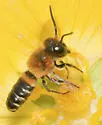
Megachile umbripennis
Megachile umbripennis
Reported in S Florida by multiple investigators including J. Wiley and S. Lenberger. Here's a specimen record: Discover Life
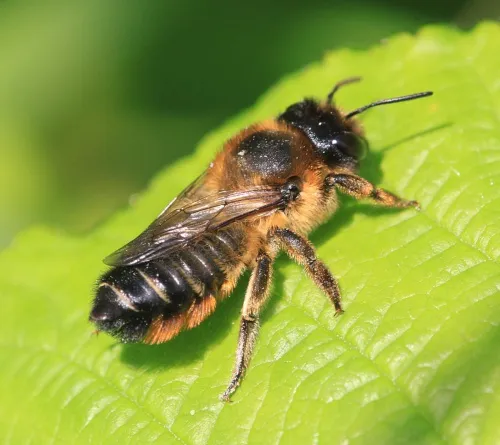
Megachile versicolor
Megachile versicolor
Females from the British mainland have the scopal hairs on sterna 5-6 black. Those from the Isle of Man and from Ireland have them extensively golden red, although the black form has been seen in Ireland too. Most solitary bees and wasps are difficul
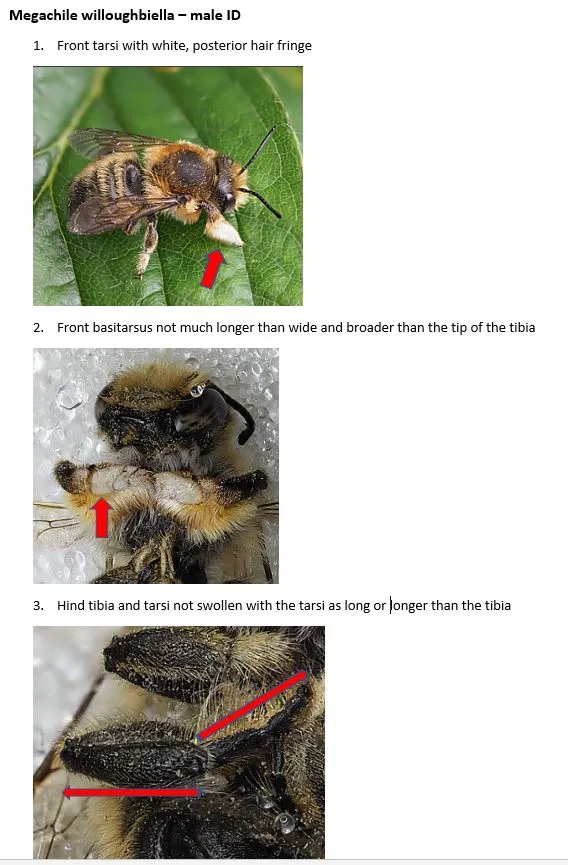
Leafcutter Bee
Megachile willughbiella
Length 12 to 18 mm. A large leafcutter bee, the males of which have distinctive white flattened front tarsi. Females of this genus can be difficult to identify, even under a microscope. It is the commonest leafcutter bee and the species most likely t
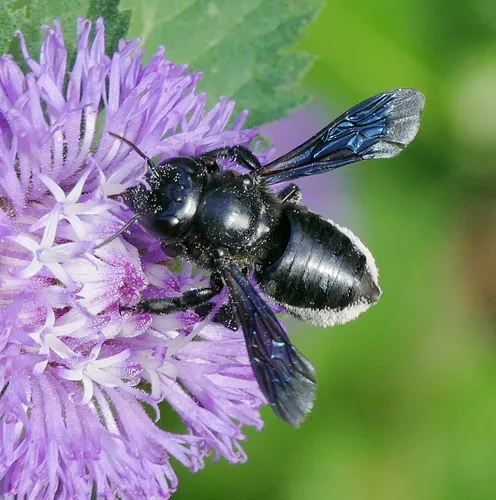
Carpenter-mimic Leafcutter Bee
Megachile xylocopoides
Identification: A very dark Megachile , resembles a Carpenter Bee, Xylocopa , especially such blue-black species as Xylocopa micans . Quoting from Bees of Florida : Subgenus Melanosarus Mitchell, 2 species. A neotropical subgenus with 2 species in th
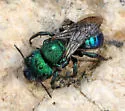
Osmia aglaia
Osmia aglaia
One of the native bees used in agriculture - see Oregon Berry Project .
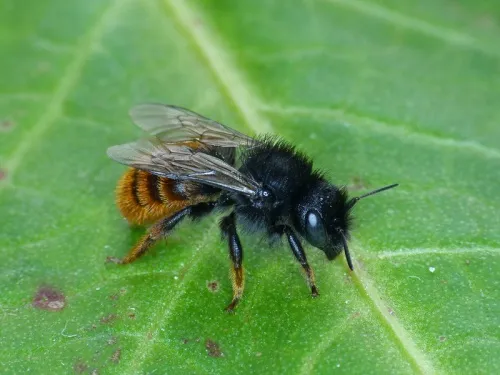
Two-coloured Mason Bee
Osmia bicolor
The female of this small (12 mm) bee is particularly attractive, with a black head and thorax and bright gingery hairs covering the abdomen. In the male the ginger is less striking. Most solitary bees and wasps are difficult to identify, and can rare
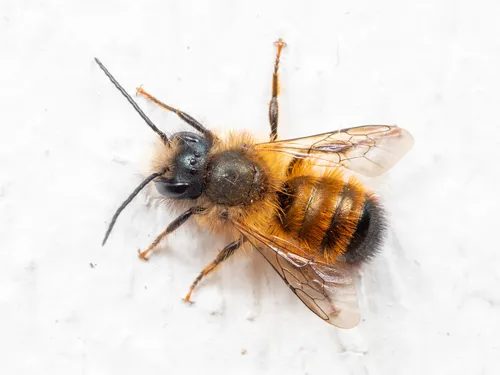
Red Mason Bee
Osmia bicornis
Greyish-brown hair on the thorax and orange-red on the abdomen. The head features two inwardly-curved facial horns below the antennae. The only other British Osmia species with this feature is O. cornuta, which resembles a large black and bright oran
Osmia botitena
Osmia botitena
Identification: "...appears to be what I've been calling O. botitena , a somewhat problematic species since the type is AWOL." Det. John L. Neff, 2015 Central Texas Melittological Institute
Bufflehead Mason Bee
Osmia bucephala
Identification: Bombus -like color pattern of female. Modified legs of male.
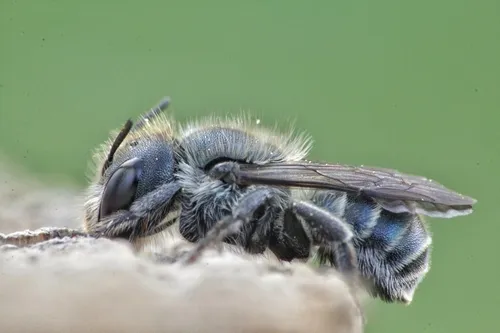
Blue Mason Bee
Osmia caerulescens
Length 8 to 10 mm. The females have large box-shaped heads and a blue metallic lustre to the abdomen giving rise to its common name, with a black pollen basket on the hind legs. The males are bronze with pale yellow hairs and a shining slope at the f
Blue Calamintha Bee
Osmia calaminthae
Currently only known from sandy scrub at four sites in the southern Lake Wales Ridge in Highlands County, Florida
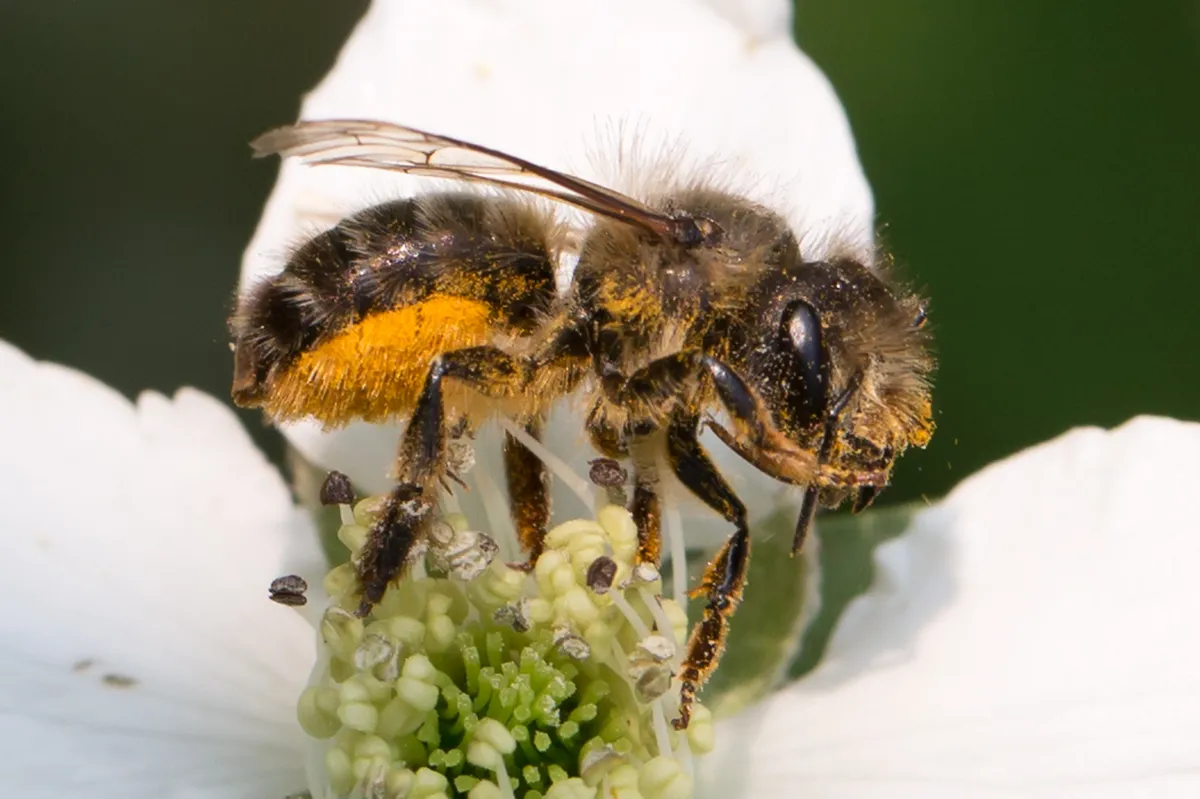
Hornfaced Bee
Osmia cornifrons
They are used in Japan to pollinate apple trees and were deliberately introduced to the United States by USDA scientists in the 1970s for the same purpose, even though the very similar native species Osmia lignaria occurs here and can be managed in a
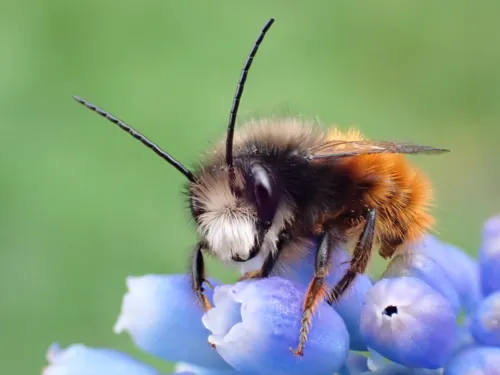
Osmia cornuta
Osmia cornuta
Dark thorax with dark hairs and bright orange-red abdomen (more strongly contrasting than Osmia bicornis). Long inwardly-curved facial horns on the head below the antennae (longer than in Osmia bicornis). Males have a large patch of long white hairs
Osmia integra
Osmia integra
O. integra is known from coastal CA sand dunes (e.g., San Francisco, as recorded by White, 1952:293). It is similar in hair color to O. longula , but that is a montane species in California
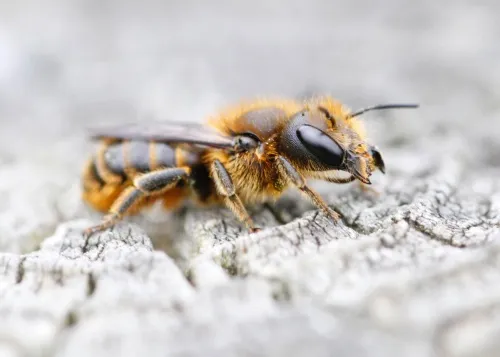
Orange-vented Mason Bee
Osmia leaiana
10mm females, 6mm males. As with all Osmia species, it has a large box-shaped head (similar in size to the thorax). Females have a dense orange pollen brush under the abdomen. Males lack the pollen brush and are generally dark, often metallic green,
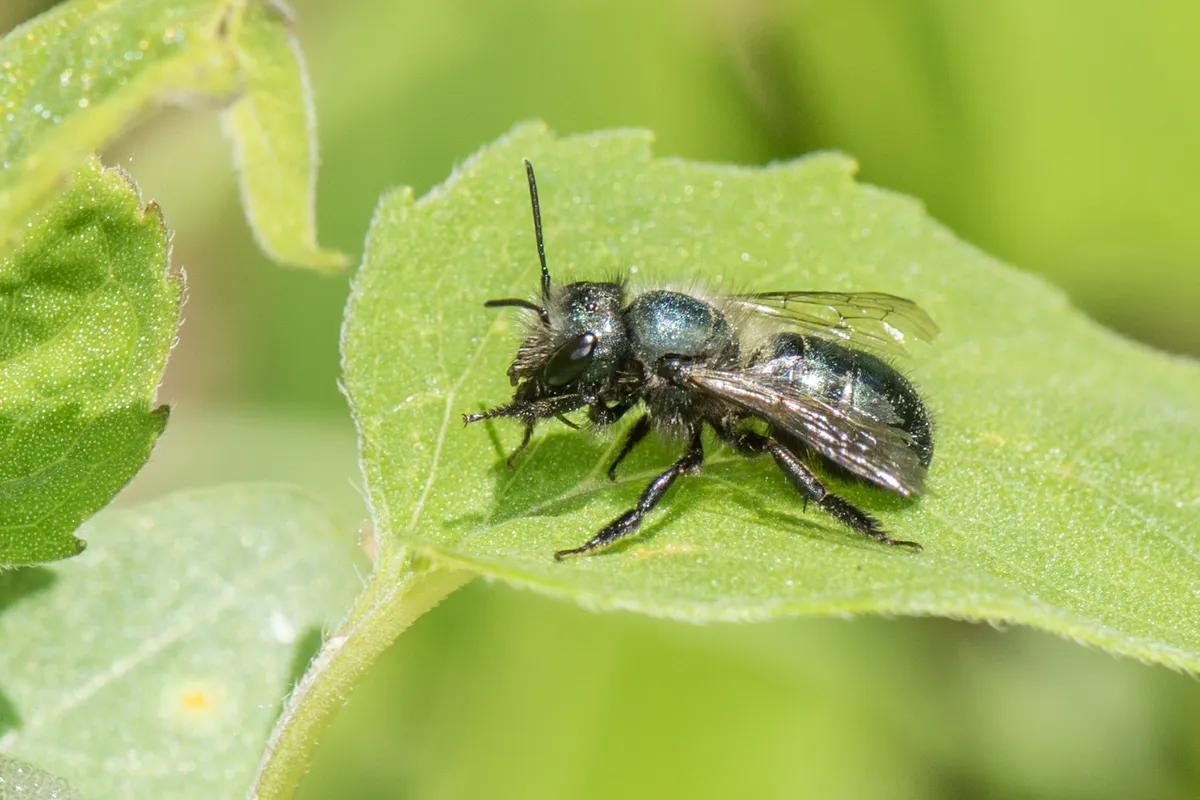
Blue Orchard Bee
Osmia lignaria
Identification: Metallic blue, almost black. It is being managed and developed for use as fruit trees pollinator. Management of O. lignaria . Field use of an incubation box The clerid Lecontella brunnea (Spinola) was reared from the nest of Osmia lig
Osmia montana
Osmia montana
Identification: "The smooth, shining, and concave lower face (including clypeus) and nearly black (not green or blue) integument is typical of O. montana." - JSA ( ref. )
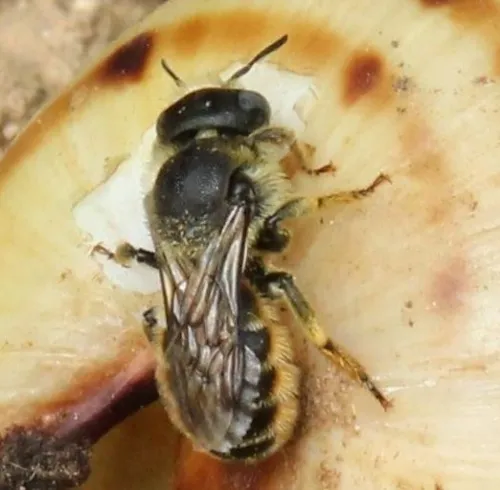
Spined Mason Bee
Osmia spinulosa
The taxonomy of Osmia spinulosa has been the subject of considerable debate. Recent genetic work carried out in Switzerland by Mueller, shows that this taxon should correctly be placed within the genus Osmia rather than left within Hoplitis . Records
Pseudoanthidium nanum
Pseudoanthidium nanum
Identification: About the size or a little smaller than Osmia pumila . Discovered in the New World by Sarah Kornbluth in New Jersey and identified by John S. Ascher. Subsequently reported from Maryland and several other states.
Stelis costalis
Stelis costalis
Very similar to S. louisae , and there is much potential for confusion where this species overlaps (unfortunately potential overlap is not well known at this point).
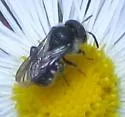
Stelis lateralis
Stelis lateralis
Parasitizes (Alcidamea simplex ) Robertsonella simplex (Cresson); Hoplitis pilosifrons and H. producta
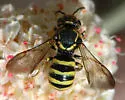
Stelis laticincta
Stelis laticincta
Cleptoparasitic on Megachile . The host is a Megachile (Chelostomoides) , likely M. angelarum .
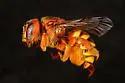
Trachusa cordaticeps
Trachusa cordaticeps
Identification: Extensively red markings very distinctive Color pattern matches that of some Eumeninae, Cercerini and other wasps
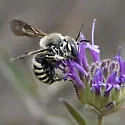
Trachusa timberlakei
Trachusa timberlakei
Once considered a subspecies of T. zebratum , which it resembles. Although widespread, apparently is locally uncommon.
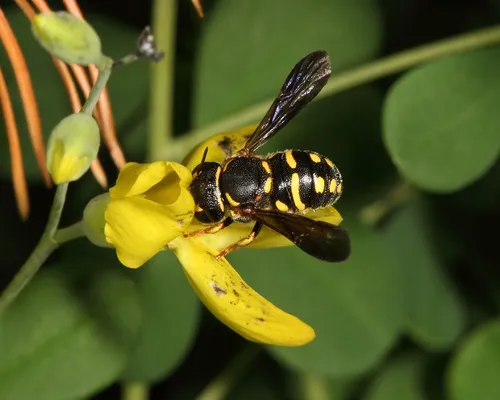
Northern Rotund-Resin Bee
Anthidiellum notatum
Anthidiellum perplexum
Anthidiellum perplexum
Anthidiellum robertsoni
Anthidiellum robertsoni
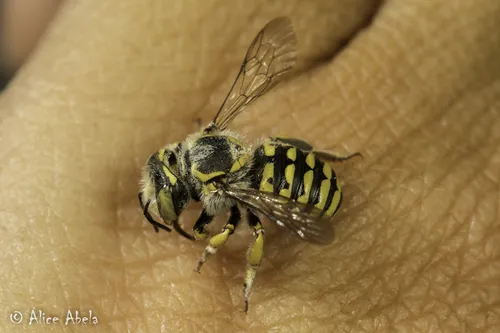
Edwards' Wool-carder Bee
Anthidium edwardsii
Anthidium maculifrons
Anthidium maculifrons
Anthidium maculosum
Anthidium maculosum
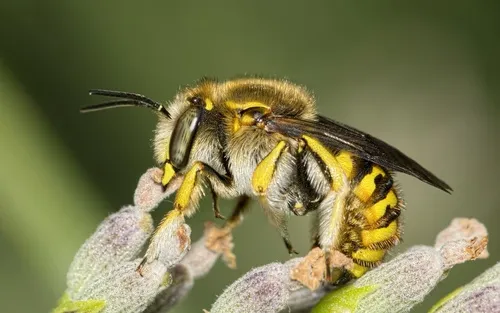
European Wool-carder Bee
Anthidium manicatum
Pacific Wool-carder Bee
Anthidium palliventre
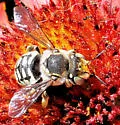
Porter's Wool-carder Bee
Anthidium porterae
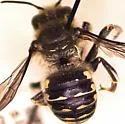
Anthidium psoraleae
Anthidium psoraleae
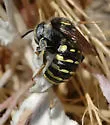
Anthidium utahense
Anthidium utahense
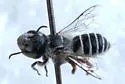
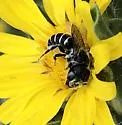
Ashmeadiella bigeloviae
Ashmeadiella bigeloviae
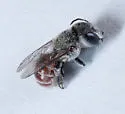
Ashmeadiella bucconis
Ashmeadiella bucconis
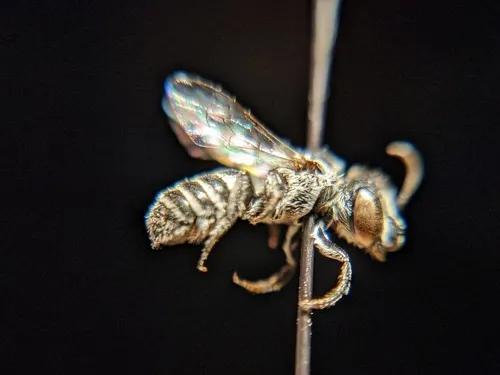
Ashmeadiella eurynorhyncha
Ashmeadiella eurynorhyncha
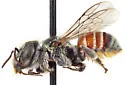
Ashmeadiella meliloti
Ashmeadiella meliloti
Ashmeadiella rubrella
Ashmeadiella rubrella
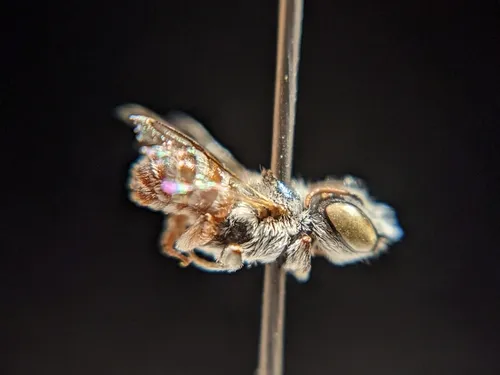
Ashmeadiella xenomastax
Ashmeadiella xenomastax
Chelostoma californicum
Chelostoma californicum
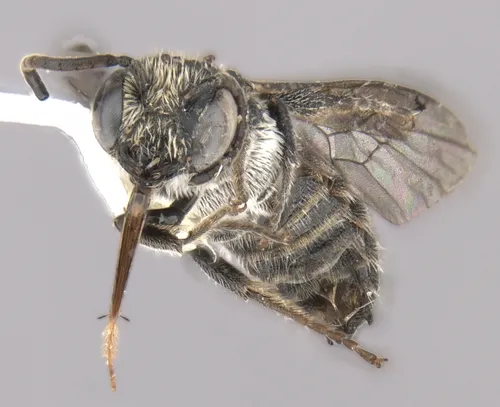
Chelostoma phaceliae
Chelostoma phaceliae
Chelostoma rapunculi
Chelostoma rapunculi
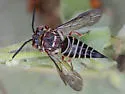
Coelioxys aztecus
Coelioxys aztecus
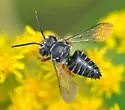
Coelioxys germanus
Coelioxys germanus
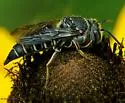
Coelioxys hunteri
Coelioxys hunteri
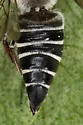
Coelioxys immaculatus
Coelioxys immaculatus
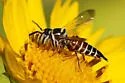
Coelioxys menthae
Coelioxys menthae
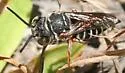
Coelioxys mexicanus
Coelioxys mexicanus
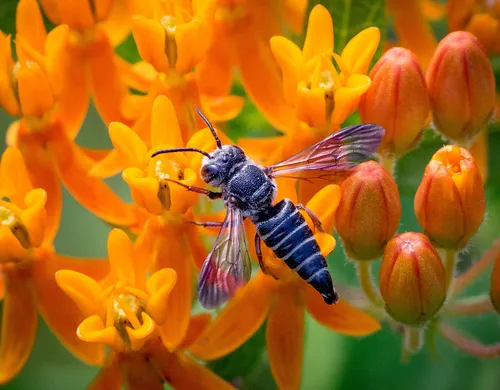
Coelioxys obtusiventris
Coelioxys obtusiventris
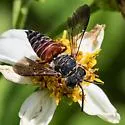
Coelioxys slossoni
Coelioxys slossoni
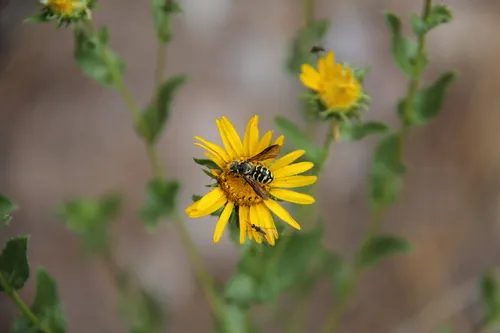
Dianthidium arizonicum
Dianthidium arizonicum
Dianthidium curvatum
Dianthidium curvatum
Dianthidium floridiense
Dianthidium floridiense
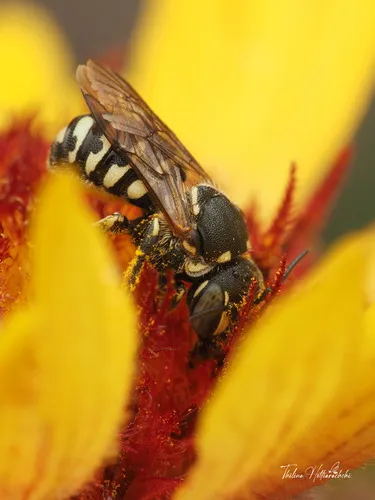
Dianthidium pudicum
Dianthidium pudicum
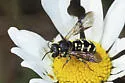
Dianthidium simile
Dianthidium simile
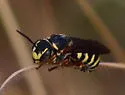
Texas Pebble Bee
Dianthidium texanum
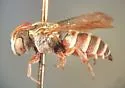
Dioxys productus
Dioxys productus
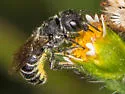
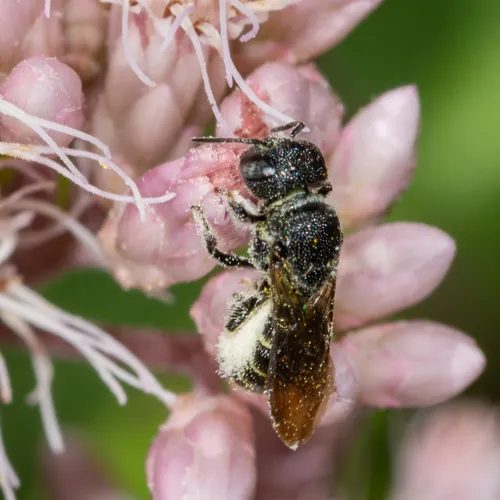
Heriades carinata
Heriades carinata
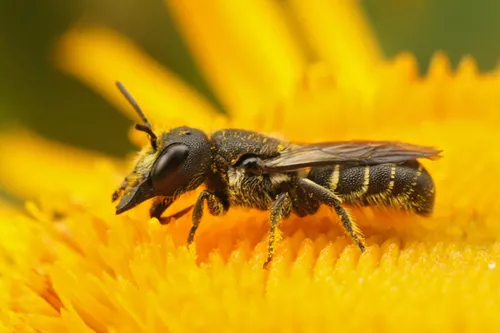
Heriades leavitti
Heriades leavitti
Large-headed Armoured-Resin bee
Heriades truncorum
Hoplitis albifrons
Hoplitis albifrons