
Formica subintegra
This record describes Formica subintegra (species). Recorded family: Formicidae. Recorded order: Hymenoptera.
Identification and Appearance
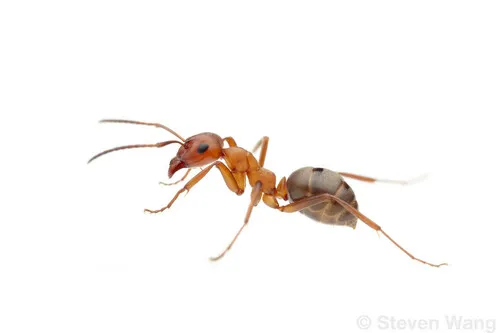
Easiest macroscopic identifying trait is the brownish base of the first gastral tergite. One of the slave-making species; workers of this species steal the pupae of Formica subsericea (or closely related F. podzolica, F. glacialis where these are more abundant) to acquire workers for their own colony. Host workers typically outnumber the parasite by 5 : 1 or more in the mixed colony. The mixed population is maintained by stealing host species pupae in well-organized raids. Host nest defenders are overcome by pheromones that suppress aggression against the raiders. Occasionally, this species may simply move into a host nest and take over. This follows a few days of of back and forth traffic carrying brood in either direction.
Classification
- Kingdom
- Animalia
- Phylum
- Arthropoda
- Class
- Insecta
- Order
- Hymenoptera (Ants, Bees, Wasps and Sawflies)
- Superfamily
- Formicoidea
- Family
- Formicidae (Ants)
- Subfamily
- Formicinae
- Tribe
- Formicini
- Genus
- Formica (Wood ants, mound ants, & field ants)
Imported taxonomy record. Source availability varies; see the source references and editorial policy below.
Habitat and Range
Habitat
Woodland and woodland edge; lives in mounds constructed by and very similar in appearance to those of the host.
Geographic Range
North America from Quebec to Alberta, south to higher elevations of Georgia and Arkansas.
Seasonal Activity
Afternoon raiding activity makes these most conspicuous in July and August.
Additional species information
Species notes from the sources
Etymology: Author: Wheeler, 1908 Specific epithet "subintegra" = not quite entire (entire in the sense of unlobed or unincised), in reference to the median notch on the outer margin of the clypeus of this and other members of the F. sanguinea group.
About Flies: the wider group
Order-level background for Hymenoptera, the group containing Formica subintegra. Species-specific details appear above.
Group overview
Hymenoptera includes over 150,000 described species of ants, bees, wasps, and sawflies. Earth harbors approximately 20 quadrillion (20×10^15) ants, with a combined biomass of ~12 megatons of dry carbon - exceeding the combined biomass of all wild birds and mammals (PNAS, 2022).
Ecological role of the group
About 35% of the world's food crops depend on animal pollinators. The chocolate industry, valued at over $100 billion, depends on pollinating flies and midges. Ants are the dominant soil engineers in most terrestrial ecosystems, turning more soil than earthworms in many habitats.
Economic and practical significance of the group
Pollinators contribute $235-577 billion worth of annual global food production (FAO). In the U.S., bee pollination alone benefits crops valued at $18 billion annually, and honey bees are responsible for $5.4 billion in agricultural productivity. Between April 2023-2024, 55.1% of managed honey bee colonies were lost. The U.S. bee population dropped from 5 million to 2.5 million.
Recorded sources for this group: FAO, USDA, EPA, PNAS (2022), US Fish & Wildlife Service. Imported estimates may describe particular regions or reporting periods.
Photos of Formica subintegra (2)
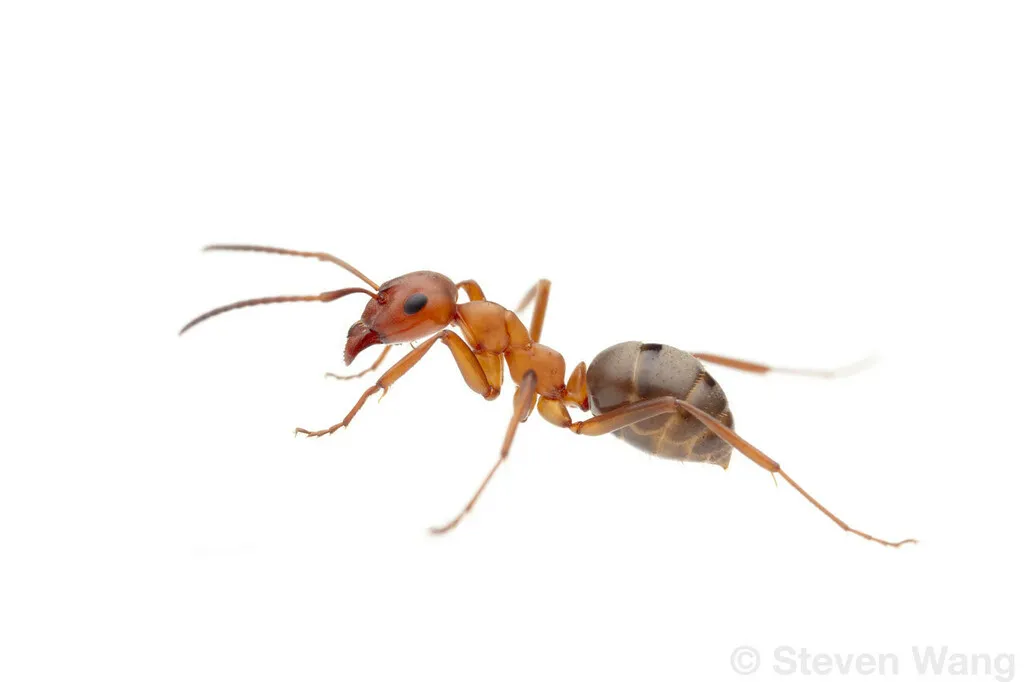
Photo credits: Contributed by James C. Trager; Additional contributions by Joshua Stuart Rose , ceiseman
Frequently Asked Questions About Formica subintegra
What is Formica subintegra?
Formica subintegra is a species in the family Formicidae, within the order Hymenoptera.
How big is Formica subintegra?
5.5-6.5 mm
How do you identify Formica subintegra?
Easiest macroscopic identifying trait is the brownish base of the first gastral tergite.
Where is Formica subintegra found?
| Feature | Details |
|---|---|
| Habitat | Woodland and woodland edge; lives in mounds constructed by and very similar in appearance to those of the host. |
| Range | North America from Quebec to Alberta, south to higher elevations of Georgia and Arkansas. |
When is Formica subintegra active?
Formica subintegra: seasonal activity - Afternoon raiding activity makes these most conspicuous in July and August..