
Family Spider Wasps (Pompilidae)
Pompilidae is a family in the order Hymenoptera. Browse 164 named species recorded in this family, or open an individual profile for its available identification and natural-history information.
Species in Pompilidae (164)
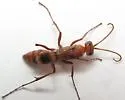
Ageniella accepta
Ageniella accepta
Identification: ♀ ♂ Like all Ageniellini, they sever the legs of their prey to accommodate transport: This photo shows either an aberrant A. accepta or (less likely) an undescribed species
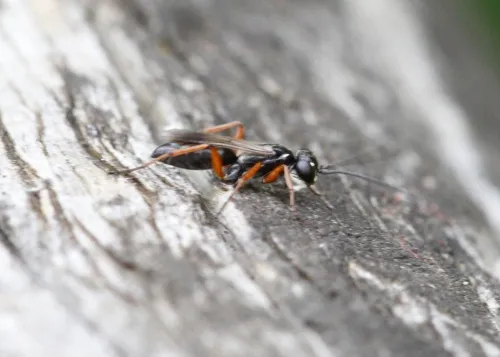
Agenioideus cinctellus
Agenioideus cinctellus
Most solitary bees and wasps are difficult to identify, and can rarely be identified from photos taken in the field. All red-rated records should include a photo or set of photos of the specimen, illustrating the key characters taken from a standard
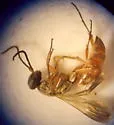
Allaporus pulchellus
Allaporus pulchellus
Identification: Typical aporine: Long pronotum with a straight rear margin, incrassate front femora, two submarginal cells in anterior wing, the second receiving two recurrent veins. -Can be recognized by small size, red markings on abdomen (some fro
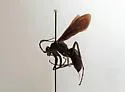
Anoplius aethiops
Anoplius aethiops
A. aethiops visits flowers while A. cleora RARELY does. Soil type is also significant. A. cleora is almost completely restricted to very sandy soil and A. aethiops is not. Note by Nick Fensler
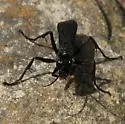
Anoplius depressipes
Anoplius depressipes
Transports its spider prey (usually Dolomedes) across the water's surface. They would be expected to be found near water.
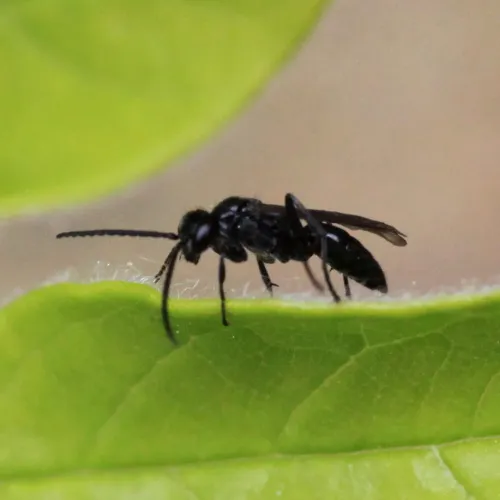
Anoplius nigerrimus
Anoplius nigerrimus
Up to 11mm length. Third submarginal cell almost triangular; comb spines of inferior row on fore basitarsus longer than those of superior row; erect hairs of thorax fine, short, with a few fine hairs on propodeum; largely with dark pubescence. The co
Anoplius toluca
Anoplius toluca
Identification: Females are difficult or impossible to separate from its sister species, A. dreisbachi . When viewed laterally, the hair brushes on the 4th and 5th sternum appear continuous in A. dreisbachi but separated in A. toluca . In California
Aporinellus taeniolatus
Aporinellus taeniolatus
Identification: In all the currently existing keys, two principal characters are cited for separating taeniolatus from all other species in the genus: 1) The 2nd submarginal cell is relatively small...less than twice as wide as high (cf. Fig. 245 her
Arachnospila arcta
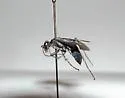
Arachnospila arcta
Identification: The genus Arachnospila is most similar to Anoplius , but they lack strong bristles on the pygidium. However, of all of the genera split from Pompilus , Arachnospila is perhaps the most closely related to Anoplius . This species is ver
Auplopus carbonarius
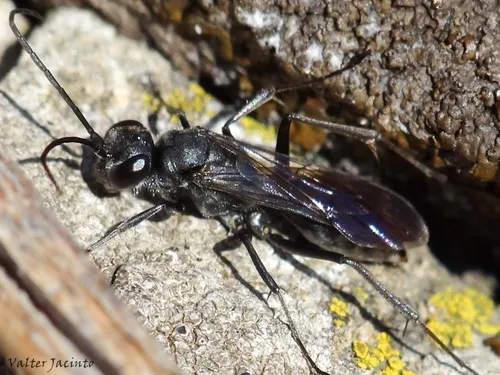
Auplopus carbonarius
Most solitary bees and wasps are difficult to identify, and can rarely be identified from photos taken in the field. All red-rated records should include a photo or set of photos of the specimen, illustrating the key characters taken from a standard
Ceropales elegans
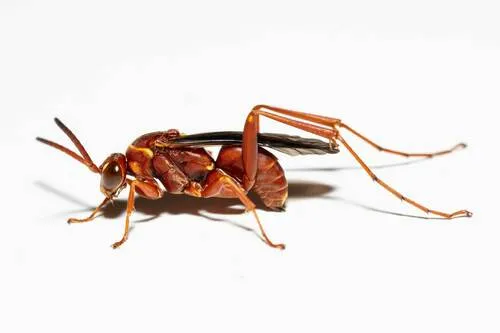
Ceropales elegans
Identification: Overview of Species Second flagellomere 1.8-2.2x as long as wide, pronotum and mesoscutum with inconspicuous hairs, mesopleuron coarsely punctured, second tarsomere of middle leg conspicuously longer than wide, claws of middle and hin
Ceropales maculata
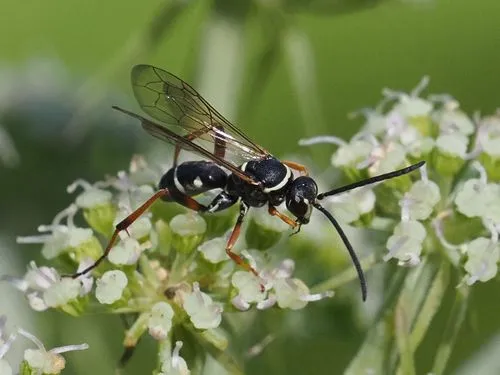
Ceropales maculata
Identification: C. m. caenosa : T3 entirely black; femora black. Range: CA (Sierra Nevada) C. m. fraterna : T3 with apical band; abdominal bands narrow; hind femur with yellow on less than apical third and front face brownish-black. Range: widespread
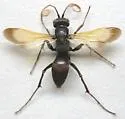
Cryptocheilus pallidipenne
Cryptocheilus pallidipenne
Identification: From the treatment in Townes : Black. Body pubescence dark gray; flagellum orange, its first segment infuscate basally; wings orange-yellow, the apical 0.21 ± of the forewing and the apical margin of the hind wing fuscous. Female: For
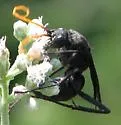
Entypus fulvicornis
Entypus fulvicornis
Identification: A black-bodied species with black wings and orange antennae. Distinguished from E. magnus by the following combination: interrupted or strongly subapically narrowed brush on the inner side of the hind tibia (narrowed more weakly in E.
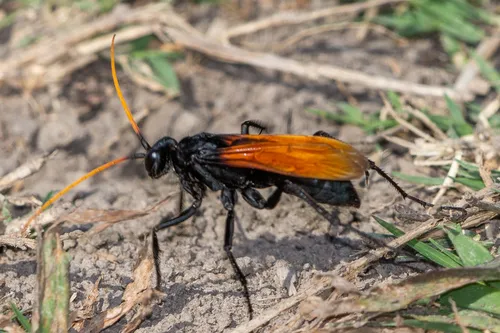
Entypus unifasciatus
Entypus unifasciatus
Identification: Body blue-black, smoky brown wings with orange tips, prominent orange antennae.
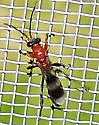
Epipompilus aztecus
Epipompilus aztecus
Identification: After generic separation color is used to separate the species. The abdomen is black except for a pair of white spots on T2 and a white stripe on T5. The entire mesosoma is orange. The wings are hyaline and strongly twice-banded. The
Episyron quinquenotatus
Episyron quinquenotatus
Identification: body mostly black with white markings: a thin line behind each eye, another line on side of face bordering inner edge of eye, a thin crescent along anterior edge of thorax broken by black in the middle, and three white wedge-shaped ma
Red Legged Spider Wasp
Episyron rufipes
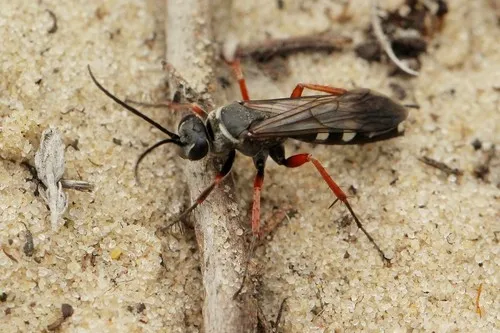
A large, robust species with ivory spots on the gaster. Until recently this was the only member of this genus to be found in Britain, but the recent discovery of Episyron gallicum has complicated matters. Females are readily distinguished by having f
Pepsis basifusca
Pepsis basifusca
Identification: Wings largely orangish, with rather uniformly-narrow dark borders along the margins of the fore and hind wings...which begin near the tip of the marginal cell, bend around the apex of the wing, and continue along the posterior edge to
Pepsis grossa
Pepsis grossa
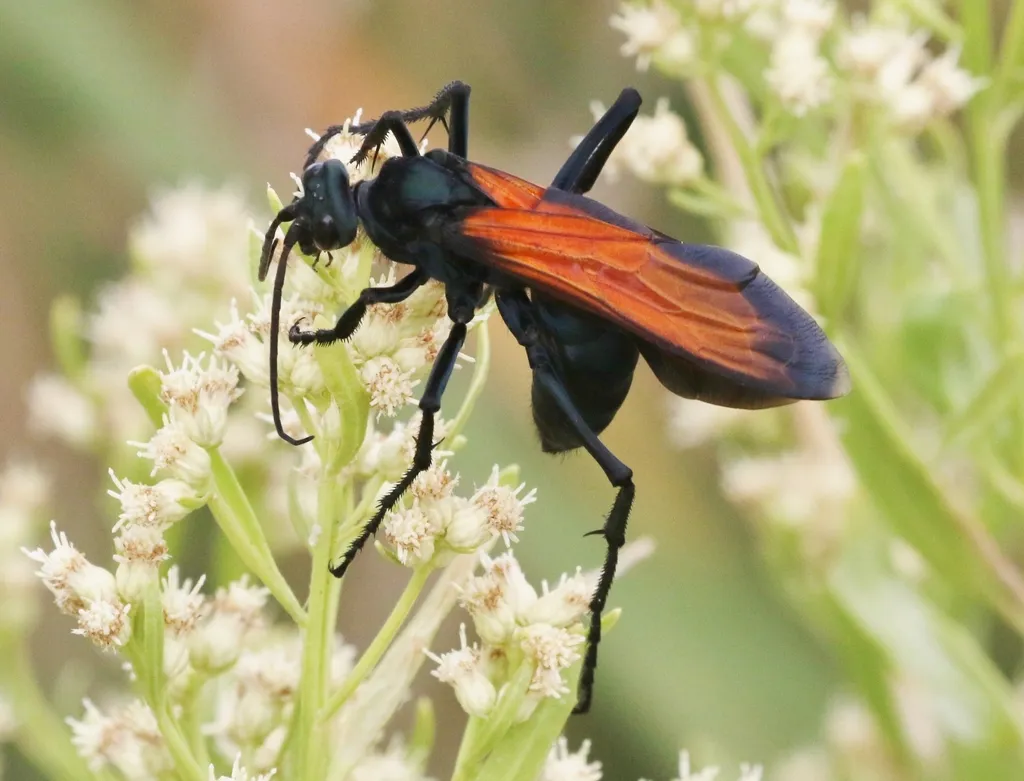
Identification: Very large, with two color forms: Orange-winged (xanthic) and black-winged (melanic). The two color forms are not often seen in the same locality. Melanic forms are easily confused with Pepsis mexicana , but that species is usually mu
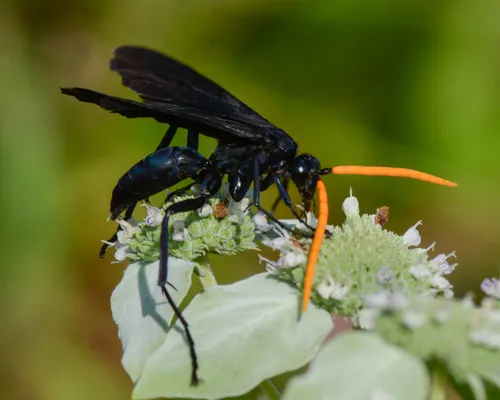
Elegant Tarantula-hawk Wasp
Pepsis menechma
Identification: The western " cerberus " form is orange-winged (dark-bordered), with antennae entirely dark (black to dark brown). The eastern " elegans " form is a large, blue-black wasp with orange antennae and wings black...likely mimicked by an i
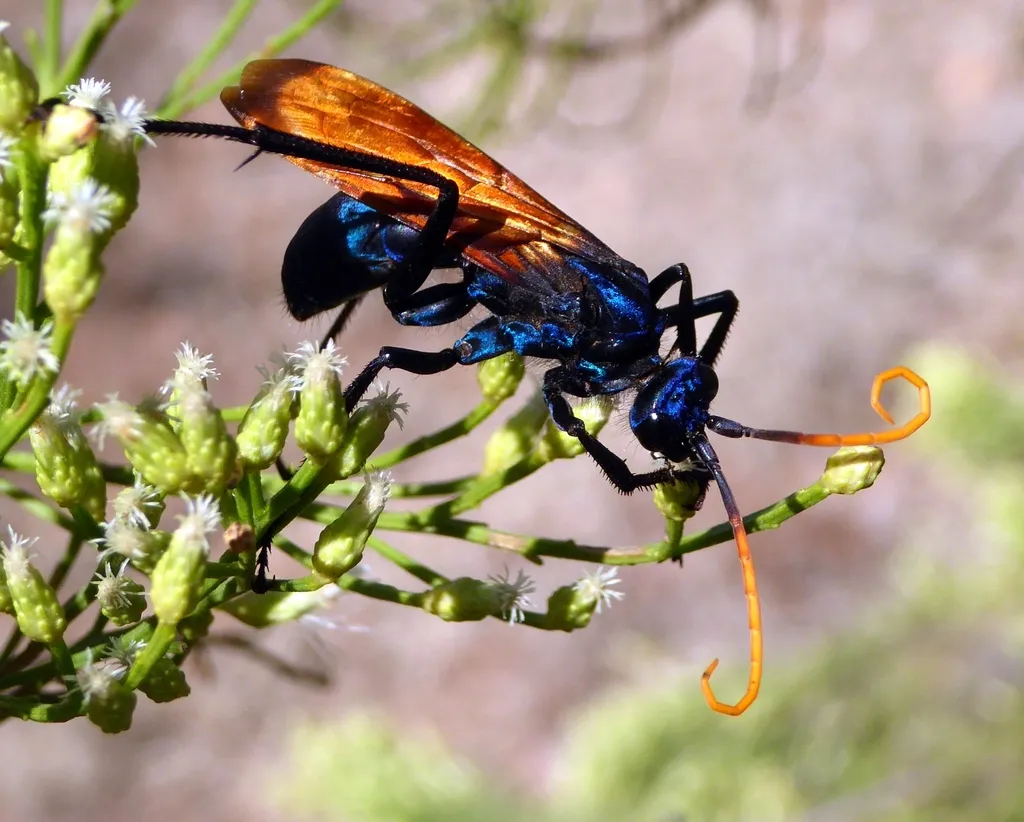
Milde's Tarantula-hawk Wasp
Pepsis mildei
Identification: Males may have antennae with the flagellum colored in varying amounts of orange and black. (BG images) Wing coloring may vary from solid-black to mostly-orange. ♂ ♀
Pepsis pallidolimbata
Pepsis pallidolimbata
Identification: Note the absence of a dark submarginal band basal to the hyaline edge of the wing (see comment on this post by Nick Fensler).
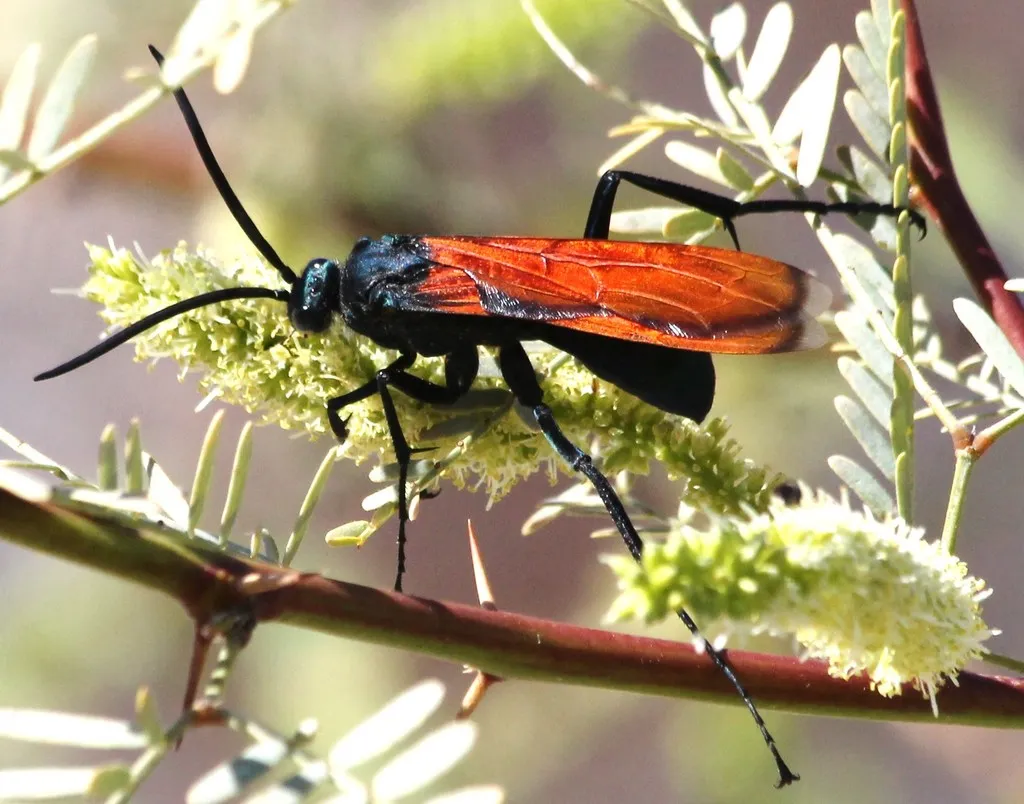
Thisbe's Tarantula-hawk Wasp
Pepsis thisbe
Identification: "Note the dark submarginal band basal to the hyaline edge of the wing." ( comment by Nick Fensler)
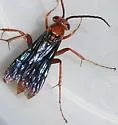
Poecilopompilus algidus
Poecilopompilus algidus
Identification: This wasp is in the subfamily Pompilinae, tribe Pompilini and therefore possesses the following characters: They are separated from other Pompiline genera by the following: They are separated from the similar P. interruptus ) by the f
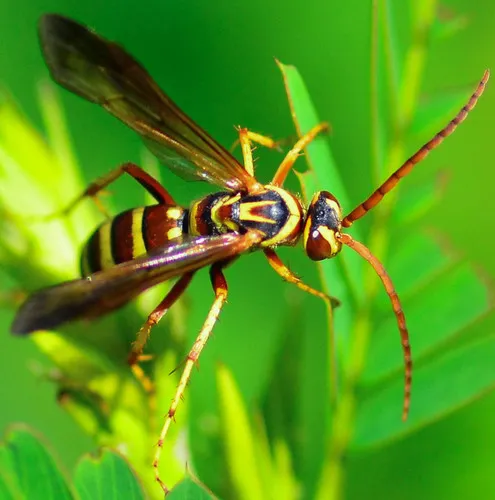
Poecilopompilus interruptus
Poecilopompilus interruptus
Identification: This species may be separated from others within its genus by the following combination: eyes not strongly convergent above, forelegs of the female with dentate claws, clypeus of the male with the lower margin truncate (not rounded),
Poecilopompilus mixtus
Poecilopompilus mixtus
Identification: Differs from P. interruptus in having a pair of (more or less expanded) longitudinal yellow stripes on the propodeum. In P. interruptus , there is only one transverse posterior yellow stripe. An additional character of diagnostic valu
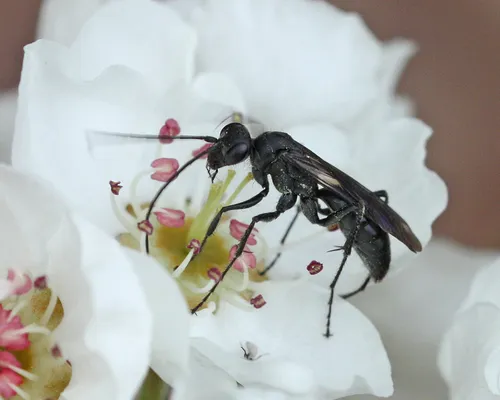
Priocnemis minorata
Priocnemis minorata
Identification: Prominent teeth on dorsal edge of hind tibiae.
Priocnessus nuperus
Priocnessus nuperus
Identification: Females have a row of teeth on the dorsal side of hind tibiae. ♀ ♂
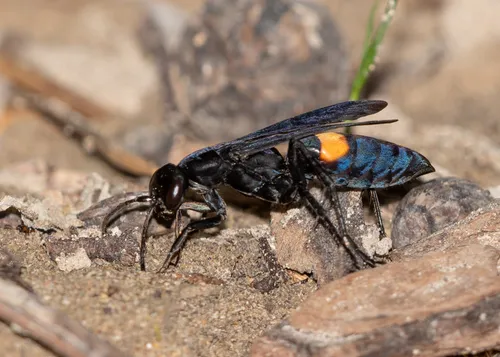
Psorthaspis brimleyi
Psorthaspis brimleyi
Identification: Apparently the only eastern member of the genus where female is mostly dark. Like most other members of this genus, known only from the female. Original description below (Malloch, 1928): Pedinaspis brimleyi , new species. Female. - B
Psorthaspis legata
Psorthaspis legata
Identification: This species has some orange coloration on the head and two cream bands on the third and fourth abdominal segments. Wings banded instead of diffusely darkened. (Nick Fensler)
Psorthaspis mariae
Psorthaspis mariae
Identification: See discussion under images. Historical notes. The author of this species is American entomologist Ezra Townsend Cresson (1838-1926). The wasp was no doubt named "mariae" in honor of his wife (married 1859), Mary Ann Ridings Cresson (
Psorthaspis planata
Psorthaspis planata
Formerly a separate species, Psorthaspis morosa is now considered synonymous with Psorthaspis planata . (Evans 1954)
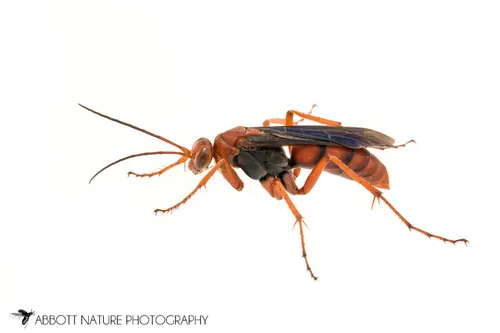
Rusty Spider Wasp
Tachypompilus ferrugineus
Identification: Subspecies are noted as follows based on the extent of black markings:
Ageniella agenioides
Ageniella agenioides
Ageniella arcuata
Ageniella arcuata
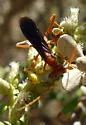
Ageniella coronata
Ageniella coronata
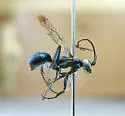
Ageniella cupida
Ageniella cupida
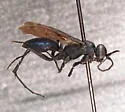
Ageniella euphorbiae
Ageniella euphorbiae
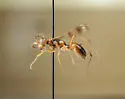
Ageniella faceta
Ageniella faceta
Ageniella fulgifrons
Ageniella fulgifrons
Ageniella longula
Ageniella longula
Ageniella mintaka
Ageniella mintaka
Ageniella placita
Ageniella placita
Ageniella reynoldsi
Ageniella reynoldsi
Ageniella salti
Ageniella salti
Ageniella semitincta
Ageniella semitincta
Agenioideus birkmanni
Agenioideus birkmanni
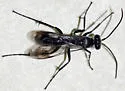
Agenioideus humilis
Agenioideus humilis
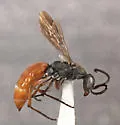
Allaporus smithianus
Allaporus smithianus
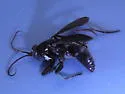
Allochares azureus
Allochares azureus
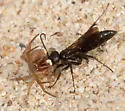
Ammosphex angularis
Ammosphex angularis
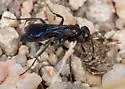
Ammosphex anomalus
Ammosphex anomalus
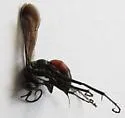
Ammosphex michiganensis
Ammosphex michiganensis
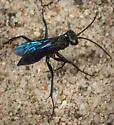
Ammosphex solonus
Ammosphex solonus
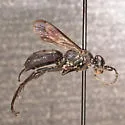
Ammosphex wasbaueri
Ammosphex wasbaueri
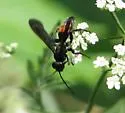
Anoplius americanus
Anoplius americanus
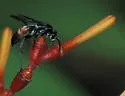
Anoplius apiculatus
Anoplius apiculatus
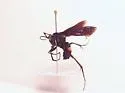
Anoplius atrox
Anoplius atrox
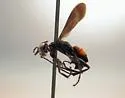
Anoplius brevihirta
Anoplius brevihirta
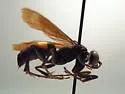
Anoplius carolinus
Anoplius carolinus
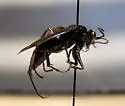
Anoplius cleora
Anoplius cleora
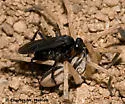
Anoplius fulgidus
Anoplius fulgidus
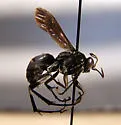
Anoplius illinoensis
Anoplius illinoensis
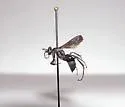
Anoplius insolens
Anoplius insolens
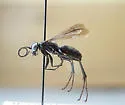
Anoplius ithaca
Anoplius ithaca
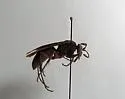
Anoplius lepidus
Anoplius lepidus
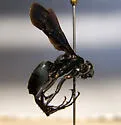
Anoplius nigritus
Anoplius nigritus
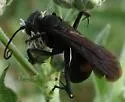
Anoplius semicinctus
Anoplius semicinctus
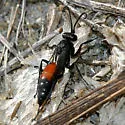
Anoplius semirufus
Anoplius semirufus
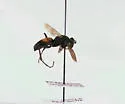
Anoplius splendens
Anoplius splendens
Anoplius subcylindricus
Anoplius subcylindricus
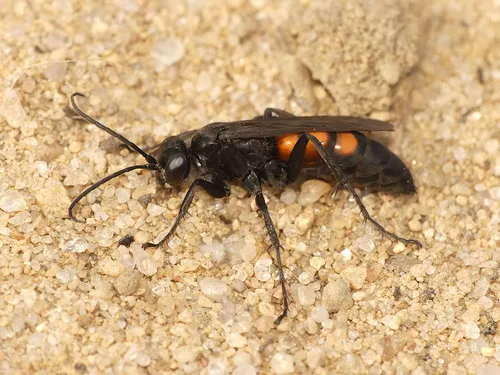
Black-banded Spider Wasp
Anoplius viaticus
Anoplius virginiensis
Anoplius virginiensis
Anoplochares apicata
Anoplochares apicata
Aporinellus basalis
Aporinellus basalis
Aporinellus completus
Aporinellus completus
Aporinellus fasciatus
Aporinellus fasciatus
Aporinellus medianus
Aporinellus medianus
Aporinellus wheeleri
Aporinellus wheeleri
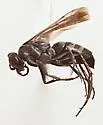
Aporinellus yucatanensis
Aporinellus yucatanensis
Aporus concolor
Aporus concolor
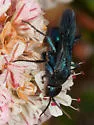
Aporus hirsutus
Aporus hirsutus
Aporus niger
Aporus niger
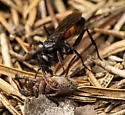
Arachnospila fumipennis
Arachnospila fumipennis
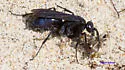
Arachnospila scelestus
Arachnospila scelestus
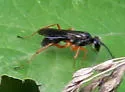
Auplopus adjunctus
Auplopus adjunctus
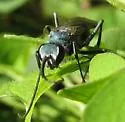
Auplopus architectus
Auplopus architectus
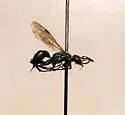
Auplopus caerulescens
Auplopus caerulescens
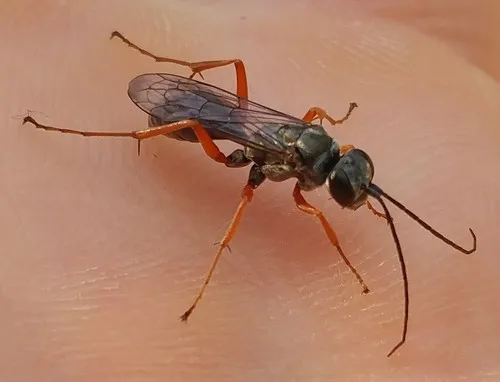
Spider Wasp
Auplopus mellipes
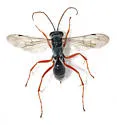
Auplopus mollis
Auplopus mollis
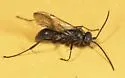
Auplopus nigrellus
Auplopus nigrellus
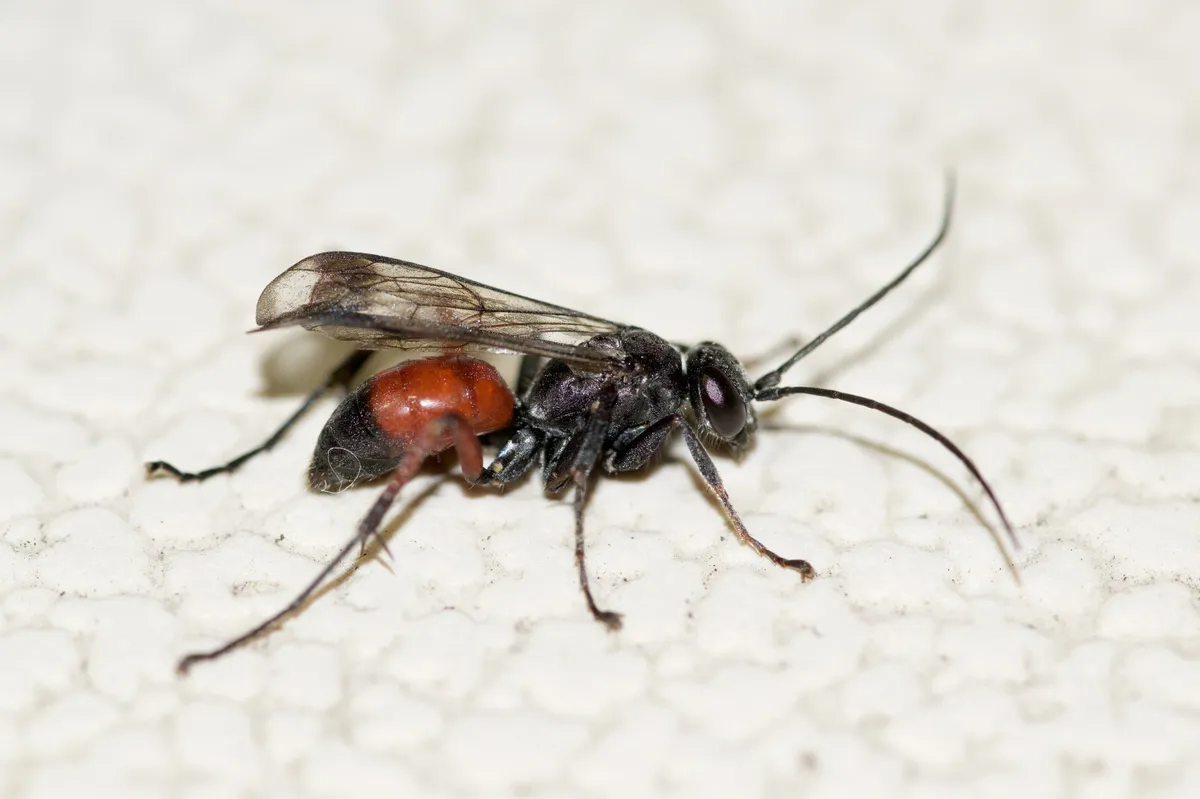
Caliadurgus fasciatellus
Caliadurgus fasciatellus
Calopompilus albopilosus
Calopompilus albopilosus
Calopompilus deceptus
Calopompilus deceptus
Calopompilus feroculis
Calopompilus feroculis
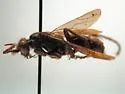
Calopompilus fortis
Calopompilus fortis
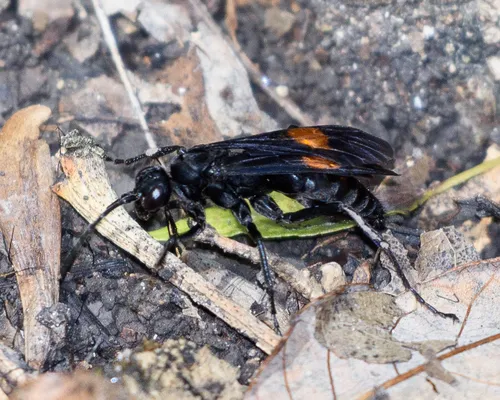
Calopompilus maculipennis
Calopompilus maculipennis
Calopompilus pyrrhomelas
Calopompilus pyrrhomelas
Calopompilus validus
Calopompilus validus