
Flies
Order Hymenoptera
The Flies (Order Hymenoptera) includes 5,194 species across 102 families and 1,491 genera in our directory.
About Flies
Hymenoptera includes over 150,000 described species of ants, bees, wasps, and sawflies. Earth harbors approximately 20 quadrillion (20×10^15) ants, with a combined biomass of ~12 megatons of dry carbon - exceeding the combined biomass of all wild birds and mammals (PNAS, 2022).
Economic Impact
Pollinators contribute $235-577 billion worth of annual global food production (FAO). In the U.S., bee pollination alone benefits crops valued at $18 billion annually, and honey bees are responsible for $5.4 billion in agricultural productivity. Between April 2023-2024, 55.1% of managed honey bee colonies were lost. The U.S. bee population dropped from 5 million to 2.5 million.
Ecological Role
About 35% of the world's food crops depend on animal pollinators. The chocolate industry, valued at over $100 billion, depends on pollinating flies and midges. Ants are the dominant soil engineers in most terrestrial ecosystems, turning more soil than earthworms in many habitats.
Families in Hymenoptera (102)
Species in Hymenoptera (5,194)
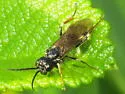
Curled Rose Sawfly
Allantus cinctus
Identification: Larva is light green with white dots and an orange head with dark markings. Curls up like a snail, usually on undersides of leaves
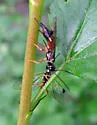
Currant Stem Sawfly
Janus integer
The introduced ichneumonid Collyria coxator is used as biocontrol.
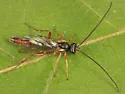
Cymodusa distincta
Cymodusa distincta
Identification: Basal flagellomeres of female white on inner side, black on outer side.
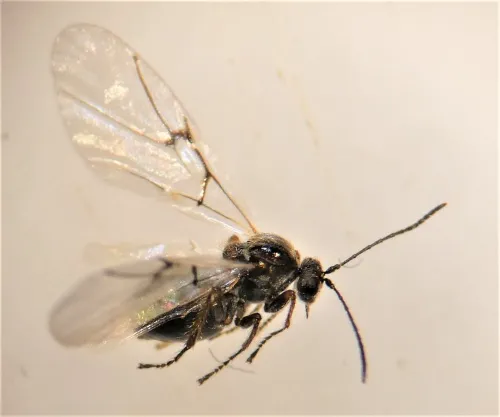
Cynips longiventris
Cynips longiventris
The agamic generation are produced from striped pea galls on oak. No additional images available for this species.
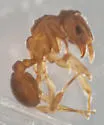
Cyphomyrmex minutus
Cyphomyrmex minutus
Identification: Part of the Cyphomyrmex rimosus group but smaller than Cyphomyrmex rimosus , without a deep hairless furrow on the dorsum of the postpetiole or only a faint short furrow. C. minutus C. rimosus
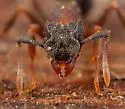
Cyphomyrmex rimosus
Cyphomyrmex rimosus
Identification: Similar to Cyphomyrmex minutus but larger and more widespread, with a deep hairless furrow on the dorsum of the postpetiole extending well into the first gastric tergite. C. minutus C. rimosus
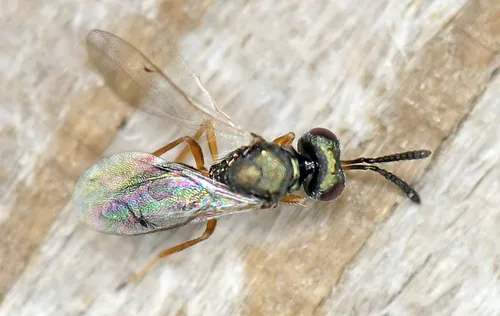
Cyrtogaster vulgaris
Cyrtogaster vulgaris
2-3mm long metallic green-bronze-green wasp. Like most Pteromalids, they have elbowed (geniculate) antennae with a 13-segmented structure (including the tiny ring segments). The clypeus (the area above the mouthparts) usually has a distinct, slightly
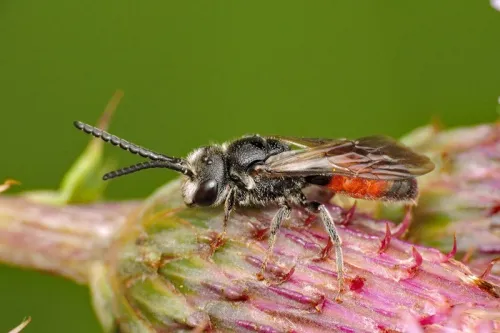
Dark-winged Blood Bee
Sphecodes gibbus
Body length about 10 mm. Of the 3 large species of Sphecodes, this one lacks the box-head of S. monilicornis: darker red and smokier wings than S. reticulatus. Expert confirmation of id is usually required. Most solitary bees and wasps are difficult
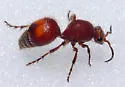
Dasymutilla archboldi
Dasymutilla archboldi
In Florida, males of D. vesta have been misidentified as D. archboldi (Williams et al., 2012: Systematic review of the Dasymutilla monticola species-group (Hymenoptera: Mutillidae): using phylogenetics to address species-group placement and sex assoc
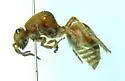
Dasymutilla asopus
Dasymutilla asopus
Identification: thorax as broad as long or slightly broader than long; mandible tridentate (Comment by George Waldren)
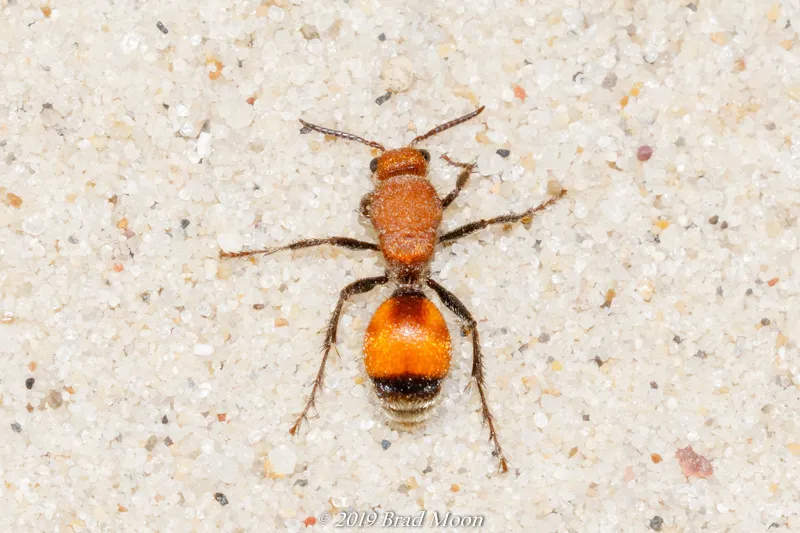
Dasymutilla bioculata
Dasymutilla bioculata
Identification: Females: No tubercles on posterolateral angles of head. Thorax longer than broad, with a scutellar scale and transverse carina anterior to it. Pygidium longitudinally striate. Color variable. Males: Color variable, dorsum of head and
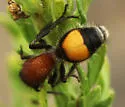
Dasymutilla campanula
Dasymutilla campanula
Identification: Thorax orangish, legs black, abdomen black with broad, bell-shaped yellow mark on T2. Posterolateral tubercles on the head present; mesosoma longer than broad and with a scutellar scale.
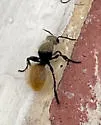
Dasymutilla connectens
Dasymutilla connectens
Identification: A a rarer member of the desert Müllerian group colored very similarly to both D. eminentia and D. magna with gray to pale yellow body setae. The thorax is elongate as in D. magna (versus wide in D. eminentia ), but the head is thicker
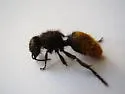
Dasymutilla gorgon
Dasymutilla gorgon
Identification: One of several large species with this color pattern; the very large head is one character that helps to separate it from D. klugii and D. magnifica .
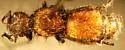
Dasymutilla montivagoides
Dasymutilla montivagoides
Identification: "easily distinguished by having the mesosoma as broad as long, the antennal scrobe ecarinate, and the mandible tridentate. The head and mesosoma are clothed with reddish setae. The sterna, genae, and pleurae have predominantly black s
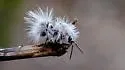
Dasymutilla pseudopappus
Dasymutilla pseudopappus
Identification: In comparison to Dasymutilla gloriosa , the integument is blacker (not reddish), and the head and thorax have more erect setae. The females of this species were once thought to be mimics of the seeds of the Creosote bush ( Larrea trid
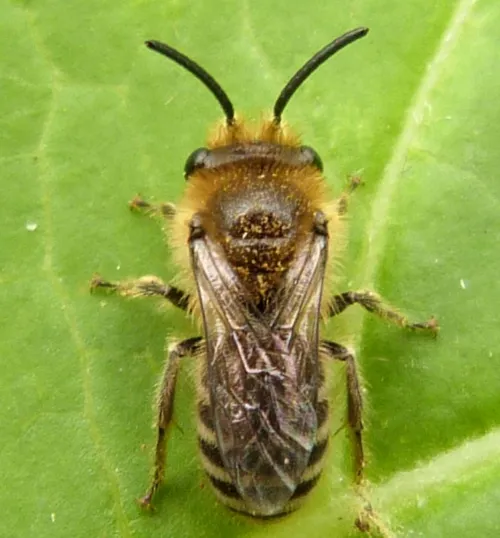
Davies' Colletes
Colletes daviesanus
Size 7 to 9 mm. This is the smallest species of Colletes in the UK. It is more grey brown than other similar species, and has sparser thoracic hair (allowing the mesonotum to shine through). Most solitary bees and wasps are difficult to identify, and
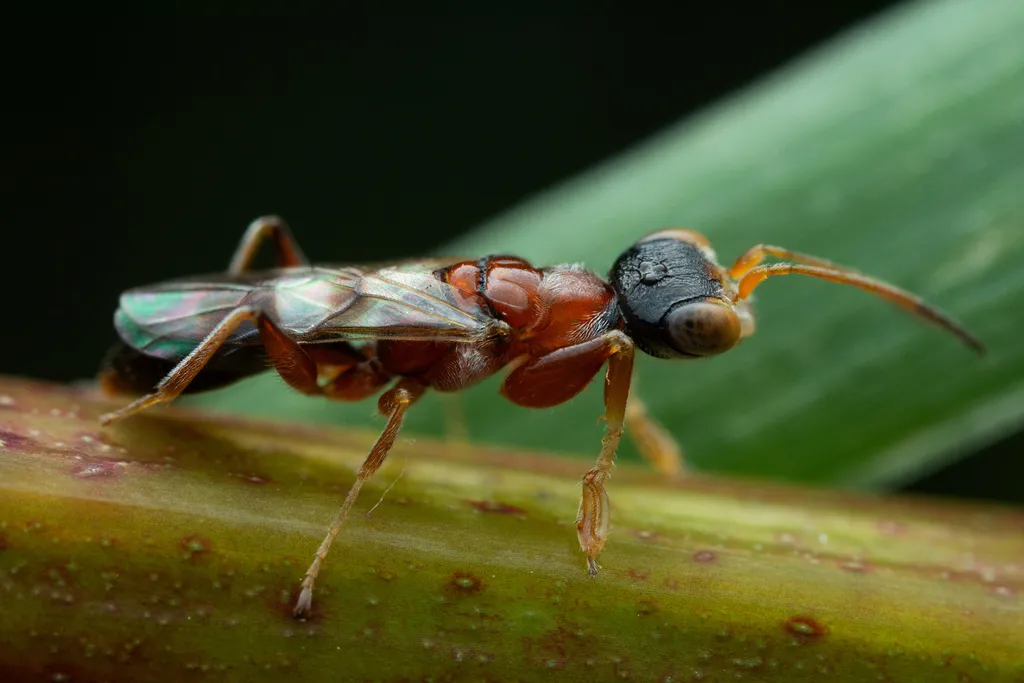
Deinodryinus atriventris
Deinodryinus atriventris
Identification: Rather robust; female typically bicolored (red thorax and black abdomen), with an infuscated spot in the wing Sculpture and color very variable, hence the many described species in synonymy.
Delta higletti
Delta higletti
In Florida this is an introduced species first reported in 1981, originating in Africa (perhaps via Jamaica, as it was found there in 1979).
Diadasia laticauda
Diadasia laticauda
Identification: apical rim of clypeus thickened in females
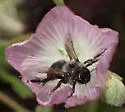
Diadasia nigrifrons
Diadasia nigrifrons
Identification: A dark-haired Diadasia in which Females possess front femurs with acute thorn-shaped process basiventrally; and males possess hind tibiae with inner apical thorn-shaped process.
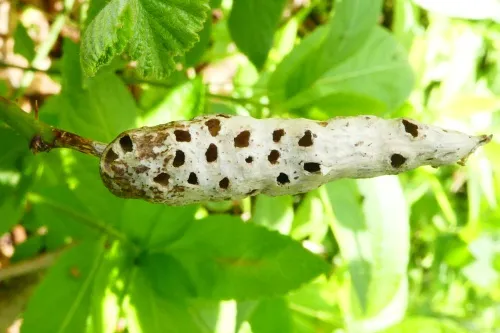
Diastrophus rubi
Diastrophus rubi
Diastrophus rubi is a gall wasp which affects Bramble ( Rubus fruticosus agg.). The galls is an elongated swelling, usually causing the stem to bend, with a bumpy surface, each bump containing a separate gall chamber. Often the old, vacated galls are
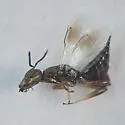
Dibrachys pelos
Dibrachys pelos
Identification: Discal area of forewing infuscated + distance between eyes and ocelli about 1.5 to 2 times lateral ocellus diameter. A similar species (D. confusus) has the eyes and ocelli separated more widely (Grissell, 1974).
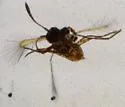
Dicopomorpha echmepterygis
Dicopomorpha echmepterygis
Identification: Antenna with 7 funicular segments, with the second approximately equal in length to first. The male of this species is much smaller, blind, and wingless but possesses long legs that it uses to attach itself to a female that is emergin
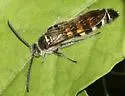
Dielis tejensis
Dielis tejensis
Identification: Known only from the male. The 5 stripes on the abdomen separate this species from all of our campsomerine species except D. pillipes .
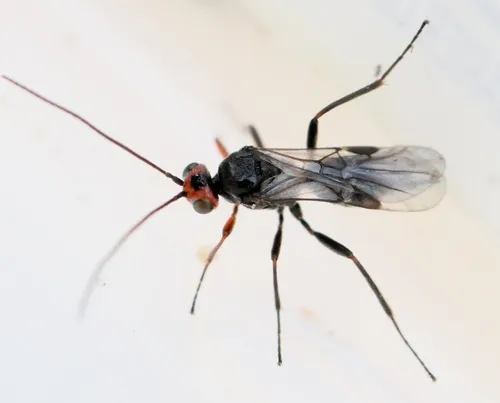
Dinocampus coccinellae
Dinocampus coccinellae
A tiny parthenogenetic wasp which is an endoparasitoid of adult ladybird beetles. The adult wasp is rarely seen but investigation of non-moving ladybirds will sometimes reveal a cocoon of this wasp beneath. Wherever its host ladybird species are to b
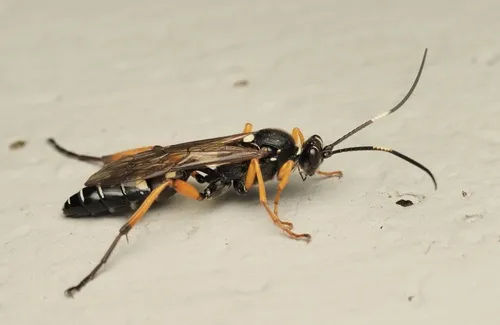
Diphyus quadripunctorius
Diphyus quadripunctorius
A large and distinctively marked black and yellow species with the femora (thighs) on the rear legs being orange in the female and yellow in the male. The species is sexually dimorphic with females having a pale section on their antennae and very dif
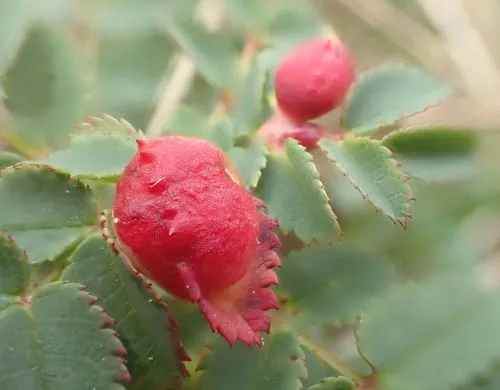
Diplolepis spinosissimae
Diplolepis spinosissimae
The larvae of the gall wasp cause Diplolepis spinosissimae cause galls to form on various rose species, being most frequent on Burnet Rose (Rosa spinosissima) , but also found on other rose species including Dog-rose and Sweet-briar. The galls are sm
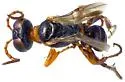
Diploplectron peglowi
Diploplectron peglowi
species page creation based on identification of this image by Matthias Buck here: https://inaturalist.ca/observations/135856842
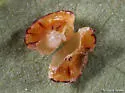
Disc Gall Wasp
Feron parmula
Identification: Only females are known for this species. Their galls are glossy and detachable, occurring on both sides of most white oaks.
Disholcaspis bassetti
Disholcaspis bassetti
Forms twig galls on bur ( Quercus macrocarpa ) and swamp white ( Q. bicolor ) oaks in the fall: "Globose, usually with a produced curving apex, single or clustered twig gall, green, turning to brown."
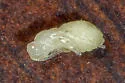
Disholcaspis lacuna
Disholcaspis lacuna
Identification: This wasp induces globular "bullet" galls on Quercus gambelli stems. They are tinged with pink when fresh and turn uniformly brown with age. These galls are always found in clusters of 3 or more.
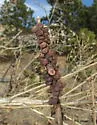
Disholcaspis perniciosa
Disholcaspis perniciosa
Identification: Induces globular "bullet" galls on stems of Quercus gambelii, grisea, and Quercus x undulata.
Disholcaspis rubens
Disholcaspis rubens
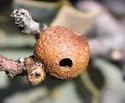
Identification: This wasp induces round bullet galls on Quercus arizonica, fendleri, gambelli, oblongifolia, rugosa, toumeyi, and Quercus x undulata. The galls are yellow and red when young, and with age turn brown but often keep the red tinge. The g
Disholcaspis spissa
Disholcaspis spissa
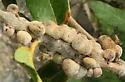
Identification: Induces cylindrical-globular stem galls on Quercus arizonica, fendleri, havardii, oblongifolia, rugosa, and turbinella. The galls almost always are found in groups of 4 or more. They can rarely become coalesced and turn into a large c
Dissomphalus apertus
Dissomphalus apertus
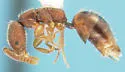
Identification: Redescription of both sexes and male genitalia illustrated in .
Diversinervus elegans
Diversinervus elegans
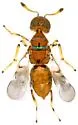
Native to the Old World. Introduced into California during a biocontrol program directed against Saissetia oleae, starting in the 1950s.
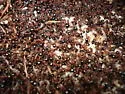
Dolichoderus mariae
Dolichoderus mariae
Can be locally abundant but populations can be spotty, particularly in the southern most portions of its range
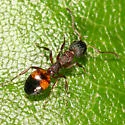
Dolichoderus plagiatus
Dolichoderus plagiatus
Identification: The four orange marks on the gaster are distinctive when separated and not blended together. See also comments on
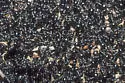
Dolichoderus taschenbergi
Dolichoderus taschenbergi
Identification: An unmistakable species of this genus in North America, as it is the only one with a jet black color "In the spring, workers of this species will form a mass of ants in exposed areas to warm themselves"
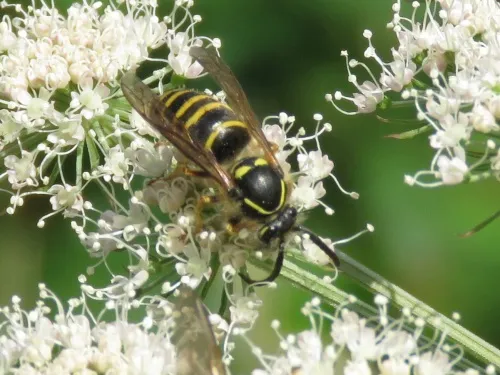
Dolichovespula saxonica
Dolichovespula saxonica
It is a very close relative of Dolichovespula norwegica but lacks the pair of red spots on the second gastral tergum (but note, these markings are also absent in some specimens of Dolichovespula norwegica). Unless identified by a recognised expert, a
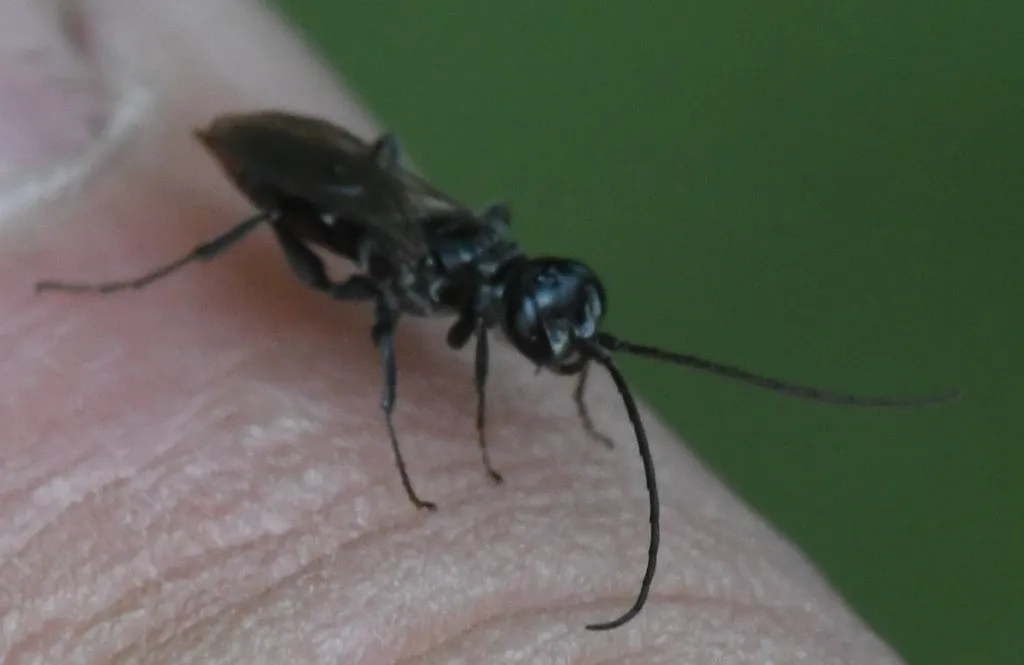
Dolichurus greenei
Dolichurus greenei
Identification: Distinguished as the only eastern Ampulicidae with a black body but the tip of the gaster (apical margin of segment 3 and following) reddish. Most similar to the western species Paradolichurus californicus (San Diego Co., CA), which h
Dorymyrmex bureni
Dorymyrmex bureni
Identification: This species is can be identified in the field by its yellowish coloration, long legs and scapes, fast movement, and by its preference for sandy soils. (MacGown 2012) Dorymyrmex bureni (Trager) Det. M. A. Quinn, 2012 " Dorymyrmex bure
Dorymyrmex flavopectus
Dorymyrmex flavopectus
Identification: Bicolored with a dark brown to black head and gaster and a orange thorax. Similar to Dorymyrmex bossutus , but with many appressed hairs on the gaster instead of shiny.
Dorymyrmex insanus
Dorymyrmex insanus
In the mild, but summer-dry climate of southern California, they fly in warm, sunny spells during the winter rainy season. ( comment made by James C. Trager)
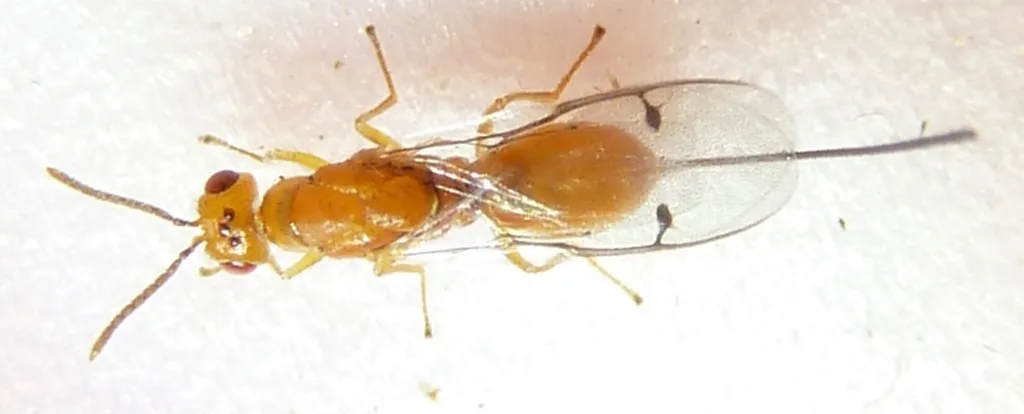
Douglas Fir Seed Chalcidoid Wasp
Megastigmus spermotrophus
Females are capable of parthenogenesis , which produces males.
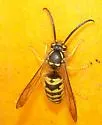
Downy Yellowjacket
Vespula flavopilosa
Identification: Queen (♀♀) Worker (♀) Male (♂) Workers usually have a large amount of yellow throughout the thorax and abdomen, but melanic (dark) and xanthic (yellow) forms may occur: This very yellow (xanthic) male has proved difficuilt to ID to sp
Dracunesia parapolita
Dracunesia parapolita
Identification: Males: pronotal disc with a distinct transverse carina dorsally; mandibles with 5 teeth; abdomen petiolate; median lobe of clypeus roundly or roundly or somewhat angularly produced, extending well beyond lateral lobes; median lobe of
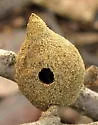
Dried Peach Gall Wasp
Disholcaspis simulata
Identification: This wasp created bud galls on scrub, leather, blue, Oregon, and Englemann oaks. The monothalamous galls contain a floating larval chamber.
Druon ignotum
Druon ignotum
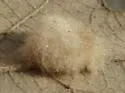
Forms galls on the undersides of veins of leaves in the white oak group, composed of seedlike cells in groups, covered by wool. Felt describes the galls as "oval, rather thick-shelled, brown leaf vein gall, at first woolly, later naked, length 1/8 in
Dryocosmus floridensis
Dryocosmus floridensis
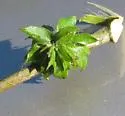
The gall is a rosette of green bracts with a larval cell in the center, found "on all the red oaks in early spring."
Dusky Birch Sawfly
Nematus latitarsus
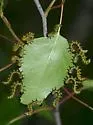
Identification: Larva is yellow-green with rows of black spots along the body; heads of mature larvae black (dull orange in Birch Sawfly, Arge pectoralis ) Key to Species (Larvae and Adults) common defoliator of birch
Dusona circumspectans
Dusona circumspectans
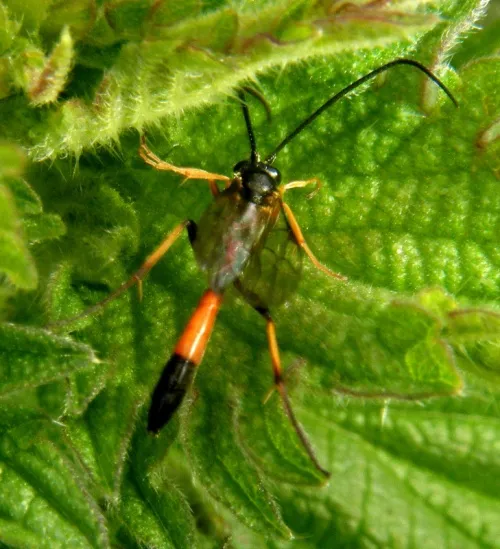
This ichneumon is about 7 or 8 mm long and has a black head and thorax. The abdomen is also black but has a wide orange band. The legs are mainly orange, but the femurs of the rear legs are black. Thought to parasitise small caterpillars.
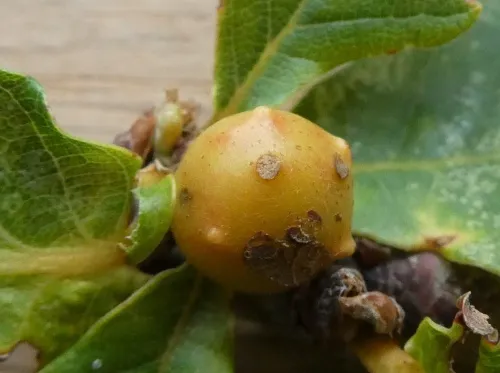
Dyer's Gall
Andricus infectorius
The agamic form is a medium-sized gall on oak buds. Rounded and may be nearly spherical, up to 15mm diameter, with a narrow attachment to a lateral or terminal bud on oak. Green then becoming reddish or orangey brown, often with light brown warty lum
Earinus limitaris
Earinus limitaris
The newly valid species, E. austinbakeri Sharkey 2022, E. erythropoda Cameron, 1887 stat. rev. , and E. walleyi Sharkey 2022 are essentially identical in coloration and will run to E. limitaris in older keys. Dr. Michael Sharkey notes additional unde
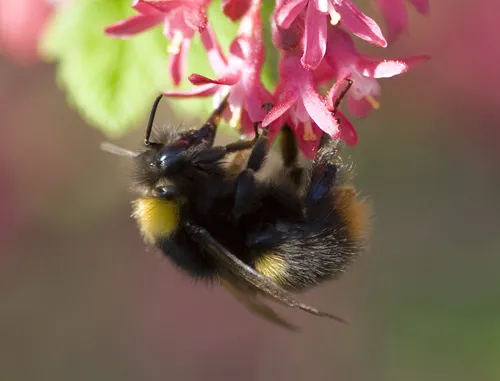
Early Bumblebee
Bombus pratorum
Queen 15-17 mm, workers 10-14 mm, male 11-13 mm. The workers and the males are a little smaller than those of the Common Carder Bee. The front of the thorax is covered with yellow hairs, and it may be covered with yellow hairs entirely, especially in
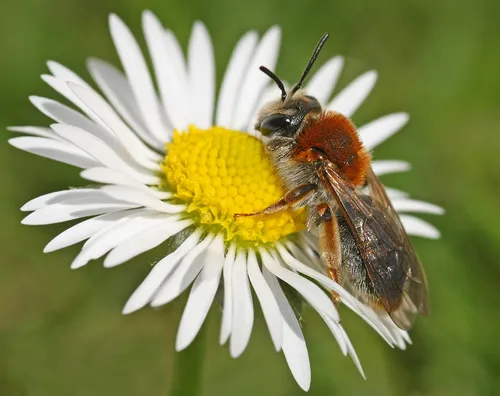
Early Mining Bee
Andrena haemorrhoa
Length 8 to 11 mm. The thorax is foxy brown on top; the abdomen is black with few hairs, except for prominent orange hairs at the tip. The male is much smaller than the female and its hairs are much lighter colour, tending to grey or even white. Arou
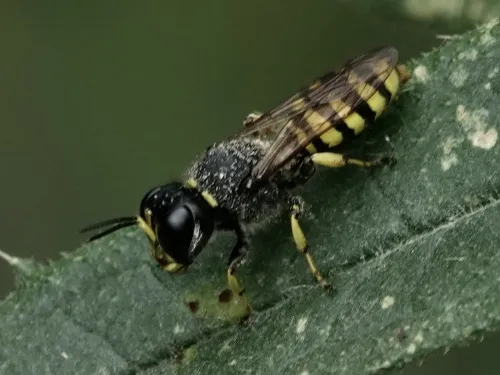
Ectemnius cavifrons
Ectemnius cavifrons
At 11-16.5mm this is one of the largest Ectemnius species. They are very hard to identify from photographs and a specimen is usually required. The males can sometimes be identified from a good view of the nobbly antennae. The females require an even
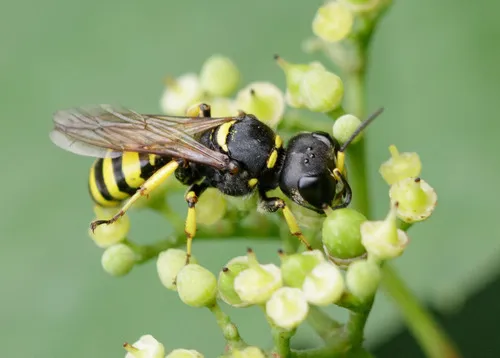
Ectemnius cephalotes
Ectemnius cephalotes
One of the larger Ectemnius species species (9-15 mm) and with the familiar black and yellow abdomen. The thorax is dull and both sexes have transverse striae in the front half of the mesonotum and longitudinal striae in the rear half. Most solitary
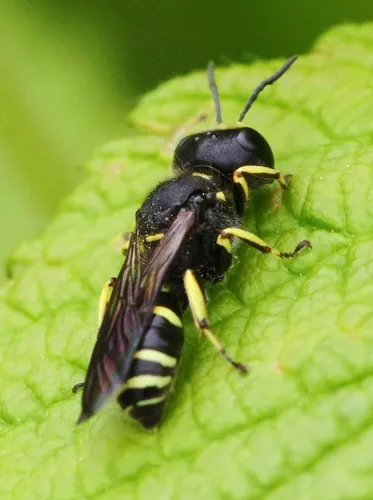
Ectemnius continuus
Ectemnius continuus
8-14mm. The largest and most common of the British Ectemnius species. Generally black, yellow markings on tergites 1 and 3 are much reduced or absent, all yellow tibiae. Ectemnius species are difficult to separate so care needs to be taken with ident
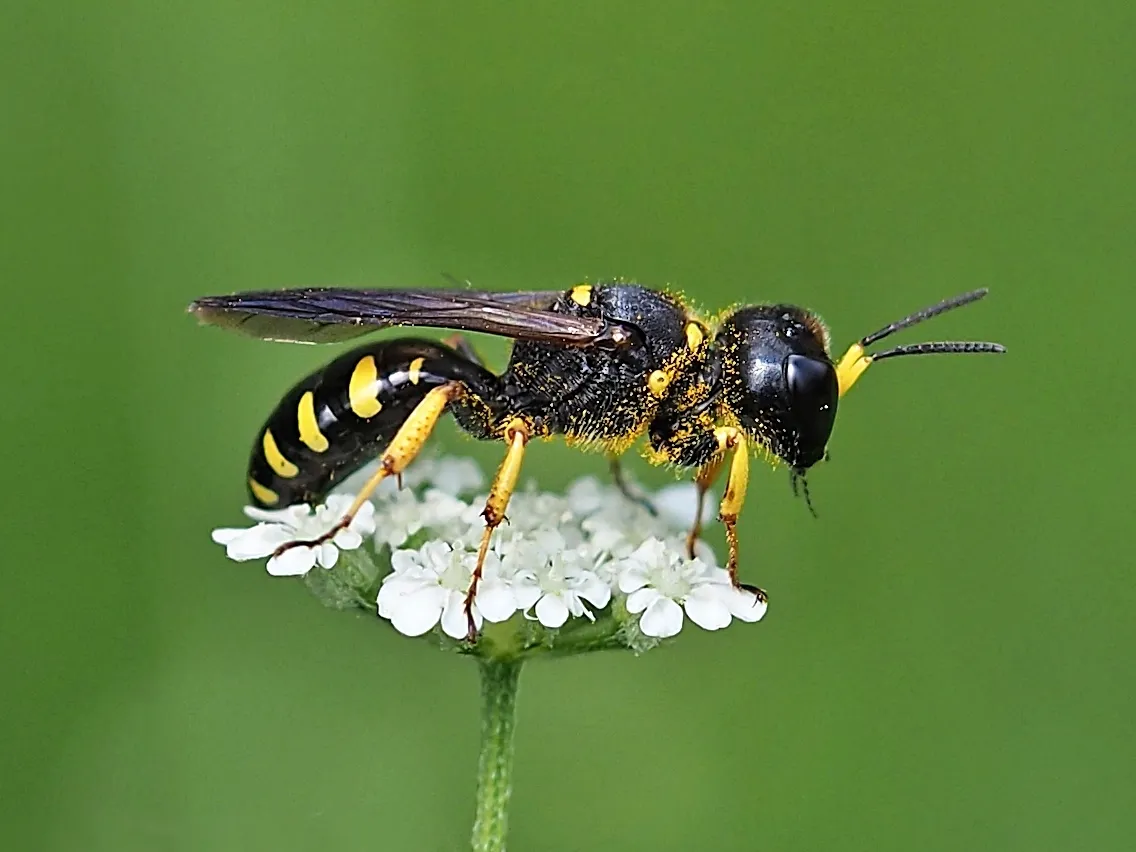
Ectemnius maculosus
Ectemnius maculosus
Identification: "Male of this species quite distinctive because of the narrowing of the head behind the eyes." -- Matthias Buck
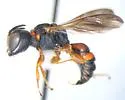
Ectemnius rufipes
Ectemnius rufipes
Identification: The typical form (TX, OK, AL, northern FL, to the Carolinas), T-II and IV-VI are yellow marked. In the south Florida form, these markings (and sometimes T-I) are reddish.
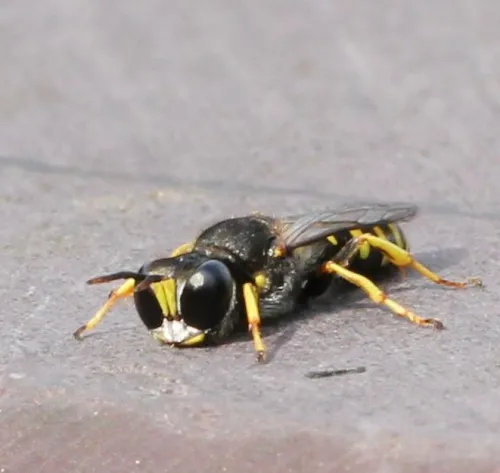
Ectemnius sexcinctus
Ectemnius sexcinctus
A large Ectemnius species with yellow and black wasp like markings and closely resembling the more common Ectemnius continuus. Most solitary bees and wasps are difficult to identify, and can rarely be identified from photos taken in the field. All re
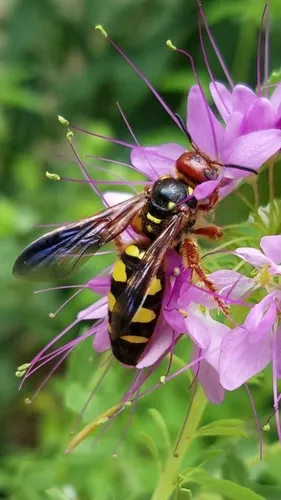
Eight-spotted Scoliid Wasp
Colpa octomaculata
Identification: yellow abdominal bands may vary in thickness slightly; usually it's yellow maculation on black background, but some individuals may have a significant amount of red. ♂ ♀ western varieties have more red vs. black on the body, legs and
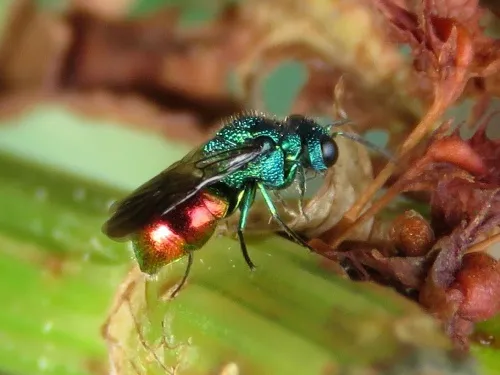
Elampus panzeri
Elampus panzeri
One of many similar ruby tailed wasp species. Expert help should be sought for identification. Occurs in the habitats of its hosts which are open sandy areas. May be abundant around the nesting sites of its host. June to August but usually found duri
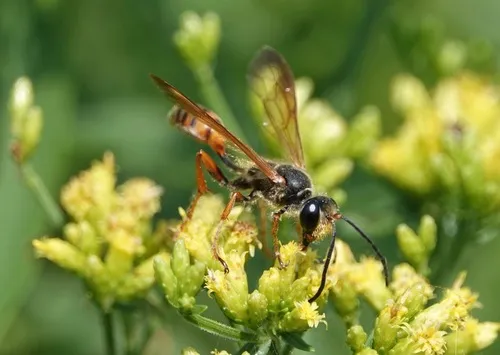
Elegant Grass-carrying Wasp
Isodontia elegans
Coloration is quite variable. At least part of the genus needs revision. It is possible that elegans (subenus Murrayella ) may eventually become a synonym of I. mexicana , or vice versa. (Comments by E. Eaton)
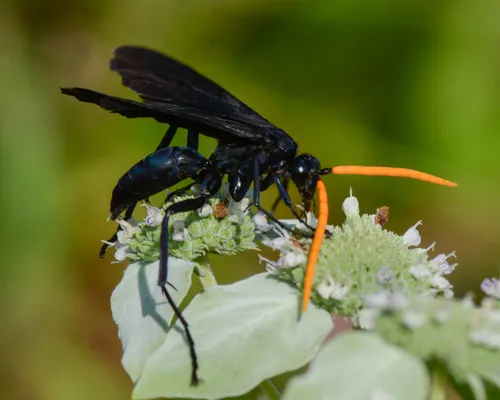
Elegant Tarantula-hawk Wasp
Pepsis menechma
Identification: The western " cerberus " form is orange-winged (dark-bordered), with antennae entirely dark (black to dark brown). The eastern " elegans " form is a large, blue-black wasp with orange antennae and wings black...likely mimicked by an i
Encarsia citrina
Encarsia citrina
Used to control scales insects; effective against Diaspis bromeliae, Pinnaspis aspidistrae, Abgrallaspis cyanophylli and Aspidiotus nerii
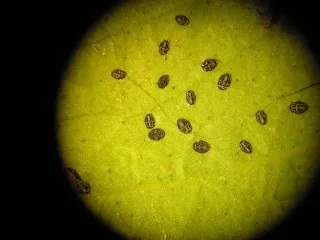
Encarsia formosa
Encarsia formosa
First described in 1924 in a greenhouse in Idaho (USA). It has been introduced in other countries to combat greenhouse pests.
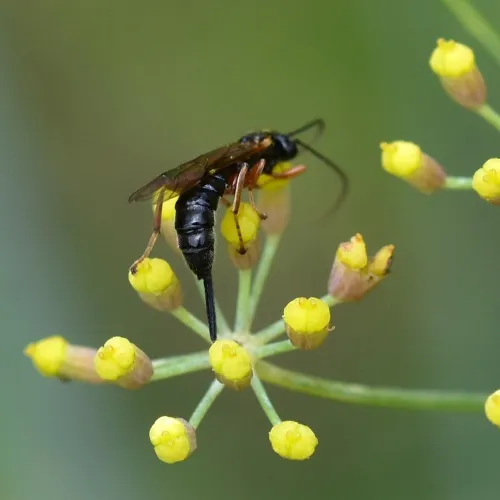
Endromopoda detrita
Endromopoda detrita
A black bodied ichneumon with red-brown coloured legs. Unless identified by a recognised expert, a photo is required and the specimen should be examined with a microscope. In the comments box, state the key or ID method used and describe the size and
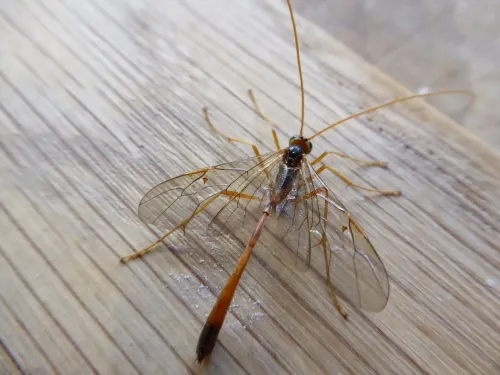
Enicospilus combustus
Enicospilus combustus
Pronotum, mesopleuron, mesocutum and propodeum with dark patches in this species. Unless identified by a recognised expert, a photo is required. If the photo doesn't show the key ID features, then in the comments box describe the size and identifying
Enicospilus cubensis
Enicospilus cubensis
Identification: Central sclerite crescentic, positioned close to a slender proximal sclerite which is of only slightly larger surface area
Enicospilus glabratus
Enicospilus glabratus
Identification: Forewing with discosubmarginal cell bearing a cluster of closely interspaced hairs in anterodistal corner (the forehead of the horse-head shaped cell)
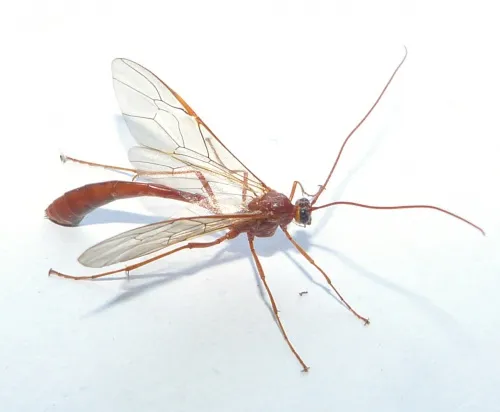
Enicospilus inflexus
Enicospilus inflexus
A large orange-bodied wasp it is similar to other Ophioninae species and care is needed with identification. Unless confirmed by a recognised expert, a photo is required and the specimen should be examined with a microscope. In the comments box, stat
Enicospilus peigleri
Enicospilus peigleri
named after Ric Peigler (reared Ophioninae for Gauld)
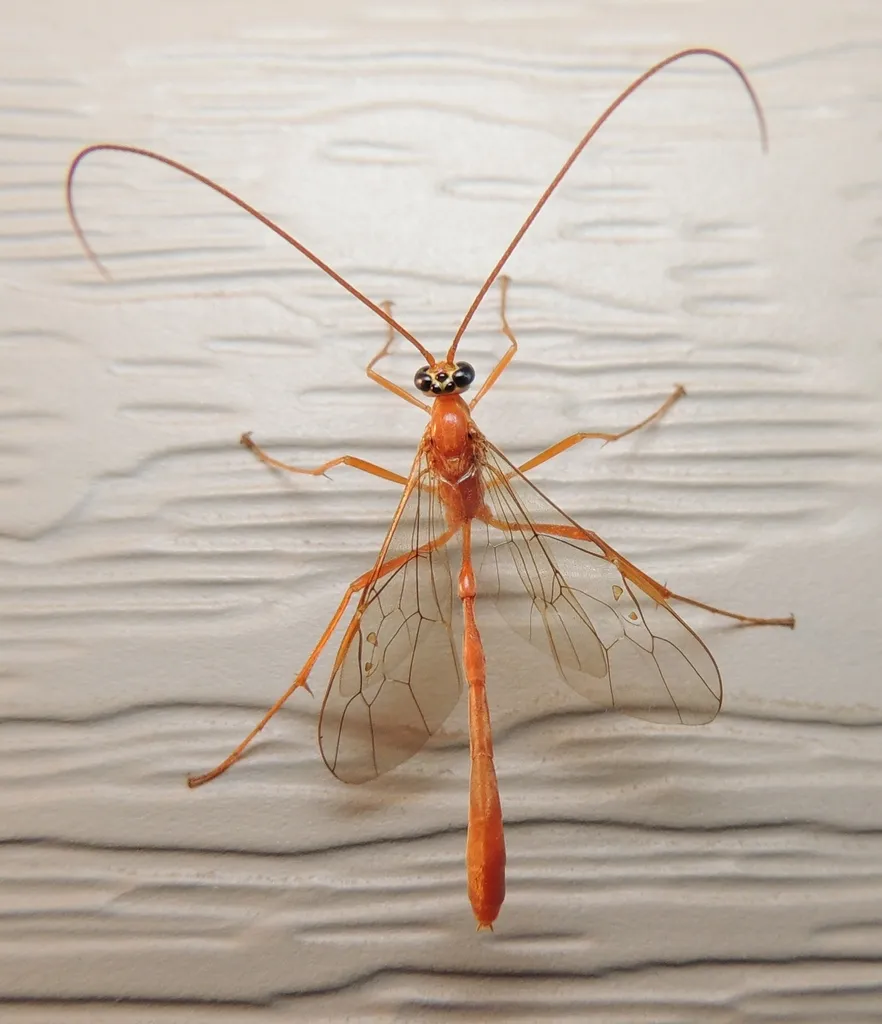
Enicospilus purgatus
Enicospilus purgatus
Identification: Recognized by the pattern of sclerites in the discosubmarginal cell of the fore wing: proximal and central sclerite prominent but distal sclerite reduced to a thin crescent. Mandible with a longitudinal furrow which bears setae.
Enicospilus texanus
Enicospilus texanus
Identification: Forewing WITHOUT discosubmarginal cluster of close hairs in anterodistal corner. Forewing length 15 mm+; forewing with Rs+2r weakly sinuous, straightened before joining Rs.
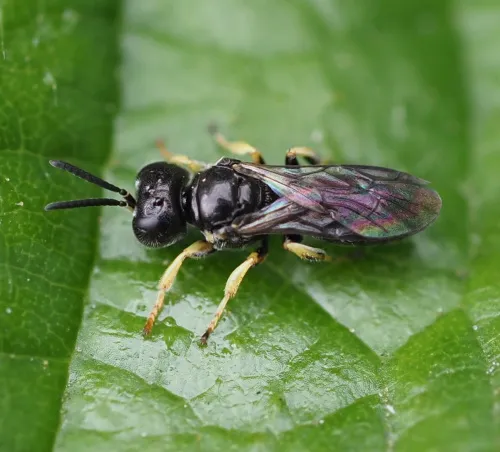
Entomognathus brevis
Entomognathus brevis
A small, black wasp superficially resembling Lindenius species, but with pronounced hairy eyes. Most solitary bees and wasps are difficult to identify, and can rarely be identified from photos taken in the field. All red-rated records should include
Entypus fulvicornis
Entypus fulvicornis
Identification: A black-bodied species with black wings and orange antennae. Distinguished from E. magnus by the following combination: interrupted or strongly subapically narrowed brush on the inner side of the hind tibia (narrowed more weakly in E.
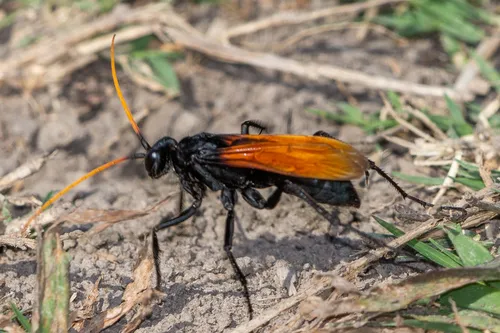
Entypus unifasciatus
Entypus unifasciatus
Identification: Body blue-black, smoky brown wings with orange tips, prominent orange antennae.
Epeolus americanus
Epeolus americanus
Identification: Fore wing commonly has two submarginal cells
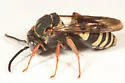
Epeolus autumnalis
Epeolus autumnalis
Identification: Head: Black. Lower face has pale yellowish hairs, denser on inner eye margin. Male lower face has more dense whiter hairs. Antenna: Black – females 10 segments, males 11. Thorax: Black, all segments more or less outlined in pale yello
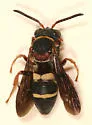
Epeolus bifasciatus
Epeolus bifasciatus
Identification: Male and female similar. Abdomen has only 2 yellowish stripes. Thorax segment 2 (scutellum) entirely red. Head: White hairs faintly circle antenna bases in female. Cheeks very narrow. Antenna: Scape and segment 1 reddish, rest of segm
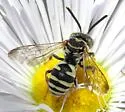
Epeolus canadensis
Epeolus canadensis
Identification: Black bee with white to yellowish bands, lines and patches. Head: Dense whitish hairs around bases of antennae, more so on male. Cheeks half as wide as eye width. Mandibles reddish-yellow. Antenna: Black. Thorax: Collar stripe interru
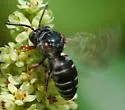
Epeolus lectoides
Epeolus lectoides
Identification: Male and female similar. Head: Black, covered with very short, silvery hair. Lower face (clypeus) dark and bare. Cheeks very narrow about 1/3 eye width. Mandibles red, base and tips black. Antenna: Black. Underside of base (scape) and
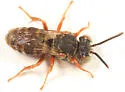
Epeolus pusillus
Epeolus pusillus
Widespread but usually less common than E. scutellaris in the northeastern USA. Types: Holotype female by Cresson, 1874. #9204193. Locality: Massachusetts. In Smithsonian, no photos. Lectotype: #2228 with right antenna off beyond joint three. In Aca
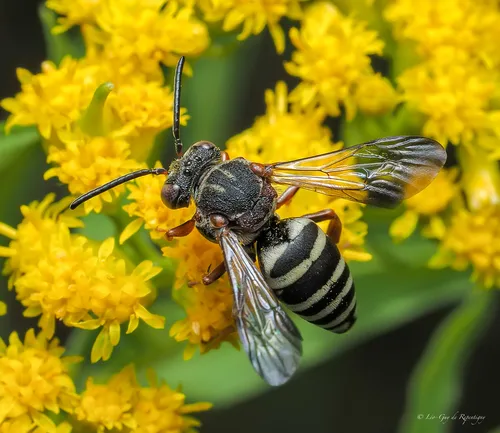
Epeolus scutellaris
Epeolus scutellaris
Identification: . . . shape of pygidial plate is diagnostic of Epeolus. Head: Black with yellowish hair around antenna bases in female; across mid-face in male. Cheeks narrow, about half as wide as eye width; males only ¼ as wide as eye width. Mandib
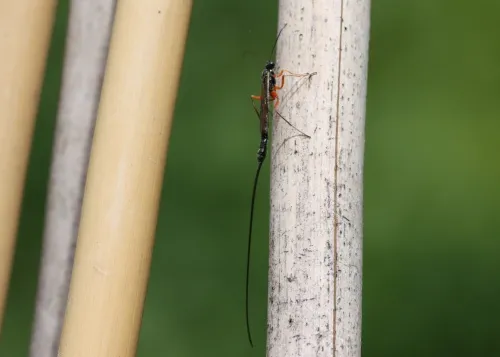
Ephialtes manifestator
Ephialtes manifestator
An entirely black species with orange legs. The female has an extremely long ovipositor (up to 6 cm) for probing the nest of solitary bees and wasps, together with the wide, pale brown clypeus on the lower face. Males are not as conspicuous, but can
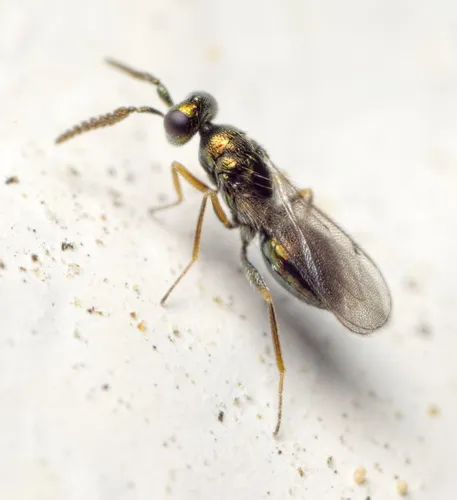
Epiclerus panyas
Epiclerus panyas
A tiny (~2mm) "jewel wasp" with a dark, shimmering metallic blue-green or bronze appearance. Legs are mostly dark (concolorous with the body) at the base (coxae), but the tibiae are often paler or yellowish-brown. Males have 4-segmented tarsi on all
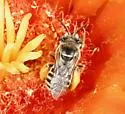
Epimelissodes duplocinctus
Epimelissodes duplocinctus
Epimelissodes duplocinctus (Epimelissodes duplocinctus) is a species in the family Apidae, commonly known as cuckoo, carpenter, digger, bumble, and honey bees, belonging to the order Hymenoptera (Ants, Bees, Wasps and Sawflies). It is classified with
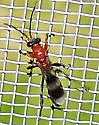
Epipompilus aztecus
Epipompilus aztecus
Identification: After generic separation color is used to separate the species. The abdomen is black except for a pair of white spots on T2 and a white stripe on T5. The entire mesosoma is orange. The wings are hyaline and strongly twice-banded. The
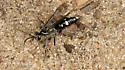
Episyron quinquenotatus
Episyron quinquenotatus
Identification: body mostly black with white markings: a thin line behind each eye, another line on side of face bordering inner edge of eye, a thin crescent along anterior edge of thorax broken by black in the middle, and three white wedge-shaped ma
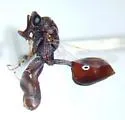
Epitranus clavatus
Epitranus clavatus
introduced in 1997 or earlier. Originally known from the Neotropics and Asia ( Grissel & Smith 2003 )
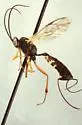
Eriborus terebrans
Eriborus terebrans
Palearctic species introduced in NA to control the European corn borer ( Ostrinia nubilalis ) Introduced repeatedly from 1927 through 1940.
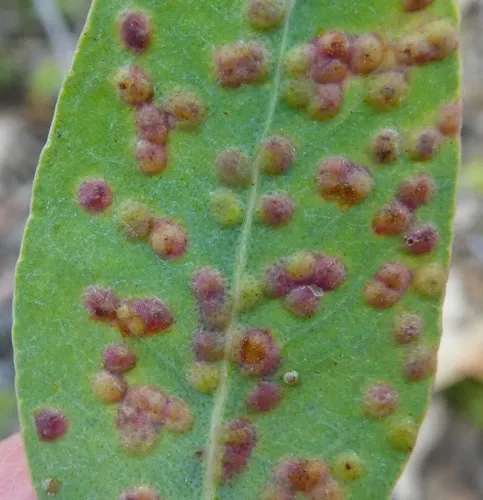
Eucalyptus Gall Wasp
Ophelimus maskelli
Ophelimus maskelli is a species of Chalcid Wasp about 1mm long and mainly blackish in colour. The larvae produce galls on the leaves of Eucalyptus species, particularly Eucalyptus camaldulensis . The galls are numerous, pale green to reddish pustules
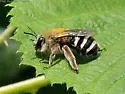
Eucera cordleyi
Eucera cordleyi
Identification: Very similar to E. (S.) edwardsii but with narrow white band on T2 especially laterally (see Timberlake, 1969)
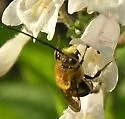
Eucera rosae
Eucera rosae
Identification: Very similar to atriventris . With fulvous pubescence
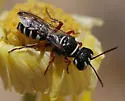
Eucerceris arenaria
Eucerceris arenaria
The original description of Eucerceris arenaria , written in 1948 by Herman Scullen, is very detailed and accompanied by Figs. 6a-f .
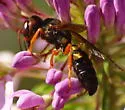
Eucerceris zonata
Eucerceris zonata
Identification: Extent of yellow markings highly variable (Scullen, 1939)
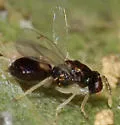
Eulophus basalis
Eulophus basalis
Larvae parasitize caterpillars of the drab prominent , which feed on the undersides of sycamore leaves. They "exit from a mature host en masse , move a short distance away, usually less than 2 cm, void their meconium and attach their posteriors to th