
Family Sweat, Furrow, Nomiine, and Short-faced Bees (Halictidae)
Halictidae is a family in the order Hymenoptera. Browse 163 named species recorded in this family, or open an individual profile for its available identification and natural-history information.
Species in Halictidae (163)
Agapostemon coloradinus 0
Agapostemon coloradinus
Identification: Along with A. tyleri , males lack yellow on the metasomal sterna. According to Roberts (1972) this is the rarest species of Agapostemon in the United States.
Agapostemon femoratus
Agapostemon femoratus
Identification: Males can be differentiated from many (not all) other species by the enlarged hind femora.
Agapostemon poeyi
Agapostemon poeyi
Identification: Males - Abdomen a mix of yellow, black, and metallic green (Unique among FL Agapostemon). Females - Tergites metallic green. Mandible with a metallic green spot basally. Mesoscutum rugose. May hybridize with P. viequesensis (Roberts,
Silky Striped Sweat Bee
Agapostemon sericeus
Identification: Rugose scutum See remarks. "Only 4 Agapostemon species in Ontario. A. sericeus has the roughest thorax and three white hair bands on abdomen, the second hair band is usually wider. Dark legs with the longest golden hair. A. splendens
Brown-winged Striped Sweat bee
Agapostemon splendens
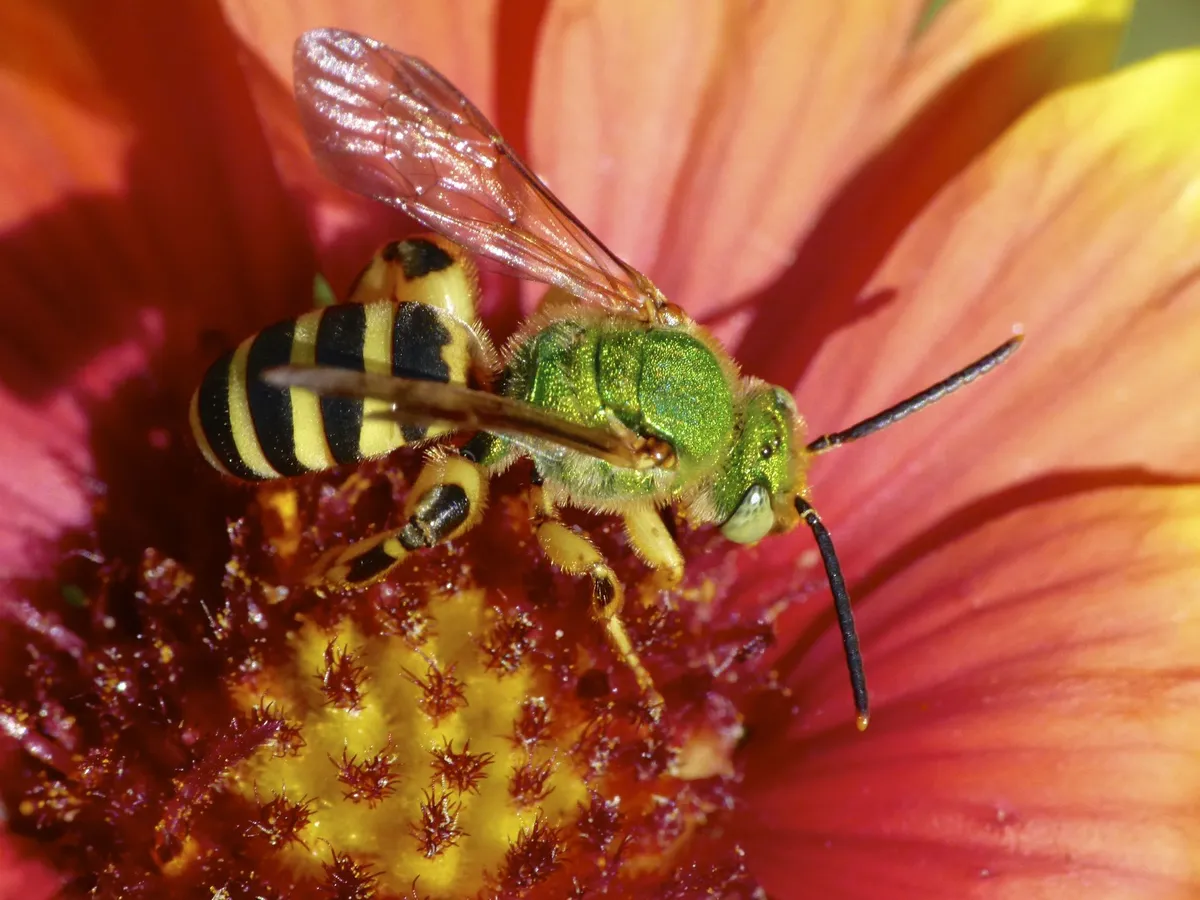
Identification: Males: Hind femora robust, thickened, only about twice as long as the greatest width. Females: Abdomen metallic green. Dark wings, not clear.
Texas Striped Sweat Bee
Agapostemon texanus
Identification: Scutum of female shining and "double punctate" that is with punctures of two different sizes. Identification notes for males from John Ascher "Note green reflections on terga, dark scape, and large femur" Found here
Bicolored Striped Sweat Bee
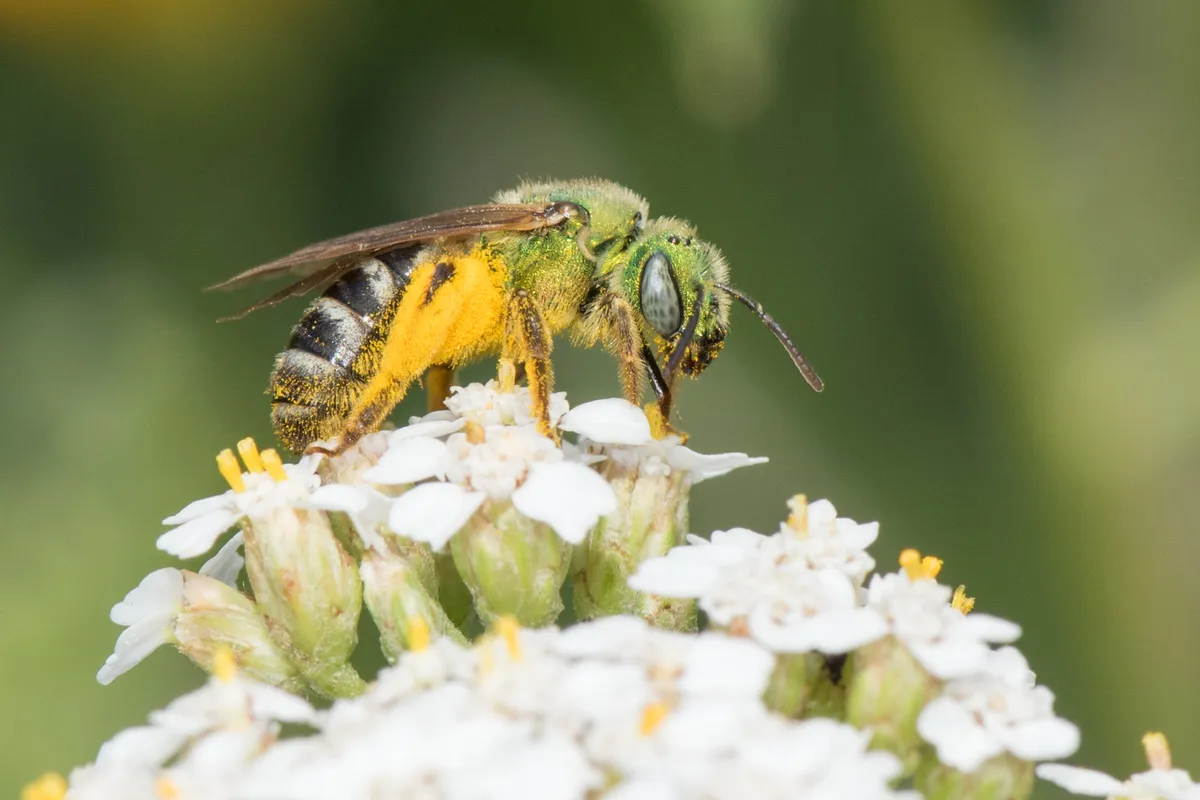
Agapostemon virescens
Identification: Males: Hind femora slender, fully three times as long as the greatest width. Females: Abdomen black, with pale basal fasciae.
Augochloropsis metallica
Augochloropsis metallica
Identification: Green metallic tegulae; the posterior inner margins project inward. Typical halictine mouthparts: long prementum and short tongue and labial palpi
Augochloropsis viridula
Augochloropsis viridula
May prove to be specifically distinct. Treated her as a putative subspecies for purposes of sorting images, pending improved documentation of the status of this genus in North America.
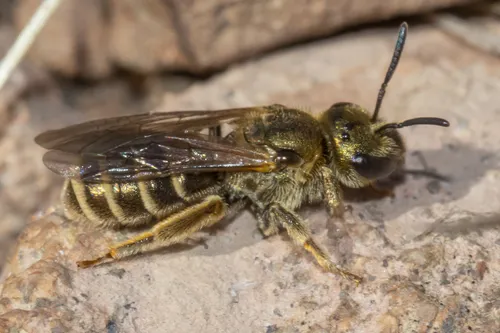
Halictus confusus
Halictus confusus
Identification: The integument (body, NOT HAIR) is greenish.
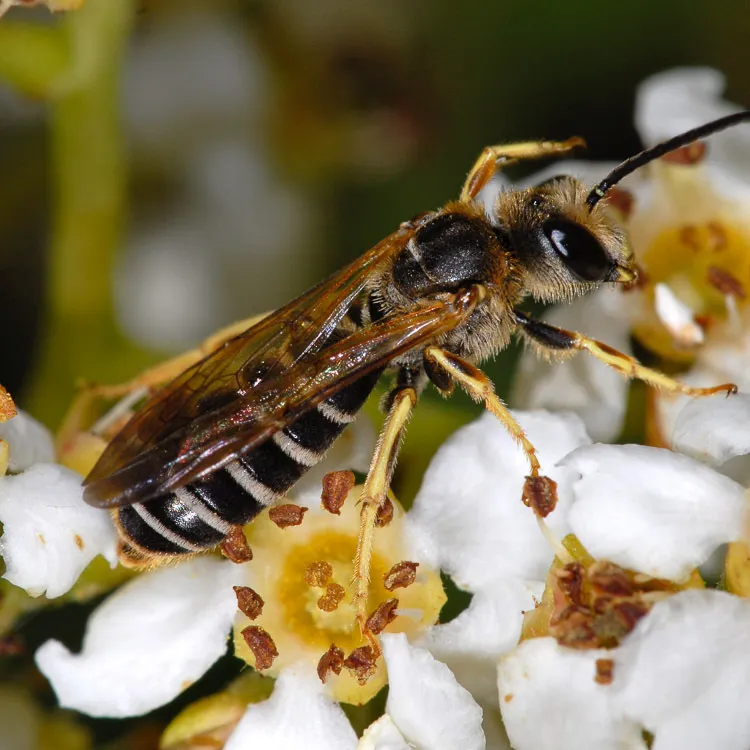
Halictus farinosus
Halictus farinosus
Identification: Key to western Halictus sp. found in
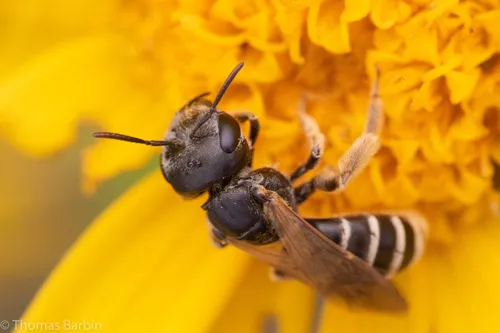
Ligated Furrow Bee
Halictus ligatus
Identification: Well-defined basal hair bands, relatively broad apical hair bands; apparently robust head of female with a genal tooth; male antennae pale below; tegula pale. Best separated from H. poeyi based on range OR DNA sequence data in areas o
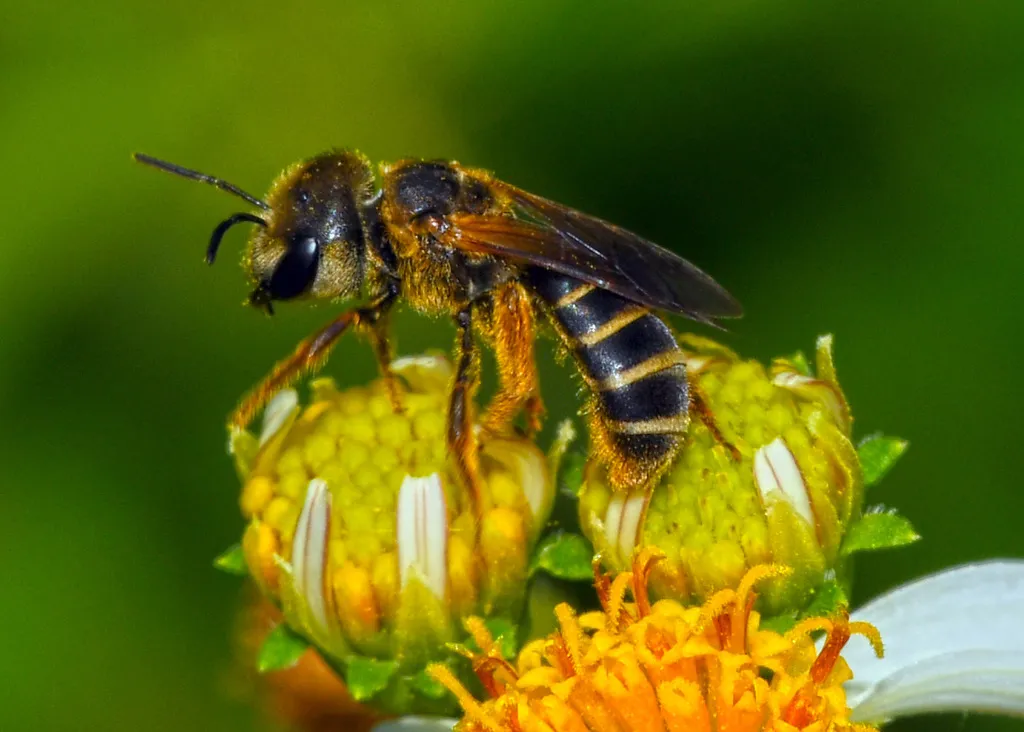
Poey's Furrow Bee
Halictus poeyi
Identification: Well-defined basal hair bands, relatively broad apical hair bands; apparently robust head of female with a genal tooth; male antennae pale below; tegula pale. Best separated from H. ligatus based on range OR DNA sequence data in areas
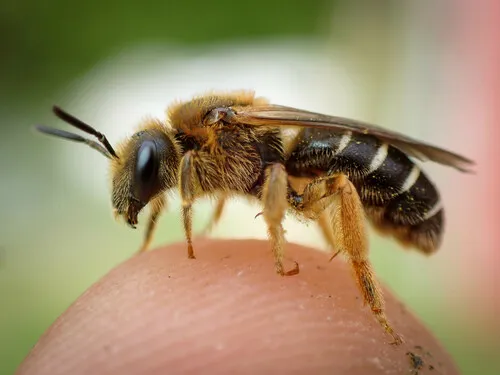
Halictus rubicundus
Halictus rubicundus
This small bee is a member of the family Halictidae known as sweat bees. It is small (about 1 cm) dark brown, with fine yellowy white bands across the apices of the abdominal segments, and a yellow fuzz of hairs on the tip of the abdomen. The legs ar
Halictus tectus
Halictus tectus
First US record in the early 2000's(2005?), introduced from Europe. Found in eastern US, usually in disturbed, even urban, areas.
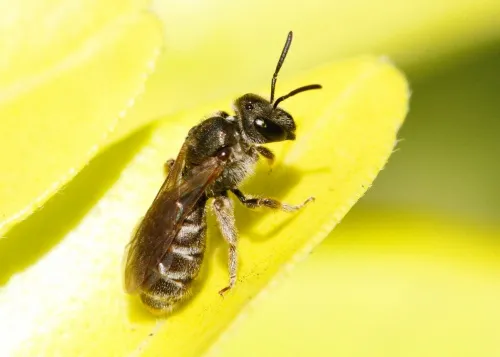
Bronze Furrow Bee
Halictus tumulorum
A rather small, metallic bee, with white tomentose hair bands on the gaster. In females the pale hair band on tergite 3 narrows in the middle. Most solitary bees and wasps are difficult to identify, and can rarely be identified from photos taken in t
Halictus virgatellus
Halictus virgatellus
Halictus virgatellus (Halictus virgatellus) is a species in the family Halictidae, commonly known as sweat, furrow, nomiine, and short-faced bees, belonging to the order Hymenoptera (Ants, Bees, Wasps and Sawflies). It is classified within the subfam
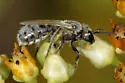
Lasioglossum actinosum
Lasioglossum actinosum
Identification: "note the white hairs covering most of the metasoma, pale wings, etc. This species resembles semicaeruleum but is greener (rather than blue)" - Comment from John Ascher here .
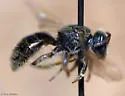
Lasioglossum admirandum
Lasioglossum admirandum
Uncommon "Most L. admirandum have the head and mesosoma primarily green but some individuals have stronger blue reflections."
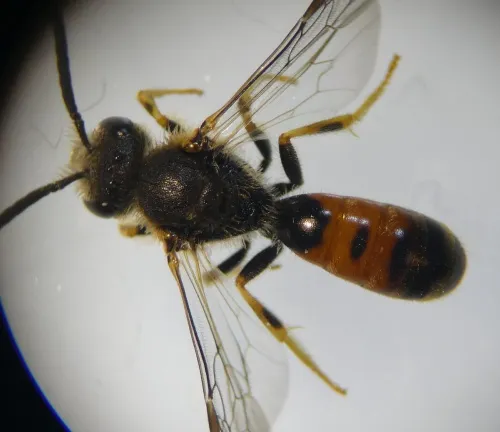
Bloomed Furrow Bee
Lasioglossum albipes
See description here https://www.flickr.com/photos/63075200@N07/albums/72157639213366755/ Closely resembling Lasioglossum calceatum in both sexes, but in L. albipes the labrum is yellow whereas in L. calceatum it is dark. Most solitary bees and wasps
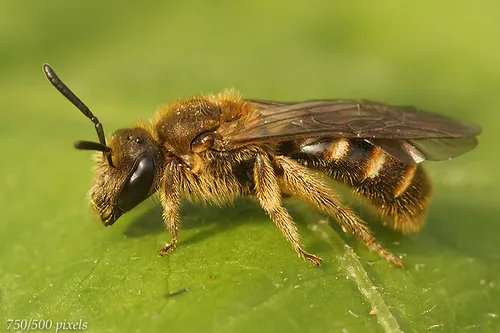
Common Furrow-bee
Lasioglossum calceatum
Forewing: 5.5-7mm (sexes similar). Males can have either an all-black abdomen or be extensively red-marked. Both sexes have pale hairs along the apical edges of the abdominal tergites. There are several similar species and expert help should be sough
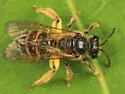
Lasioglossum coriaceum
Lasioglossum coriaceum
Identification: "broad gena and black distitarsi" (John Ascher's comment here )
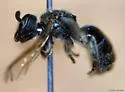
Nightmarish Metallic-Sweat Bee
Lasioglossum ephialtum
Identification: Part of the L. viridatum species-group, which are difficult to separate. Common
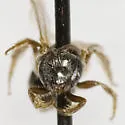
Lasioglossum imitatum
Lasioglossum imitatum
Identification: Females can be recognized by their small size and the distinct course hair on T3 and T4.
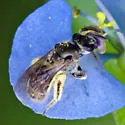
Lasioglossum lepidii
Lasioglossum lepidii
Identification: Note modified tegula - Comment from Dr. Ascher
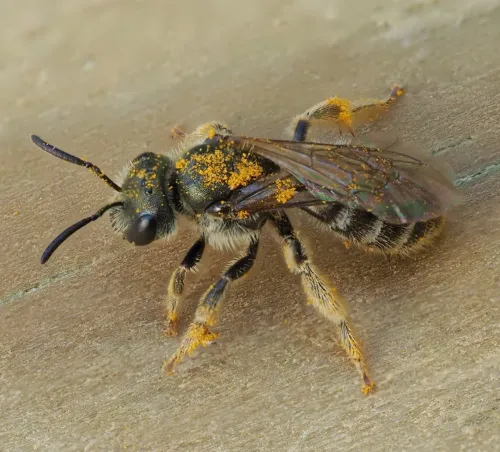
White-footed Green Furrow-bee
Lasioglossum leucopus
One of four small, metallic Lasioglossum species. Males are easily distinguished from the others by the pale yellow mid and hind tarsi. Females resemble L. morio but are stockier with a shinier thorax and propodeum, and lack minute transverse ridges
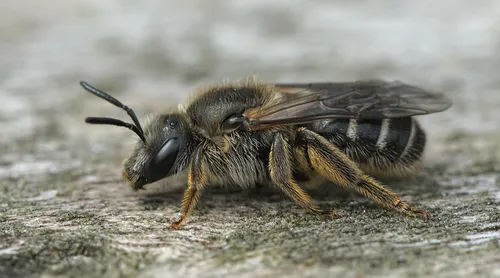
White-zoned Furrow Bee
Lasioglossum leucozonium
A rather large, robustly-built Lasioglossum with conspicuous white tomentose patches on the sides of tergites 2 to 4 (which form complete bands when the abdomen is distended). The hind tibiae have a dark pollen brush. Females closely resemble those o
Lasioglossum macoupinense
Lasioglossum macoupinense
Lasioglossum macoupinense (Lasioglossum macoupinense) is a species in the family Halictidae, commonly known as sweat, furrow, nomiine, and short-faced bees, belonging to the order Hymenoptera (Ants, Bees, Wasps and Sawflies). It is classified within
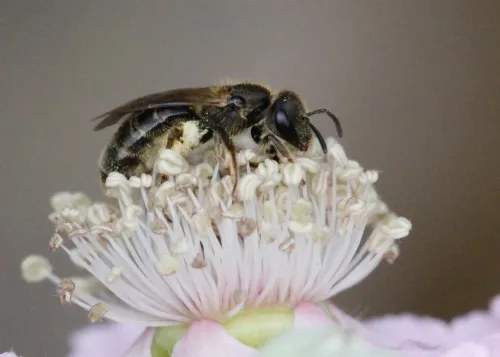
Sharp-collared Furrow Bee
Lasioglossum malachurum
This is one of the larger Lasioglossum species in Britain, and the distinctive right-angled front corners of the pronotum are easily seen under the microscope. Most solitary bees and wasps are difficult to identify, and can rarely be identified from
Lasioglossum marinum
Lasioglossum marinum
Identification: Tegula enlarged, distinctly punctate with strong posterior angle, and metasomal terga with metallic reflections. Uncommon
Brassy Mining Bee
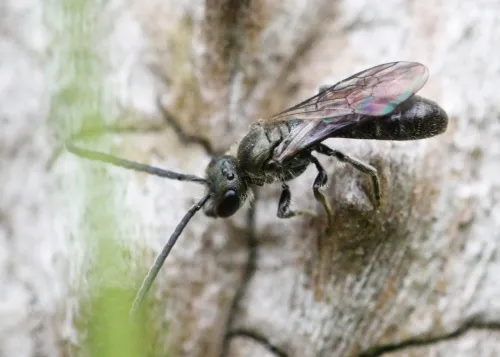
Lasioglossum morio
This is the commonest of the four Lasioglossum species with metallic colouration. Both sexes are distinguished from other species by the densely punctate, dull scutum which has clear microsculpture between the punctures. Some females of Lasioglossum
Lasioglossum nymphale
Lasioglossum nymphale
Lasioglossum nymphale (Lasioglossum nymphale) is a species in the family Halictidae, commonly known as sweat, furrow, nomiine, and short-faced bees, belonging to the order Hymenoptera (Ants, Bees, Wasps and Sawflies). It is classified within the subf
Lasioglossum oceanicum
Lasioglossum oceanicum
Identification: "rather shiny scutum, relatively short flagellomeres" JSA ( ref. ) Common
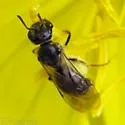
Lasioglossum oenotherae
Lasioglossum oenotherae
Types: Holotype as Halictus (Evylaeus) oenotherae female by Stevens. Type #12033 and #23848. Locality: Blue Rapids, Kansas, June 20, 1919. In the U. S. National Museum of Natural History, Smithsonian. Holotype as Halictus ralenci female by Crawford.
Lasioglossum ovaliceps
Lasioglossum ovaliceps
Identification: Bright red metasoma and long face are distinct among the Lasioglossum (Hemihalictus) sp.
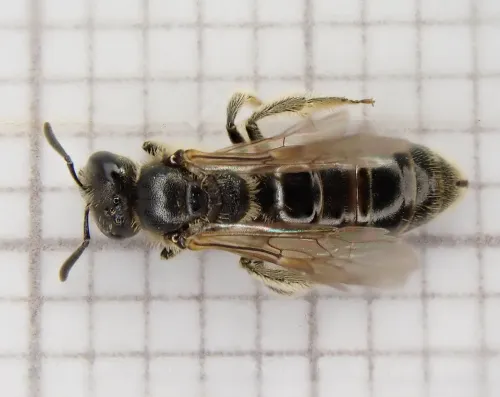
Lasioglossum pauxillum
Lasioglossum pauxillum
A small dark bee. Males have long antennae and short hairs beneath sternite 2 but are difficult to distinguish from related species. In females the inner spur of the hind tibiae is distinctive with 4 broad projections. Most solitary bees and wasps ar
Lasioglossum pilosum
Lasioglossum pilosum
Identification: Distinctive features of pilosum sensu lato include an elongate head, densely punctate scutum, and dense tan hairs covering most of the terga. Lasioglossum pilosum sensu stricto differs only subtly from L. leucocomum. The former averag
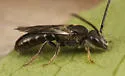
Quebec Sweat Bee
Lasioglossum quebecense
Identification: "this common Lasioglossum species has weak apical and basal hair bands" JSA ( ref. ) "apical hair bands atypical of Lasioglossum but found in that species" JSA ( ref. ) "elongate body and dull scutum" (in males) JSA ( ref. ) "some mal
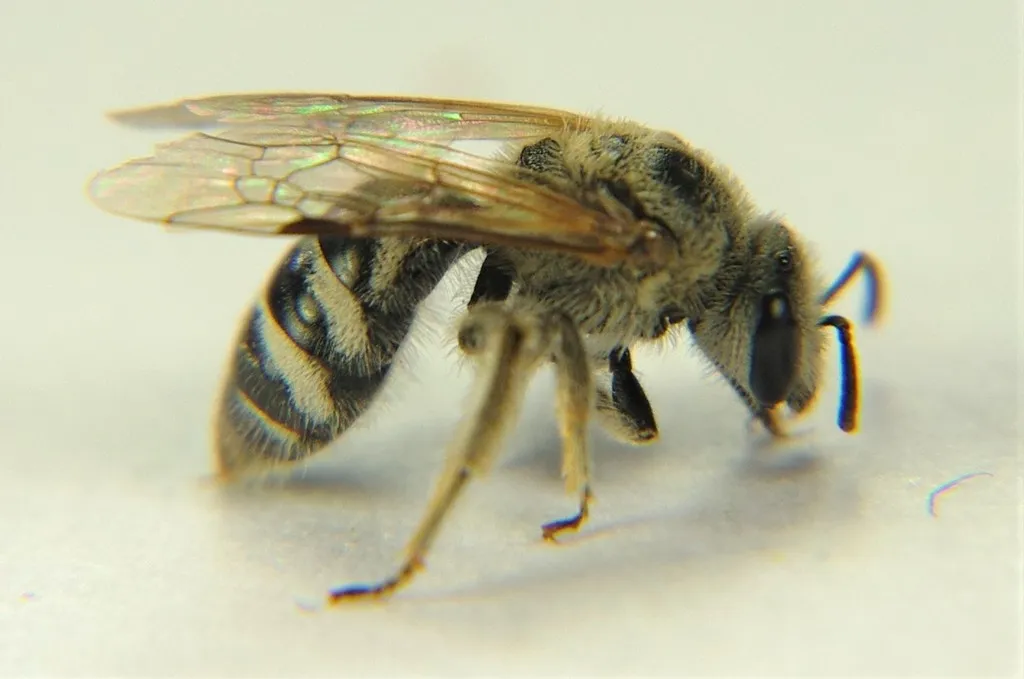
Lasioglossum sisymbrii
Lasioglossum sisymbrii
Identification: T1 has a complete basal hair band which has sometimes been worn off. Most common and widespread Lasioglossum sp. in the west.
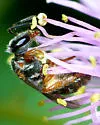
Lasioglossum tarponense
Lasioglossum tarponense
Identification: Both sexes can be ID'd by the combination of: Legs and Clypeus yellow/orange and mesepisternum punctate.
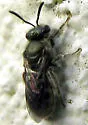
Lasioglossum tegulare
Lasioglossum tegulare
Identification: "modified black tegula and densely punctate scutum" -- John S. Ascher Visible in this photo:
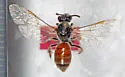
Lasioglossum texanum
Lasioglossum texanum
Identification: The ocelli are so large that the gap between the eye and the lateral ocellus is less than half of one ocellus. The compound eye is also much larger than other Lasioglossum species in the East Flies at dusk or at night by moon light. F
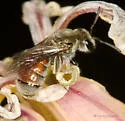
Lasioglossum tuolumnense
Lasioglossum tuolumnense
This species is part of the L. petrellum species group.
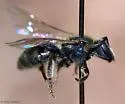
Lasioglossum versatum
Lasioglossum versatum
This is L. rohweri as used sensu Mitchell, 1960, which is the true L. versatum. L. versatum as understood by previous workers is now known as L. callidum (but there is likely also a similar undescribed species); see Gibbs (2010). Common
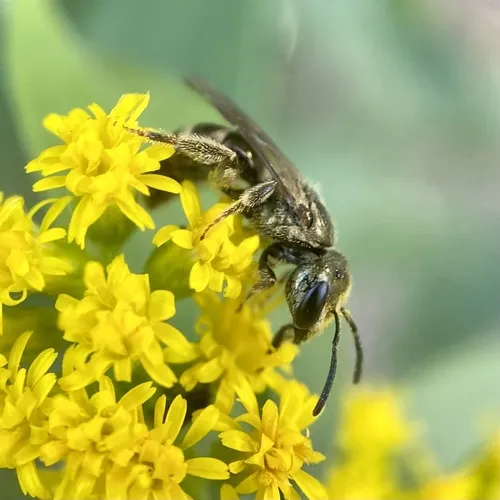
Lasioglossum zephyrus
Lasioglossum zephyrus
It can be primitively eusocial or solitary. Video of nest aggregation Nest behaviors can determine individuals. Nudging of other bees in the nest is done most often by the queen. If the queen nudges a bee, it normally turns to face the queen then fol
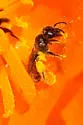
Micralictoides ruficaudus
Micralictoides ruficaudus
Identification: Red-tailed. Low position of antennal bases
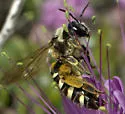
Alkali Bee
Nomia melanderi
Nest is irregular, with 15-20 cells [ diagram ]; construction takes ~30 days. Used commercially as a pollinator of alfalfa.
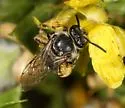
Nomia tetrazonata
Nomia tetrazonata
Nests in Soil. Neither turret nor nest chimney is present. Maximum depth of nest in soil is up to 50 cm
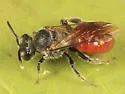
Sphecodes confertus
Sphecodes confertus
Identification: "sickle-shaped, elongate, simple mandibles, median groove (hairs within visible in image) of broad clypeus, broad head, and densely punctate scutum". Comment by John Ascher
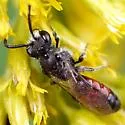
Sphecodes davisii
Sphecodes davisii
Identification: One of the larger species, with dense white hairs on the clypeus , a red metasoma with black tip (vs. black in males of many other species), and a rugose scutum anteriorly (comment by John Ascher).
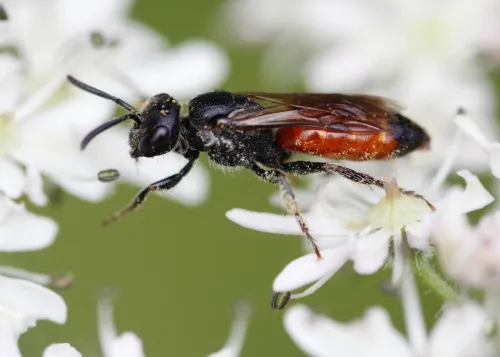
Bare-saddled Blood Bee
Sphecodes ephippius
Similar to several other Sphecodes species and care is needed with the identification. Most solitary bees and wasps are difficult to identify, and can rarely be identified from photos taken in the field. All red-rated records should include a photo o
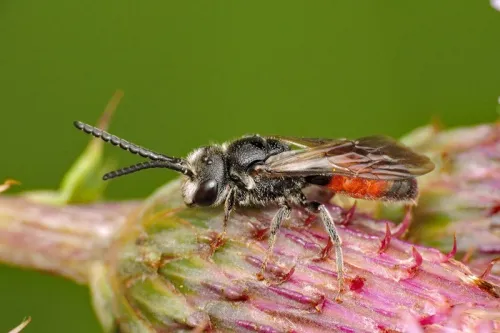
Dark-winged Blood Bee
Sphecodes gibbus
Body length about 10 mm. Of the 3 large species of Sphecodes, this one lacks the box-head of S. monilicornis: darker red and smokier wings than S. reticulatus. Expert confirmation of id is usually required. Most solitary bees and wasps are difficult
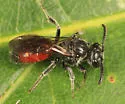
Sphecodes mandibularis
Sphecodes mandibularis
Gibbs et. al., 2017 says Mitchell 1960 uses the name Sphecodes stygius for this species.
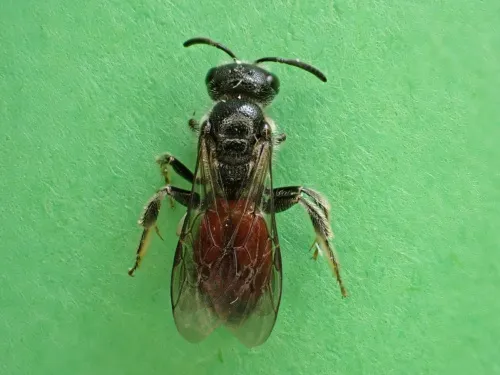
Box-headed Blood-bee
Sphecodes monilicornis
One of three medium-sized to large Sphecodes (Blood-bees), in which females have punctures (rather than just rugosity) behind the ocelli. Males are one of a number of species with somewhat compressed and shiny antennal flagellar segments and are best

Sickle-jawed Blood Bee
Sphecodes puncticeps
A stout, small Sphecodes, with a median groove at the front of the thorax. It is very similar to other Sphecodes species and care is needed with identification. Most solitary bees and wasps are difficult to identify, and can rarely be identified from
Sphecodes ranunculi
Sphecodes ranunculi
Identification: Short first flagellar segment, long second segment. Slender body form. ( Comment by John Ascher)
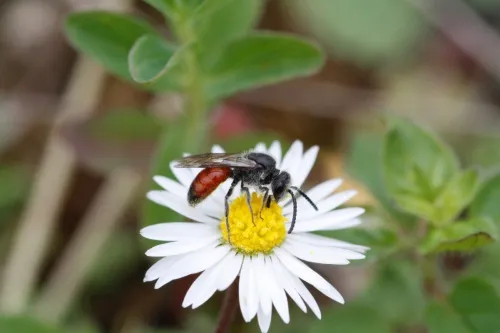
Red-tailed Blood Bee
Sphecodes rubicundus
A strikingly large Sphecodes. Male has knobbly antennae, (13 segments). Antennae not obviously compressed, and with fairly narrow zones of pubescence. It has a greater area of red in the body than males of other large Sphecodes species. Care is neede
Xeralictus biscuspidariae
Xeralictus biscuspidariae
Males are fooled into visiting flowers of Mohavea confertiflora , which offer no nectar reward but mimic flowers of the females pollen hosts in the genus Mentzelia (e.g. M. involucrata ). The Mohavea flowers even have a dark spot at the center of the
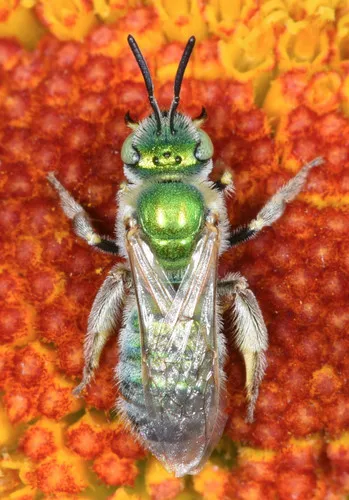
Agapostemon angelicus
Agapostemon angelicus
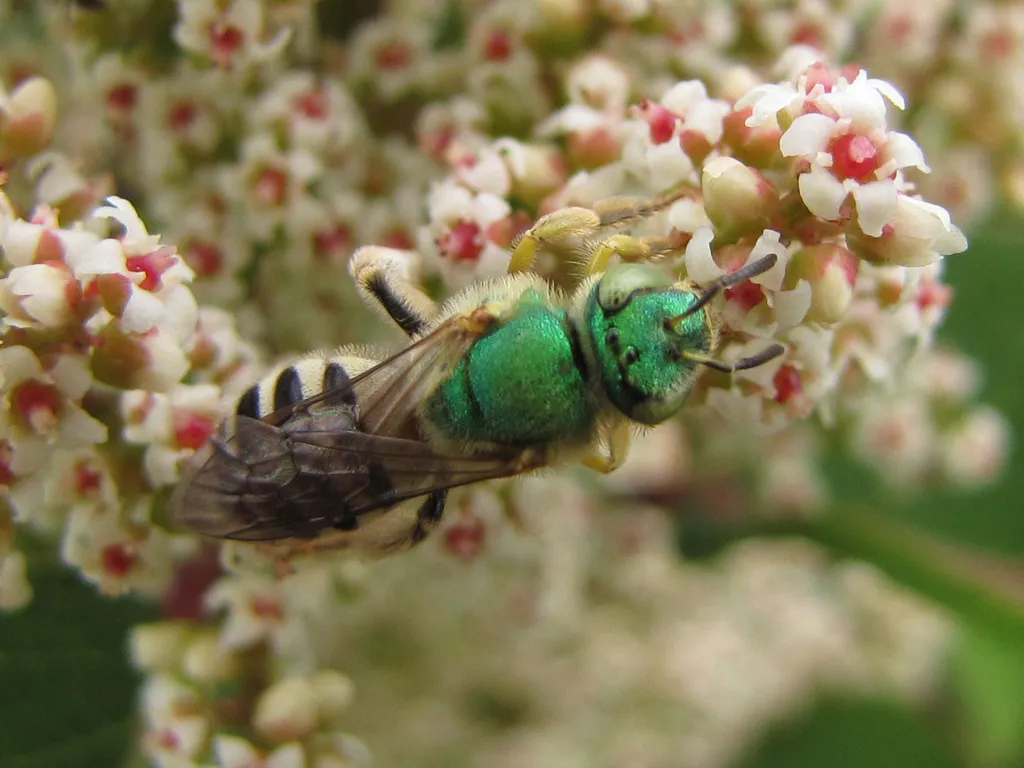
Honey-tailed Striped Sweat bee
Agapostemon melliventris
Agapostemon nasutus 0
Agapostemon nasutus
Agapostemon obliquus
Agapostemon obliquus
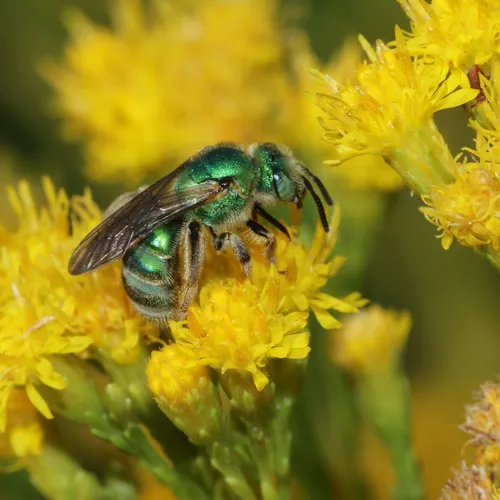
Fine striped sweat bee
Agapostemon subtilior
Agapostemon tyleri
Agapostemon tyleri
Bicolored Agapostemon Sweat Bee
Agapostemon viriscens
Augochlora aurifera
Augochlora aurifera
Aztec Sweat Bee
Augochlora azteca
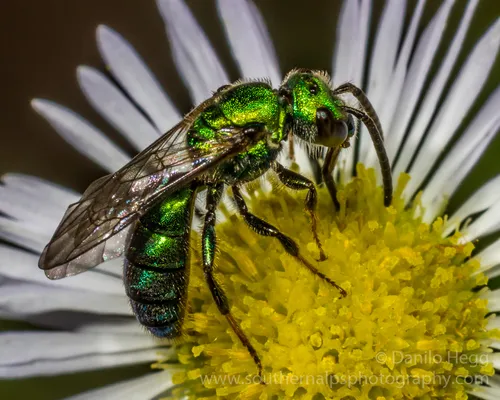
Augochlora Sweat Bee
Augochlora pura
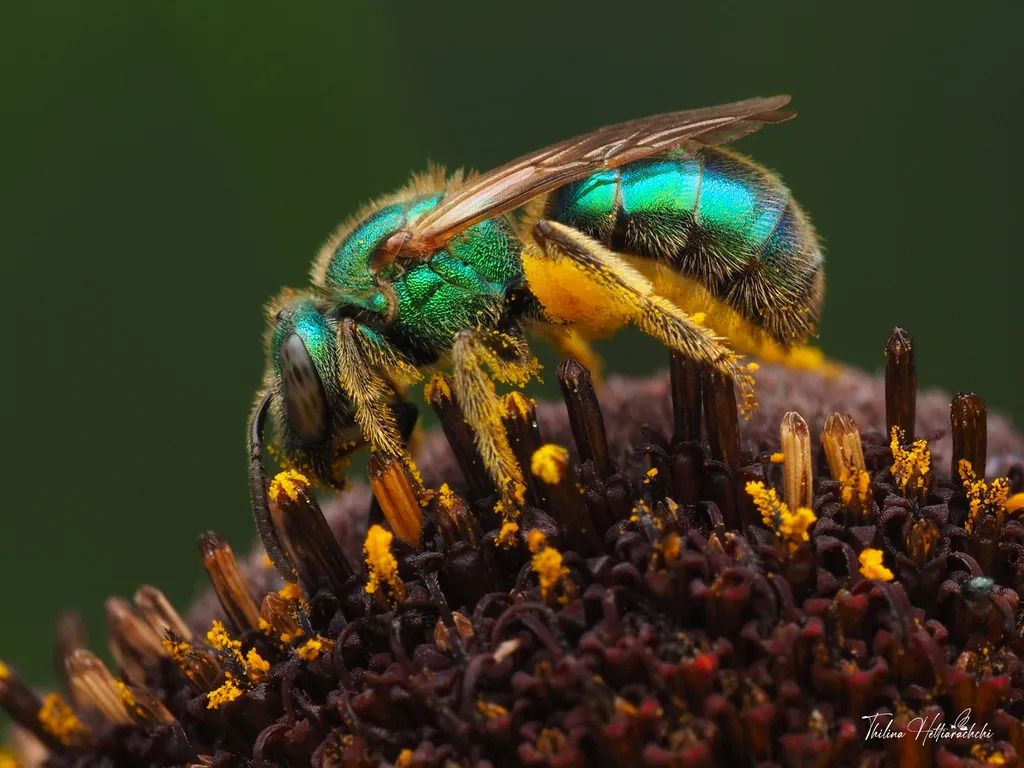
Golden Green Sweat Bee
Augochlorella aurata
Augochlorella neglectula
Augochlorella neglectula
Augochlorella nigrocyanea 0
Augochlorella nigrocyanea
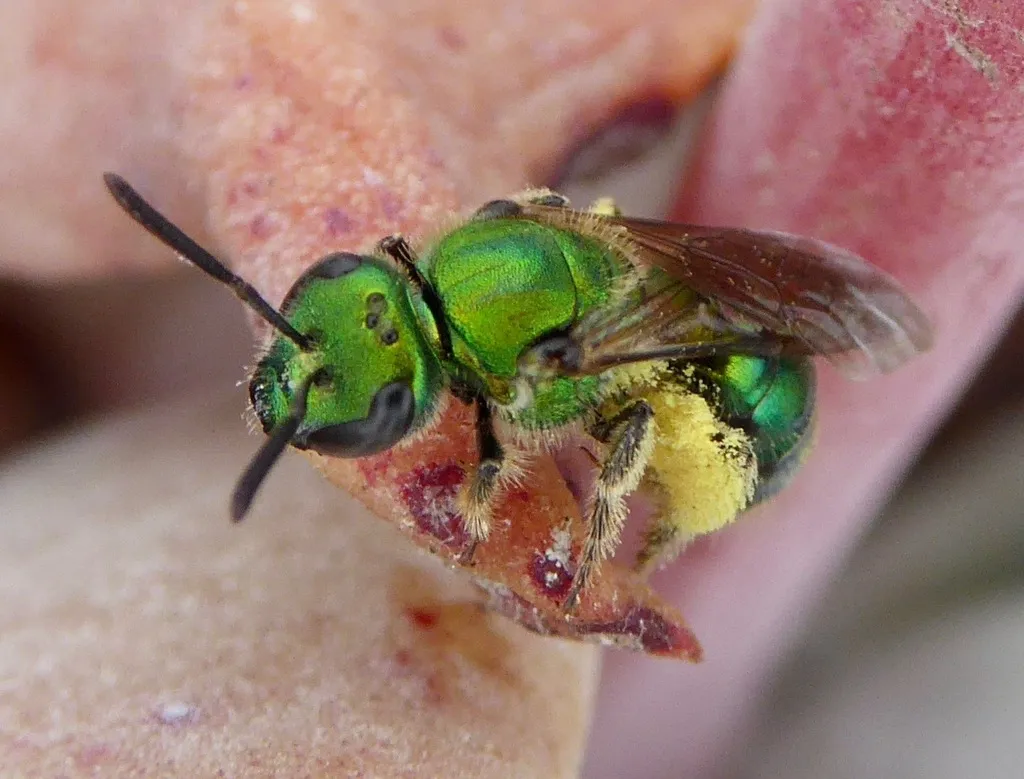
Augochlorella pomoniella
Augochlorella pomoniella
Augochloropsis anonyma
Augochloropsis anonyma
Augochloropsis sumptuosa
Augochloropsis sumptuosa
Conanthalictus bakeri
Conanthalictus bakeri
Conanthalictus macrops
Conanthalictus macrops
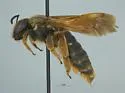
Dieunomia bolliana
Dieunomia bolliana
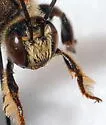
Dieunomia heteropoda
Dieunomia heteropoda
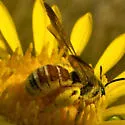
Dieunomia nevadensis
Dieunomia nevadensis
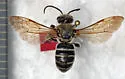
Dieunomia triangulifera
Dieunomia triangulifera
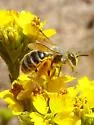
Dufourea australis
Dufourea australis
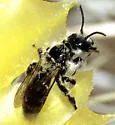
Dufourea echinocacti
Dufourea echinocacti
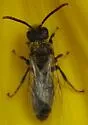
Dufourea marginata
Dufourea marginata
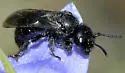
Dufourea maura
Dufourea maura
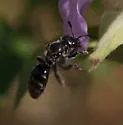
Dufourea monardae
Dufourea monardae
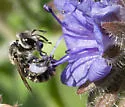
Dufourea mulleri
Dufourea mulleri
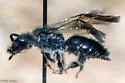
Dufourea novaeangliae
Dufourea novaeangliae
Dufourea oenotherae
Dufourea oenotherae
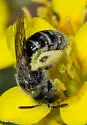
Dufourea pulchricornis
Dufourea pulchricornis
Dufourea versatilis
Dufourea versatilis
Halictus parallelus
Halictus parallelus
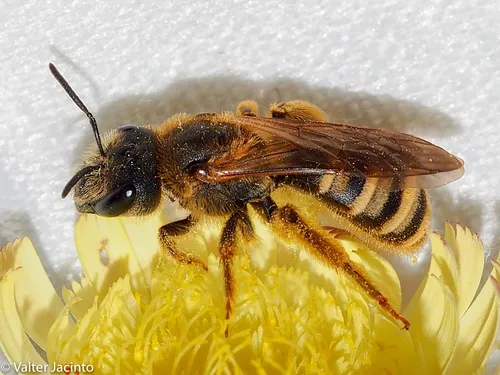
Great Banded Furrow Bee
Halictus scabiosae
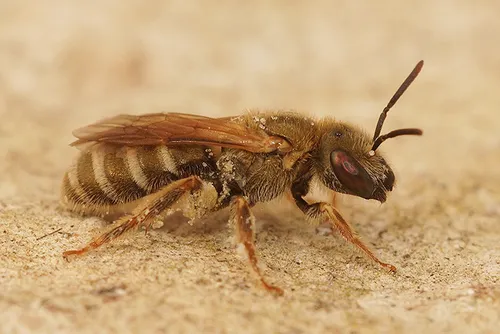
Golden Furrow Bee
Halictus subauratus
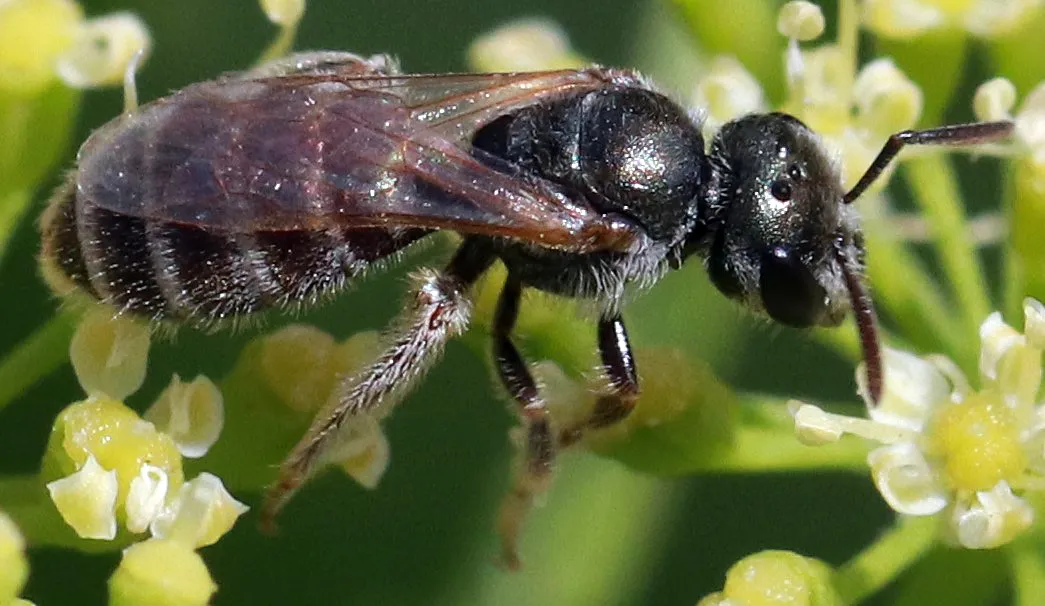
Halictus tripartitus
Halictus tripartitus
Lasioglossum albipenne
Lasioglossum albipenne
Lasioglossum anomalum
Lasioglossum anomalum
Lasioglossum atwoodi
Lasioglossum atwoodi
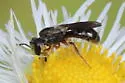
Lasioglossum birkmanni
Lasioglossum birkmanni
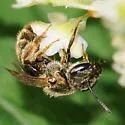
Lasioglossum bruneri
Lasioglossum bruneri
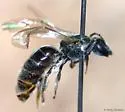
Lasioglossum cattellae
Lasioglossum cattellae