
True Bugs, Cicadas, Hoppers, Aphids and Allies
Order Hemiptera
The True Bugs, Cicadas, Hoppers, Aphids and Allies (Order Hemiptera) includes 7,349 species across 120 families and 1,727 genera in our directory.
About True Bugs, Cicadas, Hoppers, Aphids and Allies
Hemiptera (true bugs) includes over 80,000 described species across cicadas, aphids, leafhoppers, shield bugs, and bed bugs. Aphids alone cost global agriculture an estimated $2.5 billion annually in crop losses.
Economic Impact
The brown marmorated stink bug (Halyomorpha halys) caused $37 million in apple crop losses in a single year in the U.S. Mid-Atlantic region. Bed bug infestations in the U.S. increased by 500% between 2001-2010, costing the hotel industry hundreds of millions annually.
Ecological Role
Many Hemiptera are essential food sources for birds and predatory insects. Cicadas provide massive nutrient pulses during emergence events - a single Brood X emergence can involve trillions of individuals across 15 states.
Families in Hemiptera (120)
Species in Hemiptera (7,349)
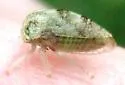
Cyrtolobus maculifrontis
Cyrtolobus maculifrontis
An incredibly variable species; perhaps the most variable in the genus. Certainly worthy of closer study.
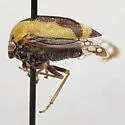
Cyrtolobus maxinei
Cyrtolobus maxinei
Identification: MALE: FEMALE: In life, the coloration of the species is described as green as opposed to the yellow seen in dried specimens. The male and female of this species have not been associated with absolute certainty beyond the fact that the
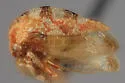
Cyrtolobus oblongatus
Cyrtolobus oblongatus
Cyrtolobus arizonae , C. frigidus , and C. oblongatus are three western species that are superficially nearly identical. It is unclear if there are any good ways to separate them from one another.
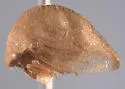
Cyrtolobus ovatus
Cyrtolobus ovatus
Likely two different entities under this name, a northern and southern, according to Mark Rothschild
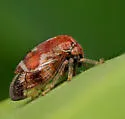
Cyrtolobus pallidifrontis
Cyrtolobus pallidifrontis
It was previously incorrectly noted that this is the only Cyrtolobus with a dark band across the middle of the wings. A few other species exhibit this character including the similar C. gramatanus and the dark band most often only applies to the fema
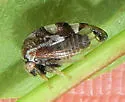
Cyrtolobus parvulus
Cyrtolobus parvulus
Identification: the way the markings on the front of the crest get broken up into mottled light and dark is characteristic ─A.K.G. Hamilton, 20.v.2010
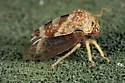
Cyrtolobus pictus
Cyrtolobus pictus
This species is very similar to Cyrtolobus maculifrontis and females may be difficult to differentiate between the two species.
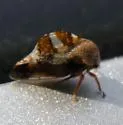
Cyrtolobus tuberosus
Cyrtolobus tuberosus
Identification: the largest and most humpbacked member of the genus; the way the crest is notched just before the tip, and its crossbanding are distinctive
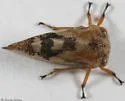
Cyrtolobus vanduzii
Cyrtolobus vanduzii
Currently understood to be a highly variable species, but that may eventually change
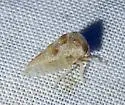
Cyrtolobus woodruffi
Cyrtolobus woodruffi
Identification: Crest is rather wedge-shaped, making it a morphologically unique member of the AZ fauna as currently defined. Sexually dimorphic, as all other members of the genus. Female holotype : , Male paratype : Individual variation of males Ind
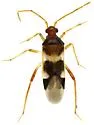
Cyrtopeltocoris rubripes
Cyrtopeltocoris rubripes
Identification: Edges of white markings on corium somewhat blurry, not distinct. "Head, pronotum, and scutellum reddish brown, contrasting with a darker brown cuneus and posterior half of corium." Type Locality: Argus Mountains, California, April 29.
Cyrtorhinus caricis 0
Cyrtorhinus caricis
Cyrtorhinus caricis 0 (Cyrtorhinus caricis) is a species in the family Miridae, commonly known as plant bugs, belonging to the order Hemiptera (True Bugs, Cicadas, Hoppers, Aphids and Allies). It is classified within the subfamily Orthotylinae, tribe
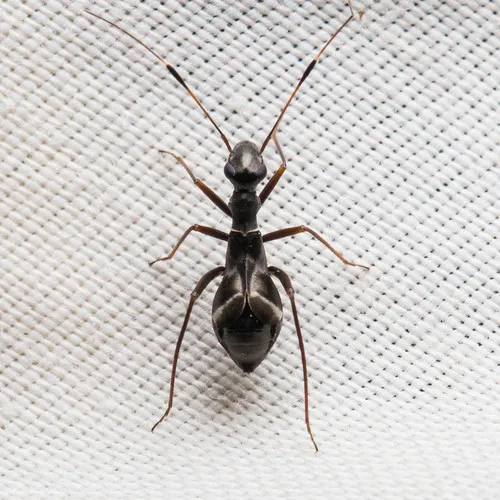
Dacerla mediospinosa
Dacerla mediospinosa
Identification: Distinctive Characters: 1) Hind-margin of pronotum abruptly upturned as a thin flange, which is elongated in its median portion and raised into a spine-like projection (but is hollow from behind). 2) Hemelytra (= fore-wings) short; ta
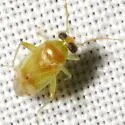
Dagbertus fasciatus
Dagbertus fasciatus
Identification: A2 uniformly pale, scutellum lacking red or fuscous markings, if weakly marked, inner margin of clavus infuscated or clouded with brown. Paraclypeus with a bright red, transverse band apically. Pronotum with a dark, transverse band po
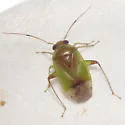
Dagbertus olivaceus
Dagbertus olivaceus
Identification: apically black A2; entirely or apically red or fuscous scutellum, and the unmarked clavus. Paraclypeus unmarked. Labium straw colored, segment IV dark brown or black apically. Scutellum mostly red or at least apical third red, speckle
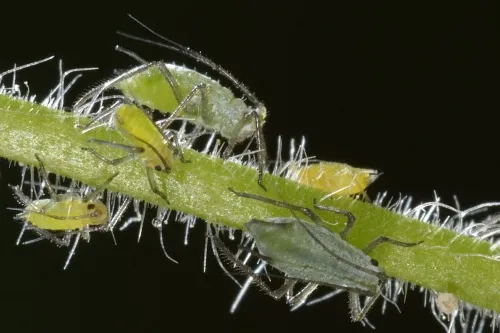
Damson-hop aphid
Phorodon humuli
Phorodon humuli apterae are small to medium sized, whitish to pale yellowish green and relatively shiny. The abdomen is marked with three dark green longitudinal stripes. The damson-hop Aphid host alternates from blackthorn or plum species (Prunaceae
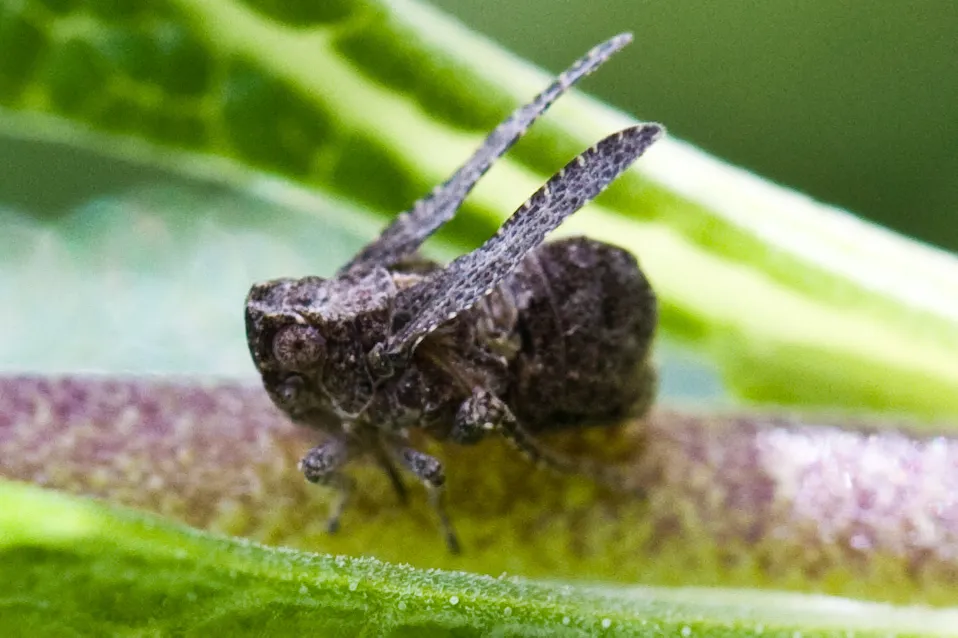
Danepteryx barbarae
Danepteryx barbarae
Identification: slightly wider between the eyes and longer than other species of this genus that have strap-shaped wings ( Andy Hamilton )
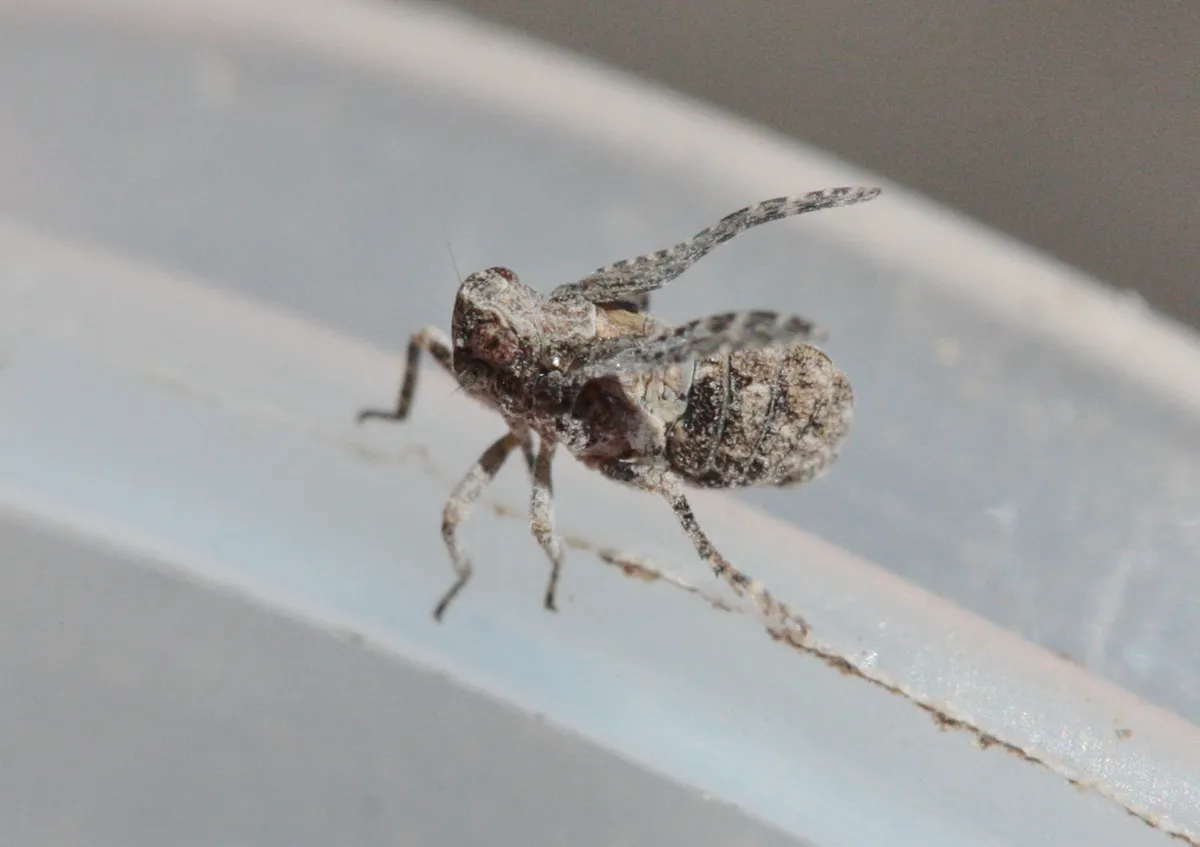
Danepteryx robusta
Danepteryx robusta
Identification: "The palest species in the genus." [ comment by Andy Hamilton]
Darmistus crassicornis
Darmistus crassicornis
Identification: Antennal segment II longer than IV; antennal segment I thick, heavily setose
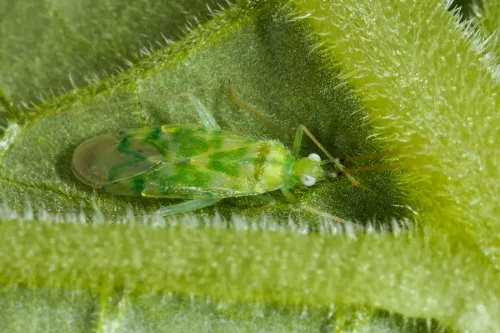
Delicate Apple Capsid
Malacocoris chlorizans
Length 3 to 4 mm. The rather forward set eyes and green mottled forewings are distinctive. This species can be identified with care but there are similar species that it could be confused with. This small bug may be found on a range of deciduous tree
Delochilocoris illuminatus
Delochilocoris illuminatus
Identification: orange legs and antennae see full list of characters here: Det. Iustin Cret, 2019
Delphacodes venosus
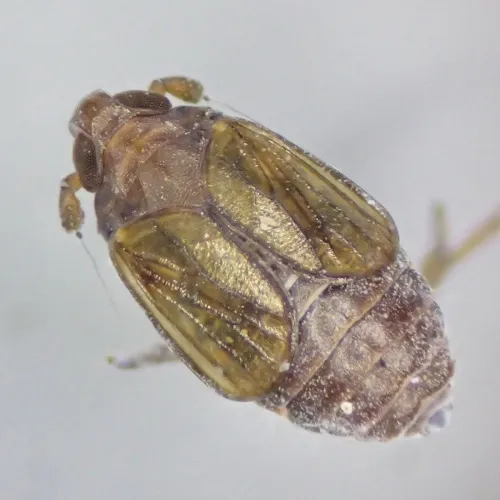
Delphacodes venosus
Length 1.4-2.5mm for brachypters, 3.0-3.2mm for macropters. A rather plain brown species. Keels of pronotum reach hind margin. First antennal segment as long as thickest part. Frons without pale bar. Abdomen blackish on top. Vertex, pronotum and scut
Delphax pulchellus
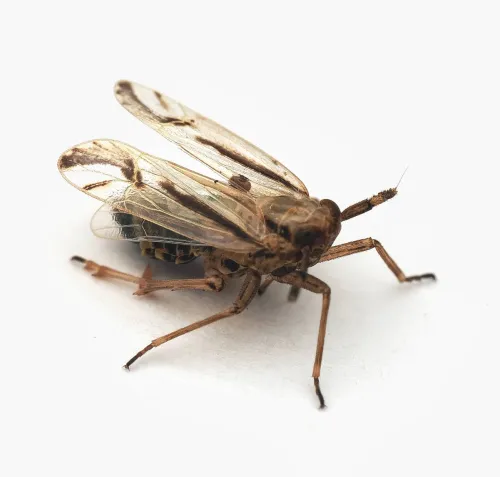
Delphax pulchellus
Males 5mm, females 8mm. Brachypterous and macropterous forms occur. Males are distinctively pigmented, females brown and could be confused with Asiraca clavicornis , but in this species the anterior tibiae are not flattened. The frons is mostly brown
Deltocephalus pulicaris
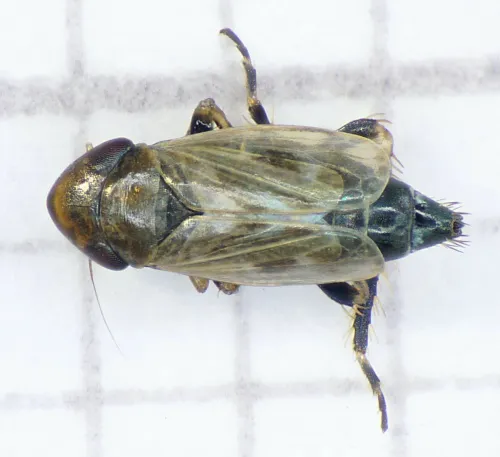
Deltocephalus pulicaris
Length 2.5 to 3.5 mm. A small dark leafhopper with brownish wings and vertex. The vertex usually has a number of small dark spots. Good photographs from a specimen required. Common (ref.: UK Auchenorrhyncha checklist 2021 ) https://www.britishbugs.or
Dendrocoris neomexicanus
Dendrocoris neomexicanus
Identification: similar to D. contaminatus (that is restricted to creosote bush)
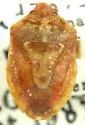
Dendrocoris parapini
Dendrocoris parapini
Identification: The elongate head with dark punctations along the margin is diagnostic. Det. J. E. Eger, 1984 two short series from the Davis Mtns in the TAMUIC and three county records from NM
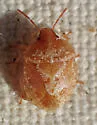
Dendrocoris pini
Dendrocoris pini
Identification: lack of dark punctations on the dorsum and pleura are diagnostic
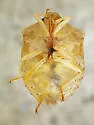
Dendrocoris reticulatus
Dendrocoris reticulatus
Identification: reticulate venation is unique in the genus easily collected in numbers by beating live oak in se. AZ and adjacent NM (D.B. Thomas, pers. comm. to =v=)
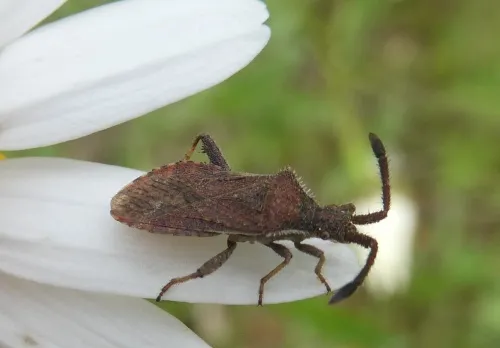
Denticulate Leatherbug
Coriomeris denticulatus
Length 7 to 9 mm. A reddish-brown squashbug which is distinctly bristly, particularly on the pronotum, legs and antennae. The lateral margins of the pronotum are covered in white spines, each ending in a dark tip. Associated with dry, open habitats o
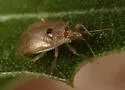
Deraeocoris cochise
Deraeocoris cochise
Identification: From the description: "Dorsum pale yellow, nearly glabrous; hemelytra trnaslucent; scutellum impunctate; legs uniformly pale yellow; claws deeply cleft near bases; genitalia distinctive for the species."
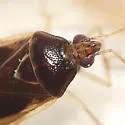
Deraeocoris davisi
Deraeocoris davisi
Identification: Scutellum impunctate; tibiae uniformly pale; metafemora pale with incomplete dark band; antennae pale yellow ; membrane with apical half pale; pronotum, clavus, and inner half of corium dark brown to black; and outer half of corium us
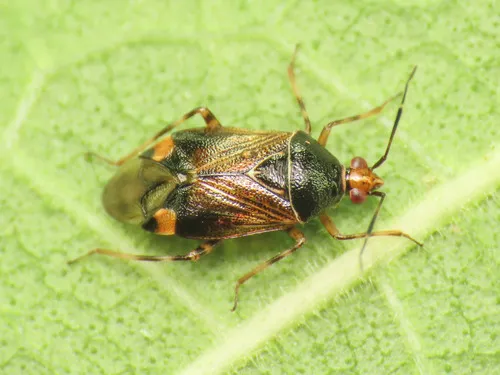
Deraeocoris flavilinea
Deraeocoris flavilinea
Length 7-8 mm. It is a large and fairly distinctive bug, but sexually dimorphic and thus rather variable. Males are much darker than the more orange females. The front and rear margins of the pronotum are narrowly pale. The cuneus is variable and the
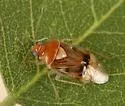
Deraeocoris fulvus
Deraeocoris fulvus
Identification: "Small in size, less than 5 mm; general coloration fulvous to piceous; scutellum convex, pale or yellowish; membrane clear; genital structures distinctive for the species."
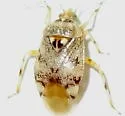
Deraeocoris gilensis
Deraeocoris gilensis
Identification: "Closely related to D. vanduzeei Knight, but setae on dorsum, antennae and legs denser and distinctly longer; punctures on dorsum sparser, except for cluster of punctures behind calli." The characters that lead to this species in Raza
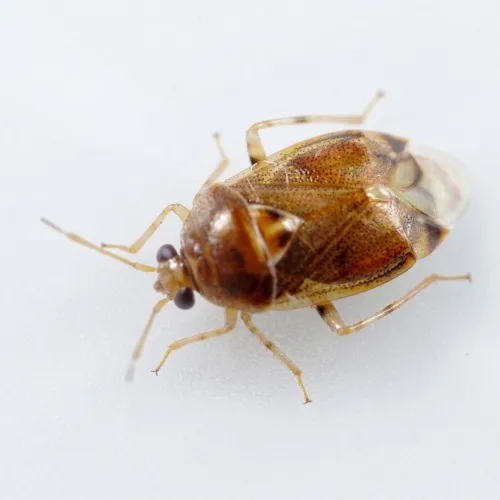
Deraeocoris lutescens
Deraeocoris lutescens
Length ~4 mm. A small bug, generally orange-brown with blackish markings and translucent forewings. Although sometimes rather variable, there are usually two dark bars on the scutellum, which is unpunctured. Found on a wide variety of plants but favo
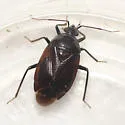
Deraeocoris nigritulus
Deraeocoris nigritulus
Identification: 1) Dorsum hairy; 2) Pronotum, hemelytra, and legs uniformly dark brown; 3) Paler subtranslucent areas of hemelytra stained with brownish; and 4) Apical half of hind tibiae usually with a pale ring.
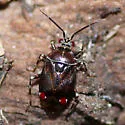
Deraeocoris poecilus
Deraeocoris poecilus
Identification: 1) Pronotum punctate; 2) Cuneus red; and 3) A2 ≥ pronotum.
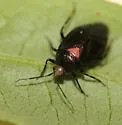
Deraeocoris sayi
Deraeocoris sayi
Identification: scutello rufo-testaceo Det. M. A. Quinn, 2014 Type Locality: Texas ( Belfarge )
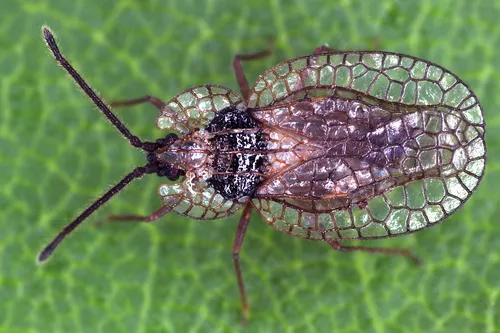
Derephysia foliacea
Derephysia foliacea
Length 3 to 3.5 mm. This lacebug is distinguished by the single row of large meshes along the edge of the forewing, which may be partly divided. The outer rim of the forewings is strongly raised. The colouring is pale brown, with the antennae, head,
Derophthalma emissitia
Derophthalma emissitia
Identification: Brownish-ochraceous; two irregular central fasciae to pronotum, inner margins of clavus, a transverse spot near centre of corium and a spot at inner angle of same, body beneath, and femora fuscous; cuneus castaneous; antennae, lateral
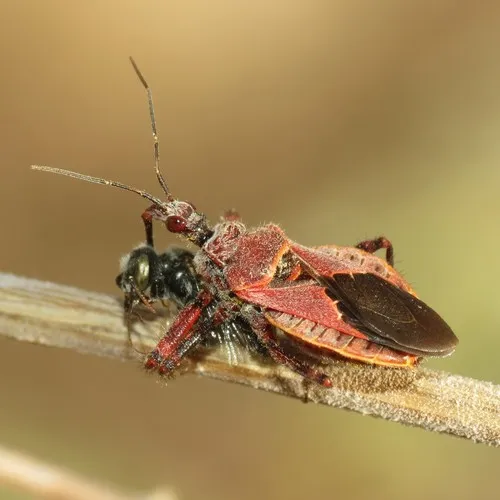
Desert Bee Assassin
Apiomerus cazieri
Identification: Most easily confused with A. spissipes , especially the red form, although the small size of A. cazieri will easily distinguish the two species. Also sympatric with A. californicus and A. montanus but easily separated by color and siz
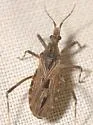
Diaditus tejanus
Diaditus tejanus
Identification: Presence of lamellate setae along the prosternal channel seems to be the best character to separate from T. pictipes . [Dan Swanson, pers. comm.] readily comes to lights. ( 5 )
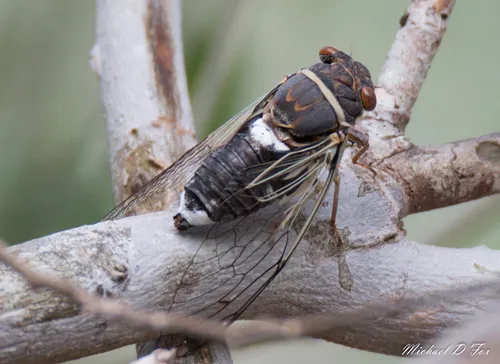
Diceroprocta cinctifera
Diceroprocta cinctifera
Identification: broad white band across tip of abdomen is distinctive Basic characters usu. include: Eyes: Described as tan to reddish (rust-colored) Body: Usually dark, often with some reddish-brown coloration visible Pronotal Collar: VARIABLE (may
Diceroprocta marevagans
Diceroprocta marevagans
Identification: Basic characters usu. include: Eyes: Described as tan to reddish (rust-colored) Body: Usually dark with reddish-brown coloration & pattern visible Pronotal Collar: VARIABLE (may be described as "bisected" with the anterior region bein
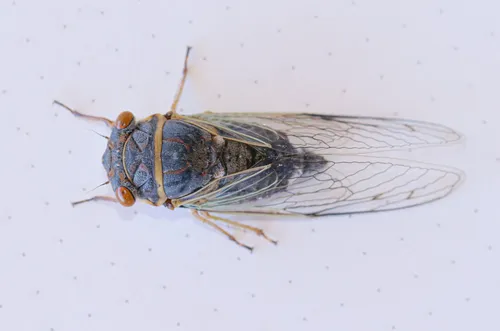
Diceroprocta semicincta
Diceroprocta semicincta
Identification: Basic characters include: Eyes: Described as tan to greyish (rarely if ever rust-colored) Body: VARIABLE - Usually dark, dorasl brown coloration may be visible Pronotal Collar: Hind margin of pronotum or collar with anterior portion b
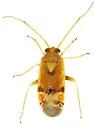
Dichrooscytus cuneatus
Dichrooscytus cuneatus
Identification: Basal half and apex of cuneus red. "[Base color of] hemelytra pale yellowish, apical margin of corium infuscated." The hemelytra are weakly to strongly speckled with red flecks (J.T. Botz, personal observation).
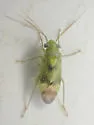
Dichrooscytus longirostris
Dichrooscytus longirostris
Identification: Overall green color, long rostrum (reaching beyond hind trochanters onto genital segment).
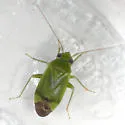
Dichrooscytus repletus
Dichrooscytus repletus
Identification: <4.00 mm, vertex width <A1, dorsum uniformly green with blackish hair
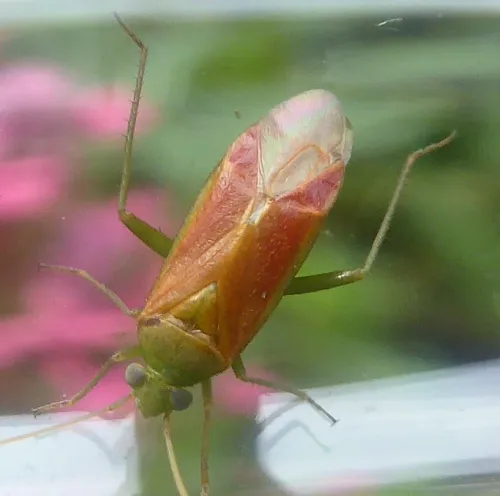
Dichrooscytus rufipennis
Dichrooscytus rufipennis
Dichrooscytus is comprised of 4 species in Europe. These are all quite similar. They are mainly green and have greenish red wings. Dichrooscytus rufipennis is the biggest of the four species, measuring some 6 mm. The second antennal segment is larger
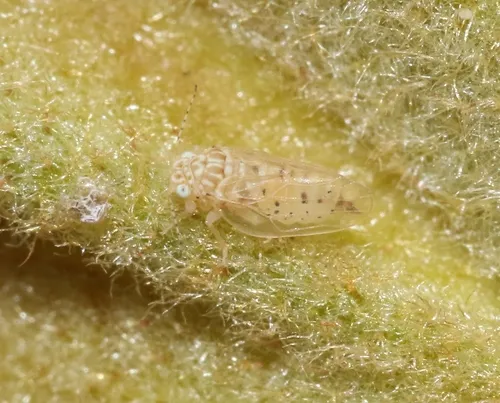
Diclidophlebia fremontiae
Diclidophlebia fremontiae
Identification: Pale greenish-yellow in color with white markings on head and thorax; last 8 antennae segments black-tipped. Genae short and rounded; wing venation unique among nearctic psyllids.
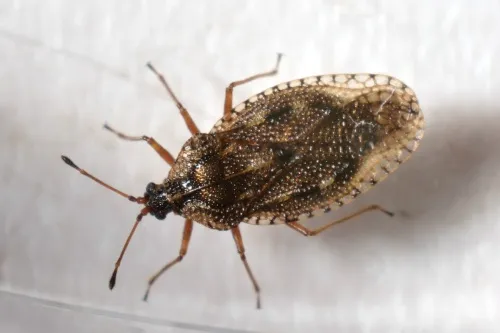
Dictyla convergens
Dictyla convergens
3.5 to 4.0 mm. The sides of the pronotum are noticeably down-turned, a feature it shares with species in the genus Physatocheila. However, unlike Physatocheila, only the central of the three keels reaches the head. There are several dark areas on the
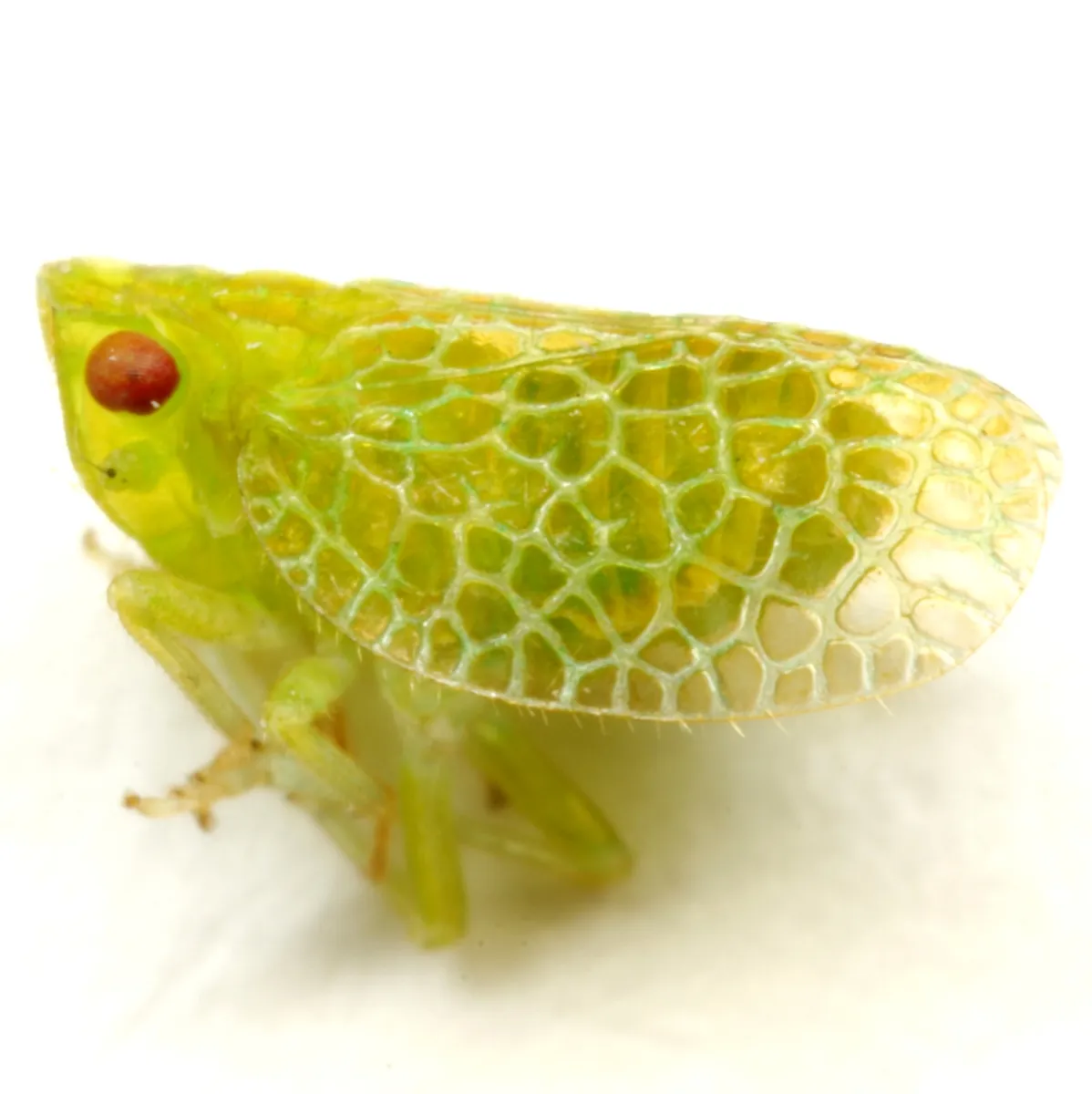
Dictyonissus griphus
Dictyonissus griphus
Identification: There are only two species in the genus. They resemble each other closely in color, size and general features. They are easily distinguished by the presence of pitch-black hairs on body and tegmina in nigropilosus , together with the
Dictyonissus nigropilosus
Dictyonissus nigropilosus
Identification: There are only two species in the genus. They resemble each other closely in color, size and general features. They are easily distinguished by the presence of pitch-black hairs on body and tegmina in nigropilosus , together with the
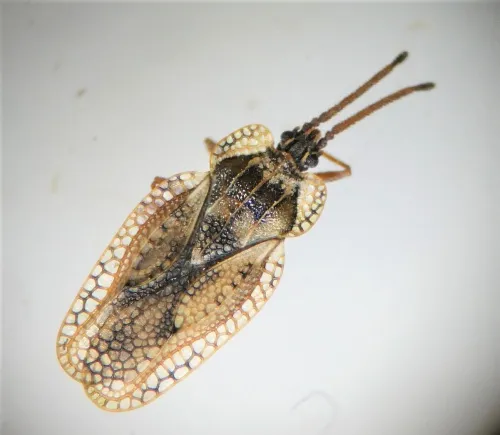
Dictyonota fuliginosa
Dictyonota fuliginosa
Length 4.5 to 5 mm. Dictyonota species and Kalama tricornis have two rows of meshes at the lateral edges of the forewings and uniformly wide antennae (the 3rd segment is as thick or thicker than the 4th). In D. fuliginosa , the antennae are mainly br
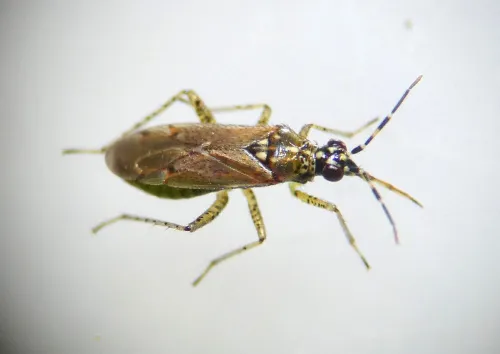
Dicyphus annulatus
Dicyphus annulatus
A small bug, found on restharrow. Head marked in black and white, and antennae black with white rings on basal and 2nd segment. Tibial spines arise from black spots. (ref.: B S Nau, unpublished key to Miridae, 2012) Several other Dicyphus species are
Dicyphus discrepans
Dicyphus discrepans
Identification: “Head black, area behind each eye yellow. (...) First antennal segment yellow, base and apex red, often all black; second segment longer than width of pronotum at base. Pronotum pale yellow, transverse groove behind calli often red. S
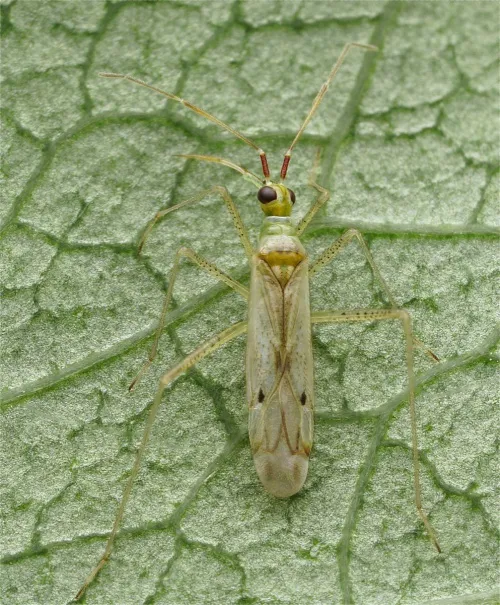
Dicyphus epilobii
Dicyphus epilobii
Length of adult macropters (long-winged forms) 4 to 5 mm. Legs and antennae long and slender; hind tibia c.3mm. and antennnae >3mm. Pale green with green collar between head and pronotum; vertex (front of head) often marked with red or brown. Often w
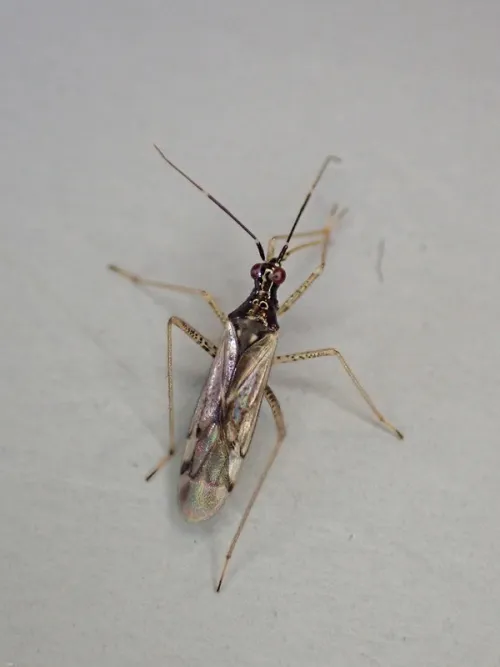
Dicyphus errans
Dicyphus errans
Length of adult macropters (long-winged forms) 4 to 5 mm. Legs and antennae long and slender; hind tibia c.3mm. and antennnae >3mm. Head, pronotum and basal and 2nd antennal segments often black. Teneral and pale forms have paler heads and antennae.
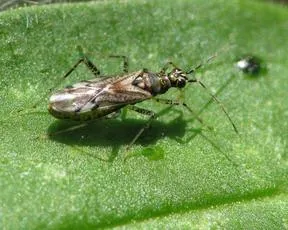
Dicyphus escalerae
Dicyphus escalerae
The rather coarse black pubescence arising from black spots on the dorsal surface helps to distinguish it from other UK Dicyphus species. Detailed examination of the specimen is needed to identify the species. You must state the host-plant. UK sighti
Dicyphus famelicus
Dicyphus famelicus
Identification: “Head light yellow often marked with red. First antennal segment pale green, bar near base and apex red; second segment pale green, apical one third red or black. Pronotum and scutellum light yellow. Hemelytra opaque white marked with
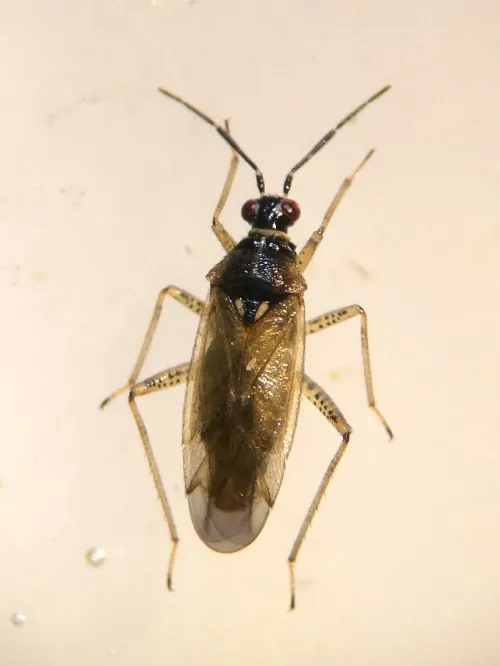
Dicyphus globulifer
Dicyphus globulifer
A small bug with short legs and antennae compared to other Dicyphus species; the 3rd antennal segment is much less than the head width across the eyes. The head and antennae are black, and there are dark marks on the pronotum. The rear of the pronotu
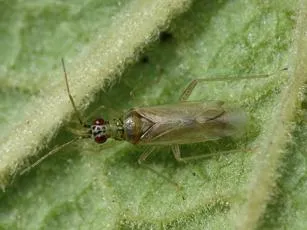
Dicyphus pallicornis
Dicyphus pallicornis
Length 3.5 to 4 mm; macropterous or brachypterous. Shorter legs and antennae than many other Dicyphus ; the 3rd antennal segment is much less than head width across the eyes. The 2nd antennal segment is usually pale, but may be darker at the base; th
Dicyphus pallidus
Dicyphus pallidus
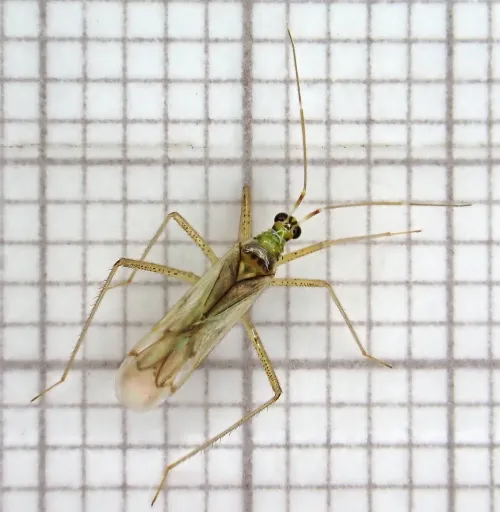
ant2 >2.1× longer than head width; body length 5.2–5.8mm in macropters, 4.3–5.1mm in brachypters; ant3 > head width across eyes; head, pronotum, ant1+2 largely pale ( D. errans tenerals are ‘dusky’); ant1 marked with red; pronotal callosities large –
Dicyphus stachydis
Dicyphus stachydis
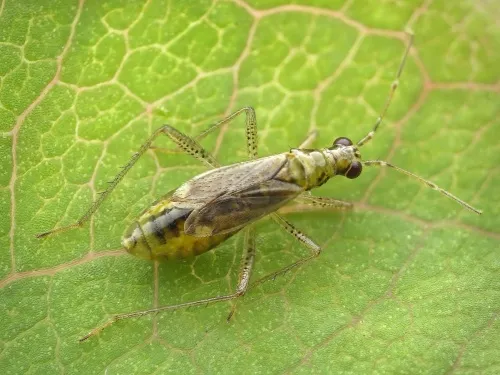
Length 4.5 mm. The adults are usually brachypterous and often show a dark spot at the apex of both the corium and the cuneus as in D. epilobii , but the 1st antennal segment is mainly pale and the head has dark markings. Detailed examination s needed
Dicyphus tamaninii
Dicyphus tamaninii
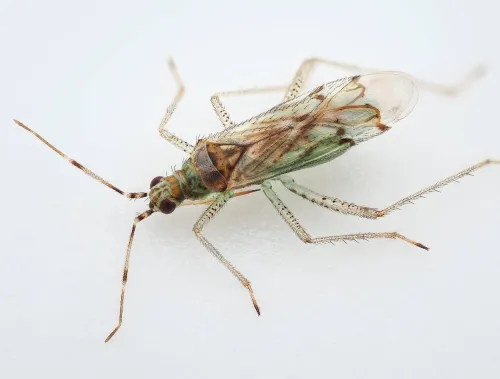
Similar to D. escalerae in appearance. Strong black upperside pubescence; ant1 with dark rings near base and apex (uniformly dark in escalerae); femora finely spotted (coarsely spotted in escalerae); tibiae pale (with a basal ring in escalerae); left
Dieuches armatipes
Dieuches armatipes
Identification: large size and habitus distinctive among NA rhyparochromids has the potential to become a serious pest in n. FL ( Brambila & Halbert 2004 )
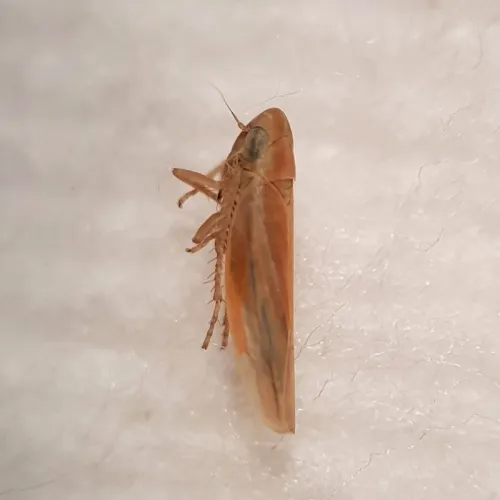
Dikraneura variata
Dikraneura variata
Length 3 mm. The eye shape is significantly longer than high and a line joining the rear points of the eyes would meet around half-way across the pronotum. There is a slightly swollen base to the final (long) antennal segment. Usually greenish, with
Dismal Swamp Stink Bug
Chlorochroa dismalia
Identification: connexivium bicolorous: yellow outside, black inside
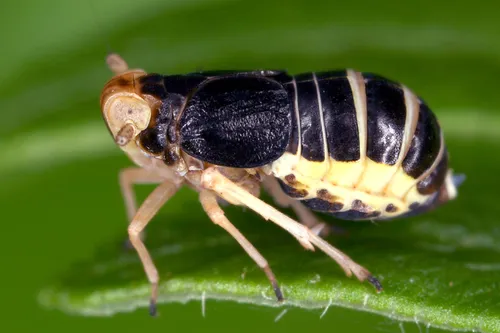
Ditropis pteridis
Ditropis pteridis
Length 3-4 mm. A distinctive planthopper associated with Bracken. The foreparts are yellowish and the wings and top of the abdomen are dark; males are smaller than females, and have longer wings, although almost all are brachypeterous. Common (ref.:
Dixianus utahnus
Dixianus utahnus
Described from three specimens from "Chads." Utah. (Ball, 1909)
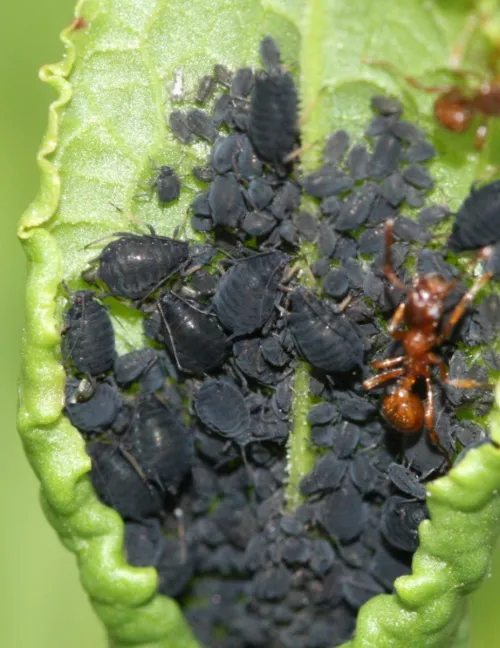
Dock Aphid
Aphis rumicis
The wingless form has a length of 2 to 2.7 mm and is black to very dark greenish-brown. The winged form is also mainly black in colour. It is similar to another Dock feeder Aphis fabae but that species does not cause the leaf edges of Dock to curl. F
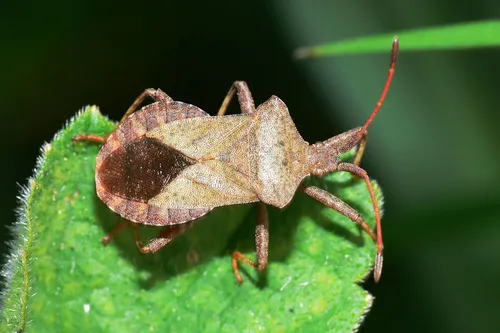
Dock Bug
Coreus marginatus
Length 13-15 mm. A large and mottled reddish-brown squashbug with a broad, oval abdomen. The two small projections between the antennae are diagnostic. All year round. New adults from August onwards. There is one generation per year, adults mating an
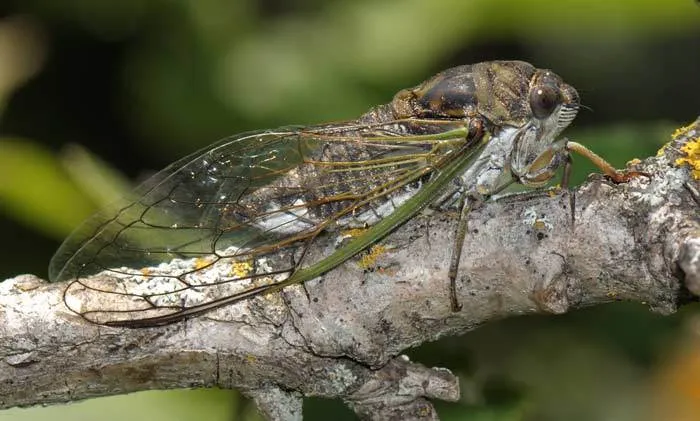
Dog-day Cicada
Neotibicen canicularis
other species sometimes called "dog day cicada" include Tibicen pruinosa and Tibicen chloromera ; the term is also used generally to refer to any cicada that sings during late summer Due to morphological and song variations, it is suspected that cani
Doldina interjungens
Doldina interjungens
Identification: among Harpactorinae, the long, skinny body (over 5.5-6 times as long as greatest width) is diagnostic. --drswanny
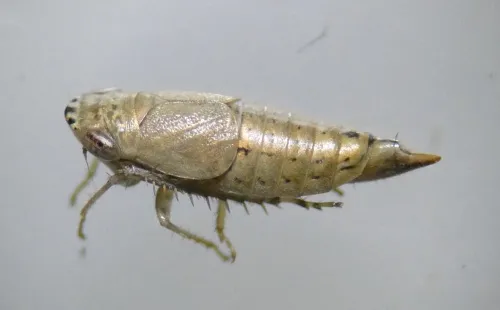
Doratura stylata
Doratura stylata
Length 3 to 4.5 mm. A distinctive leafhopper with short wings that have greenish metallic highlights. There are three large black spots at the tip of the vertex. Females have long projecting gonoplacs (part of the ovipositor). The nymph is brownish w
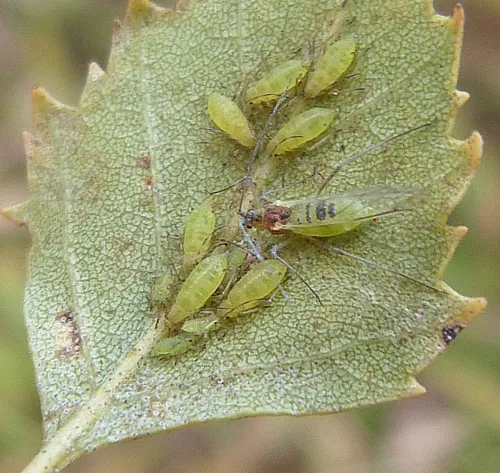
Downy Birch Aphid
Euceraphis punctipennis
One of the larger aphids and has a pale green body, lightly dusted with bluish wax particles, membranous wings and long legs. Euceraphis betulae is found on Silver Birch. Found living on downy birch trees (Betula pubescens) where they feed and multip
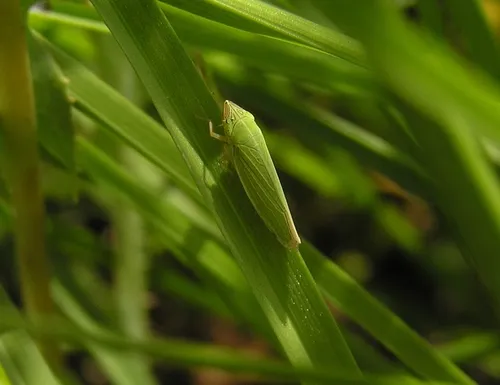
Draeculacephala angulifera
Draeculacephala angulifera
Identification: Males of this species are boldly-marked, sporting a crossbow-shaped marking on the head. The wing venation is a pale blue and the underside is completely yellow. There are notably two dark spots in front of the antennal segments of bo
Draeculacephala balli
Draeculacephala balli
Identification: A very distinct species with two black triangles on the head (postocellar maculae) and two black triangles at the anterior of the scutellum. This species sometimes has a dark dash on the vertex and the dot in the centre of the crown c
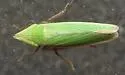
Draeculacephala bradleyi
Draeculacephala bradleyi
Identification: A green white-veined species with an underside much darker than any other Draeculacephala in the Eastern U.S. Some males can have paler faces, so clear views from different angles are important. The anterior pronotum of bradleyi is of
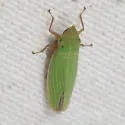
Draeculacephala constricta
Draeculacephala constricta
Identification: A generally unmarked green species with white wing venation. Males of this species most often has a yellow/tan underside and face unlike other common members of the genus (besides D. mollipes , which has blue venation). This species i
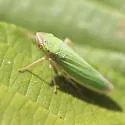
Draeculacephala crassicornis
Draeculacephala crassicornis
Identification: A green species with pale blue venation. Morphologically quite similar to D. angulifera and D. noveboracensis , there are two dark spots in front of the antennal segments and two very close dark spots on the vertex. Importantly, howev
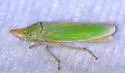
Draeculacephala floridana
Draeculacephala floridana
Identification: A very distinct species, it is the only member of this genus with the entire head inflated and nose upturned. Unlike any other Draeculacephala , the markings on the head are speckled. The face is pale green to yellow with black or fus
Draeculacephala navicula
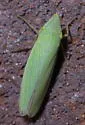
Draeculacephala navicula
Identification: A *nearly* always unmarked yellow-green species, it's morphologically somewhat similar to Draeculacephala antica and D. bradleyi . Unlike D. antica , males have a pale tan face and underside, lacking mesosternal maculae. Both males an
Draeculacephala pagoda
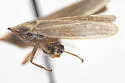
Draeculacephala pagoda
Identification: A green species with white wing venation and markings on the head and scutellum. Males have a mostly dark underside and pale face with dark muscle scars. There is a dark spot on the vertex of the crown and the markings on the head are
Draeculacephala paludosa
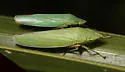
Draeculacephala paludosa
Identification: This species has very dark dorsal markings which superficially resemble the southern D. inscripta . Most notably, this species has a somewhat inflated face, two dark spots on the scutellum, and very dark markings on the anterior prono
Draeculacephala portola
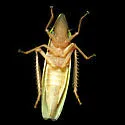
Draeculacephala portola
Identification: This green species is mostly unmarked dorsally. It has an inflated face, an uncommon trait in the genus shared only in the U.S. by D. paludosa and the very different D. floridana . This species has white to blue wing venation with dar
Draeculacephala producta
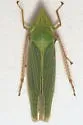
Draeculacephala producta
Identification: A usually unmistakable species-at least outside of the Cuban range-this species is easily recognised by blue wing venation/pronotal lines and a greatly produced head (as if stretched out from the tip). Also differentiating it from the
Draeculacephala robinsoni
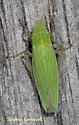
Draeculacephala robinsoni
Identification: A green species with (almost always) blue venation, usually having a dark face. The abdominal sterna are described as being pale/yellow, but there is a high degree of variation among individuals (some can be very dark brown with yello
Draeculacephala septemguttata
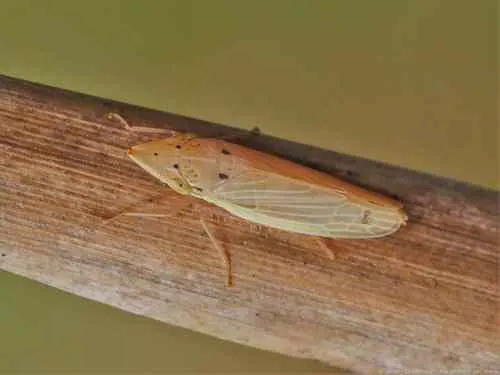
Draeculacephala septemguttata
Identification: A tan species with distinctive markings. There are two triangular spots on the scutellum, a spot on each lateral margin of the pronotum, two spots on the head behind the ocelli, and a single bold spot in the centre of the crown. In so
Dragonana dracontea
Dragonana dracontea
Identification: "Vertex broadly rather roundedly produced, more than twice as broad as long. Vertex pale, heavily marked with reddish punctate spots. Pronotum yellow to tawny, the anterior margin often appearing reddish. Scutellum pale, basal angles
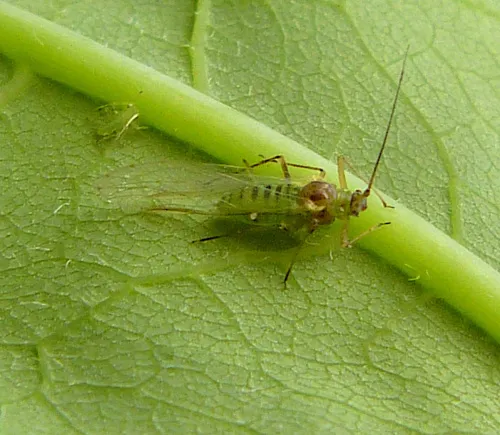
Drepanosiphum platanoidis
Drepanosiphum platanoidis
In this species all adult forms are winged, and range in size from 3.2 to 4.3 mm long. They have red eyes, a brown thorax, and a pale green abdomen. The upper surface of the abdomen has up to 5 or 6 variably developed dark cross-bars. Early in the ye
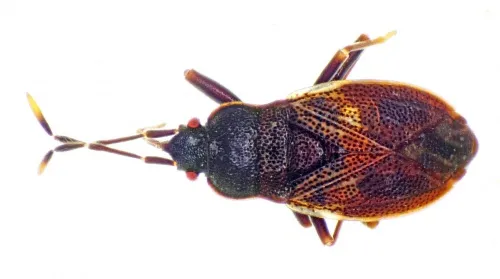
Drymus brunneus
Drymus brunneus
Length 4-5 mm. This genus has a distinctively-shaped pronotum and the front femur has one larger tooth and several small ones. Within the genus, it can be distinguished by the great width of the forewings across the middle of the abdomen, the brownis
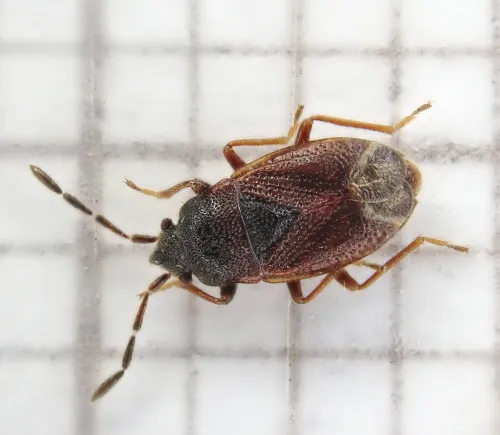
Drymus pumilio
Drymus pumilio
Drymus pumilio is a particularly small, dull brown species, length 2.5-3mm. Small tooth on front femur; tibiae with hairs shorter than width of tibia; pronotum black anteriorly, brown posteriorly; forewings usually at least as long as the abdomen. Ot
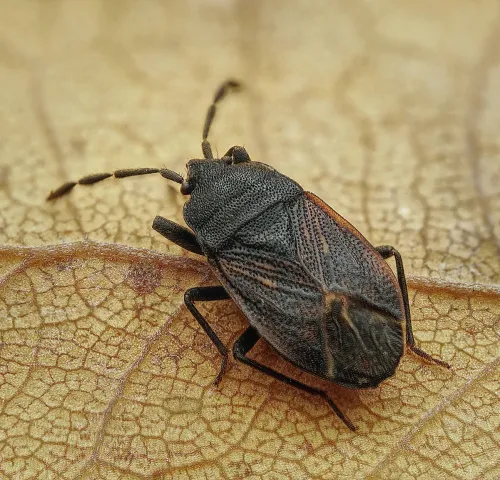
Drymus ryei
Drymus ryei
Length 4 to 5 mm. Drymus is one of several lygaeid genera in which the front femur has one larger tooth and several small ones; it is rather a difficult genus to identify. In D. sylvaticus and D. ryei the tibiae lack long erect hairs and the scutellu
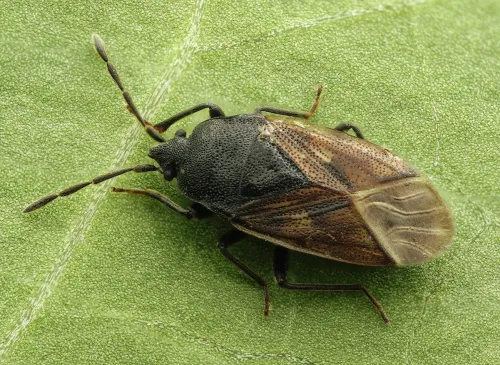
Drymus sylvaticus
Drymus sylvaticus
Length 4 to 5 mm. This genus has a distinctively-shaped pronotum and the front femur has one large tooth and several small ones. Drymus sylvaticus has reddish-brown forewing and entirely black scutellum and pronotum. The legs lack long hairs. There a
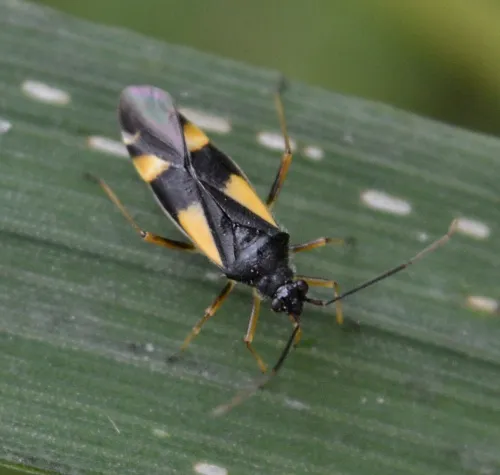
Dryophilocoris flavoquadrimaculatus
Dryophilocoris flavoquadrimaculatus
Length 6-7 mm. This is one of several mirids which are mostly black with yellow markings. Although distinctive, it is similar to the much rarer Globiceps species, which have less extensive yellow areas at the front of the corium. In addition, the pro
Dwarf Catonia
Catonia pumila
Identification: One of the smallest species in the genus; head narrower than in most spp. (Dr Hamilton)
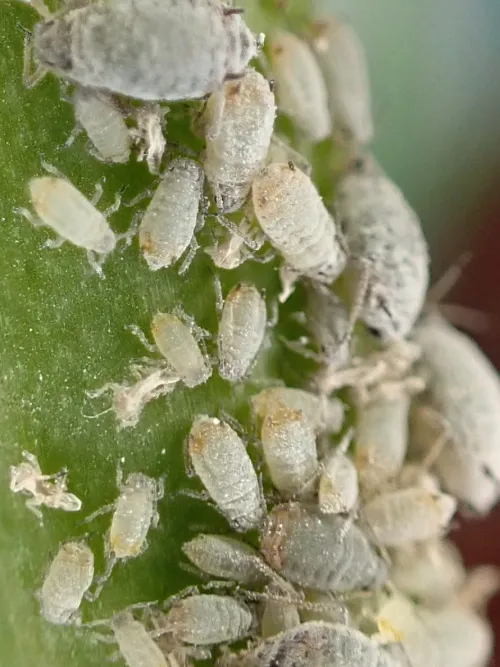
Dysaphis tulipae
Dysaphis tulipae
Adult apterae of Dysaphis tulipae are pale greenish yellow, but may appear whitish because of an overlay of white powder. There is often a reddish suffusion around the siphunculi which is more prominent in immatures. The body length of the Dysaphis t
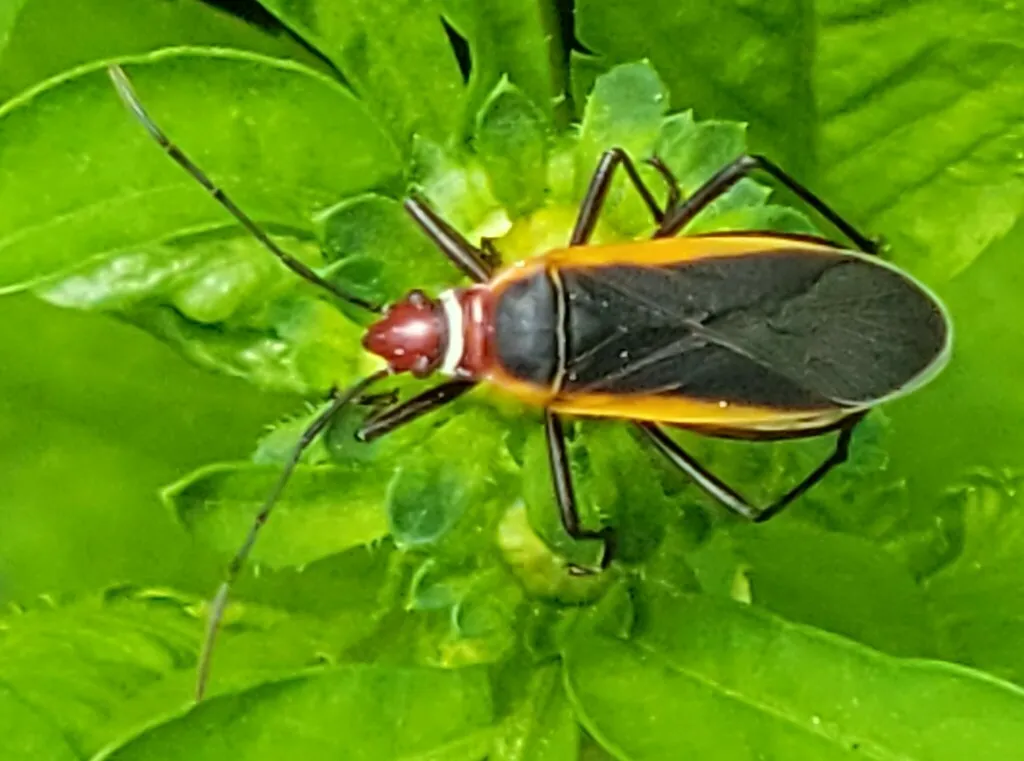
Dysdercus mimulus
Dysdercus mimulus
Identification: antennomeres I & II equal or subequal
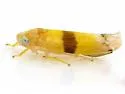
E. rubricola sensu Hamilton
Empoa rubricola
Identification: "The dark band tapered towards both edges of each wing is characteristic." - KGA Hamilton Note the sparse markings at the apex of the forewings and the medial tapering of the band on the forewings. The identity of this species is uncl