
True Bugs, Cicadas, Hoppers, Aphids and Allies
Order Hemiptera
The True Bugs, Cicadas, Hoppers, Aphids and Allies (Order Hemiptera) includes 7,349 species across 120 families and 1,727 genera in our directory.
About True Bugs, Cicadas, Hoppers, Aphids and Allies
Hemiptera (true bugs) includes over 80,000 described species across cicadas, aphids, leafhoppers, shield bugs, and bed bugs. Aphids alone cost global agriculture an estimated $2.5 billion annually in crop losses.
Economic Impact
The brown marmorated stink bug (Halyomorpha halys) caused $37 million in apple crop losses in a single year in the U.S. Mid-Atlantic region. Bed bug infestations in the U.S. increased by 500% between 2001-2010, costing the hotel industry hundreds of millions annually.
Ecological Role
Many Hemiptera are essential food sources for birds and predatory insects. Cicadas provide massive nutrient pulses during emergence events - a single Brood X emergence can involve trillions of individuals across 15 states.
Families in Hemiptera (120)
Species in Hemiptera (7,349)
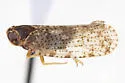
Cloudy-tipped Cixius
Cixius coloepeum
Identification: has the shortest head among the smaller species in the genus [comment by Andy Hamilton]
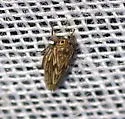
Clover Leafhopper
Aceratagallia sanguinolenta
Identification: Very short rounded wings distinguish it from other eastern spp. (there are western spp. with the same characteristic, however). (Dr Hamilton)
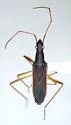
Cnemodus hirtipes
Cnemodus hirtipes
Identification: Femora and tibiae with many hairs (as opposed to having very few hairs in C. mavortius)
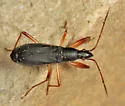
Cnemodus mavortius
Cnemodus mavortius
Identification: Front lobe of pronotum much longer than hind lobe. Lacks thick hair on legs, unlike C. hirtipes . nymph: Active runner on open ground; often brachypterous . Sweet found it be parasitized by a tachinid ( Catharosia sp.)
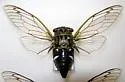
Coastal Scissor(s) Grinder
Neotibicen latifasciatus
Guide based on comments on images and e-mails by Bill Reynolds . ---------------------------------------------------------------- NOTE: Species seems abundant in the webs of Nephila clavipes , an important predator of this and other cicadas.
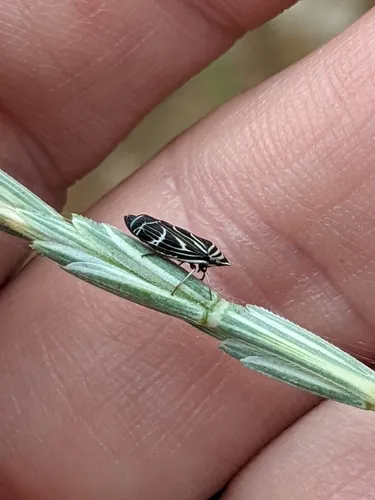
Cochlorhinus opertus
Cochlorhinus opertus
Identification: From "Studies on insects of the Redwood Empire I: New Phytophagous Hemiptera from the Coast Range mountains", self-published by Bliven 1955 (Eureka, CA): "Runs to couplet 4 in Beamer's key where it differs from unispinosus in the long
Cochlorhinus pluto
Cochlorhinus pluto
Identification: According to the key in Beamer 1940 , the other species of Cochlorhinus with "only a white dash on cross-veins, remainder of dorsum black" is C. stygicus, which has "vertex about a right angle" rather than the "vertex acute, longer th
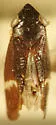
Cochlorhinus stygicus
Cochlorhinus stygicus
Identification: Per the key in Beamer 1940 , similar to C. pluto in having "only a white dash on the cross-veins, remainder of dorsum black", but differs from that species in having the "vertex about a right angle".
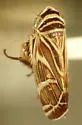
Cochlorhinus unispinosus
Cochlorhinus unispinosus
Identification: "Externally C. unispinosus is very close to C. pasadenus and C. ziczac and still closer to the new species C. bidentatus . This latter species, however, has the aedeagus of C. unispinosus and the pygofer with the two spines of C. plut
Coconut Scale
Aspidiotus destructor
Introduced species. Apparently originated in the Pacific islands (Burger and Ulenberg, 1990) but is now recorded in tropical and subtropical regions worldwide. Present in almost all countries where coconuts are grown.
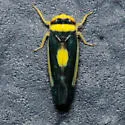
Colladonus furculatus
Colladonus furculatus
Identification: Identifications of non-vouchered photographs should be treated as tentative: "[ Colladonus furculatus ] is so similar to clitellarius that dissection of the genitalia is necessary to separate the two species. From clitellarius , to wh
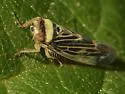
Colladonus mendicus
Colladonus mendicus
Identification: "the color pattern, particularly the pale veins, are distinctive" [as per a comment by Andy Hamilton on this post ]
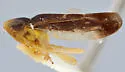
Colladonus okanaganus
Colladonus okanaganus
Identification: http://dmitriev.speciesfile.org/taxahelp.asp?hc=139769&key=Erythroneura&lng=En
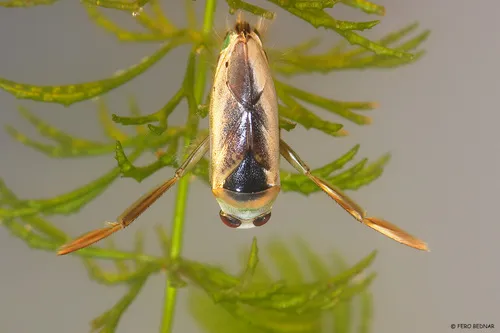
Common Backswimmer
Notonecta glauca
Up to nearly 2 cm in size, and commonly called backswimmers because they swim upside down and are often seen at the surface of the water. Notonecta glauca is light brown in colour with a number of dark markings and large reddish eyes. It often looks
Common Birch Aphid
Calaphis betulaecolens
Identification: Viviparae all alate, bright lemon yellow without dorsal markings, with blackish antennae and tibiae and dark wing veins.
Common Cactus Dodger
Cacama valvata
Identification: A common and widespread species TL - ? Similar by most accounts to C. moorei with which it may be sympatric across parts of Arizona. Similar to several other species incl. C. dissimilis (MEXICO) & C. furcata (MEXICO) Described as a "d
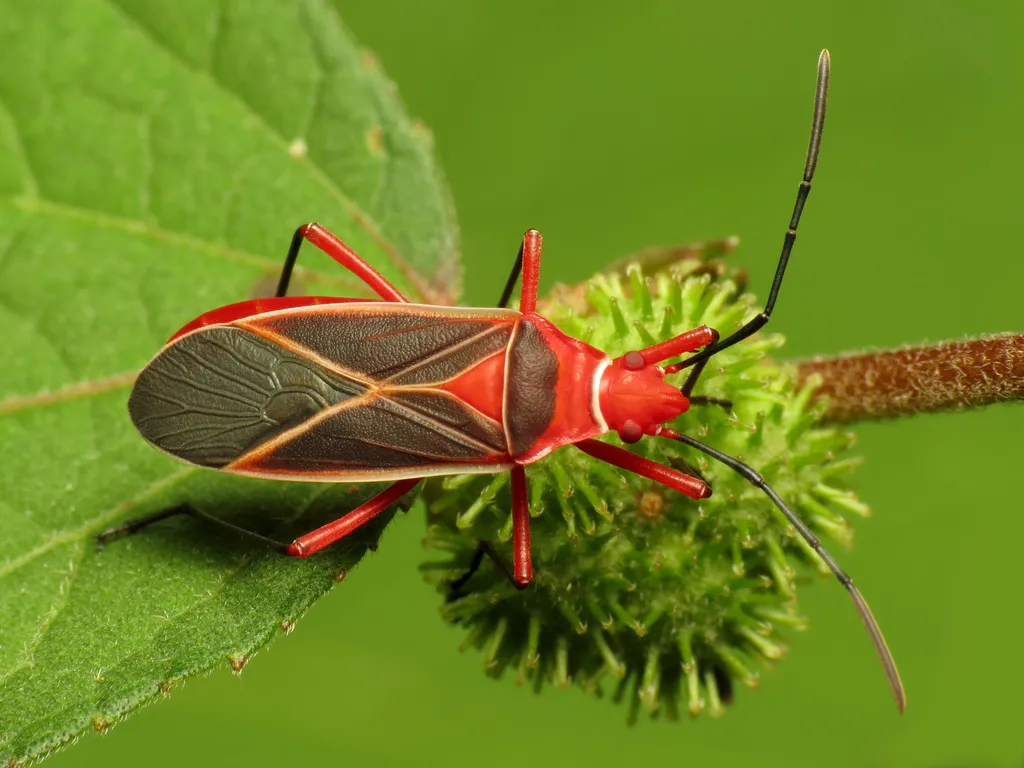
Common Cotton Stainer
Dysdercus suturellus
Identification: Corium light to dark brown, not reddish; black spot absent, but a dark bar sometimes variously developed from obscure to distinct. First antennomere distinctly longer than the second. a pest of cotton; "Feeding on the cotton bolls st
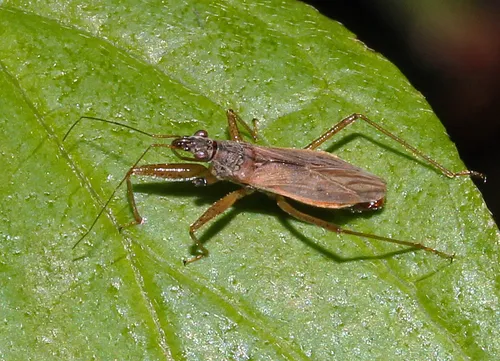
Common Damsel Bug
Nabis rugosus
Length 6.5 to 7.5 mm, and, N. rugosus is yellow-brown in colour, with rather pale forewings. The length of the 2nd antennal segment is greater than the maximum width of the pronotum. This species is almost always brachypterous, the forewings reaching
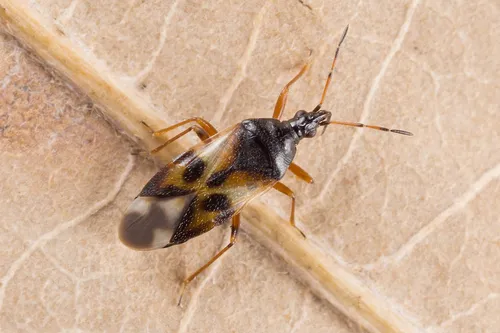
Common Flower Bug
Anthocoris nemorum
Length 3.5-4.5mm. Probably the most common species of this difficult genus. The forewings are entirely reflective and the pronotum entirely black. The legs are mostly orange-brown, with variable development of small dark patches near the tip of the f
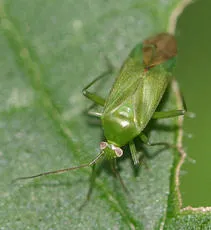
Common Green Capsid
Lygocoris pabulinus
Length 5-6.5 mm. Lygocoris species can be distinguished from similar green bugs by the very fine and inconspicuous pale brown tibial spines and at high magnification, the break in the keel between the eyes. The pronotum is rather straight-sided. In L
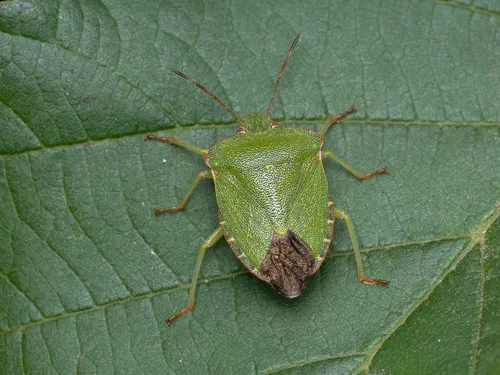
Common Green Shieldbug
Palomena prasina
Length 12-13.5 mm. A large shieldbug with a dark wing membrane and reddish antennae (4th and 5th segments). Adults are bright green in the spring and summer but finely punctured with dark marks. They become a darker bronze-brown prior to winter hiber
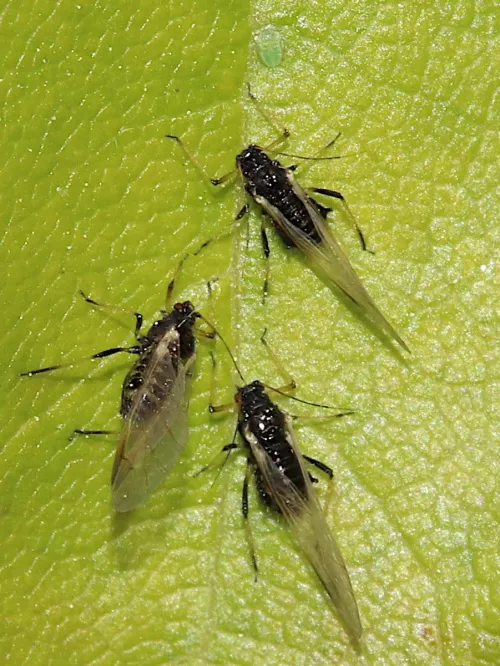
Common Maple Aphid
Periphyllus testudinaceus
In the winged form of this aphid (alate) the pterostigma on the wing is brown, rather than black. Widespread but under recorded in Britain. https://influentialpoints.com/Gallery/Periphyllus_testudinaceus_Common_Periphyllus_Aphid.htm
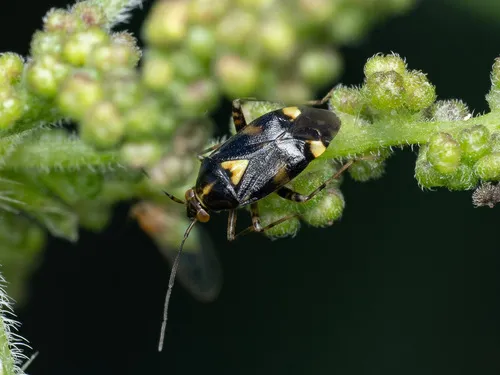
Common Nettle Bug
Liocoris tripustulatus
Length 4-5 mm. A variable but distinctive species, the colour of the scutellum and cuneus ranges from cream to deep yellow and the pale legs are striped with black rings. Short dark spines are present on the tibiae. Head width = 1/2 pronotum width, l
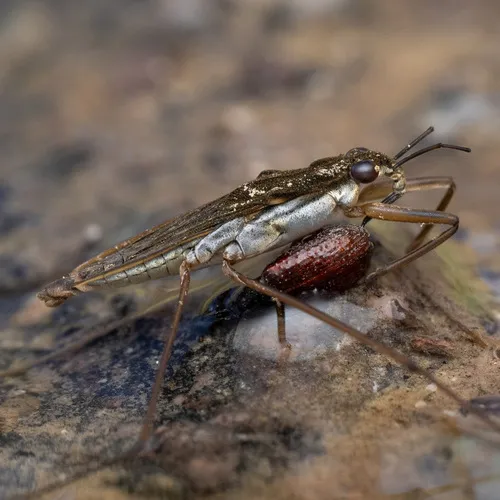
Common Pondskater
Gerris lacustris
Approximately 8-10mm, generally brown with a black pronotum and black antennae. There are several similar-looking species of pondskaters, of which this is the commonest and most likely to be found in a garden pond, but examination of a specimen is ne
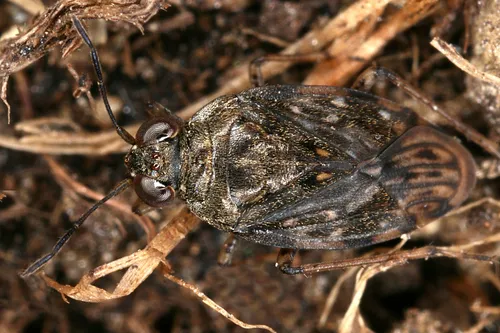
Common Shorebug
Saldula saltatoria
Length 4 to 4.5 mm. This genus comprises 11 rather oval saldids which have an entirely dark pronotum and forewings which completely overlap. There are several very similar species which are often difficult to identify. In S. saltatoria, the most comm
Common Sycamore Aphid
Drepanosiphum plantanoidis
By nitrogen tracking, they enter a reproductive diapause in summer, avoiding period of low nitrogen availability.
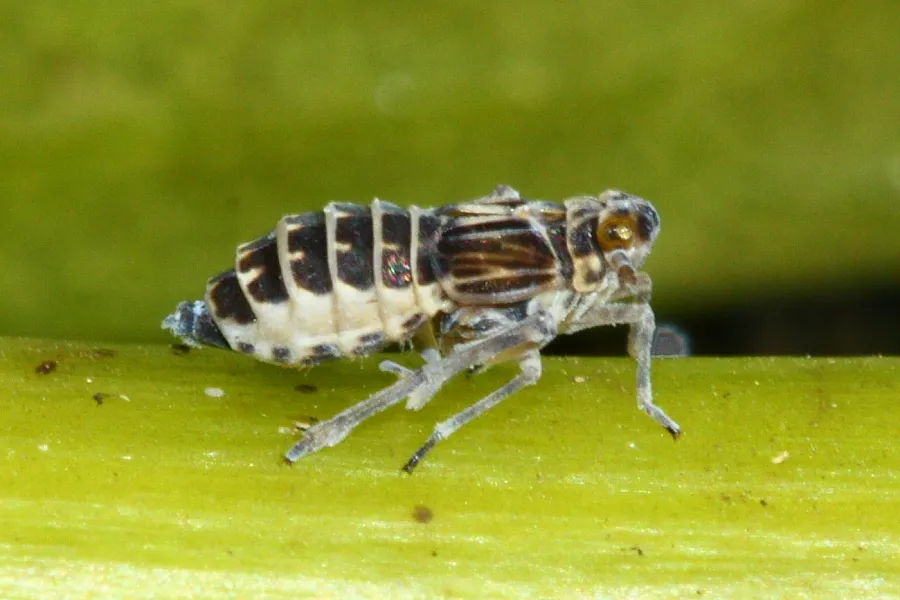
Common Waterlily Planthopper
Megamelus davisi
Identification: Anal processes projecting posteriorly
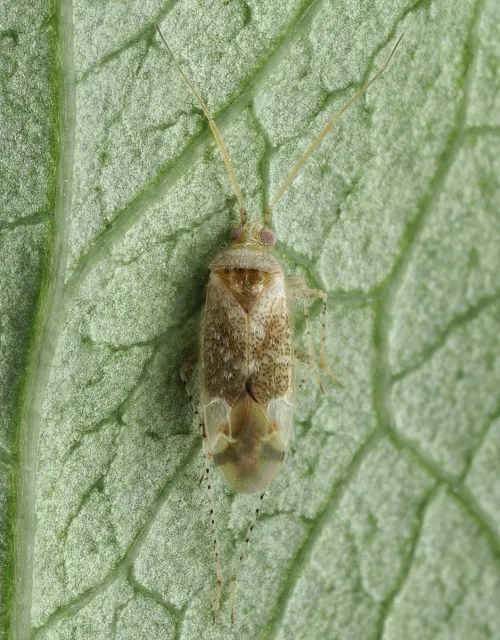
Compsidolon salicellum
Compsidolon salicellum
Length about 4mm. The pale greyish-yellow ground colour of this bug is often broken up by brown spotting across the forewings, although the cuneus is pale. The hind femora are dark, particularly towards the apex and there are dark marks on the wing m
Conocephalocoris nasicus
Conocephalocoris nasicus
Identification: Monotypic genus. Similar to Eurychilopterella spp., "but head longer and more cone-shaped; antennal segment III about equal to segment IV (in Eurychilopterella segment III distinctly longer than IV)." Overall look is reminiscent of an
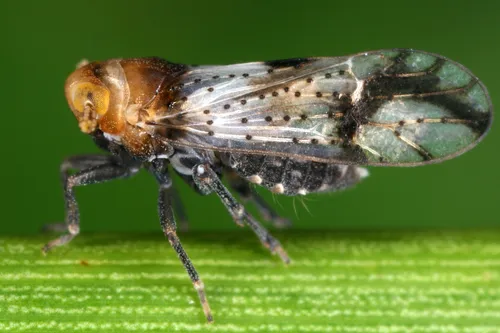
Conomelus anceps
Conomelus anceps
Length 4 mm. The males are distinctive, with reddish-brown ground colour and wings with dark spots on the veins. It is most commonly brachypterous and in these individuals the forewings are darker at the base and tip. Macropters occur less frequently
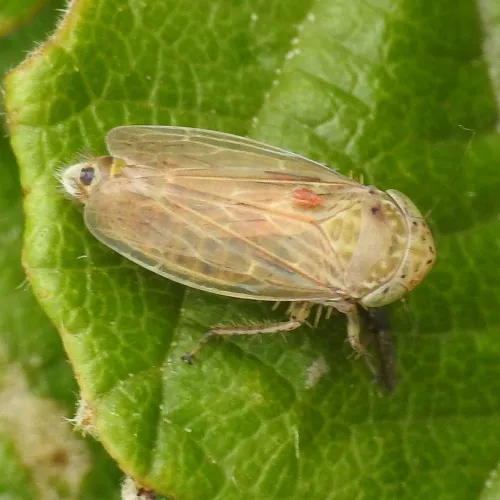
Conosanus obsoletus
Conosanus obsoletus
Length: 5 to 6 mm. A large leafhopper, light brownish in colour with darker markings in the forewing cells. The vertex normally has four dark marks in a V-shape pointing toward the tip. Dissection of the male will confirm identification; females have
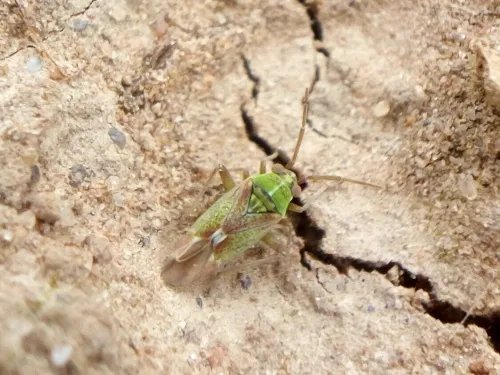
Conostethus venustus
Conostethus venustus
Length 3.0 mm. Conostethus species have a distinctively shaped pronotum, which is much wider than long and has concave lateral margins. This species is usually easily recognised by the rosy markings on the clavus, cuneus and part of the corium, altho
Coquillettia albiclava
Coquillettia albiclava
Identification: white clavus, pale translucent basal half of corium, embolium dark; antennomeres II & III equal in length
Coriander aphid
Hyadaphis coriandri
Introduced from Asia probably Central Asia. Now worldwide.The 2 other members of this genus in the US are also introduced.
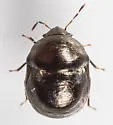
Corimelaena agrella
Corimelaena agrella
Identification: White costal stripe with inner angulate margin; apex of corium acute.
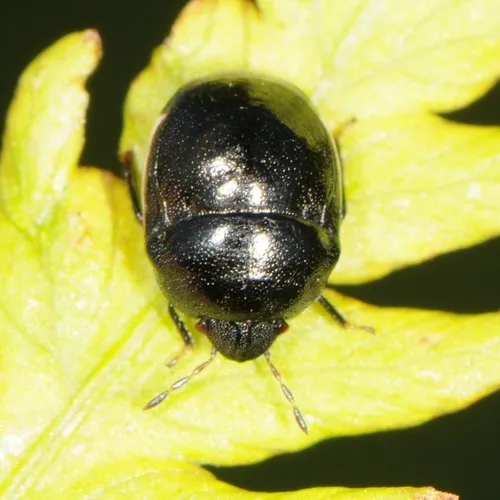
Corimelaena lateralis
Corimelaena lateralis
Identification: Pale stripe of corium does not extend over cubital vein and is complete its entire length
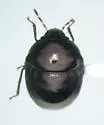
Corimelaena obscura
Corimelaena obscura
Identification: Similar to C. lateralis, but the white corial stripe is obscured, especially in the middle third; sometimes with just apex white.
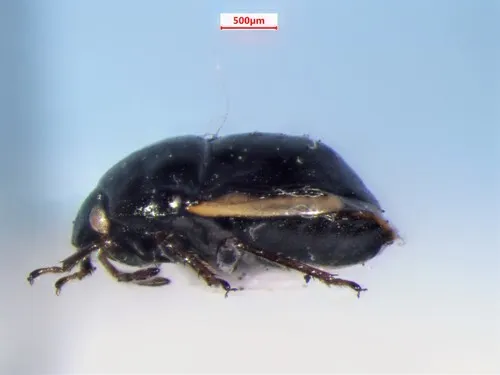
Corimelaena pulicaria
Corimelaena pulicaria
Identification: Pale stripe of corium extends over cubital vein. Head and pronotum distinctly arched and head with margins emarginate before eyes. Very similar to the apparently rare C. alpina (the two will be difficult to distinguish from photos) se
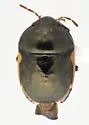
Corimelaena virilis
Corimelaena virilis
Identification: Differentiated from very similar species by the sloping anterior rim of the pygophore (McAtee and Malloch's "hypopygium"), forming a carina, with raised setulose knobs on either side of this carina.
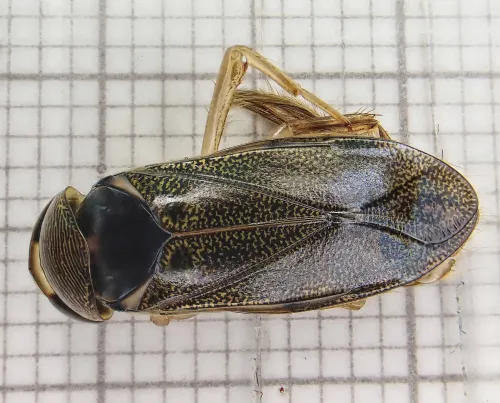
Corixa dentipes
Corixa dentipes
The species is similar in size (12 to 15 mm.) and appearance to the more common Corixa punctata . C. dentipes is easily distinguished from other Corixa species by the indentation or notch in the tibia of the middle leg, where it joins the femur. Unle
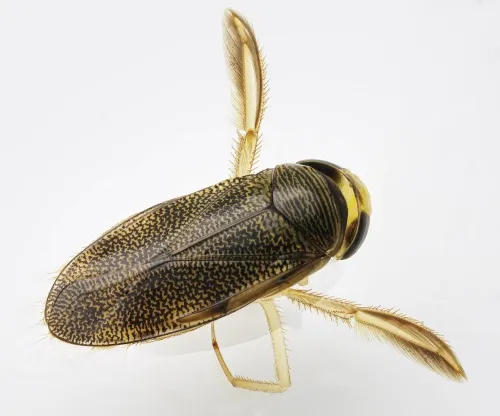
Corixa panzeri
Corixa panzeri
Corixa panzeri is 10 to 11 mm in length and has 10 to14 pale lines on the pronotum. Unless identified by a recognised expert, a photo is required and the specimen should be examined with a microscope. In the comments box, state the key or ID method u
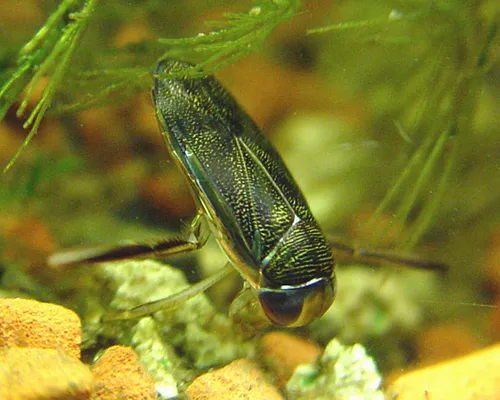
Corixa punctata
Corixa punctata
12-15 mm. There are 15-20 lines on the pronotum. The dorsal surface is not keeled on this species and the middle and back legs are more or less the same length. The strigil of the male (on the left under the wings) has 9-10 ridges. Corixa dentipes is
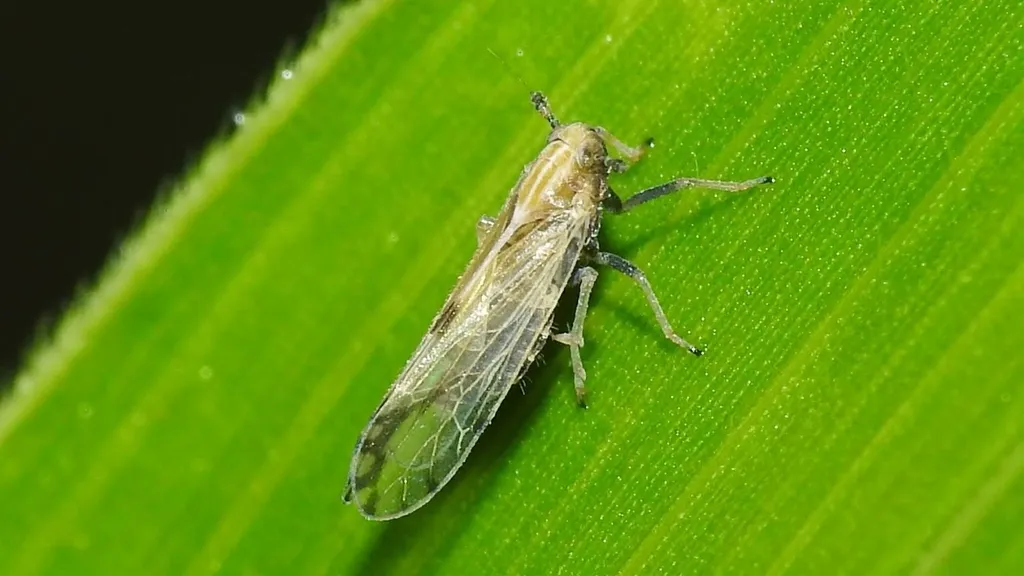
Corn Delphacid
Peregrinus maidis
Identification: distinctive, larger than many delphacids with slightly patterned wings and a pale stripe along the midline of the body; the middle carina of the face is forked well below the top of of the head in frontal view. Also, when viewing the
Corn Leafhopper
Dalbulus maidis
Identification: Dets. Kyle Kittelberger Considered invasive in this country. (Capinera, 2002)
Cornuplura nigroalbata
Cornuplura nigroalbata
C. nigroalbata For additional IMAGE, please refer to the link below (C. nigroalbata specimen is exhibited at the header for this site)
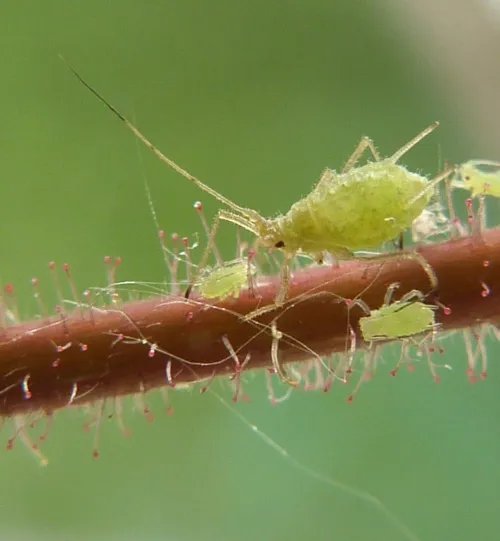
Corylobium avellanae
Corylobium avellanae
Corylobium avellanae apterae are usually yellowish-green but in one form the aphid is mottled with red. For additional information see ‘Further info’ link below. Unless identified by a recognised expert, a photo is required. If the photo doesn't show
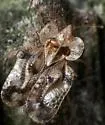
Corythucha mollicula
Corythucha mollicula
Identification: Differs from the other northern and eastern species in having the lateral spines on the pronotum (except anterior border) and elytra almost entirely wanting.
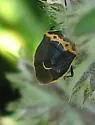
Cosmopepla conspicillaris
Cosmopepla conspicillaris
Identification: contrasting creamy white tip of the scutellum is the most obvious difference from C. uhleri (in which the apex is concolorous with the disc of the scutellum) [D.B. Thomas, pers.comm.] Often found on plants in the genus Stachys of the
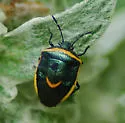
Cosmopepla decorata
Cosmopepla decorata
Identification: The yellow markings on the prothorax, scutellum, and hemelytra can vary from pale yellow to bright orange-red. Type Locality: Mexico
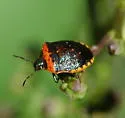
Cosmopepla uhleri
Cosmopepla uhleri
Identification: scutellum uniformly dark (no pale margin around the tip)
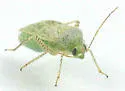
Cotton Fleahopper
Pseudatomoscelis seriatus
Identification: Dark spots on the pale green dorsum and on A2 Type Locality: Texas ( Belfarge )
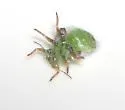
Cottony Alder Psyllid
Psylla floccosa
Identification: General color typically green to greenish-yellow; antennae usually 3 times as long as width of head; pterostigma absent or diminutive

Cottony Ash Psyllid
Psyllopsis discrepans
Length 3-4mm. Very similar to P. fraxini but with less intense wing markings. It causes marginal leaf-fold galls on ash leaves, which are pale with reddish/violet marking; the galls cannot be distinguished from others in the Psyllopsis fraxini specie
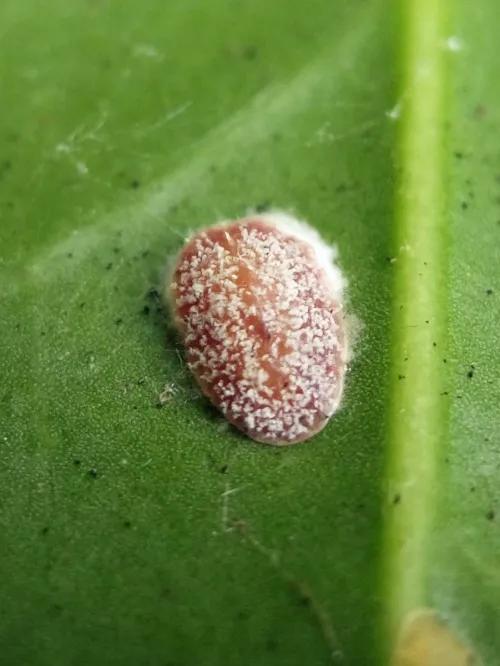
Cottony Camellia Scale
Pulvinaria floccifera
This brown scale insect can sometimes be detected by the white wax film it produces, usually on the underside of leaves, which protects its eggs. Unless identified by a recognised expert, a photo is required. If the photo doesn't show the key ID feat
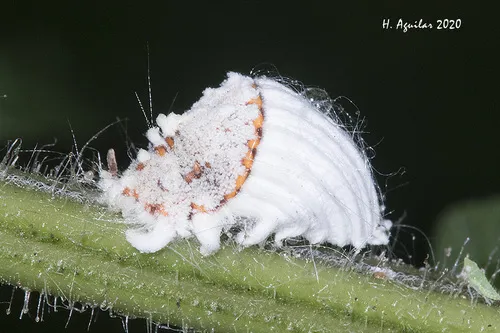
Cottony Cushion Scale
Icerya purchasi
The white fluted part of the insect is an egg sac that can contain up to 1000 eggs. The insect is hermaphroditic, producing sperm that can fertilize its own ova, but in an alternate reproductive strategy it can also make winged males that can fertil
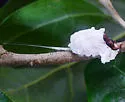
Cottony Maple Leaf Scale
Pulvinaria acericola
Identification: Slightly convex; brown with a longitudinal yellow-brown ridge. The body is covered with flakes of clear wax. Legs absent.
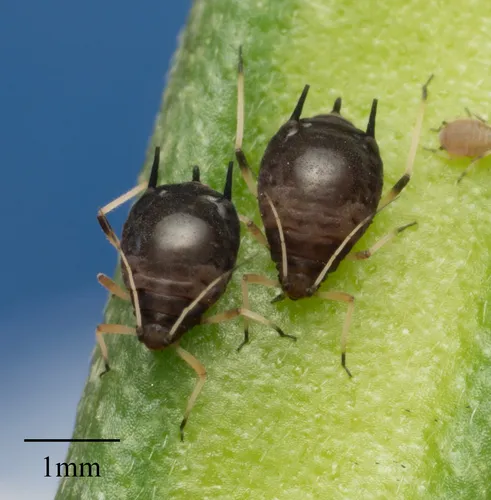
Cowpea Aphid
Aphis craccivora
Identification: Adults shiny black, immatures lightly dusted with wax and light brownish. Det. Andrew Jensen, 2009 Young colonies concentrate on the growing points of plants and are usually attended by ants. Can be a serious pest of many crops and or
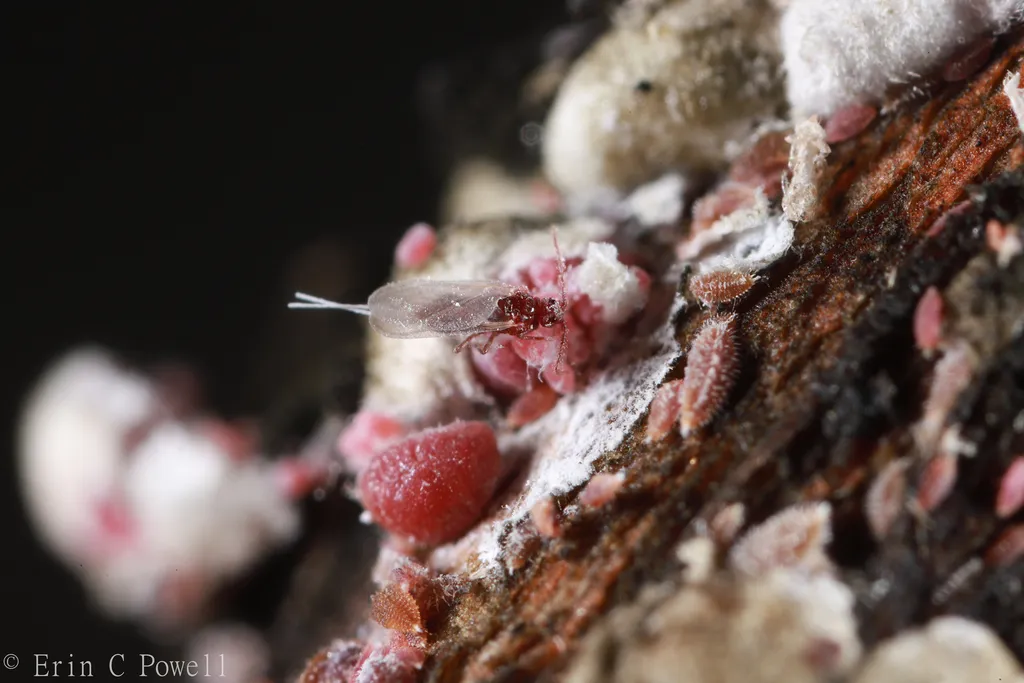
Crape Myrtle Bark Scale
Acanthococcus lagerstroemiae
Introduced from Asia. Found in Texas in 2004. It keeps spreading through southern states. It has become a serious pest of crape myrtle.
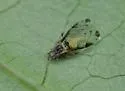
Crapemyrtle Aphid
Sarucallis kahawaluokalani
Identification: Adults are light green to yellow with black thoracic markings and black markings on dorsal of abdomen. The second abdominal segment has a double-pronged hump in the black marking. Wings are clear with black markings and held roof-like
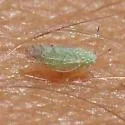
Craspedolepta martini
Craspedolepta martini
Identification: General color from green to brown, wings white and uniformly covered in dark spots; female genitalia short The nymphs are often abundant on the ventral surface of younger leaves, producing sticky honeydew and inducing the leaves to cu
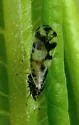
Craspedolepta schwarzi
Craspedolepta schwarzi
Identification: Similar to C. nebulosa , with wings more heavily maculate
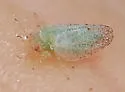
Craspedolepta suaedae
Craspedolepta suaedae
Identification: Forewings densely spotted, on Suaeda sp.
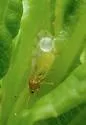
Craspedolepta subpunctata
Craspedolepta subpunctata
Identification: Apical veins darkened, but lacking the extensive dark wing markings usually present on the other species associated with Chamaenerion angustifolium
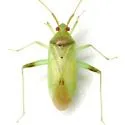
Creontiades debilis
Creontiades debilis
Identification: Uniformly green or yellowish-green dorsal coloration without red lines or a red tinge Type Locality: Georgia
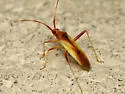
Creontiades rubrinervis
Creontiades rubrinervis
Identification: red-tinged A1 and apically red A2 & A3, yellowish-green upper surface and legs variously tinged or marked with red.
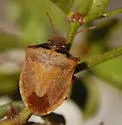
Creosote Stink Bug
Dendrocoris contaminatus
Identification: Yellowish to brick red, pronotal cicatrices contrastingly dark brown (characteristic), connexivum unicolorous Dets. Salvador Vitanza the most common pentatomid on Larrea
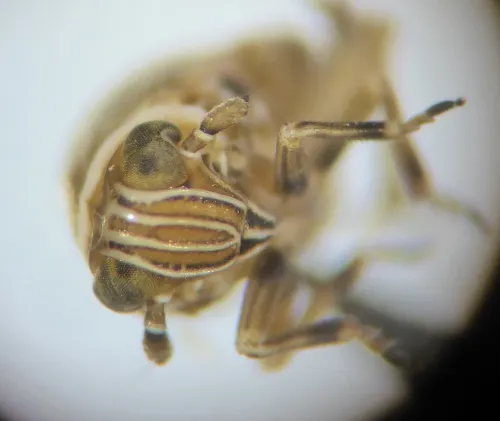
Criomorphus albomarginatus agg.
Criomorphus albomarginatus agg.
Length 2 to 4 mm. This is a difficult genus and examination of male genitalia is needed to separate the 3 species. Criomorphus albomaginatus has a rear genital segment that is approximately triangular in rear view. The frons (face) has 2 median keels
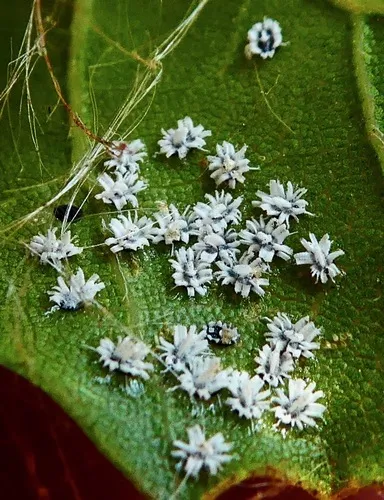
Crown Whitefly
Aleuroplatus coronata
Original 1900 description by Quaintance here with supporting Figs. 13-15 of Plate I and Fig. 69 of Plate VII . Supplementary description given on on pg. 497 of Bemis(1904) with Fig. 9 of Plate 27 illustrating the extruded, waxy ribbons of the pupa.
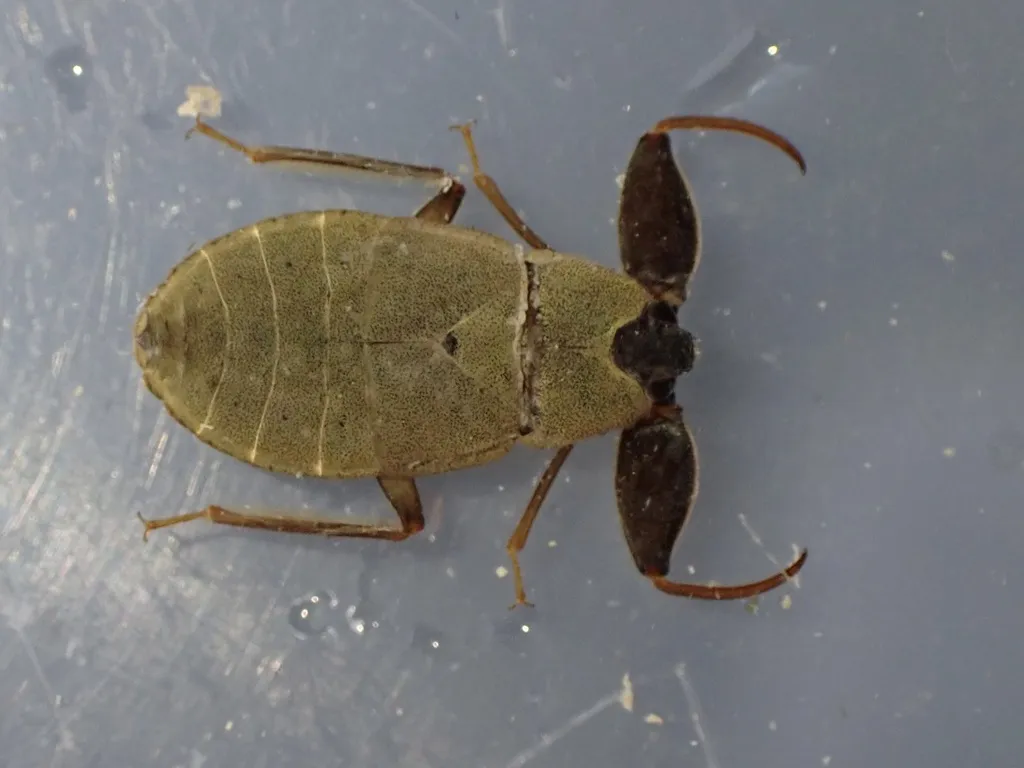
Cryphocricos hungerfordi
Cryphocricos hungerfordi
Identification: A total of 790 adults was collected in the South Llano River; six were macropterous (0.8%) and one was submacropterous (0.1%). The remainder (783 specimens) were brachypterous. With the discovery of the submacropterous form, this spec
Cryphula abortiva 0
Cryphula abortiva
Identification: last key couplet: Dorsum pilose; antennae without long setae
Cryphula parallelogramma 0
Cryphula parallelogramma
Identification: Corium without conspicuous transverse fascia; posterior margin of pronotum inconspicuously pale
Cryphula subunicolor
Cryphula subunicolor
Identification: last key couplet: Dorsum uniformly castaneous; antennae with long semi-erect setae Very easily distinguished from other members of the genus by reason of its nearly uniform, castaneous color. Type Locality: Tucson Mts., Ariz., Jan. 1,
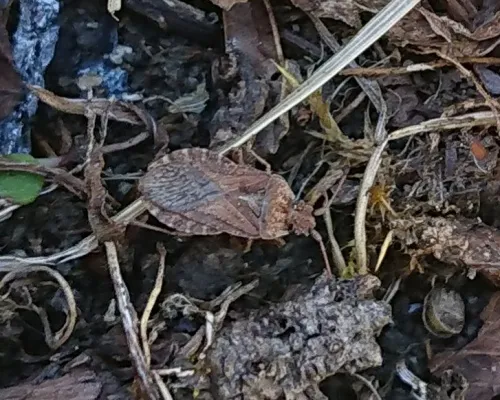
Cryptic Leatherbug
Bathysolen nubilus
Length 5.5 to 7 mm. This squashbug is characterised by a short and broad pronotum which lacks spines and has pale sides. The scutellum has a pale tip and the 1st antennal segment is rather broad, wider than the 4th. Unless identified by a recognised
Ctenotrachelus shermani
Ctenotrachelus shermani
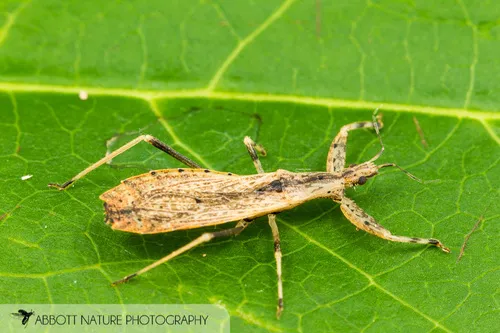
Identification: easily distinguished from species of other regional genera ( Oncocephalus, Narvesus, Pygolampis, Stenopoda ) of Stenopodainae by the antennal and femoral characters used in Blatchley’s key , but is further set off by the wide separati
Cuerna alpina
Cuerna alpina
Identification: tentative det: Kyle Kittelberger, 2020
Cuerna fenestella
Cuerna fenestella
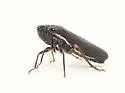
Identification: Forewing color does not consistently distinguish this species from C. sayi. Distinctive characters are the short, curved macrosetae on the female metatibiae and the shape of the male aedeagus.
Cuerna sayi
Cuerna sayi
Identification: Forewing color does not consistently distinguish this species from C. fenestella. Distinctive characters are the long, curved macrosetae on the female metatibiae and the shape of the male aedeagus.
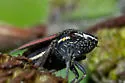
Cuerna striata
Cuerna striata
This is a complex of many closely-related and variable species with their limits poorly defined. The most recent revision collapsed the complex back into one species until further study can be used to determine the limits of the species. " C. striata
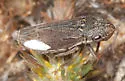
Cuerna unica
Cuerna unica
This species is externally identical to C. occidentalis (except for female eighth sternites), but is more northern in distribution: central California to Washington.
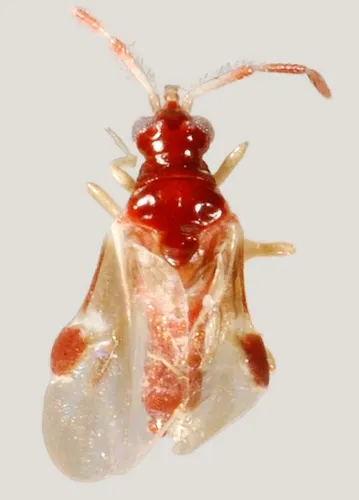
Curalium cronini
Curalium cronini
Identification: Male: Recognized superficially by the very small size and striking ruby-red coloration of the head, thorax, and cuneus only ♂♂ have been collected (all at UV lights)
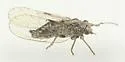
Currant Psyllid
Cacopsylla ribesiae
Identification: Dark spot on clavus, pterostigma small
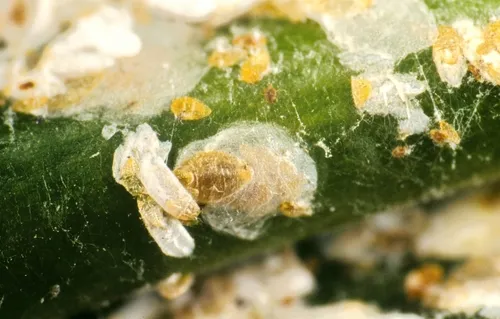
Cycad Aulacaspis Scale
Aulacaspis yasumatsui
Introduced from Asia. First found in the US in the Miami area in 1996, has gradually moved northwards and is extremely damaging to sago palms, causing necrosis of individual fronds and eventual plant death.
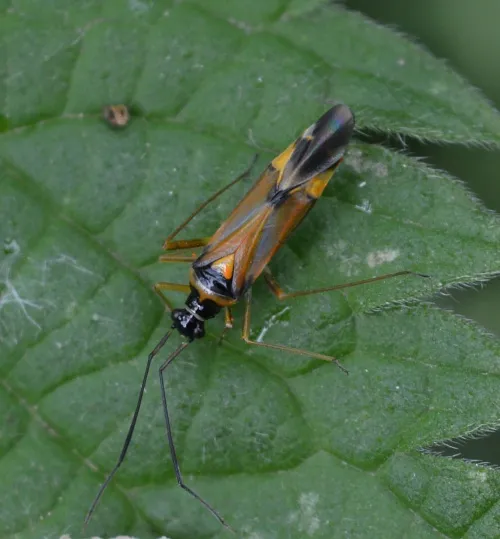
Cyllecoris histrionius
Cyllecoris histrionius
The adult is a strikingly marked and elongate bug reaching a length of 6 to 8 mm. The largely black pronotum is strongly narrowed at the front, forming a distinct collar which is marked with yellow or white. The antennae are red tipped. This species
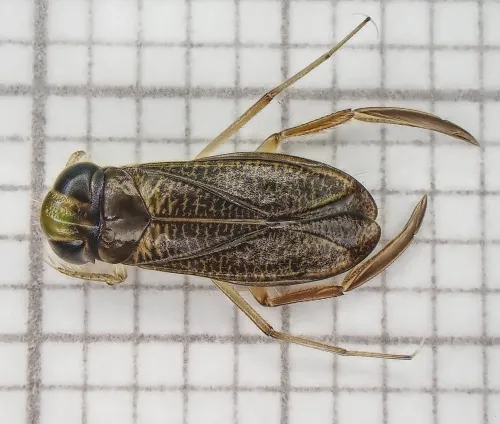
Cymatia bonsdorffii
Cymatia bonsdorffii
Length 6-6.5mm. Pronotum uniform colour (no stripes), eyes protruding, wings transversely patterned, pronotum length ≈ head length. Detailed photos and measurements required. No additional images available for this species.
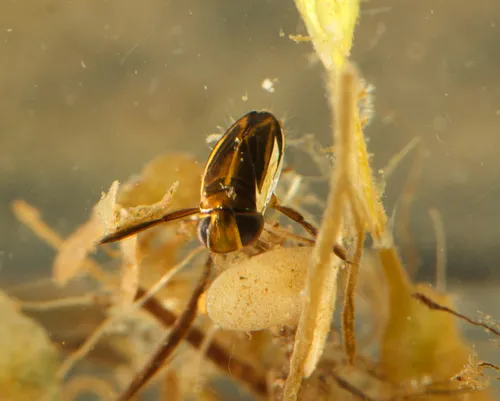
Cymatia coleoptrata
Cymatia coleoptrata
3.4-4mm. One of the few Corixidae that can usually be identified from an image. It is usually brownish in colour with large eyes and a yellow face. It is the only corixid with pale and dark longitudinal lines. The pronotum is smaller than the head. W
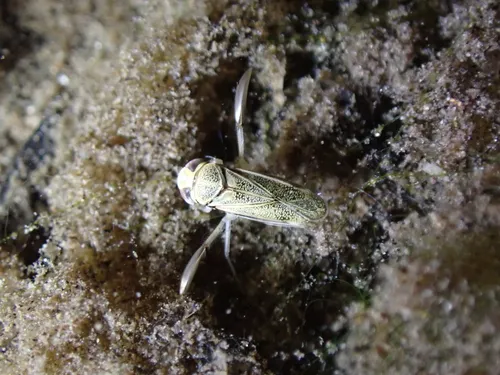
Cymatia rogenhoferi
Cymatia rogenhoferi
About 7.5 mm, and lacks lines on the pronotum and also transverse wrinkles on the rostrum. It has pale yellow patches at the top of the corium. There are three Cymatia species in the UK. The genus is characterised by the lack of lines on the pronotum
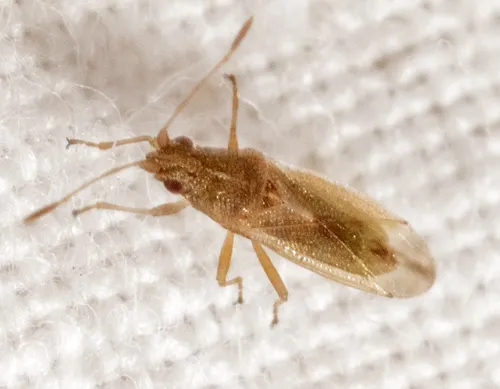
Cymodema breviceps
Cymodema breviceps
Identification: first key couplet: Preocular part of head notably shortened, 1st antennomere extending well beyond apex of tylus; 3rd twice as long as 2nd readily distinguished by the long 3rd antennomere and short head. Color uniform light yellowish
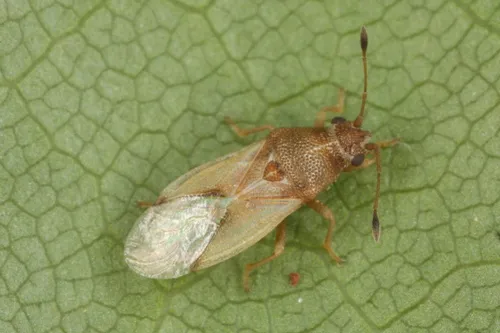
Cymus claviculus
Cymus claviculus
A small bug - length 2.5 to 3.5 mm, with a narrow shape. Cymus species have a distinctively punctured head, pronotum, scutellum and forewings. Cymus claviculus has a narrow band without punctures just next to the suture between the clavus and corium.
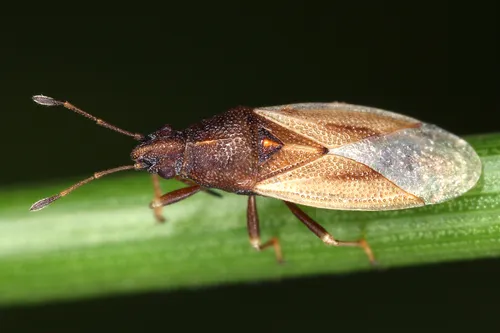
Cymus glandicolor
Cymus glandicolor
Length 4 to 5 mm. Cymus species have a narrow shape and densely punctured head, pronotum, scutellum and forewings. Cymus glandicolor is slightly larger than the two other common species , and has a pale keel on the scutellum and a dark streak on each
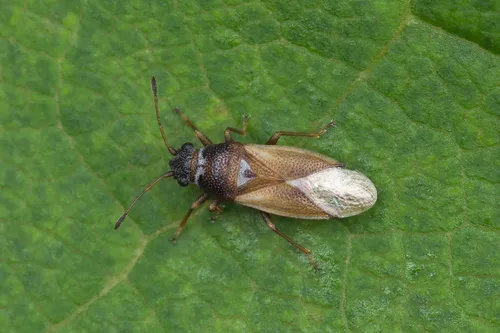
Cymus melanocephalus
Cymus melanocephalus
Length 3 to 4 mm. Cymus species have a distinctively punctured head, pronotum, scutellum and forewings. Cymus melanocephalus does not have a pale keel on the scutellum, and the forewings are entirely punctured. Although it often has a dark head, pale
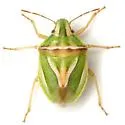
Cyptocephala elegans
Cyptocephala elegans
Identification: distinguished from all congeners by its striking green and white markings and much elongated head. The head of T. brevis is much broader. (Malloch 1919) Type Locality: "male, Loma, Texas, July 7, 1908." Allotype Locality: "Lake Lomalt
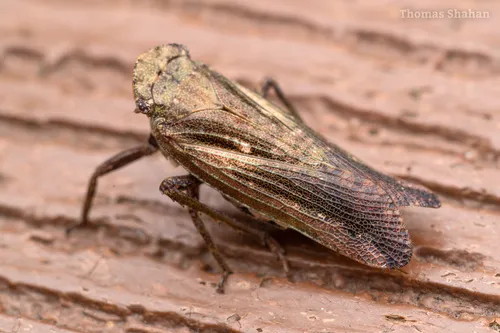
Cyrpoptus belfragei
Cyrpoptus belfragei
Identification: Forewing with distal midline solidly darkened from apex to or almost to opaque basal portion
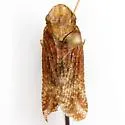
Cyrpoptus pudicus
Cyrpoptus pudicus
Identification: Head in lateral view produced anteriorly for about 1x width of eye; forewing with more hyaline areas
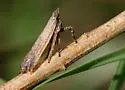
Cyrpoptus reineckei
Cyrpoptus reineckei
Identification: Forewing extensively darkened distally, with distinct transparent oblique vitta from costal margin in apical portion reaching to or beyond midline Similar to Cyrpoptus belfragei , but generally lacks dark markings on the vertex and ha
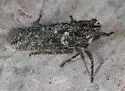
Cyrpoptus vanduzeei
Cyrpoptus vanduzeei
Identification: Midline of crown darkened to form wide stripe or longitudinal band, coronal length at middle 2x or less length next to eyes
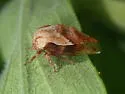
Cyrtolobus acuminatus
Cyrtolobus acuminatus
" C. acuminatus has a relatively high crest for that genus, but it doesn't have the inflated characteristics of Xantholobus muticus . I have collected C. acuminatus primarily in the midwest - mostly in Missouri and southern Ohio." - M.J. Rothschild
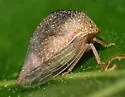
Cyrtolobus arcuatus
Cyrtolobus arcuatus
Identification: This is one of the few that lacks a band across the front of the crest in the female; males are similar to those of C. fulginosus . Members of this genus do not exceed 7 mm in length. … Andy Hamilton, 26 September, 2008
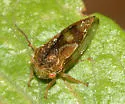
Cyrtolobus fenestratus
Cyrtolobus fenestratus
Identification: The pronotum extends to the wing tips, but is not as strongly arched as in C. fuliginosus . -Andy Hamilton
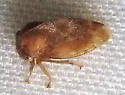
Cyrtolobus fuscipennis
Cyrtolobus fuscipennis
Identification: A highly variable species. The brown wings are generally characteristic.
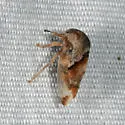
Cyrtolobus griseus
Cyrtolobus griseus
Identification: "the crest is highest in the front, and marked with a v-shaped dark area" -- comment by Andy Hamilton