
Dicyphus pallidus
This record describes Dicyphus pallidus (species). Recorded family: Miridae. Recorded order: Hemiptera.
Identification and Appearance
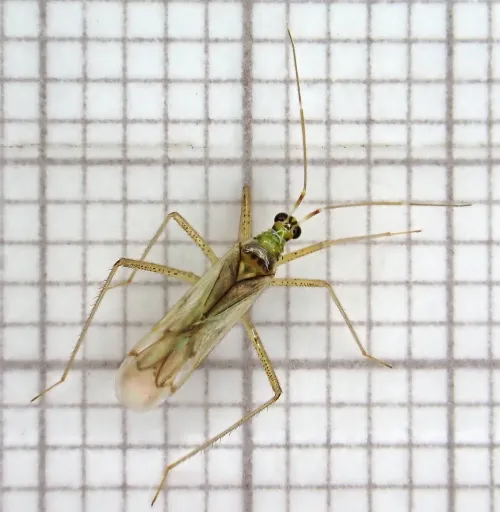
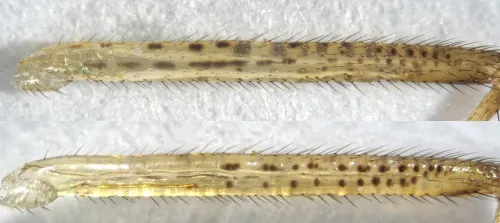
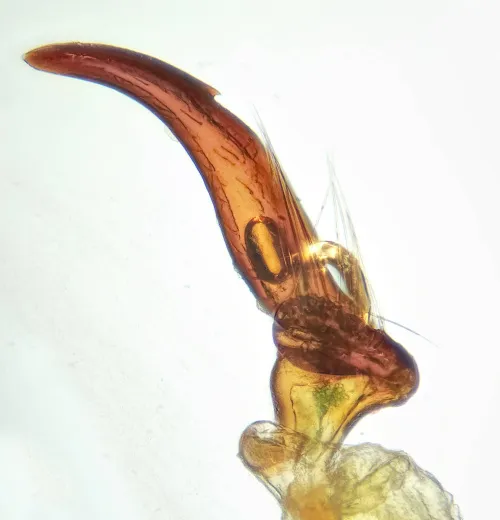
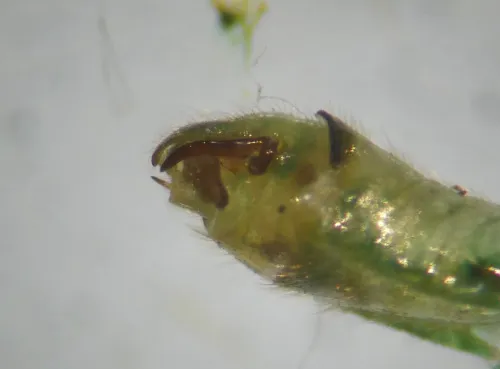
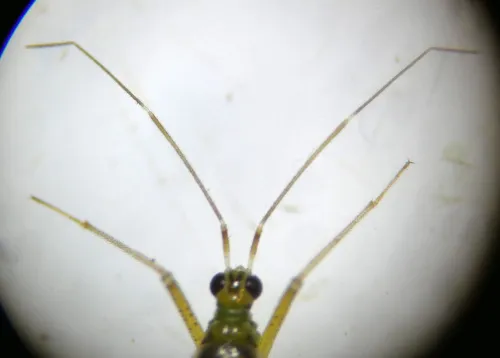
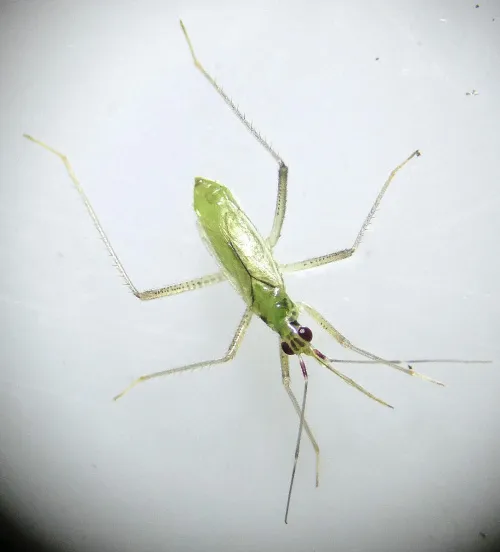
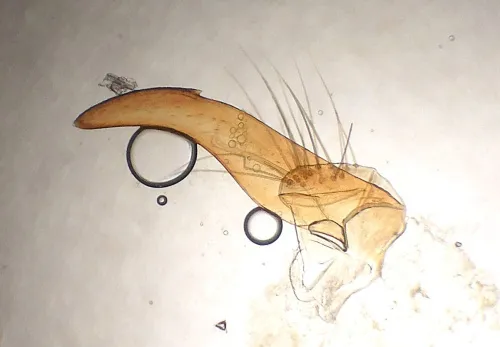
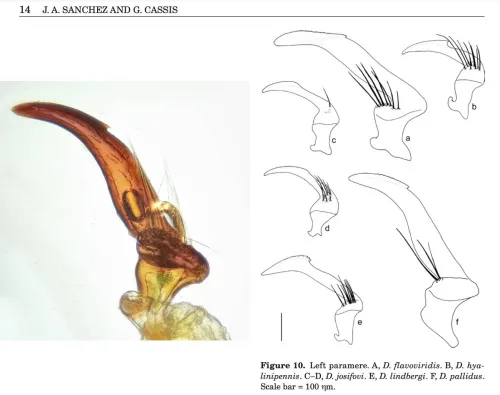
ant2 >2.1× longer than head width; body length 5.2–5.8mm in macropters, 4.3–5.1mm in brachypters; ant3 > head width across eyes; head, pronotum, ant1+2 largely pale ( D. errans tenerals are ‘dusky’); ant1 marked with red; pronotal callosities large – 2x width of collar; hairs on the hind femur all dark (pale in D. constrictus ). (ref.: B S Nau, unpublished key to Miridae, 2012) Photographs of key ID features required. Please state the host-plant Dicyphus pallidus overwinters in the egg stage, as do most Mirids. This species is assumed to be at least partly predatory. Not known in England prior to 2009, but is now considered to be widely distributed, at least in southern England. Sanchez, J.A. & Cassis, G. Towards solving the taxonomic impasse of the biocontrol plant bug subgenus Dicyphus (Dicyphus)(Insecta: Heteroptera: Miridae) using molecular, morphometric and morphological partitions. Zoological Journal of the Linnean Society, 184, 330-406.
Identification notes
- online help
Classification
Habitat and Range
Habitat
On Hedge Woundwort and other plants.
Seasonal Activity
Summer.
Diet and Behavior
Life History
Dicyphus pallidus
Additional species information
Recorded status
Not known in England prior to 2009, but is now considered to be widely distributed, at least in southern England.
About True Bugs, Cicadas, Hoppers, Aphids and Allies: the wider group
Order-level background for Hemiptera, the group containing Dicyphus pallidus. Species-specific details appear above.
Group overview
Hemiptera (true bugs) includes over 80,000 described species across cicadas, aphids, leafhoppers, shield bugs, and bed bugs. Aphids alone cost global agriculture an estimated $2.5 billion annually in crop losses.
Ecological role of the group
Many Hemiptera are essential food sources for birds and predatory insects. Cicadas provide massive nutrient pulses during emergence events - a single Brood X emergence can involve trillions of individuals across 15 states.
Economic and practical significance of the group
The brown marmorated stink bug (Halyomorpha halys) caused $37 million in apple crop losses in a single year in the U.S. Mid-Atlantic region. Bed bug infestations in the U.S. increased by 500% between 2001-2010, costing the hotel industry hundreds of millions annually.
Recorded sources for this group: USDA, EPA, University research. Imported estimates may describe particular regions or reporting periods.
Photos of Dicyphus pallidus (10)
Frequently Asked Questions About Dicyphus pallidus
What is Dicyphus pallidus?
Dicyphus pallidus is a species in the family Miridae, within the order Hemiptera.
How big is Dicyphus pallidus?
5.2–5.8mm in macropters, 4.3–5.1mm in brachypters; ant3 > head width across eyes; head, pronotum, ant1+2 largely pale (
How do you identify Dicyphus pallidus?
- online help
Where is Dicyphus pallidus found?
Habitat: On Hedge Woundwort and other plants.
When is Dicyphus pallidus active?
Dicyphus pallidus: seasonal activity - Summer..
What is the life cycle of a Dicyphus pallidus?
Dicyphus pallidus