
Dicyphus tamaninii
This record describes Dicyphus tamaninii (species). Recorded family: Miridae. Recorded order: Hemiptera.
Identification and Appearance
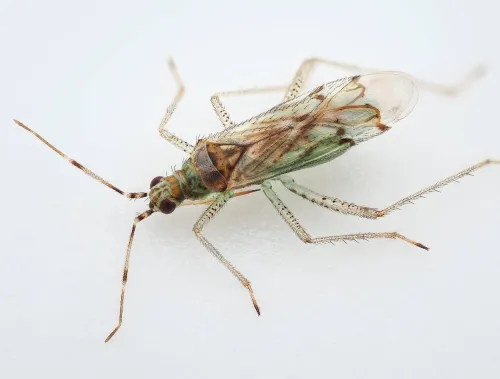
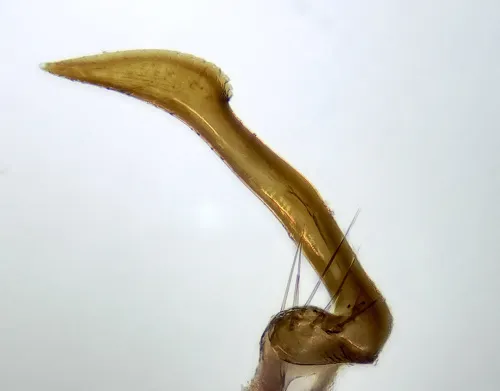
Similar to D. escalerae in appearance. Strong black upperside pubescence; ant1 with dark rings near base and apex (uniformly dark in escalerae); femora finely spotted (coarsely spotted in escalerae); tibiae pale (with a basal ring in escalerae); left clasper of male distinctive with a minutely toothed crest. Photos showing key identification features required. Associated with a variety of herbaceous plants, including Great Hairy Willowherb, Black Nightshade, Tomato, Bittersweet, Goosefoot, Dock and Knotgrass. D. tamaninii is primarily predatory and is frequently used as a biological control agent on greenhouse crops, suggesting horticultural produce as a possible pathway of introduction. First recorded in London area in 2008, spreading northwards. Contribution to the study of the genus Dicyphus: the case of D. bolivari and D. tamaninii (Hemiptera: Heteroptera: Miridae). Acta Entomologica, 64, 365-381. No additional images available for this species.
Classification
Habitat and Range
Habitat
Associated with a variety of herbaceous plants, including Great Hairy Willowherb, Black Nightshade, Tomato, Bittersweet, Goosefoot, Dock and Knotgrass.
Diet and Behavior
Life History
D. tamaninii is primarily predatory and is frequently used as a biological control agent on greenhouse crops, suggesting horticultural produce as a possible pathway of introduction.
Additional species information
Recorded status
First recorded in London area in 2008, spreading northwards.
About True Bugs, Cicadas, Hoppers, Aphids and Allies: the wider group
Order-level background for Hemiptera, the group containing Dicyphus tamaninii. Species-specific details appear above.
Group overview
Hemiptera (true bugs) includes over 80,000 described species across cicadas, aphids, leafhoppers, shield bugs, and bed bugs. Aphids alone cost global agriculture an estimated $2.5 billion annually in crop losses.
Ecological role of the group
Many Hemiptera are essential food sources for birds and predatory insects. Cicadas provide massive nutrient pulses during emergence events - a single Brood X emergence can involve trillions of individuals across 15 states.
Economic and practical significance of the group
The brown marmorated stink bug (Halyomorpha halys) caused $37 million in apple crop losses in a single year in the U.S. Mid-Atlantic region. Bed bug infestations in the U.S. increased by 500% between 2001-2010, costing the hotel industry hundreds of millions annually.
Recorded sources for this group: USDA, EPA, University research. Imported estimates may describe particular regions or reporting periods.
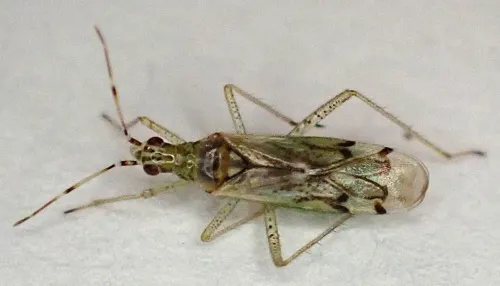
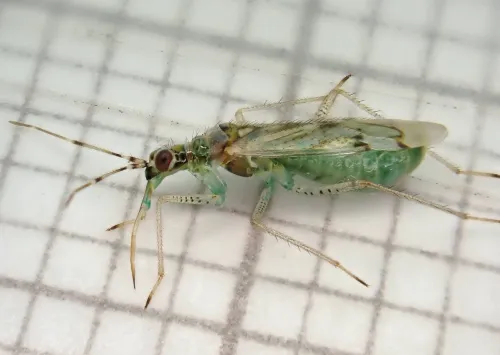
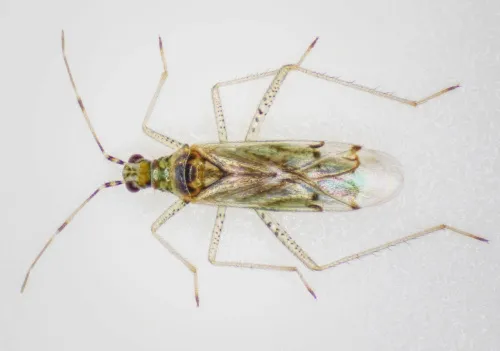
Photos of Dicyphus tamaninii (5)
Frequently Asked Questions About Dicyphus tamaninii
What is Dicyphus tamaninii?
Dicyphus tamaninii is a species in the family Miridae, within the order Hemiptera.
Where is Dicyphus tamaninii found?
Habitat: Associated with a variety of herbaceous plants, including Great Hairy Willowherb, Black Nightshade, Tomato, Bittersweet, Goosefoot, Dock and Knotgrass.
What is the life cycle of a Dicyphus tamaninii?
D. tamaninii is primarily predatory and is frequently used as a biological control agent on greenhouse crops, suggesting horticultural produce as a possible pathway of introduction.