
Draeculacephala angulifera
This record describes Draeculacephala angulifera (species). Recorded family: Cicadellidae. Recorded order: Hemiptera.
Identification and Appearance
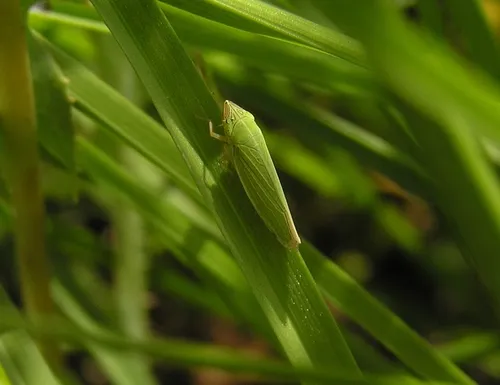
Males of this species are boldly-marked, sporting a crossbow-shaped marking on the head. The wing venation is a pale blue and the underside is completely yellow. There are notably two dark spots in front of the antennal segments of both sexes and two very close dark spots on the vertex. The markings on females are much less conspicuous (this species is highly sexually dimorphic). This species can be very difficult to differentiate from D. crassicornis , which also shares the trait of these markings. D. crassicornis is mostly confined to the Pacific coast and doesn't reach as far North as angulifera . Additionally, crassicornis is somewhat stouter in appearance, has black tips of the antennae that appear flattened, and lacks the crossbow mark on males. It is important to obtain clear photographs, as angulifera can be found in the Pacific Northwest to Oregon and extends down the Rockies. note unique crossbow marking on males: Dietrich, 1994 synonymised D. angulifera and D. manitobiana on the basis of insufficient evidence for their separation and Dietrich states that the differences in male genitalia are arbitrary. Additionally, some authors treat D. angulifera , D. crassicornis , D. floridana , and D. noveboracensis as members of the subgenus Draeculacephala (Carneocephala) , but this is not widely supported.
Classification
- Kingdom
- Animalia
- Phylum
- Arthropoda
- Class
- Insecta
- Order
- Hemiptera (True Bugs, Cicadas, Hoppers, Aphids and Allies)
- Suborder
- Auchenorrhyncha
- Superfamily
- Membracoidea
- Family
- Cicadellidae (Typical Leafhoppers)
- Subfamily
- Cicadellinae
- Tribe
- Cicadellini
- Genus
- Draeculacephala
Imported taxonomy record. Source availability varies; see the source references and editorial policy below.
Habitat and Range
Geographic Range
western United States and Canada, especially in the north.
Diet and Behavior
Diet: Grasses
Additional species information
Species notes from the sources
Etymology: Draeculacephala angulifera (Walker, 1851)
About True Bugs, Cicadas, Hoppers, Aphids and Allies: the wider group
Order-level background for Hemiptera, the group containing Draeculacephala angulifera. Species-specific details appear above.
Group overview
Hemiptera (true bugs) includes over 80,000 described species across cicadas, aphids, leafhoppers, shield bugs, and bed bugs. Aphids alone cost global agriculture an estimated $2.5 billion annually in crop losses.
Ecological role of the group
Many Hemiptera are essential food sources for birds and predatory insects. Cicadas provide massive nutrient pulses during emergence events - a single Brood X emergence can involve trillions of individuals across 15 states.
Economic and practical significance of the group
The brown marmorated stink bug (Halyomorpha halys) caused $37 million in apple crop losses in a single year in the U.S. Mid-Atlantic region. Bed bug infestations in the U.S. increased by 500% between 2001-2010, costing the hotel industry hundreds of millions annually.
Recorded sources for this group: USDA, EPA, University research. Imported estimates may describe particular regions or reporting periods.
Photos of Draeculacephala angulifera (2)
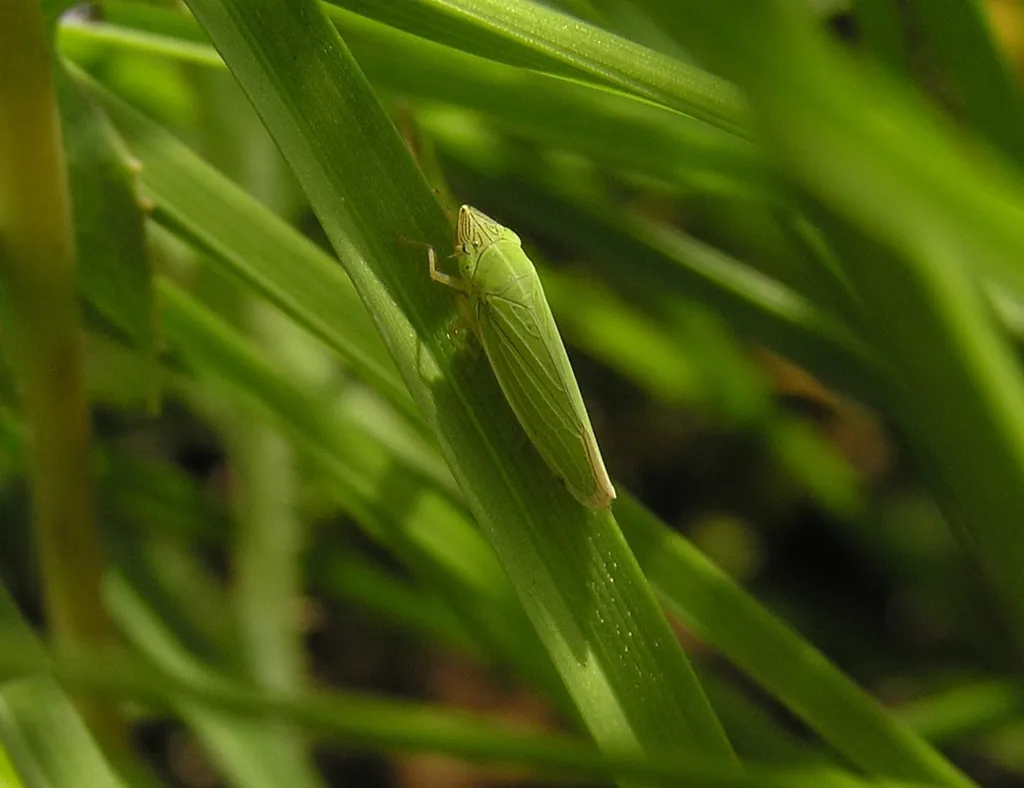
Photo credits: Contributed by v belov; Additional contributions by TurtleDude , antarctica
Frequently Asked Questions About Draeculacephala angulifera
What is Draeculacephala angulifera?
Draeculacephala angulifera is a species in the family Cicadellidae, within the order Hemiptera.
How do you identify Draeculacephala angulifera?
Males of this species are boldly-marked, sporting a crossbow-shaped marking on the head. The wing venation is a pale blue and the underside is completely yellow. There are notably two dark spots in front of the antennal segments of both sexes and two very close dark spots on the vertex. The markings on females are much less conspicuous (this species is highly sexually dimorphic). This species can be very difficult to differentiate from D. crassicornis , which also shares the trait of these markings. D. crassicornis is mostly confined to the Pacific coast and doesn't reach as far North as angulifera . Additionally, crassicornis is somewhat stouter in appearance, has black tips of the antennae that appear flattened, and lacks the crossbow mark on males. It is important to obtain clear photographs, as angulifera can be found in the Pacific Northwest to Oregon and extends down the Rockies. note unique crossbow marking on males:
Where is Draeculacephala angulifera found?
Range: western United States and Canada, especially in the north.
What does Draeculacephala angulifera eat?
The diet of the Draeculacephala angulifera includes Grasses.