
Draeculacephala robinsoni
This record describes Draeculacephala robinsoni (species). Recorded family: Cicadellidae. Recorded order: Hemiptera.
Identification and Appearance
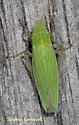
A green species with (almost always) blue venation, usually having a dark face. The abdominal sterna are described as being pale/yellow, but there is a high degree of variation among individuals (some can be very dark brown with yellow parts). Females can have dark faces, but males are usually darker as a whole on the underside. This species mainly differs from the similar D. mollipes based on size, coupled with the colour of the face. D. mollipes usually has a yellow face, though it can sometimes be brown to the point of overlap with the morphology of robinsoni , so it's quite important to get lateral and ventral photos coupled with a measurement. One of (if not the) most common members of the genus. The status of Draeculacephala zeae has been under debate-Dietrich's taxonomy is followed here: The 2S and 3S apodemes are highly variable in shape among individuals of D. robinsoni based on slight differences in the shape of the 2S apodemes. [Hamilton's] division, between those individuals having the lower half of the apodeme produced more strongly and those having the upper have more produced, seems arbitrary, and, although possibly correlated with body length (Hamilton, 1985), is not supported by other morphological characters. Without additional evidence to suggest that these groups represent distinct species, I consider them synonyms. - Dietrich, 1994 Hamilton & Chandler (2017) disputed this based on genetic barcoding, reinstating the species under the statement that zeae specimens cluster separately from those of robinsoni . This opens up the possibility that this species is actually a complex and there is the possibility of intergradation. Update April 2023: The World Auchenorrhyncha Database treats D. zeae as a valid species and the taxon is reinstated on the site. For now, we will treat specimens with this color form as D. robinsoni pending further work on the genus. The holotype of D. zeae is here:
Classification
- Kingdom
- Animalia
- Phylum
- Arthropoda
- Class
- Insecta
- Order
- Hemiptera (True Bugs, Cicadas, Hoppers, Aphids and Allies)
- Suborder
- Auchenorrhyncha
- Superfamily
- Membracoidea
- Family
- Cicadellidae (Typical Leafhoppers)
- Subfamily
- Cicadellinae
- Tribe
- Cicadellini
- Genus
- Draeculacephala
Imported taxonomy record. Source availability varies; see the source references and editorial policy below.
Habitat and Range
Habitat
grasslands, lawns, fields, etc.; also found in somewhat specialised habitats
Geographic Range
widespread throughout the U.S. and Canada east of Rocky Mts.; populations in western Canada and Washington (Hamilton, 1985), though these individuals seem to have paler venation
Diet and Behavior
Diet: grasses
Additional species information
Species notes from the sources
Etymology: Draeculacephala robinsoni Hamilton, 1967
About True Bugs, Cicadas, Hoppers, Aphids and Allies: the wider group
Order-level background for Hemiptera, the group containing Draeculacephala robinsoni. Species-specific details appear above.
Group overview
Hemiptera (true bugs) includes over 80,000 described species across cicadas, aphids, leafhoppers, shield bugs, and bed bugs. Aphids alone cost global agriculture an estimated $2.5 billion annually in crop losses.
Ecological role of the group
Many Hemiptera are essential food sources for birds and predatory insects. Cicadas provide massive nutrient pulses during emergence events - a single Brood X emergence can involve trillions of individuals across 15 states.
Economic and practical significance of the group
The brown marmorated stink bug (Halyomorpha halys) caused $37 million in apple crop losses in a single year in the U.S. Mid-Atlantic region. Bed bug infestations in the U.S. increased by 500% between 2001-2010, costing the hotel industry hundreds of millions annually.
Recorded sources for this group: USDA, EPA, University research. Imported estimates may describe particular regions or reporting periods.
Photos of Draeculacephala robinsoni (5)
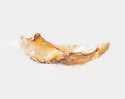
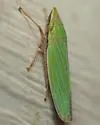
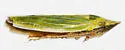
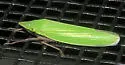
Photo credits: Contributed by john and jane balaban; Additional contributions by v belov , TurtleDude , antarctica
Frequently Asked Questions About Draeculacephala robinsoni
What is Draeculacephala robinsoni?
Draeculacephala robinsoni is a species in the family Cicadellidae, within the order Hemiptera.
How big is Draeculacephala robinsoni?
♂♂ 6.5-8.2mm, ♀♀ 8.0-10.5mm
How do you identify Draeculacephala robinsoni?
A green species with (almost always) blue venation, usually having a dark face. The abdominal sterna are described as being pale/yellow, but there is a high degree of variation among individuals (some can be very dark brown with yellow parts). Females can have dark faces, but males are usually darker as a whole on the underside. This species mainly differs from the similar D. mollipes based on size, coupled with the colour of the face. D. mollipes usually has a yellow face, though it can sometimes be brown to the point of overlap with the morphology of robinsoni , so it's quite important to get lateral and ventral photos coupled with a measurement.
Where is Draeculacephala robinsoni found?
| Feature | Details |
|---|---|
| Habitat | grasslands, lawns, fields, etc.; also found in somewhat specialised habitats |
| Range | widespread throughout the U.S. and Canada east of Rocky Mts.; populations in western Canada and Washington (Hamilton, 1985), though these individuals seem to have paler venation |
What does Draeculacephala robinsoni eat?
The diet of the Draeculacephala robinsoni includes grasses.