
True Bugs, Cicadas, Hoppers, Aphids and Allies
Order Hemiptera
The True Bugs, Cicadas, Hoppers, Aphids and Allies (Order Hemiptera) includes 7,349 species across 120 families and 1,727 genera in our directory.
About True Bugs, Cicadas, Hoppers, Aphids and Allies
Hemiptera (true bugs) includes over 80,000 described species across cicadas, aphids, leafhoppers, shield bugs, and bed bugs. Aphids alone cost global agriculture an estimated $2.5 billion annually in crop losses.
Economic Impact
The brown marmorated stink bug (Halyomorpha halys) caused $37 million in apple crop losses in a single year in the U.S. Mid-Atlantic region. Bed bug infestations in the U.S. increased by 500% between 2001-2010, costing the hotel industry hundreds of millions annually.
Ecological Role
Many Hemiptera are essential food sources for birds and predatory insects. Cicadas provide massive nutrient pulses during emergence events - a single Brood X emergence can involve trillions of individuals across 15 states.
Families in Hemiptera (120)
Species in Hemiptera (7,349)
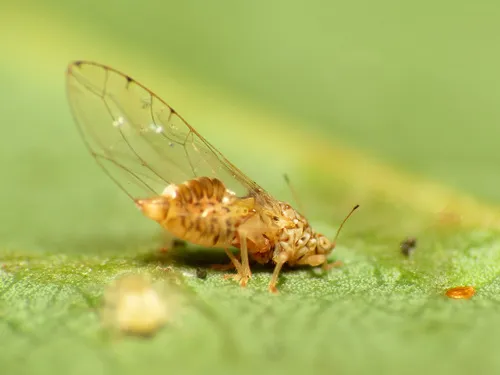
Bay Sucker
Lauritrioza alacris
Identification: Long, sharply pointed wings. The three main veins in the forewing arising from a common point, usually pointed forewings with radular spinules.
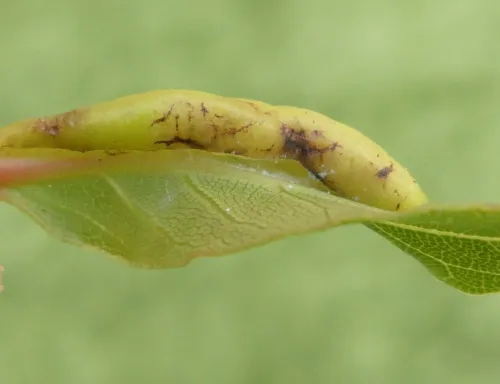
Bay Sucker
Trioza alacris
Adult length 3.5 to 4 mm. Lauritrioza alacris has long, sharply pointed wings, the outermost vein is short and curved, and only the last two antennal segments are dark. Its colouring varies dramatically with age, the dorsal surfaces darkening to blac
Beet Leafhopper
Neoaliturus tenellus
Identification: Females are easily recognized by the dark-margined notch at the base of the ovipositor that looks exactly like a burn mark left on the edge of a table from a lit cigarette. Males are equally distinctive from the underside, having trun
Belostoma ellipticum
Belostoma ellipticum
Identification: Reported from TX and AZ, but no verifiable records have been found. All specimens from TX have been B. subspinosum
Belostoma subspinosum
Belostoma subspinosum
Identification: Larger than other Belostoma in our area, except for B. ellipticum . Compared to B. ellipticum , B. subspinosum has anteoculus shorter than interoculus; males with dorsal arms of phallotheca short or slightly elongated.
Bermudagrass Leafhopper
Xyphon reticulatum
Identification: coloration highly variable, with wings from green to almost black
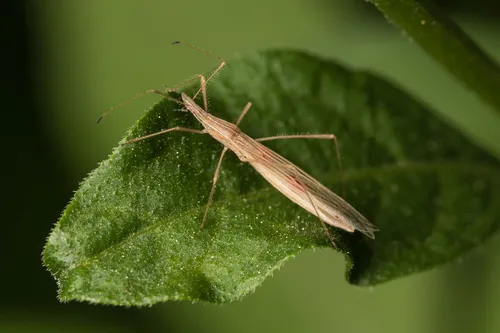
Berytinus hirticornis
Berytinus hirticornis
A larger (7-11mm) but very slender stilt-bug with erect hairs on the 1st antennal segment, which are longer than the width of the segment. The clubs of the 1st antennal segment and femora are pale. Good photographs of specimen showing key features As
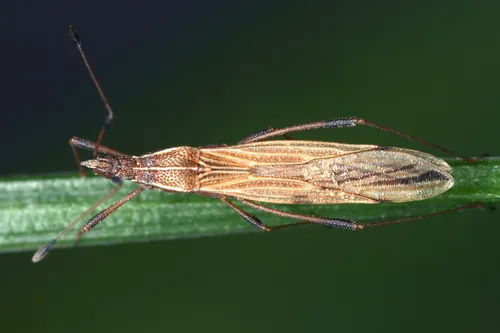
Berytinus minor
Berytinus minor
A small (5-7mm), very slender, straw-coloured bug with short 2nd antennal segments. The 1st antennal segment has a black club, and the femora are tipped with brown (not black). The head is shorter than the pronotum. grassland with leguminous species
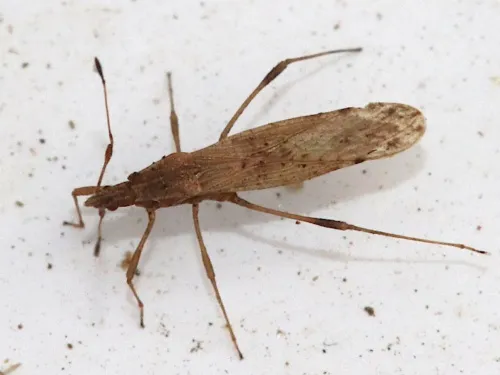
Berytinus montivagus
Berytinus montivagus
A small (5-7mm), very slender straw-coloured bug with short 2nd antennal segment. The 1st antennal segment club is brown and paler than the dark clubbed 4th segment. The ends of the hind femora are also dark. The tip of the wing membrane is rounded a
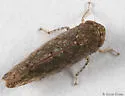
Bespeckled Leafhopper
Paraphlepsius irroratus
Identification: A rather slender species, rather uniform in color, but sometimes with the vertex and scutellum paler than the pronotum and forewings.
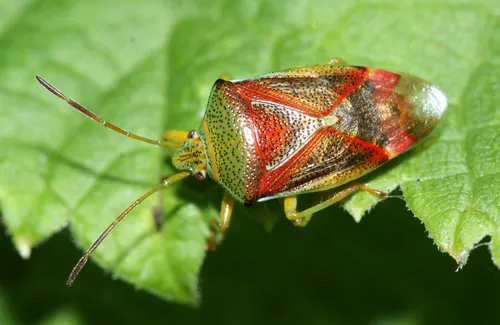
Birch Shieldbug
Elasmostethus interstinctus
Length 8-11.5 mm. A distinctive species, although similar to the Hawthorn Shieldbug (see below). Confusion with the larger and more elongate Hawthorn Shieldbug ( A. haemorrhoidale ) is possible. The lateral extensions of the pronotum are smaller in E
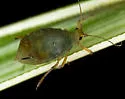
Bird Cherry Oat Aphid
Rhopalosiphum padi
Identification: Wingless adults are green with reddish areas toward the end of the abdomen and around the bases of the cornicles. Winged adults have black heads and thoraxes and green abdomens.
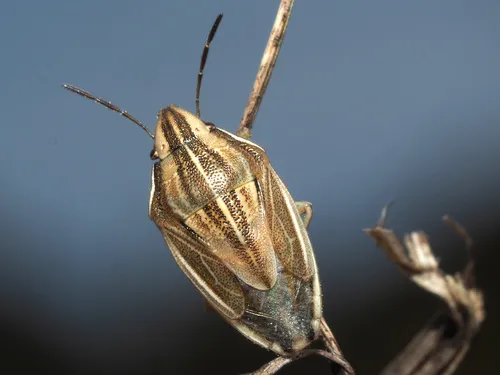
Bishop's Mitre Shieldbug
Aelia acuminata
Length 8 to 9 mm. A large and distinctive striped shieldbug with an obviously pointed head and ridged pronotum. Adult: All year, with new adults found from August onwards. There is one generation per year, adults mating and laying eggs in spring and
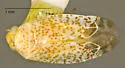
Bisulcopsallus fulvipunctatus
Bisulcopsallus fulvipunctatus
Identification: "Recognized by the relatively small size among Bisulcopsallus spp., average length approximately 2.7 [mm], the pale background coloration with dull orange spots primarily on the coriaceous parts of the hemelytra..." and genitalic char
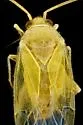
Bisulcopsallus pallidus
Bisulcopsallus pallidus
Identification: "Recognized by the relatively large size among Bisulcopsallus spp.,... the entirely pale coloration, and the structure of the male genitalia..."
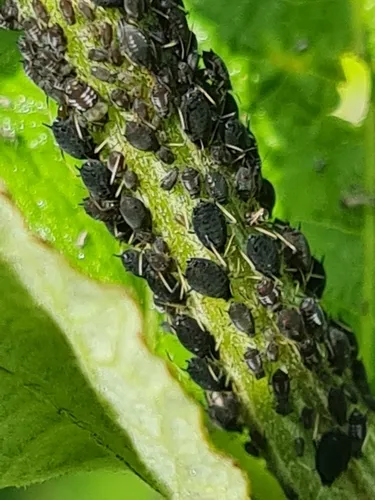
Black Bean Aphid
Aphis fabae
The black bean aphid is more commonly known as 'Black fly'. Adult aphids are up to 2mm long and elliptical in shape. They are black in colour, although they can also appear dark green or purple. Colonies can usually be found on the undersides of leav
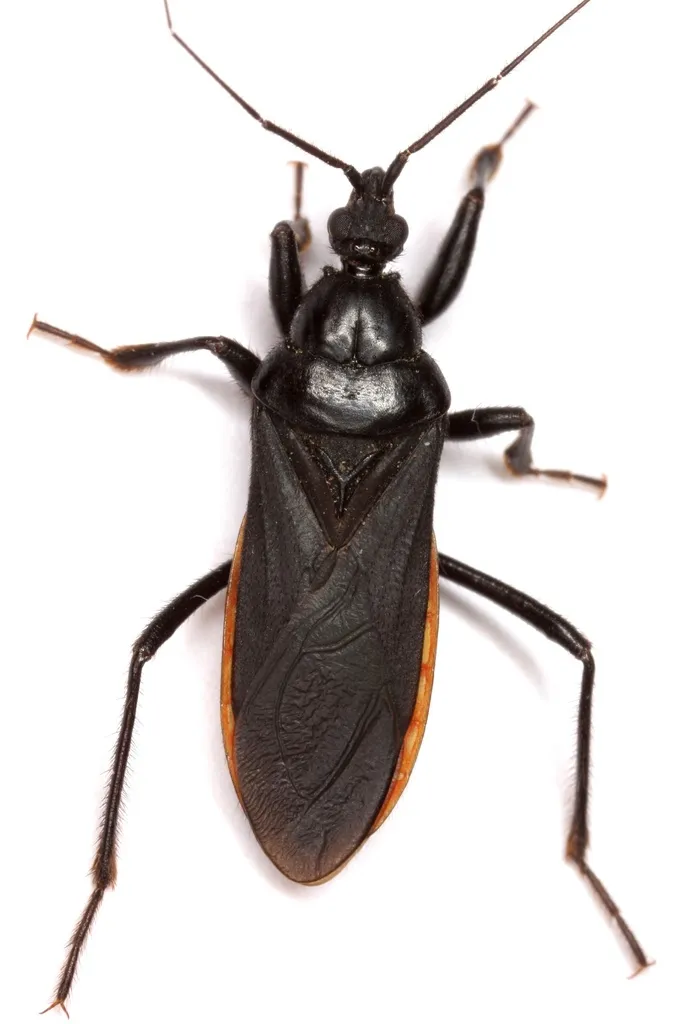
Black Corsair
Melanolestes picipes
Identification: Males macropterous (fully winged); female wings variable, often micropterous Can inflict a painful bite but does not feed on blood and does not transmit diseases.
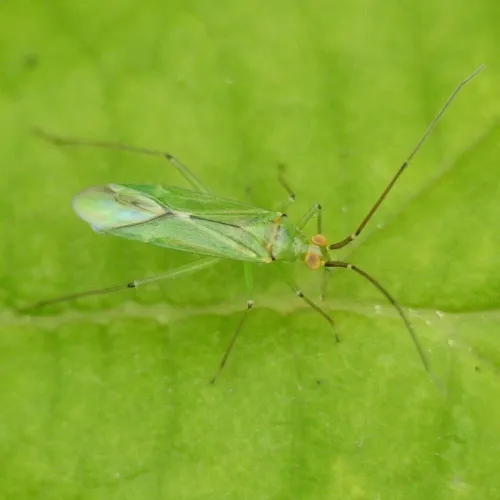
Black Kneed Capsid
Blepharidopterus angulatus
Length 5 to 6 mm. A slender and parallel-sided blue-green species with black patches at the base of the rather bristly tibia ('knees'), parts of the antennae and at the posterior angles of the pronotum The length of the first antennal segment is roug
Black Larch Aphid
Cinara laricifex
Identification: Apterae are dark brown to bronze, without wax Sometimes confused with the European C. laricis (Hartig)
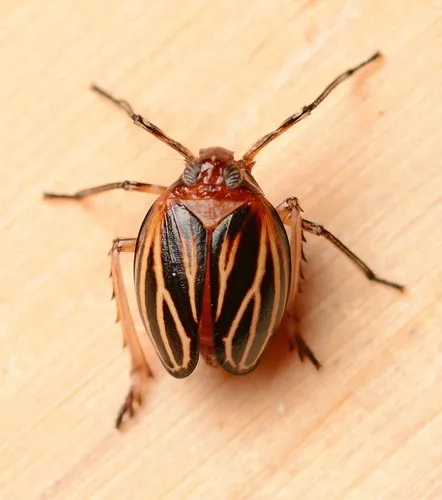
Black Leaf-Leg
Phylloscelis atra
Identification: species comes in several very different color patterns (Andy Hamilton, 2.i.2013) a red/orange-striped variety 'albovenosa' is a mimic of a number of similarly colored distasteful beetles in the genus Cryptocephalus ; this color variet
Black Locust Treehopper
Vanduzea arquata
Identification: Brown, wedge-shaped treehopper with no crest, white arc-shaped mark on side, aggregates on Black Locust. An interesting little critter, to be looked for on Black Locust. I've coined the common name based on the host plant association.
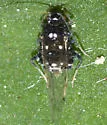
Black Pecan Aphid
Melanocallis caryaefoliae
Identification: only black aphid that attacks pecan foliage. The adult may be various shades of green or black. Nymphs tend to be lighter in color than the adults, especially in spring when the first through fourth instars have little dark pigment. A
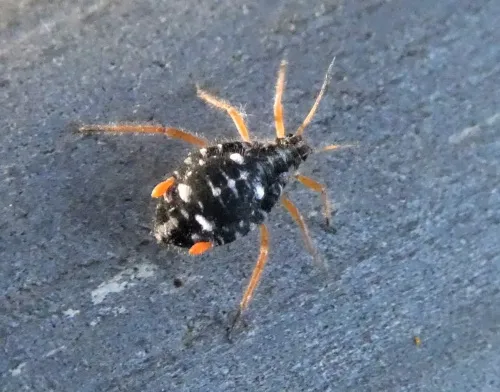
Black Willow Bark Aphid
Pterocomma salicis
These are large greenish black to black aphids 3.2 - 4.5 mm in length with pale grey spots of waxy powder. The siphunculi are bright orange. The legs and antennae are pinkish-brown. They feed on the two year old twigs of willows (Salix species). Diff
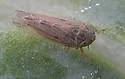
Black-faced Leafhopper
Graminella nigrifrons
Identification: The pattern of black spots along the head edge and the dark-marked face are characteristic of this species. agricultural pest, vector of plant viruses Diseases Transmitted ( 3 ) Maize chlorotic dwarf virus Waikavirus Maize bushy stunt
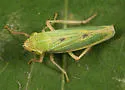
Black-ledged Sharpshooter
Draeculacephala noveboracensis
Identification: This species is green to yellow-green with blue wing venation and a blunter head than most members of the genus. This species is very similar to D. angulifera and D. crassicornis , but has subtle features that usually allow differenti
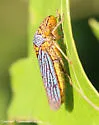
Black-winged Sharpshooter
Oncometopia nigricans
Individuals of this species from northern Florida and southeastern Georgia are externally identical to O. orbona (Rakitov, 2016). Therefore, individuals that look like O. orbona in northern Florida can likely be tentatively assigned to nigricans, sin
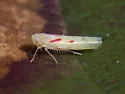
Blackberry Leafhopper
Dikrella californica
used as intermediary host to Anagnus epos , a parasitic wasp used to control the Western grape leafhopper, Erythroneura elegantula [ Ferro in ]
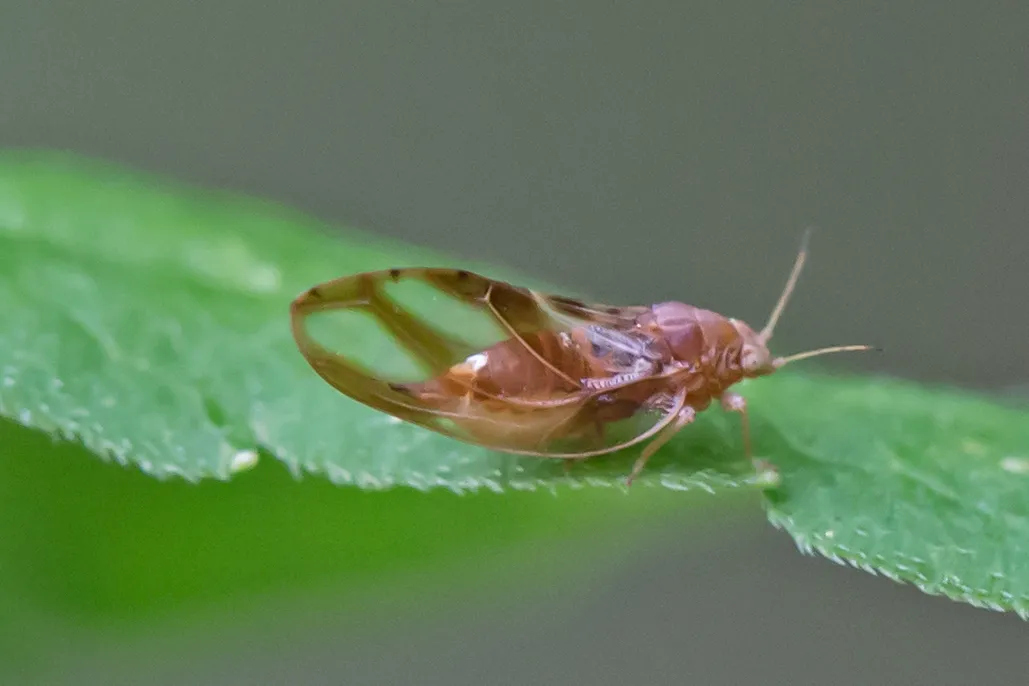
Blackberry Psyllid
Phylloplecta tripunctata
Identification: Forewing broad and angulate with brown vittae along veins; marginal cells very small
Blackmargined Pecan Aphid
Monellia caryella
Identification: Found on pecan trees. A clear to yellow or pale green aphid. Adults hold their wings flat over the back of the body. distinguished from the related Yellow Pecan Aphid, Monelliopsis pecanis Bissel, which lacks the black front margin
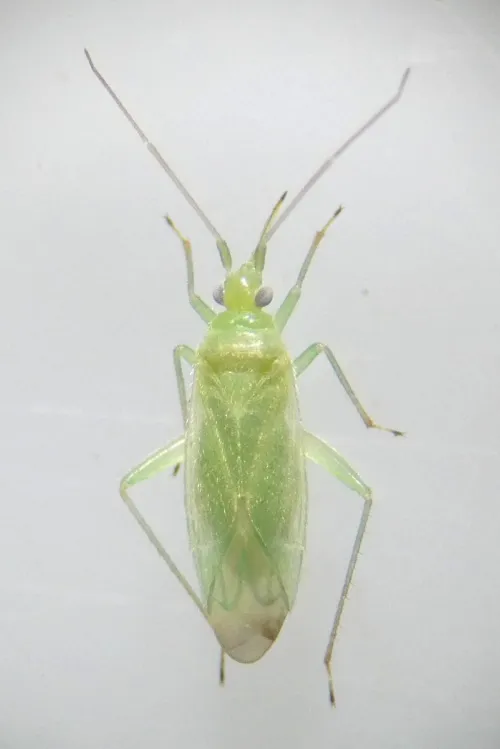
Blepharidopterus diaphanus
Blepharidopterus diaphanus
Length 4.5mm. Translucent, very pale green; upperside with fine pale erect hairs. Rostrum short, front femur with fringe of long fine pale hairs along lower edge; pronotum & antennae entirely pale.
Blissus barberi
Blissus barberi
Identification: see spmn in the TTU Museum Type Locality: College Station, Brazos Co., Texas
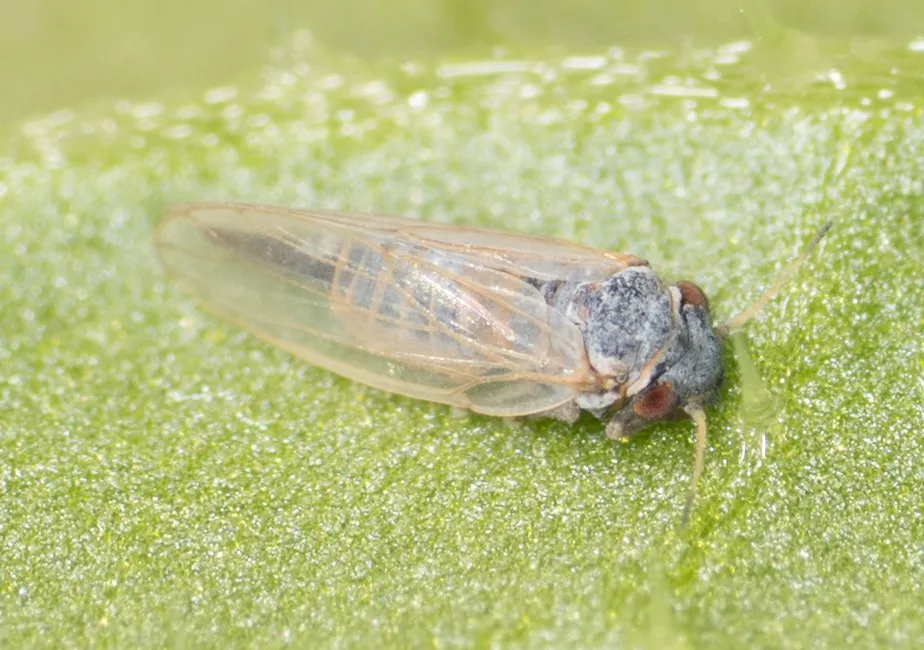
Blue Gum Psyllid
Ctenarytaina eucalypti
Blue Gum Psyllid (Ctenarytaina eucalypti) is a species in the family Aphalaridae, belonging to the order Hemiptera (True Bugs, Cicadas, Hoppers, Aphids and Allies). It is classified within the subfamily Spondyliaspidinae, suborder Sternorrhyncha, sup
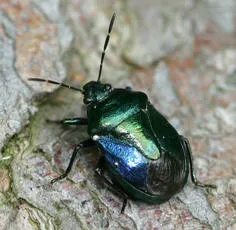
Blue Shieldbug
Zicrona caerulea
Length 5-7 mm. A medium-sized dark shieldbug with a deep blue-green metallic sheen and a dark wing membrane. The nymphs can resemble early instars of Troilus luridus but the legs of Zicrona caerulea are all dark rather than mottled and the head and p
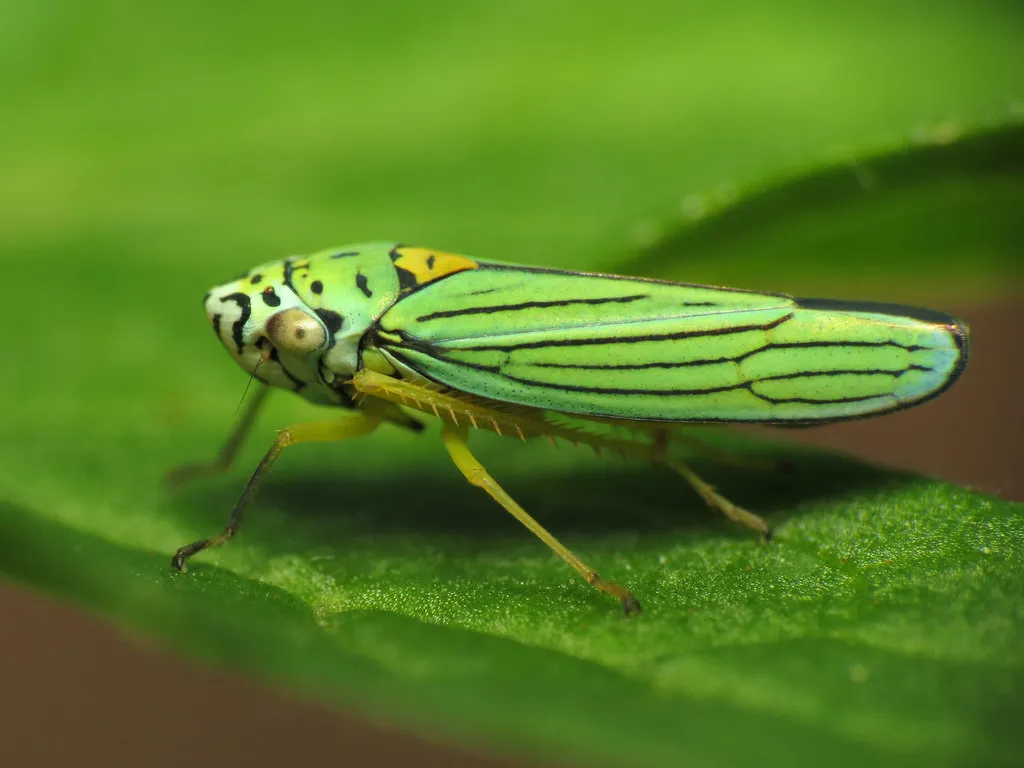
Blue-green Sharpshooter
Graphocephala atropunctata
Identification: A rather variable species ranging across a number of blue and green forms, usually based on population (due to genetic isolation). Populations in Northern California are often a dark green with fainter markings, while populations in S
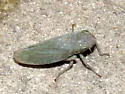
Bog Leafhopper
Helochara communis
Identification: "This dark green leafhopper has the back and wings covered with pits... The male also has the tip of the antenna expanded, forming a black diamond-shaped 'club.'" --Dr Hamilton
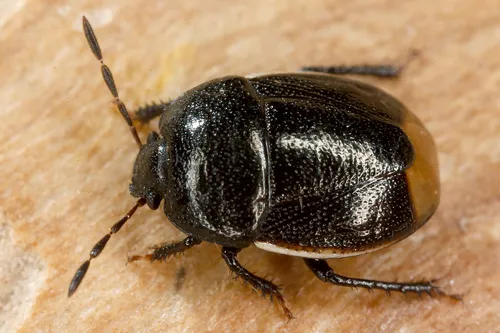
Bordered Shieldbug
Legnotus limbosus
Length 3.5-4.5 mm. Front margin of head strongly notched ; outer margin of fore-wing pale over the whole or most of the length of the corium (c.f. Legnotus picipes ). Associated with bedstraws ( Galium sp) growing on dry friable soils in sunny situat
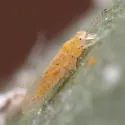
Boreioglycaspis melaleucae
Boreioglycaspis melaleucae
A rare example of biological control in the Psylloidea, this species was intentionally introduced into southern Florida in 2002 to control Melaleuca quinquenervia which is considered an invasive weed in the state. In 2009, the species was discovered
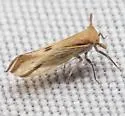
Bostaera nasuta
Bostaera nasuta
Described from 10 spmns collected in south, east and north Colorado (Ball 1902)
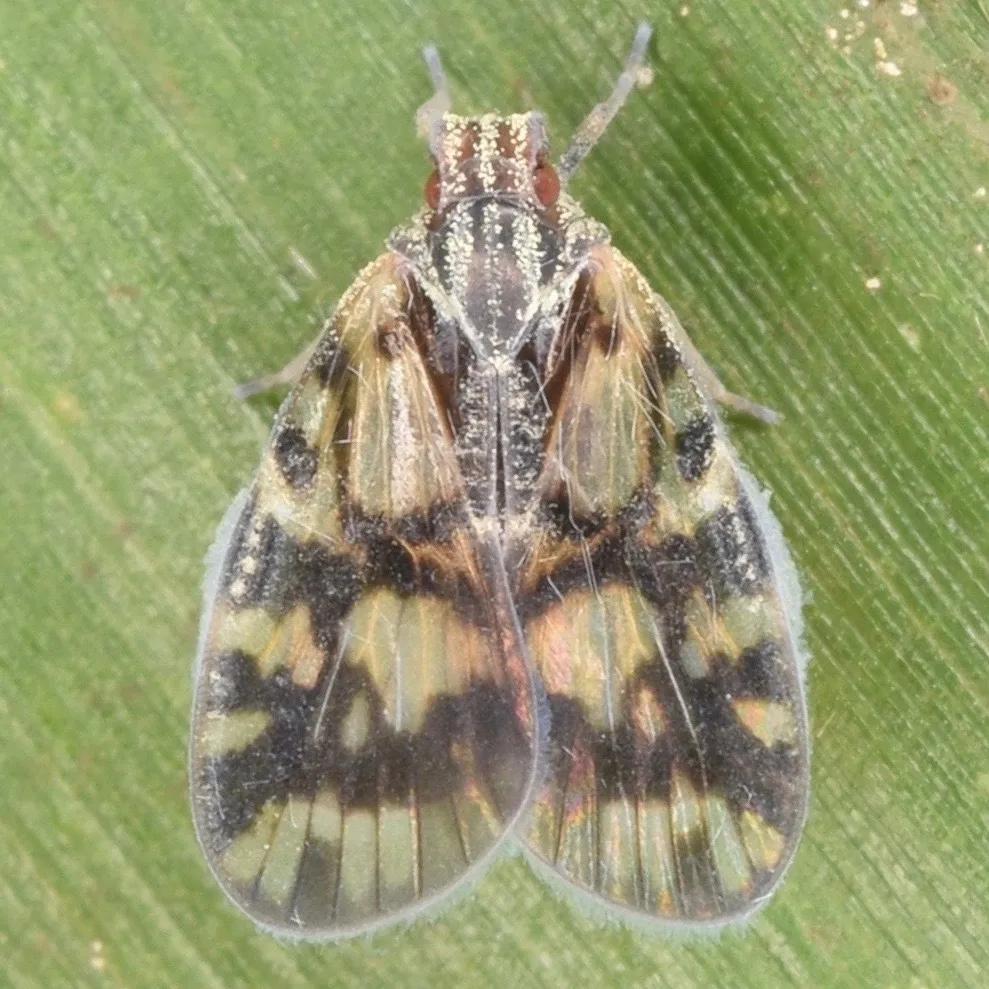
Bothriocera cognita
Bothriocera cognita
Identification: wing markings darker than in B. maculata
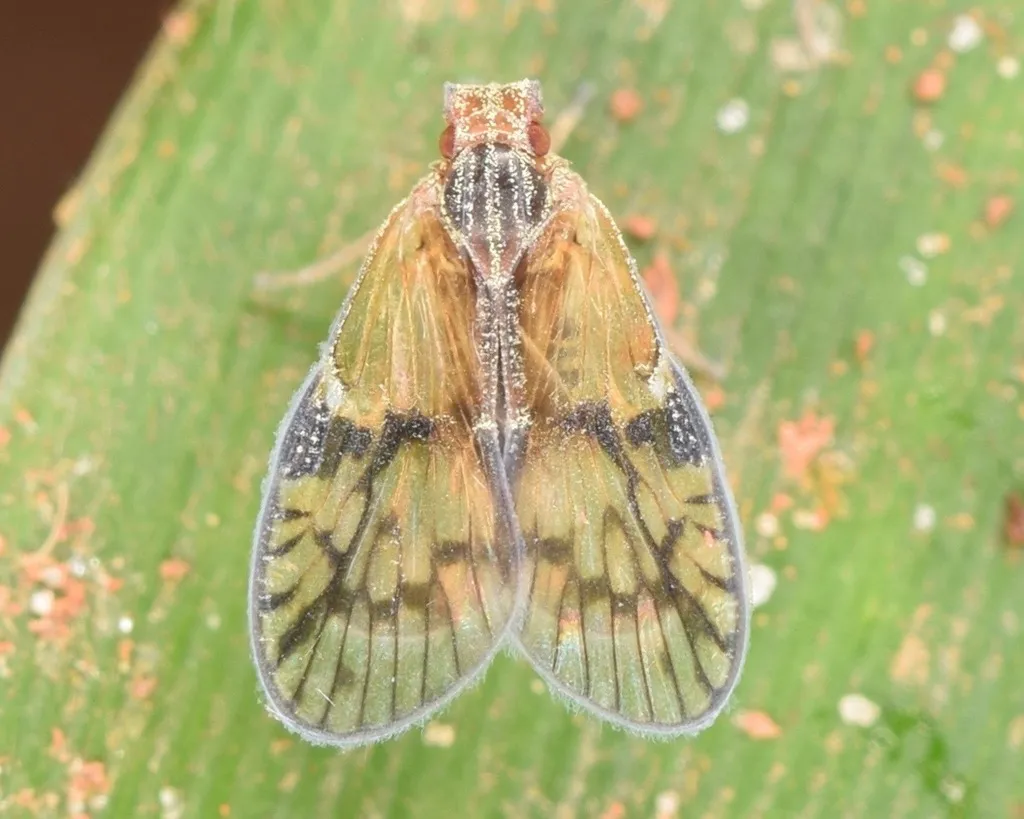
Bothriocera datuna
Bothriocera datuna
This entity in the past has been misattributed to Bothriocera maculata Caldwell, 1943 through internet photos. There are many lookalike species present in the tropics, especially in the Caribbean.
Bothriocera knulli
Bothriocera knulli
Type Locality: Gillespie Co., Texas, VI-23-1940, D.J. & J.N. Knull Enchanted Rock is located in Gillespie Co., and is a primary geological feature of central Texas.
Bothriocera tex
Bothriocera tex
Identification: Holotype The type locality per the labels of the type specimens is "Devils Riv. TX." Per Kramer : "Devils River is mainly in Val Verde County, Texas, which borders Mexico on the south. It appears likely that this is where Bishop, Prat
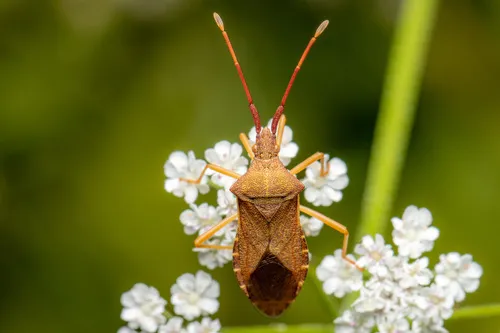
Box Bug
Gonocerus acuteangulatus
Length 11 to 14 mm. A relatively large reddish-brown squashbug, distinguished from the commoner Coreus marginatus by the narrower abdomen and more pointed lateral extremities of the pronotum. Nymphs have a green abdomen which can become dull red late
Boxelder Psyllid
Cacopsylla negundinis
Identification: Close to P. annulata , but antennae unicolorous except for black tips
Boxwood Psyllid
Spanioneura buxi
Identification: see comment here by Chris Mallory. Nymphs occur on young terminal leaves, causing them to curl ( 4 )
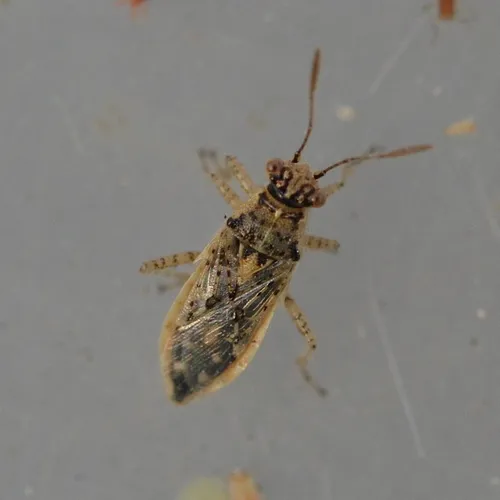
Brachycarenus tigrinus
Brachycarenus tigrinus
Length 6-7mm. Straw-coloured with extensive black markings on the head, adjacent to the eyes. Pronotum is speckled with black, particularly on the hind angles and the scutellum is also marked with black at the base. The head is noticeabl;y shorter th
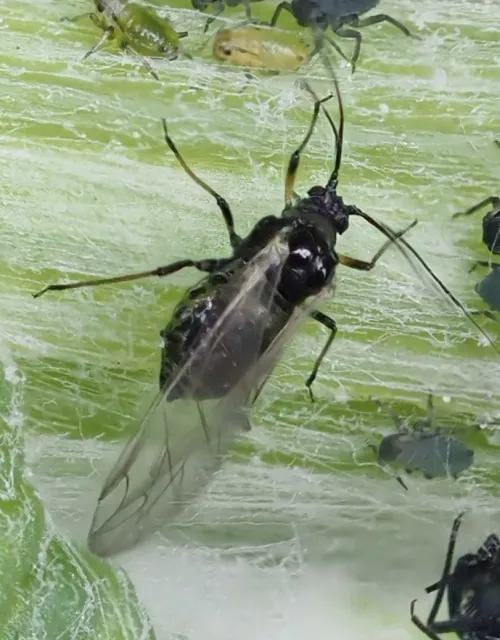
Brachycaudus cardui
Brachycaudus cardui
Brachycaudus cardui apterae are brownish-yellow, pale green or brown, with separate cross bars on thoracic segments, a large shining black spot situated dorsally on the abdomen and 2 or 3 black stripes at the tip. The immatures are yellowish or reddi
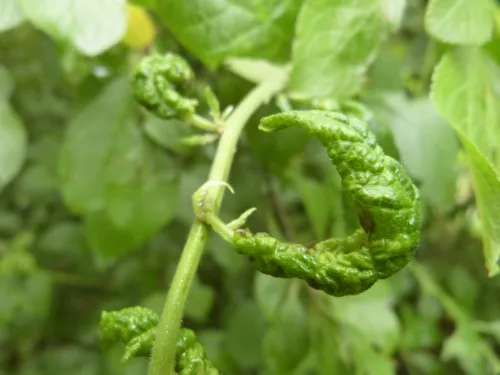
Brachycaudus helichrysi
Brachycaudus helichrysi
Brachycaudus helichrysi aphids causes distortion of leaves of various Prunus species (primary host) causing the leaves to become rolled up tightly in spring. These are not true galls, and other aphids may cause similar leaf distortions. Aphids 2 mm,
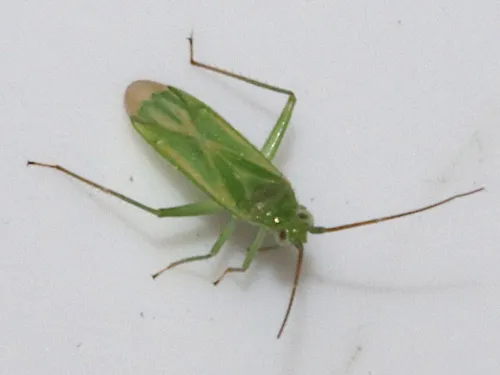
Brachynotocoris puncticornis
Brachynotocoris puncticornis
4-5mm long. Green with yellow borders adjoining the hemelytral margins (usually). The base of the hemelytra are wider than the pronotum and the scutellum is longer than the pronotum. The rostrum is short, and expanded near the apex as in Platycranus
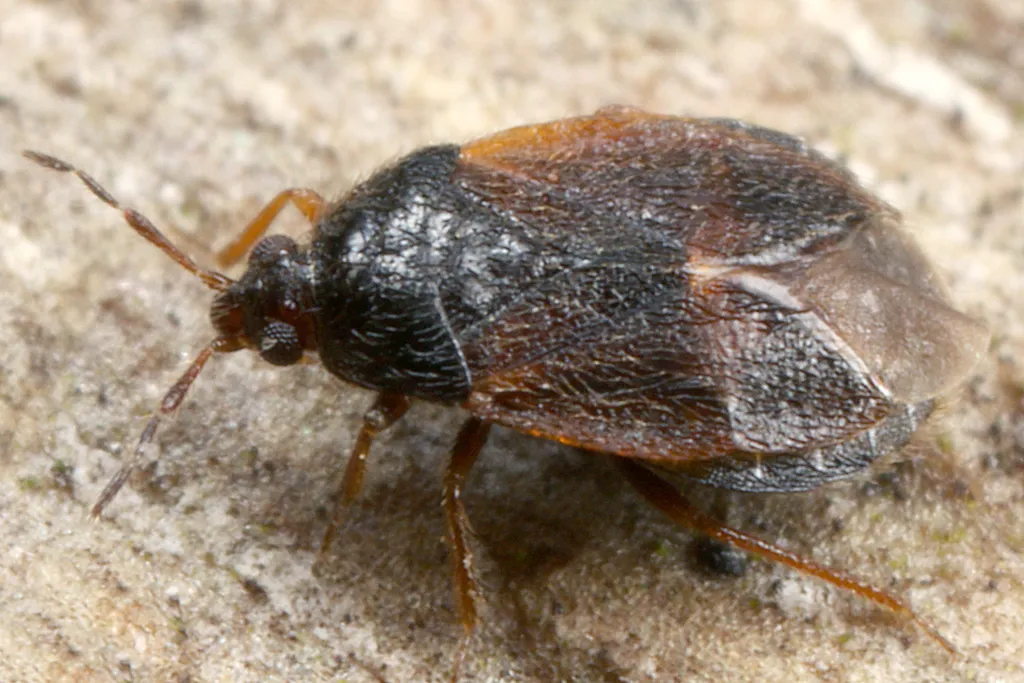
Brachysteles parvicornis
Brachysteles parvicornis
Identification: adult images: [A] | [B] earliest record in our area: NJ 1925
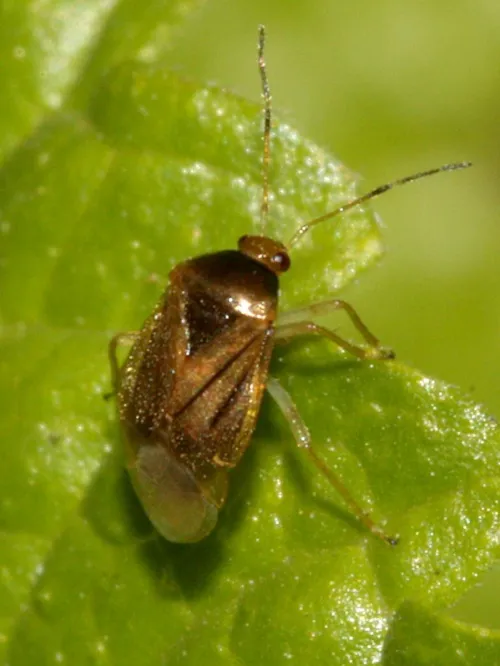
Bracken Bug
Monalocoris filicis
A small bug (length only 2 to 3 mm). The rich brown colouring and the orange head are quite distinctive. This species is always macropterous. Feeds primarily on the sporangia of ferns. Local but sometimes abundant where found. No additional images av
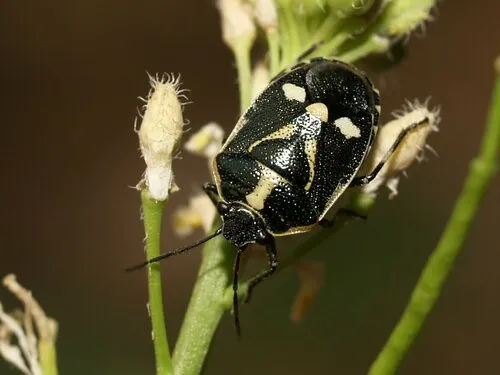
Brassica Shieldbug
Eurydema oleracea
Length 6 to 7 mm. Dramatically coloured, the dark metallic green/blue-black ground colour is overlain with red, yellow, creamy white or orange markings. Larvae may be found May-July on a range of Brassicas including Garlic Mustard and Horse-radish. T
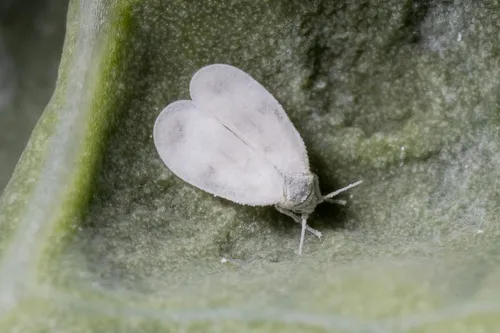
Brassica Whitefly
Aleyrodes proletella
Adults are 1.5 mm in length. They have white wings with four inconspicuous grey spots. The wings are white due to a powdery wax. Widespread and fairly frequent in Britain. No additional images available for this species.
Brazilian Leafhopper
Protalebrella brasiliensis
Identification: Det. Kyle Kittelberger, 2021 in our area, may be an introduced species
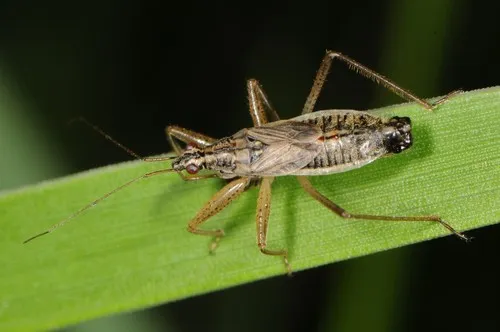
Broad Damsel Bug
Nabis flavomarginatus
Length 7 to 9 mm. N. flavomarginatus is a large and distinctive nabid which has a broad body and rather short wings. The upper surface of the abdomen is densely covered in short golden hair. This bug is always brachypterous (partly-winged), the forew
Brochymena myops
Brochymena myops
Identification: The anterolateral pronotal margin is strongly contrastingly pale ivory. The humeri are triangular. This is the largest species in the genus (19-20 mm). It has a pair of large, elliptical, ivory to reddish-yellow ocellar callouses on t
Brochymena punctata
Brochymena punctata
Identification: Head roundly truncate anterior to subapical teeth, unlike in other congeners in ne US rather uncommon
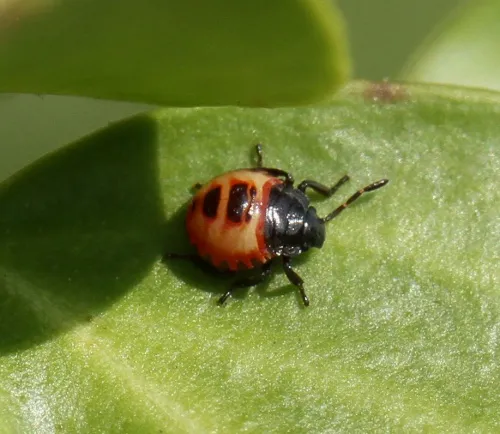
Bronze Shieldbug
Troilus luridus
Length 10-12 mm. A large predatory shieldbug which has an orange band on the penultimate antennal segment. The legs are brown and the scutellum lacks an orange tip, further distinguishing this species from the Forest Bug. In addition, the frontal pro
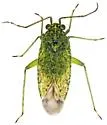
Brooksetta malvastri
Brooksetta malvastri
Identification: Inspection of male genitalia (namely, shape of right paramere and tergal process on anterodorsal edge of genital cavity) is generally needed to differentiate this from similar species. Females are identified by association with males.
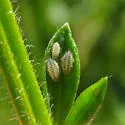
Broom Hedgehog Aphid
Ctenocallis setosa
Identification: numerous long finger-like protuberances on dorsum
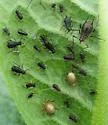
Brown Ambrosia Aphid
Uroleucon ambrosiae
Identification: Adults are medium to large in size, broadly spindle shaped, red-brown to dark brown or dull red, and have black cornicles.
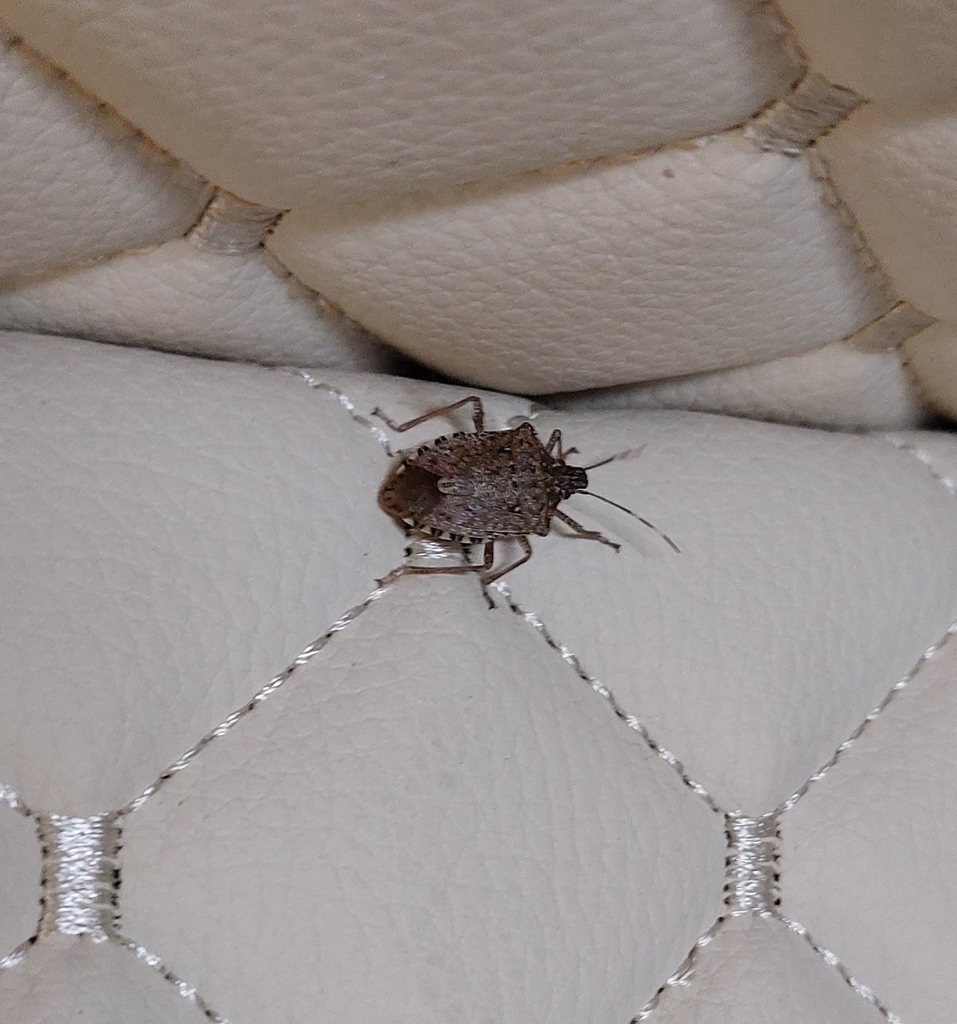
Brown Marmorated Stink Bug
Halyomorpha halys
no rights reservedA large bug (12 to 17 mm long). Similar to the Hairy Shieldbug but distinguished by having white spots at the top of the scutellum and two white bands on the antennae (Hairy Shieldbug has 3). It also has protruding 'shoulders' on the pronotum. Superf
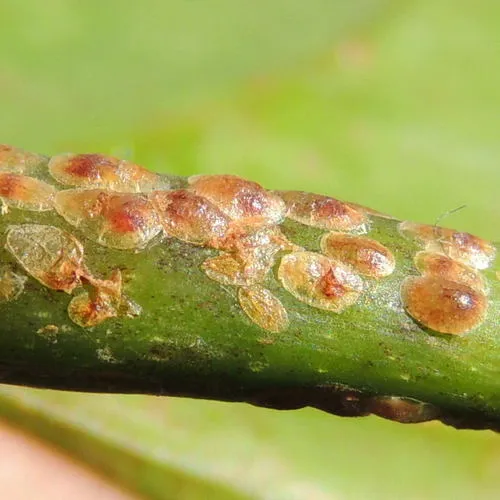
Brown Soft-scale
Coccus hesperidum
The adult female Coccus hesperidum is oval, flattish, translucent pale-yellow to yellow-brown, often mottled with brown spots; body length up to 5 mm and width 2.5 mm. Adult males, however, resemble small flies but never feed and die within a day or
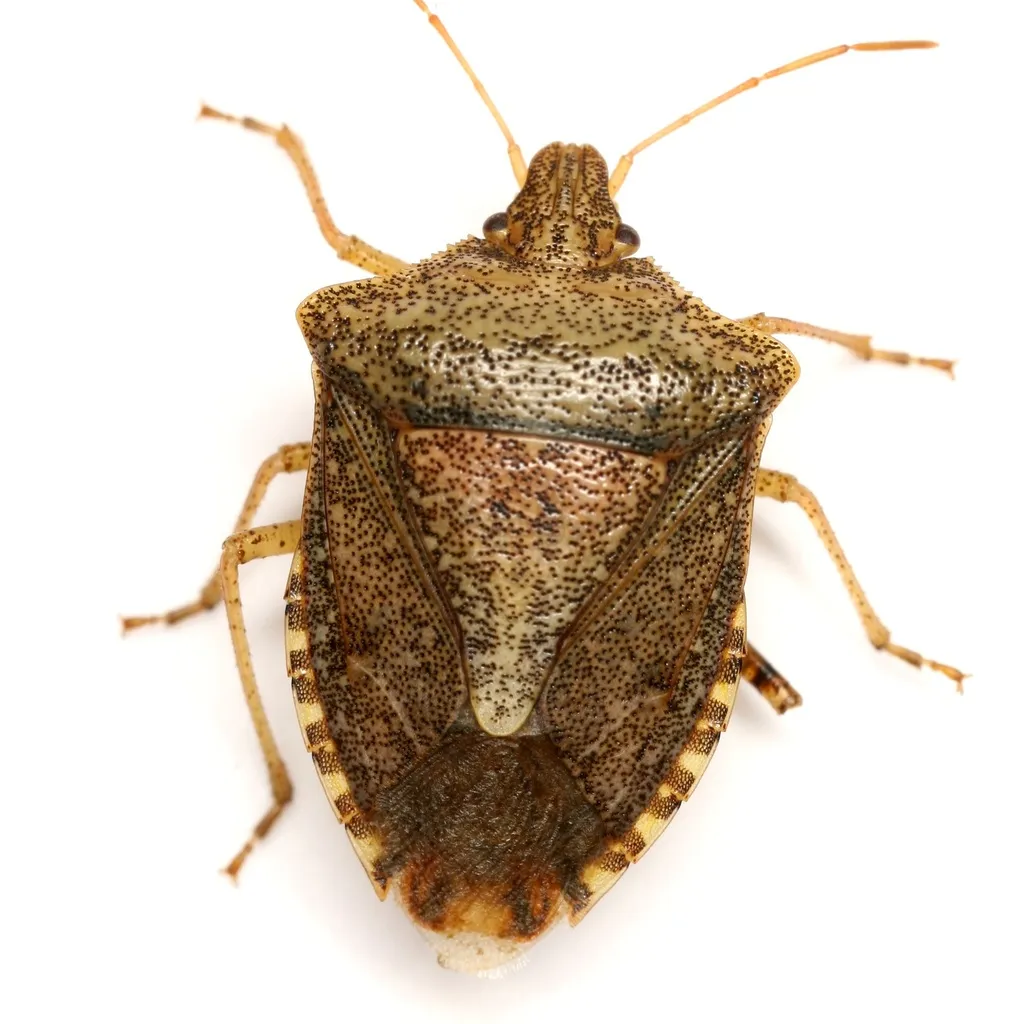
Brown Stink Bug
Euschistus servus
the most economically important species of the genus in our area; may damage soybean, corn, cotton, alfalfa, sorghum, fruit, pecan, and tobacco ( 4 )
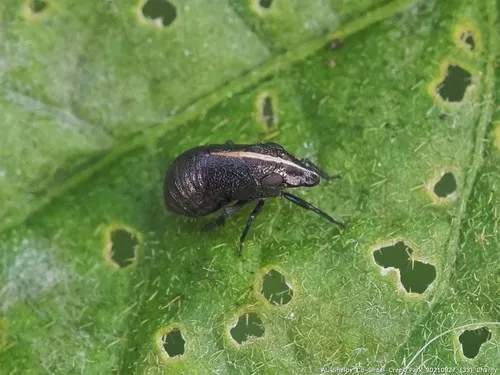
Bruchomorpha abrupta
Bruchomorpha abrupta
Identification: Similar to B. extensa , but the white line down the back fades out on the abdomen. --Andy Hamilton Ventral margin of postclypeus only slightly concave, reddish-brown in color; nasal process not inflated at tip, more truncate across ap
Bruchomorpha extensa
Bruchomorpha extensa
Identification: Large species, black with a contrasting yellow dorsal stripe extending to apex of abdomen
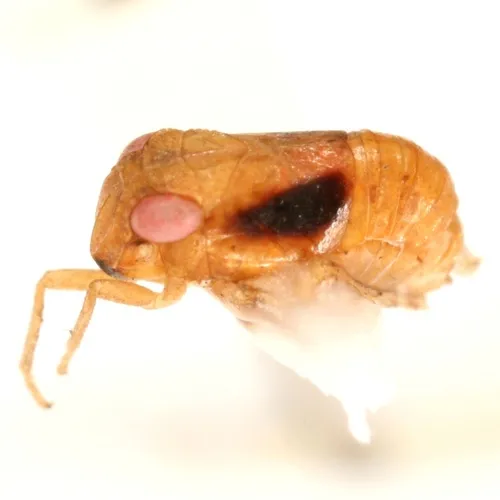
Bruchomorpha jocosa
Bruchomorpha jocosa
Identification: final couplet: Uniform reddish-brown color in females and males, with a dark lateral area on each tegmen [forewing], and a conspicuous dark spot on apex of postclypeus
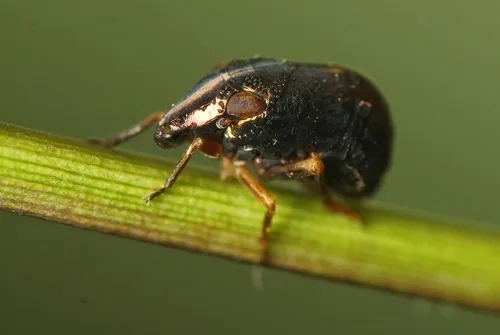
Bruchomorpha oculata
Bruchomorpha oculata
Identification: last key couplet: "Ventral margin of postclypeus deeply concave; nasal process slightly bulbous, with a distinct slant; a uniform dark species with only a trace of a median tannish or bronze stripe on head and thorax"
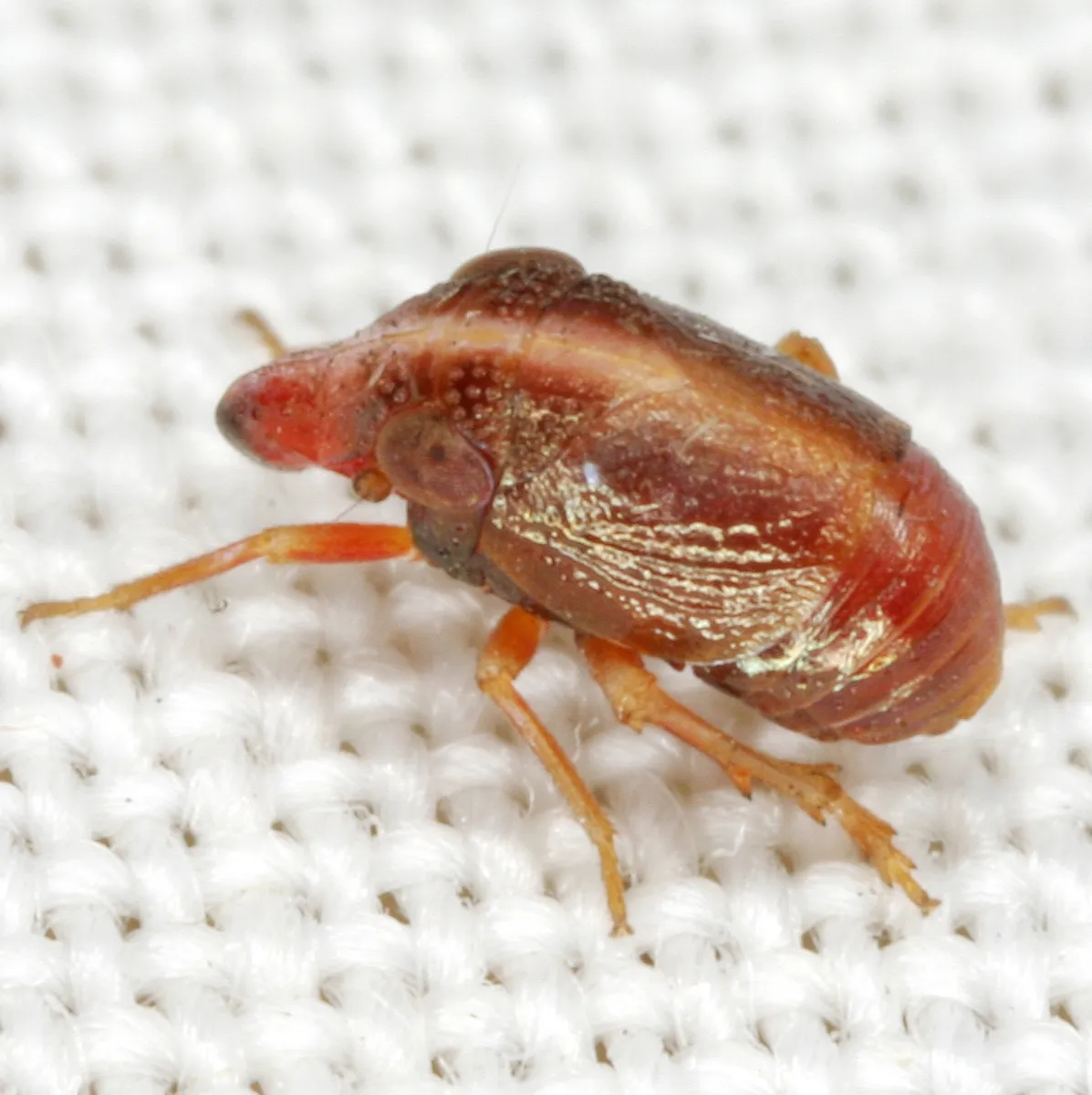
Bruchomorpha rosea
Bruchomorpha rosea
Identification: easily distinguished by rosy coloring (Doering 1940) Nasal process not so bulbous, lateral carinae converging at about base of apical seventh or eighth; reddish in color
Bruchomorpha vittata
Bruchomorpha vittata
Identification: Nasal process very narrow, truncate; ventral margin of postclypeus straight; a yellow species with two lateral longitudinal dark stripes
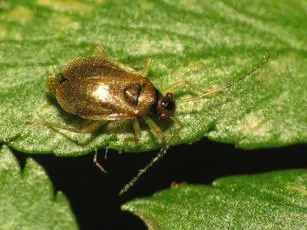
Bryocoris pteridis
Bryocoris pteridis
Length 2 to 4 mm. A small bug found on ferns. Adults can be fully winged or have short rudimentary wings and the head is at least partly dark brown or black. The 1st antennal segment is longer than the width of the head. Be sure to rule out Monalocor
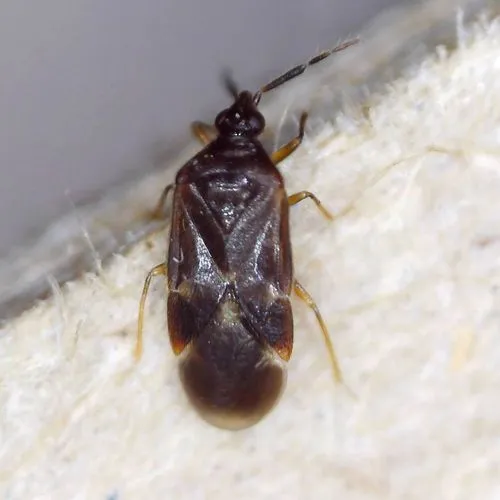
Buchananiella continua
Buchananiella continua
A small (approx. 2.5 mm) brown, or reddish brown bug. Macropterous, shiny and covered with a rather long pale pubescence. Antennae longer than head and pronotum combined, brownish with ant2 paler at least in its basal half. Legs slender, pale, the ba
Buenoa scimitra
Buenoa scimitra
Identification: Stridulatory area on inner surface of profemur scimitar-shaped, almost crossing the femur, consisting of about 60 ridges
Bush Cicada
Megatibicen dorsatus
A beautiful species that now exists in scattered isolates across much of its former range. Although listed as "secure" (i.e. "not threatened/endangered"), many populations, particularly those isolated in more developed areas, should be monitored and
Cacama californica
Cacama californica
Identification: Similar by most accounts to C. variegata Described as a "mottled species". TL - Los Angeles Co., California For additional info: Refer to pages 68-79 for details on the Genus Cacama and spp. occurring in the USA (for carbonaria see pp
Cacama carbonaria
Cacama carbonaria
Identification: Similar by most accounts to C. valvata. Described as a "dark species". TL - Mexico City, Mexico (?) For additional info: Refer to pages 68-79 for details on the Genus Cacama and spp. occurring in the USA (for carbonaria see pp. 70, 76
Cacama collinaplaga
Cacama collinaplaga
Refer to the following similar species: Cacama variegata Davis 1919 Cacama valvata (Uhler 1888) Cacama moorei sp. n. Sanborn & M. Heath It has been mentioned and noted by some cicada specialists, that C. collinaplaga is morphologically, as well as ge
Cacama dissimilis
Cacama dissimilis
Identification: Similar by most accounts to C. valvata. Described as a "dark species" with the basal area of the forewings slightly ochreous and opaque; anal membranes of all 4 wings orangish with the posterior margins being grey; 1st and 2nd transve
Cacama furcata
Cacama furcata
Identification: C. furcarta appears to be easily confused with valvata, with which it may be sympatric across parts of the valvata range (??) C. furcata: TL - "lower Calif." (=Mex??) Differentiating furcata from valvata/dissimilis furcata (Baja Calif
Cacama longirostris
Cacama longirostris
Identification: similar to C. maura Cacama longirostris (Distant, ?) TL. "Mexico" / Range?
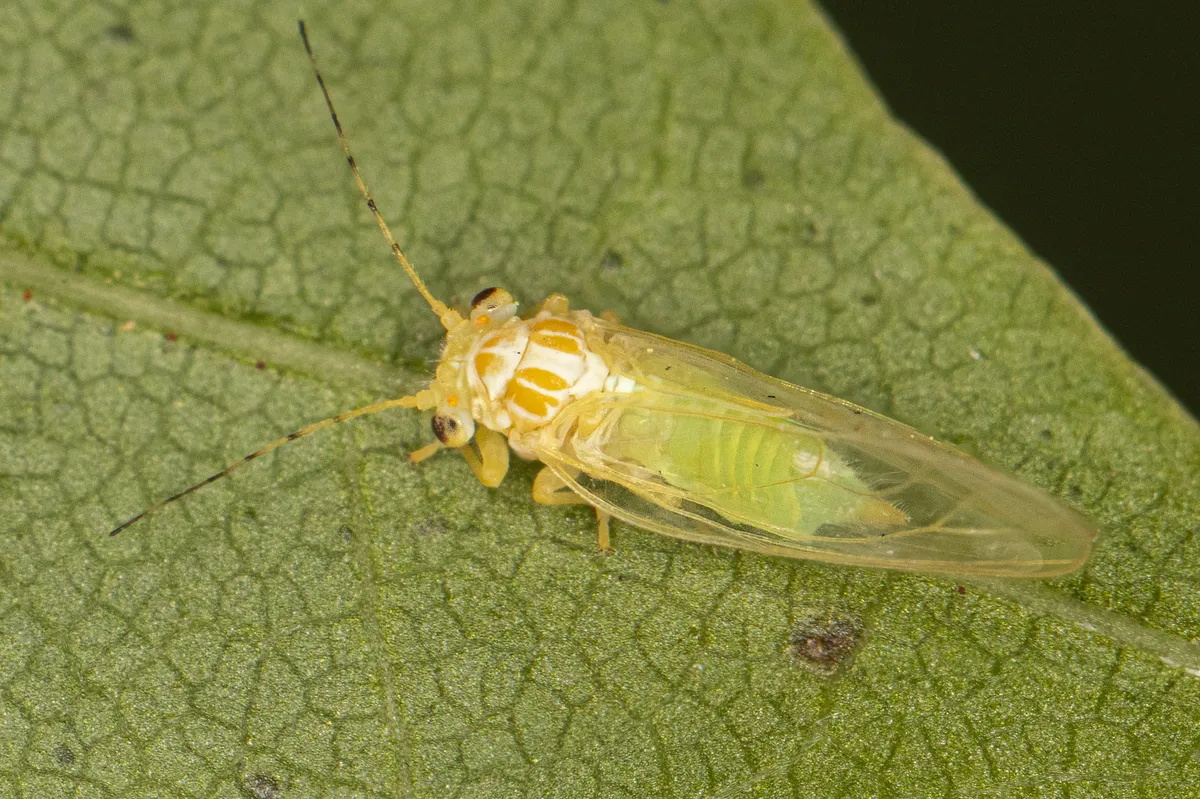
Cacopsylla annulata
Cacopsylla annulata
Identification: Typically pale yellow in color with green abdomen; head unusually wide, with eyes on prominent stalklike areas of head which separate slightly the eyes from the posterior ocelli; antennae yellow with black rings apically on each segme
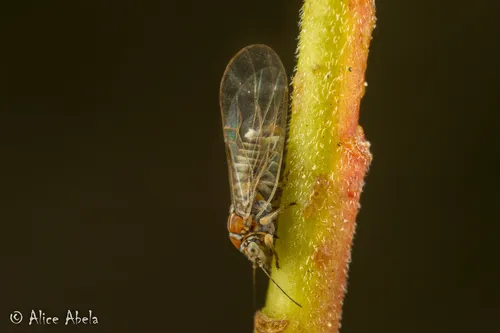
Cacopsylla curta
Cacopsylla curta
Identification: Wings membrane conspicuously and thickly set with minute setae ; antennae about 1.5x as long as width of head, genal cones divergent from base; female genitalia long, dorsal valve straight to blunt apex, ventral valve much shorter In
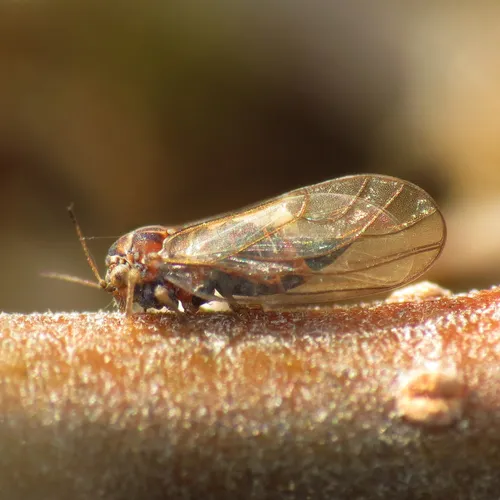
Cacopsylla quadrilineata
Cacopsylla quadrilineata
Identification: Reddish to reddish-brown in color, with four light longitudinal stripes on the scutum. Wings whitish, thickly set with minute setae forming indefinite radular areas on the apical margin; pterostigma large, infuscated. Antennae very sh
Cacopsylla sinuata
Cacopsylla sinuata
Identification: Male paramere in lateral view with conspicuous posterior lobe in basal two thirds ; refer to illustration from Tuthill, 1943
Cacopsylla striata
Psylla striata
Identification: General color yellowish, including wings; abdomen sometimes green, genitalia dark yellowish-brown; eyes grey. Antennae twice as long as width of head; female genitalia very long, stout, blunt, dorsal valve much longer than ventral
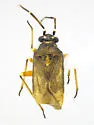
Calidroides schaffneri
Calidroides schaffneri
Identification: "Distinguished from C. negro by... dusky orange brown coloration; campanulate pronotum in dorsal view; usually more narrow head and vertex; shorter antennal segments; shorter labium; and pointed unarmed apex of vesica."
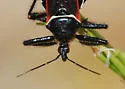
California Bee Assassin
Apiomerus californicus
Identification: Generally black with the corium reddish near the costal margin and fading caudad or uniformly bright red. Posterior pronotal margin and lateral connexival margin usually pale. Easily distinguished from A. cazieri and A. flaviventris
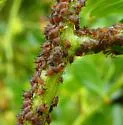
California Lilac Aphid
Aphis ceanothi
Identification: Apterae are dull reddish or amber-brown; dorsal abdomen with large black presiphuncular sclerites, often linked by a transverse sclerite on abdominal tergite 6.
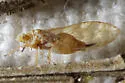
Calinda fumipennis
Calinda fumipennis
Identification: Entire body ochreous, with pale yellowish wings
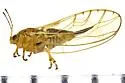
Calinda longicaudata
Calinda longicaudata
Identification: Female genitalia very long, with proctiger and subgenital plate more or less evenly tapering to apex
Calinda longistylus
Calinda longistylus
Identification: Forewing with brown shading along veins
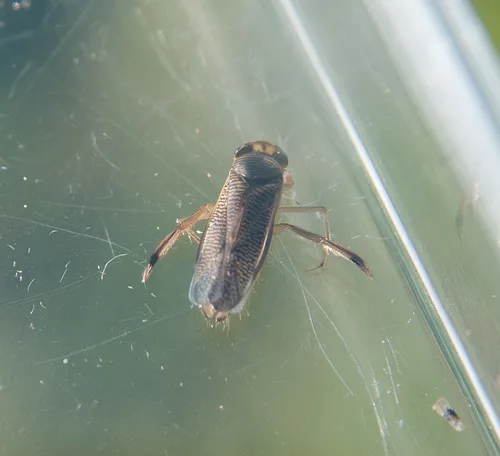
Callicorixa praeusta
Callicorixa praeusta
7-8mm. This species is similar to several other species of water boatman and detailed examination is necessary for a sound id. As with other species it has a gold and black wave pattern on the pronotum and elytra. Both sexes have a black 'square' at
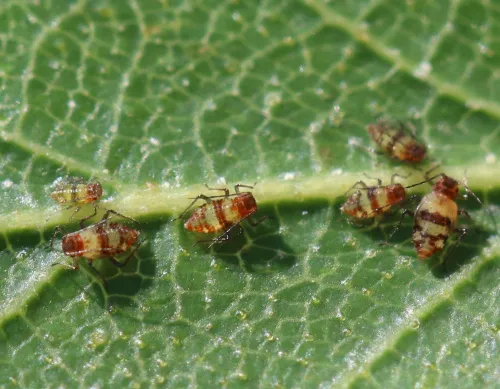
Callipterinella tuberculata
Callipterinella tuberculata
Callipterinella tuberculata apterae are usually yellowish with a brown head, a reddish-brown dorsal band over the front of the abdomen and a dark quadratic patch on abdominal tergites 4-6. However, the dark markings are very variable. The body length
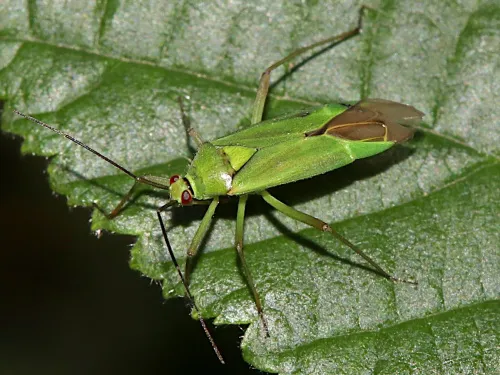
Calocoris alpestris
Calocoris alpestris
Length 9-11 mm. One of many entirely green plant bugs but distinctive due to its large size and very elongate shape. The 1st antennal segment is very long. The base of the scutellum is sometimes narrowly dark, as is a thin collar behind the head. Thi
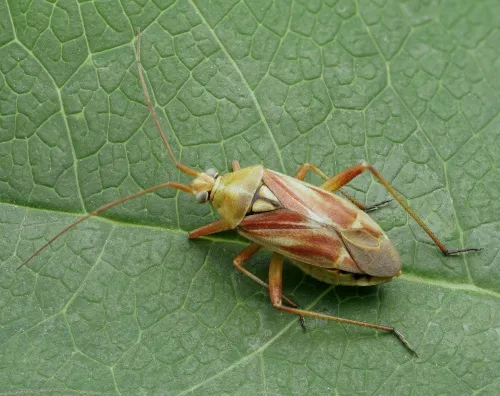
Calocoris roseomaculatus
Calocoris roseomaculatus
Length 6 to 8 mm. A beautifully marked bug. The rosy patches on the forewings are characteristic, with the pale scutellum bisected by a dark line. The head, pronotum and legs may also be rose-tinged and the 2nd antennal segment is shorter than the 3r
Calocoris texanus
Calocoris texanus
Identification: Distinguished by the orange coloration, with antennae, tibiae, and tips of femora black. Type Locality: Uvalde, Texas, 5 June 18, 1936 (S. E. Jones)
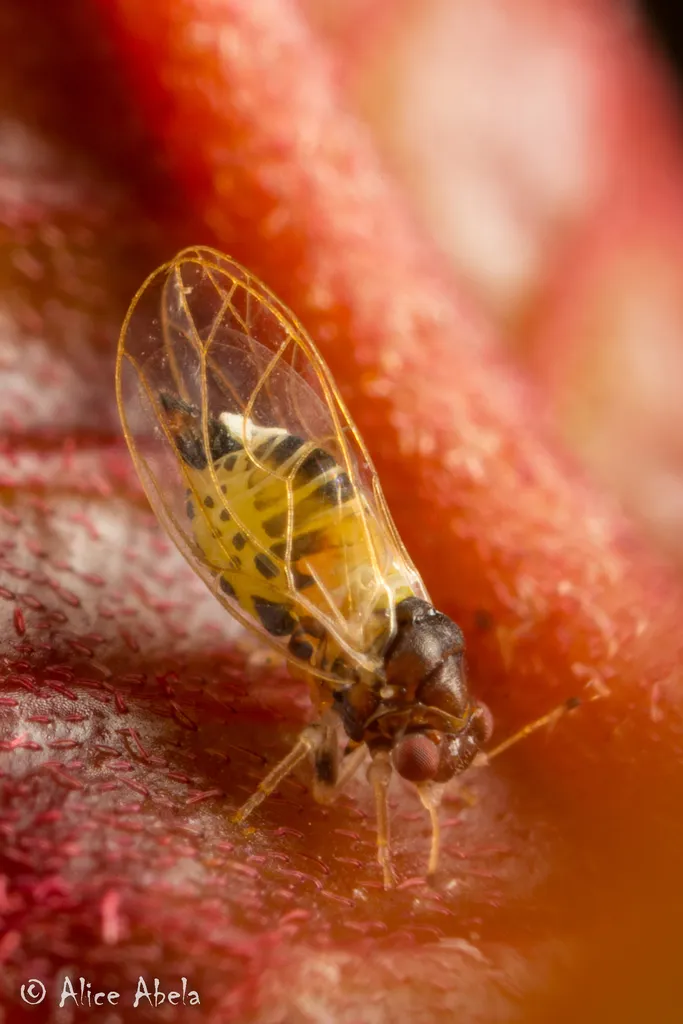
Calophya californica
Calophya californica
Identification: Males dark brown to black on head and thorax; females light brown to golden yellow . Legs light except dark spot on femora; genal processes long, white; antennae shorter than width of head, black-tipped; venation typical for genus, wi
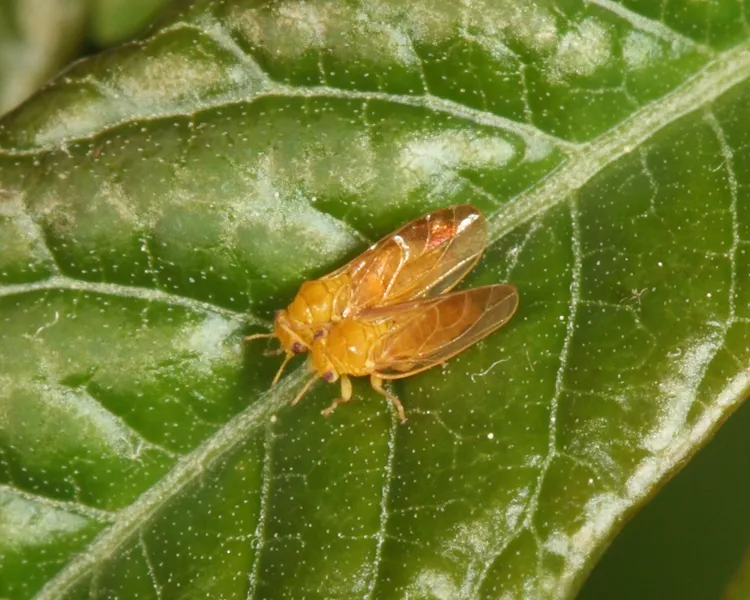
Calophya flavida
Calophya flavida
Identification: General color "honey-yellow"; head and thorax smooth, shining, vertex rounded forward; antennae shorter than width of head; wings pale yellow, rounded, first marginal cell about twice as large as second, pterostigma long
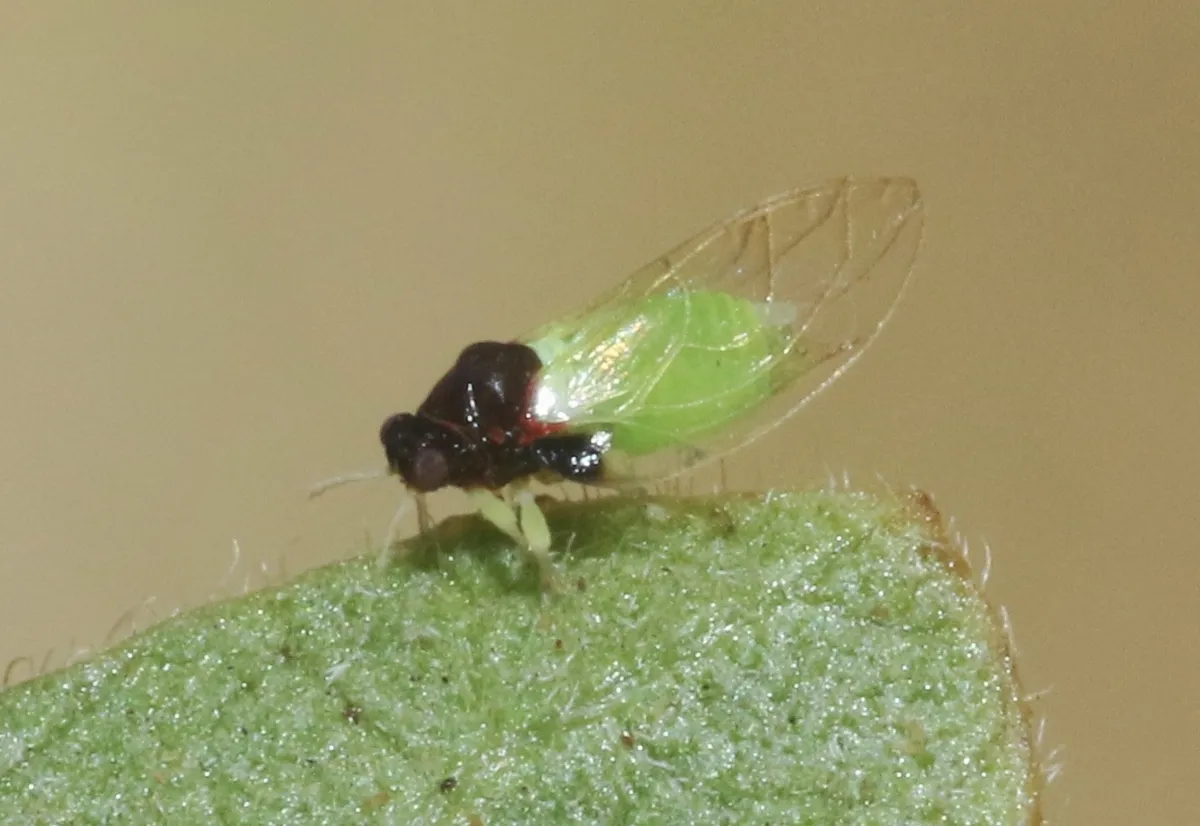
Calophya triozomima
Calophya triozomima
Identification: Forewings usually darkened on anterior basal cell; apex of forewing subacute
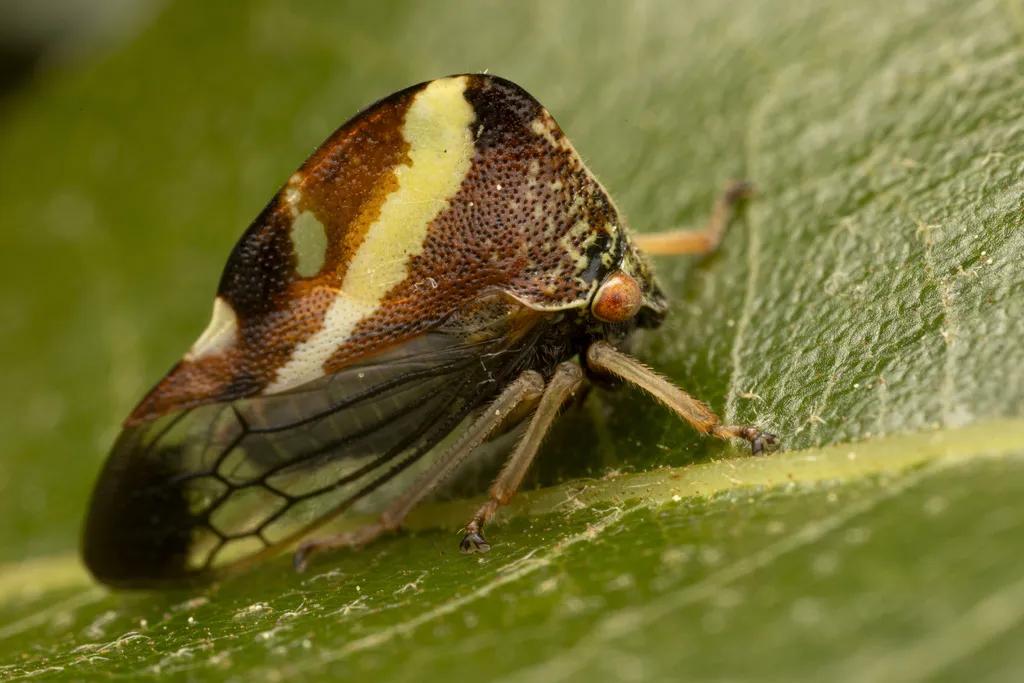
Camel Treehopper
Smilia camelus
Camel Treehopper (Smilia camelus) is a species in the family Membracidae, commonly known as typical treehoppers, belonging to the order Hemiptera (True Bugs, Cicadas, Hoppers, Aphids and Allies). It is classified within the subfamily Smiliinae, tribe