
Cacopsylla quadrilineata
This record describes Cacopsylla quadrilineata (species). Recorded family: Psyllidae. Recorded order: Hemiptera.
Identification and Appearance
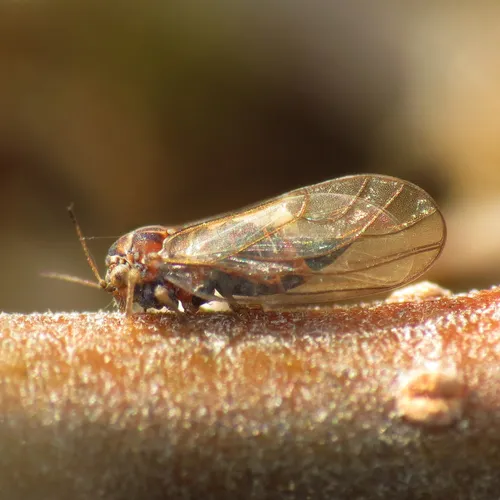
| Feature | Description |
|---|---|
| Additional details | Reddish to reddish-brown in color, with four light longitudinal stripes on the scutum. |
| Wings | Wings whitish, thickly set with minute setae forming indefinite radular areas on the apical margin; pterostigma large, infuscated. |
| Antennae | Antennae very short, about as long as the width of the head. Female genitalia with dorsal valve straight, blunt; ventral valve shorter, upturned midway This species has been much confused and there has been doubt over the identity of the type material . Crawford's redescription of the species in his 1914 monograph was based on paratypes of Psylla gilleti with which Crawford deemed synonymous, but Tuthill determined that P. gilleti was synonomous with another very different species, P. ribesiae . As such, Crawford's description and Colorado locality must be discarded, and Tuthill's 1943 description and figures remain the only reliable references to this species. |
Classification
- Kingdom
- Animalia
- Phylum
- Arthropoda
- Class
- Insecta
- Order
- Hemiptera (True Bugs, Cicadas, Hoppers, Aphids and Allies)
- Suborder
- Sternorrhyncha
- Superfamily
- Psylloidea
- Family
- Psyllidae
- Subfamily
- Psyllinae
- Genus
- Cacopsylla
Imported taxonomy record. Source availability varies; see the source references and editorial policy below.
Habitat and Range
Geographic Range
Northeastern USA
Diet and Behavior
Diet: Salix
Additional species information
Species notes from the sources
Etymology: Cacopsylla quadrilineata (Fitch, 1851)
About True Bugs, Cicadas, Hoppers, Aphids and Allies: the wider group
Order-level background for Hemiptera, the group containing Cacopsylla quadrilineata. Species-specific details appear above.
Group overview
Hemiptera (true bugs) includes over 80,000 described species across cicadas, aphids, leafhoppers, shield bugs, and bed bugs. Aphids alone cost global agriculture an estimated $2.5 billion annually in crop losses.
Ecological role of the group
Many Hemiptera are essential food sources for birds and predatory insects. Cicadas provide massive nutrient pulses during emergence events - a single Brood X emergence can involve trillions of individuals across 15 states.
Economic and practical significance of the group
The brown marmorated stink bug (Halyomorpha halys) caused $37 million in apple crop losses in a single year in the U.S. Mid-Atlantic region. Bed bug infestations in the U.S. increased by 500% between 2001-2010, costing the hotel industry hundreds of millions annually.
Recorded sources for this group: USDA, EPA, University research. Imported estimates may describe particular regions or reporting periods.
Photos of Cacopsylla quadrilineata (2)
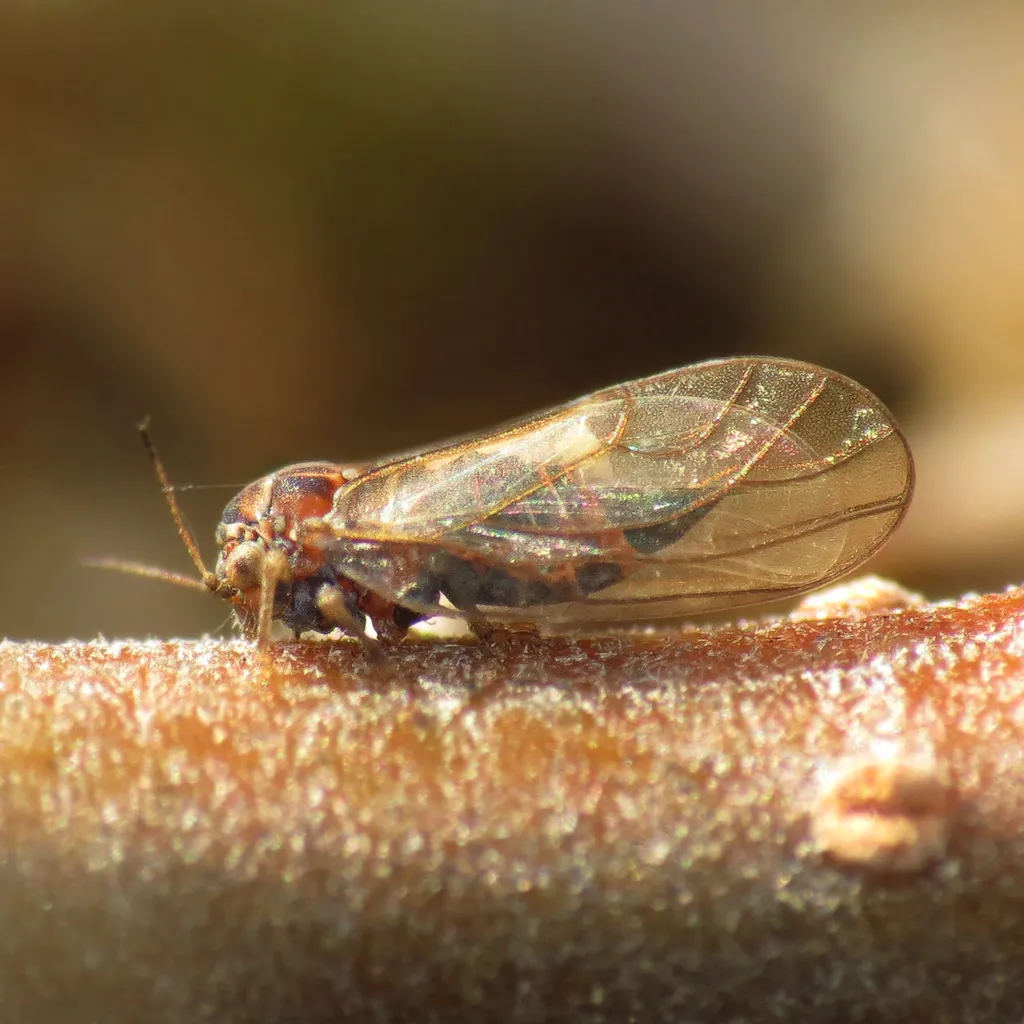
Photo credits: Contributed by Chris Mallory
Frequently Asked Questions About Cacopsylla quadrilineata
What is Cacopsylla quadrilineata?
Cacopsylla quadrilineata is a species in the family Psyllidae, within the order Hemiptera.
How big is Cacopsylla quadrilineata?
3mm
How do you identify Cacopsylla quadrilineata?
| Feature | Description |
|---|---|
| Additional details | Reddish to reddish-brown in color, with four light longitudinal stripes on the scutum. |
| Wings | Wings whitish, thickly set with minute setae forming indefinite radular areas on the apical margin; pterostigma large, infuscated. |
| Antennae | Antennae very short, about as long as the width of the head. Female genitalia with dorsal valve straight, blunt; ventral valve shorter, upturned midway |
Where is Cacopsylla quadrilineata found?
Range: Northeastern USA
What does Cacopsylla quadrilineata eat?
The diet of the Cacopsylla quadrilineata includes Salix.