
Bush Cicada
Megatibicen dorsatus
This record describes Megatibicen dorsatus (species). Recorded family: Cicadidae. Recorded order: Hemiptera.
Identification and Appearance
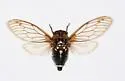
A beautiful species that now exists in scattered isolates across much of its former range. Although listed as secure (i.e. not threatened/endangered), many populations, particularly those isolated in more developed areas, should be monitored and conserved.
Classification
- Kingdom
- Animalia
- Phylum
- Arthropoda
- Class
- Insecta
- Order
- Hemiptera (True Bugs, Cicadas, Hoppers, Aphids and Allies)
- Suborder
- Auchenorrhyncha
- Superfamily
- Cicadoidea
- Family
- Cicadidae (Cicadas)
- Subfamily
- Cicadinae
- Tribe
- Tacuini
- Genus
- Megatibicen
Imported taxonomy record. Source availability varies; see the source references and editorial policy below.
Habitat and Range
Habitat
long-grass/short-grass prairie remnants & associated woodlands
Geographic Range
Most populations are centrally located east of the Rockies and west of the Mississippi River This species can be found across the Plains States west to CO south to TX Isolates occur as far east as the upper Midwest (incl. IL & w. IN) Much of the former reported range also included the closely related T. tremulus (recently described and separated from dorsatus ). T. dorsatus has also been reported from Wyoming and South Dakota, however, there may still be some confusion regarding the details in range distributions between dorsatus and tremulus - coupled with erroneous id's incl. T. dealbatus with which it is sympatric across much of its range and occasionally confused. Some populations found in "Prairie remnants" and parks may be listed/protected. One should check with local authorities prior to collecting in these sites.
Seasonal Activity
mostly: July-Sept (BG data)
Diet and Behavior
Diet: misc. vascular plants
About True Bugs, Cicadas, Hoppers, Aphids and Allies: the wider group
Order-level background for Hemiptera, the group containing Megatibicen dorsatus. Species-specific details appear above.
Group overview
Hemiptera (true bugs) includes over 80,000 described species across cicadas, aphids, leafhoppers, shield bugs, and bed bugs. Aphids alone cost global agriculture an estimated $2.5 billion annually in crop losses.
Ecological role of the group
Many Hemiptera are essential food sources for birds and predatory insects. Cicadas provide massive nutrient pulses during emergence events - a single Brood X emergence can involve trillions of individuals across 15 states.
Economic and practical significance of the group
The brown marmorated stink bug (Halyomorpha halys) caused $37 million in apple crop losses in a single year in the U.S. Mid-Atlantic region. Bed bug infestations in the U.S. increased by 500% between 2001-2010, costing the hotel industry hundreds of millions annually.
Recorded sources for this group: USDA, EPA, University research. Imported estimates may describe particular regions or reporting periods.
Photos of Bush Cicada (5)
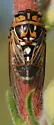
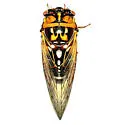
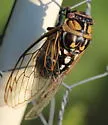
Photo credits: Contributed by Troy Bartlett; Additional contributions by cotinis , Will Chatfield-Taylor , Mike Quinn , David Ferguson , v belov , Bill Reynolds , Andy - CritterZone
Frequently Asked Questions About Bush Cicada
What is Bush Cicada?
Bush Cicada (Megatibicen dorsatus) is a species in the family Cicadidae, within the order Hemiptera.
Where is Bush Cicada found?
| Feature | Details |
|---|---|
| Habitat | long-grass/short-grass prairie remnants & associated woodlands |
| Range | Most populations are centrally located east of the Rockies and west of the Mississippi River This species can be found across the Plains States west to CO south to TX Isolates occur as far east as the upper Midwest (incl. IL & w. IN) Much of the former reported range also included the closely related T. tremulus (recently described and separated from dorsatus ). T. dorsatus has also been reported from Wyoming and South Dakota, however, there may still be some confusion regarding the details in range distributions between dorsatus and tremulus - coupled with erroneous id's incl. T. dealbatus with which it is sympatric across much of its range and occasionally confused. Some populations found in Prairie remnants and parks may be listed/protected. One should check with local authorities prior to collecting in these sites. |
What does Bush Cicada eat?
The diet of the Bush Cicada includes misc. vascular plants.
When is Bush Cicada active?
Bush Cicada: seasonal activity - mostly: July-Sept (BG data).