
Black Pecan Aphid
Melanocallis caryaefoliae
This record describes Melanocallis caryaefoliae (species). Recorded family: Aphididae. Recorded order: Hemiptera.
Identification and Appearance
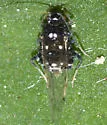
| Feature | Description |
|---|---|
| Additional details | only black aphid that attacks pecan foliage. The adult may be various shades of green or black. Nymphs tend to be lighter in color than the adults, especially in spring when the first through fourth instars have little dark pigment. |
| Antennae | Antennae are pale yellow with small amounts of black on several segments. |
| Eyes | Eyes are dark red and cornicles are short. In the other two aphid species present on pecan, cornicles are absent or greatly reduced. (Info from: http://www.ipm.ucdavis.edu/PMG/r609300411.html) Black pecan aphids are not abundant during the spring, however, and leaf damage is limited. Higher populations capable of causing severe defoliation generally occur from midSeptember until frost. Black pecan aphids have a high reproductive rate – with each aphid capable of producing up to 35 offspring. There are approximately 20 to 30 generations per year. (Info from: https://www.lsuagcenter.com/NR/rdonlyres/7D1C68BF-DA8E-4745-8BD0-0BF1206C2886/67823/pub3146BlackPecanAphidHIGHRES.pdf ) |
Classification
- Kingdom
- Animalia
- Phylum
- Arthropoda
- Class
- Insecta
- Order
- Hemiptera (True Bugs, Cicadas, Hoppers, Aphids and Allies)
- Suborder
- Sternorrhyncha
- Superfamily
- Aphidoidea
- Family
- Aphididae (Aphids)
- Subfamily
- Calaphidinae
- Tribe
- Panaphidini
- Genus
- Melanocallis
Imported taxonomy record. Source availability varies; see the source references and editorial policy below.
Diet and Behavior
Diet: Nearly monophagus on Pecan, but Hickory and other Juglandacea members may be possible
Life History
overwinters as an egg in bark crevices. The nymphs hatch in the spring, move to young foliage, and begin to feed. They mature into asexual stem mothers in about a week and begin to produce living young. These offspring in turn mature into asexual females. Many generations (15 to 30) of females are produced per year. The fall forms, wingless females and winged males, begin to appear among the nymphs in October. These forms mate and the females migrate to protected areas of the limbs and trunk and deposit their eggs in cracks. (Info from: http://entoweb.okstate.edu/ddd/insects/blackpecanaphid.htm)
About True Bugs, Cicadas, Hoppers, Aphids and Allies: the wider group
Order-level background for Hemiptera, the group containing Melanocallis caryaefoliae. Species-specific details appear above.
Group overview
Hemiptera (true bugs) includes over 80,000 described species across cicadas, aphids, leafhoppers, shield bugs, and bed bugs. Aphids alone cost global agriculture an estimated $2.5 billion annually in crop losses.
Ecological role of the group
Many Hemiptera are essential food sources for birds and predatory insects. Cicadas provide massive nutrient pulses during emergence events - a single Brood X emergence can involve trillions of individuals across 15 states.
Economic and practical significance of the group
The brown marmorated stink bug (Halyomorpha halys) caused $37 million in apple crop losses in a single year in the U.S. Mid-Atlantic region. Bed bug infestations in the U.S. increased by 500% between 2001-2010, costing the hotel industry hundreds of millions annually.
Recorded sources for this group: USDA, EPA, University research. Imported estimates may describe particular regions or reporting periods.
Photos of Black Pecan Aphid (5)
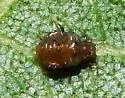
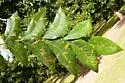
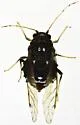
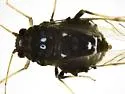
Photo credits: Contributed by Charley Eiseman; Additional contributions by margarethe brummermann
Frequently Asked Questions About Black Pecan Aphid
What is Black Pecan Aphid?
Black Pecan Aphid (Melanocallis caryaefoliae) is a species in the family Aphididae, within the order Hemiptera.
How do you identify Black Pecan Aphid?
| Feature | Description |
|---|---|
| Additional details | only black aphid that attacks pecan foliage. The adult may be various shades of green or black. Nymphs tend to be lighter in color than the adults, especially in spring when the first through fourth instars have little dark pigment. |
| Antennae | Antennae are pale yellow with small amounts of black on several segments. |
| Eyes | Eyes are dark red and cornicles are short. In the other two aphid species present on pecan, cornicles are absent or greatly reduced. (Info from: http://www.ipm.ucdavis.edu/PMG/r609300411.html) |
What does Black Pecan Aphid eat?
The diet of the Black Pecan Aphid includes Nearly monophagus on Pecan, but Hickory and other Juglandacea members may be possible.
What is the life cycle of a Black Pecan Aphid?
overwinters as an egg in bark crevices. The nymphs hatch in the spring, move to young foliage, and begin to feed. They mature into asexual stem mothers in about a week and begin to produce living young. These offspring in turn mature into asexual females. Many generations (15 to 30) of females are produced per year. The fall forms, wingless females and winged males, begin to appear among the nymphs in October. These forms mate and the females migrate to protected areas of the limbs and trunk and deposit their eggs in cracks. (Info from: http://entoweb.okstate.edu/ddd/insects/blackpecanaphid.htm)