
True Bugs, Cicadas, Hoppers, Aphids and Allies
Order Hemiptera
The True Bugs, Cicadas, Hoppers, Aphids and Allies (Order Hemiptera) includes 7,349 species across 120 families and 1,727 genera in our directory.
About True Bugs, Cicadas, Hoppers, Aphids and Allies
Hemiptera (true bugs) includes over 80,000 described species across cicadas, aphids, leafhoppers, shield bugs, and bed bugs. Aphids alone cost global agriculture an estimated $2.5 billion annually in crop losses.
Economic Impact
The brown marmorated stink bug (Halyomorpha halys) caused $37 million in apple crop losses in a single year in the U.S. Mid-Atlantic region. Bed bug infestations in the U.S. increased by 500% between 2001-2010, costing the hotel industry hundreds of millions annually.
Ecological Role
Many Hemiptera are essential food sources for birds and predatory insects. Cicadas provide massive nutrient pulses during emergence events - a single Brood X emergence can involve trillions of individuals across 15 states.
Families in Hemiptera (120)
Species in Hemiptera (7,349)
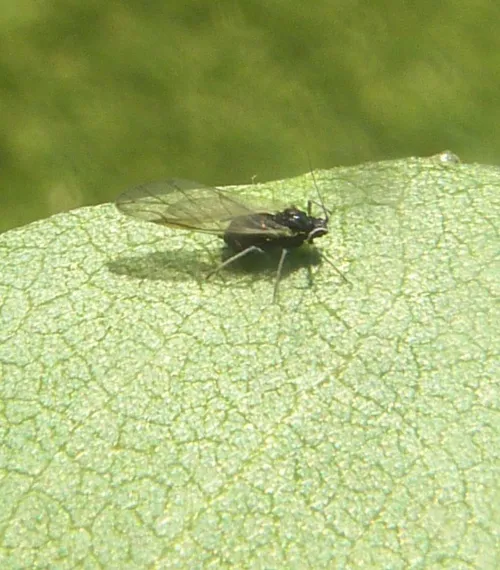
Aphis cytisorum
Aphis cytisorum
Aphis cytisorum is a very dark green aphid which may appear greyish because of the strong wax secretion. The adult aptera has a dark sclerotized dorsal abdominal shield, which is often rather fragmented and variable in size. The dark sclerotic areas
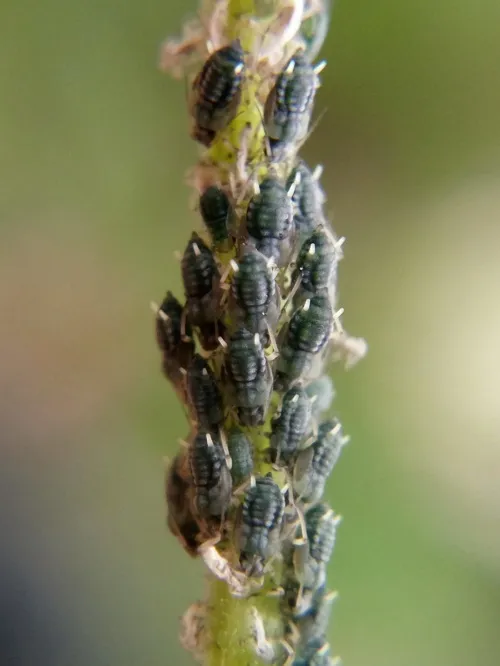
Aphis epilobii
Aphis epilobii
Adult apterae of Aphis epilobii are dark blackish-green to reddish-brown, but often appear dark-grey to pinkish-brown because of a rather uniform powdering of wax. The alate has marginal postsiphuncular and small marginal sclerites, but no dorsal cro
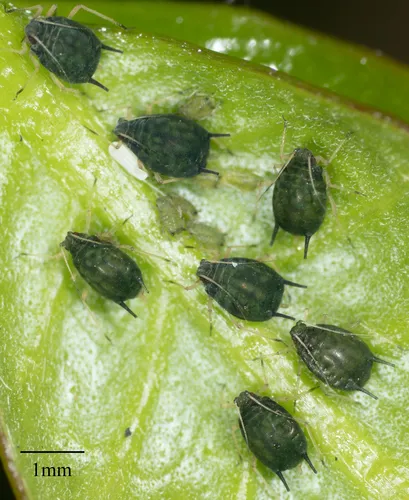
Aphis gossypii
Aphis gossypii
The body length of adult Aphis gossypii apterae ranges from 0.9 to 1.8 mm. Wingless females of Aphis gossypii are usually blackish green or dark green mottled with lighter. In hot conditions or when crowded they are smaller, and these dwarf forms are
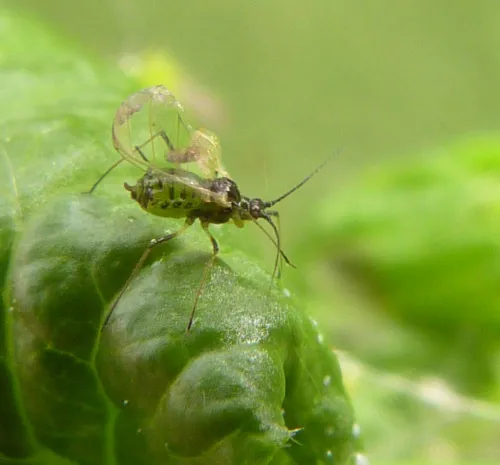
Aphis grossulariae
Aphis grossulariae
Dense colonies of Aphis grossulariae at the growing tips of Gooseberry cause severe deformation and clumping of young leaves. The adult aptera is dull green to dark green and is slightly to moderately wax powdered. The antennae are shorter than the b
Aphis ilicis
Aphis ilicis
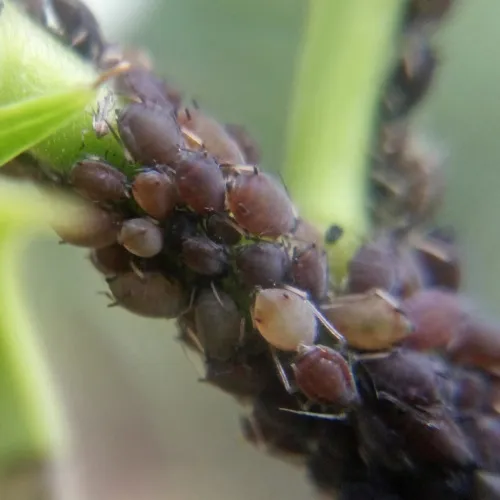
Aphis ilicis apterae are dark olive-brown, reddish-brown or greyish-brown. For a more detailed description of this species please use the ‘Further info:’ link below. Please add good quality images to support your record, and also state the host plant
Aphis jacobaeae
Aphis jacobaeae
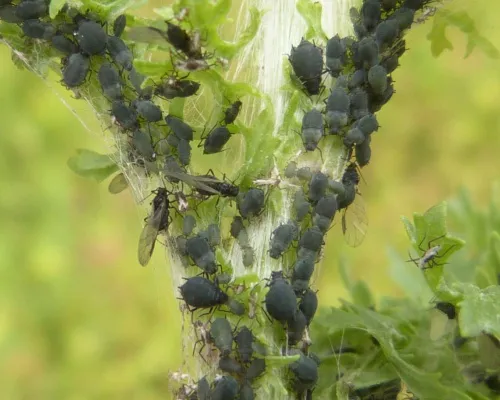
The body length of Aphis jacobaeae apterae is 1.8 to 2.2 mm. Immatures and adults are greeny-black - all segments of the antennae are dark. The legs are dark except for the extreme bases of their femora. Aphis fabae which also occurs on Ragwort has p
Aphis ulicis
Aphis ulicis
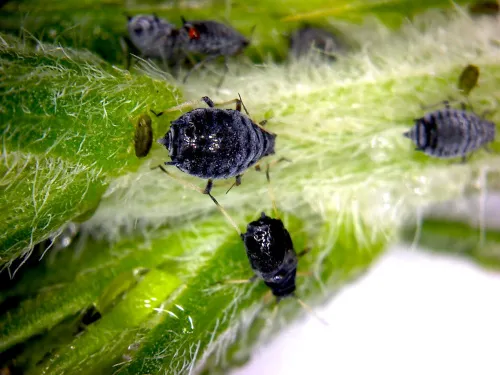
Adult apterae of Aphis ulicis are dark blackish green, with the abdominal dorsum shiny black, but usually covered with greyish wax powdering. The legs and antennae are largely pale. See 'Further Information' link below for more detail. Please provide
Aphis ulmariae
Aphis ulmariae
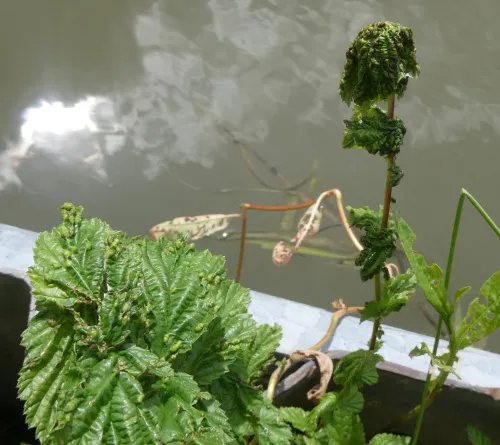
Aphis ulmariae live in the curled terminal leaves of Meadowsweet and other Filipendula species. Adult apterae are generally described as mottled dark green in life but some are yellow mottled with green, similar to the colour variation shown by its c
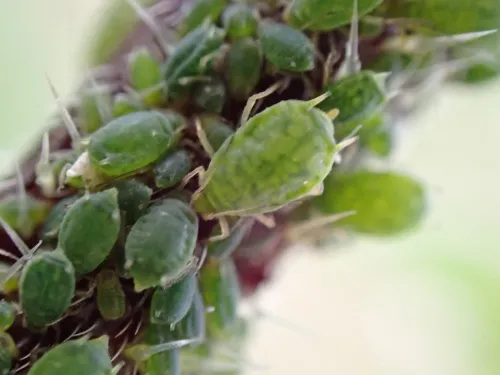
Aphis urticata
Aphis urticata
Early generations of the dark green nettle aphid are dark bluish-green often mottled with a lighter green they have pale tapering siphunculi and a pale cauda - the adult apterae are 1.7 to 2.2 mm. (see the 'Further Information' link below for more de
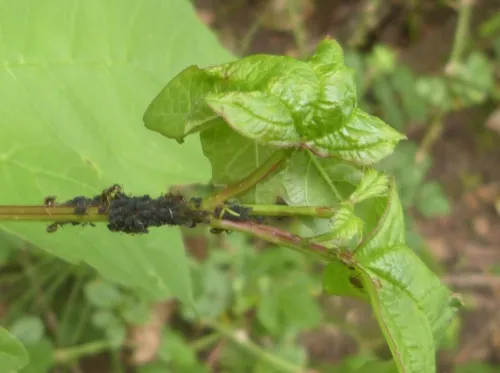
Aphis viburni
Aphis viburni
Apterae of Aphis viburni are slate-coloured, brownish green or dark brown, sometimes with paired pleural wax spots on the abdomen. Of all the 'black aphid' group, A. viburni is probably the most variable in colour. Aphis viburni can most readily be d
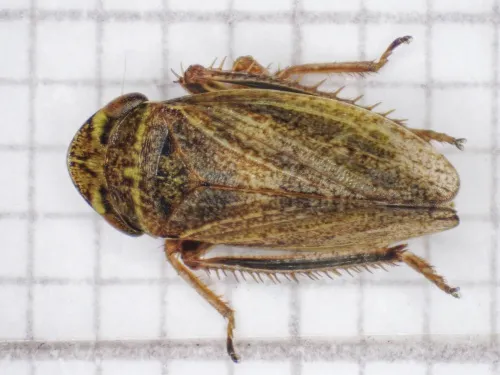
Aphrodes makarovi
Aphrodes makarovi
Length 5.5 (males) to 7.5 mm. (females). A large leafhopper with a sharply pointed vertex with a median keel. Very variable; base colour of forewings brownish with light diagonal stripes along pale wing veins. Careful examination and measurement of t
Aphrophora irrorata
Aphrophora irrorata
Identification: "The little white circles with white centers dotting the wing are characteristic of this species and the basis of its name." - Vinton Thompson
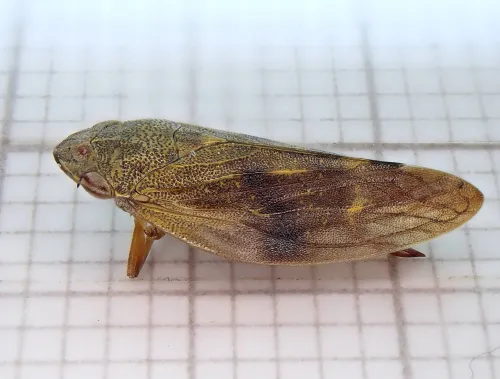
Aphrophora pectoralis
Aphrophora pectoralis
A large froghopper (9-11mm) associated with willows and sallows ( Salix spp.). The basal third of the forewings are yellowish with an indistinct dark band behind this. Close examination of the external genitalia of females or dissection of the male w
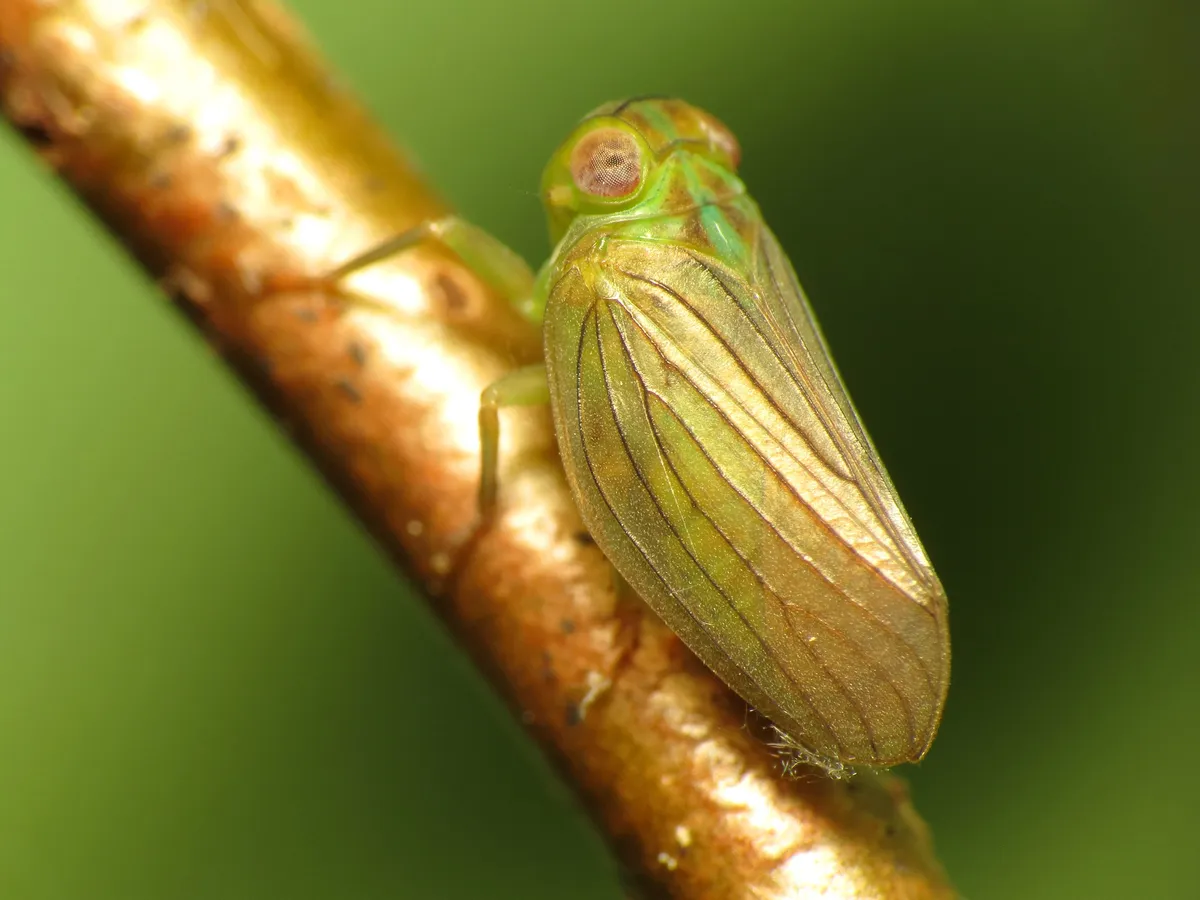
Aplos simplex
Aplos simplex
Found by inspection of possible hosts (try Robinia ), also by sweeping or beating. Found in abundance in Pennsylvania in Lindgren funnel traps. ( 3 )
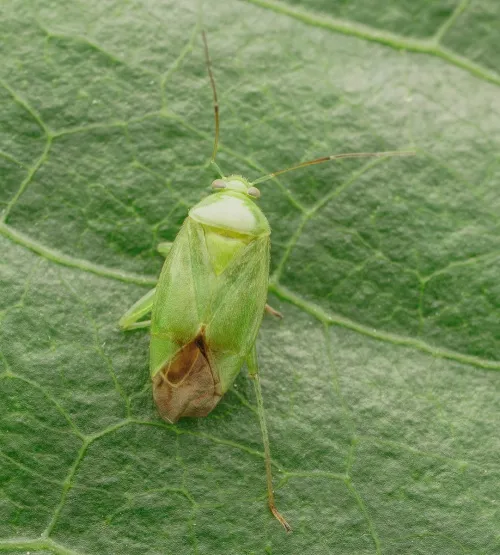
Apolygus lucorum
Apolygus lucorum
Length 5 to 6 mm. The black tibial spines do not arise from black spots and the 2nd antennal segment is usually shorter than the width of the pronotum at the base. Separated from the similar A. spinolae by the darker ground colour and by the cuneus,
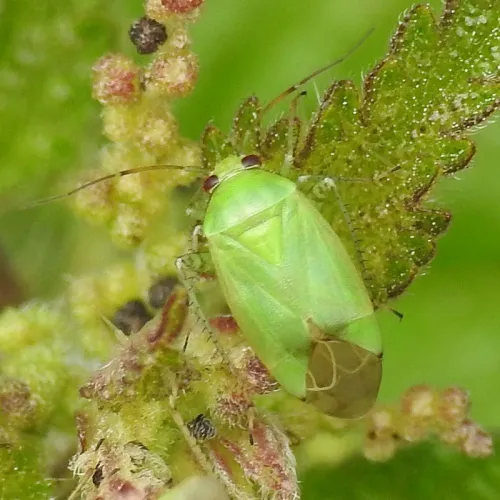
Apolygus spinolae
Apolygus spinolae
Length 5 to 6 mm. Separated from the similar A. lucorum by the paler ground colour and by the cuneus, which is black at the extreme apex. Apolygus species are green and rather broadly oval in shape. The black tibial spines do not arise from black spo
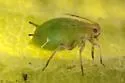
Apple Aphid
Aphis pomi
Identification: Apterae bright apple-green with black siphunculi and dark cauda, in dense colonies on young growth of several genera of woody Rosaceae (Pomoidea); ant-attended, and causing slight leaf-curl
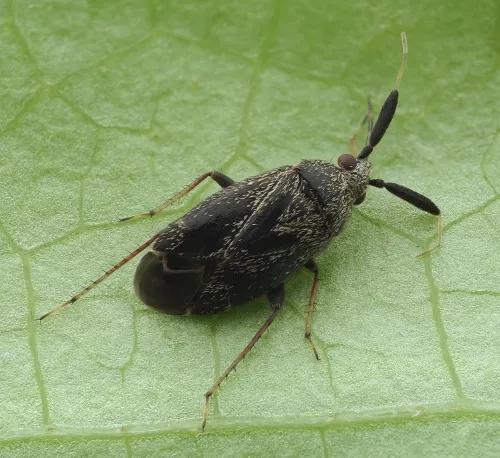
Apple Brown Bug
Atractotomus mali
Length 3.5mm The 1st antennal segment is triangular and tapers towards the base, while the 2nd segment is much thickened in both sexes, particularly so in females. The body shape is rather oval and convex. The larvae are red, with the fore-parts dark
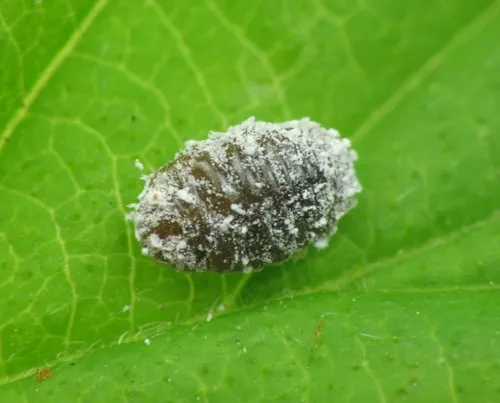
Apple Mealybug
Phenacoccus aceris
Identification: have three circuli --Ian Stocks's comment
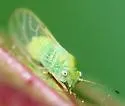
Apple Psyllid
Cacopsylla mali
Young adults are yellow-green, becoming reddish in autumn.
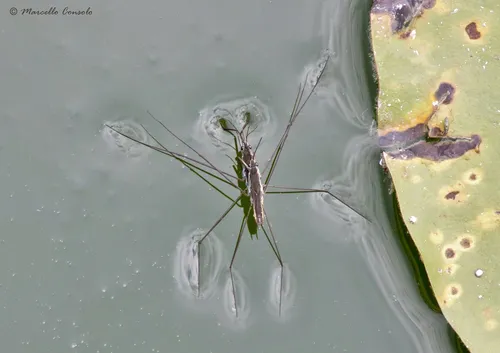
Aquarius paludum
Aquarius paludum
Aquarius paludum (14 to 16 mm) and A. najas (13 to 17 mm) can be distinguished from all other skaters found in England by their larger size. A. paludum is characterised by long abdominal spines that are angled upward and reach the tip of the abdomen,
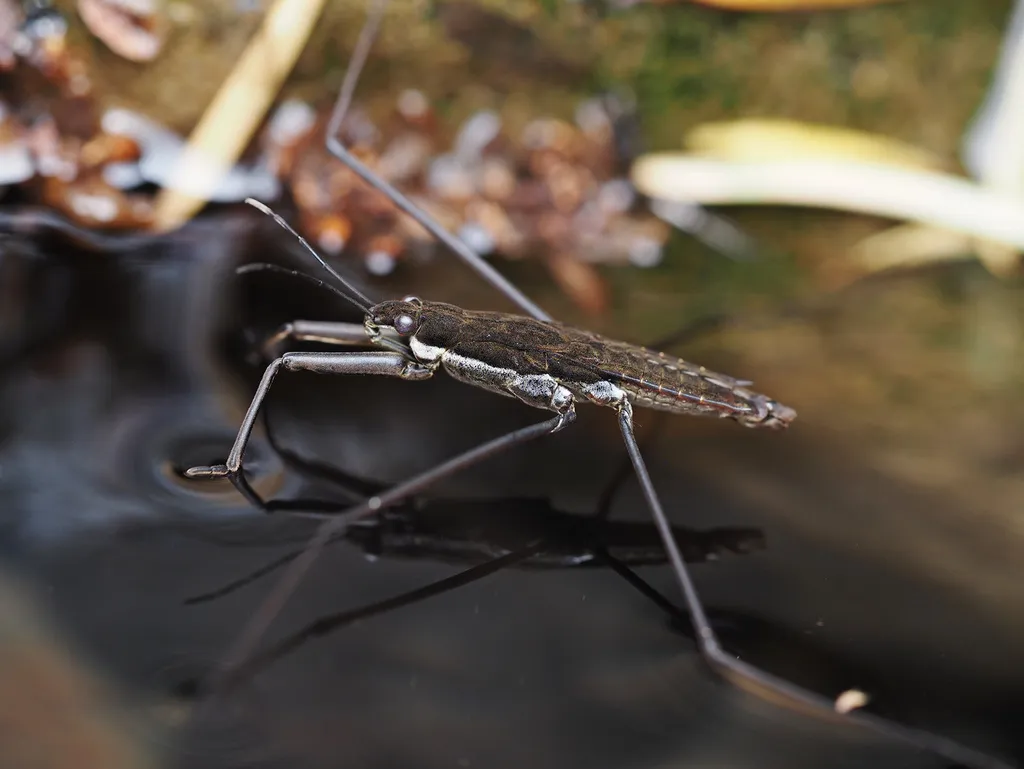
Aquarius remigis
Aquarius remigis
Identification: hind tibia at least 4 times length of first hind tarsal segment; connexival spines prominent; pronotum dull; first antennal segment subequal to combined length of antennal segments two and three; greatest width across mesoacetabula (m
Aradus acutus
Aradus acutus
Identification: silvery spots on abdominal tergites along the connexivum are diagnostic
Aradus aequalis
Aradus aequalis
Identification: The relatively short antennomere 2 and almost straight anterolateral and posterolateral margins of the pronotum are characteristic
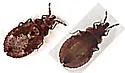
Aradus antennalis
Aradus antennalis
Identification: Separated from A. kormilevi by the bicolorous third antennal segment (apical half pale yellow), whereas this segment is unicolorous in A. kormilevi . Furthermore, brachypterous females of A. antennalis have a distinct narrow membrane
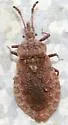
Aradus approximatus
Aradus approximatus
Identification: In the East, identified by the long second antennal segment (more than 3x length of third) with the abruptly enlarged apex. The large size and overall pale coloration also may aid in separating A. approximatus from several other spec
Aradus brevicornis 0
Aradus brevicornis
Identification: antenna slightly longer than head width • females brachypterous • imaged in
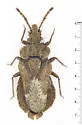
Aradus carolinensis
Aradus carolinensis
Identification: type specimen one of only 3 or 4 eastern spp. described after publication of
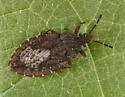
Aradus cf-oviventris
Aradus cf-oviventris
Identification: based on description, Aradus oviventris Kormilev 1966 (AZ; nr basalis ) is similar but testaceous with darker parts
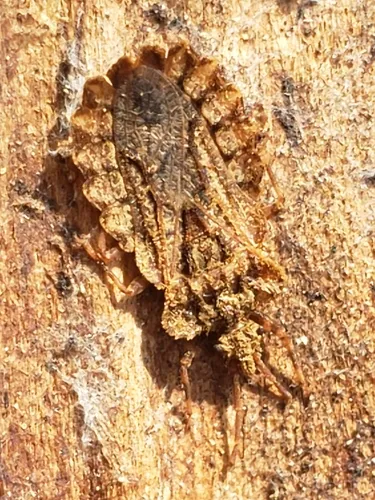
Aradus crenatus
Aradus crenatus
Identification: This common species is recognizable by its large size, peculiar antennal structure, and strongly crenate abdomen
Aradus depictus
Aradus depictus
Identification: coloration unique among nearctic congeners
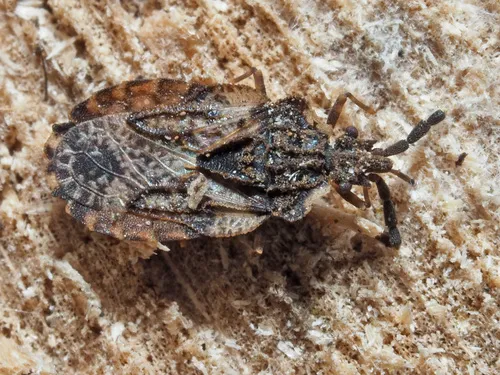
Aradus depressus
Aradus depressus
Length 5 to 6 mm. Unlike Aneurus species, the wing membrane in Aradus flatbugs does not extend below the apex of the scutellum. A. depressus is distinguished by the pale shoulders, and the 2nd and 3rd antennal segments are similar in length. Detailed
Aradus gracilis
Aradus gracilis
Identification: readily id'd by coloration, expanded pronotum, and slender scutellum
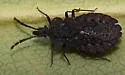
Aradus inornatus
Aradus inornatus
Identification: Among those eastern species with the antennae thinner than the profemur and a serrate lateral pronotal margin, this species is diagnosed by the clavate (gradually enlarged from base to apex) second antennomere being greater than three
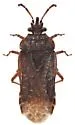
Aradus laeviusculus
Aradus laeviusculus
Aradus laeviusculus (Aradus laeviusculus) is a species in the family Aradidae, commonly known as flat bugs, belonging to the order Hemiptera (True Bugs, Cicadas, Hoppers, Aphids and Allies). It is classified within the subfamily Aradinae, suborder He
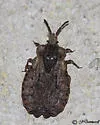
Aradus linsleyi
Aradus linsleyi
Identification: very similar to the eastern A. crenatus in habitus & antennae; photos in
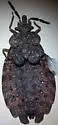
Aradus ovatus
Aradus ovatus
i found a female that matches the orig. description (also based on a single female) of this very distinctive mystery bug; not sure if any other specimens are known, will ask around
Aradus paganicus
Aradus paganicus
Identification: closely related to A. acutus , can be separated by the duller general coloration and the bulged median carinae of the pronotum
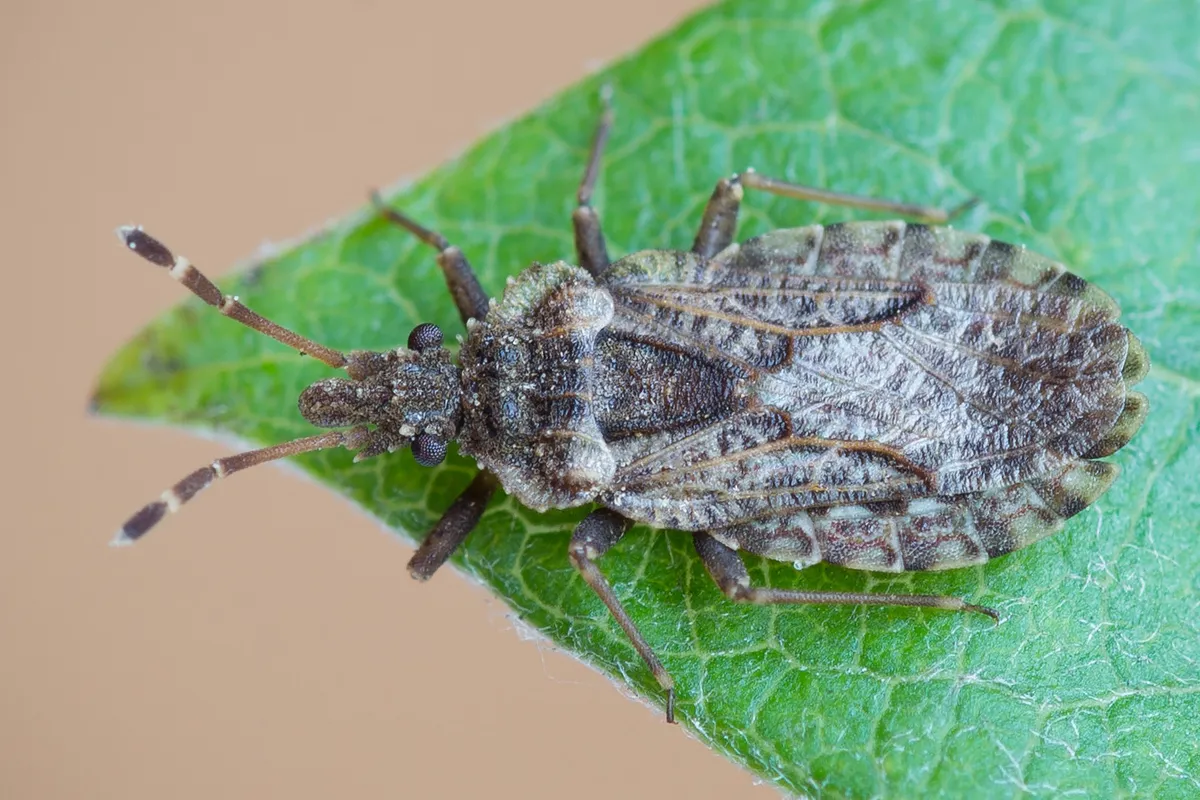
Aradus pictellus 0
Aradus pictellus
Identification: adult habitus ( 3 ) • photo gallery ( 4 )
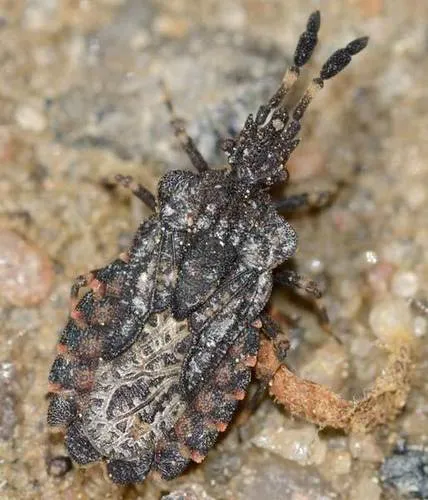
Aradus quadrilineatus
Aradus quadrilineatus
Identification: The strongly thickened antennomere 3 and the strongly expanded median portion of the pronotum are diagnostic
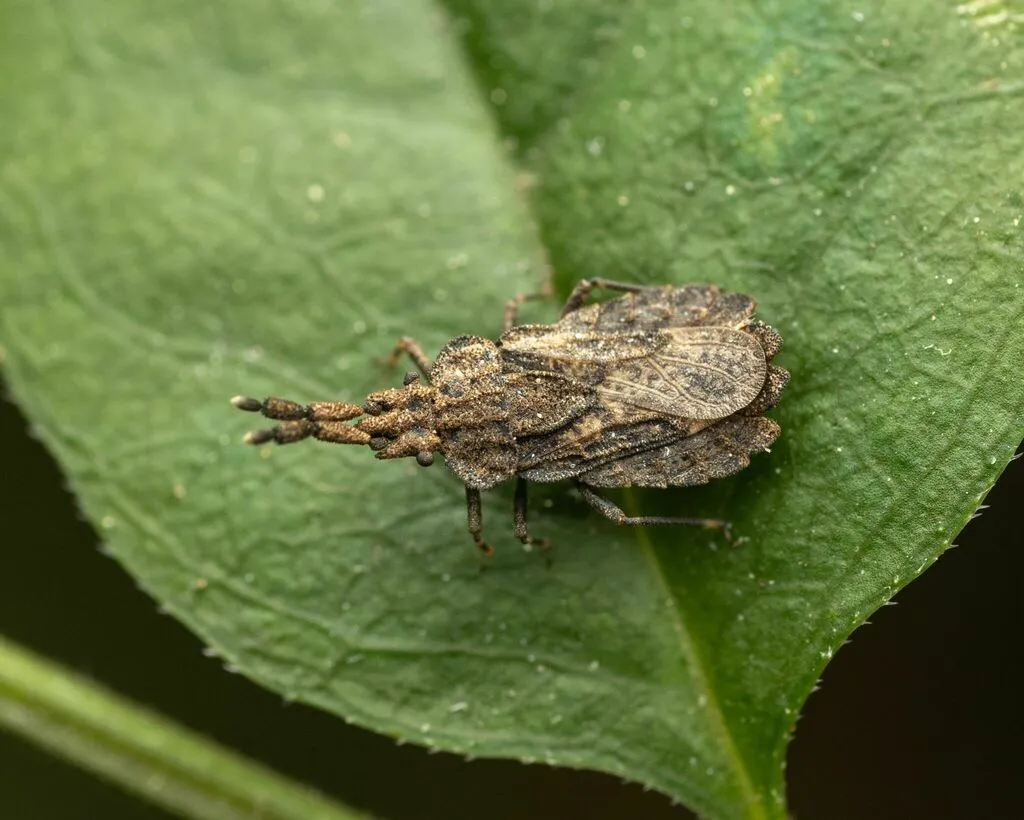
Aradus robustus
Aradus robustus
one of the most commonly collected Aradus in NA ( 3 )
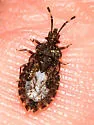
Aradus similis
Aradus similis
Identification: 3rd antennal segment pale yellow except fuscous base In the relatively thick median process of the head and the relatively short antennae resembles A. parvicornis ; however, in A. similis the median process of the head does not reach
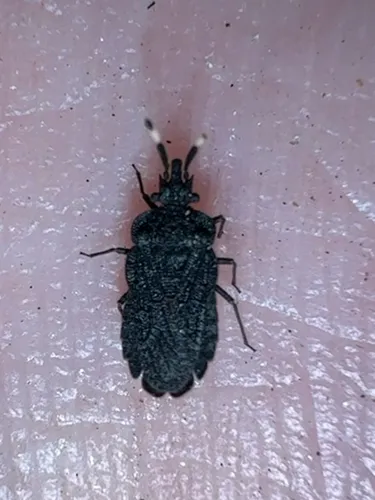
Aradus uniformis
Aradus uniformis
Identification: note pale third antennomere and smooth pronotal margin "In the eastern and central species with antennae not distinctly thicker than the profemur, entire (not serrate) pronotal margin, and more or less dilated bases of the hemelytra,
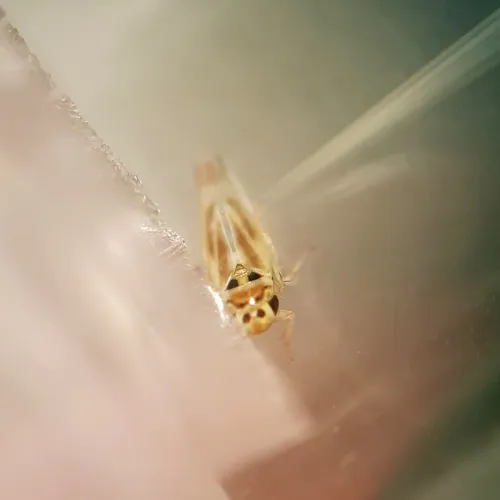
Arboridia parvula
Arboridia parvula
Length 2.5 - 3.1mm. Two prominent spots on the vertex and four small marks at the front of the pronotum. The forewings have dark streaks along the two long cells closest to the midline, and the lower part of the face is blackish. Very similiar to A r
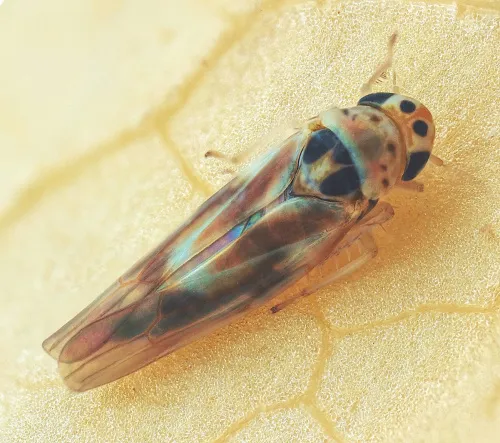
Arboridia ribauti
Arboridia ribauti
Length 3 to 3.5 mm, associated mainly with oak. Two prominent spots on the vertex and four small marks at the front of the pronotum. The forewings have dark streaks along the two long cells closest to the midline, and the lower part of the face is bl
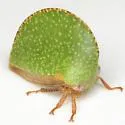
Archasia auriculata
Archasia auriculata
Identification: The green crest edged with brown spots is distinctive. --K.G.A. Hamilton
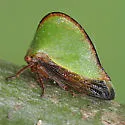
Archasia belfragei
Archasia belfragei
Identification: According to Dr. Andy Hamilton, the high-arched crest rises vertically from the head, and the brown fringe is distinctive.
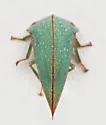
Archasia pallida
Archasia pallida
Identification: Crest lower than the others in the genus (twice as long as high) and there are more black spots above the eye. The pale, striped legs also seem to be distinctive. --K.G.A. Hamilton, 2010
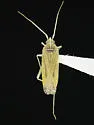
Argyrocoris scurrilis
Argyrocoris scurrilis
Identification: Species notes from Van Duzee : "Testaceous white; pronotum with five lines of appressed silvery scales the three median of which are continued over the head. Length 5 mm... Elytra nearly unicolorous. Membrane white, sparingly marmorat
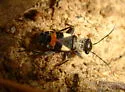
Arhaphe carolina
Arhaphe carolina
Likely a Batesian mimic of mutillid wasps ( Hoffman 2005 )
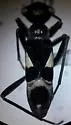
Arhaphe mimetica
Arhaphe mimetica
Identification: distinctive among congeners (glabrous, with smaller body)
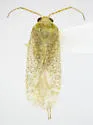
Arizonapsallus stonedahli
Arizonapsallus stonedahli
Identification: "Recognized by the relatively large size within the Phymatopsallus group,... pale coloration, spotted dorsum, and the left side of the pygophore lacking a specialized field of spicules or a tubercle."
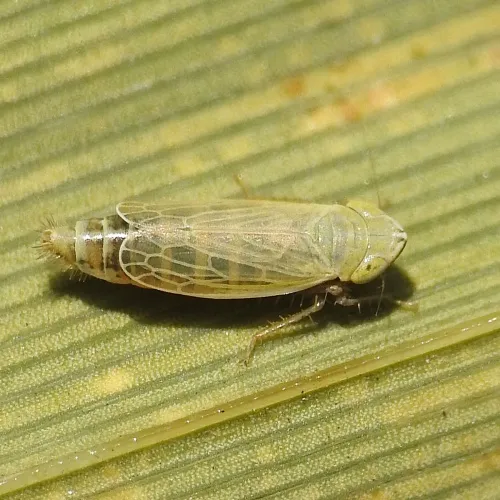
Arthaldeus pascuellus
Arthaldeus pascuellus
Length 3 to 4 mm. A small greenish leafhopper. There are two short dark streaks at the tip of the vertex, and the frons (face) does not have a central longitudinal pale streak. Arthaldeus striifrons and A arenarius both have a pale longitudinal strea
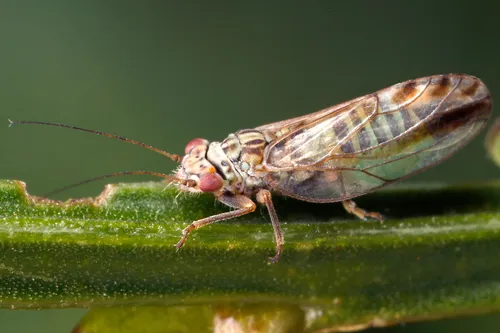
Arytaina genistae
Arytaina genistae
This psyllid has no genal cones, and is associated with Broom. The colour of the body is variable from green to brown, but the wings have diagnostic dark streaks. Arytainilla spartiophila is also associated with broom, but the wings do not have dark
Asarcopus palmarum
Asarcopus palmarum
Identification: Sexually dimorphic in the shape of the head and wing color/shape. The male is shinier, has more color contrast, and has a humped thorax and an indentation at the junction of the thorax and abdomen, whereas the female is smoothly tubul
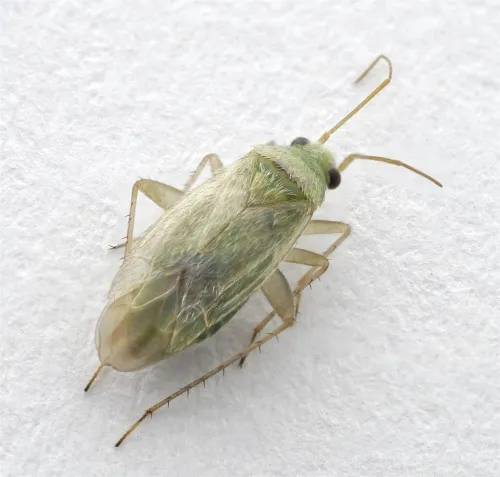
Asciodema obsoleta
Asciodema obsoleta
Length: 4 to 5 mm. A dense covering of white hairs gives this bug a very pale green appearance. Sparse dark hairs are also present on closer examination. The antennae are pale. The femora are unspotted and it has dark tibial spines, but these do not
Ascra bifida
Ascra bifida
Ascra bifida (Ascra bifida) is a species in the family Pentatomidae, commonly known as stink bugs, belonging to the order Hemiptera (True Bugs, Cicadas, Hoppers, Aphids and Allies). It is classified within the subfamily Edessinae, suborder Heteropter
Asian Citrus Psyllid
Diaphorina citri
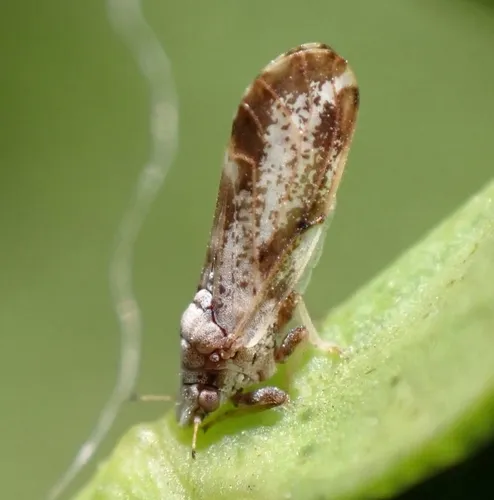
Identification: Nymphs ; wingpads massive; white waxy excretions of the nymphs on new leaves are indicative Earliest record in our area: FL 1998. Damages citrus plants by feeding on sap; a vector of citrus greening disease (Huanglongbing). The Euloph
Asian Woolly Hackberry Aphid
Shivaphis celti
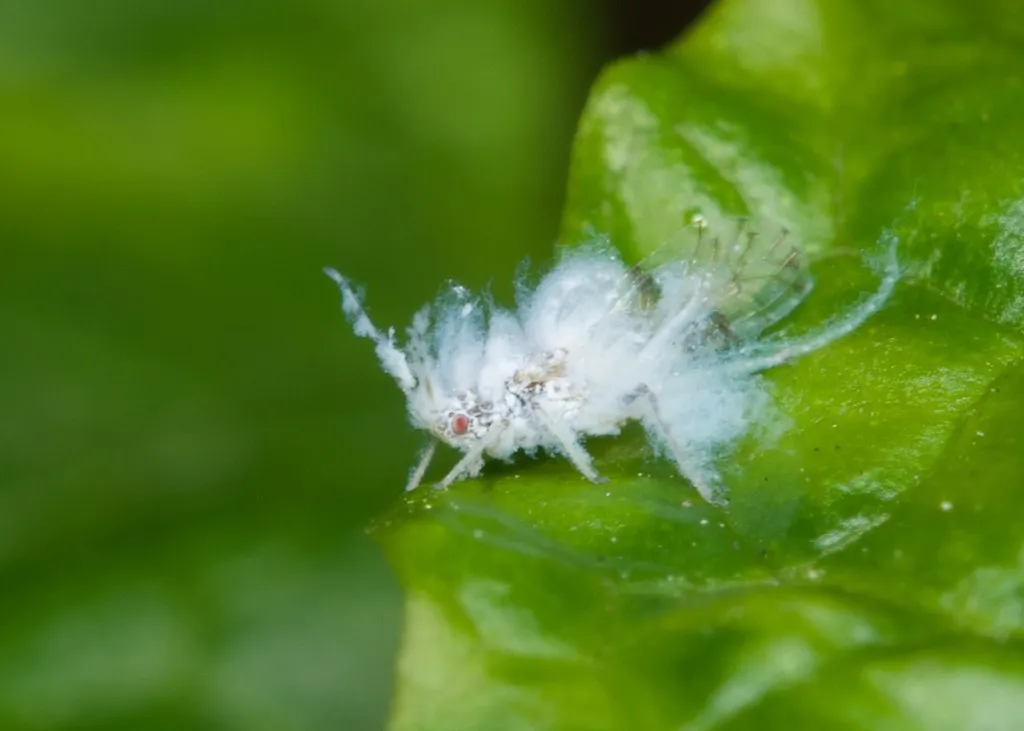
Identification: These aphids are covered in a bluish white wax that forms from conspicuous abdominal glands. The winged forms have shading along the wing veins, particularly toward the edge of the wings. While generally obscured like most of the inse
Asiraca clavicornis
Asiraca clavicornis
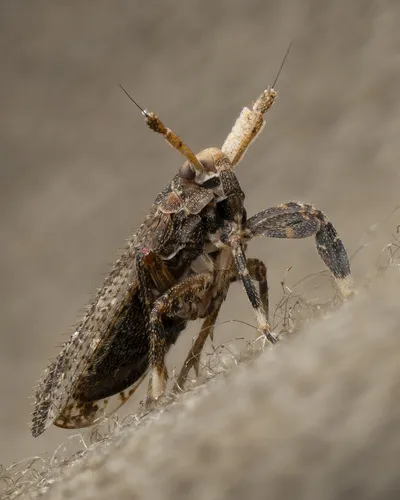
Length 3 to 4 mm. An unmistakeable species with extraordinary antennae and expanded leaf-like front legs. Photographs required please, as this species is uncommon in our area. Notable B (ref: UK Auchenorrhyncha checklist 202 1) Believed to be declini
Asotocixius diopter
Asotocixius diopter
"The lack of spines on the hind tibia before the apex, the shapes of the apical cells of the forewings, the large mesonotum, and the carinate longitudinal midline of the frons together distinguish A. diopter from all other cixiids found in our fauna.
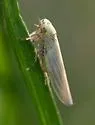
Aster Leafhopper
Macrosteles quadrilineatus
Identification: Narrow-winged, with 6 spots on the head, and a black mustache. Major polyphagous agricultural pest and plant disease vector, reported to cause serious losses of some crops. It is a vector of the so called aster yellows , a bacterial
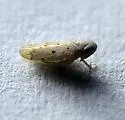
Atanus perspicillatus
Atanus perspicillatus
specimens from the northeast differ slightly from the illustrations. "The first specimens collected in New Hampshire were identified by Andy Hamilton as Atanus ?perspicillatus. The issue is that the genitalia are closest to the figure of perspicillat
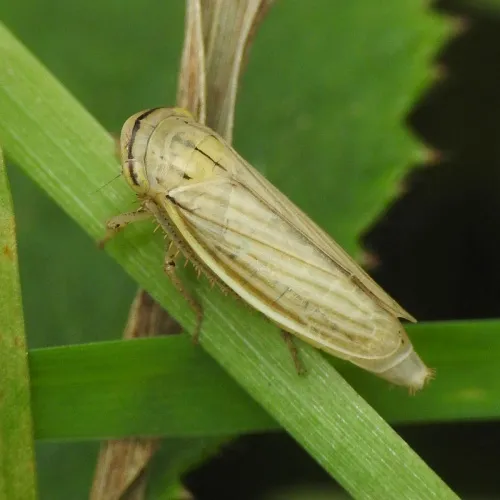
Athysanus argentarius
Athysanus argentarius
Length 6.5 to 8 mm. A large pale leafhopper with a distinctve dark line across the front of the vertex, connecting the eyes. Good photos in the field or from a specimen, showing vertex Common. Historically considered scarce and confined to coastal ar
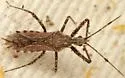
Atrachelus cinereus
Atrachelus cinereus
Identification: Spines present along edge of abdomen. Small size. One of the smallest of North American assassin bugs. Males usually sexually dimorphic, with third antennomere thickened.
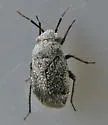
Atractotomus balli
Atractotomus balli
Identification: Recognized by its small size; short second antennal segment; generally distributed, scalelike setae on hemelytral membrane and hind femora; antennal fossae removed from anteroventral margin of eye by distance equal to or greater than
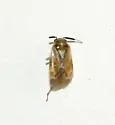
Atractotomus nicholi
Atractotomus nicholi
Identification: Recognized by its small size; brownish yellow general coloration, sometimes suffused with fuscous dorsally but leaving scutellum pale; dorsum with light and dark scalelike setae; antennal segment II black, slightly inflated in both se
Attenuipyga platyrhyncha
Attenuipyga platyrhyncha
Identification: Head is broad, front convex transversely; elytra more than half the length of abdomen in both sexes. Females will have the last 3 segments of the abdomen visible; male elytra will usually reach the tip of the abdomen.
Attenuipyga vanduzei
Attenuipyga vanduzei
Identification: Hamilton's paper provides keys for Dorycephalini and Hecalini. A. vanduzeei is differentiated by its tan underside; tip of ovipositor sometimes blackened. Characteristic of A. vanduzeei[i/] is the 3 black head spots (one median, 2 nex
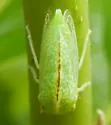
Atymna helena
Atymna helena
Identification: Resembles the male of A. querci but has the front of the crest pale. ‒K.G.A. Hamilton, 17.vi.2008
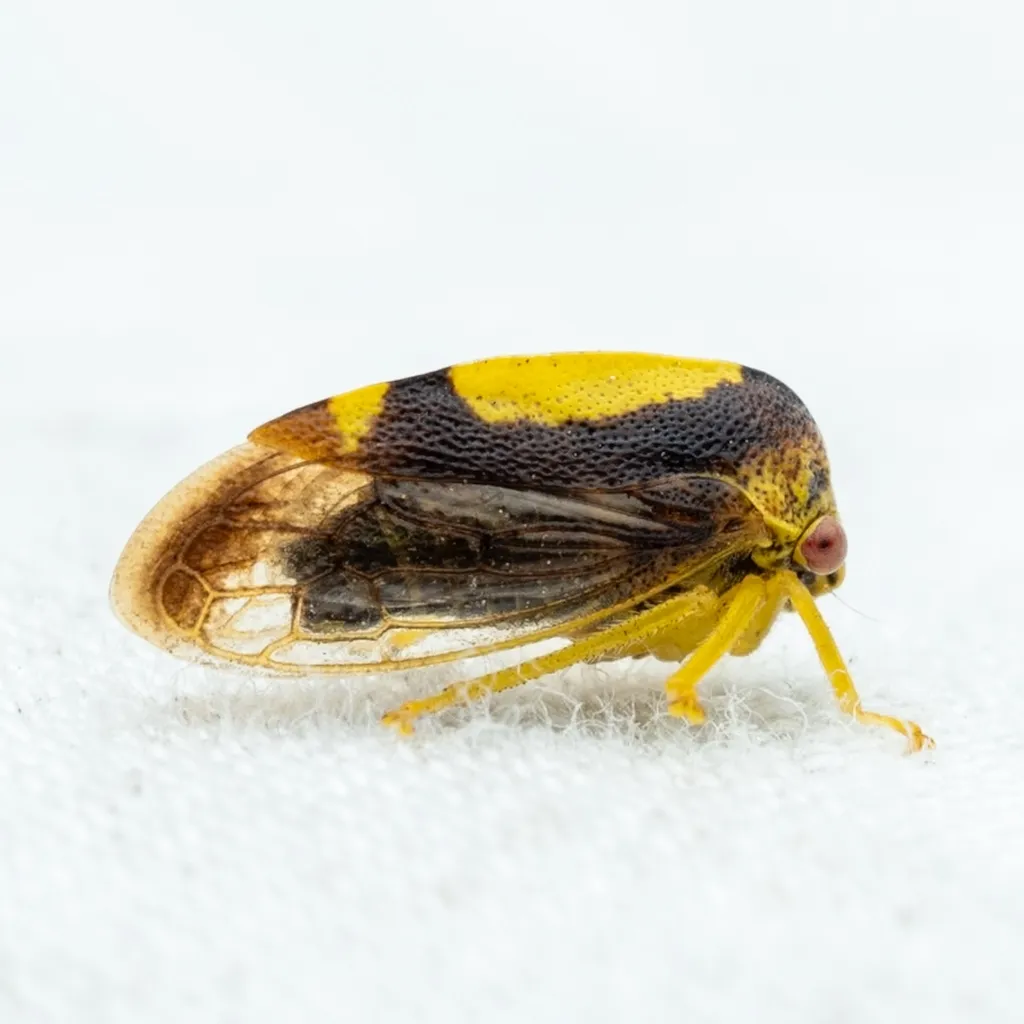
Atymna querci
Atymna querci
Identification: The male is black with yellow spots, and the female is all green.
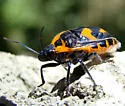
Augocoris illustris
Augocoris illustris
good photo here -- i'll try to get it for the guide
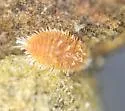
Azalea Bark Scale
Acanthococcus azaleae
Mostly on Rhododendron (rhododendrons and azaleas) but also on other Ericaceae and some unrelated trees.
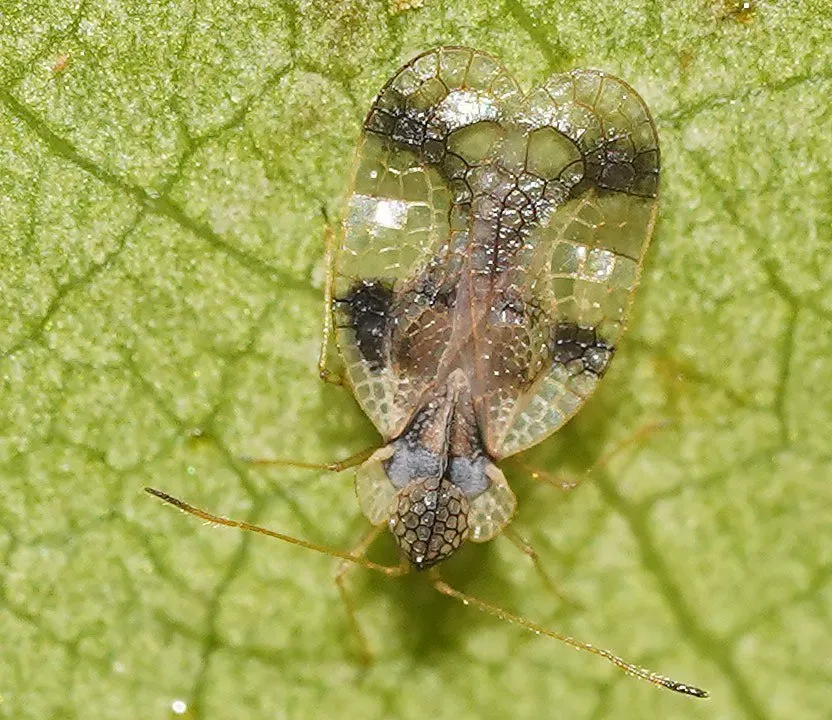
Azalea Lace Bug
Stephanitis pyrioides
Azalea Lace Bug (Stephanitis pyrioides) is a species in the family Tingidae, commonly known as lace bugs, belonging to the order Hemiptera (True Bugs, Cicadas, Hoppers, Aphids and Allies). It is classified within the subfamily Tinginae, tribe Tingini
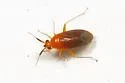
Azalea Plant Bug
Rhinocapsus vanduzeei
Identification: Clypeus, jugum, and lorum black; A2 pale on basal half, black on apical half; femora spotted with black.
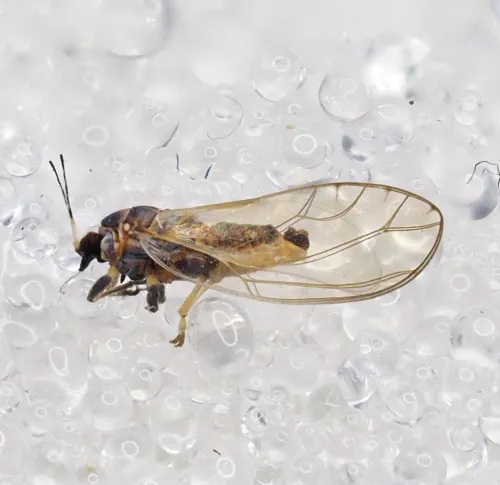
Bactericera albiventris
Bactericera albiventris
3.5-4mm. As with other species in the Triozidae family, it has pointed forewings and with and the three main veins joining together. Adults have a characteristic reddish colour that darkens as it matures and the underside of the abdomen is pale. Very
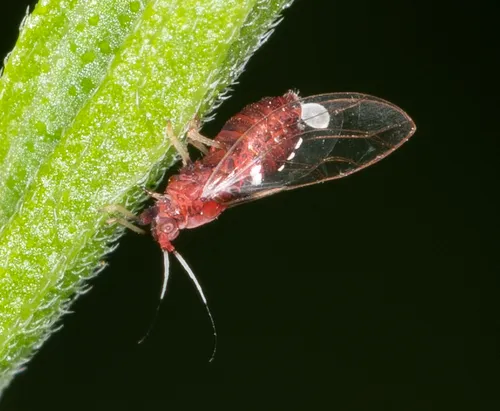
Bactericera antennata
Bactericera antennata
Identification: Head emarginate anteriorly, antennae very long when compared to other Triozidae, segments 1-2 red, 3-5 white, 6-10 black. Fore femurs slightly enlarged; genae slightly swollen ventrally. Males generally black with green abdomen; femal
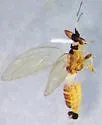
Bactericera athenae
Bactericera athenae
Identification: Head, pronotum, prescutum, male genitalia black; rest of body yellow. Antennae black except segments 4,5 and tip of 3 white. Head cleft, concave, eyes projecting forward; wings angular, three times as long as broad, marginal cells sma
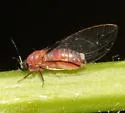
Bactericera californica
Bactericera californica
Identification: General color orange to brown with black head; veins R+M+Cu, R, and anal margin basally heavily embrowned:
Bactericera lobata
Bactericera lobata
Identification: Wings with distinct maculae; general body color yellow, with tip of each antenna segment dark; head and thorax pubescent
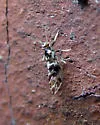
Bactericera maculipennis
Bactericera maculipennis
Identification: Wings maculate, angulate, with enlarged cubital cell. Maculae as follows: a narrow mark extending along margin from apex to cubital cell; another including most of cubital cell and more or less continuous across the furcation of R; an
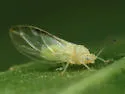
Bactericera minuta
Bactericera minuta
Identification: Color extremely variable; usually orange with various degree of black on head and thorax; abdomen usually green but occasionally dark orange. Wings typically immaculate, but var. arizonae with distinct dark marginal band on forewing.
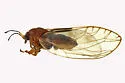
Bactericera salicivora
Bactericera salicivora
Identification: General color variable, from orange to red to dark reddish-brown; head and genal cones usually reddish but sometimes dark brown to black; abdomen darker dorsally and pale ventrally; antennae 1.5x width of head, pale basally and black
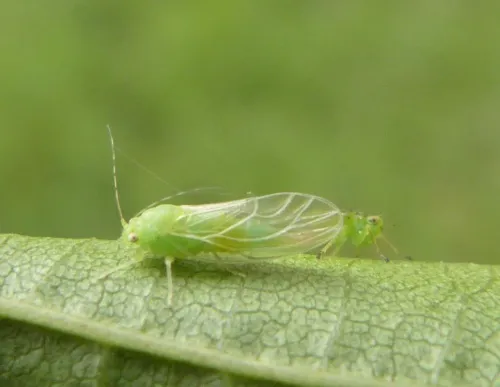
Baeopelma foersteri
Baeopelma foersteri
A large green psyllid associated with Alder, length c.4 mm. It has short roudned genal cones and the females have very long orange-brown terminalia. The forewings are yellowish, and have pale veins. Psylla alni is also associated with Alder but is la
Bagrada Bug
Bagrada hilaris
Identification: distinctive among NA Pentatomidae Det. Salvador Vitanza, 2017 May aggregate on non-hosts in the fall when bug populations are high and food is scarce. Avoiding cruciferous and other hosts at risk should be a serious consideration for
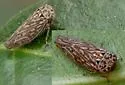
Balcanocerus chisosus
Balcanocerus chisosus
Identification: "Resembling dolosus in general appearance but paler in color. Vertex almost transverse and parallel margined. Male antennae with small elongate oval discs. Color pale brown, face unmarked, a pair of large round black spots on vertex.
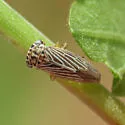
Balcanocerus dolosus
Balcanocerus dolosus
Identification: "Form and general appearance of crataegi , slightly broader and darker. Face and pronotum irregularly immaculate with brown. Head as broad as in crataegi , much broader than in the other deep-headed species. Vertex not as much curved
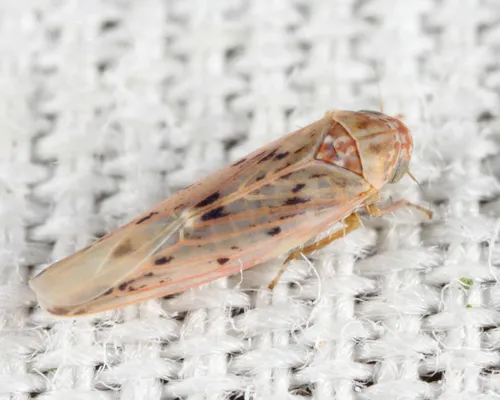
Balclutha impicta
Balclutha impicta
Identification: Sometimes this species has spotted wings, and sometimes not. The very short head, which is also much narrower than the thorax, is distinctive for this species in eastern North America. In the west there is a look-alike, B. manitou .
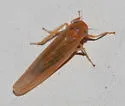
Balclutha neglecta
Balclutha neglecta
Identification: Has a wider head than most of the species in North America per Andy Hamilton.
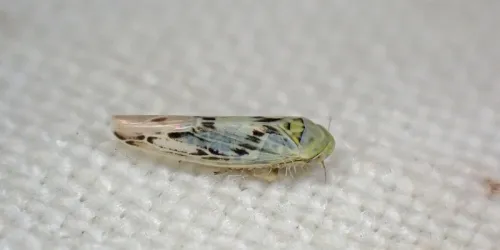
Balclutha punctata
Balclutha punctata
Length 4 mm. A very variable species, sometimes heavily spotted or with dark streaks in a characteristic pattern, but also may be faintly spotted or unmarked. Colour varies from whitish or pale green, to yellowish, pinkish or pale orange. The pattern
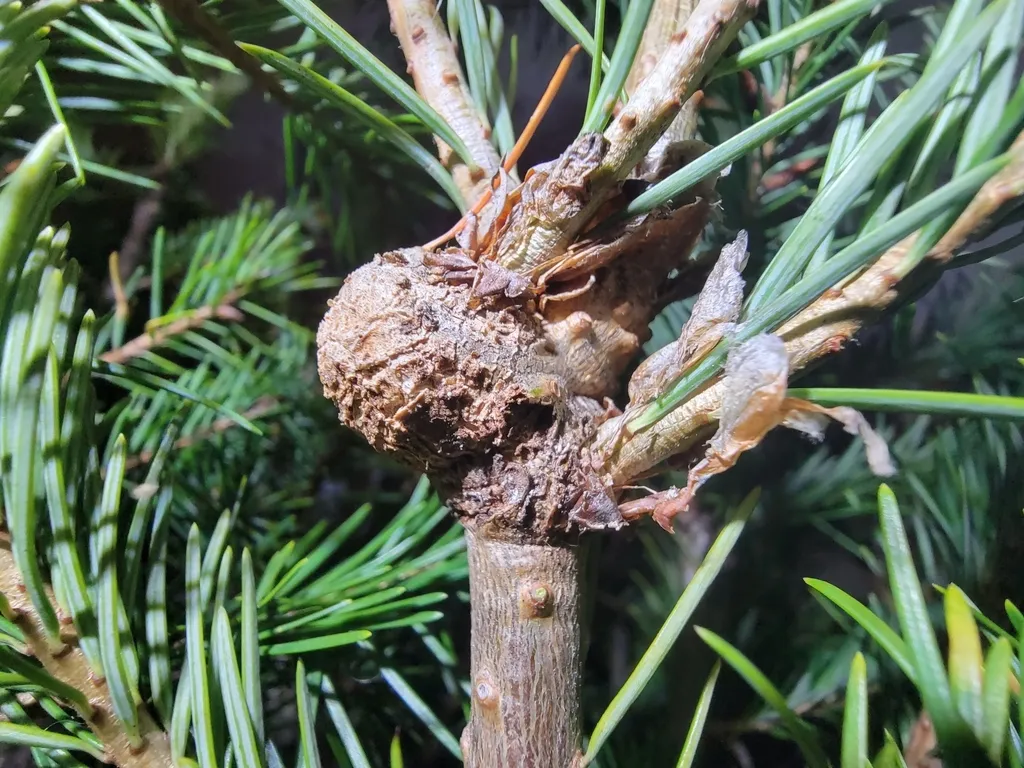
Balsam Woolly Adelgid
Adelges piceae
Identification: Purple to black. As they mature, they cover themselves with cottony white wax, and become much more noticeable. Adults are near-spherical and usually wingless.
Banasa packardii
Banasa packardii
Banasa packardii (Banasa packardii) is a species in the family Pentatomidae, commonly known as stink bugs, belonging to the order Hemiptera (True Bugs, Cicadas, Hoppers, Aphids and Allies). It is classified within the subfamily Pentatominae, tribe Pe
Banasa sordida
Banasa sordida
Identification: body dark (not always black), with 4 rows of dark blotches on abdomen
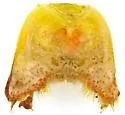
Banasa subcarnea
Banasa subcarnea
Identification: Apex of head blunter than in B. calva Common in the mountains of the southwest
Bandara inflata
Bandara inflata
Identification: a more orange species than the others - Andy Hamilton, 18 November, 2008
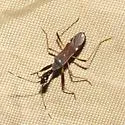
Banded Long-necked Seed Bug
Myodocha annulicornis
Identification: pale white ring surrounding base of fourth antennal segment distinguishes this species from the similar M. serripes, whose fourth antennal segment is uniformly dark hemelytra are darker than those of M. serripes, and their lateral mar
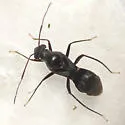
Barberiella formicoides
Barberiella formicoides
Identification: A triangular projection on the scutellum.
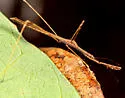
Barce fraterna
Barce fraterna
Identification: unique male genitalia uniform across all forms led Wygodzinsky to lump several described species into Barce fraterna , with several 'races': B. f. fraterna , B. f. annulipes , and B. f. banskii , separated based on shape of pygophore,
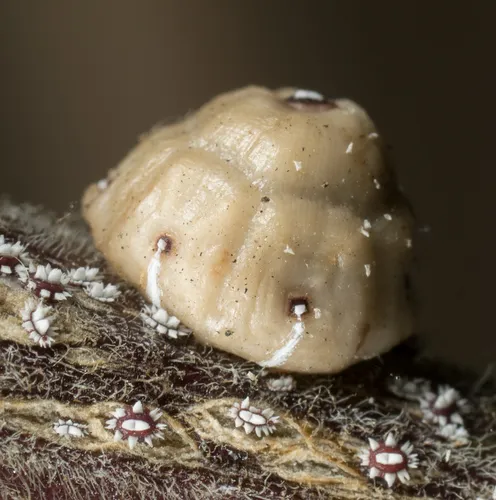
Barnacle Scale
Ceroplastes cirripediformis
TBA-HNM It has been intercepted at U. S. ports-of-entry 12 times between 1995 and 2005.
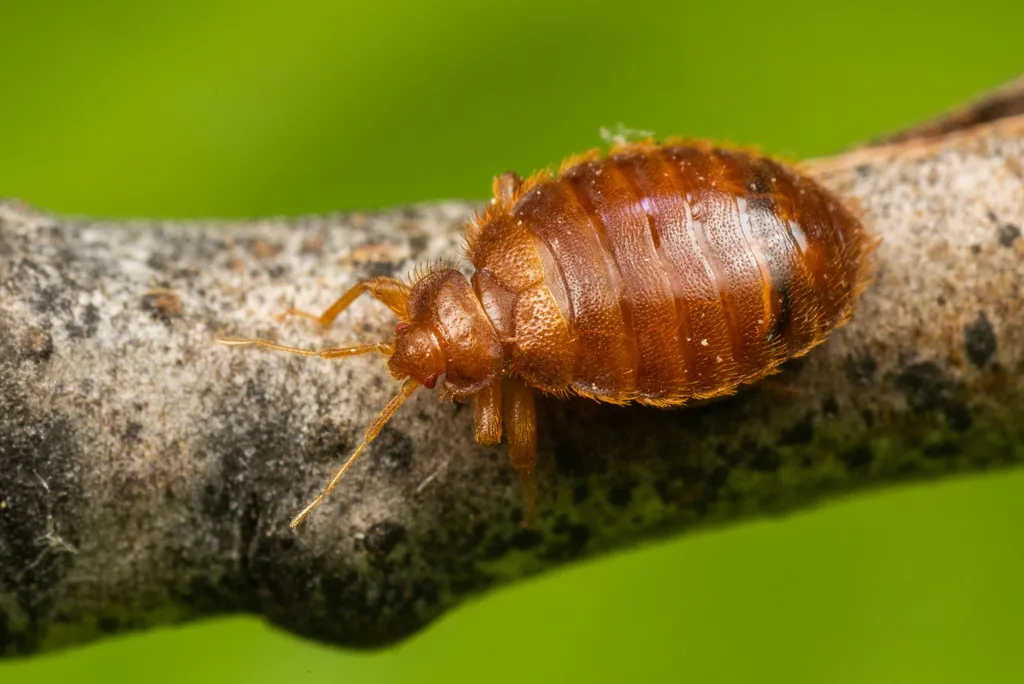
Bat Bug
Cimex pilosellus
Identification: distinguished from C. lectularius by long setae on the body of the adult and large nymphs; and thorax extends forward on sides of the head occasionally feeds on people