
True Bugs, Cicadas, Hoppers, Aphids and Allies
Order Hemiptera
The True Bugs, Cicadas, Hoppers, Aphids and Allies (Order Hemiptera) includes 7,349 species across 120 families and 1,727 genera in our directory.
About True Bugs, Cicadas, Hoppers, Aphids and Allies
Hemiptera (true bugs) includes over 80,000 described species across cicadas, aphids, leafhoppers, shield bugs, and bed bugs. Aphids alone cost global agriculture an estimated $2.5 billion annually in crop losses.
Economic Impact
The brown marmorated stink bug (Halyomorpha halys) caused $37 million in apple crop losses in a single year in the U.S. Mid-Atlantic region. Bed bug infestations in the U.S. increased by 500% between 2001-2010, costing the hotel industry hundreds of millions annually.
Ecological Role
Many Hemiptera are essential food sources for birds and predatory insects. Cicadas provide massive nutrient pulses during emergence events - a single Brood X emergence can involve trillions of individuals across 15 states.
Families in Hemiptera (120)
Species in Hemiptera (7,349)
Camellia Scale
Lepidosaphes camelliae
occasionally a serious pest of camellia and holly in FL
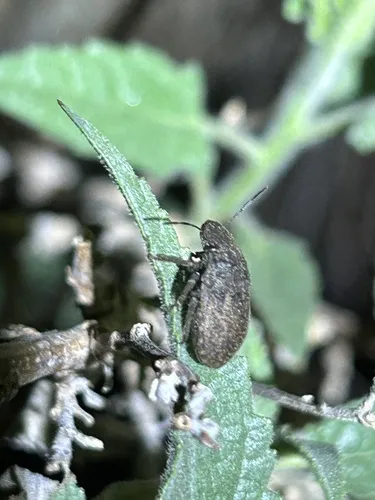
Camirus moestus
Camirus moestus
Identification: Dense dorsal punctation with golden pubescence
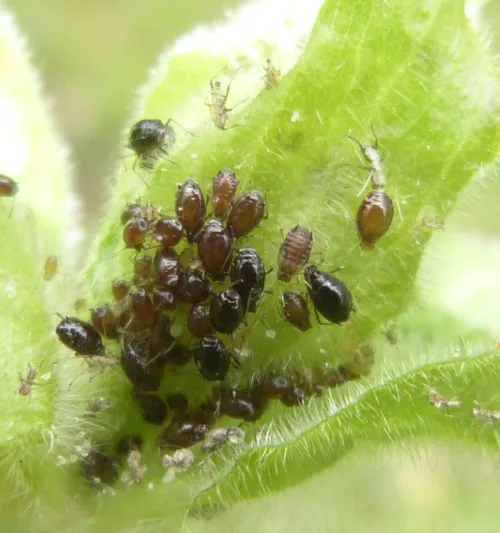
Campion Aphid Group-Brachycaudus lychnidis species group
Brachycaudus lychnidis species group - (B. klugkisti, B. lychnicola and B. lychnidis sensu stricto)
Please provide close up image (s) of the aphids and a photo showing whether they were found at the top or bottom of the plant. Most often found on the upper parts of Red Campion plants, but also uses White Campion. All year, but especially late sprin
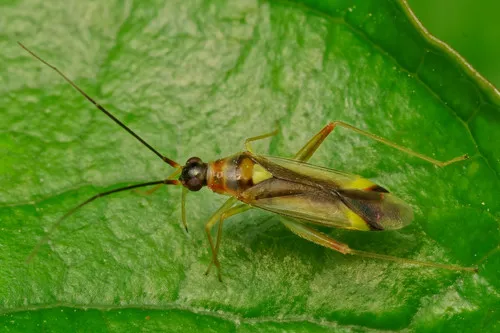
Campyloneura virgula
Campyloneura virgula
Length 4 to 5 mm. A distinctively marked species which has very long antennae and a bright yellow cuneus, tipped with dark red. Nymphs are yellow, with red-banded antennae and a red stripe on the margins of the pronotum. Males are extremely rare; rai
Capsus ater
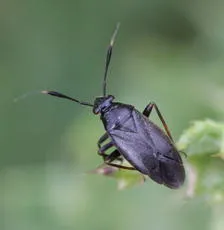
Capsus ater
Length 5-6 mm. This common bug is characterised by its rather oval body shape, black forewings and 2nd antennal segment, which is swollen towards the apex. The widest part of this segment is more than twice as broad as the narrowest section. The head
Cardiastethus fasciiventris
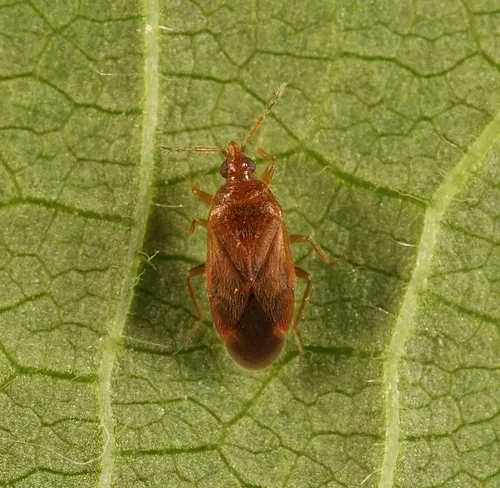
Cardiastethus fasciiventris
A small (2-2.4mm) orange-brown bug. Antennae slightly longer than width of rear of pronotum; ant2 entirely pale. Front wings with the clavus lacking punctures and densely covered with pale hairs. Inner edge of anterior tibiae of male furnished with 2
Cariniocoris geminatus
Cariniocoris geminatus
Identification: dimorphic; males with hemelytra uniformly dark brown, base of corium sometimes paler, females uniformly pale greenish; primary spiculum Type Locality: Holotype and 31 paratypes, College Station, Brazos Co., TX, 7-12 Apr. 1928, H. G. J
Carynota stupida
Carynota stupida
Identification: dark grayish with whitish spots and low rounded crest page creation based on Andy Hamilton's identification of this image
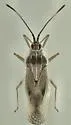
Cassava Lace Bug
Vatiga illudens
pest of cassava in the Neotropics; earliest record in our area: FL 2009
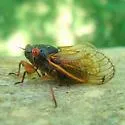
Cassin's 13-year Cicada
Magicicada tredecassini
Identification: Some characters (Magicicada.org): Link to video/audio showing the distinctive buzzy sound of this species in chorus:
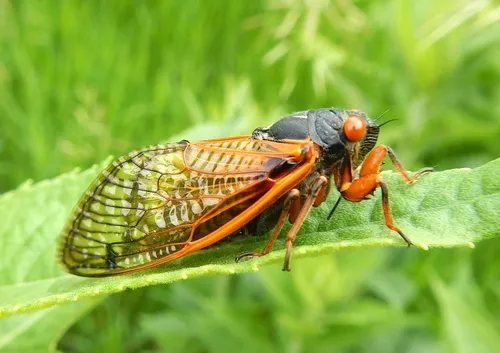
Cassin's 17-year Cicada
Magicicada cassinii
Fisher seems to have been active in Philadelphia, and was a colleague of John Cassin, both active in the Academy of Natural Sciences. Perhaps the same person as "J. Coleman Fisher"?
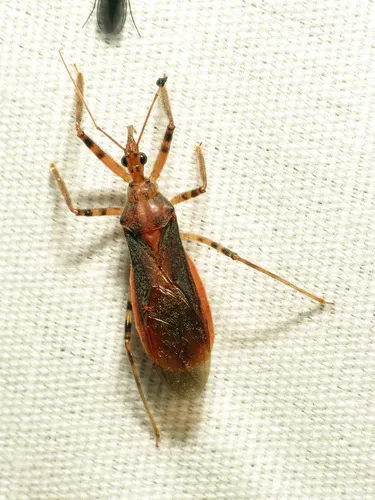
Castolus ferox
Castolus ferox
Identification: There is sexual dimorphism in C. ferox . The two (most obvious) dimorphic structures are the antennae and the connexiva. Regarding the antennae, there are some reduviid genera (harpactorine only?) in which the males have the third seg
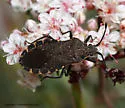
Catorhintha apicalis
Catorhintha apicalis
prior to 16.x.2012, all BG images of this sp. were misidentified as Anasa andresii ; IDs corrected by T.J. Henry
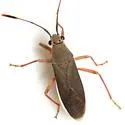
Catorhintha divergens
Catorhintha divergens
Identification: Drawing Type locality: Paradise Key, Dade County, Florida
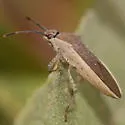
Catorhintha texana
Catorhintha texana
Identification: Relatively narrow body; continuously yellow connexivia; antennal tubercle unarmed (no spine or obtuse angle on the outer side). Antennae black except for (usually) a distinct pale yellow band at the apex of the 3rd antennomere; legs d
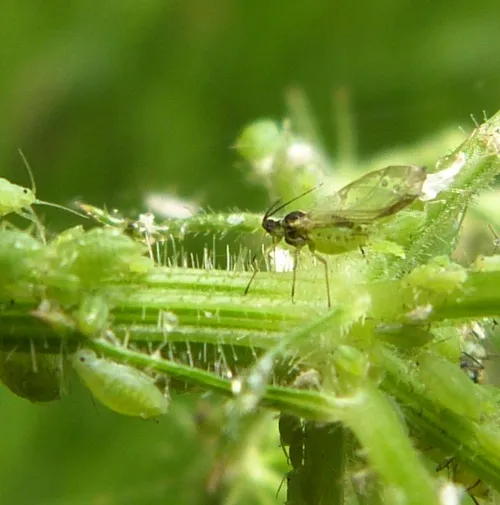
Cavariella theobaldi
Cavariella theobaldi
The body length of Cavariella theobaldi apterae is 1.8 to 2.8 mm. For further details please follow the ‘Further info:’ link below Unless identified by a recognised expert, a photo is required. If the photo doesn't show the key ID features, then in t
Ceanothia bicolor
Ceanothia bicolor
Identification: Males are uniformly dark except basal 2/3 of antennae, tibiae, and tarsi pale; wings dark opaque, with basal area and claval suture translucent. Females are blue-green to flavotestaceous, with forewings pale amber to fumate, opaque to
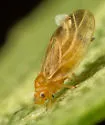
Ceanothia boharti
Ceanothia boharti
Identification: Wings with variable dark maculation. Females more lightly-colored than males, terminalia long, acuminate.
Ceanothia ceanothi
Ceanothia ceanothi
Identification: General color yellow to brown; genal cones very small, broadly rounded; eyes and clypeus large; cubital cell just slightly larger than medial cell, pterostigma prominent; female genitalia acuminate, dorsal valve excavate, ventral valv
Ceanothia essigi
Ceanothia essigi
Identification: General color dark; forewings subcoriaceous, dark except proximal hyaline area, with large medial cell and very small pterostigma; posterior tibiae white; genal processes large, conical, contiguous basally; discal foveae inconspicuous
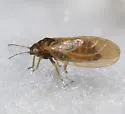
Ceanothia mitella
Ceanothia mitella
Identification: General color from yellow to dark brown in mature individuals, wings transparent. Female terminalia rather short, blunt; genal processes short, broadly rounded, less than half as long as vertex; antennae about 1.2x as long as width of
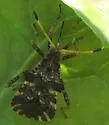
Centrocoris variegatus
Centrocoris variegatus
Identification: photos of ref. specimens earliest NA record: CA 2009
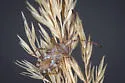
Centrocoris volxemi
Centrocoris volxemi
Identification: distinguished from C. variegatus by smaller size ( C. variegatus ♂ 10.9‒11.8 mm, ♀ 11.5‒12.8 mm), anterolateral margin of the pronotum entire (with series of small spines in C. variegatus ), posterolateral margin of the pronotum entir
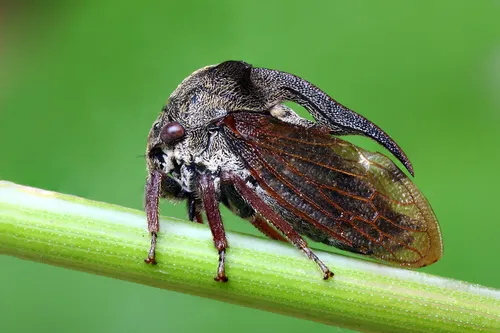
Centrotus cornutus
Centrotus cornutus
Length about 10 mm. One of only two UK treehoppers. It has horn-like projections on the pronotum The other UK treehopper, Gargara genistae, is associated with broom and is smaller than C. cornutus and lacks the 'horns' on the pronotum. Good photograp
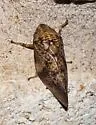
Cephisus brevipennis
Cephisus brevipennis
Type locality: Ciudad Valles, San Luis Potosi, Mexico
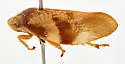
Cephisus laticeps
Cephisus laticeps
Type locality: 21 km east of Concordia, Sinaloa, Mexico.
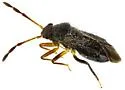
Ceratocapsidea fusiformis
Ceratocapsidea fusiformis
Identification: distinguished by the striate frons, the brown pronotum often having the base and calli darker brown, the dark or reddish hind femur, silvery scale-like and bristle-like setae on the hemelytron, and the male genitalia
Ceratocapsidea rileyi 0
Ceratocapsidea rileyi
Identification: final key couplet: Antennal segments I and II dark brown to fuscous; left paramere (Fig. 189) with beak-like process broadly rounded; right paramere (Fig. 191) with one, relatively short, upturned lateral arm; phallotheca stout, broad
Ceratocapsidea texensis 0
Ceratocapsidea texensis
Identification: final key couplet (part): Broadly rounded, uniformly reddishbrown species (Figs 45, 46); legs uniformly yellow distinguished by the small size, oval body form, the uniformly pale yellowish brown appendages, and the male genitalia. Typ
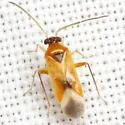
Ceratocapsus apicalis
Ceratocapsus apicalis
Identification: black pronotum and scutellum, distinctly blackish apical half of membrane, and fuscous cloud at inner apical angles of corium. Type Locality: Fabens, El Paso Co., Texas
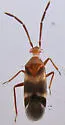
Ceratocapsus apicatus
Ceratocapsus apicatus
Identification: Closely allied to fasciatus Uhl., but with thicker antenna, a pale band across apex of corium as well as one at apex of scutellum, a unicolorous membrane and darker legs ( original description )
Ceratocapsus barbatus 0
Ceratocapsus barbatus
Identification: Fuscous, clavus and corium more brown, thickly clothed with semi-erect and erect, brown pubescence; antennal segments brown; eyes with rather long setae (Fig. 27b) ( 3 ) " Ceratocapsus barbatus resembles C. cecilsmithi and C. pubescen
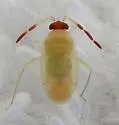
Ceratocapsus bifurcus
Ceratocapsus bifurcus
Identification: Det. Michael D. Schwartz, 2024 Henry examined numerous specimens collected at Highlands Co., Archbold Biological Station, May 5, 1977, B. Stinner, at light (PDA, TJH). He studied the Ceratocapsus Frost listed as C. lutescens and found
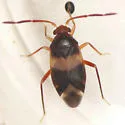
Ceratocapsus fasciatus
Ceratocapsus fasciatus
Identification: Dorsum dark brown and clothed only with simple pubescence, and a broad pale or yellowish mark extending across hemelytra just beyond tip of scutellum. uncommon (BG data)
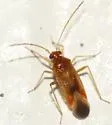
Ceratocapsus fuscosignatus 0
Ceratocapsus fuscosignatus
Identification: Suggestive of punctulatus Reuter described from Texas, but differs in the shorter pubescence, shorter antennal segments, and the setigerous punctures of the dorsum not infuscated. Type Locality: Tampa, Florida
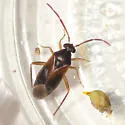
Ceratocapsus modestus
Ceratocapsus modestus
Identification: Separated from other Ceratocapsus by the lack of pilose or tomentose pubescence on the hemelytra, the overall yellowish-brown color with the more fuscous pronotum, scutellum and apical portion of the hemelytra , and the male genitalia
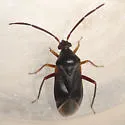
Ceratocapsus nigellus
Ceratocapsus nigellus
Identification: Recognized among species of Ceratocapsus lutescens group by: 1) Clavus and middle of corium clothed with silky or tomentose pubescence intermixed with simple, erect, semierect or pilose setae; 2) Dorsum with only shorter, more recumbe
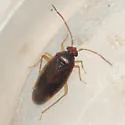
Ceratocapsus pumilus
Ceratocapsus pumilus
Identification: 1) Clothed with two types of pubescence; 2) Dorsum without transverse pale mark; 3) Pronotum punctate with calli and anterior area of disk dark fuscous to black; 4) (vertex width + dorsal width of one eye) < A3 < (head width); 5) Scut
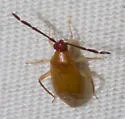
Ceratocapsus rubricornis
Ceratocapsus rubricornis
Identification: totally red antennae Det. Jason Botz, 2024 Note: I have seen a specimen of C. rubricornis with partially pale antennae, as in lutescens & bifurcus. (B Barnd, 2025) Type Locality: Mississippi
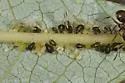
Chaitophorus pallipes
Chaitophorus pallipes
Identification: Apterae yellow with broad black pleural stripes, and femora usually pale, at least on fore and middle legs. Alatae have black dorsal abdominal cross-bands. First instars are yellow. Ant-attended.
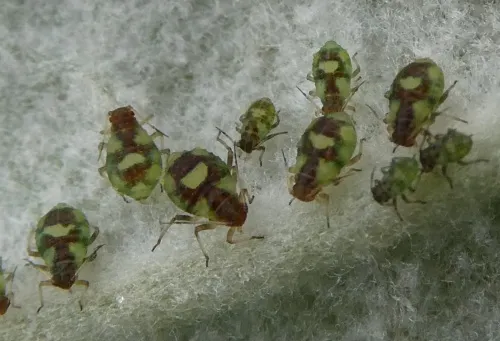
Chaitophorus populeti
Chaitophorus populeti
The body length of Chaitophorus populeti is 1.5 to 2.9 mm. The nymphs of this species are distinctively patterned, the adult apterae are black and more difficult unless recorded in association with nymphs. For more information please follow the ‘Furt
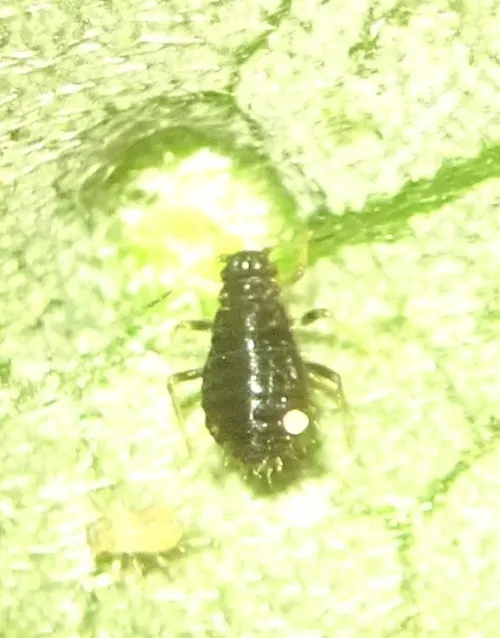
Chaitophorus salijaponicus subsp. niger
Chaitophorus salijaponicus subsp. niger
Adult apterae of Chaitophorus salijaponicus subsp. niger are usually uniformly blackish-brown. For a more detailed description of this species please use the ‘Further info:’ link below. Please add good quality images to support your record, and also
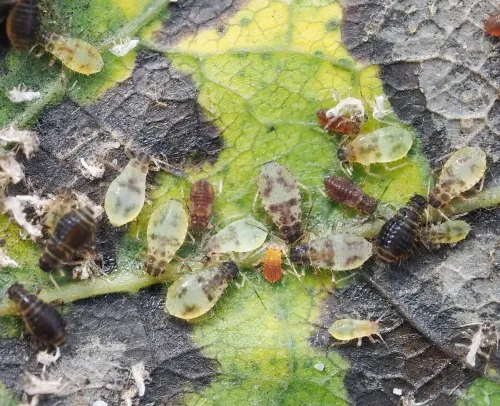
Chaitophorus tremulae
Chaitophorus tremulae
The apterae of the aphid Chaitophorus tremulae are elongate oval with the dorsum solidly blackish sclerotic, rather densely sculptured with denticular spinules (=small toothlike spines), and very often with a paler line along the mid-dorsum. More inf
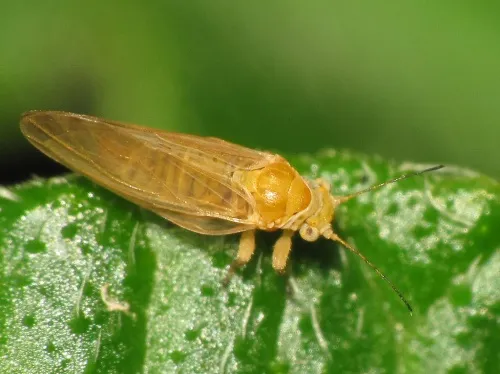
Chamaepsylla hartigi
Chamaepsylla hartigi
A yellow-orange psyllid, sometimes with paler head, pronotum and genal cones. The wings are tinted yellow. The female have very long terminalia and can be identifed, with care; identification of males requires examination of genitalia Good quality ph
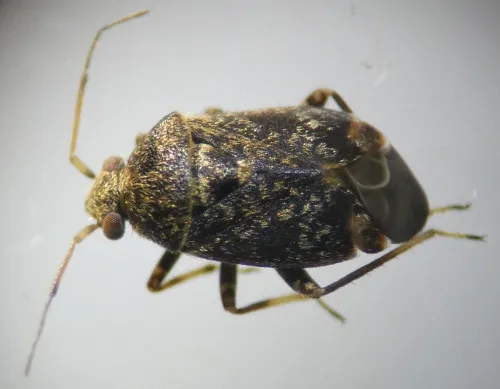
Charagochilus gyllenhalii
Charagochilus gyllenhalii
Length ~3.5 mm. Charogochilus species are small dark plant bugs which are covered in scale-like golden pubescence. The wing membrane is often strongly curved downward, and the tibial spines are very fine and pale. The similar but very rare Charagochi
Chariesterus albiventris
Chariesterus albiventris
Identification: diagnostic features include the presence of scattered erect setae on the head, scutellum, pronotum, and hemelytra. Such setae give a coarse, hairy, almost scabrous appearance to the specimens, a trait that is not evident in close rela
Chariesterus balli
Chariesterus balli
Identification: flaring, multispinose humeri are diagnostic
Chariesterus cuspidatus
Chariesterus cuspidatus
Identification: A slender and rather delicate species, light castaneous (chestnut colored) above and somewhat paler below. abdominal venter is spotted, the anterolateral margins of the pronotum are edentulous (lacking teeth), the auricle of the metas
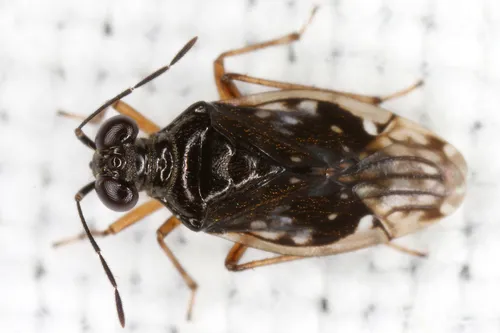
Chartoscirta cincta
Chartoscirta cincta
3.5 to 4 mm. Distinguished by the antennae, which are of uniform thickness, with the 2nd segment dark. The wing membrane is long (half the length of the corium) and the upper surface lacks long hairs. Chartoscirta cocksii (distinguished by the antenn
Chelinidea canyona
Chelinidea canyona
Identification: See discussion and link to C. canyona holotype image here
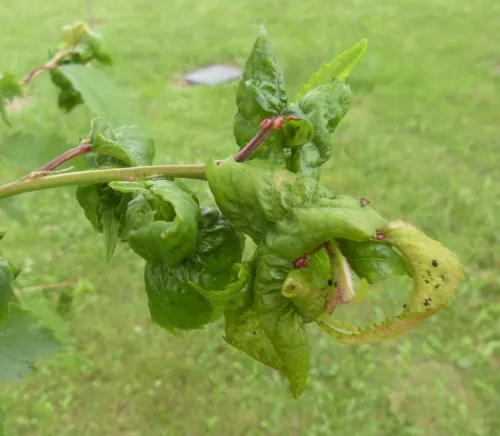
Cherry Aphid
Myzus cerasi
On its primary host (Cherry), Myzus cerasi cause the leaves to curl and produce ant-attended leaf nests. The adult aptera that lives in the leaf nest is a small to medium sized aphid, shiny, very dark brown to black with a sclerotized dorsum. Good qu
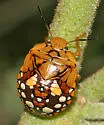
Chinavia marginata
Chinavia marginata
Identification: = Almost identical to C. hilaris yet much less common, though may locally predominate. C. marginatum has a yellow border around most of its body, especially on the face, but C. hilaris may have a yellow border, too. In C. hilare , the
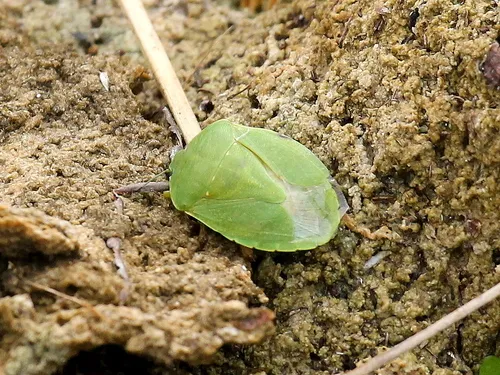
Chinavia pensylvanica
Chinavia pensylvanica
Identification: smaller and more ovoid than C. hilaris anterolateral pronotal margin is curved in C. pensylvanica and straight in C. hilaris , per Andrew Meeds in an iNat comment here uncommon
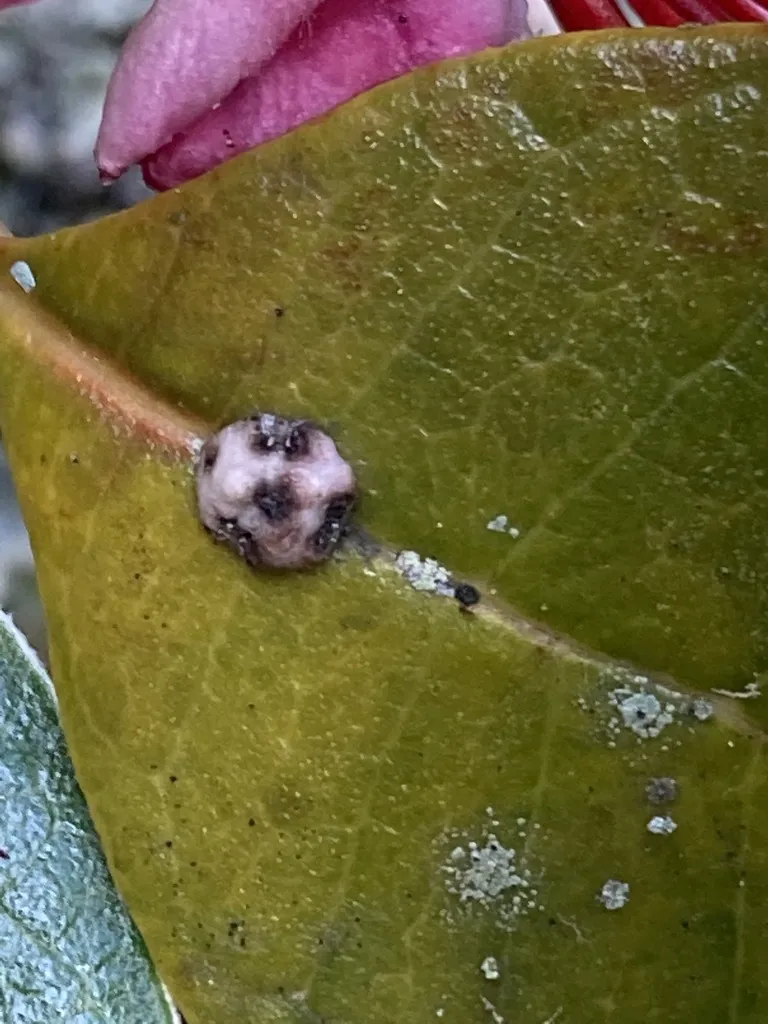
Chinese Wax Scale
Ceroplastes sinensis
Identification: Body elliptical; convex in lateral view; reddish brown; with a thick wax covering. Resembles C. cirripediformis Comstock but can be distinguished by having dorsal setae with acute or rounded apices. Non native. Introduced from Asia
Chionomus puella
Chionomus puella
Identification: white collar is distinctive. [but not unique to this sp.]
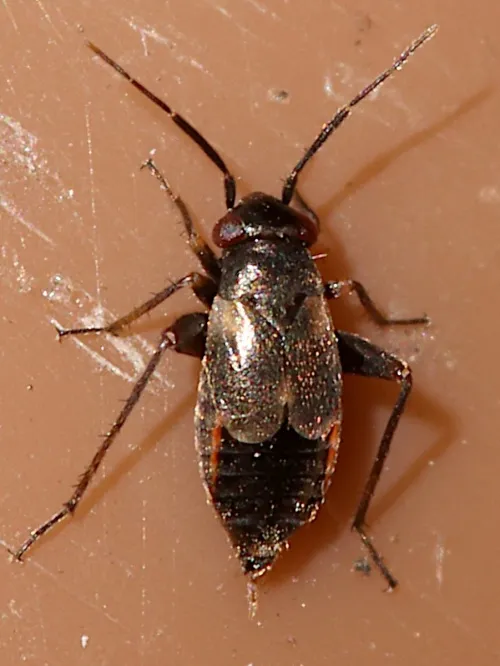
Chlamydatus saltitans
Chlamydatus saltitans
Length about 2.5 mm. This genus comprises five very small and almost entirely black bugs with rather broad hind femora. Halticus species are similar, but have longer antennae ( body length). The 2nd antennal segment in Chlamydatus is head width. C.
Chlamydatus suavis
Chlamydatus suavis
Identification: last key couplet: Tibial spines black but without black spots at base; rostrum reaching upon posterior trochanters Det. Jason Botz, 2017 Type Locality: Texas ( Belfarge )
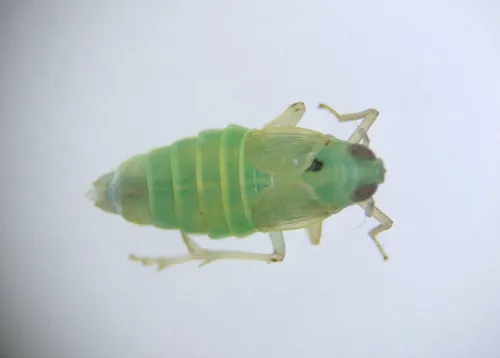
Chloriona glaucescens
Chloriona glaucescens
Length 3-5mm. Bluish-green ("glaucous") or greenish-yellow planthopper. Females are easier to identify than males, by examination of external genitalia. Unless identified by a recognised expert, a photo is required and the specimen should be examined
Chlorocanta viridis
Chlorocanta viridis
Identification: A green insect, almost unicolorous, with the membranes or flaps at the base of the wings yellowish. The venation of the wings is green, except the costal margin, which is yellowish to the end of the radial cell. The basal cell is near
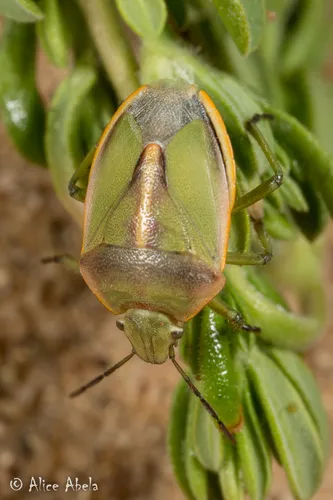
Chlorochroa belfragii
Chlorochroa belfragii
Chlorochroa belfragii (Chlorochroa belfragii) is a species in the family Pentatomidae, commonly known as stink bugs, belonging to the order Hemiptera (True Bugs, Cicadas, Hoppers, Aphids and Allies). It is classified within the subfamily Pentatominae
Chlorochroa faceta
Chlorochroa faceta
Identification: looks nearly identical to C. lineata (CA‒UT); unlike C. belfragii , lacks black distal markings on embolium
Chlorochroa opuntiae
Chlorochroa opuntiae
Identification: Rostrum exceptionally long (ventral shots may prove critical). Southern specimens tend to be green and smaller; northern ones, purplish-black and larger Found on cholla cactus along with Narnia sp. (Coreidae)
Chlorochroa persimilis
Chlorochroa persimilis
Chlorochroa persimilis (Chlorochroa persimilis) is a species in the family Pentatomidae, commonly known as stink bugs, belonging to the order Hemiptera (True Bugs, Cicadas, Hoppers, Aphids and Allies). It is classified within the subfamily Pentatomin
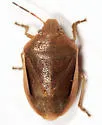
Chlorochroa saucia
Chlorochroa saucia
Identification: pronotum with anterolateral margins carinate (ridged) but not reflexed
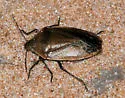
Chlorochroa senilis
Chlorochroa senilis
Identification: can be separated from other Chlorochroa (Rhytidolomia) spp. by large size, pale margins, and very elongate body pronotum with anterolateral margins carinate (ridged) and narrowly but sharply reflexed
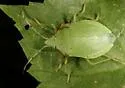
Chlorocoris distinctus
Chlorocoris distinctus
the only representative of the nominate subgenus in our fauna (the subgenus is primarily S. American and contains a total of 13 spp.)
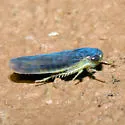
Chlorotettix fuscus
Chlorotettix fuscus
Identification: "This species is very similar to C. melanotus, but frequently has a broken transverse band on the vertex that C. melanotus seemingly does not have. Additionally, while the pregenital sternites are very similar between fuscus and melan
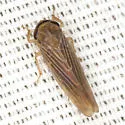
Chlorotettix necopinus
Chlorotettix necopinus
Identification: head markings are distinctive (comm. Andy Hamilton, 2011) Det. Solomon Hendrix, 2021
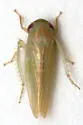
Chlorotettix scutellatus
Chlorotettix scutellatus
Identification: Dull straw color with a dusky transverse band on the vertex; 2 blackish marks on each side of scutellum that extend forward and under the pronotum, showing through (DeLong 1919)
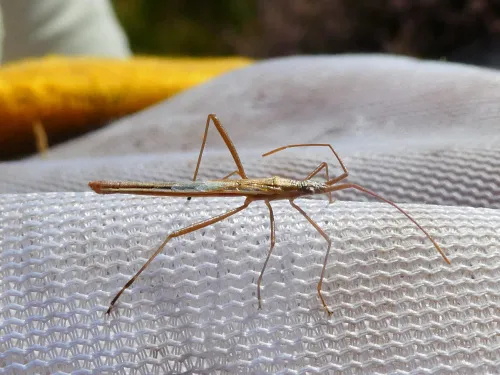
Chorosoma schillingi
Chorosoma schillingi
A very long and narrow straw-coloured bug, 14-16mm long, found in grasslands. It is usually brachypterous. Some Mirid bugs found in grasslands are also very long and thin, but do not have ocelli or membraneous wings Records should be accompanied by g
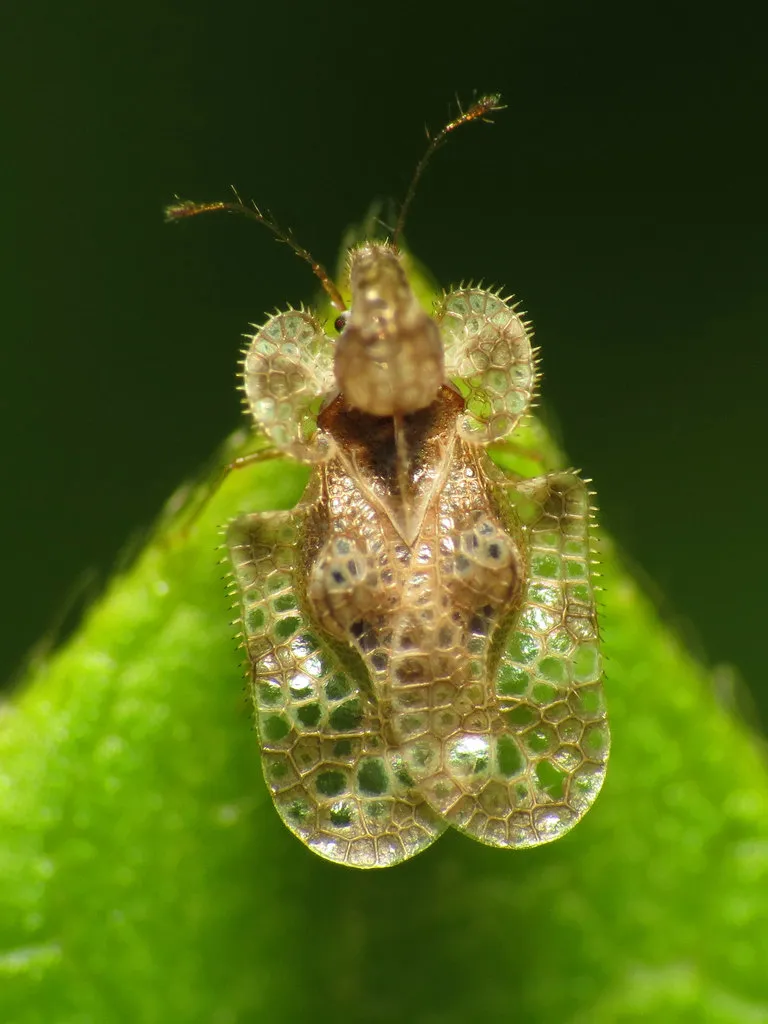
Chrysanthemum Lace Bug
Corythucha marmorata
Identification: Very pale, easily recognized by largely opaque whitish ground color; brown spots usually vague and ill-defined. One of the most abundant lace bugs; may damage chrysanthemums
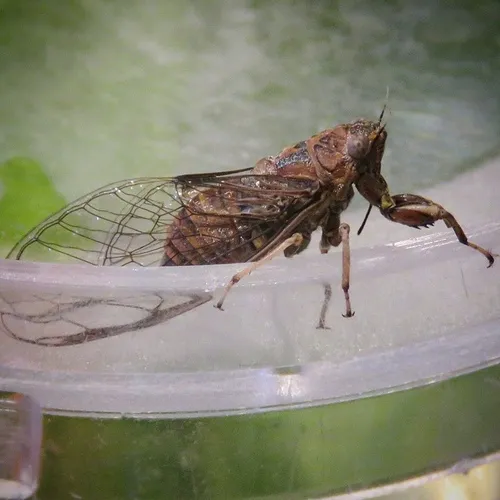
Cicadettana calliope
Cicadettana calliope
Identification: Small, and "narrower across the head" than other small cicadas Compare with Pacarina & Beameria . Color & Pattern: The coloration and degree of pattern may not be diagnostic to species! Populations currently classified as "C. calliope
Cicadettana camerona
Cicadettana camerona
Identification: Song is a fast train of sharp, resonant pulses. Type Locality: Brownsville, Cameron Co., Texas
Cicadettana kansa
Cicadettana kansa
Identification: C. kansa is characteristically a pale green coloration and distinguished from the similar C. calliope by having only 4 or 5 apical cells in the hind wing; there are typically 6 in C. calliope .
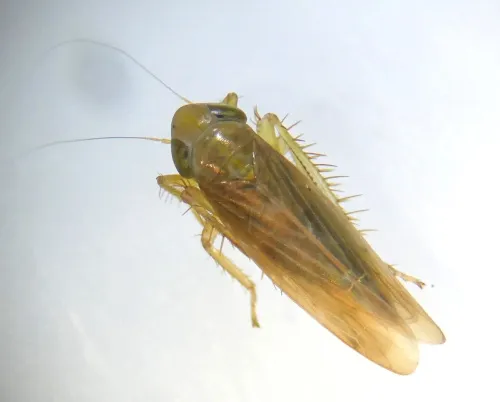
Cicadula frontalis
Cicadula frontalis
4.5 - 6.2 mm. This brownish-yellow leafhopper has very long antennae, with dark patches at their base. There are either no spots on the vertex, or very small ones at the front edge. The wings are fairly clear with pale venation. Can only be identifie
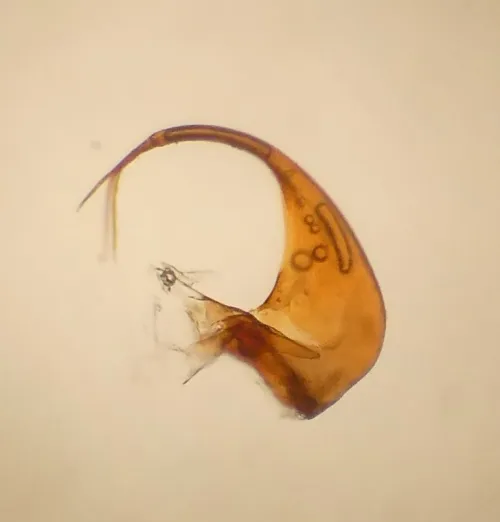
Cicadula persimilis
Cicadula persimilis
Length 4 to 5 mm. Cicadula persimilis is a yellow-green leafhopper with four large black spots on the vertex, near the eyes. Dissection of males is required for definite identification. Dissection of males is required for definite identification. Wid
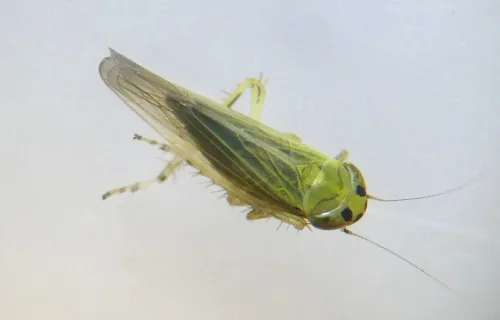
Cicadula quadrinotata
Cicadula quadrinotata
Length 4 to 5 mm. Cicadula quadrinotata is a yellow-green leafhopper with black spots on the vertex and rather long antennae. Dissection of males is required for definite identification. Females cannot be distinguished from similar species. Males can
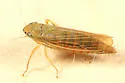
Cicadula saliens
Cicadula saliens
Identification: "this is the taxon [that Beirne & Young (1953)] treated as melanogaster. It has a pointed head and the female S7 is also distinctive" (J. Kits, pers. comments to K. Kittelberger)
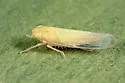
Cicadula straminea
Cicadula straminea
Identification: A slender, pale yellow species with 4 black dots along the margin of the head. - Andy Hamilton
Ciminius taosus
Ciminius taosus
Identification: The veins of the female specimens at hand are white, the males dark.
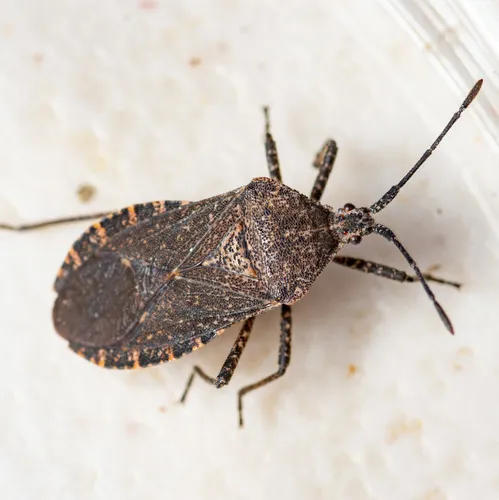
Cimolus obscurus
Cimolus obscurus
Identification: wider than Anasa tristis , head not bisected by a pale line
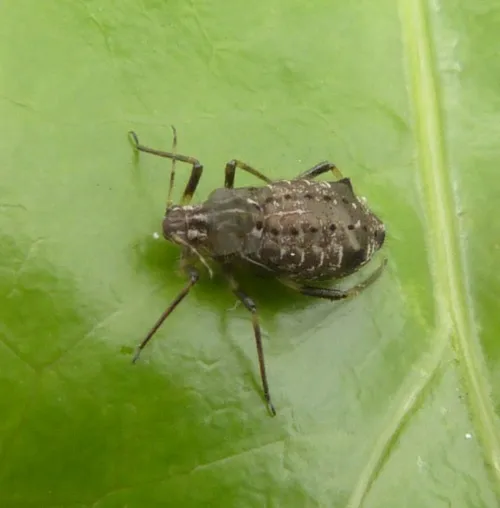
Cinara confinis
Cinara confinis
Apterae of Cinara confinis are greenish-black or dark brown, with a double row of blackish slightly shining speckles and small flecks of fine wax in transverse rows. Cinara confinis alatae are grey-green also with small flecks of fine wax in transver
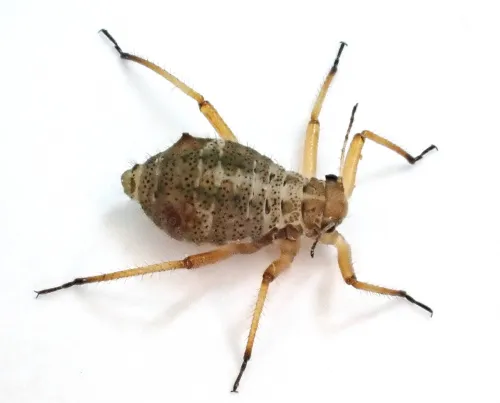
Cinara pinea
Cinara pinea
Apterae of Cinara pinea are shiny orange-brown early in the year and grey or dark brown later on. The body is finely spotted with black and dusted with wax especially along the dorsal midline and laterally. The spots are black scleroite plates at the
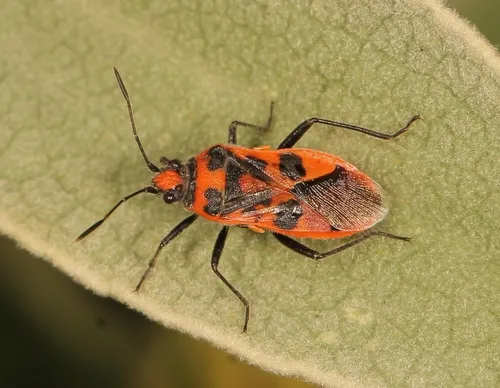
Cinnamon Bug
Corizus hyoscyami
Length 9 mm. A very handsome species which should be unmistakable. Although striking, it does bear a superficial resemblance to the red and black ground bugs (Lygaeidae); be sure to rule out Arocatus longiceps, which has recently been recorded in sou
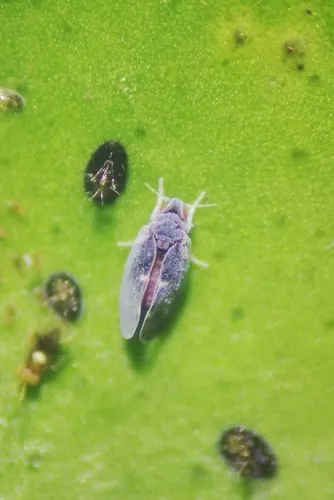
Citrus Blackfly
Aleurocanthus woglumi
A serious citrus pest introduced from Asia, detected in Key West, FL in 1937, eradicated and found again at a later time and is now widespread in FL
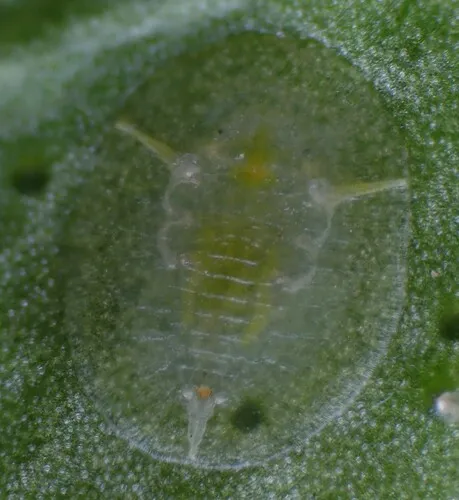
Citrus Whitefly
Dialeurodes citri
Identification: Mealy white insect with mealy white wings. Non-native, originally from India, probably introduced into Florida around 1858-1885 (Morrill and Back 1911 in: University of Florida )
Cixidia variegata
Cixidia variegata
Identification: last key couplet: Front brown, irrorated paler throughout (Fig. 5); vertex obviously wider than long (Fig. 17)
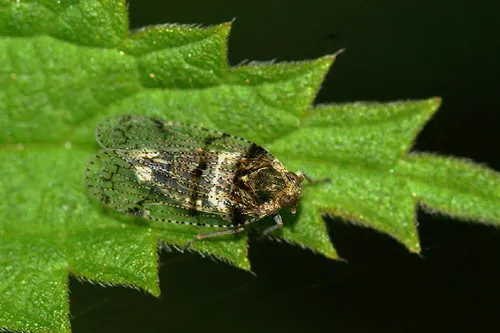
Cixius nervosus
Cixius nervosus
A large species, 6.5 - 8.5mm (females larger), and variable in intensity of markings. The basal part of the forewing, next to the pronotum, is usually brown, and there is usually a brown median band and other dark markings towards the wing apex. The
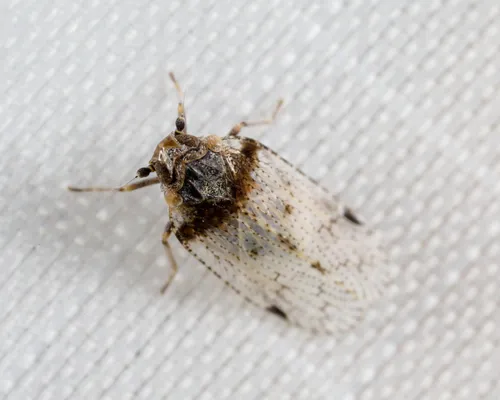
Cixius stigmatus
Cixius stigmatus
Identification: The bold color pattern is distinctive (A. Hamilton, pers. comm.)
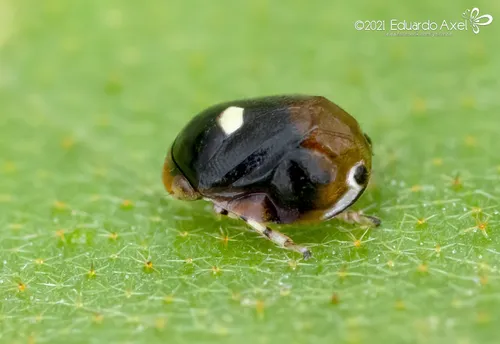
Clastoptera funesta
Clastoptera funesta
Identification: The yellow/pink on the scutellum extending past the central scutellum dividing line is characteristic of C. globosa but not C. funesta . (see comment from V. Thompson here )
Clastoptera globosa
Clastoptera globosa
Identification: The yellow/pink on the scutellum extending past the central scutellum dividing line is characteristic of C. globosa but not C. funesta . (see comment from V. Thompson here ) This Mexican species' presence in the U.S. has never been of
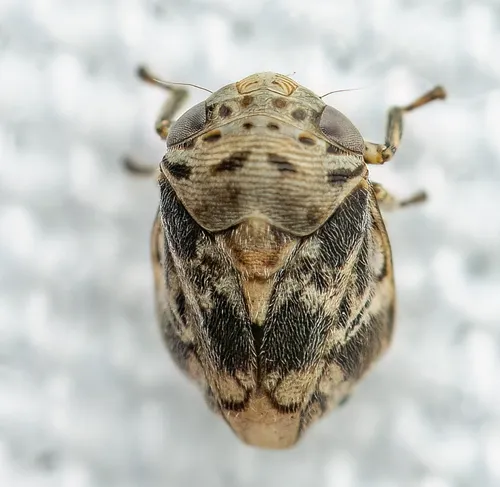
Clastoptera laevigata
Clastoptera laevigata
[old comment from Andy Hamilton: "This is actually an undescribed species, found on hackberry in the eastern states. It was recorded as C. laenata (a tropical species) but the morphology says this is wrong..."]
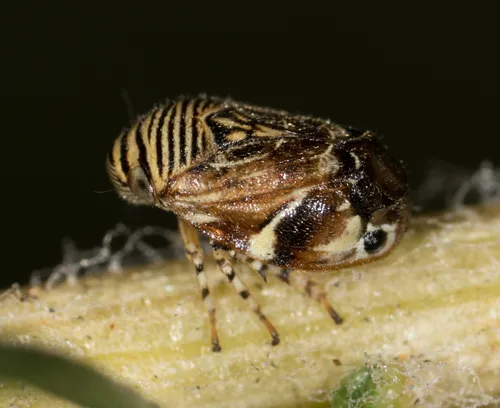
Clastoptera lineatocollis
Clastoptera lineatocollis
Identification: Similar to C. brunnea , but with the face of the female not extensively black, and in the male with a pale band extending across the lower part of the face (in C. brunnea the pale markings form two spots, one on each side). ( Dr. Hami
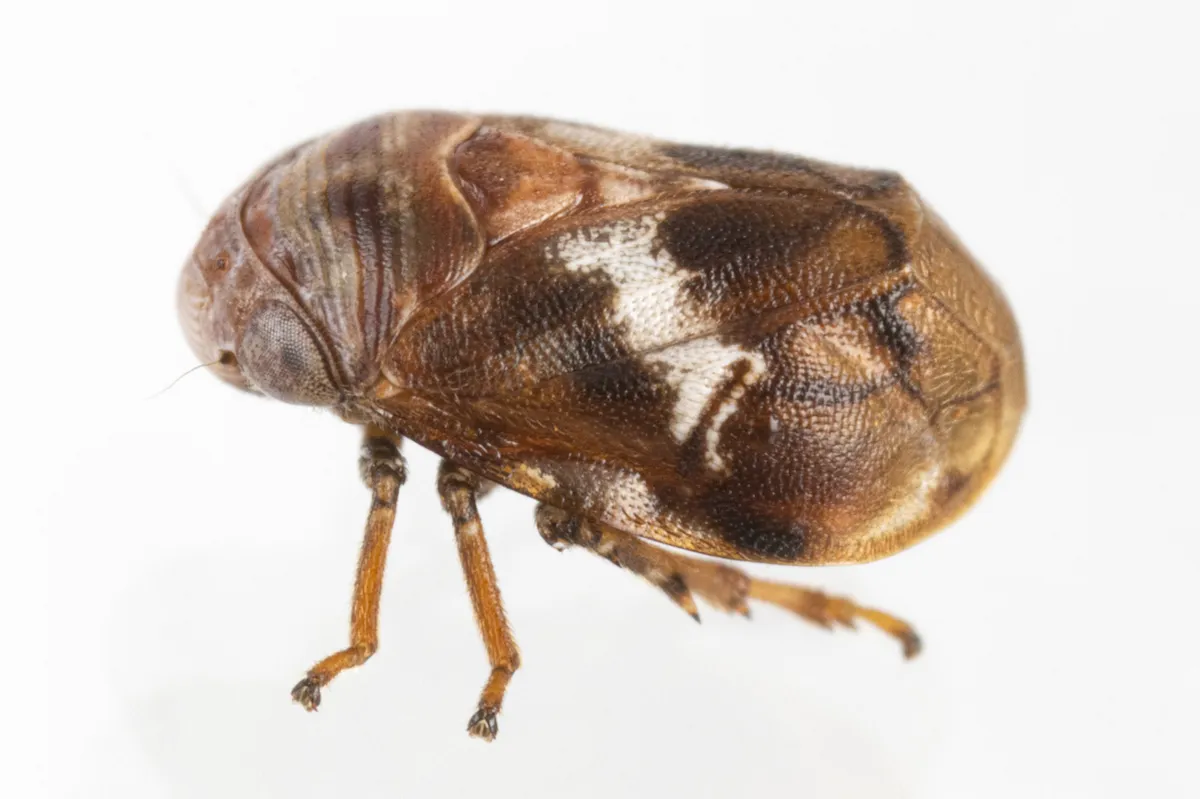
Clastoptera octonotata
Clastoptera octonotata
Identification: 8 brown spots, 4 on the head and 4 on the anterior border of the pronotum. --K.G.A. Hamilton, 19.ii.2014
Clivinema detecta
Clivinema detecta
Identification: Distinguished from villosa Reut. by the more strongly inflated scutellum and by the fuscous marks on membrane. and by orange legs? Type Locality: Jemez Springs, New Mexico, alt. 6400 ft., August 1-15, 1916
Clivinema regalis
Clivinema regalis
Identification: Distinctive in the genus for having bright red to orange-red dorsum with black hemelytra , antennae, and tibiae. [emphasis added]
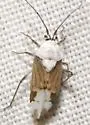
Clivinema villosa
Clivinema villosa
Identification: White-grey, white-grey-villous above the forehead two strigis, wedge, membranous vein apical areolae minor, the antennae, the feet, and the lateral spots of the belly are brownish-testaceous; on the eyes, in the middle of the breast,
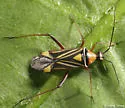
Closterocoris amoenus
Closterocoris amoenus
Identification: Adults are distinctively colored/patterned: Nymphs (immatures) appear "ant-like":
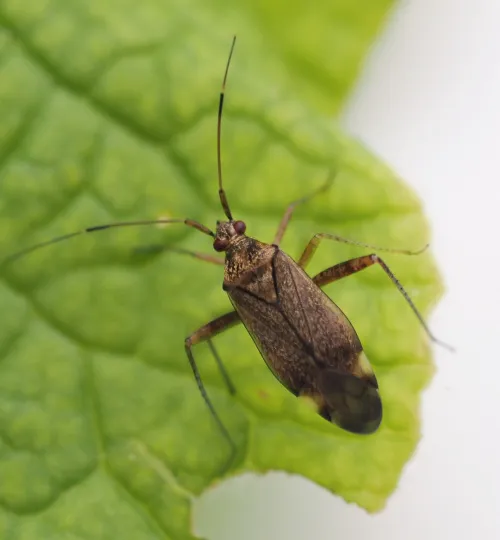
Closterotomus fulvomaculatus
Closterotomus fulvomaculatus
Length 6 to7 mm. A fairly large and mainly brownish plant bug in which the upper surface is covered in flattened golden hairs. Confusion with other species is unlikely. Feeds mainly on Hop, although Nettles and Meadowsweet are also used as foodplants
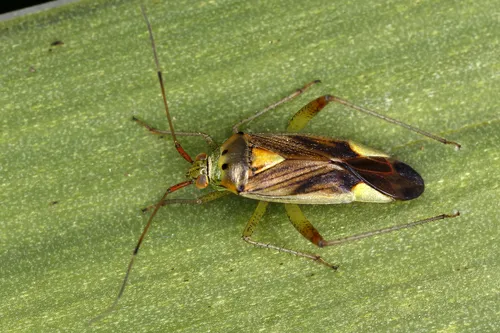
Closterotomus trivialis
Closterotomus trivialis
Females are greenish, typically with a green cuneus and two dark spots on the pronotum. Males are usually darker, with red cuneus. Both sexes have darkish wing membranes with reddish wing veins Quite similar to Closterotomus fulvomaculatus – care nee