
Primitive Winged Insects
Order Coleoptera
The Primitive Winged Insects (Order Coleoptera) includes 15,720 species across 160 families and 3,716 genera in our directory.
About Primitive Winged Insects
Coleoptera is the largest order of insects with over 400,000 described species, representing ~25% of all known animal species and ~40% of all insects. In the U.S. alone, nearly 30,000 beetle species have been identified.
Economic Impact
Beetles have major economic significance: leaf beetles (Chrysomelidae) and weevils (Curculionoidea) are among the most destructive agricultural pests globally, costing billions annually, while predatory species like ladybugs provide natural pest control.
Ecological Role
Beetles are prominent decomposers, especially in forests, breaking down dead wood and recycling nutrients. As predators, they reduce populations of pest insects. Many species are also important pollinators of flowering plants.
Families in Coleoptera (160)
Species in Coleoptera (15,720)
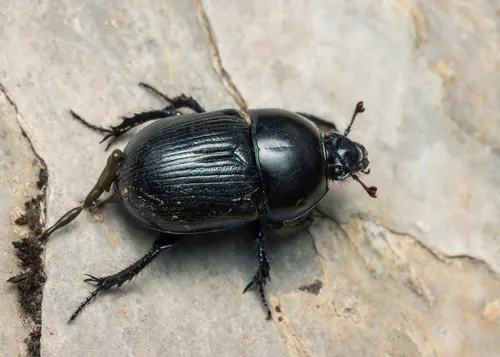
Geotrupes stercorarius
Geotrupes stercorarius
A large beetle up to 26 mm long and weakly lustrous, the legs in particular having a bluish tinge. The body shape is very compact and arched toward the top. It is commonly known a the Dor Beetle and also as the Dung Beetle. There are other very simil
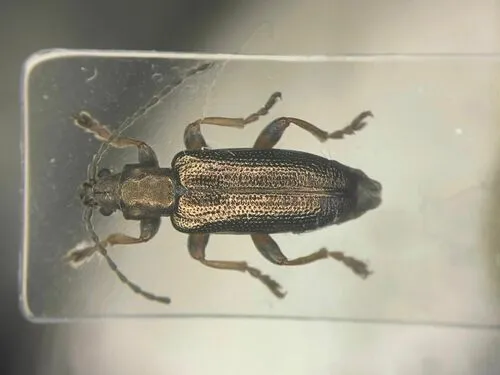
Germar's reed beetle
Plateumaris germari
Plateumaris germari is a species of aquatic leaf beetle in the family Chrysomelidae. It is found in western North America.
Geropa concolor
Geropa concolor
Identification: Det. E. G. Riley, 2010 Was abundant on 2-yr dead Acacia trees at Welder refuge in May and Oct ( 3 )
Gerstaeckeria fasciata 0
Gerstaeckeria fasciata
Identification: Elytral color black with white humeral spots and caramel or tan subapical band; elytra about 1.5 times wider than pronotum Type Locality: Buck Key, Monroe Co., Florida
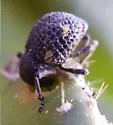
Gerstaeckeria hubbardi
Gerstaeckeria hubbardi
Identification: Elytral color pattern predominantly black and white; length 7.5 to 9.5 mm; elytra nearly twice as wide as pronotum Det. R.E. Woodruff Type Locality: Crescent City, Florida
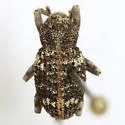
Gerstaeckeria knullorum
Gerstaeckeria knullorum
Type Locality: Holotype, female, Huachuca Mts., Ariz. VIII-12-50, DJ & JNK. in (OSU). DJ & JNK found this insect in large numbers on the light colored walls of a cabin in Miller Canyon, Huachuca Mtns., Ariz.
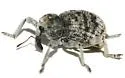
Gerstaeckeria unicolor
Gerstaeckeria unicolor
Identification: Its erect curved scales on the dorsum separates it from most other species, except tricolor . Type Locality: San Luis Potosi, Mexico.
Ghost Tiger Beetle
Ellipsoptera lepida
Ghost Tiger Beetle (Ellipsoptera lepida) is a species in the family Carabidae, commonly known as ground beetles, belonging to the order Coleoptera (Beetles). It is classified within the subfamily Cicindelinae, tribe Cicindelini, suborder Adephaga. Th
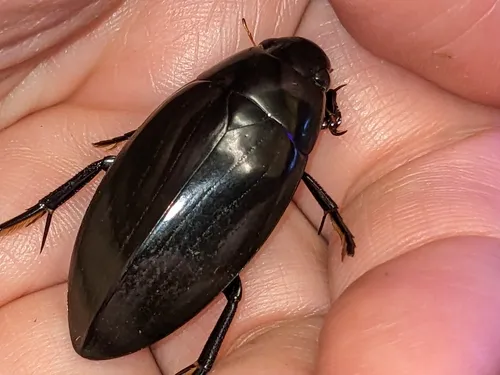
Giant Black Water Beetle
Hydrophilus triangularis
Identification: Similar to the usually smaller and less oblong H. (Dibolocelus) ovatus (which is more common southward), but the prosternum is undivided
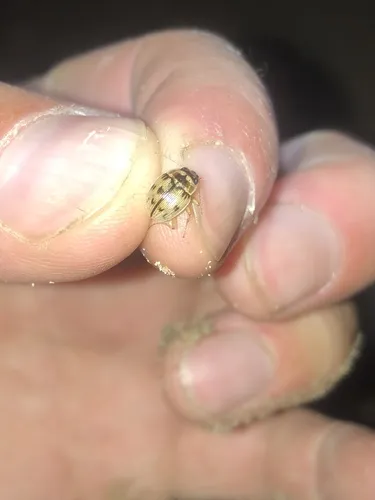
Gila River Round Sand Beetle
Omophron gilae
Omophron gilae, the Gila River round sand beetle, is a species of ground beetle in the family Carabidae. It is found in Central America and North America (Sonora, Arizona, California, Colorado, New Mexico, Texas, Utah), where it may be found at the m
Gilbertiola helferi
Gilbertiola helferi
Gilbertiola helferi (Gilbertiola helferi) is a species in the family Brachyceridae, belonging to the order Coleoptera (Beetles). It is classified within the subfamily Raymondionyminae, suborder Polyphaga, superfamily Curculionoidea. This species belo
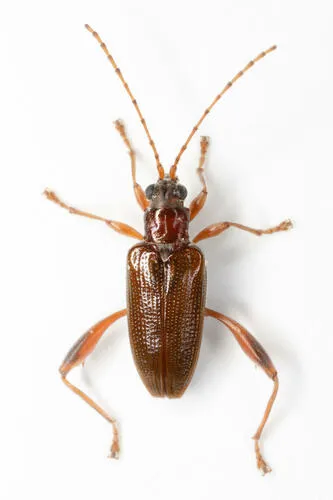
Girdle-horned Pond Lily Leaf Beetle
Donacia cincticornis
Identification: Pair of hind femora spines in male, but note that paired metafemoral spines (or teeth) are found in quite a number of species, so this is not diagnostic. This species is incredibly variable. Typically, pronotum and elytra are smooth a
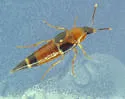
Girdled Lordithon
Bobitobus cinctus
Identification: body shaped like an elongate football (from the midpoint, tapering continuously to a point, anteriorly and posteriorly); elytra short, about 1/4 body length, widest at posterior margin - which is widest part of body; pronotum narrower
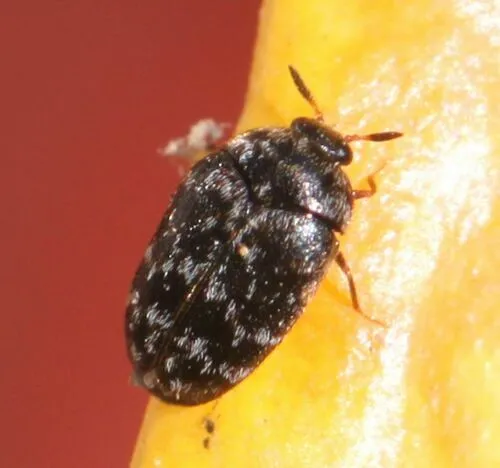
Glabrous Cabinet Beetle
Trogoderma glabrum
Glabrous Cabinet Beetle (Trogoderma glabrum) is a species in the family Dermestidae, commonly known as carpet beetles, belonging to the order Coleoptera (Beetles). It is classified within the subfamily Megatominae, tribe Megatomini, suborder Polyphag
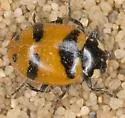
Glacial Lady Beetle
Hippodamia glacialis
Identification: Largest Hippodamia species. The nominate (eastern) subspecies is distinctive, with some of the large spots at the rear of the elytra are fused into a single mass. There are also generally two small-to-barely-noticeable spots at the ou
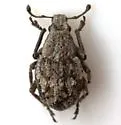
Glaphyrometopus ornithodorus
Glaphyrometopus ornithodorus
Described from five more or less perfect specimens taken from the stomach of a meadow lark, Sturnella magna negleda , which was shot at Navasota, Texas, December 12, 1907 in an open prairie by Mr. V. Bailey. (Biological Survey, No. 57705.) The unusua
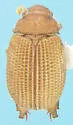
Glaresis inducta
Glaresis inducta
Identification: A diagnosis for G. inducta would be: average size small, length 2.60 to 3.20 mm; head with vertex and posterior portion of frons dull, densely, finely rugose; body short, stout, lateral elytral margins rounded medially; elytral striae
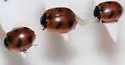
Gleaming Lady Beetle
Coccinella fulgida
Identification: Gordon's figures Type locality: Cape Henrietta Maria, north central Ontario
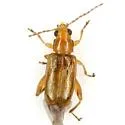
Glenidion flexicaulis
Glenidion flexicaulis
Identification: Det. E. G. Riley 2009 Type Locality: Esperanza Ranch, Brownsville, Cameron County, Texas (Schaeffer 1905)
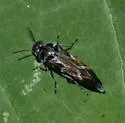
Glipa hilaris
Glipa hilaris
Identification: One of the largest species of Mordellini, easy to recognize seems to be rather rare
Glipostenoda ambusta
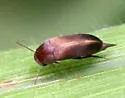
Glipostenoda ambusta
Identification: rather easy to distinguish by the color and by the longer and more strongly oblique ridges on the tibiae; the male is usually lighter in color than the female Ridges 3/3/2, sometimes with rudimentary ridges on tibia and 1st tarsi
Glischrochilus hortensis
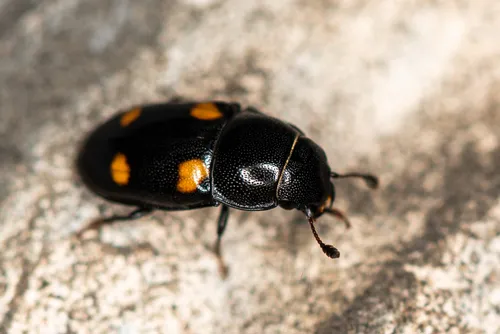
Glischrochilus hortensis
This is one of three species of Glischrochilus beetles found in the UK. These are small beetles (around 5mm in length). G. Hortensis has black elytra with a total of four large orange blotches. Unless identified by a recognised expert, good photos ar
Glischrochilus quadriguttatus
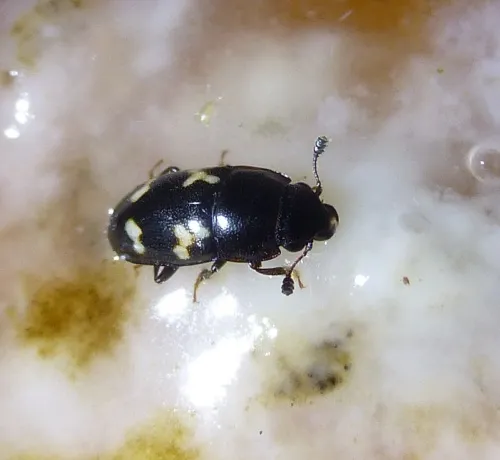
Glischrochilus quadriguttatus
The dark elytra have large pale straw coloured markings. Unless identified by a recognised expert, good photos are required that show the key ID features. Also state the beetle's size in the comments box. Well wooded areas, sometimes found at sap run
Glischrochilus sanguinolentus
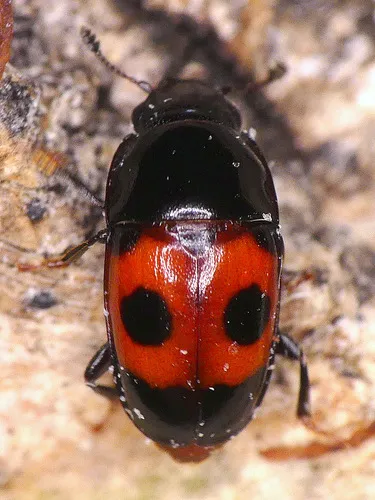
Glischrochilus sanguinolentus
Identification: Elytra red with black submedian spot and black apical third, to almost all-black
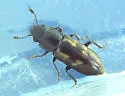
Glischrochilus vittatus
Glischrochilus vittatus
Glischrochilus vittatus (Glischrochilus vittatus) is a species in the family Nitidulidae, commonly known as sap-feeding beetles, belonging to the order Coleoptera (Beetles). It is classified within the subfamily Cryptarchinae, suborder Polyphaga, sup
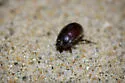
Globose Dune Beetle
Coelus globosus
Identification: populations vary in size and punctation, but the deeply emarginate epistoma and setation extending only to the frontoclypeal suture separate this species from others :
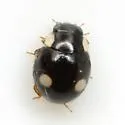
Globular Lady Beetle
Hyperaspis globula
Identification: Gordon's figures Type locality: Brownsville, Texas
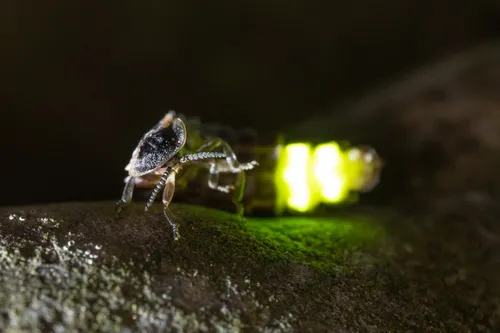
Glow-worm
Lampyris noctiluca
The glow-worm is not really a worm at all, in fact it is a beetle. This is most obvious when you see the male. Lampyris noctiluca presents a conspicuous sexual dimorphism. The males are winged, with brown elytra, a clearer pronotum and a large brown
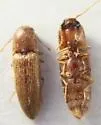
Glyphonyx ferruginosus
Glyphonyx ferruginosus
Type Locality: Huachuca Mountains, AZ (Schaeffer 1916)
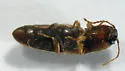
Glyphonyx inquinatus
Glyphonyx inquinatus
Identification: Supra-antennal carina meets clypeus at center, margins of prosternal process form a v-shape (meeting at apex), size usually > 4.5 mm, elytral suture usually dark, interval nine without groove widening at apex
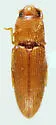
Glyphonyx knulli
Glyphonyx knulli
Identification: -frontal and nasale carinae joined at the middle -prosternal process margined to apex -size and color -length of elytra only slightly more than twice the width -lateral pronotal carina extending to almost, but not beyond, 3/4 length o
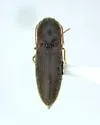
Glyphonyx kulashi
Glyphonyx kulashi
Identification: "Body color very dark brown (chocolate), legs rufous yellow, vestiture whitish." -Smith & Balsbaugh 1984
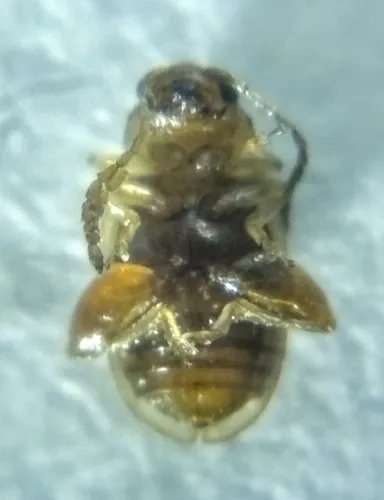
Glyptina atriventris
Glyptina atriventris
Identification: Elytral striae of very fine or obsolete punctures, sides and apex smooth. Elytral striae of extremely fine punctures; body beneath always pale - cerina Elytral striae of coarse, obsolete punctures near the base and scutellum only; bod
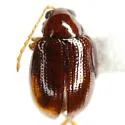
Glyptina brunnea
Glyptina brunnea
13 spmns coll'ed Apr-July in c. TX arboreal surveys on oaks and cedar elm ( 4 )
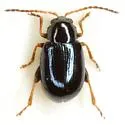
Glyptina nivalis
Glyptina nivalis
Type Locality: Near Hot Springs Las Vegas, N.M., 7000 ft., Aug 1882, F. H. Snow
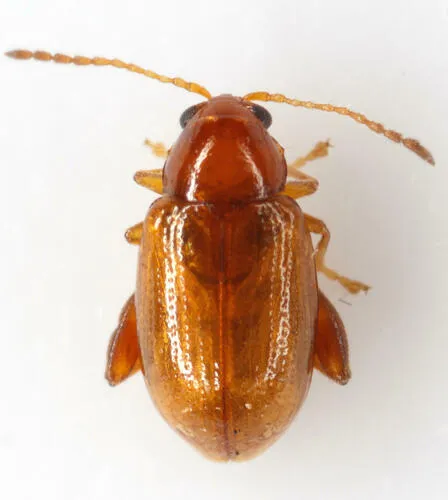
Glyptina spuria
Glyptina spuria
Glyptina spuria is a species of flea beetle in the family Chrysomelidae. It is found in North America.
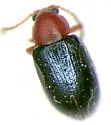
Glyptina texana
Glyptina texana
locally common south of the Houston TX area on Euphorbia bicolor per E.G. Riley
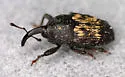
Glyptobaris lecontei
Glyptobaris lecontei
Identification: Combination of scale vestiture on elytra and sculptured pronotum distinctive Det. V. Belov, 2013
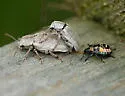
Glyptoscelis albicans
Glyptoscelis albicans
Identification: The reddish-brown color and coarse white hairs distinguish this from other eastern species.
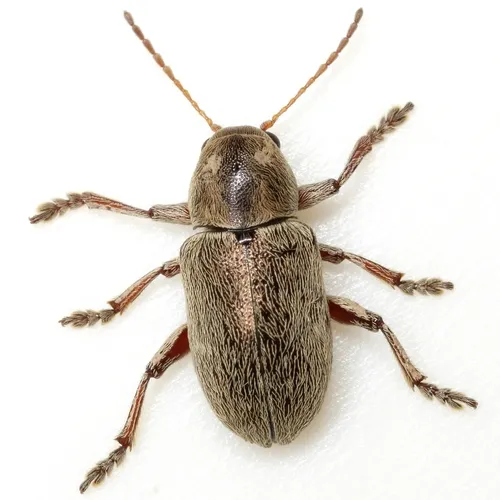
Glyptoscelis prosopis
Glyptoscelis prosopis
Type Locality: Esperanza Ranch, Brownsville, Texas (Schaeffer 1905)
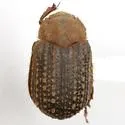
Glyptotrox frontera
Glyptotrox frontera
Identification: among species of the terrestris group, has distinctive male genitalia, much longer and finer setae on elytral margins, and metatibiae more emarginate and slightly curved inward; most similar to G. terrestris (MA‒FL‒MS), especially in
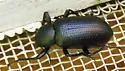
Glyptotus cribratus
Glyptotus cribratus
Identification: Besides the eight rows of large remote punctures, there is a marginal series and a short scutellar one. The sides of the thorax converge a little behind the middle, and are almost straight to the posterior angles, where they are bent
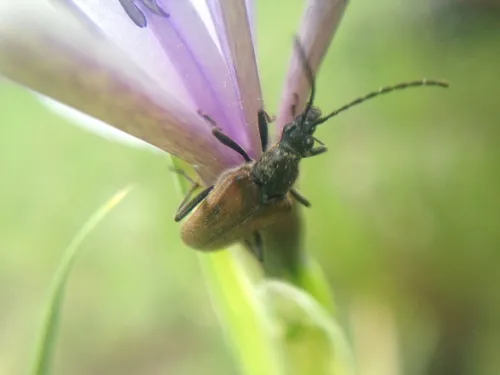
Gnathacmaeops pratensis
Gnathacmaeops pratensis
Gnathacmaeops pratensis is a species of the Lepturinae subfamily in the long-horned beetle family. This beetle is distributed in Austria, Belarus, Bosnia and Herzegovina, Bulgaria, Canada, Croatia, Czech Republic, Estonia, Finland, France, Germany, H
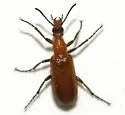
Gnathium francilloni
Gnathium francilloni
Identification: most easily identified by the dark head and elytra Det. E. G. Riley, 2011
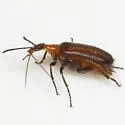
Gnathium minimum
Gnathium minimum
Identification: elytra broadly infuscated [brown tinged] on sides and narrowly along suture Det. John Pinto, 2009 Type Locality: Arkansas (Territory?)
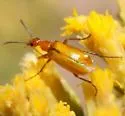
Gnathium politum
Gnathium politum
Identification: superficially greatly resembles G. nitidum , but is at once distinct in the very long maxillary filaments and in having a head of normal length. differs from other Texan spp. in the smooth, shining elytra, which are nearly impunctate
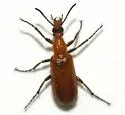
Gnathium texanum
Gnathium texanum
Identification: relatively short head, the pronotum no longer that wide and densely punctate, and the densely punctate elytra
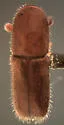
Gnathotrichus pilosus
Gnathotrichus pilosus
Identification: quite hairy unlike most other N. Amer. Gnathotrichus . (comment: Rick Buss, 2010)
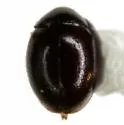
Gnathoweisea texana
Gnathoweisea texana
Type Locality: TEXAS: Bell Co., Co. Rd., 4 ml. E. Heidenheimer, Barton Weems Farm, 26 Jun. 1978, coll. Robbins & Critchfield. USNM (101326).
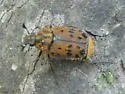
Gnorimella maculosa
Gnorimella maculosa
Identification: Medium-sized scarab with prominent maculations . Bright yellow pygidium with dark "U-shaped" mark on ventral surface is also distinctive. rarely collected...
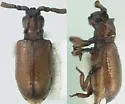
Gnostus floridanus
Gnostus floridanus
Identification: Unmistakeable in the context of the N-American fauna. Full species name: Gnostus floridanus Blatchley, 1930
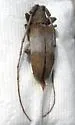
Goes fisheri
Goes fisheri
Identification: this rather rare sp. is distinguished from pulcher by the grayish pubescence of the elytra. Type Locality: Uvalde, Uvalde Co., Texas
Goes novus 0
Goes novus
Described from a series of six examples taken by Mr. Poling at Alpine, Texas, June-July, 1926. The type is a male bearing date July 15-30.
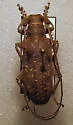
Goes tumifrons
Goes tumifrons
Identification: Similar to G. tesselatus , but more robust, pubescence is uniform (somehwat striped in tesselatus ), very thick, face more bulging, and lower eye lobes are nearly circular
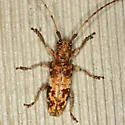
Goes variegatus
Goes variegatus
Identification: White pubescence of elytra restricted primarily one-third section antemedially, and sometimes extending along suture - varigatus Most of basal half of elytra with mottled white pubescence - debilis resembles G. debilis but has stronge
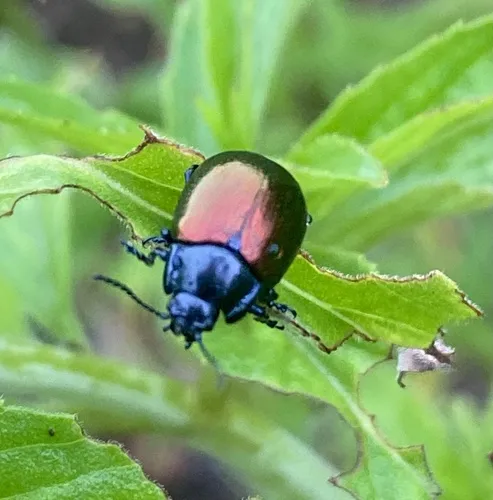
Gold-winged Leaf Beetle
Chrysolina auripennis
Identification: variable iridescence, black form least common elytra variable, bright green, cupreous, bronze black, or deep blue or violet.
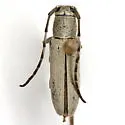
Golden Aster Borer
Mecas confusa
Identification: Note: tarsal claws with inner tooth almost as long as outer Det. L. E. Bezark, 1992 Type Locality: Luling, Gonzales Co., Texas
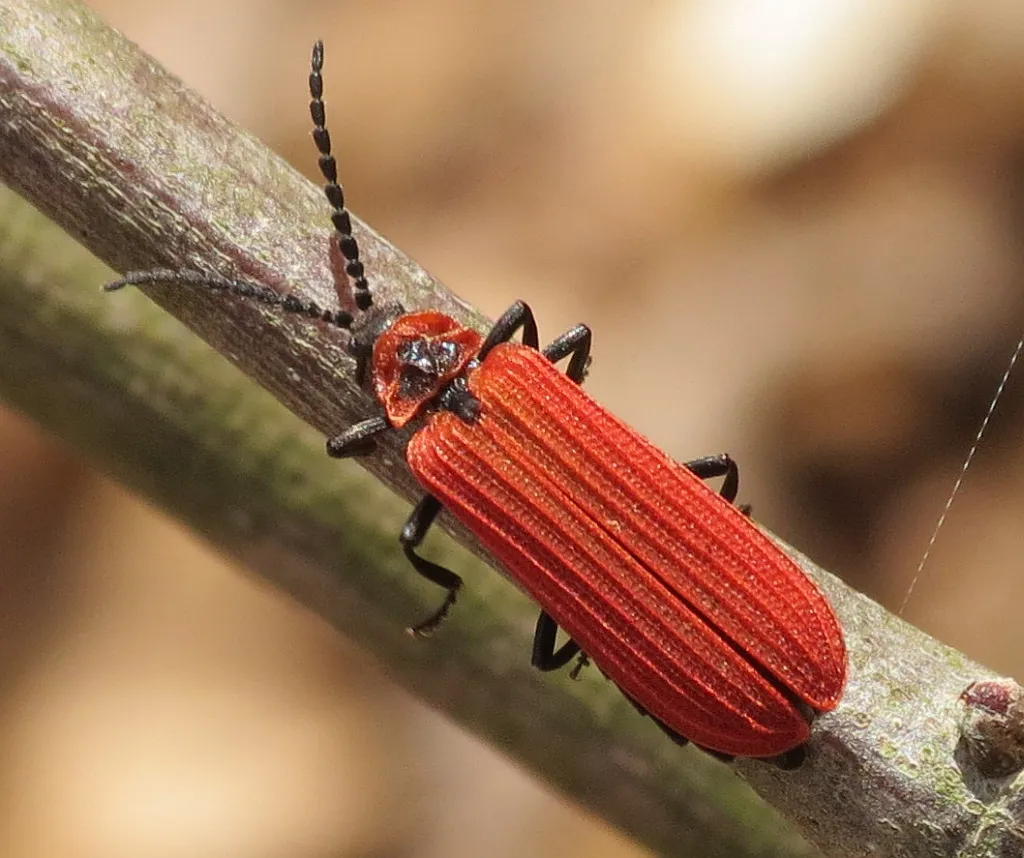
Golden Net-winged Beetle
Dictyoptera coccinata
Identification: Black venter, black spot on pronotal disc, black scutellum. ―Joe Cicero, 16.v.2013
Golden Spider Beetle
Niptus hololeucus
Identification: ¹ earliest record in our area: QC ~1890 ( 3 )
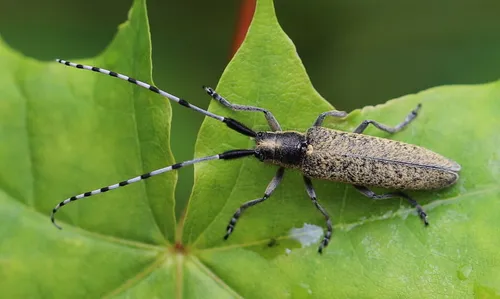
Golden-bloomed Grey Longhorn
Agapanthia villosoviridescens
A large and very distinctive longhorn beetle with a golden iridescent bloom on the elytra and thorax. The antennae are also very distinctive with dark and light bands. The elytra are somewhat bristly with hairs. Length up to 20mm. Mainly found in moi
Golden-headed Weevil
Compsus auricephalus
Identification: habitus distinctive among N. Amer. weevils two recognized morphotypes: the typical green form, with pink to cupreous head and part of the legs and the uniformly white to pale brown form. ( 3 )
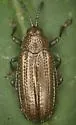
Goldenrod Leafminer
Microrhopala vittata
Identification: varies from bold to nearly entirely black The dull reddish stripes on the elytra, the 8-segmented antennae and the smooth (not serrate/toothed) elytral margins distinguish this species Fairly variable in coloration: specimens from dif
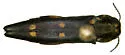
Goldspotted Oak Borer
Agrilus auroguttatus
A. coxalis , almost identical in appearance, is found in Central Mexico and n. Guatemala (at some point A. auroguttatus was treated as a subspecies of A. coxalis ) It is a native of Mexico and Guatemala and was first detected in Arizona in late 1800'
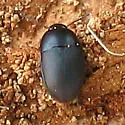
Gondwanocrypticus obsoletus
Gondwanocrypticus obsoletus
Identification: Antennal segments 2 and 3 similar in color and size . The dorsal luster or sheen is uniformly dull, somewhat polished Det. M. A. Quinn, 2022
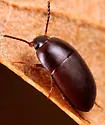
Gondwanocrypticus platensis
Gondwanocrypticus platensis
Identification: Antennomeres 1 & 2 reddish, 2 is much shorter and paler compared to 3, which is two times as long as 2 and darkly pigmented in contrast, pronotum noticeably more shining than the relatively dull elytra in G. obsoletus (Say), Antennome
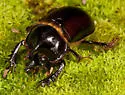
Gopher Beetle
Ceratophyus gopherinus
Information about parental care and larval food: Robert Duff, personal communication. Richter and Duff (1971) discuss the origin of this beetle in California: "In 1962, a strange, deep burrowing, geotrupid beetle was found in Santa Barbara County, Ca
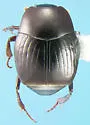
Gopher Tortoise Hister Beetle
Geomysaprinus xerobatis
considered by FL to be a declining "Species of Greatest Conservation Need" (SGCN)
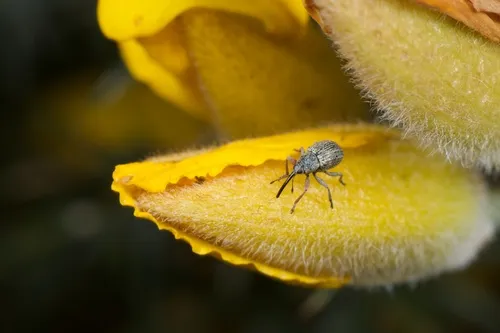
Gorse Weevil
Exapion ulicis
Length 2 to 3 mm. The adult weevil is covered in light grey scales which can appear in lines down the elytra. The female has a rostrum half as long as its body whereas the male's rostrum is only about as long as the pronotum, and shorter than the ant
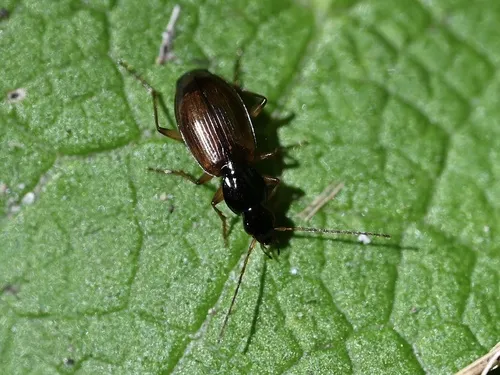
Gracious Ground Beetle
Agonum gratiosum
Agonum gratiosum is a species of ground beetle in the Platyninae subfamily. It is found in Chukotka region, Russia and Kamchatka, and also in Alaska, United States.
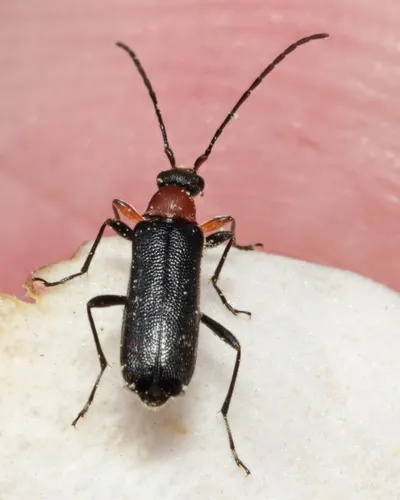
Grammoptera haematites
Grammoptera haematites
Identification: Typical form has dark elytra, orange pronotum and front femora. Yanega notes "head is black except for the clypeus, and the basal antennal segments and legs are mostly reddish (scape reddish beneath)". That source also notes the pale
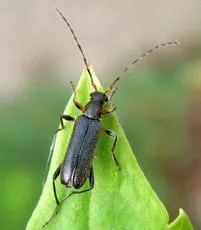
Grammoptera ruficornis
Grammoptera ruficornis
3-7mm - one of our smallest longhorn beetles. It is brownish or dark grey with silky hairs on the wing cases, giving it a sheen. It has long red/black banded antennae, where the 2nd segment is elongate - features which distinguish it from the other t
Grammoptera subargentata
Grammoptera subargentata
Identification: dorsal pubescens entirely dark (may be somewhat silvery on the pronotum); body always black but legs, antennal bases, and clypeus sometimes reddish ; see comment here
Granary Weevil
Sitophilus granarius
Identification: distinct from S. oryzae in having the hind wings reduced, the elytral intervals at least as wide as the striae, the strial punctures small and clearly separated, and the pronotal punctures distinctly elongate notorious pest of stored
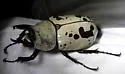
Grant's Hercules Beetle
Dynastes grantii
Identification: Distinctive in its Southwestern range. Dynastes grantii is the largest scarab in the w. US, and is relatively common in Arizona. but is considered by New Mexico to be a "Species of Greatest Conservation Need" (SGCN) ( 3 ) at high risk
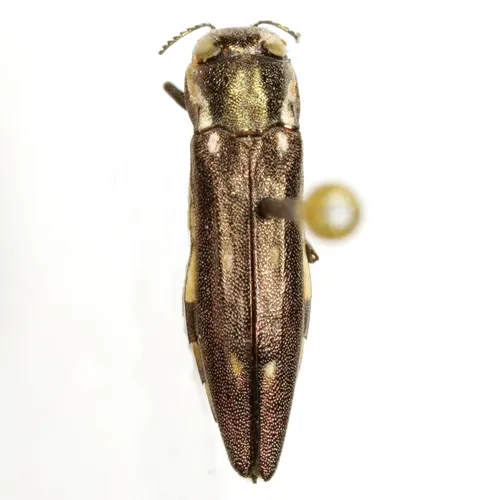
Granulate Poplar Borer
Agrilus granulatus
may kill limbs and entire poplar/cottonwood trees ( 4 )
Grape Cane Borer Beetle
Amphicerus bimaculatus
Identification: With dense white tomentum laterally in basal half of pronotum, otherwise in flecks and more golden; reminds of Lichenophanes spp
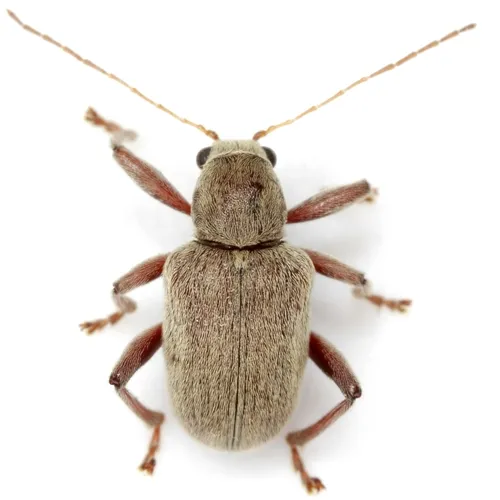
Grape Rootworm
Neofidia lurida
Neofidia lurida, the grape rootworm, is a species of leaf beetle. Grape rootworms are found in eastern North America, south to Mexico, and have been recently reported as far north as Quebec. Adults are typically 4.9 to 7.0 mm in length. They are colo
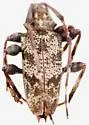
Graphisurus despectus
Graphisurus despectus
Identification: elytra ground color pale gray or brownish, covered by heavy dark speckling and crossed by irregular blackish band about two-thirds distance from base; elytral apices truncate but not emarginate (concave); scutellum glabrous (smooth; h
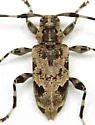
Graphisurus triangulifer
Graphisurus triangulifer
Identification: elytra with a large, irregular dark triangle beyond the middle, running from the outer margin to near the suture; and a small one near the apex. Det. M. A. Quinn, 2012 comes to UV lights
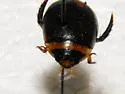
Graphoderus occidentalis
Graphoderus occidentalis
Identification: Diagnostic characters include: posterior black fascia of pronotum contiguous with hind margin and anterior black fascia of pronotum contiguous with anterior margin. The male mesotarsus is also not dilated (widened) in this species.
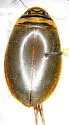
Graphoderus perplexus
Graphoderus perplexus
Identification: Unlike G. occidentalis , the posterior black fascia on the pronotum (the black band at the bottom part of the pronotum) does not reach the hind margin. The black band is contiguous (unseparated) with the hind margin in G. occidentalis
Graphops barberi
Graphops barberi
Identification: Type - USNM, Smithsonian Type Locality: Flagstaff, Coconino Co., Arizona, coll'ed by Wickham in 1933
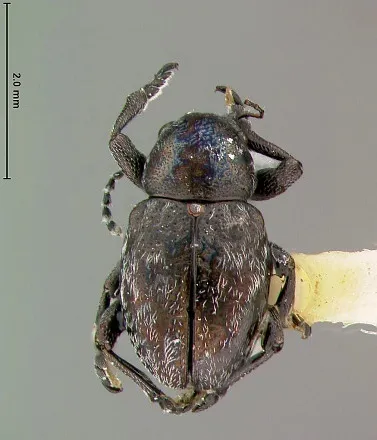
Graphops exilis
Graphops exilis
Identification: Type - USNM, Smithsonian Type Locality: Victoria, Victoria Co., Texas, coll'ed by J. D. Mitchell, 29 Aug 1913
Graphops floridana
Graphops floridana
Type: male and 6 paratypes U.S.N.M. collected at Tavares, Florida, July 18 by Hubbard and Schwarz.
Graphops tenuis
Graphops tenuis
Identification: Type - USNM, Smithsonian Type Locality: Alpine; 4400-6000 ft., Texas, coll'ed by Wickham, 28 Jun 1930
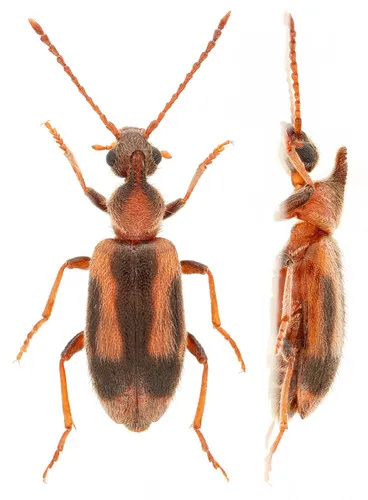
Grappling Antlike Flower Beetle
Notoxus anchora
Notoxus anchora is a species of monoceros beetle in the family Anthicidae. It is found in North America.
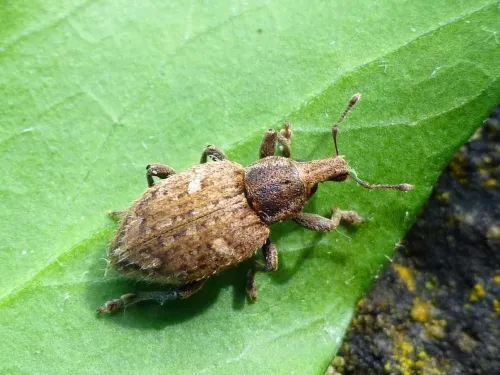
Graptus triguttatus
Graptus triguttatus
Graptus triguttatus is a large (6 to 8 mm), distinctively marked species with pale brown elytra that are marked with two creamy-white blotches on each elytron, the ones at the rear often forming a ‘V’ pattern. Unless identified by a recognised expert
Gratiana boliviana
Gratiana boliviana
Identification: Larva cream with small green spot. Carries fecal shield. Young adults light green with a continuous yellow mark along the rim. Adults turn yellow. Used as weed biocontrol agent against Solanum viarum (soda apple), an invasive plant fr
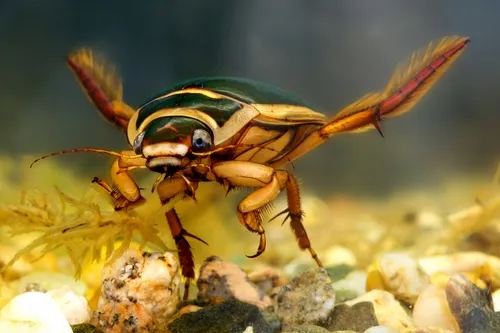
Great Diving Beetle
Dytiscus marginalis
One of our largest beetles, this species has a dark, olive-brown, almond-shaped oval body, about three centimetres long. The pronotum is completely bordered by a yellow margin - one of the key features that enables this species to be recognised in th
Great Plains Giant Tiger Beetle
Amblycheila cylindriformis
Identification: All black to brownish. Entire surface of elytra covered with pits--distinctive character for this species . See key on genus page. This flightless and nocturnal sp. was first coll'ed by Say along the Arkansas River near the Rocky Moun
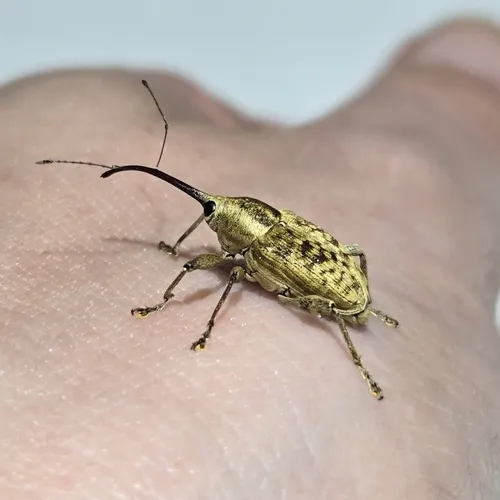
Greater Chestnut Weevil
Curculio caryatrypes
Identification: "The Greater Chestnut Weevil is Curculio caryatrypes and it is easily recognized as its the only Curculio with segment two of the antennal funicule (the part beyond the elbow) longer than segment 1. In Lesser Chestnut Weevil segment 1
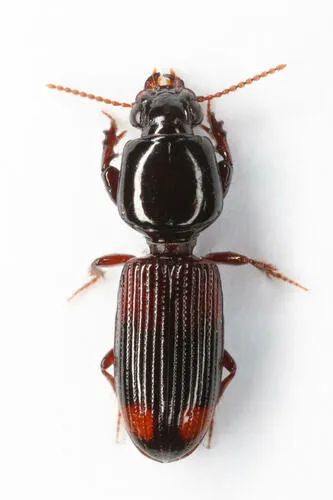
Greater Tail-light Carabid
Paraclivina bipustulata
Identification: Adult: head and pronotum dark brown to blackish; elytra striated and punctate, dark brown to blackish with dull dark reddish area at base, and two large spots of same color near apex; front tarsi flattened and bearing several claw-lik
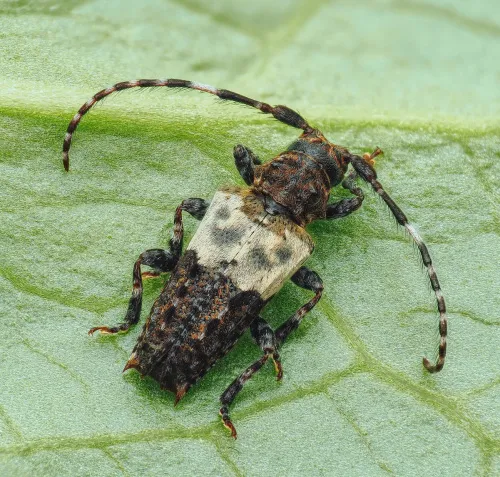
Greater Thorn-tipped Longhorn Beetle
Pogonocherus hispidulus
Length 5 to 8 mm. Similar to P. hispidus but generally larger and with longer teeth at the tip of each elytron. This species has white marked antennae and a white band on the scutellum. Well camouflaged on trees and shrubs by its lichen like appearan
Green Click Beetle
Nitidolimonius resplendens
Relatively common, but usually encountered as single specimens
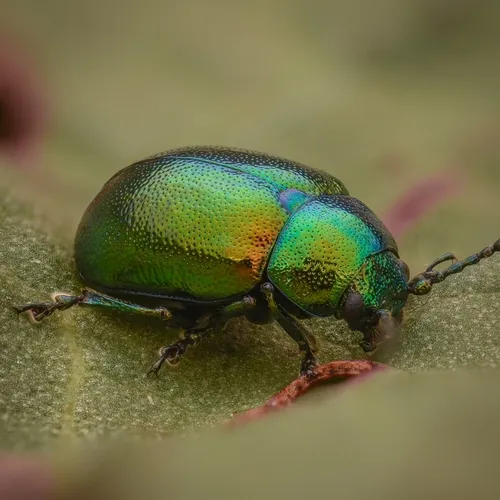
Green Dock Beetle
Gastrophysa viridula
Length 4 to 6 mm. A small green-golden beetle the elytra often seem to have a sheen. Usually found on Dock plants, it can be seen anywhere that Dock is present, such as roadside verges and field margins. It is often seen near to water. The gravid fem
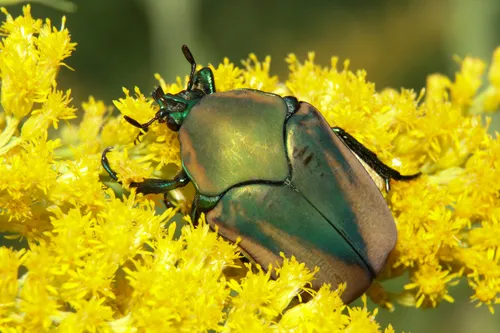
Green Fig Beetle
Cotinis mutabilis
Identification: the most widespread and variable species within the genus, with dozens of forms, some quite different in appearance, throughout its range ...though metafemora may be partially pale: ...but may be bicolored, too:
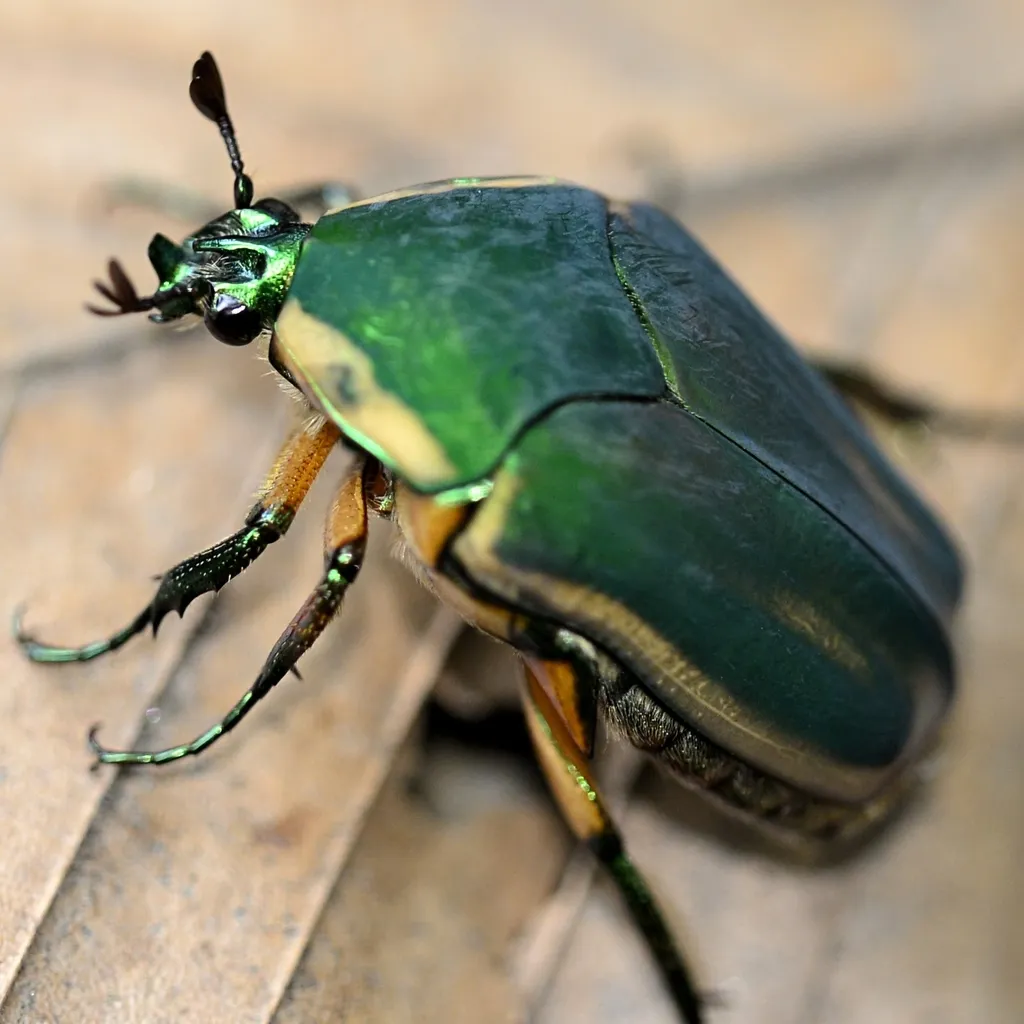
Green June Beetle
Cotinis nitida
Identification: Overall size generally smaller than mutabilis , but variable, averaging larger in the south and west. Pygidium bicolored; basal portion green, apical portion testaceous. Hind femora usually pale, distinctly lighter in color than remai
Green Leaf Weevil
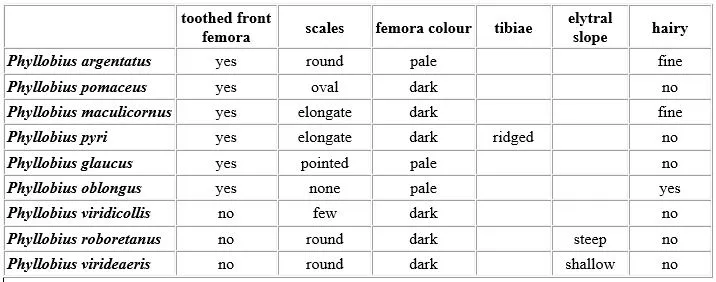
Phyllobius maculicornis
One of many similar green weevils. It has elongate scales and a covering of fine, pale setae. It has a tooth on the femora which are dark coloured under the scales. The elytral striae are clearly visible (lacking scales) and the apex of the scape is
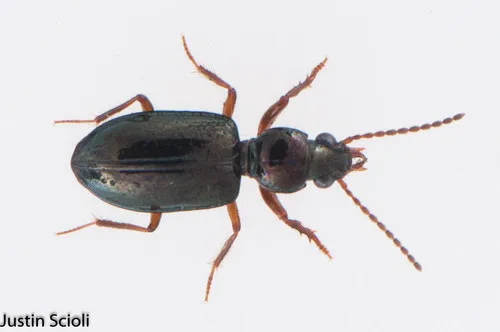
Green Semipoint-mouth Beetle
Semiardistomis viridis
Semiardistomis viridis is a species of ground beetle in the family Carabidae. It is found in North America.
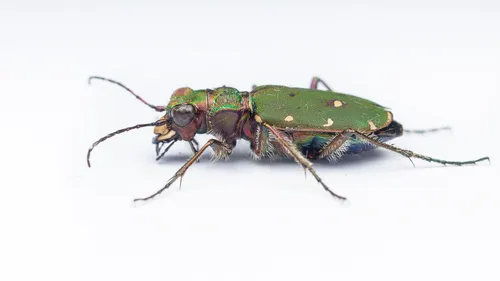
Green Tiger Beetle
Cicindela campestris
A large (15 mm) tiger beetle that is iridescent green with yellow markings. It is usually found in areas with bare ground or sparse vegetation such as gravelly or sandy hillsides and sandy heath. April to September. Adults are active in early summer