
Primitive Winged Insects
Order Coleoptera
The Primitive Winged Insects (Order Coleoptera) includes 15,720 species across 160 families and 3,716 genera in our directory.
About Primitive Winged Insects
Coleoptera is the largest order of insects with over 400,000 described species, representing ~25% of all known animal species and ~40% of all insects. In the U.S. alone, nearly 30,000 beetle species have been identified.
Economic Impact
Beetles have major economic significance: leaf beetles (Chrysomelidae) and weevils (Curculionoidea) are among the most destructive agricultural pests globally, costing billions annually, while predatory species like ladybugs provide natural pest control.
Ecological Role
Beetles are prominent decomposers, especially in forests, breaking down dead wood and recycling nutrients. As predators, they reduce populations of pest insects. Many species are also important pollinators of flowering plants.
Families in Coleoptera (160)
Species in Coleoptera (15,720)
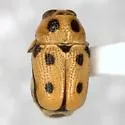
Griburius equestris
Griburius equestris
Identification: Our basis for assigning Olivier's name is the dorsal color pattern and the color of the abdomen. His illustration depicts a yellow Griburius beetle with two round, black maculae on each elytron, the anterior-most being isolated and we
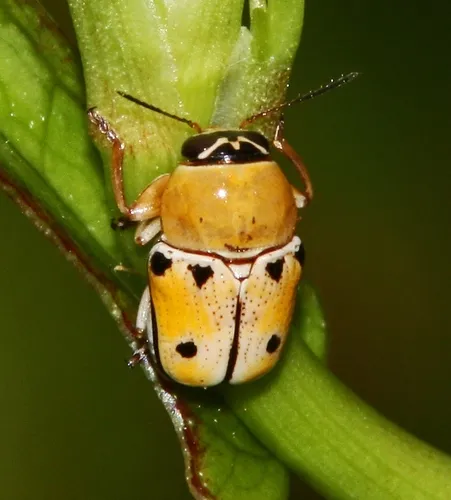
Griburius larvatus
Griburius larvatus
Identification: The specimens Riley et al. (2001) assigned to G. larvatus (over 100 examined) have the elytral pattern variably developed, ranging from nearly absent to heavily marked. The anterior discal spot of the elytra is basal, nearly touching
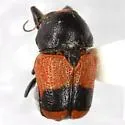
Griburius lecontii
Griburius lecontii
Identification: Dets. M. A. Quinn, 2015 Type Locality: Texas
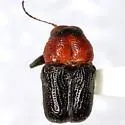
Griburius montezuma
Griburius montezuma
Identification: dets. E.G. Riley: There exists a color form of this species where the ivory-white elytral markings are absent or nearly so, being reduced to a very narrow strip along the lower anterior portion of the elytral margin. From above, the e
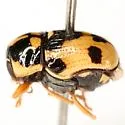
Griburius scutellaris
Griburius scutellaris
Identification: Lateral margins and occasionally medial and paired basal spots of prothorax yellowish orange. Scutellum and medial and apical elytral fascia yellow-orange. ( 3 ) variable:
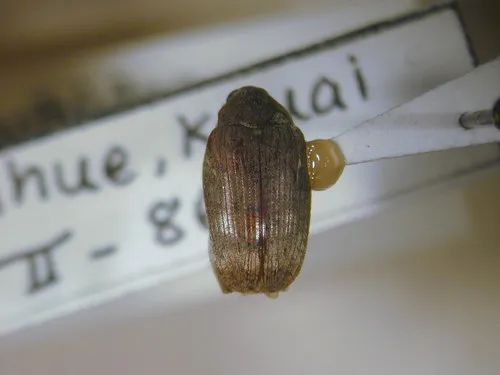
Groundnut Bruchid
Caryedon serratus
Caryedon serratus, known generally as the groundnut bruchid or groundnut borer, is a species of leaf beetle in the family Chrysomelidae. It is found in Africa, the Caribbean, Europe and Northern Asia (excluding China), Central America, North America,
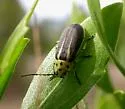
Groundselbush Beetle
Trirhabda bacharidis
Identification: Note tapering elytral stripes Introduced into Australia and Asia to control Baccharis spp. ( 3 )
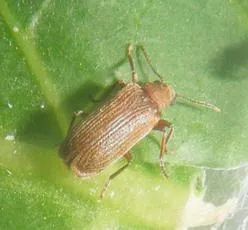
Grynobius planus
Grynobius planus
Length about 4 mm. A small wood boring beetle with a dark tan, deeply studded elytra. The last three segments of the antennae are much longer than the others. Fairly frequent and widespread in the southern half of Britain. No additional images availa
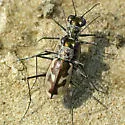
Gulfshore Tiger Beetle
Eunota pamphila
Usually active early in the morning. Larva unknown.
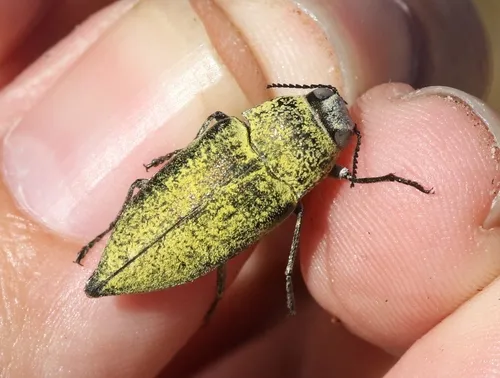
Gyascutus carolinensis
Gyascutus carolinensis
Gyascutus carolinensis is a species of metallic wood-boring beetle in the family Buprestidae. It is found in Central America and North America.
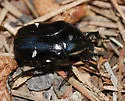
Gymnetina borealis
Gymnetina borealis
Identification: distinguished by greatly reduced pronotal and elytral markings and a pygidium lacking cretaceous spots. Type Locality: Oak Creek Canyon, Coconino Co., Ariz., July 20, 1970
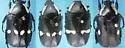
Gymnetina cretacea
Gymnetina cretacea
Identification: see discussion here: Det. Wm. B. Warner, 2011
Gymnetina howdeni
Gymnetina howdeni
Type Locality: Miller Canyon, Cochise Co. AZ., Aug. 8, 1987, Coll'ed by Tom Ryan
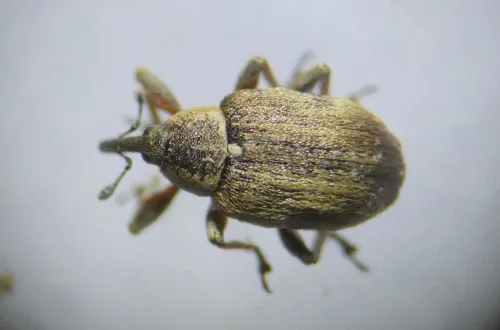
Gymnetron villosulum
Gymnetron villosulum
A small brown weevil 2-3mm, with long hairs on the pronotum and elytra. The larvae feed within galls formed in the seed-capsules of water speedwells, usually pink water-speedwell, Veronica catenata , but also Veronica anagallis-aquatica , Veronica be
Gymnognathus chiricahuae
Gymnognathus chiricahuae
Type Locality: Onion Saddle, Chiricahua Mts., Ariz. VIII-2-52, DJ & JNK. in (OSU). Allotype same data in (OSU). Fifteen paratypes
Gymnognathus triangularis
Gymnognathus triangularis
Type Locality: Texas, San Patricio County., 2 mi. N.E. Sinton, 15-x-1993, S. M. Clark Dr. Shawn Clark collected the holotype sweeping and beating grass and small roadside trees and shrubs, mostly mesquite and Baccharis along U.S. route 77 Jonathan Ki
Gyretes torosus
Gyretes torosus
Type Locality: ARIZ. Yavapai Co., Convergence Oak Cr. and Verde R. 10 July, 1979. M.W. Sanderson UV light trap.
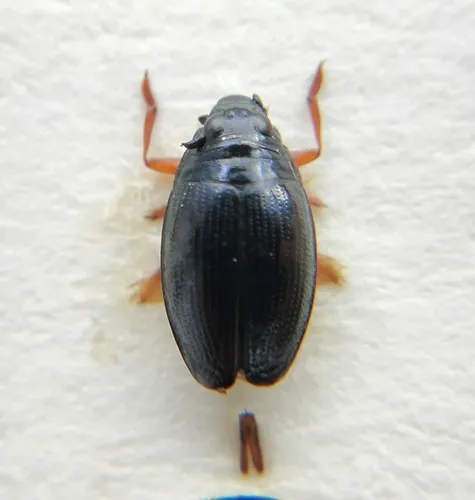
Gyrinus marinus
Gyrinus marinus
4.5 to 8 mm with the females being generally larger than males. Broadly-oval and widest behind the middle, entirely shiny black with a bluish or bronzy lustre and red legs with dark claws. This last feature is present in only one other UK species, Gy
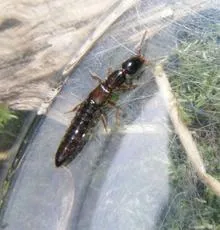
Gyrohypnus angustatus
Gyrohypnus angustatus
Length 6 to7 mm. Head black. Pronotum black to dark brown, sometimes paler around the margins. Elytra usually brown, occasionally darker or even black. Abdominal tergites usually dark brown. Legs brown to dark brown. Antennae brown with segment 1 dar
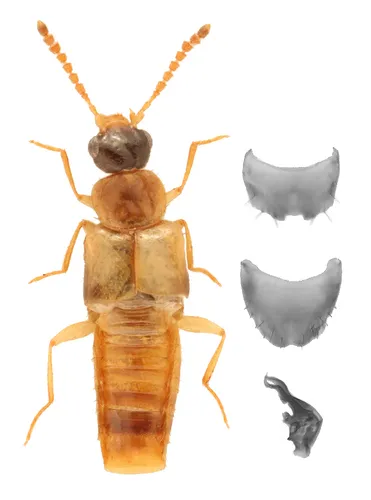
Gyrophaena gilvicollis
Gyrophaena gilvicollis
Identification: As with many species of Aleocharinae, the genitalia as well as tergites and sternites VIII allow for reliable diagnosis.
Gyrophaena nanoides
Gyrophaena nanoides
similar to G. caseyi , but differs by the subquadrate antennomeres VI‒X (transverse in G. caseyi ) and the distincly broader elytra (as broad as pronotum in G. caseyi )
Habrocerus magnus
Habrocerus magnus
Habrocerus magnus (Habrocerus magnus) is a species in the family Staphylinidae, commonly known as rove beetles, belonging to the order Coleoptera (Beetles). It is classified within the subfamily Habrocerinae, suborder Polyphaga, superfamily Staphylin
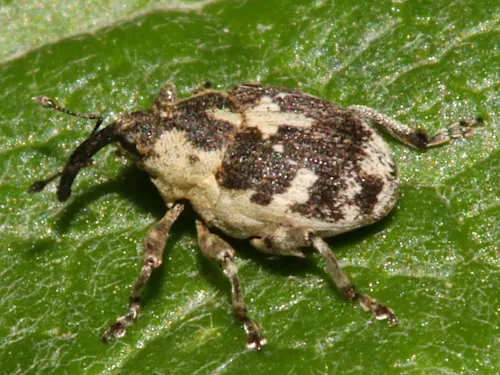
Hadroplontus litura
Hadroplontus litura
Unless identified by a recognised expert, photographic evidence is required and the specimen should be examined with a microscope. In the comments box, state the key or ID method used. Note the beetle's size and describe the identifying characters. I
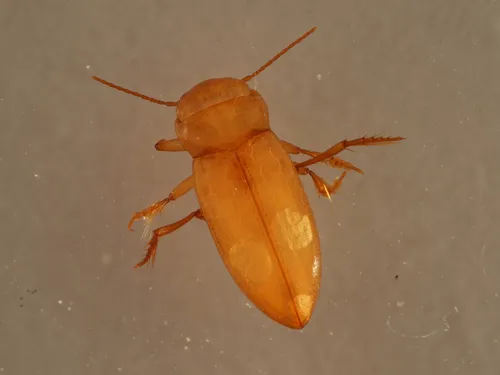
Haideoporus texanus
Haideoporus texanus
Type Locality: Artesian well at the Aquatic Station, Texas State University, San Marcos, Hays County, Texas. Texas considers this a "Species of Greatest Conservation Need" (SGCN) This is the 1st blind, depigmented, aquifer-adapted Dytiscidae describe
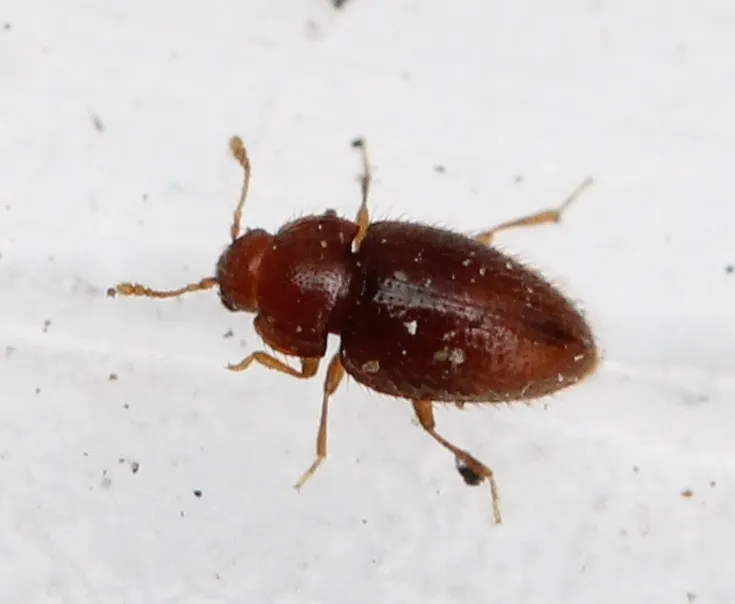
Hairy Cellar Beetle
Mycetaea subterranea
Hairy Cellar Beetle (Mycetaea subterranea) is a species in the family Mycetaeidae, belonging to the order Coleoptera (Beetles). It is classified within the suborder Polyphaga, superfamily Coccinelloidea. This species belongs to the genus Mycetaea. Si
Hairy Fungus Beetle
Typhaea stercorea
Identification: Det. E.G. Riley, 2010 Secondary pest of stored grain/seeds, tobacco, peanuts, and cacao
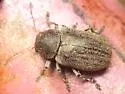
Hairy Leaf Beetle
Glyptoscelis pubescens
Identification: The large size, dark color, scaly dorsal surface, and the expanded lateral lobes of the prothorax will distinguish this species. (E.G. Riley)
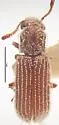
Hairy Powderpost Beetle
Minthea rugicollis
Identification: Trachodes hispidus earliest record in our area: PA 1929
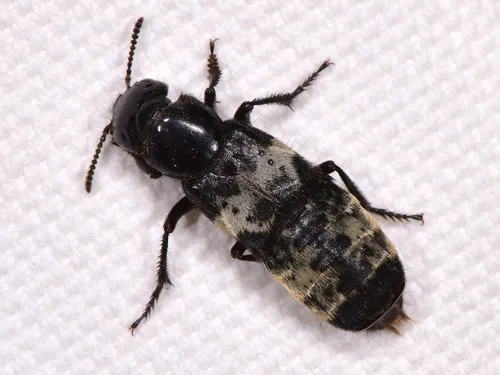
Hairy Rove Beetle
Creophilus maxillosus
15 to 22 mm. The large size and stout build, coupled with the distinctive pattern of creamy grey hairs on an otherwise dark body will identify this beetle. The shiny thorax is free from hairs. It has a habit of curling up when it feels threatened, an
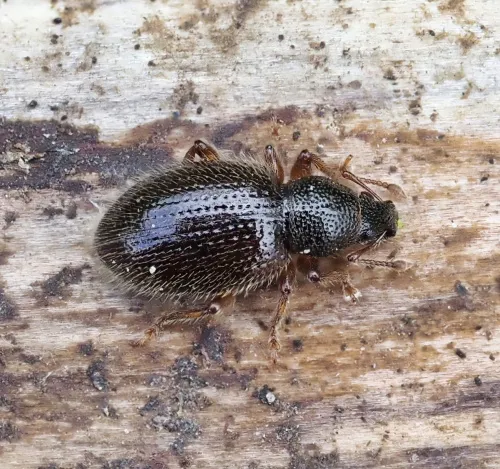
Hairy Spider Weevil
Exomias pellucidus
It is 3 to 4 mm in length with long upright hairs on the elytra which are studded with rows of holes. The pronotum is also pitted. Colour varies from a yellowy brown to almost black. Unless identified by a recognised expert, photographic evidence is
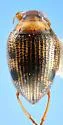
Haliplus distinctus
Haliplus distinctus
Identification: Can be distinguished from H. dorsomaculatus by the metaventral process having a longitudinal impression on each side
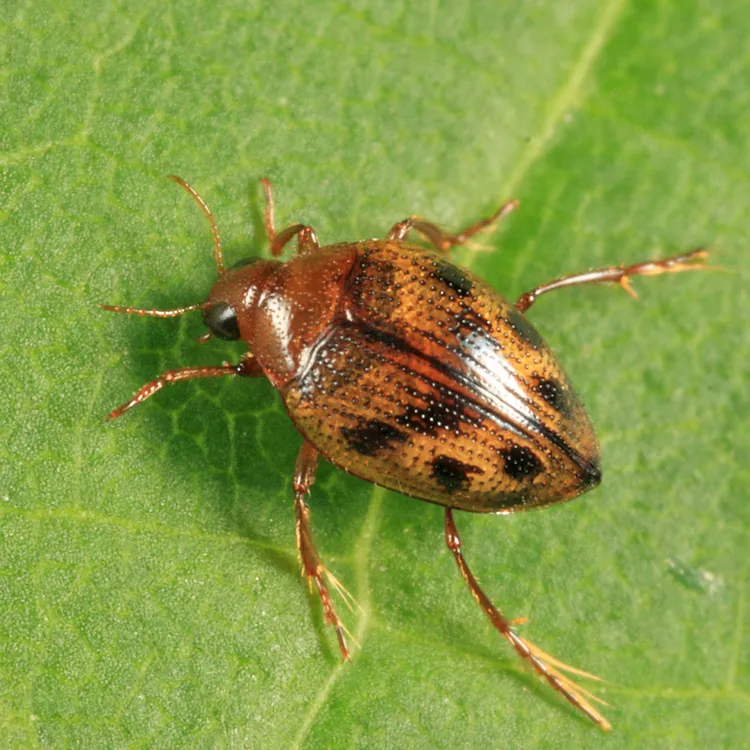
Haliplus immaculicollis
Haliplus immaculicollis
One of the most commonly collected haliplids in eastern Canada
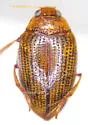
Haliplus leechi
Haliplus leechi
Identification: Anteromedial portion of the pronotum (near the anterior margin) with blackened punctures that may give the appearance of a blotch; subsutural row of elytral punctures may form a partial double row basally; other important characters a
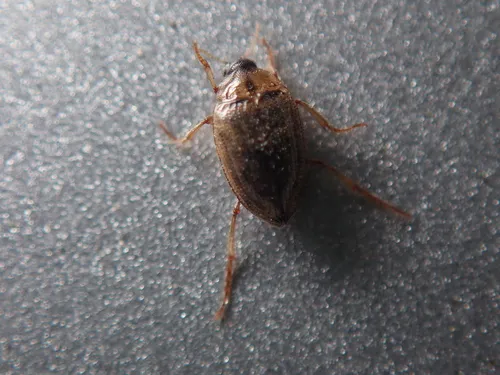
Haliplus lineatocollis
Haliplus lineatocollis
A small (2.6-3.5mm) water beetle. Pronotum with dark median line and curved slot on each side. Unless identified by a recognised expert, a photo is required. If the photo doesn't show the key ID features then in the comments box describe the size and
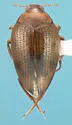
Haliplus longulus
Haliplus longulus
Identification: Elytra with postmedial blotches; pronotal basal plicae long (>¼ length of pronotum); prosternal process unchanneled
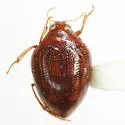
Haliplus tumidus
Haliplus tumidus
Lectotype Locality: Bosque Co., TX, coll'ed by Belfarge
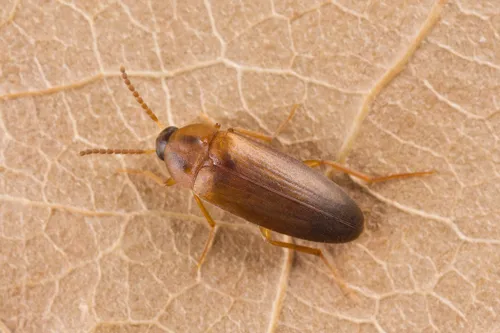
Hallomenus binotatus
Hallomenus binotatus
An all brown beetle, sometimes paler around the shoulders and pronotum. The legs are also pale brown. Most likely to be encountered in summer and autumn. The larvae are associated with fungi usually bracket fungi. Scattered records from most part
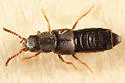
Halobrecta flavipes
Halobrecta flavipes
Our sole representative of the tribe Taxicerini Thomson, 1858
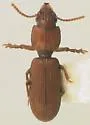
Halocoryza arenaria
Halocoryza arenaria
Halocoryza arenaria is a species of brown coloured ground beetle in the subfamily Scaritinae which was described by Darlington in 1939.
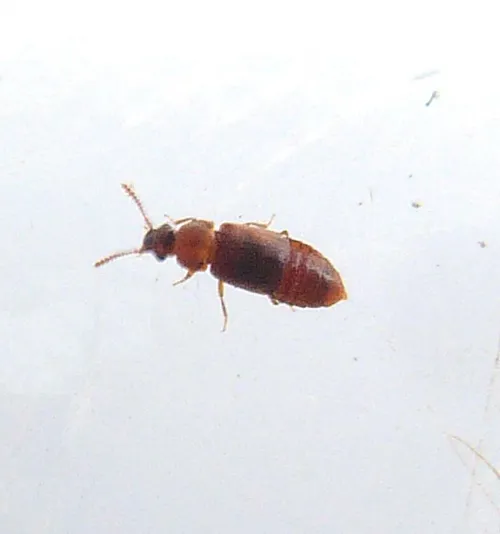
Hapalaraea pygmaea
Hapalaraea pygmaea
A small (2.2 to 3.0 mm) rove beetle which is orange-brown or red in colour. Unless identified by a recognised expert, a photo is required. If the photo doesn't show the key ID features then in the comments box describe the size and identifying charac
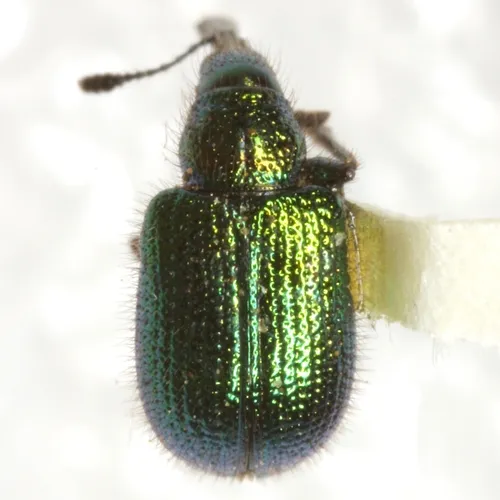
Haplorhynchites eximius
Haplorhynchites eximius
Identification: Type spcimen varies greatly in size, sculpture of rostrum & head, and color (metallic green, tinged with gold or rosy-bronze, to a deep blue-green or purple)
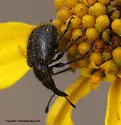
Haplorhynchites planifrons
Haplorhynchites planifrons
Identification: The length, punctuation and linear impression of the pronotum serve to distinguish this species; frons flat to concave in most specimens
Haplorhynchites pseudomexicanus
Haplorhynchites pseudomexicanus
Identification: very close to H. aeneus , can be distinguished by the bluish luster, smaller interval punctures, and shorter rostrum sex for sex
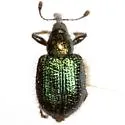
Haplorhynchites quadripennis
Haplorhynchites quadripennis
Identification: Black with bluish, greenish, and purpurescent reflections, extremities of legs and antennae somewhat paler, to the naked eye varying from a rosy-bronze head and pronotum with a metallic green elytra to a black or greenish-black head a
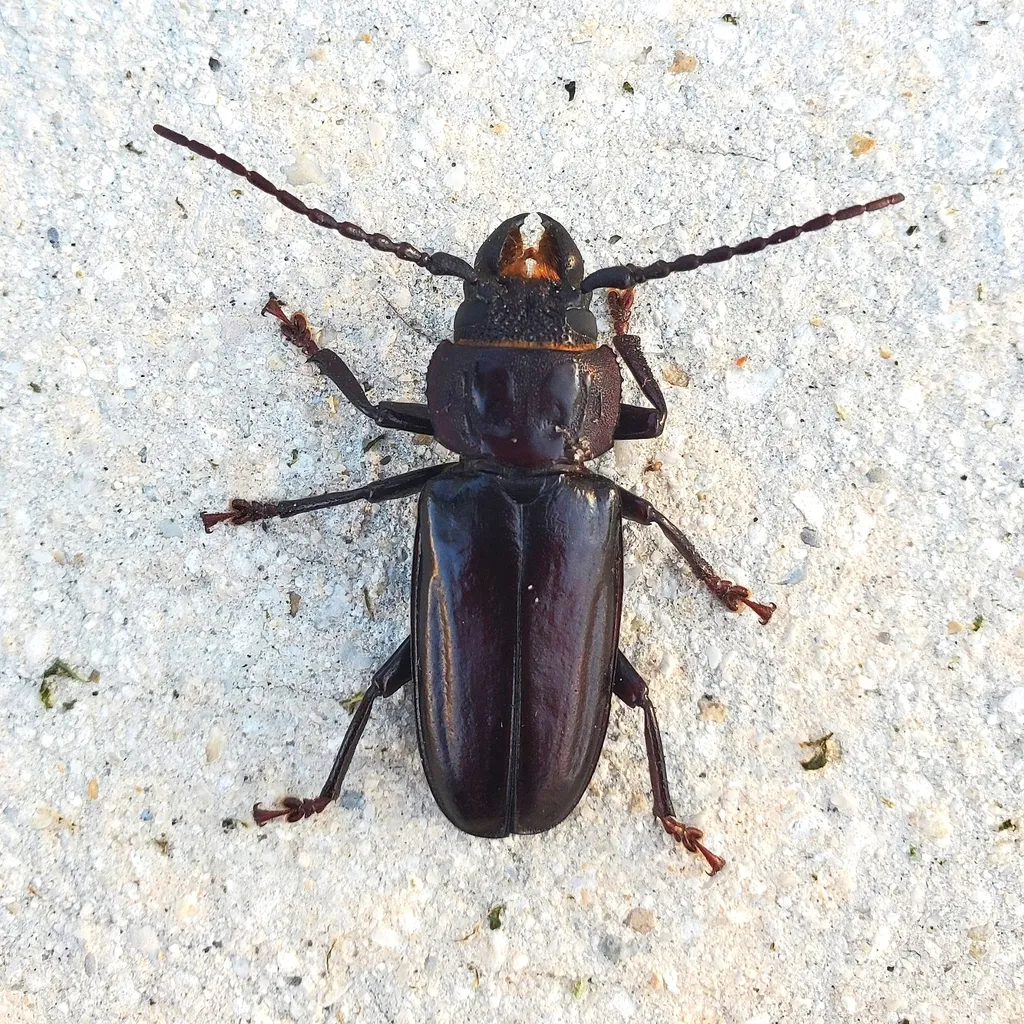
Hardwood Stump Borer
Mallodon dasystomus
Identification: Tubercles at the base of the antennae acute; mandibles nearly horizontal, prolonged in male, more or less carinate above, most bidentate and pubescent internally.
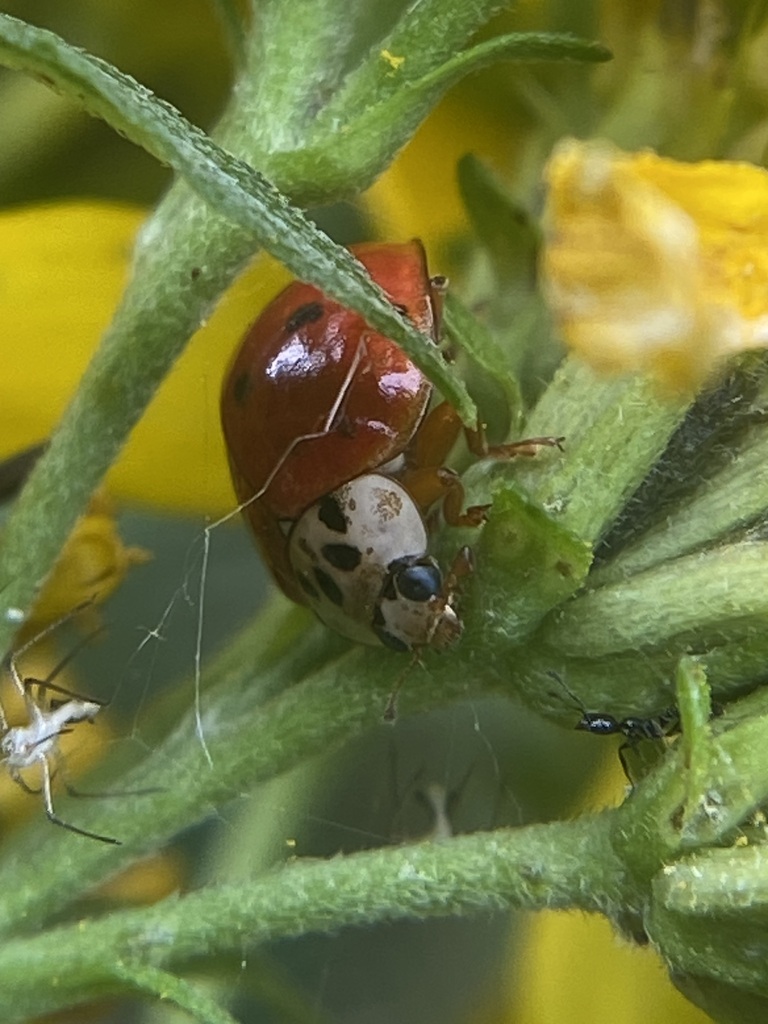
Harlequin Ladybird
Harmonia axyridis
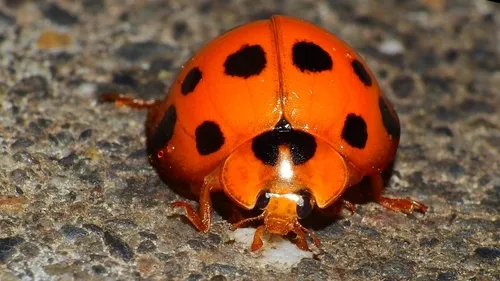
no rights reservedThis species is relatively easy to identify and is unlikely to be confused with anything else. However photos are always helpful to confirm your record. The Harlequin has the ability to live in diverse habitats. It is most commonly found on deciduous
Harmonia dimidiata
Harmonia dimidiata
Identification: Det. E. G. Riley, 2014 "The initial introduction ... from south China into California in 1924. It was released in 1925 for aphid control, but did not become established. A shipment sent to Florida from California in 1925 was released
Haroldiataenius convexus
Haroldiataenius convexus
Identification: Clypeal anterior margin angulate each side of median emargination. Elytral intervals strongly convex on disc. Body dark reddish brown. among the most commonly coll'ed beetle spp. (via pitfall traps) at Laguna Atascosa NWR, Rio Hondo,
Haroldiataenius griffini
Haroldiataenius griffini
Identification: Det. P. Skelley, 2008 Type Locality: San Patricio County, near junction of Texas Highway 9 and U.S. 77.
Haroldiataenius semipilosus
Haroldiataenius semipilosus
Identification: Clypeus strongly angulate to dentate each side of median emargination. Elytral intervals with long scattered setae, most prominent laterally. Type Locality: Texas Pass, Dragon [Dragoon] Mountains, Arizona, Van Dyke Coll, in CASC.
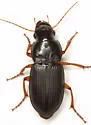
Harpalus actiosus
Harpalus actiosus
Identification: Det. P. W. Messer, 2013 (by microscopic examination) Characteristic combination: This combination rules out the two most similar species: H. protractus and H. vagans (formerly H. longicollis ).
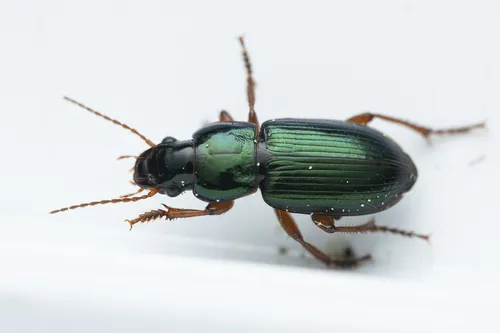
Harpalus affinis
Harpalus affinis
Length 8.5 to12 mm. the male is a handsome and normally shiny ground beetle which may have a metallic sheen of blue, green, maroon or black. Only the male is metallic - the female is dull black.The elytra are pubescent only along the margins. It is c
Harpalus atrichatus
Harpalus atrichatus
Identification: Labrum uniformly pale, tarsi somewhat pale
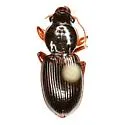
Harpalus cohni
Harpalus cohni
Identification: Males are easily distinguished from other Glanodes males by the shining elytra with no microsculpture on intervals[Cite:1612651,195] Type locality: Marfa, Presidio Co., Texas
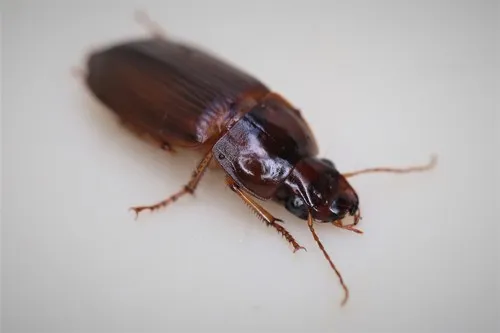
Harpalus faunus
Harpalus faunus
Harpalus faunus is a species of ground beetle in the subfamily Harpalinae. It was described by Say in 1823.
Harpalus gravis
Harpalus gravis
Identification: "Brownish mid-sized shiny " Harpalus " showing squarish pronotum with sharp hind angles" - PWMesser
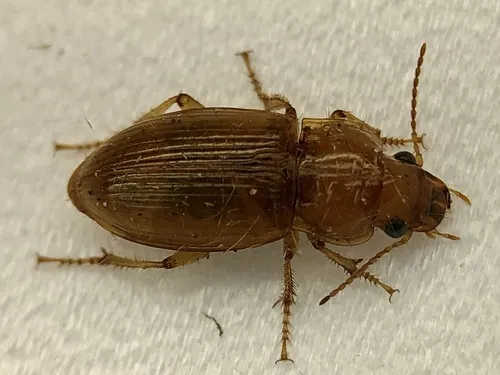
Harpalus indianus
Harpalus indianus
Harpalus indianus is a species of ground beetle in the subfamily Harpalinae. It was described by Csiki in 1932.
Harpalus katiae
Harpalus katiae
Identification: head impunctate, otherwise very smilar to H. caliginosus
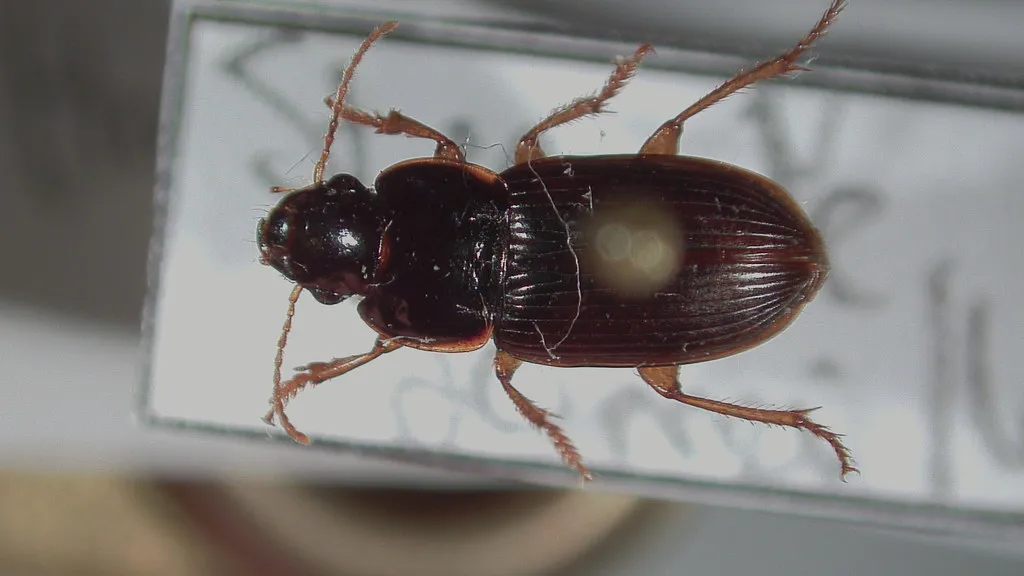
Harpalus megacephalus 0
Harpalus megacephalus
Harpalus megacephalus is a species of ground beetle in the subfamily Harpalinae. It was described by Leconte in 1848.
Harpalus paratus
Harpalus paratus
Identification: Det. P. W. Messer, 2013 (based on microscopic examination of this specimen) Distinguished from juxatapostional species in Ball & Anderson (1962) by combination of: The latter diagnostic character I find especially useful. Other large
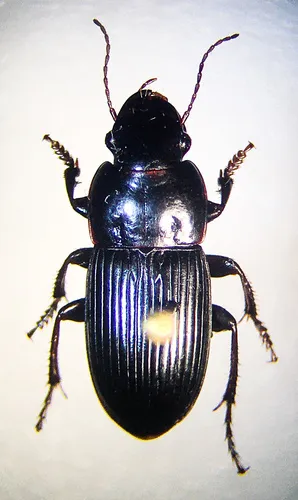
Harpalus providens
Harpalus providens
Harpalus providens is a species of ground beetle in the subfamily Harpalinae. It was described by Casey in 1914.
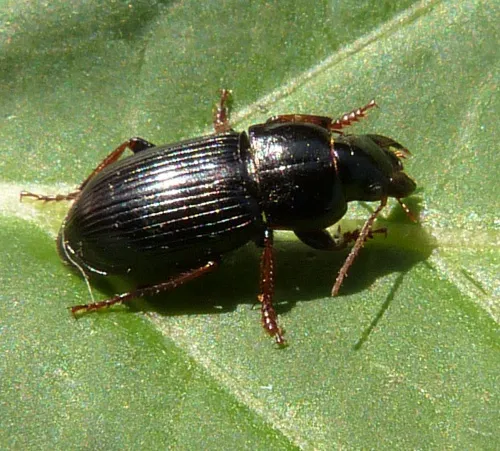
Harpalus rubripes
Harpalus rubripes
A medium-sized (8.5 to 12 mm) ground beetle which may be green or black in colour. Often found on dry or gravelly ground with sparse vegetation such as post industrial sites. March to September, peaking from April to June. Widespread but local in Eng
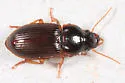
Harpalus somnulentus
Harpalus somnulentus
Identification: Elytra with single pair of dorsal punctures near posterior and a tiny but distinct tooth at each humerus (shoulder), pronotum with somewhat rounded hind angles and punctures along base, and legs completely pale.
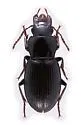
Harpalus spadiceus
Harpalus spadiceus
Identification: single setigerous pore on the 3d interval and short hind wings; two morphs of adults:
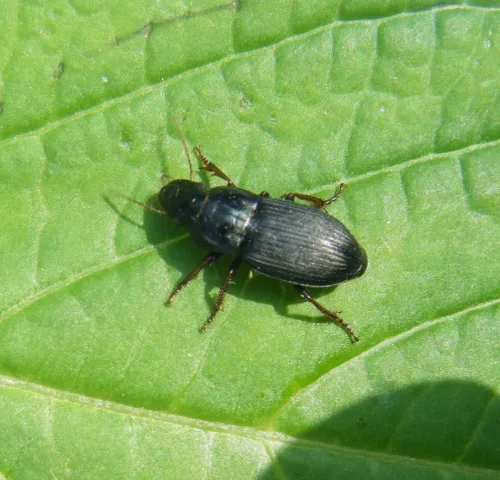
Harpalus tardus
Harpalus tardus
A ground beetle found on dry, sandy or gravelly ground. Widespread in Britain, but often coastal. No additional images available for this species.
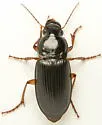
Harpalus texanus
Harpalus texanus
Identification: PWM update 2025. Very similar to H. pensylvanicus . Reliable ID should be based on examination of the internal sac of the aedeagus --see Ball & Anderson (1962). Otherwise, one can evaluate the more accessible apex of the aedeagus.
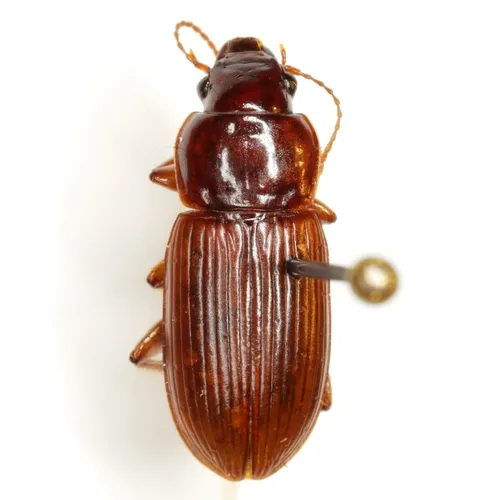
Hartonymus hoodi
Hartonymus hoodi
Type Locality: Topeka, Illinois (where the sp. was "rather abundant") (Casey 1914)
Hatch's Click Beetle
Eanus hatchi
Threatened with habitat loss; possibly extirpated at former Snohomish county collection localities (see fact sheet below).
Hatch's Snail-eating Beetle
Scaphinotus hatchi
Scaphinotus hatchi, Hatch's snail-eating beetle, is a species of beetle of the Carabidae family. This species is found in the United States (Oregon), where it inhabits coniferous forests.
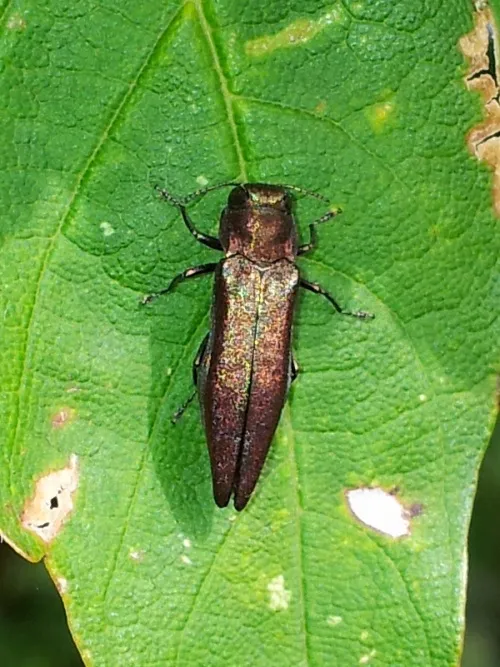
Hawthorn Jewel Beetle
Agrilus sinuatus
Length 5 to 10 mm. This is a reddish-brown rather bronze-metallic looking species. Adults are active from mid-June to late September. The species is associated with Hawthorn, the larvae bore beneath the bark producing a snaky, zig-zag pattern. Previo
Hawthorn Leaf Beetle
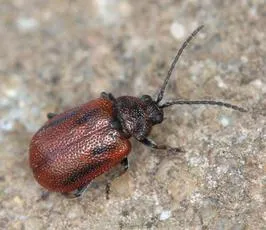
Lochmaea crataegi
This leaf beetle has characteristic black markings on a red background. It is seen along hedgerows and woodland where it feeds on Hawthorn leaves. Reasonably common and widespread in England and Wales.
Hazel Leaf-roller
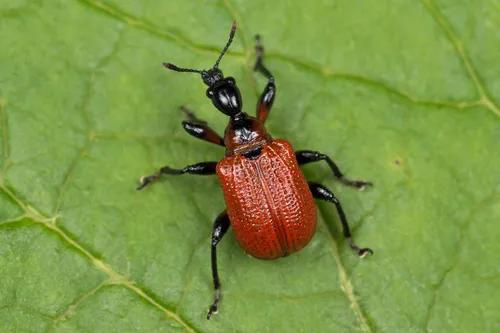
Apoderus coryli
This beetle has red elytra and a black head which narrows at the rear forming a distinct neck. This species is relatively easy to identify and is unlikely to be confused with anything else. However a photo is required to confirm your record. Larvae f
Head-clipping Weevil
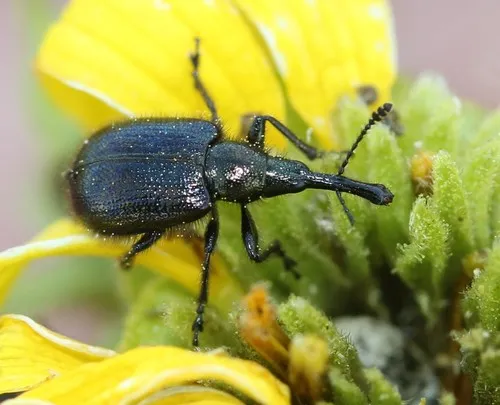
Haplorhynchites aeneus
Identification: Black, with faint bronze luster and often dull reddish-brown elytra (in teneral specimens); body covered with long dark setae; fairly constant morphologically over its range and easily separated by color & luster Det. C. W. O'Brien, 2
Heather Beetle
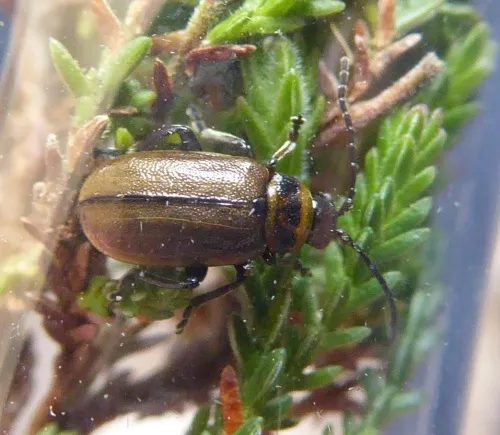
Lochmaea suturalis
4.3 to 6 mm. Brown to dark ochre-coloured Lochmaea caprea is similar but less shiny than L. suturalis . The record must include a note to state whether the beetle was found on Heather. Unless identified by a recognised expert, a photo is required and
Heather Lady Beetle
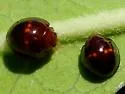
Chilocorus bipustulatus
Identification: Reddish-brown to black with a band of three red spots on each elytron Cannot survive cold winters, but may be encountered throughout North America during warm weather. This may account for BG sightings from NJ, MD, and even BC ‒ all n
Heather Weevil
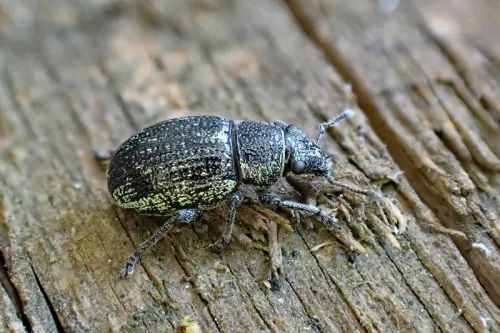
Strophosoma sus
Size 3.4 to 4.5 mm. This is predominantly a black weevil, with a dusting of white scales down the side of the elytra and onto the pronutum. Unless identified by a recognised expert, photographic evidence is required and the specimen should be examine
Hebestola pullata
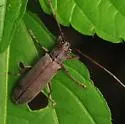
Hebestola pullata
Identification: uniform, dull brown/gray (incl. ant.) plus elongate shape and unspined pronotum comes to lights (MV may work better than blacklight)
Helesius nubilans
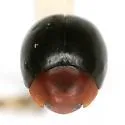
Helesius nubilans
Identification: Gordon's figures Type locality: Brownsville, Cameron Co., Texas known from four spmns, two coll'ed in Brownsville by H. F. Wickham ca. 1897 and one (shown here) coll'ed in San Antonio in 1945, and the fourth from one county east of Lu
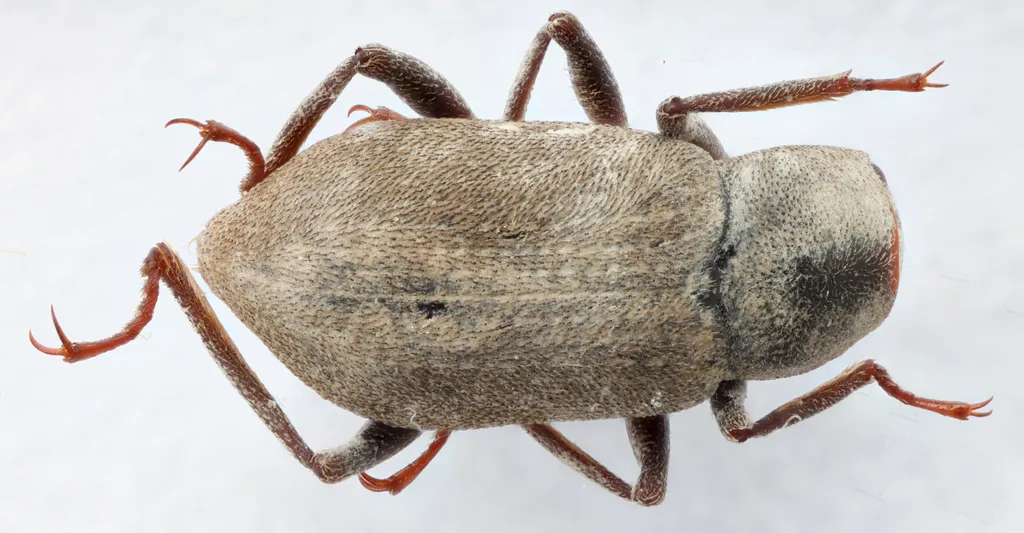
Helichus suturalis
Helichus suturalis
often abundant and frequently the only dryopoid in lowland southwestern streams.
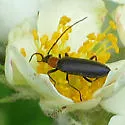
Heliocis repanda
Heliocis repanda
Heliocis repanda (Heliocis repanda) is a species in the family Oedemeridae, commonly known as false blister beetles, belonging to the order Coleoptera (Beetles). It is classified within the subfamily Oedemerinae, tribe Asclerini, suborder Polyphaga,
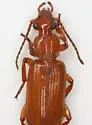
Helluomorphoides ferrugineus
Helluomorphoides ferrugineus
Identification: Except by the form of the antennae, this species almost exactly resembles H. praeustus ; the thorax is, however, less narrowed posteriorly. Type Locality: Brownsville, Cameron County, Texas
Helobata larvalis
Helobata larvalis
Identification: The broadly produced margins of the thorax and elytra give this insect a peculiar appearance recalling that of [i]Peltis feruginea[i], as well as of the larvse of some of our Elmidae.
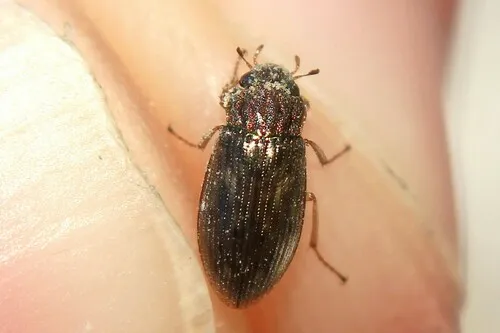
Helophorus aequalis
Helophorus aequalis
A very common water beetle, 4.5 to 6.3 mm length, it is all brown in colour with the zig-zag ridges on the thorax typical of the genus. Darker spots may be present on the elytra. It is most similar to H. grandis which is also one of the larger Heloph
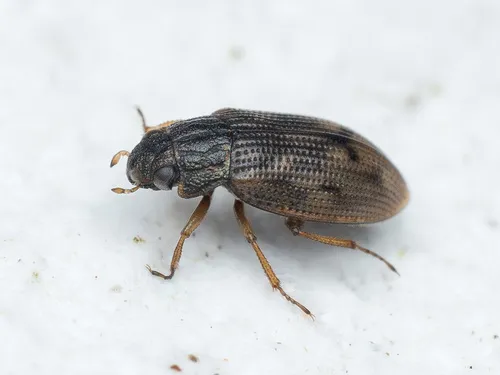
Helophorus brevipalpis
Helophorus brevipalpis
A small 2.1 to 4.1 mm water beetle and the commonest over much of Britain. Generally pale mottled brown but appearance varies due to the extent of dark markings on the elytra. The pronotum is strongly metallic; purple, bronze or green, often in combi
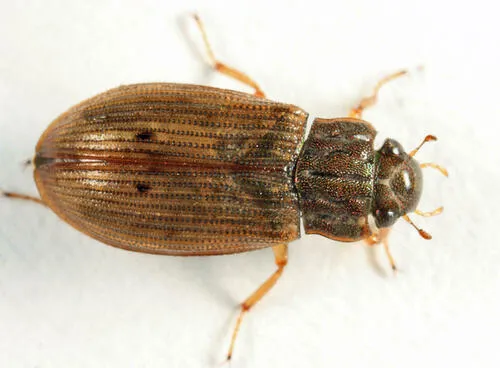
Helophorus grandis
Helophorus grandis
Length 5.3 to 7.7mm. As with other Helophorus the pronotum has characteristic zig-zag longitudinal grooves. It is pale brown to straw coloured with darker spots on the elytra. The large size means it could only be confused with larger specimens of He
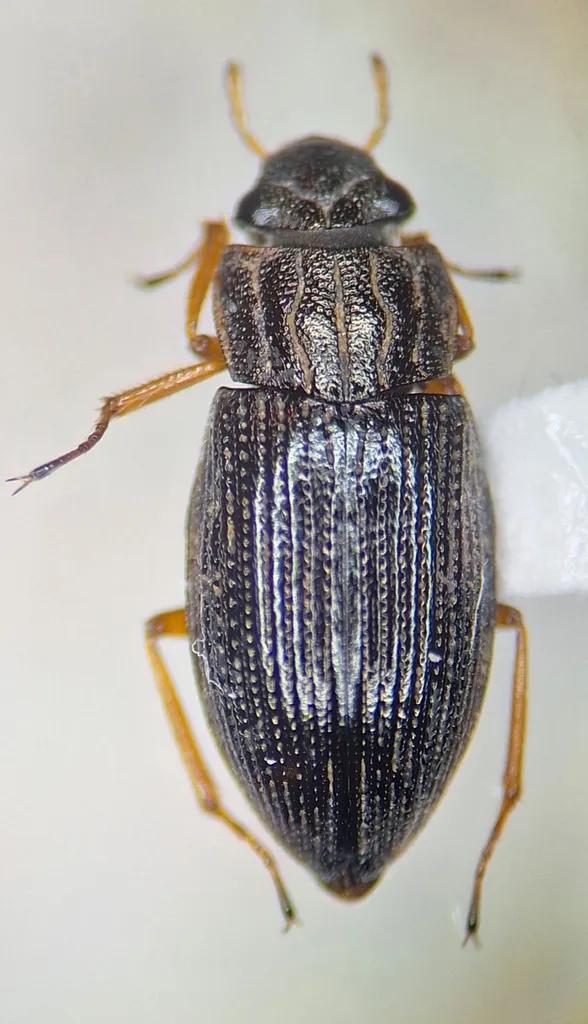
Helophorus ledatus
Helophorus ledatus
Identification: Study of male genitalia is usually needed for positive identification .
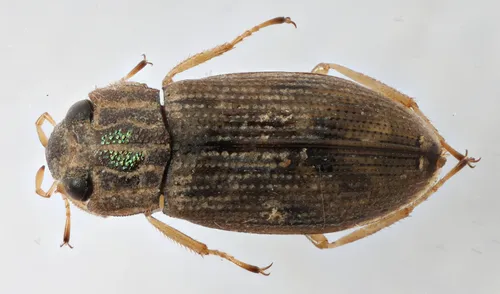
Helophorus linearis
Helophorus linearis
Type Locality: Fort Laramie, Wyoming [not Nebraska]
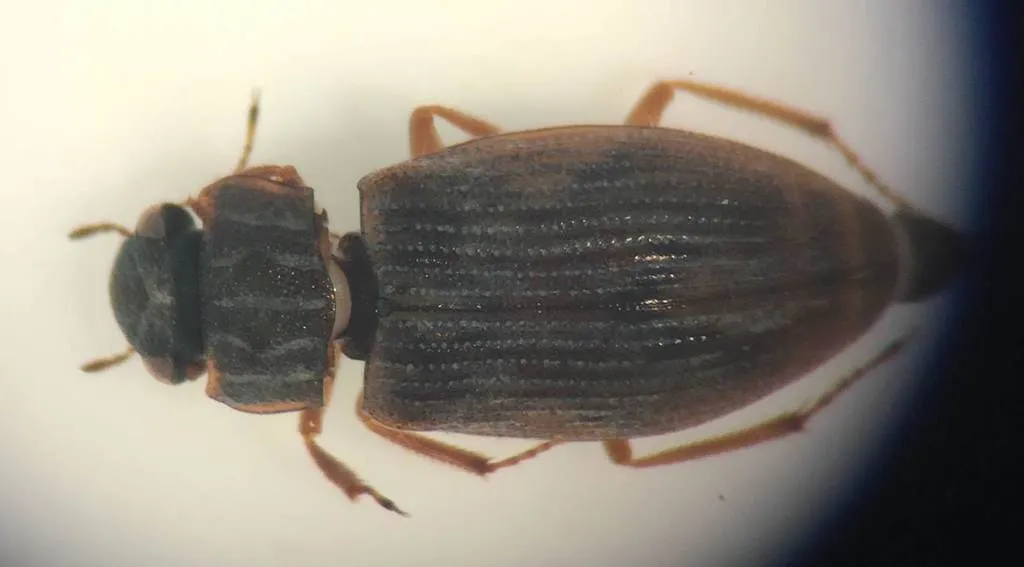
Helophorus lineatus
Helophorus lineatus
Identification: Distinguished, in part, from other Helophorus by the short apical maxillary palpi and the distinctly indented lateral pronotal groove.
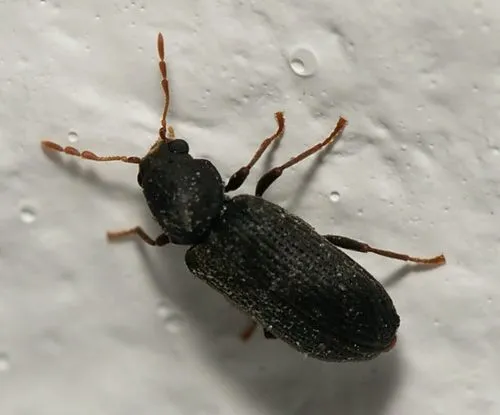
Hemicoelus fulvicornis
Hemicoelus fulvicornis
Size: 3.5 to 3.8 mm. A tiny wood boring beetle which is a dark, dull grey in colour. It has a hood-like pronotum and a dark stripe along the front tibia. Unless identified by a recognised expert, a photo is required and the specimen should be examine
Hemicoelus pusillus
Hemicoelus pusillus
Identification: Small size; second abdominal ventrite longer than first; first abdominal suture broadly arcing posteriorly.
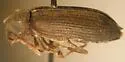
Hemicoelus umbrosus
Hemicoelus umbrosus
Identification: Pronotum 0.7-0.9x as wide as base of elytra; lateral pronotal margin sharp and distinct throughout; size 3.1-5.8mm; abdomen nearly always with distinct fine granulation Antennae 11-jointed Type specimen images at MCZ: https://mczbase.
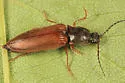
Hemicrepidius decoloratus
Hemicrepidius decoloratus
Identification: This species is most-similar to H. hemipodus but can usually be separated by having pale elytra. Melanic forms can be very difficult to separate from H. hemipodus without microscopic examination. In late 2020, this species was elevate
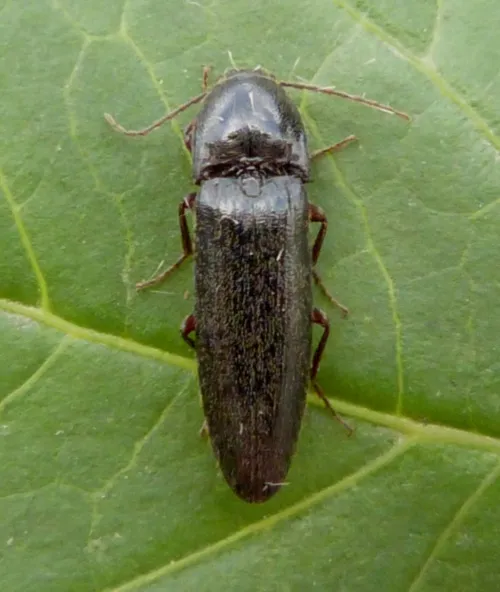
Hemicrepidius hirtus
Hemicrepidius hirtus
One of the larger British Click Beetles at 13 to 17mm long. The species is uniformly black but with a slight silvery pubescence due to a covering of fine hairs. The elytral stria are deep giving a ridged appearance. The pronotum is rounded and the le
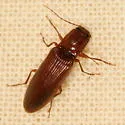
Hemicrepidius melanophthalmus
Hemicrepidius melanophthalmus
Identification: This species and H. bilobatus are the only two North American Hemicrepidius with ecarinate pronotal hind angles. In late 2020, this species was removed from synonomy with H. bilobatus
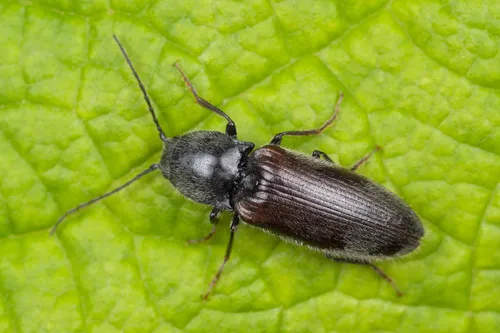
Hemicrepidius niger
Hemicrepidius niger
Identification: coloration vary from brown to black earliest record in our area: ON 2008
Hemicrepidius ruficornis
Hemicrepidius ruficornis
In late 2020, H. ruficornis was removed from synonomy with H. nemnonius
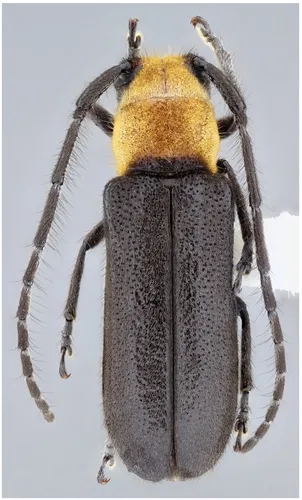
Hemierana rileyi
Hemierana rileyi
Identification: pronotum entirely orange on wide anterior area. HOLOTYPE Type Locality: Texas: Jeff Davis Co., Davis Mountain Preserve, Mount Livermore, Mount Livermore Road (2,400–2,500 m; 30.63467º N / 104.16899º W (± 350 m)), 17.VI.2014, E. G. Ril
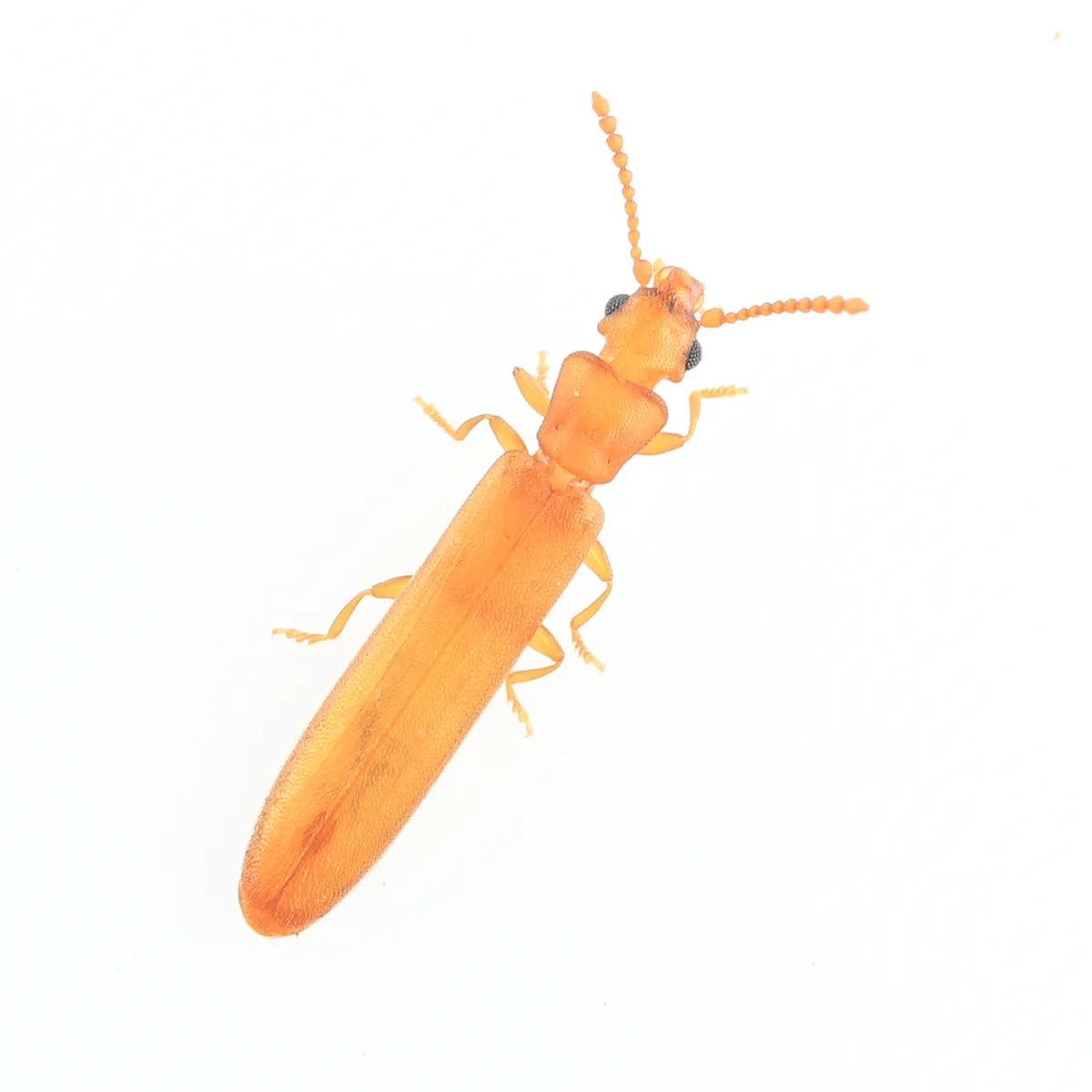
Hemipeplus microphthalmus
Hemipeplus microphthalmus
The only species in our area not associated with palmetto ( 3 )
Hemiphrynus elongatus 0
Hemiphrynus elongatus
Identification: both sexes with stout antennomeres (fourth antennomere approximately 2.4x longer than wide) 18 spmns coll'ed 3 miles s. of Alto, New Mexico
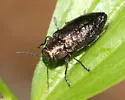
Hemlock Borer
Phaenops fulvoguttata
Pristaulacus rufitarsis and P. bilobatus are wasps in the Evaniidae family that parasites this beetle. Pristaulacus rufitarsis