
Green June Beetle
Cotinis nitida
This record describes Cotinis nitida (species). Recorded family: Scarabaeidae. Recorded order: Coleoptera.
Identification and Appearance
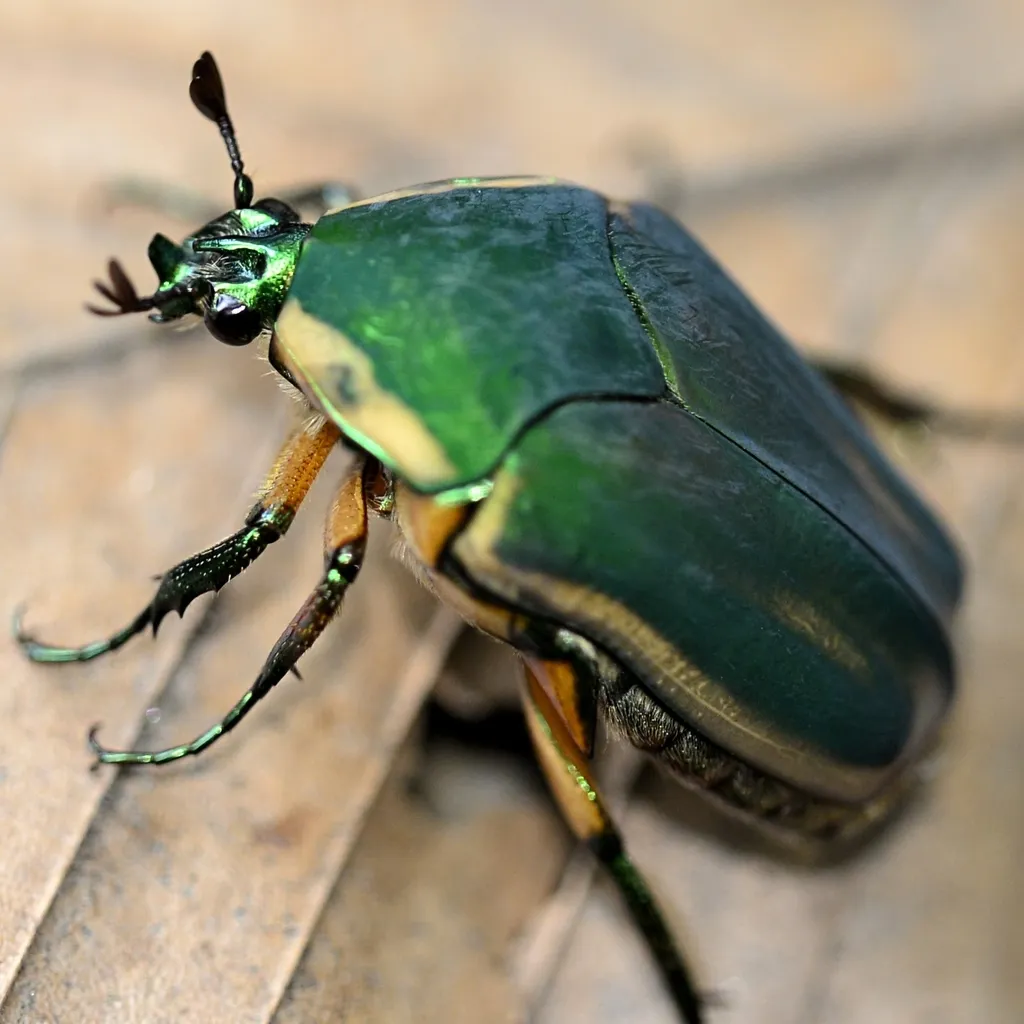
Overall size generally smaller than mutabilis , but variable, averaging larger in the south and west. Pygidium bicolored; basal portion green, apical portion testaceous. Hind femora usually pale, distinctly lighter in color than remainder of leg. elytral color variation (interesting but not diagnostic) The adults can often be seen in numbers flying just inches over turf. species is of great economic importance as attested by the fact that in the last 10 years of publication of the Index of American Economic Entomology (Hawes and Cushman 1949-59) no less than 50 papers on nitida are indexed.
Wikipedia reference for Cotinis nitida: http://en.wikipedia.org/wiki/Cotinis_nitida.
Classification
- Kingdom
- Animalia
- Phylum
- Arthropoda
- Class
- Insecta
- Order
- Coleoptera (Beetles)
- Suborder
- Polyphaga
- Superfamily
- Scarabaeoidea
- Family
- Scarabaeidae (Scarab Beetles)
- Subfamily
- Cetoniinae
- Tribe
- Gymnetini
- Genus
- Cotinis
Imported taxonomy record. Source availability varies; see the source references and editorial policy below.
Habitat and Range
Geographic Range
e US (NY-FL to NE-TX) - Map
Diet and Behavior
Diet: Adults: sap, ripening soft-skinned fruit, incapable of chewing into solid foods despite contrary reports ( 4 ) ; larvae: roots/rhizomes of many plants.
Life History
Eggs spherical, grayish colored, laid in organic-rich soil. Larvae usually emerge after prolonged rain, crawl on their backs over soil or through sod, and overwinter deep in soil. The larvae develop in earthen cells near the surface and pupate in late spring the 2nd year after hatching. Adults emerge in June–July. One generation a year. ( 5 ) . Largely diurnal, but also comes to lights ( 6 )
Additional species information
Species notes from the sources
Etymology: Cotinis nitida ( Linnaeus 1764)
About Primitive Winged Insects: the wider group
Order-level background for Coleoptera, the group containing Cotinis nitida. Species-specific details appear above.
Group overview
Coleoptera is the largest order of insects with over 400,000 described species, representing ~25% of all known animal species and ~40% of all insects. In the U.S. alone, nearly 30,000 beetle species have been identified.
Ecological role of the group
Beetles are prominent decomposers, especially in forests, breaking down dead wood and recycling nutrients. As predators, they reduce populations of pest insects. Many species are also important pollinators of flowering plants.
Economic and practical significance of the group
Beetles have major economic significance: leaf beetles (Chrysomelidae) and weevils (Curculionoidea) are among the most destructive agricultural pests globally, costing billions annually, while predatory species like ladybugs provide natural pest control.
Recorded sources for this group: Britannica, Smithsonian, NCSU Entomology. Imported estimates may describe particular regions or reporting periods.
Photos of Green June Beetle (2)
Photo credits: Contributed by Troy Bartlett; Additional contributions by cotinis , Phillip Harpootlian , Chris Wirth , Bbarnd , Mike Quinn , nebbeetle , v belov , Abigail Parker , Kyhl Austin , Hisserdude
Frequently Asked Questions About Green June Beetle
What is Green June Beetle?
Green June Beetle (Cotinis nitida) is a species in the family Scarabaeidae, within the order Coleoptera.
How big is Green June Beetle?
15-27 mm
How do you identify Green June Beetle?
Overall size generally smaller than mutabilis , but variable, averaging larger in the south and west. Pygidium bicolored; basal portion green, apical portion testaceous. Hind femora usually pale, distinctly lighter in color than remainder of leg. elytral color variation (interesting but not diagnostic)
Where is Green June Beetle found?
Range: e US (NY-FL to NE-TX) - Map
What does Green June Beetle eat?
The diet of the Green June Beetle includes Adults: sap, ripening soft-skinned fruit, incapable of chewing into solid foods despite contrary reports ( 4 ) ; larvae: roots/rhizomes of many plants..
What is the life cycle of a Green June Beetle?
Eggs spherical, grayish colored, laid in organic-rich soil. Larvae usually emerge after prolonged rain, crawl on their backs over soil or through sod, and overwinter deep in soil. The larvae develop in earthen cells near the surface and pupate in late spring the 2nd year after hatching. Adults emerge in June–July. One generation a year. ( 5 ) . Largely diurnal, but also comes to lights ( 6 )