
Primitive Winged Insects
Order Coleoptera
The Primitive Winged Insects (Order Coleoptera) includes 15,720 species across 160 families and 3,716 genera in our directory.
About Primitive Winged Insects
Coleoptera is the largest order of insects with over 400,000 described species, representing ~25% of all known animal species and ~40% of all insects. In the U.S. alone, nearly 30,000 beetle species have been identified.
Economic Impact
Beetles have major economic significance: leaf beetles (Chrysomelidae) and weevils (Curculionoidea) are among the most destructive agricultural pests globally, costing billions annually, while predatory species like ladybugs provide natural pest control.
Ecological Role
Beetles are prominent decomposers, especially in forests, breaking down dead wood and recycling nutrients. As predators, they reduce populations of pest insects. Many species are also important pollinators of flowering plants.
Families in Coleoptera (160)
Species in Coleoptera (15,720)
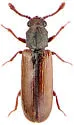
European Powderpost Beetle
Lyctus linearis
Identification: native to w. Palaearctic (now cosmopolitan), adventive in NA; in our area, throughout the US (common) & e. Canada earliest record in our area: IA 1896
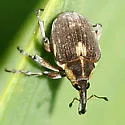
European Water Milfoil Weevil
Phytobius leucogaster
Identification: Legs reddish, very slender, Rostrum relatively short. Whole body covered with scale layer, holding an air film beneath it, enabling submerged existence. Scales on midline and sides of pronotum, on underside, and a scutellar spot (whic
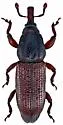
European Wood Weevil
Pentarthrum huttoni
Identification: images: 1 | 2 Dead adults often found at windows or around lights
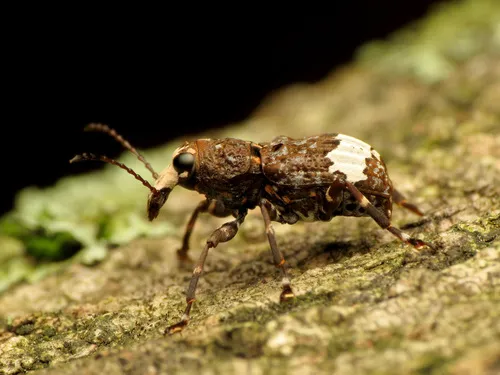
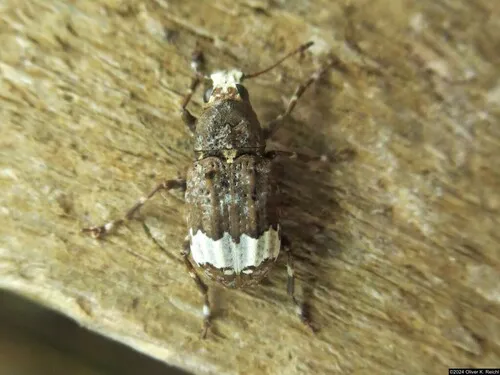
Eurymycter fasciatus
Eurymycter fasciatus
Eurymycter fasciatus is a species of fungus weevil in the family of beetles known as Anthribidae. It is found in North America.
Eurymycter tricarinatus
Eurymycter tricarinatus
Eurymycter tricarinatus is a species of fungus weevil in the beetle family Anthribidae. It is found in North America.
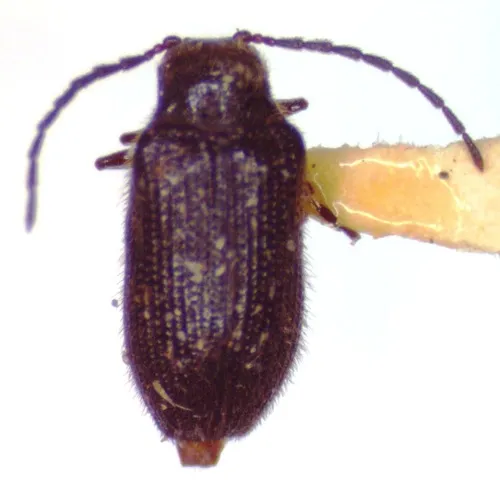
Eurypogon harrisii 0
Eurypogon harrisii
Identification: large punctation is diagnostic for E. niger. E. harrisii seems to be less common " E. harrisii , if it is indeed valid, seems rare." ―Kevin Hinson, pers.comm. to =v= 1.vi.2024
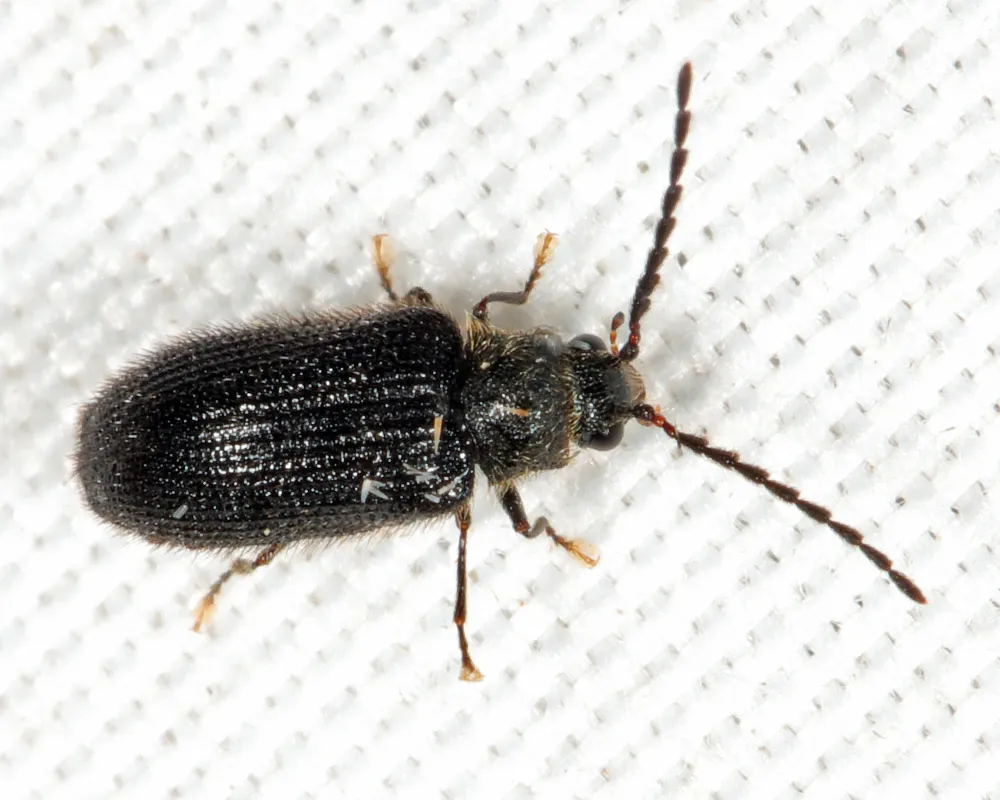
Eurypogon niger
Eurypogon niger
Identification: large punctation is diagnostic for E. niger
Eusattodera pini 0
Eusattodera pini
Type Locality: Carr's Peak, Huachuca Mts., Arizona (9000 feet, on pine).
Eusattus dilatatus
Eusattus dilatatus
Identification: Similar to the more common muricatus. This species is characterized by is psammophilous life style, strongly bowed hind and mid tibia, and its short antennae.
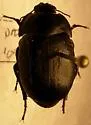
Eusattus productus
Eusattus productus
Identification: Elongate form, assymetrical last antennomere, and non-costate elytra separate it from other US Eusattus
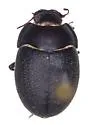
Eusattus puberulus
Eusattus puberulus
Identification: in E. muricatus , elytra are tuberculate & glabrous No other Eusattus species is found this far east
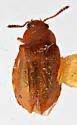
Eusphalerum aurifluum
Eusphalerum aurifluum
Identification: Elytra long, esp. in female; antennae darker to tip. Differs from other such spp. in having a long last tarsomere.
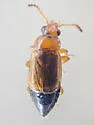
Eusphalerum californicum
Eusphalerum californicum
Identification: Male penultimate ventrite characteristic; very variable in colouration
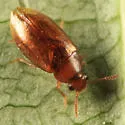
Eusphalerum convexum
Eusphalerum convexum
Identification: the only eastern species with really long elytra, almost covering abdomen in female; pale colouration, abdomen dark in males; a variation with head + pronotum dark brown.
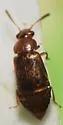
Eusphalerum pothos
Eusphalerum pothos
Identification: pronotum usually has a median groove, at least anteriourly (not sufficient alone)
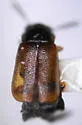
Eusphalerum rugulosum
Eusphalerum rugulosum
Identification: pronotum dull, puncturation +/- obscured by microsculture, but well impressed
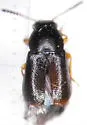
Eusphalerum swauki
Eusphalerum swauki
Identification: protibia with angular dilation, and pronotum longer than usual in male (E. tibiale-group); of dark colouration. similar only E. diversicolle : CA; tibiale : AZ-NM-CO
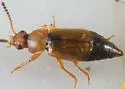
Eusphalerum torquatum
Eusphalerum torquatum
Identification: Head with weak transverse furrow behind, delimiting neck area earliest NA record: NF 1965
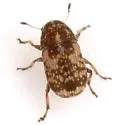
Eusphyrus eusphyroides
Eusphyrus eusphyroides
Identification: Pronotum reticulate-punctate, the raised rims darker than the depressed areas Type Locality: Esperanza Ranch, Brownsville, Texas (Schaeffer 1906)
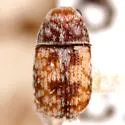
Eusphyrus rectus
Eusphyrus rectus
Identification: Holotype Type Locality: Brownsville, Texas (Schaeffer 1906)
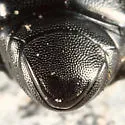
Euspilotus assimilis
Euspilotus assimilis
Identification: Differs from other congeners in the presence of a shallow impression in the anterior angles of the pronotum and a marginal sulcus on the pygidium (interrupted at the middle in the male) One of the commonest eastern histerids
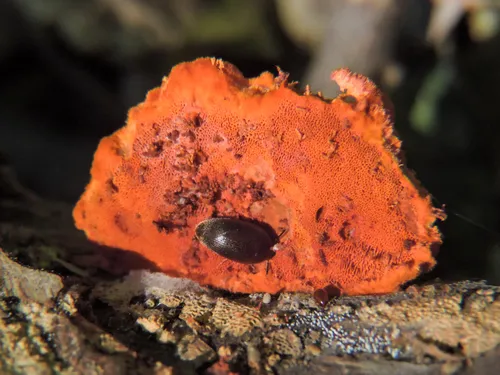
Eustrophopsis arizonensis
Eustrophopsis arizonensis
Identification: "the key character for arizonensis is the rugosity of the proepisterna. The overall shape, however, and color of antennomeres would lead me to think E. ornatus (Van Dyke). If the above mentioned structure is smooth and not rugose, the
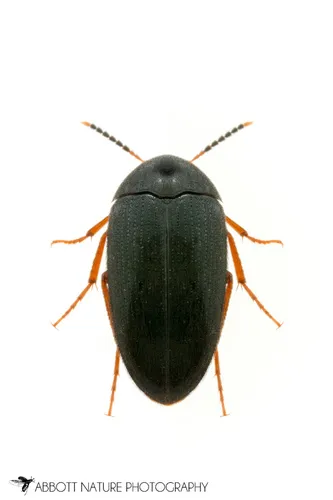
Eustrophopsis bicolor
Eustrophopsis bicolor
Identification: may be separated from the other Nearctic Eustrophinae based on the following: antennomeres 1–4 rufous, 5–10 piceous to black, 11 yellow-orange; pronotal punctures not larger than diameter of setae; males with oval setiferous pit on ve
Eustrophopsis confinis
Eustrophopsis confinis
Identification: the only Nearctic species of Eustrophinae with a combination of widely separated eyes, and transverse ridges on the outer surface of the meso- and metatibiae quite uncommon
Eutrichapion cavifrons 0
Eutrichapion cavifrons
Identification: easily distinguished by the very deep impression on frons • Holotype • habitus photos
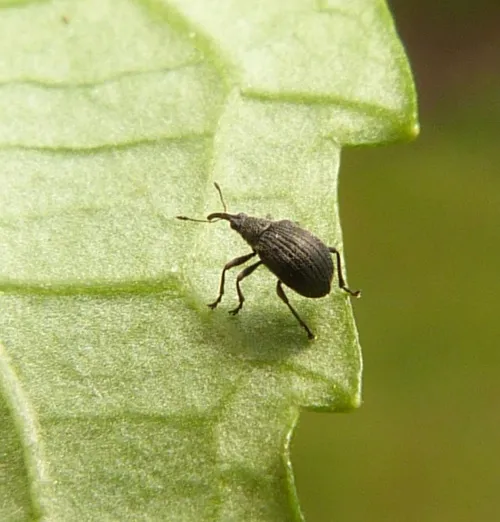
Eutrichapion ervi
Eutrichapion ervi
A small grey/black weevil length about 2.5 mm. Unless identified by a recognised expert, photographic evidence is required and the specimen should be examined with a microscope. In the comments box, state the key or ID method used. Note the beetle's
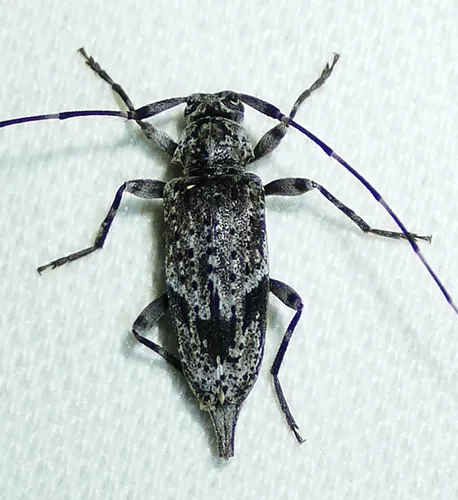
Eutrichillus neomexicanus
Eutrichillus neomexicanus
Eutrichillus neomexicanus is a species of longhorn beetles of the subfamily Lamiinae. It was described by Champlain and Knull in 1925.
Euwallacea interjectus
Euwallacea interjectus
earliest record in the Western Hemisphere: FL 2011 ( Rabaglia 2011 )
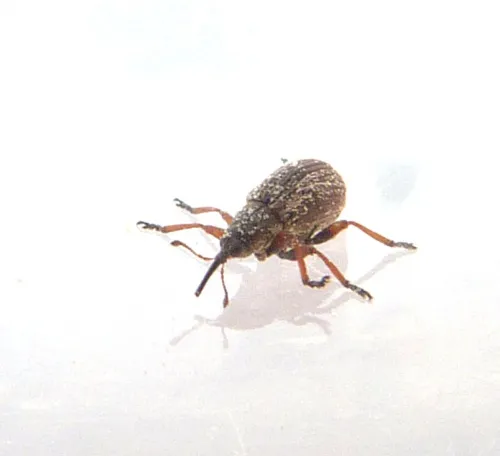
Exapion fuscirostre
Exapion fuscirostre
A small (2 to 3 mm) grey-brown weevil with a long snout and light brown legs. Unless identified by a recognised expert, photographic evidence is required and the specimen should be examined with a microscope. In the comments box, state the key or ID
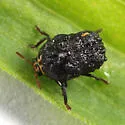
Exema byersi
Exema byersi
Identification: Exema byersi can easily be distinguished by the yellow coloring on the face, which always includes the frons in the emargination of the eye, and many oval to elliptical punctures on the pronotum, especially on the anterior half. Type
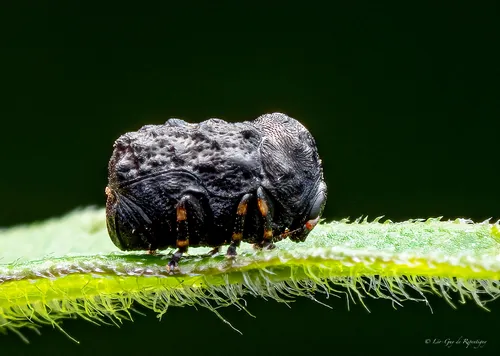
Exema canadensis
Exema canadensis
Identification: Emargination of eyes black, not yellow. "Shiny black with yellowish markings; male with antennal scape and longitudinal bar next to each eye transversely connected to central spot that merges with triangular frontal spot, yellow; fron
Exema dispar
Exema dispar
Identification: large areas of yellow on the head and anterior pronotum. Det. E. G. Riley, 2010
Exema elliptica
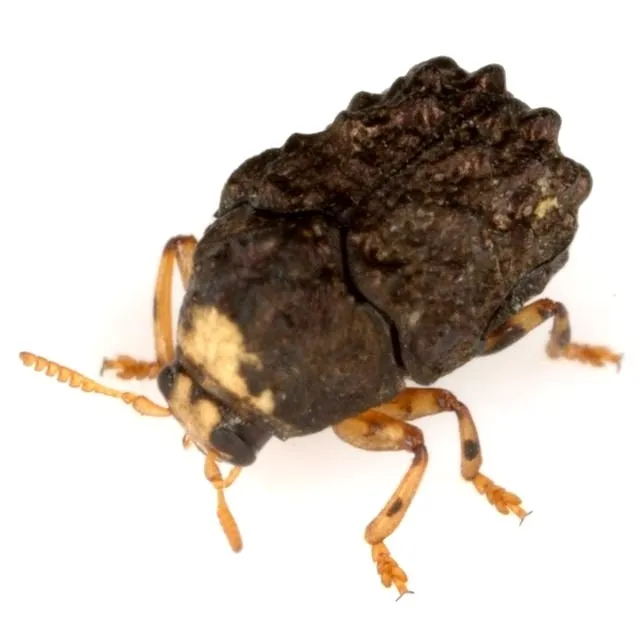
Exema elliptica
Exema elliptica is a species of warty leaf beetle in the family Chrysomelidae. It is found in North America.
Exochomus aethiops
Exochomus aethiops
Identification: Gordon's figures - Color entirely black except antenna and mouthparts yellowish brown.
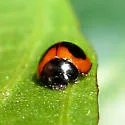
Exochomus childreni
Exochomus childreni
Identification: - Large spot on each elytron at rear of body (apical) - Some with additional small black apical spot spanning suture - Some with additional large black spot on each elytron from middle forward, not attaining base, with somewhat straig
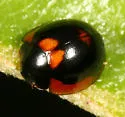
Exochomus marginipennis
Exochomus marginipennis
Identification: Gordon't figures - Gordon wrote: "There are several color forms of what I consider to be E. marginipennis (Fig. 512 e-h). The dark colored specimens are mostly restricted to the eastern and southeastern United States. Some specimens f
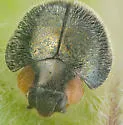
Exochomus metallicus
Exochomus metallicus
introduced from Eritrea in 1954 for control of the citricola and black scales; found in infestations of the Planococcus citri (Citrus Mealybug) on host plants other than citrus
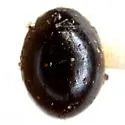
Exochomus townsendi
Exochomus townsendi
Identification: In addition to the comments under E. aethiops, E. townsendi differs from that species in having the epipleuron less strongly descending, lateral margin of elytron less strongly explanate, and the sides of the pronotum and elytra appea
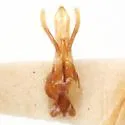
Expurgate Lady Beetle
Hippodamia expurgata
Identification: Gordon's figures Usually has a black marking connecting at the suture (midline) in an apical (rear) spot. Tarsal claw with tooth not closely appressed. Externally inseparable from Hippodamia apicalis when apical suture spot is present
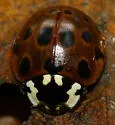
Eye-spotted Lady Beetle
Anatis mali
Identification: Yellow to brownish-red (darkens with age) Black spots surrounded by pale rings Rounded oval shape Slightly explanate (helmet-shaped, with a slightly flared "rim") This species is most similar to the European A. ocellata which, if it w
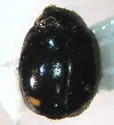
Eye-tailed Lady Beetle
Hyperaspis oculaticauda
Identification: Gordon's figures - a minature edition of H. postica , having the same dorsal color pattern but is much smaller than H. postica , the maximum observed length of H. oculaticauda being 2.40 mm, the minimum observed length of H. postica b
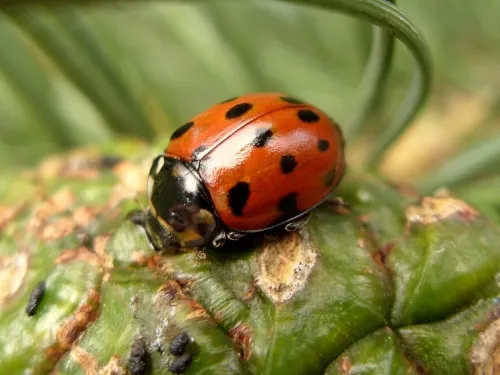
Eyed Ladybird
Anatis ocellata
At about 8 or 9 mm the Eyed Ladybird is our largest ladybird and its red elytra usually have 15 or 18 spots, but this may vary. Apart from its relatively large size, it is distinct from other ladybirds in usually (but not always) having pale borders
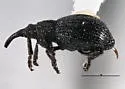
Fallapion speculiferum
Fallapion speculiferum
Identification: distinguished by the male profemur being greatly swollen and lacking limiting carina near the ventral polished area
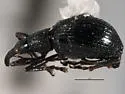
Fallapion texanum
Fallapion texanum
Identification: Black. Head densely and coarsely punctured; antennae as before, thorax densely and coarsely punctured with an evident impressed line. Elytra regularly ovate, humeri scarcely prominent, striae distinct, punctures evident, intervals mod
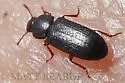
False Black Flour Beetle
Tribolium destructor
Identification: images: 1 | 2 | 3 similar in appearance to T. confusum ; darker than other Tribolium spp. earliest record in our area: 1937
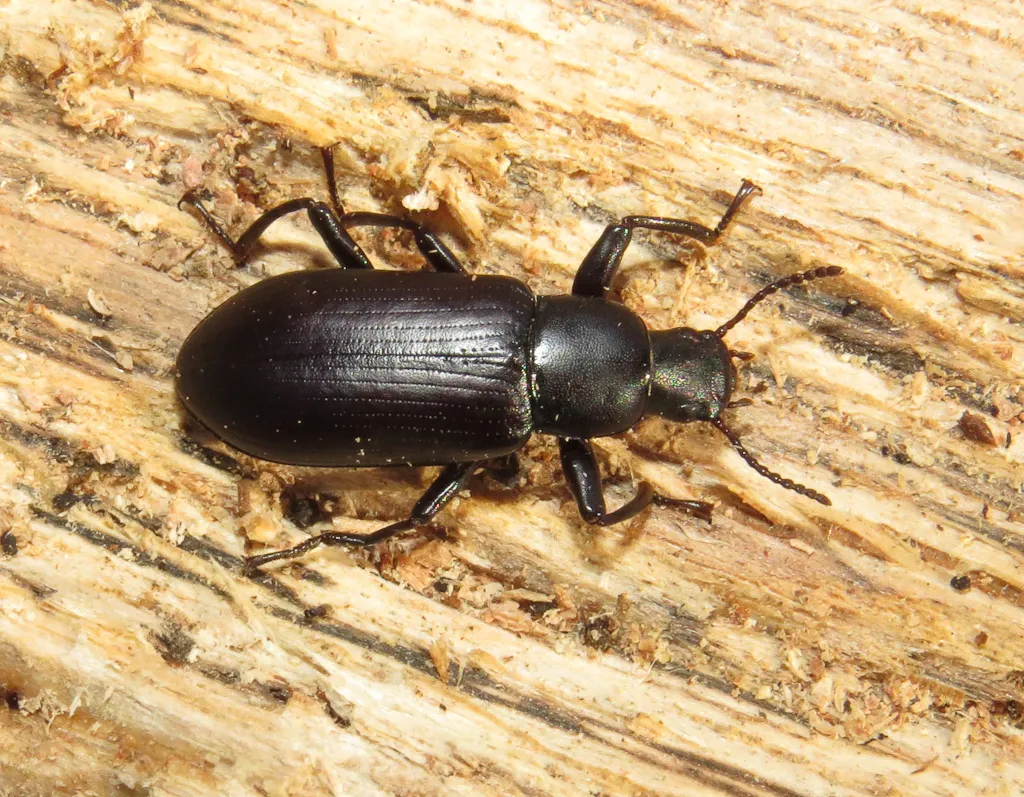
False Mealworm Beetle
Alobates pensylvanicus
Identification: mentum without a tuft of yellow hair

Falsomordellistena discolor
Falsomordellistena discolor
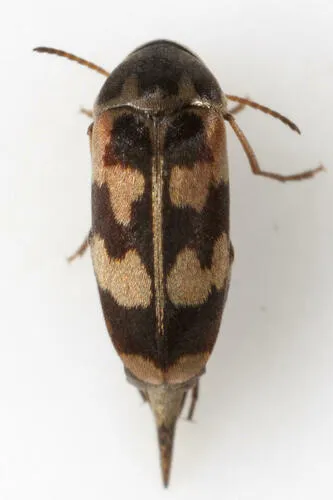
Identification: Head and thorax black, elytra brown, with pattern resembling Mordellistena liturata / masoni ; other than in these two, antennae infuscate from segment 5, and tail spine black. Hindleg ridge pattern 3(+1-3)/3-5/2-3; all ridges short a
Falsomordellistena pubescens
Falsomordellistena pubescens
Identification: somewhat variable in markings and color, ranging from black to reddish brown, but the general pattern is always about the same in spmns not rubbed. ( 3 ) , and "This species is rather prettily marked and does not resemble any other of
Fastidious Lady Beetle
Hyperaspis fastidiosa
Identification: Gordon's Figures - The elongate marginal spot on the elytron along with the less convex form distinguish H. fastidiosa from the other members of this group. Type locality: San Diego Co., California
Five-spotted Lady Beetle
Hippodamia quinquesignata
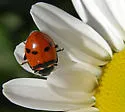
Identification: Gordon's figures - Pronotum with or without convergent pale spots; elytral color pattern extremely variable
Flat Grain Beetle
Cryptolestes pusillus
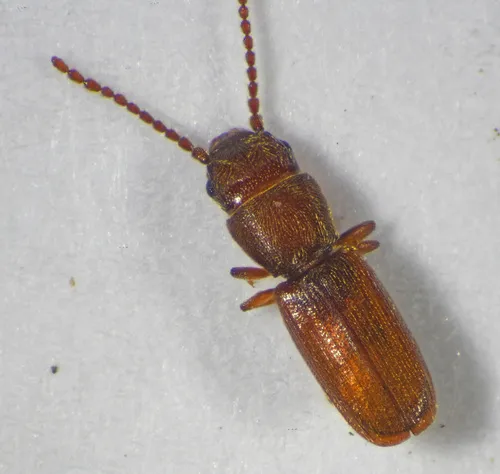
one of the most common pests of stored grain around the world; does not attack sound or uninjured kernels and often appears after the attack by other grain pests (frequently found in large numbers with the rice weevil)
Flat Oak Borer
Smodicum cucujiforme
Identification: Det. E.G. Riley, 2010 common , comes to lights ; often infests stored lumber, larvae continue to feed after the wood is in use
Flatheaded Appletree Borer
Chrysobothris femorata
Identification: antennae yellowish-green and become reddish toward the apex; clypeus more rounded than in C. adelpha (J.P. Basham, 24.vi.2006) elytral apices distinctly cupreous, posteriolateral margins of the elytra more abruptly narrowed than in re
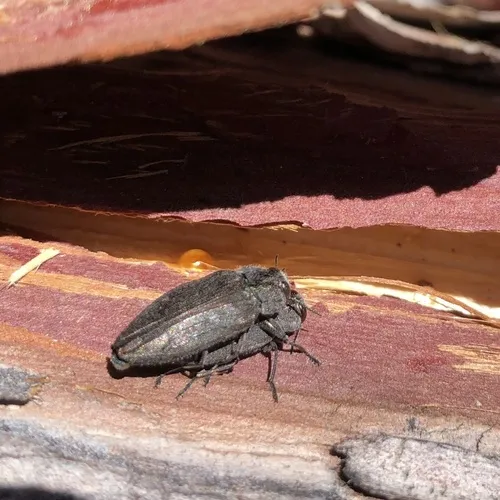
Flatheaded Cedar Borer
Chrysobothris nixa
Chrysobothris nixa, the flatheaded cedar borer, is a species of metallic wood-boring beetle in the family Buprestidae. It is found in North America.
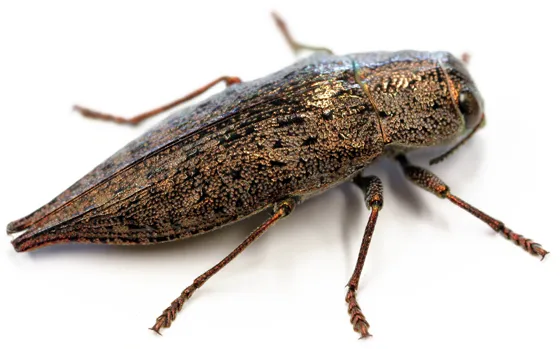
Flatheaded Hardwood Borer
Dicerca divaricata
Identification: bright aeneous to dark cupreous with a greenish tint above and below; pronotum widest in the middle, with lateral margins subparallel at base, gently expanding in the middle, then narrowly converging to anterior angles; elytral striae
Flohria subcoerulea
Flohria subcoerulea
Identification: The punctures of the head, thorax, and elytra are furnished with short hairs; those of the abdomen with longer ones; the antennae are one-fourth longer than the head, and considerably thickened externally, the outer joints being fully
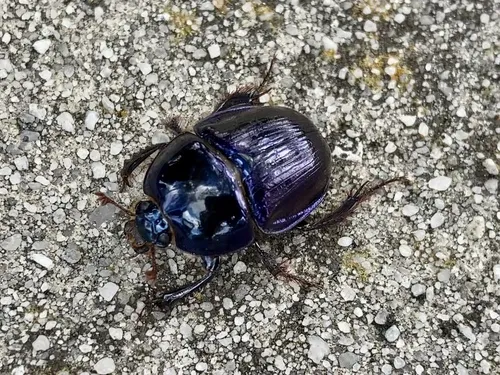
Florida Deepdigger Scarab
Peltotrupes profundus
Identification: Sutural stria by tip of scutellum definitely impressed, other striae evident; color largely purple species of special concern
Florida Metallic Tiger Beetle
Tetracha floridana
Identification: Dorsal surface dark greenish-black with pale apical elytral lunules; humeral region dark green or black, lacking violet reflections. Nocturnal. Comes to lights. Apparently, does not fly often.
Floridelater americanus
Floridelater americanus
Identification: The posteriorly bilobed scutellum is unique among Elateridae examined. This species was described by Horn as Coptostethus americanus . At the time, Horn seemed hesitant for this generic placement but felt it the best choice at the tim
Flour Mill Beetle
Cryptolestes turcicus
a pest of flour and feed mills in temperate regions of the world
Fluviphirus elevatus
Fluviphirus elevatus
Identification: "quite isolated within the subgenus and its general appearance is very conspicuous (large size, very long legs and antennae)" This species moved to the new genus Fluviphirus by Brunke (2021, ZooKeys 1076: 109-124)
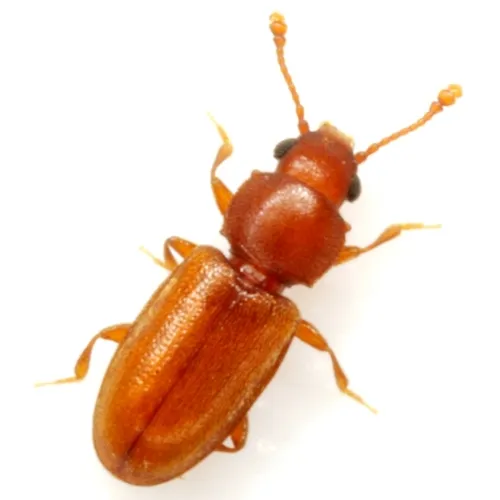
Foreign Grain Beetle
Ahasverus advena
Identification: "Note the acuminate last antennomere." (comm. Michael C. Thomas, 2014) Det. M. C. Thomas, 2014 may be a nuisance in new homes, but do no actual harm
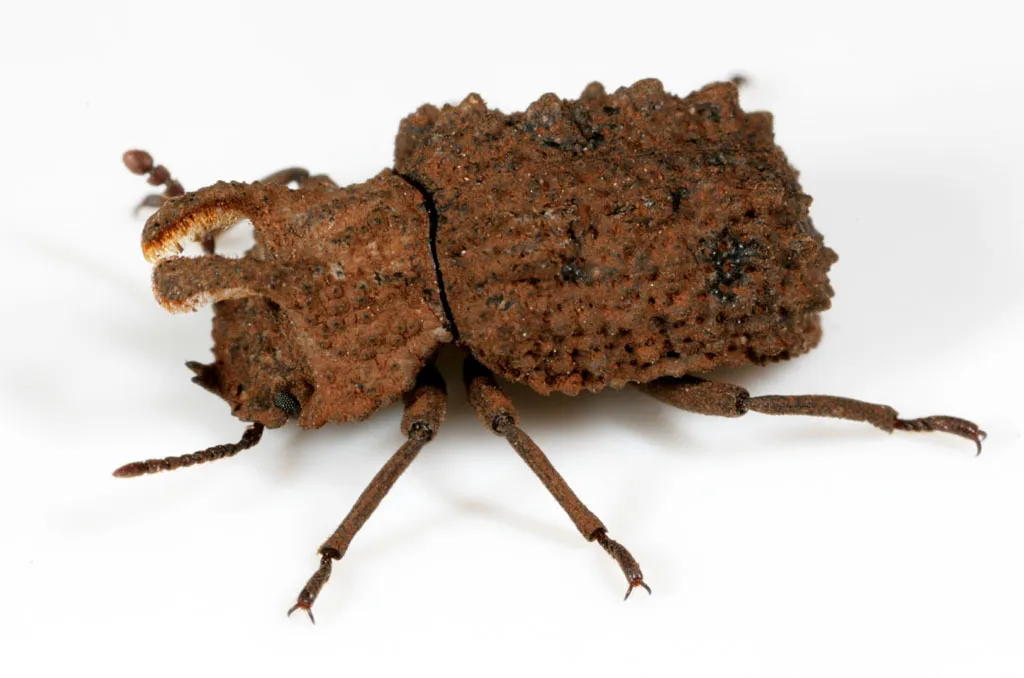
Forked Fungus Beetle
Bolitotherus cornutus
Identification: The male has a pair of stout, forward pointing horns Beetles always make the entrances through the top of the sporocarp, whether they are living in Ganoderma applanatum in the northern part of their range or in G. lucidum in the south
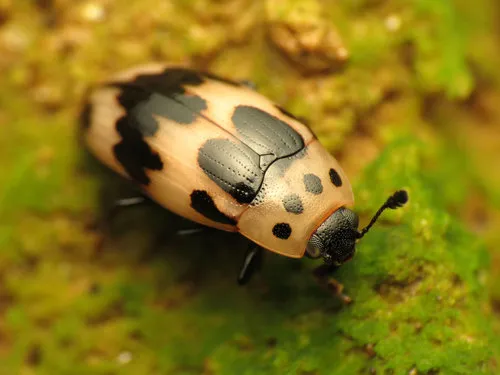
Four-Spotted Fungus Beetle
Ischyrus quadripunctatus
Identification: larvae Typically found in reasonably large groups. Pattern is likely aposematic . These beetles were seen to be ignored by an insectivorous Five-lined Skink, Eumeces fasciatus , in Orange Co., NC--the beetles even brushed against the
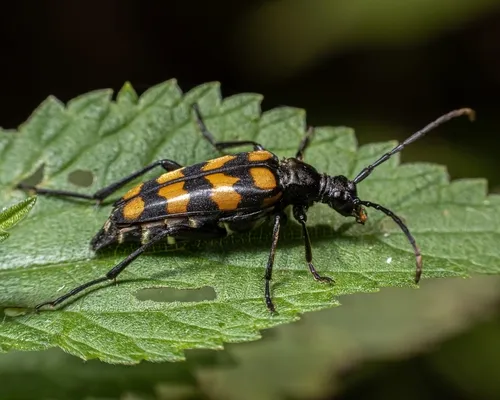
Four-banded Longhorn Beetle
Leptura quadrifasciata
Length 11 to 20 mm. Although the patterning varies it is a distinctive species, with the four yellow bands running across its elytra. It is associated with old woodland but can also be seen on flowers such as umbellifers. Most regularly encountered d
Four-eyed Lady Beetle
Hyperaspis quadrioculata
Identification: Gordon's figures Original description of fidelis : "Form slightly more broadly oval, convex, polished, black; head black (female), the pronotum with a similar lateral pale margin; elytra similarly rather strongly punctate, with a narr
Four-eyed Spruce Bark Beetle
Polygraphus rufipennis
Identification: The antennae are distinctively leaf-shaped.
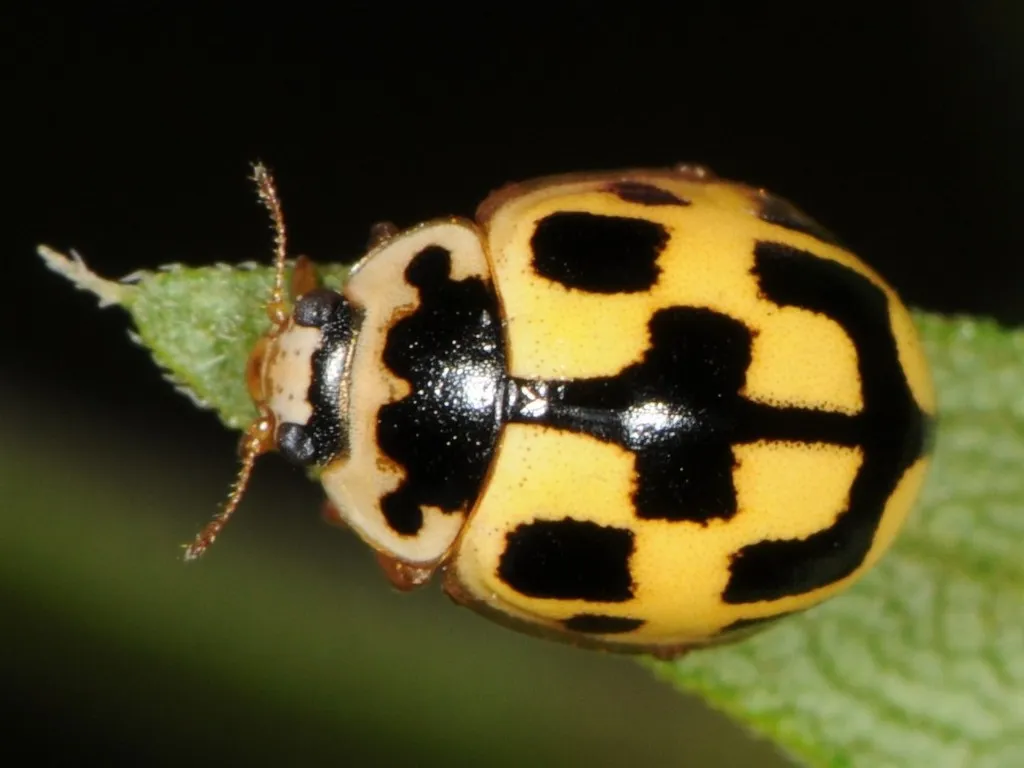
Fourteen-spotted Lady Beetle
Propylea quatuordecimpunctata
Identification: Gordon's Figures Larva: Black with white markings. White "face" and leg joints. Most important ID feature is small pointed projection from last abdominal segment: Repeated introduction attempts prior to the 1960s were unsuccessful. Th
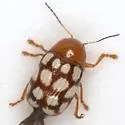
Fourteen-spotted Leaf Beetle
Cryptocephalus guttulatus
Identification: Small, brown elytra, 7 variable yellow spots on each. The combination of a pale orange pronotum and dark elytra with pale cream spots is distinctive. … John R. Watts, 8 July, 2008
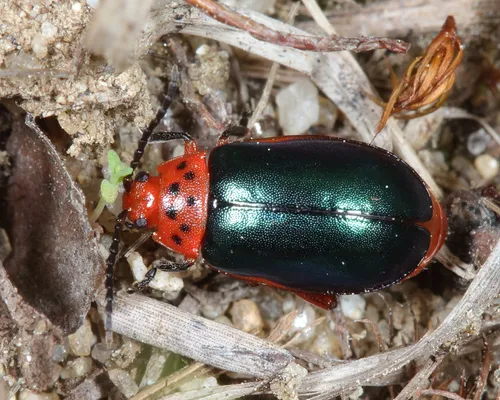
Freckle-necked Kuschelina
Kuschelina thoracica
Identification: smaller black thoracic spots and flatter irrdescent elytra than K. gibbitarsa
Frosted Dromo Tiger Beetle
Dromochorus pruininus
Identification: The elytral surface is smoother and more velvet-like than in belfragei . Male labrum is black with the central diamond-shaped portion ivory colored. The female labrum is metallic black.
Fuchsina occulta
Fuchsina occulta
Identification: Eyeless, antenna 10-segmented • syntype
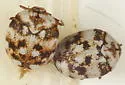
Furniture Carpet Beetle
Anthrenus flavipes
Identification: Dorsal surface with scales of two colours: white and yellowish brown. White scales on pronotum on each side condensed in a spot near anteriour angles and two (often confluent) patches in the posteriour half; white scales may be found
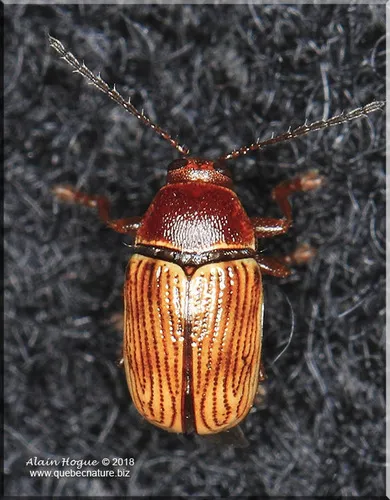
Furrow-necked Cryptocephalus
Cryptocephalus schreibersii
Cryptocephalus schreibersii is a species of case-bearing leaf beetle in the family Chrysomelidae. It is found in North America.
Gabrius astutoides
Gabrius astutoides
Identification: Very similar to the palearctic Gabrius astutus (only separated by aedeagus) Earliest NA specimen are of 1936 from Pensylvania
Gabrius seattlensis
Gabrius seattlensis
Externally similar to G. microphthalmus but can be easily separated by distribution ( G. microphthalmus is eastern in distribution with westernmost limits in Manitoba and S. Dakota vs. G. seattlensis , which is confined to the Pacific Northwest), and
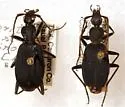
Galerita (Galerita) aequinoctialis
Galerita aequinoctialis
the only member of the nominate subgenus in our fauna; the subgenus (>80 spp.) is primarily pantropical in distribution ( 4 ) Texas Parks and Wildlife considers this sp. a SGCN ( 5 )
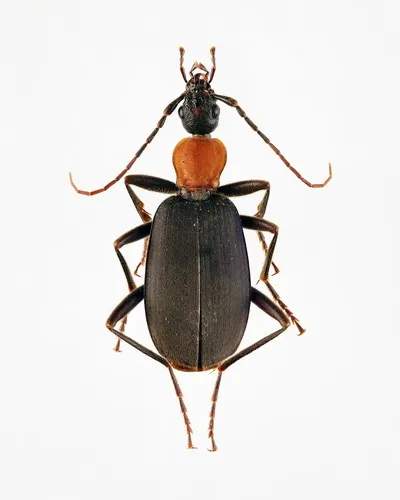
Galerita atripes
Galerita atripes
Identification: Elytra bright, azure blue. Legs black eyes not prominent: Type locality: Fort Riley, Kansas
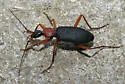
Galerita bicolor
Galerita bicolor
Identification: Can be separated from similar spp. based on shape of head and/or pronotum bicolor janus
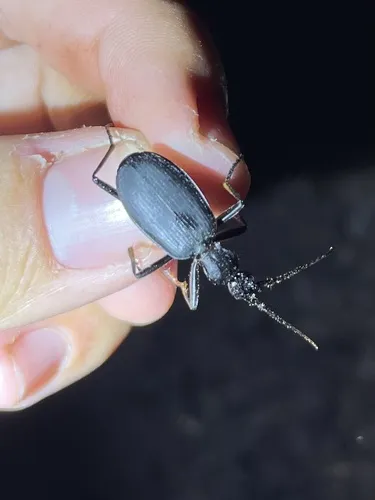
Galerita forreri
Galerita forreri
Galerita forreri is a species of ground beetle in the family Carabidae. It is found in North America.
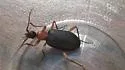
Galerita lecontei
Galerita lecontei
Identification: The range of this subspecies is disjunct: there is an eastern component ranging from Virginia to southwestern Kentucky (Trigg County, Foster F. Purrington pers. comm. 2011) southwards to southern Florida and South Bimini Island in the
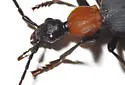
Galerita mexicana
Galerita mexicana
Identification: Elytra dark blue; appendages black. eyes prominent: compare G. atripes (sc US to AZ): - uncommon
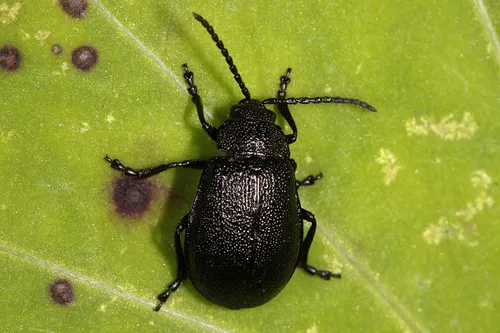
Galeruca tanaceti
Galeruca tanaceti
Size 6 to 10 mm. A shiny black beetle with dimpled elytra. Elytra wider at hind end, especially in the female, where abdomen may protrude beyond the elytra. Roadside verges and other grassy places, often in quite dry conditions. Widespread and fairly
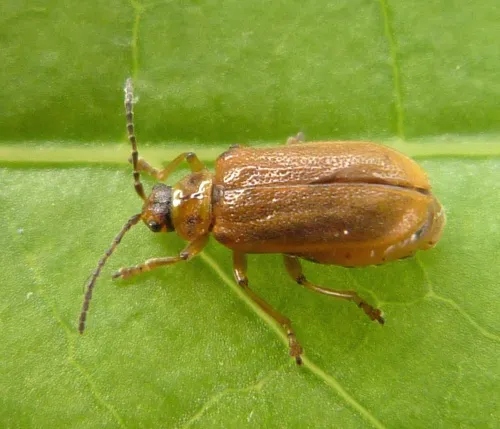
Galerucella sagittariae
Galerucella sagittariae
Galerucella sagittariae is orange-brown with a brighter orange border at the base of the elytra and a black scutellum. The pronotal disc is glabrous and shining (only G. sagittariae and G. nymphaeae share this feature). G. nymphaeae is almost identic
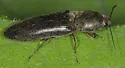
Gambrinus griseus
Gambrinus griseus
Gambrinus griseus (Gambrinus griseus) is a species in the family Elateridae, commonly known as click beetles, belonging to the order Coleoptera (Beetles). It is classified within the subfamily Dendrometrinae, tribe Dendrometrini, suborder Polyphaga,
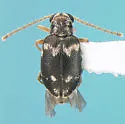
Ganascus ptinoides
Ganascus ptinoides
Ganascus ptinoides (Ganascus ptinoides) is a species in the family Aderidae, commonly known as ant-like leaf beetles, belonging to the order Coleoptera (Beetles). It is classified within the tribe Phytobaenini, suborder Polyphaga, superfamily Tenebri
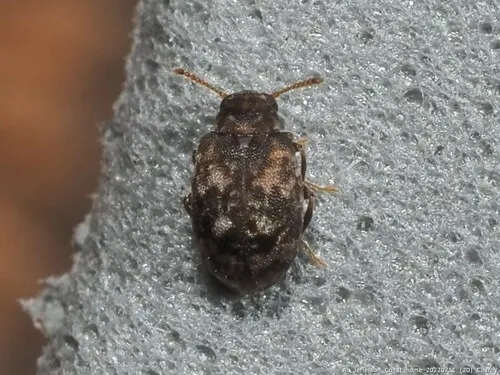
Ganascus ventricosus
Ganascus ventricosus
Ganascus ventricosus is a species of ant-like leaf beetle in the family Aderidae. It is found in North America.
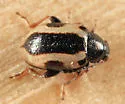
Garden Flea Beetle
Phyllotreta robusta
Identification: adult habitus Elytral yellow band expanded in the apical half to reach sutural, and lateral margins. This pattern shared with P. liebecki only; in males, the shape and length of antennal segment 5 is different: distinctly shorter than
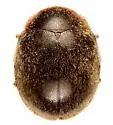
Garland Lady Beetle
Scymnus garlandicus
Identification: little to distinguish this sp. from several others externally
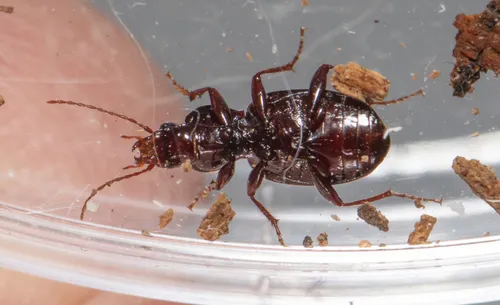
Gastrellarius honestus
Gastrellarius honestus
Identification: Some clues that help distinguish this pterostichine include: only one pair of supraorbital setae and only one pair of setigerous punctures on dorsal elytra.
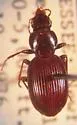
Gastrellarius unicarum
Gastrellarius unicarum
Identification: Head with 2 setigerous punctures over each eye (only 1 in G. honestus ), base of pronotum distinctly narrower than apex, elytral striae impunctate or barely punctate .
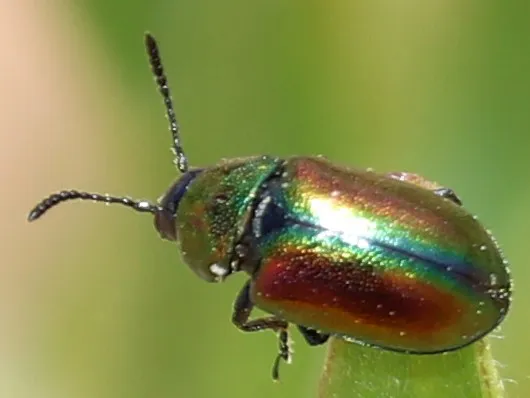
Gastrophysa formosa
Gastrophysa formosa
Gastrophysa formosa is a species of leaf beetle in the family Chrysomelidae. It is found in North America.
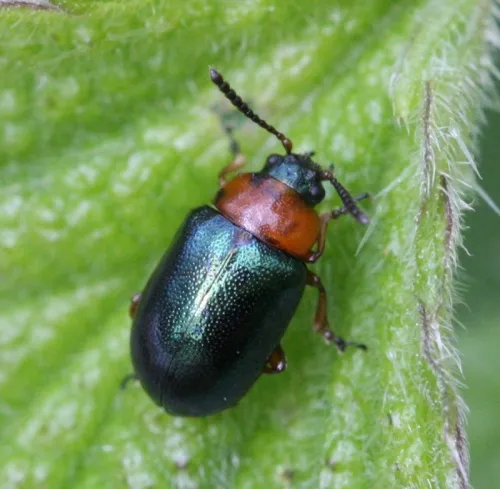
Gastrophysa polygoni
Gastrophysa polygoni
This is a small and colourful leaf beetle, no more than 5mm in length, with metallic green wing cases and head, whilst the thorax is orange. Associated with plants of the Polygonum genus, including bistorts, knotweeds, and knotgrass. Widespread and q
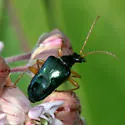
Gaurotes cyanipennis
Gaurotes cyanipennis
Identification: Comes in 2 color phases, smooth metalic purple or green. Legs yellow. Elytra smooth, pronotum tapers gradually.
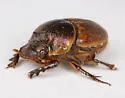
Gazelle Scarab
Digitonthophagus gazella
Identification: brown elytra often has cloudy markings, male with two short horns. ventrally distinctive femora: ♀ ♂ first released in Texas in April 1972 in Victoria County (R. R. Blume, personal communication). In July 1972, an additional release w
Gehringia olympica
Gehringia olympica
Gehringia olympica (Gehringia olympica) is a species in the family Carabidae, commonly known as ground beetles, belonging to the order Coleoptera (Beetles). It is classified within the subfamily Gehringiinae, suborder Adephaga. This species belongs t
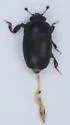
Genistogethes carinulatus
Genistogethes carinulatus
Identification: images: 1 | 2 | 3 earliest NA record: BC 2012
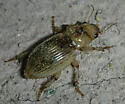
Geopinus incrassatus
Geopinus incrassatus
Identification: easily recognized on its large size, clumsy appearance, and depigmented body ; foretibia fossorial, expanded distally into a blade-like structure Det. B. Barnd, 2011 Adults fly at night and come to lights
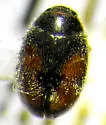
George's Lady Beetle
Nephus georgei
Identification: - Small - Elongated oval shape - Black with a peanut-shaped orange spot on each elytron (wing cover) rare in collections
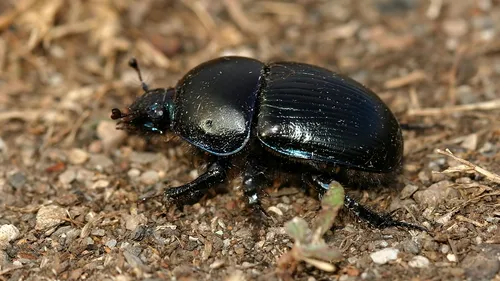
Geotrupes spiniger
Geotrupes spiniger
A big black and slightly lustrous dung beetle. Very similar to Geotrupes stercorarius but in Geotrupes spiniger the outer edge of the mandible has a distinct lobe. The larvae live in the dung of herbivores. Widespread and fairly frequent in Britain.