
Geotrupes stercorarius
This record describes Geotrupes stercorarius (species). Recorded family: Geotrupidae. Recorded order: Coleoptera.
Identification and Appearance
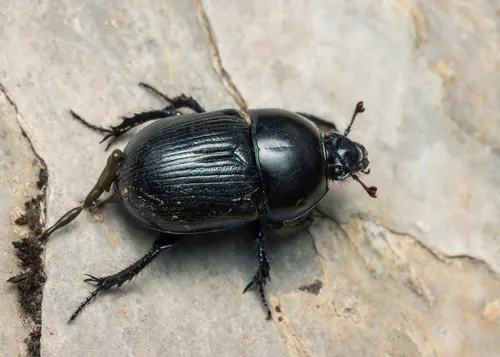
A large beetle up to 26 mm long and weakly lustrous, the legs in particular having a bluish tinge. The body shape is very compact and arched toward the top. It is commonly known a the Dor Beetle and also as the Dung Beetle. There are other very similar species in this genus which means that detailed examination of an actual specimen is generally needed to identify the exact species. A red box around the image indicates that we think it is likely to be this species but can't be 100% certain. Geotrupes spiniger looks almost identical but this species lacks the uniform hairs across the central part of the ventral tergites. The beetles normally frequent grazing pastures - where they dig out a nesting tunnel under suitable dung and line the nest with dung for the larvae to feed on. But they are also found in woodland where they use decaying fungi or rotting plants as a breeding habitat. Widespread and fairly frequent in Britain. For an illustrated guide to the Geotrupidae (Dor beetles), see here .
Wikipedia reference for Geotrupes stercorarius: http://en.wikipedia.org/wiki/Geotrupes_stercorarius.
Classification
- Kingdom
- Animalia
- Phylum
- Arthropoda
- Class
- Insecta
- Order
- Coleoptera (Beetles)
- Suborder
- Polyphaga
- Superfamily
- Scarabaeoidea
- Family
- Geotrupidae (Earth-Boring Scarab Beetles)
- Subfamily
- Geotrupinae
- Genus
- Geotrupes
Imported taxonomy record. Source availability varies; see the source references and editorial policy below.
Habitat and Range
Habitat
Grazing pasture and Woodland.
Seasonal Activity
April to October.
Diet and Behavior
Life History
The beetles normally frequent grazing pastures - where they dig out a nesting tunnel under suitable dung and line the nest with dung for the larvae to feed on. But they are also found in woodland where they use decaying fungi or rotting plants as a breeding habitat.
Additional species information
Recorded status
Widespread and fairly frequent in Britain.
About Primitive Winged Insects: the wider group
Order-level background for Coleoptera, the group containing Geotrupes stercorarius. Species-specific details appear above.
Group overview
Coleoptera is the largest order of insects with over 400,000 described species, representing ~25% of all known animal species and ~40% of all insects. In the U.S. alone, nearly 30,000 beetle species have been identified.
Ecological role of the group
Beetles are prominent decomposers, especially in forests, breaking down dead wood and recycling nutrients. As predators, they reduce populations of pest insects. Many species are also important pollinators of flowering plants.
Economic and practical significance of the group
Beetles have major economic significance: leaf beetles (Chrysomelidae) and weevils (Curculionoidea) are among the most destructive agricultural pests globally, costing billions annually, while predatory species like ladybugs provide natural pest control.
Recorded sources for this group: Britannica, Smithsonian, NCSU Entomology. Imported estimates may describe particular regions or reporting periods.
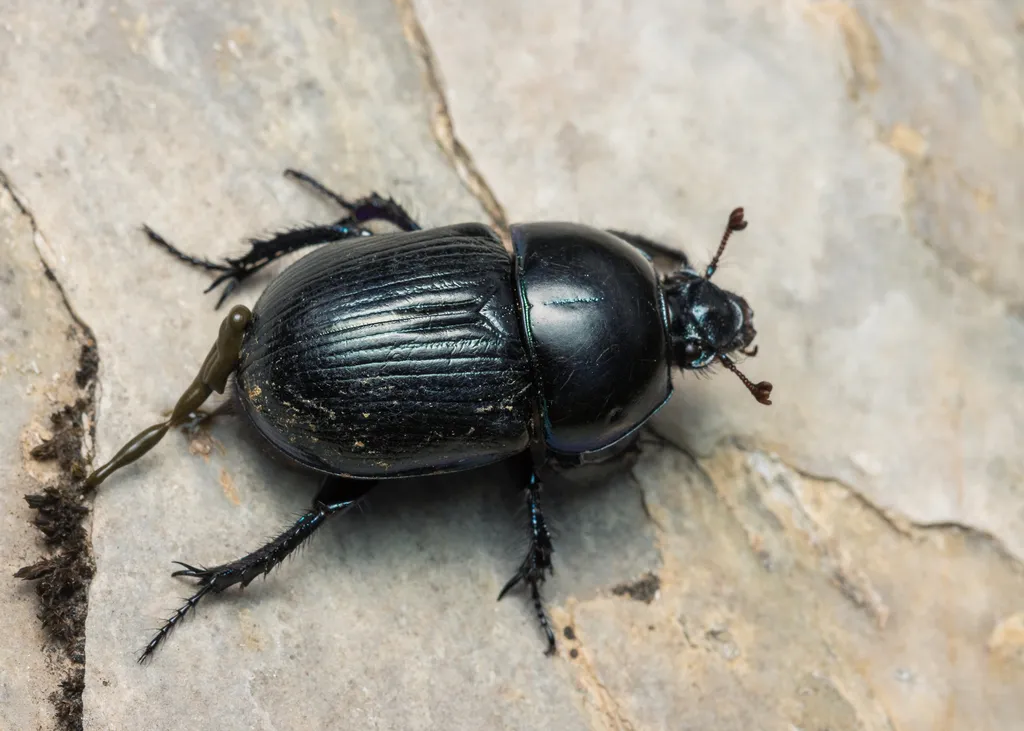
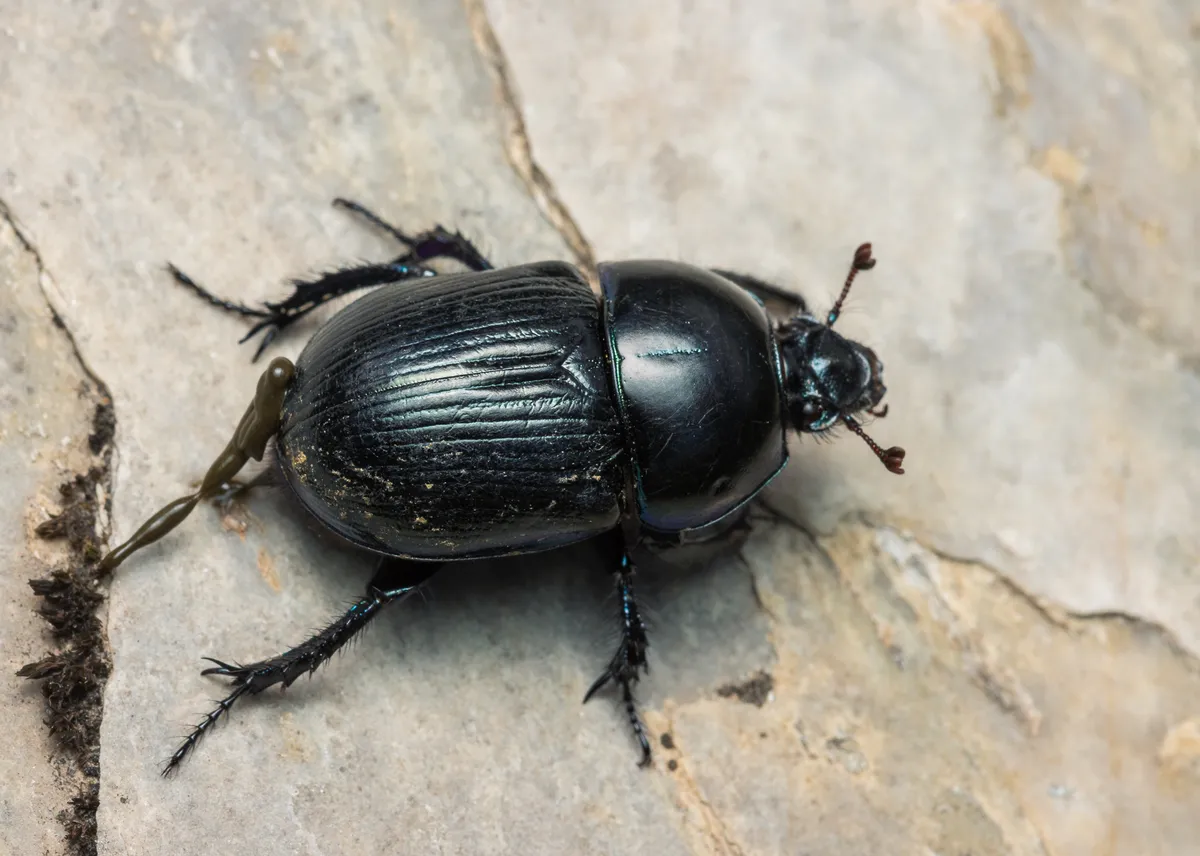
Photos of Geotrupes stercorarius (3)
Frequently Asked Questions About Geotrupes stercorarius
What is Geotrupes stercorarius?
Geotrupes stercorarius is a species in the family Geotrupidae, within the order Coleoptera.
Where is Geotrupes stercorarius found?
Habitat: Grazing pasture and Woodland.
When is Geotrupes stercorarius active?
Geotrupes stercorarius: seasonal activity - April to October..
What is the life cycle of a Geotrupes stercorarius?
The beetles normally frequent grazing pastures - where they dig out a nesting tunnel under suitable dung and line the nest with dung for the larvae to feed on. But they are also found in woodland where they use decaying fungi or rotting plants as a breeding habitat.