
Primitive Winged Insects
Order Coleoptera
The Primitive Winged Insects (Order Coleoptera) includes 15,720 species across 160 families and 3,716 genera in our directory.
About Primitive Winged Insects
Coleoptera is the largest order of insects with over 400,000 described species, representing ~25% of all known animal species and ~40% of all insects. In the U.S. alone, nearly 30,000 beetle species have been identified.
Economic Impact
Beetles have major economic significance: leaf beetles (Chrysomelidae) and weevils (Curculionoidea) are among the most destructive agricultural pests globally, costing billions annually, while predatory species like ladybugs provide natural pest control.
Ecological Role
Beetles are prominent decomposers, especially in forests, breaking down dead wood and recycling nutrients. As predators, they reduce populations of pest insects. Many species are also important pollinators of flowering plants.
Families in Coleoptera (160)
Species in Coleoptera (15,720)
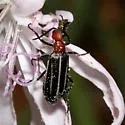
Epicauta sanguinicollis
Epicauta sanguinicollis
Identification: distinctive: head and pronotum red, elytra black with white stripes (if just the head is red, then it's a var. of E. atrata )
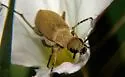
Epicauta sericans
Epicauta sericans
Identification: uniform pubescence, lack of dark elytral markings, broad pronotum, short ant. which widen apically, and large eyes
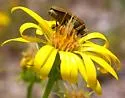
Epicauta strigosa
Epicauta strigosa
Identification: unicolorous spmns can be identified by large eyes, broad head, thick antennae, simple spurs, and dark legs
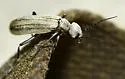
Epicauta sublineata
Epicauta sublineata
Identification: This is one of the most variable species of the genus as to color pattern. Head and pronotum always largely grey; elytra either black with grey margin, cloudy grey on disc, or with vague striping when largely grey. Type Locality: Eagl
Epicauta tenella
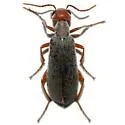
Epicauta tenella
Identification: one of the few spp. in which the elytra are darker than the head and pronotum. head, pronotum and legs rufous, elytra with moderately sparse cinereous pubescence head, pronotum and appendages rufous, elytra pubescence sparse, cinereou
Epicauta tricostata
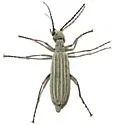
Epicauta tricostata
Identification: Suture, side margins and three, instead of four, ridges on each elytron strongly elevated. Male with antennal segments 2-5 shiny and somewhat elongate, but not as extremely as in costata Det. Blaine Mathison, 2010
Epicauta valida 0
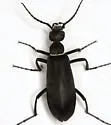
Epicauta valida
Identification: Selander & Mathieu, 1969; key p. 106: Body (including elytra) entirely black except, usually, for white fringing on pronotum (emphasis added), metathorax, coxae, and abdominal sterna Type Locality: Texas; lectotype.
Epicauta virgulata
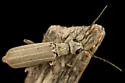
Epicauta virgulata
sometimes fairly common at light Type locality: San Jose del Cabo, Lower California
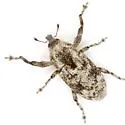
Episcirrus brachialis
Episcirrus brachialis
Identification: Legs long and slender, thighs armed with one tooth; front thighs of male extending much beyond the head. Type Locality: Columbus, Austin Co., TX
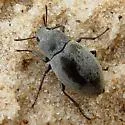
Epitragosoma arenarium
Epitragosoma arenarium
Texas considers this a "Species of Greatest Conservation Need" (SGCN) ( 5 )
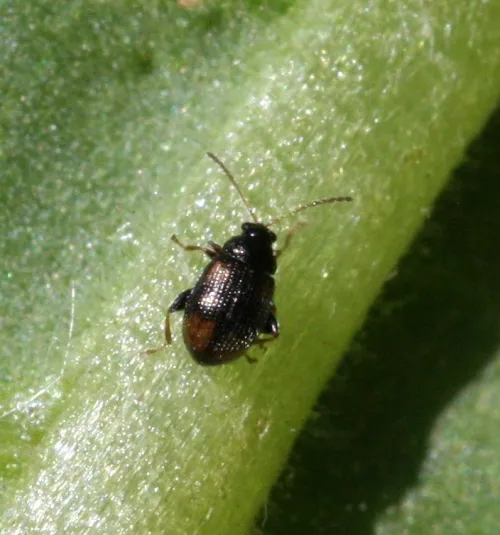
Epitrix atropae
Epitrix atropae
The dark elytra of this small (3mm) species usually have pairs of paler bronze patches. As with other 'flea' beetles it has swollen rear femora. The small size of this beetles brings a photographic challenge but knowing the food plant it is found on
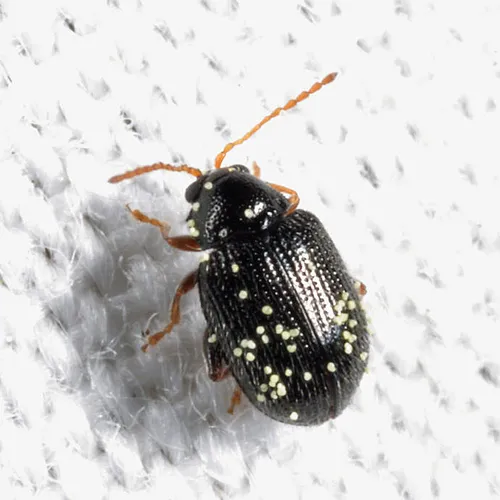
Epitrix brevis
Epitrix brevis
Identification: Body dark testaceous to piceous; antebasal impression of pronotum absent to weak; pronotal punctures separated by their diameter, small; one row of setae between elytral striae; 11 striae on elytra. Det. A. M. Deczynski, 2012 Type ser
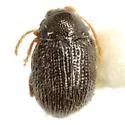
Epitrix lobata
Epitrix lobata
Identification: Body completely piceous the only species north of Mexico with a series of irregular striations present on the vertex of the head. Type Locality: South Carolina
Epitrix ovalis 0
Epitrix ovalis
Identification: Body pale testaceous to dark rufous; body highly elongate ovoid; pronotum highly convex and about same width as elytra; elytra without darker transverse band
Epitrix rileyi 0
Epitrix rileyi
Identification: Body dark rufous to testaceous, pronotum often with patches of lighter rufous Pronotal punctures separated by their diameter or more; pronotum often tinged with dark red collected in three large series from expeditions on the Emory Pe
Epitrix robusta 0
Epitrix robusta
Identification: Body completely piceous Type Locality: Chilpancingo in Guerrero, Mexico
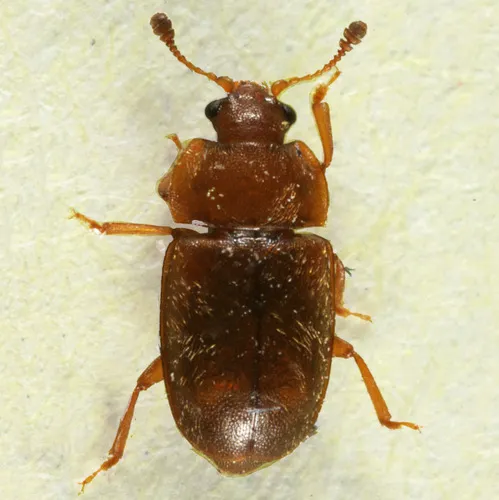
Epuraea aestiva
Epuraea aestiva
Length about 3 mm. This is a very small amber brown beetle. Unless identified by a recognised expert, photographic evidence is required and the specimen should be examined with a microscope. In the comments box, state the key or ID method used. Note
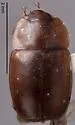
Epuraea alternans
Epuraea alternans
Identification: https://mczbase.mcz.harvard.edu/name/Epuraea+alternans" target="_blank">Holotype see Connell (1974)
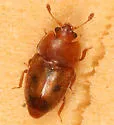
Epuraea avara
Epuraea avara
Epuraea avara (Epuraea avara) is a species in the family Nitidulidae, commonly known as sap-feeding beetles, belonging to the order Coleoptera (Beetles). It is classified within the subfamily Epuraeinae, suborder Polyphaga, superfamily Cucujoidea. Th
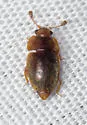
Epuraea eximia
Epuraea eximia
Identification: the oversized apical antennomere is diagnostic ( Holotype ); the only other Epuraea with this characteristic is E. aestiva , which is smaller (2.5‒3.5 mm), much more convex, and has simple male mesotibiae
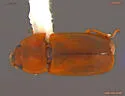
Epuraea linearis
Epuraea linearis
Epuraea linearis (Epuraea linearis) is a species in the family Nitidulidae, commonly known as sap-feeding beetles, belonging to the order Coleoptera (Beetles). It is classified within the subfamily Epuraeinae, suborder Polyphaga, superfamily Cucujoid
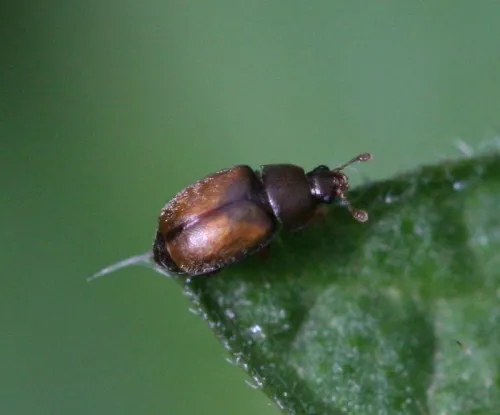
Epuraea melanocephala
Epuraea melanocephala
Size about 2.5 mm. A small brown species rather similar in appearance to other members of the genus but possible to identify with care. Unless identified by a recognised expert, photographic evidence is required and the specimen should be examined wi
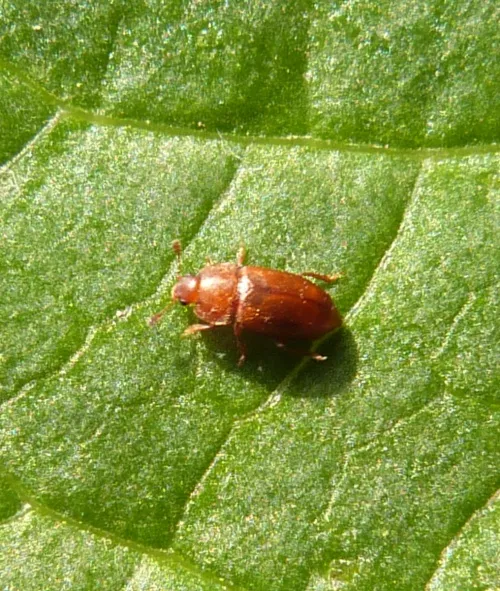
Epuraea melina
Epuraea melina
A small chestnut brown or red-brown beetle. Unless identified by a recognised expert, photographic evidence is required and the specimen should be examined with a microscope. In the comments box, state the key or ID method used. Note the beetle's siz
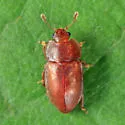
Epuraea obliqua
Epuraea obliqua
In Quebec, most specimens were caught by beating blushing Pinus branches.
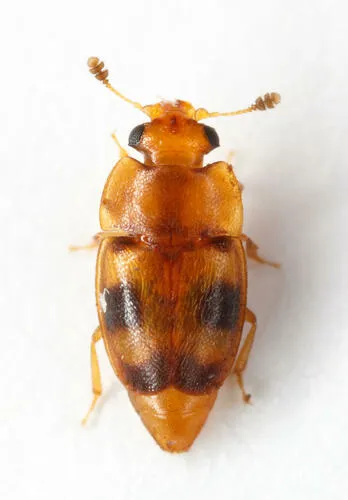
Epuraea ocularis
Epuraea ocularis
Epuraea ocularis (Epuraea ocularis) is a species in the family Nitidulidae, commonly known as sap-feeding beetles, belonging to the order Coleoptera (Beetles). It is classified within the subfamily Epuraeinae, suborder Polyphaga, superfamily Cucujoid
Epuraea peltoides
Epuraea peltoides
Epuraea peltoides (Epuraea peltoides) is a species in the family Nitidulidae, commonly known as sap-feeding beetles, belonging to the order Coleoptera (Beetles). It is classified within the subfamily Epuraeinae, suborder Polyphaga, superfamily Cucujo
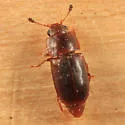
Epuraea planulata
Epuraea planulata
Epuraea planulata (Epuraea planulata) is a species in the family Nitidulidae, commonly known as sap-feeding beetles, belonging to the order Coleoptera (Beetles). It is classified within the subfamily Epuraeinae, suborder Polyphaga, superfamily Cucujo
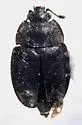
Epuraea populi
Epuraea populi
Identification: Dorsal surface dark piceous black with long conspicuous decumbent silvery pubescence, densely punctate, shining; pronotum with sides broadly explanate, feebly arcuate, a little narrowed before the subrectangular hind angles, the base
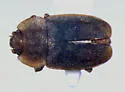
Epuraea rufa
Epuraea rufa
Epuraea rufa (Epuraea rufa) is a species in the family Nitidulidae, commonly known as sap-feeding beetles, belonging to the order Coleoptera (Beetles). It is classified within the subfamily Epuraeinae, suborder Polyphaga, superfamily Cucujoidea. This
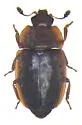
Epuraea rufomarginata
Epuraea rufomarginata
Epuraea rufomarginata (Epuraea rufomarginata) is a species in the family Nitidulidae, commonly known as sap-feeding beetles, belonging to the order Coleoptera (Beetles). It is classified within the subfamily Epuraeinae, suborder Polyphaga, superfamil
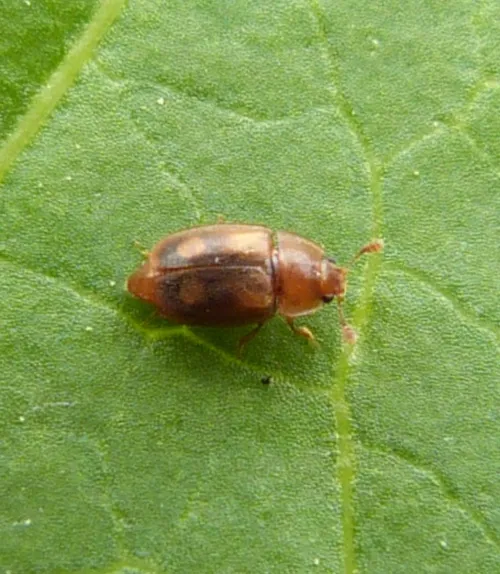
Epuraea silacea
Epuraea silacea
A smallish brown beetle; the markings, when present, may vary considerably. Unless identified by a recognised expert, photographic evidence is required and the specimen should be examined with a microscope. In the comments box, state the key or ID me
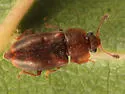
Epuraea truncatella
Epuraea truncatella
Epuraea truncatella (Epuraea truncatella) is a species in the family Nitidulidae, commonly known as sap-feeding beetles, belonging to the order Coleoptera (Beetles). It is classified within the subfamily Epuraeinae, suborder Polyphaga, superfamily Cu
Ereboporus naturaconservatus
Ereboporus naturaconservatus
three specimens collected in drift nets (300–500 µm) over two spring orifices of Caroline Springs, the headwaters of Independence Creek, Terrell County, Texas.
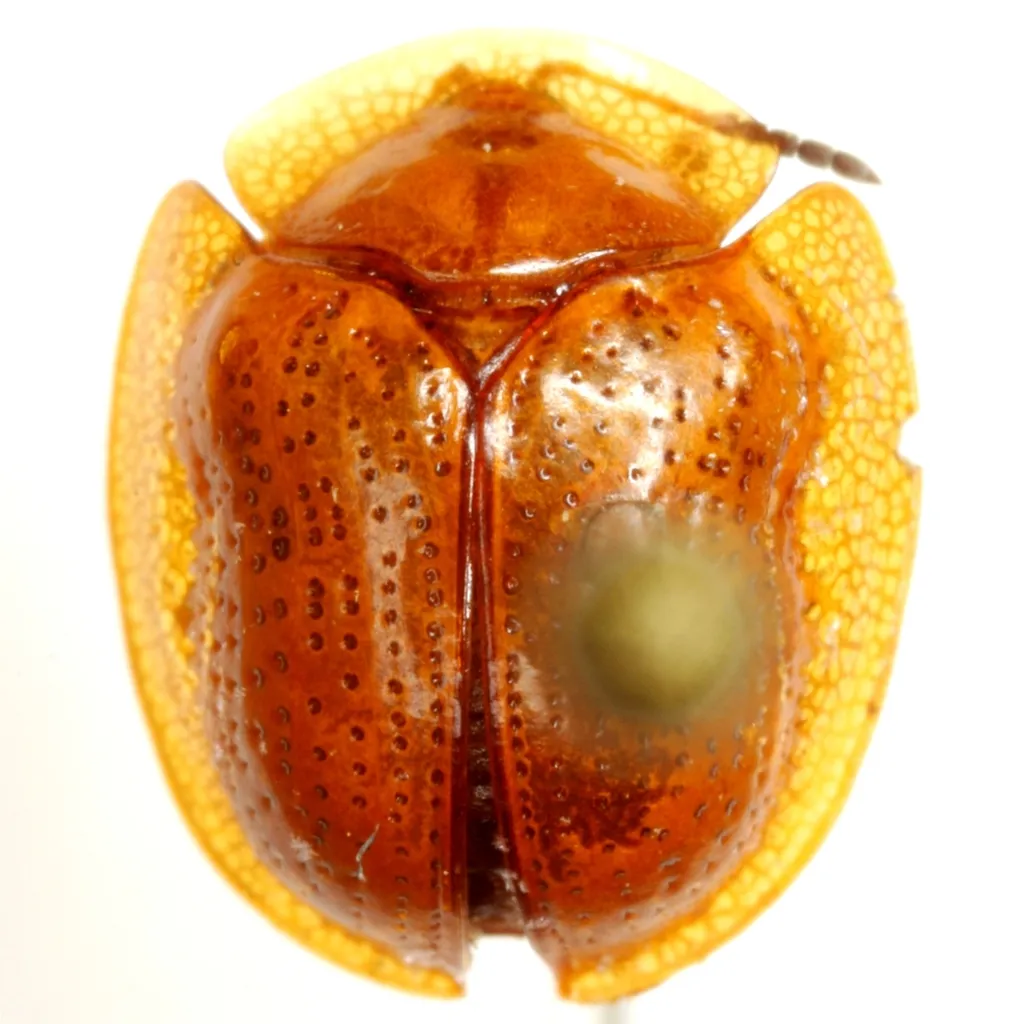
Erepsocassis rubella
Erepsocassis rubella
Identification: color: Yellow or red-brown uncommon
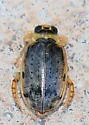
Eretes explicitus
Eretes explicitus
Type Locality: Balmorhea State Park, Texas, VII-7-1963, P.J. Spangler
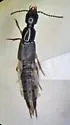
Erichsonius nanus
Erichsonius nanus
Externally similar to the European E. cinerascens (Gravenhorst); best distinguished via male genitalia
Ernobius opicus
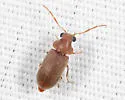
Ernobius opicus
Identification: Very similar to E. granulatus, but 5th antennal segment longer than 4th and subequal to 3rd. Elytra "less shining" than head and pronotum. Genitalia illustrated by Ford Noted as a rare species. Briefly discussed by Ford.
Eronyxa expansus
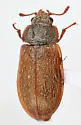
Eronyxa expansus
Identification: pronotal & elytral margins equally explanate
Eronyxa pallidus
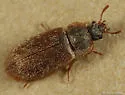
Eronyxa pallidus
Identification: Black forms are all males, and much smaller in size than brown females or males
Eros humeralis
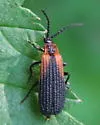
Eros humeralis
Identification: Quoting : Base of elytra and each side of thorax yellowish; transverse carina between the front and hind rows of cells strong, sinuate.... Resembles [Benibotarus] thoracicus ) in color, but distinguished by having six cells on thorax,
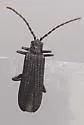
Erotides sculptilis
Erotides sculptilis
Identification: Elytra black/piceous with 4 ridges each; pronotum with prominent ridged cells.
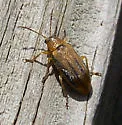
Erynephala texana
Erynephala texana
Erynephala was revised recently (Groll, et al. 2021) . Our specimens from the Texas coast are now E. texana (Schaeffer). This name was restored as valid species, removed from synonymy with maritima. Erynephala maritima does not officially occur in Te
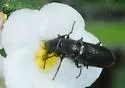
Eschatocrepis constrictus
Eschatocrepis constrictus
Identification: shape of pronotum diagnostic ― Adriean Mayor
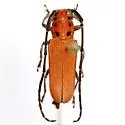
Essostrutha laeta
Essostrutha laeta
Identification: variable ( Cerambycidae Catalog ) US record based on one specimen: TX: Hidalgo Co., Mission, June, 1982. It was captured in flight at a golf course ( 3 )
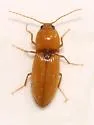
Esthesopus parcus
Esthesopus parcus
Identification: Det. B. Mathison, 2018 Type coll'ed by Horn at Camp Grant, AZ
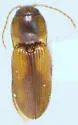
Esthesopus pusio
Esthesopus pusio
Identification: A smaller and more depressed species than any in our fauna.
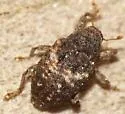
Eubulus obliquefasciatus
Eubulus obliquefasciatus
Eubulus obliquefasciatus (Eubulus obliquefasciatus) is a species in the family Curculionidae, commonly known as snout and bark beetles, belonging to the order Coleoptera (Beetles). It is classified within the subfamily Cryptorhynchinae, tribe Cryptor
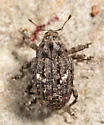
Eubulus parochus
Eubulus parochus
Identification: Most individuals are easily recognized by their larger size but small specimens are difficult to separate from larger E. bisignatus
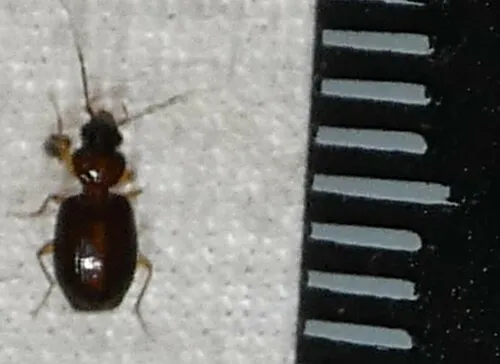
Eucaerus varicornis
Eucaerus varicornis
Identification: Holotype The key in erroneously states "antennomeres 6‒11 white, contrasted markedly with more or less piceous antennomeres 1‒5". Actually, antennomeres 7‒11 are white; 1‒6, piceous
Eucalandra mexicana
Eucalandra mexicana
Identification: Last couplet: Pronotum (Fig. 7) deeply, very densely and uniformly punctate; body lacking any broad flat scales; elytra with intervals deeply, densely uniformly punctate; front tibia with subapical tooth similar in size and form to ap
Eucalyptus Snout Beetle
Gonipterus scutellatus
Eucalyptus Snout Beetle (Gonipterus scutellatus) is a species in the family Curculionidae, commonly known as snout and bark beetles, belonging to the order Coleoptera (Beetles). It is classified within the subfamily Gonipterinae, suborder Polyphaga,
Eucanthus greeni
Eucanthus greeni
Literature record only for TX. Ratcliffe gives the range of this species as "... Alberta and Manitoba in Canada south to Texas." We are not aware of specific records for Texas but given its known range, it is expected to occur in the Texas Panhandle.
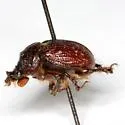
Eucanthus impressus
Eucanthus impressus
Identification: median row of pronotal punctures extends down through the pronotal ridge, almost to the head
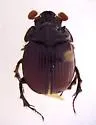
Eucanthus lazarus
Eucanthus lazarus
Identification: median row of pronotal punctures does not extend down through the lateral pronotal ridge to the head Det. M. A. Quinn, 2014
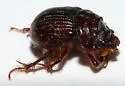
Eucanthus subtropicus
Eucanthus subtropicus
Identification: lateral edge of eye canthus protruding Det. M. A. Quinn, 2012 Fairly common at lights, apparently not attracted to fermenting baits
Euceratocerus gibbifrons
Euceratocerus gibbifrons
Identification: 3rd antennal segment clearly branched in male. seemingly rare
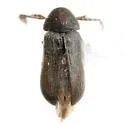
Euceratocerus parvus
Euceratocerus parvus
Identification: This species differs from the other 2 species in the genus ( hornii LeC. and gibbifrons White) in the smaller size and the more strongly pectinate male antenna. It is 2.9 to 3.4 mm long; the other two species range from 3.2 to 5.9 mm
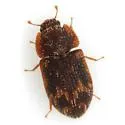
Eucicones marginalis
Eucicones marginalis
Eucicones marginalis (Eucicones marginalis) is a species in the family Zopheridae, commonly known as ironclad beetles, belonging to the order Coleoptera (Beetles). It is classified within the subfamily Colydiinae, tribe Synchitini, suborder Polyphaga
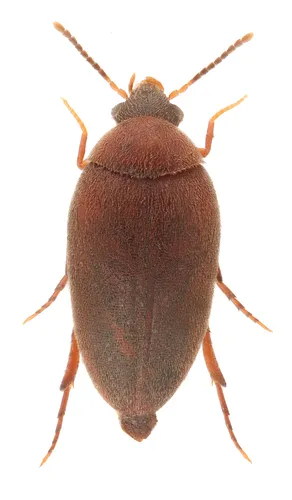
Eucinetus morio
Eucinetus morio
Eucinetus morio (Eucinetus morio) is a species in the family Eucinetidae, commonly known as plate-thigh beetles, belonging to the order Coleoptera (Beetles). It is classified within the suborder Polyphaga, superfamily Scirtoidea. This species belongs
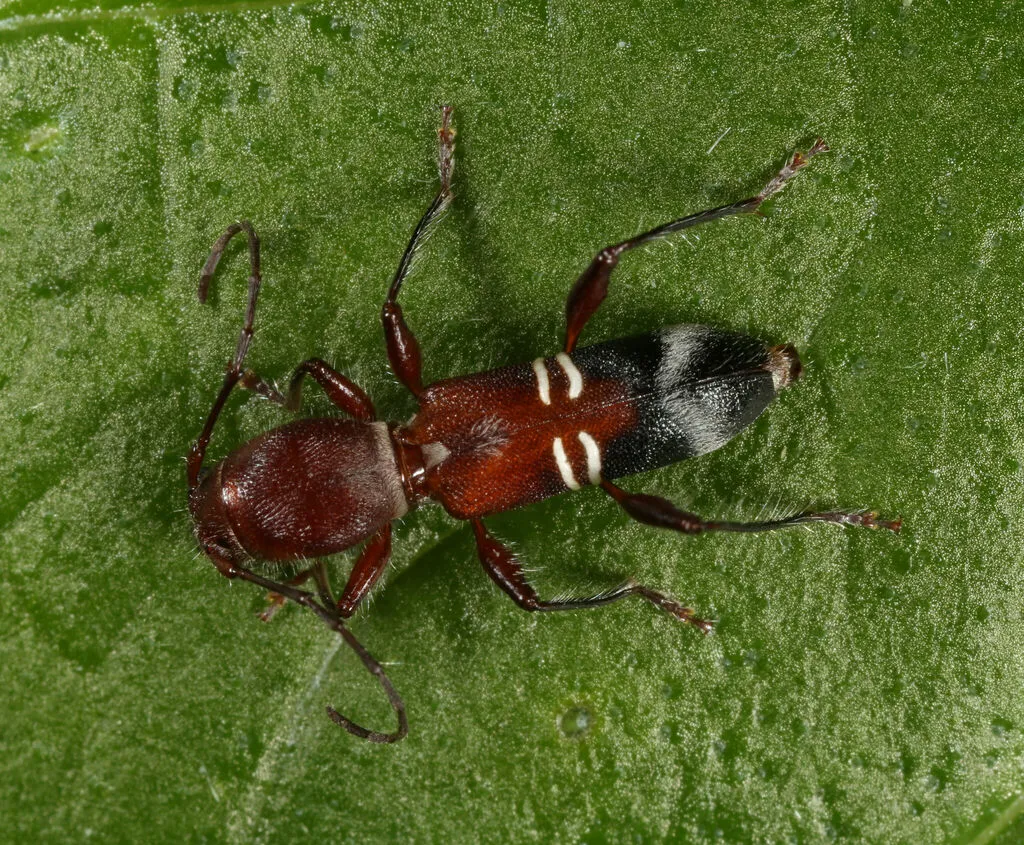
Euderces bicinctus
Euderces bicinctus
Euderces bicinctus is a species of beetle in the family Cerambycidae. It was described by Linsley in 1935.
Euderces picipes
Euderces picipes
Identification: pronotum with distinct, longitudinal rugae [striae]; ivory callus of elytron nearly always [slightly] oblique [vs. at right angle] (couplet 118) - uncommon red forms, mostly present in the Gulf states
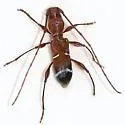
Euderces pini
Euderces pini
Identification: ant mimic; the only eastern sp. with post-median elytral fasciae in deep grooves (median fascia oblique in E. picipes , transverse in E. reichei ) --T.C. MacRae, 21.iv.2008 - uncommon black form Det. M. Quinn, 2010 - Det. Michael C. T
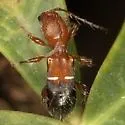
Euderces reichei
Euderces reichei
Identification: granulate pronotum w/o defined longitudinal rugae, ivory elytral lines nearly always transverse [at right angle to elytral edge] - no black form
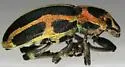
Eudiagogus pulcher
Eudiagogus pulcher
Identification: Pronotum with transversal pale band. Outer elytral band linear, branched to side in about middle:
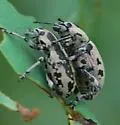
Eudiagogus rosenschoeldi
Eudiagogus rosenschoeldi
Identification: pronotum lacking transversal band, elytral outer band mottled Det. M. A. Quinn, 2012
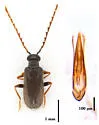
Euglenes pygmaeus
Euglenes pygmaeus
Euglenes pygmaeus (Euglenes pygmaeus) is a species in the family Aderidae, commonly known as ant-like leaf beetles, belonging to the order Coleoptera (Beetles). It is classified within the tribe Euglenesini, suborder Polyphaga, superfamily Tenebriono
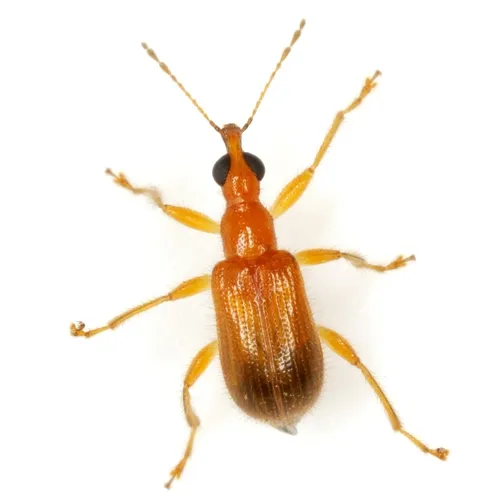
Eugnamptus cinctus
Eugnamptus cinctus
Identification: reddish- to yellowish-brown, usually with darker lateral stripe on each elytron, broadening posterad in females to cover entire elytral apices recognized by the brownish color, lateral stripes (when present) and the prominent frontal
Eugnamptus pallidus
Eugnamptus pallidus
Identification: last key couplet: Head and thorax finely punctured, front sulcate; color pale testaceous. Type Locality: Huachuca Mts., Arizona A specimen from Texas (Belfrage) seems to fit the description of this species. , note Belfrage was mostly

Eugnamptus pseudonigriventris
Eugnamptus pseudonigriventris
Identification: bicolored; head (including rostrum and antennae), prothorax, scutellum, mesothorax and legs (except metacoxae) yellowish to reddish orange, antennal club and extremities of legs darker; metasternum and ab domen brownish-black to black
Eugnamptus punctatus
Eugnamptus punctatus
Identification: Head strongly punctured; elytral interspaces convex, not wider than the striae; prothorax strongly punctured, medially depressed or sulcate. Black, thorax red, elytra nigrocoeruleous, typical variety, female. Entirely black, elytra ni
Eugnamptus puncticeps
Eugnamptus puncticeps
Identification: last key couplet: Interspaces almost flat; strial punctures round, less crowded; head strongly punctured; front more or less sulcate; testaceous, elytra sometimes piceous black or clouded. Type Locality: Illinois
Eugnamptus sheila 0
Eugnamptus sheila
Identification: bicolored; head (including rostrum), prothorax, scutellum, and mesothorax yellowish to reddish-orange; all other parts brownish-black; base of prothorax, scutellum, mesothorax and rostrum variably darkened; some times with dark line a
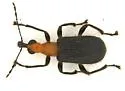
Eugnamptus striatus
Eugnamptus striatus
Identification: easily recognized by the bicolored body, round deeply impressed striae and the strongly convex elytral intervals Det. Jeff Eickwort, 2024 Type Locality: Haulover, Brevard County, Florida; Messrs. Hubbard and Schwarz.
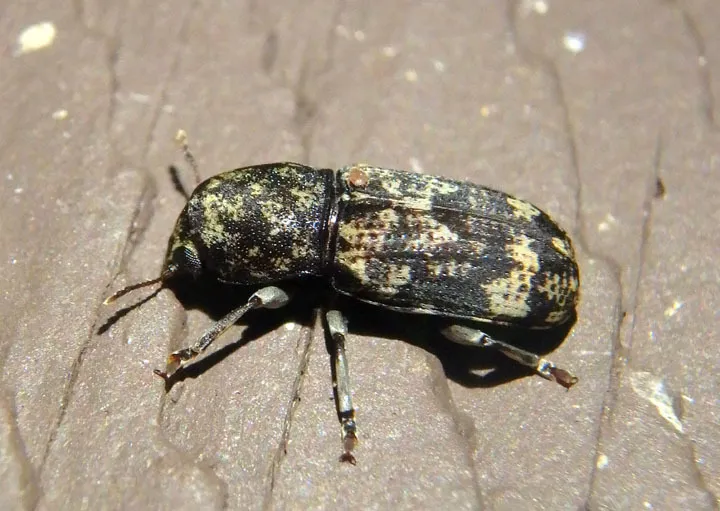
Eugonus bicolor
Eugonus bicolor
Eugonus bicolor is a species of fungus weevil in the beetle family Anthribidae. It is found in Central America and North America.
Eulepton burkei
Eulepton burkei
Type Locality: TEXAS: Pecos Co., 28 mi. S Ft. Stockton, hwy. 385 rest stop, IV-19-1997, E. Riley-469, on Quercus mohriana
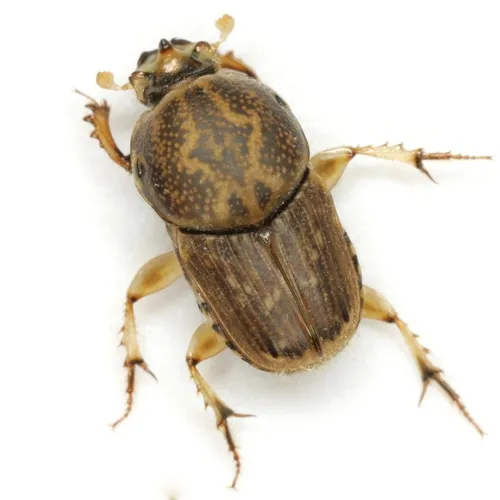
Euoniticellus intermedius
Euoniticellus intermedius
Identification: males armed, color varies from straw to dark brown Det. M. A. Quinn, 2011 Intentionally introduced from Africa into Texas during the early 1970s for dung removal
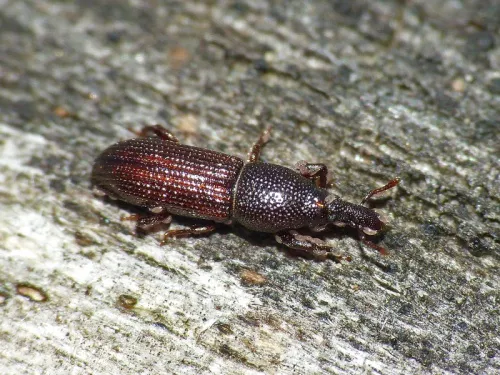
Euophryum confine
Euophryum confine
2.5 to 3.6mm. Elongate, parallel and very convex, entirely dark brown or with legs and humeral spot lighter. Upper surface with very fine and sparse pubescence. Head behind eyes smooth and very finely punctate, rest of head coarsely punctate, eyes ve
Euparixia duncani
Euparixia duncani
Identification: Pronotum constricted only in posterior one- third, the posterior angles prominent and acute Type Locality: Globe, Arizona
Euparixia moseri
Euparixia moseri
Type Locality: Melder, Louisiana; Label: 2' deep in nest of Atta texana ; collected by John C. Moser.
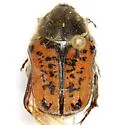
Euphoria anneae
Euphoria anneae
Type Locality: Holotype, male, two miles south Olmos Creek and U.S. Rt. 77, [Kenedy Co.], Texas, May 31, 1954. H. F. Howden and W. Cloyd. (Type deposited in U.S. National Museum.) Paratype, male, same data as type (Howden collection). (Howden 1955)
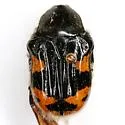
Euphoria basalis
Euphoria basalis
Identification: difficult to confuse with any other sp. of Euphoria considered a pest of cotton, melon, pumpkin, and sunflower in Mex. "I see it a few times a year heading our way as a truck hitchhiker from Mexico." (J. Leavengood, pers. comm. to MAQ
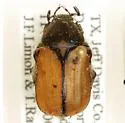
Euphoria casselberryi
Euphoria casselberryi
Type Locality: Davis Mountains, Jeff Davis Co., Texas (Robinson, 1937). The single specimen Riley and Wolfe (2003) examined was from the Davis Mountains Resort area Davis Mts., at ca. 5800 ft. (Jeff Davis County), taken during June. ( 3 ) Texas consi
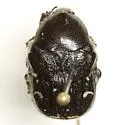
Euphoria devulsa
Euphoria devulsa
Identification: Elytral striae bearing 3 evenly spaced rows of lunulate punctures (Fig. 5a). Pygidium at apex sexually dimorphic, rounded in males, acuminate in females distinguished from other species in the group by the subquadrate clypeus, striae
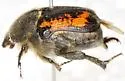
Euphoria pilipennis
Euphoria pilipennis
Euphoria pilipennis (Euphoria pilipennis) is a species in the family Scarabaeidae, commonly known as scarab beetles, belonging to the order Coleoptera (Beetles). It is classified within the subfamily Cetoniinae, tribe Cetoniini, suborder Polyphaga, s
Euphoria schottii 0
Euphoria schottii
Identification: syntype only 8 specimens known (none recently collected), including types
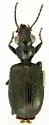
Euphorticus pubescens
Euphorticus pubescens
Euphorticus pubescens (Euphorticus pubescens) is a species in the family Carabidae, commonly known as ground beetles, belonging to the order Coleoptera (Beetles). It is classified within the subfamily Harpalinae, tribe Lachnophorini, suborder Adephag
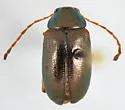
Euphrytus intermedius
Euphrytus intermedius
Identification: paired rear sternal tufts diagnostic (E.G. Riley, pers. comm., 2013 to MAQ)
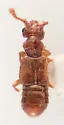
Euplectus acomanus
Euplectus acomanus
Identification: DS Chandler: "Looks about the same as E. duryi . When a male specimen is before me, duryi has a smaller impression on a shorter sternite VI, acomanus with an impression maybe twice as wide and a bit longer ventrite VI." Aedeagus disti
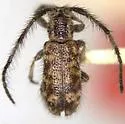
Eupogonius fulvovestitus
Eupogonius fulvovestitus
Type Series: Three specimens from Brownsville, Texas: Esperanza Ranch, Las Boragos, and Tolusa.
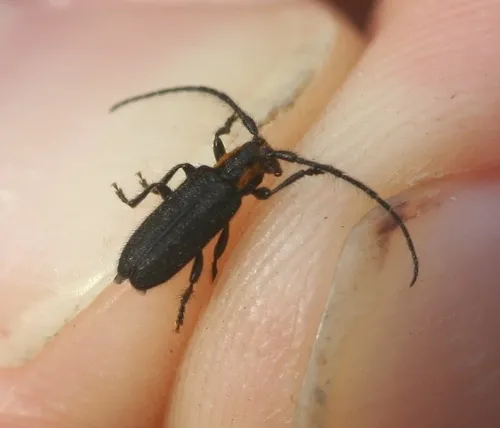
Eupogonius subarmatus
Eupogonius subarmatus
Eupogonius subarmatus is a species of beetle in the family Cerambycidae. It was described by LeConte in 1859. It is known from eastern North America.
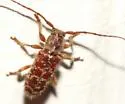
Eupogonius tomentosus
Eupogonius tomentosus
Identification: reddish brown integument, w irregular patches of tawny pubescence on eltyra Det. M. A. Quinn, 2010 Attracted to UV lights
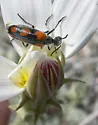
Eupompha elegans
Eupompha elegans
Identification: Black head & thorax; elytra may be variably marked with black and orange, some dark blue populations. (Evans & Hogue, description and photo )
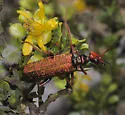
Eupompha fissiceps
Eupompha fissiceps
Identification: elytra can be coppery (or blue): head can be dark: Can be locally abundant but spotty and not seen every year. (E.G. Riley, pers. comm. to MAQ)
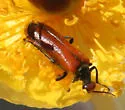
Eupompha schwarzi
Eupompha schwarzi
Identification: "The color varies quite a bit in this species -- the pronotum and head go from almost entirely orange to entirely black -- more orange in AZ and NV than CA." - John Pinto
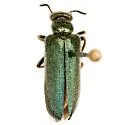
Eupompha viridis
Eupompha viridis
Identification: Whole body and elytra metallic green. Elytra with intervals not raised. ( 3 ) Type Locality: New Mexico not treated in Dillion (1952) ( 6 )
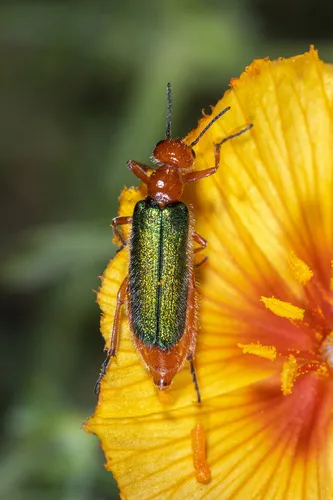
Eupompha wenzeli
Eupompha wenzeli
Identification: Head, thorax, and legs red; elytra metallic green or blue, elytra with "a scintillating appearance" Dets. F. Werner, 1976 rare in collections, Pinto made repeated attempts to discover E. wenzeli in the field from 1971-78 and was final
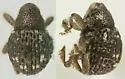
Eurhoptus pyriformis
Eurhoptus pyriformis
Eurhoptus pyriformis (Eurhoptus pyriformis) is a species in the family Curculionidae, commonly known as snout and bark beetles, belonging to the order Coleoptera (Beetles). It is classified within the subfamily Cryptorhynchinae, tribe Cryptorhynchini
Eurhoptus rileyi
Eurhoptus rileyi
Type Locality: USA: TEX: Hidalgo Co. / Bentsen R.G.V.S.P. (site 1) / 26.17830°N, 98.38577°W / IX.6–19.2008, FIT-ground / J. King & E. Riley – 0104 / cedar elm forest
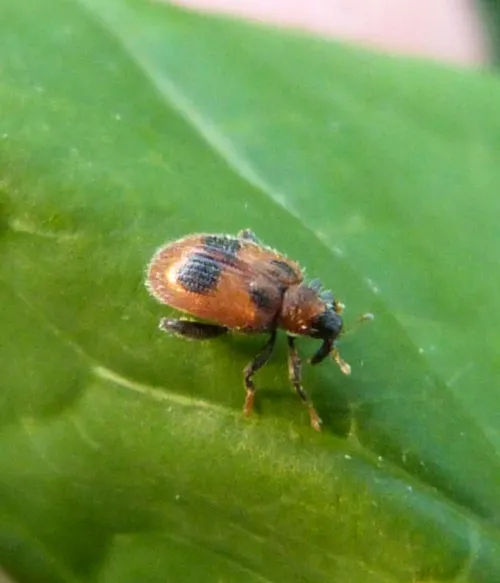
European Elm Flea Weevil
Orchestes alni
A very small (2.5 to 3.5mm) weevil. Each red/orange wing case (elytron) usually has two or more dark blotches, which gives this weevil a rather ladybird like appearance, but it is easily distinguished as a weevil by the distinctive long snout (rostru
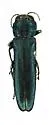
European Oak Borer
Agrilus sulcicollis
Identification: Discriminating A. sulcicollis from A. cyanescens ( Zablotny yyyy? ) earliest NA record: ON 1995; earliest US record: MI 2003 ( Haack et al. 2010 )