
Galerita atripes
This record describes Galerita atripes (species). Recorded family: Carabidae. Recorded order: Coleoptera.
Identification and Appearance
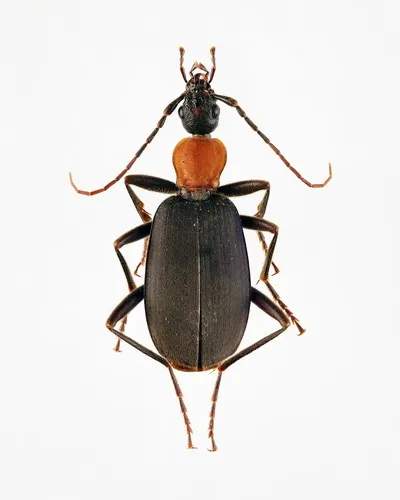
| Feature | Description |
|---|---|
| Elytra | Elytra bright, azure blue. |
| Legs | Legs black eyes not prominent: Type locality: Fort Riley, Kansas |
Classification
- Kingdom
- Animalia
- Phylum
- Arthropoda
- Class
- Insecta
- Order
- Coleoptera (Beetles)
- Suborder
- Adephaga
- Family
- Carabidae (Ground Beetles)
- Subfamily
- Harpalinae
- Tribe
- Galeritini
- Genus
- Galerita (False Bombardier Beetles)
Imported taxonomy record. Source availability varies; see the source references and editorial policy below.
Habitat and Range
Habitat
asso. w/ oak habitats
Geographic Range
sc US, AZ (AZ, c.TX-se.LA-MO-se.NE) / n.Mex. (e.Son and w.Chi) - Map , uncommon Although Ball and Nimmo shaded in an extensive area on the range map for G. atripes , they report that in fact it is known in the U.S.A. only from Missouri, eastern Kansas, a few localities in eastern Texas, and several mountain ranges in southern Arizona. To these meager TX records, TAMUIC only adds several records, per GBIF, from Bexar Co. and the TX panhandle. The Triplehorn Insect Collection adds more TX records, again per GBIF, but most are historical records, including a long series from Blanco Co. Riley doesn't record G. atripes on either his Lick Creek Park nor on his Sabal Palm lists. Stephan likewise does not record this sp. for e. OK
Additional species information
Species notes from the sources
Etymology: Galerita atripes LeConte 1858
About Primitive Winged Insects: the wider group
Order-level background for Coleoptera, the group containing Galerita atripes. Species-specific details appear above.
Group overview
Coleoptera is the largest order of insects with over 400,000 described species, representing ~25% of all known animal species and ~40% of all insects. In the U.S. alone, nearly 30,000 beetle species have been identified.
Ecological role of the group
Beetles are prominent decomposers, especially in forests, breaking down dead wood and recycling nutrients. As predators, they reduce populations of pest insects. Many species are also important pollinators of flowering plants.
Economic and practical significance of the group
Beetles have major economic significance: leaf beetles (Chrysomelidae) and weevils (Curculionoidea) are among the most destructive agricultural pests globally, costing billions annually, while predatory species like ladybugs provide natural pest control.
Recorded sources for this group: Britannica, Smithsonian, NCSU Entomology. Imported estimates may describe particular regions or reporting periods.
Photos of Galerita atripes (2)
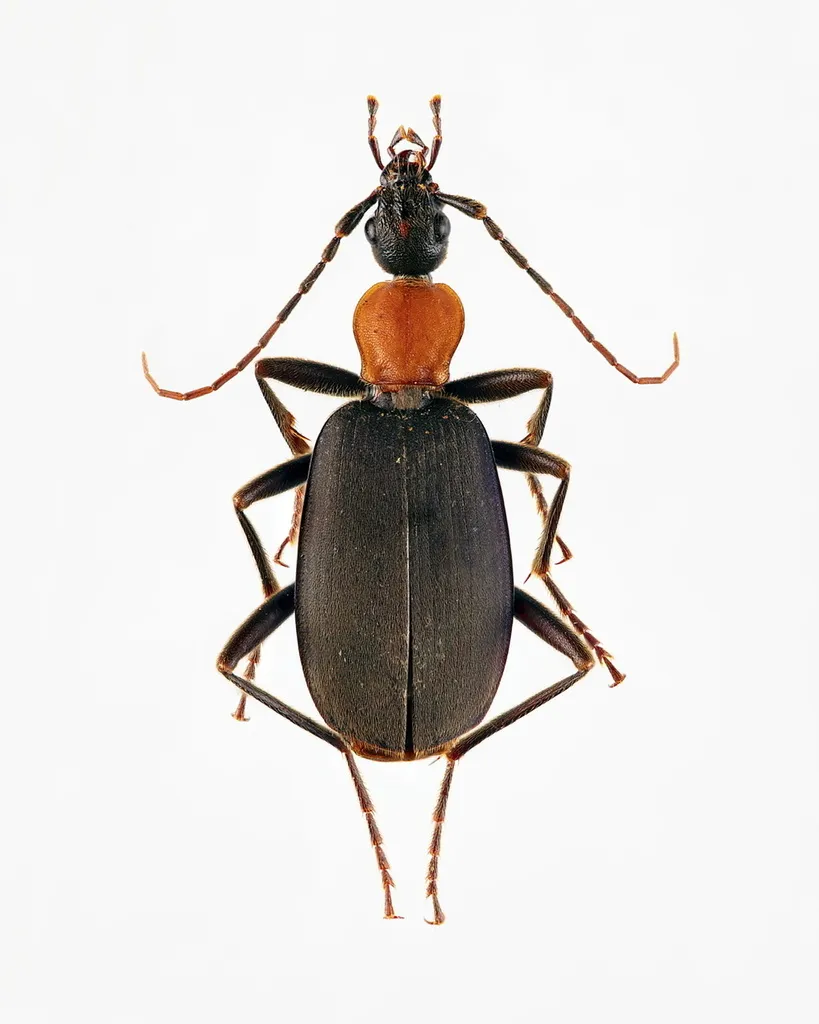
Photo credits: Contributed by v belov; Additional contributions by Mike Quinn , Tim Moyer
Frequently Asked Questions About Galerita atripes
What is Galerita atripes?
Galerita atripes is a species in the family Carabidae, within the order Coleoptera.
How do you identify Galerita atripes?
| Feature | Description |
|---|---|
| Elytra | Elytra bright, azure blue. |
| Legs | Legs black eyes not prominent: |
Where is Galerita atripes found?
| Feature | Details |
|---|---|
| Habitat | asso. w/ oak habitats |
| Range | sc US, AZ (AZ, c.TX-se.LA-MO-se.NE) / n.Mex. (e.Son and w.Chi) - Map , uncommon Although Ball and Nimmo shaded in an extensive area on the range map for G. atripes , they report that in fact it is known in the U.S.A. only from Missouri, eastern Kansas, a few localities in eastern Texas, and several mountain ranges in southern Arizona. To these meager TX records, TAMUIC only adds several records, per GBIF, from Bexar Co. and the TX panhandle. The Triplehorn Insect Collection adds more TX records, again per GBIF, but most are historical records, including a long series from Blanco Co. Riley doesn't record G. atripes on either his Lick Creek Park nor on his Sabal Palm lists. Stephan likewise does not record this sp. for e. OK |