
Eupithecia zygadeniata - Hodges#7532
Eupithecia zygadeniata
This record describes Eupithecia zygadeniata (species). Recorded family: Geometridae. Recorded order: Lepidoptera.
Identification and Appearance
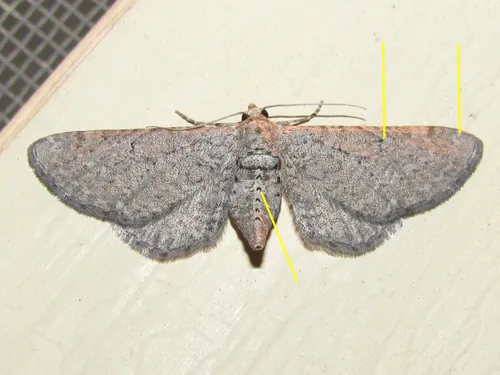
Adult - very similar to E. indistincta with longer and more pointed primaries, grayer ground color, smaller discal dot, and numerous, indistinct, oblique cross lines. The increasingly large set of images from Texas on iNaturalist show the following consistent marks, most of which are highlighted on this image : -- The thoracic disk is typically uniform gray with three darker dots, two at the front margin, one centered and toward the rear. -- The abdominal shape is fairly distinctive compared to other species in its Texas range: It is bulbous (wide) at the base and much narrower in the outer 1/3 to 1/2, often showing slightly concave sides in the distal 1/2 in dorsal view. This bulbous abdomen is more conspicuous in females. The abdominal tip is often held somewhat upturned. The abdomen of other Texas Eupithecia is narrower at the base, more uniform in width, and gradually tapered. -- A thin, shallowly U-shaped black line crosses the rear margin of the first abdominal segment, contrasting with the remainder of the gray abdomen. -- The 2nd and 3rd abdominal segments (those immediately behind the black crossline; sometimes including the 4th segment) each have a conspicuous black dot on the side. -- A narrow, whitish gray stripe runs down the center of the abdomen, interrupted by a series of black inverted chevrons on the center of each segment. -- The forewings have a narrow whitish crenulate (wavy) subterminal line which is complete from the costa to the outer angle; it usually does not form a conspicuous white dot near the outer angle as in E. miserulata .
Classification
- Kingdom
- Animalia
- Phylum
- Arthropoda
- Class
- Insecta
- Order
- Lepidoptera (Butterflies and Moths)
- Superfamily
- Geometroidea
- Family
- Geometridae (Geometrid Moths)
- Subfamily
- Larentiinae
- Tribe
- Eupitheciini
- Genus
- Eupithecia
Imported taxonomy record. Source availability varies; see the source references and editorial policy below.
Habitat and Range
Geographic Range
Most numerous in central Texas, but also ranging (sparsely?) from New Mexico and Colorado to Wyoming and Montana.
Seasonal Activity
March-May (June) in Texas; June-July further north.
Diet and Behavior
Diet: Larvae feed on the flowers and seed capsules of Green Lily ( Schoenocaulon texanum ; Liliaceae; BG records) and Death Camas ( Toxicoscordium [= Zygadenus] nuttallii ; Liliaceae) in Texas. The larval food plants in other western states are undetermined.
About Butterflies and Moths: the wider group
Order-level background for Lepidoptera, the group containing Eupithecia zygadeniata. Species-specific details appear above.
Group overview
Lepidoptera includes approximately 180,000 described species of butterflies and moths. Moths outnumber butterflies roughly 10:1. The monarch butterfly's eastern population has declined by more than 80% since the mid-1990s, and the western population by over 95% since the 1980s. The IUCN lists the migratory monarch as Vulnerable.
Ecological role of the group
Butterflies and moths are essential indicators of ecosystem health. As caterpillars, they are a primary food source for birds - a single nest of blue tit chicks requires ~10,000 caterpillars. Adult moths pollinate many night-blooming plants.
Economic and practical significance of the group
Lepidoptera are critical pollinators. In Europe, grassland butterfly species have declined by almost 50% since the early 1990s. In the UK, three-quarters of butterflies are in decline. In the U.S., five butterfly species have gone extinct since 1950, with 29 listed as endangered.
Recorded sources for this group: IUCN Red List, Xerces Society, USFWS, PNAS, WWF. Imported estimates may describe particular regions or reporting periods.
Photos of Eupithecia zygadeniata - Hodges#7532 (2)
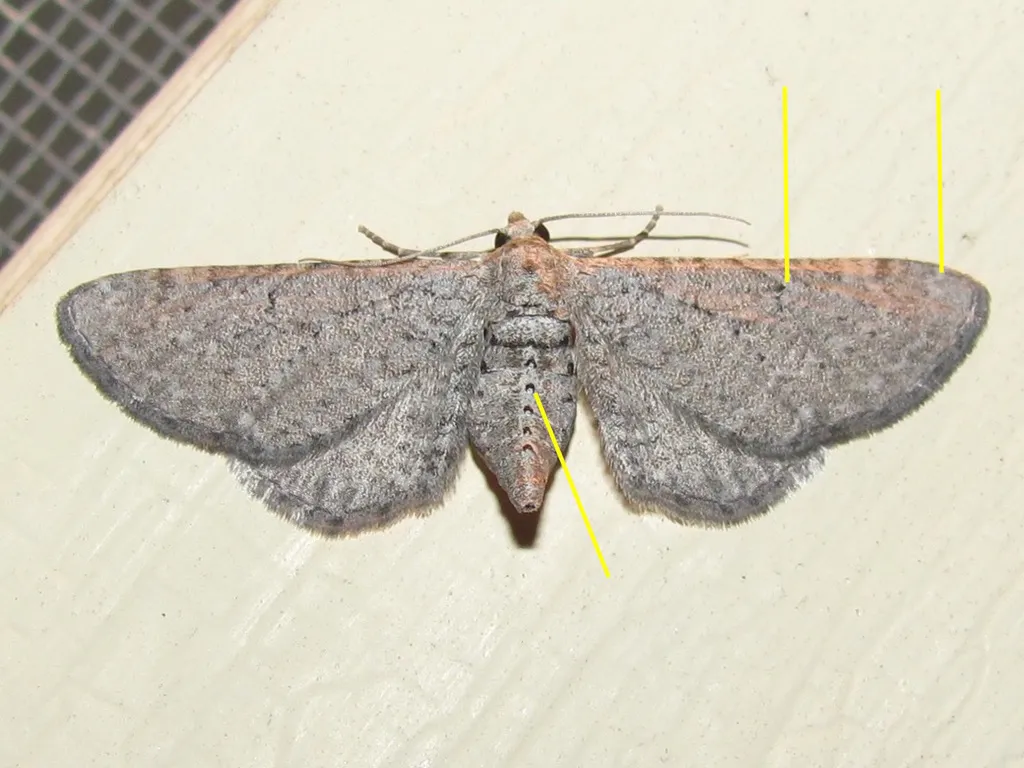
Photo credits: Contributed by Mike Quinn; Additional contributions by Chuck Sexton , Randy Hardy , JoAnneRusso
Frequently Asked Questions About Eupithecia zygadeniata - Hodges#7532
What is Eupithecia zygadeniata - Hodges#7532?
Eupithecia zygadeniata - Hodges#7532 (Eupithecia zygadeniata) is a species in the family Geometridae, within the order Lepidoptera.
How big is Eupithecia zygadeniata - Hodges#7532?
Packard (1876) recites the length of the FW as 0.50 inch (12.5 mm); wingspan 1.0 inch (ca 25 mm).
How do you identify Eupithecia zygadeniata - Hodges#7532?
Adult - very similar to E. indistincta with longer and more pointed primaries, grayer ground color, smaller discal dot, and numerous, indistinct, oblique cross lines. The increasingly large set of images from Texas on iNaturalist show the following consistent marks, most of which are highlighted on this image : -- The thoracic disk is typically uniform gray with three darker dots, two at the front margin, one centered and toward the rear. -- The abdominal shape is fairly distinctive compared to other species in its Texas range: It is bulbous (wide) at the base and much narrower in the outer 1/3 to 1/2, often showing slightly concave sides in the distal 1/2 in dorsal view. This bulbous abdomen is more conspicuous in females. The abdominal tip is often held somewhat upturned. The abdomen of other Texas Eupithecia is narrower at the base, more uniform in width, and gradually tapered. -- A thin, shallowly U-shaped black line crosses the rear margin of the first abdominal segment, contrasting with the remainder of the gray abdomen. -- The 2nd and 3rd abdominal segments (those immediately behind the black crossline; sometimes including the 4th segment) each have a conspicuous black dot on the side. -- A narrow, whitish gray stripe runs down the center of the abdomen, interrupted by a series of black inverted chevrons on the center of each segment. -- The forewings have a narrow whitish crenulate (wavy) subterminal line which is complete from the costa to the outer angle; it usually does not form a conspicuous white dot near the outer angle as in E. miserulata .
Where is Eupithecia zygadeniata - Hodges#7532 found?
Range: Most numerous in central Texas, but also ranging (sparsely?) from New Mexico and Colorado to Wyoming and Montana.
What does Eupithecia zygadeniata - Hodges#7532 eat?
The diet of the Eupithecia zygadeniata - Hodges#7532 includes Larvae feed on the flowers and seed capsules of Green Lily ( Schoenocaulon texanum ; Liliaceae; BG records) and Death Camas ( Toxicoscordium [= Zygadenus] nuttallii ; Liliaceae) in Texas. The larval food plants in other western states are undetermined..
When is Eupithecia zygadeniata - Hodges#7532 active?
Eupithecia zygadeniata - Hodges#7532: seasonal activity - March-May (June) in Texas; June-July further north..