
Flies
Order Hymenoptera
The Flies (Order Hymenoptera) includes 5,194 species across 102 families and 1,491 genera in our directory.
About Flies
Hymenoptera includes over 150,000 described species of ants, bees, wasps, and sawflies. Earth harbors approximately 20 quadrillion (20×10^15) ants, with a combined biomass of ~12 megatons of dry carbon - exceeding the combined biomass of all wild birds and mammals (PNAS, 2022).
Economic Impact
Pollinators contribute $235-577 billion worth of annual global food production (FAO). In the U.S., bee pollination alone benefits crops valued at $18 billion annually, and honey bees are responsible for $5.4 billion in agricultural productivity. Between April 2023-2024, 55.1% of managed honey bee colonies were lost. The U.S. bee population dropped from 5 million to 2.5 million.
Ecological Role
About 35% of the world's food crops depend on animal pollinators. The chocolate industry, valued at over $100 billion, depends on pollinating flies and midges. Ants are the dominant soil engineers in most terrestrial ecosystems, turning more soil than earthworms in many habitats.
Families in Hymenoptera (102)
Species in Hymenoptera (5,194)
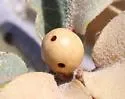
Andricus coconinoensis
Andricus coconinoensis
Identification: Induces smooth, glabrous bud galls on Quercus turbinella and oblongifolia, and maybe other species of southwestern oaks.
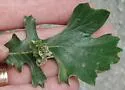
Andricus foliaformis
Andricus foliaformis
Causes bract-bearing midrib swellings, containing 1-6 cells, in leaves of the white oak group. Originally described from white oak ( Quercus alba ); the holotype and gall are lost. The description of adult and gall agree with Andricus foliosus Weld,
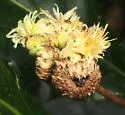
Andricus incertus
Andricus incertus
Forms fringed galls on acorns of swamp white oak ( Quercus bicolor ). "Galls drop in early Sept. and adults emerged the second and third springs in late March and April. A similar gall occurs on nine other white oaks where the recess in the cup is no
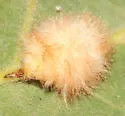
Andricus pattoni
Druon pattoni
Galls similar to those of Andricus quercusflocci , but on post oak ( Quercus stellata ), sand/dwarf post oak ( Q. margaretta ), and shallow-lobed oak ( Q. breviloba ).
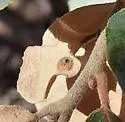
Andricus pilularis
Andricus pilularis
Identification: Induces leaf galls on Quercus arizonica, gambelli, oblongifolia, rugosa, toumeyi, and turbinella. They are small and integral to the leaf, with the bottom half of the gall protruding on the ventral side of the leaf. The gall causes th
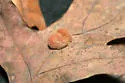
Andricus quercusflocci
Druon quercusflocci
Forms galls on leaves of white ( Quercus alba ) and chestnut ( Q. prinus ) oaks: "Woolly, dirty white, of 2-10 seed-like bodies attached by one end on midrib on upper or lower side, in fall."
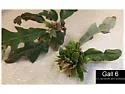
Andricus quercusfrondosus
Andricus quercusfrondosus
Galls are "globular, smooth, surrounded by bracts which persist and enlarge after gall drops in June. . . Galls attacked by guests [inquilines] do not drop, the bud scales enlarge and this 'frondosa' mass is conspicuous in winter but yields only gues
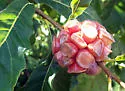
Andricus quercusstrobilanus
Andricus quercusstrobilanus
Identification: Larvae induce a cluster of wedge-shaped galls on on Quercus bicolor, macrocarpa, and lyrata . The galls are green or red/pink when they are young and turn brown as they get older.
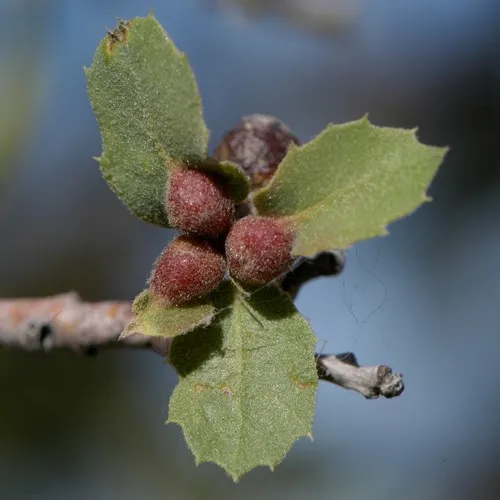
Andricus reticulatus
Andricus reticulatus
Identification: Induces integral petiole galls on Quercus ajoensis, arizonica, dumosa, engelmannii, gambelli, oblongifolia, rugosa, toumeyi, and turbinella. These galls are brown and covered rather sparsely with short white hairs. They consume the le
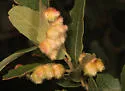
Andricus sulfureus
Feron sulfureum
Identification: Forms detachable leaf galls on Quercus arizonica and Q. oblongifolia .
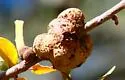
Andricus wheeleri
Andricus wheeleri
Identification: This species induces large, lobed, integral stem galls on Quercus arizonica, onlongifolia, toumeyi, and turbinella. These galls are green when fresh and turn brown when older. They can have a pink hue as well. They are very abrupt on
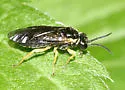
Aneugmenus flavipes
Aneugmenus flavipes
Identification: Fairly readily identifiable by the combination of black body apart from entirely yellow legs and yellow "shoulders".
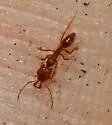
Anochetus mayri
Anochetus mayri
Identification: Back of head lacking dark apophyseal lines
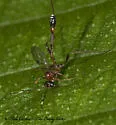
Anomalon picticorne
Anomalon picticorne
Identification: Distinctive among the Anomalonini in having a white band (annulus) on the antennae. See Viereck, 1912, for full description of female in Print References below.
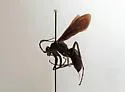
Anoplius aethiops
Anoplius aethiops
A. aethiops visits flowers while A. cleora RARELY does. Soil type is also significant. A. cleora is almost completely restricted to very sandy soil and A. aethiops is not. Note by Nick Fensler
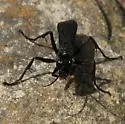
Anoplius depressipes
Anoplius depressipes
Transports its spider prey (usually Dolomedes) across the water's surface. They would be expected to be found near water.
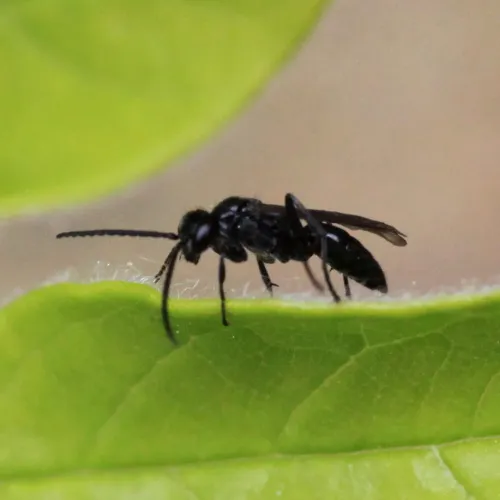
Anoplius nigerrimus
Anoplius nigerrimus
Up to 11mm length. Third submarginal cell almost triangular; comb spines of inferior row on fore basitarsus longer than those of superior row; erect hairs of thorax fine, short, with a few fine hairs on propodeum; largely with dark pubescence. The co
Anoplius toluca
Anoplius toluca
Identification: Females are difficult or impossible to separate from its sister species, A. dreisbachi . When viewed laterally, the hair brushes on the 4th and 5th sternum appear continuous in A. dreisbachi but separated in A. toluca . In California
Anthidiellum ehrhorni
Anthidiellum ehrhorni
Identification: marked with a pale cream to bright yellow pattern on black
Anthidium banningense
Anthidium banningense
Identification: Females - T6 with long, acute lateral angle and terga densely punctate.
Anthidium emarginatum
Anthidium emarginatum
A discussion of " Anthidium emarginatum , its Life-history and Parasites" appears in Davison(1895) .
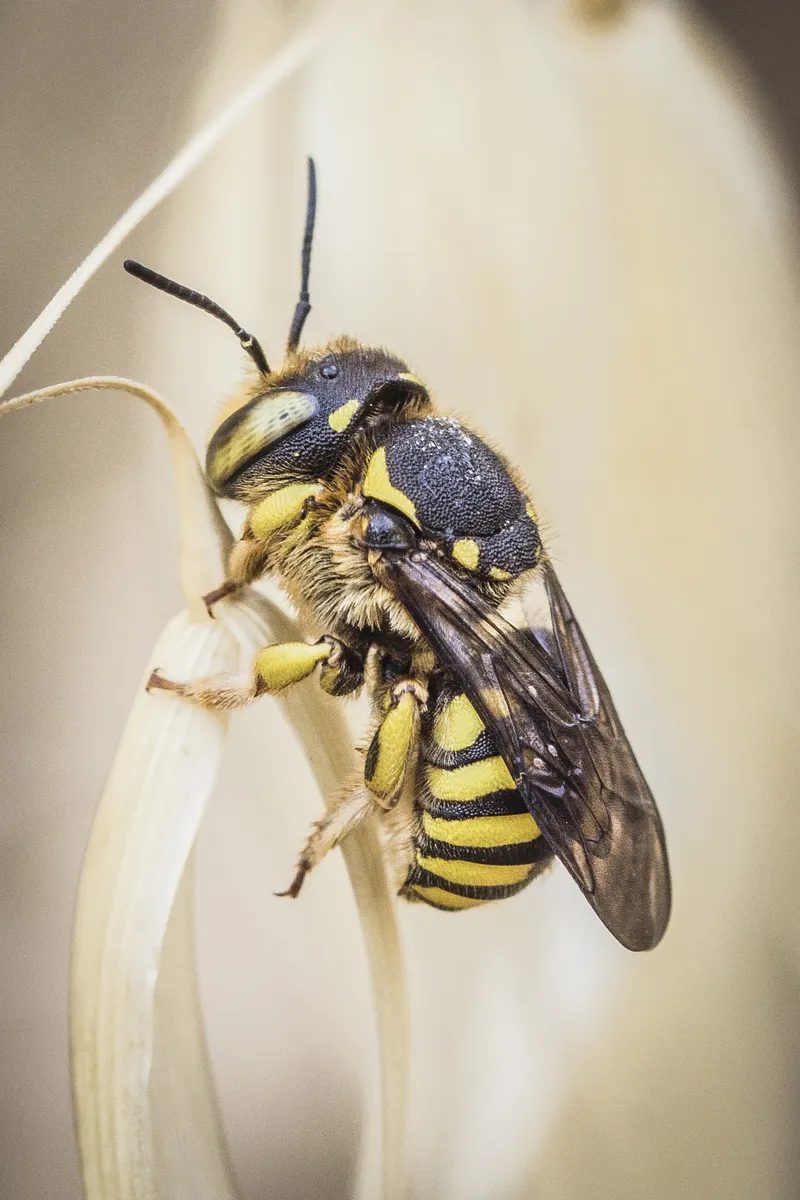
Anthidium florentinum
Anthidium florentinum
Identification: Very similar to A. manicatum in size and coloration. Considered an efficient pollinator of alfalfa.
Anthidium illustre
Anthidium illustre
Identification: T-VII of males with a short, blunt center spine (Grigarick & Stange):
Anthophora curta
Anthophora curta
Has been considered conspecific with A. squammulosa but now recognized as distinct based on a study by Michael Orr and colleagues of BBSL.
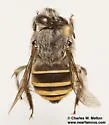
Anthophora marginata
Anthophora marginata
Identification: Cream not pure white apical margins to terga; grizzled black and gray thoracic hairs
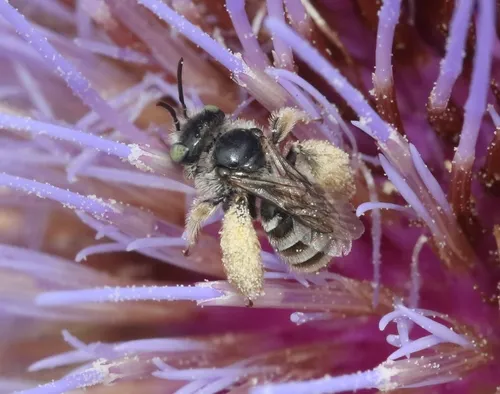
Anthophorula albicans
Anthophorula albicans
This page was set up based on examination of one female specimen, depicted below:
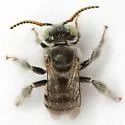
Anthophorula completa
Anthophorula completa
Probably the most common exomalopsine apid in Texas. (John L. Neff, Central Texas Melittological Institute, pers. comm., 2011)
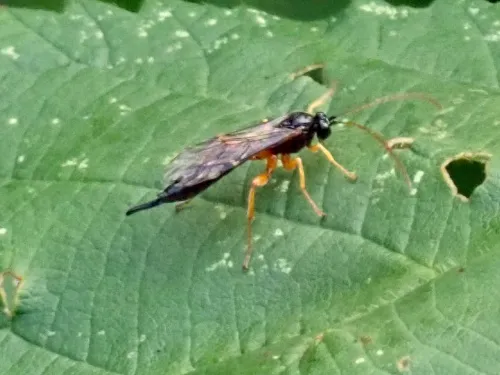
Apechthis compunctor
Apechthis compunctor
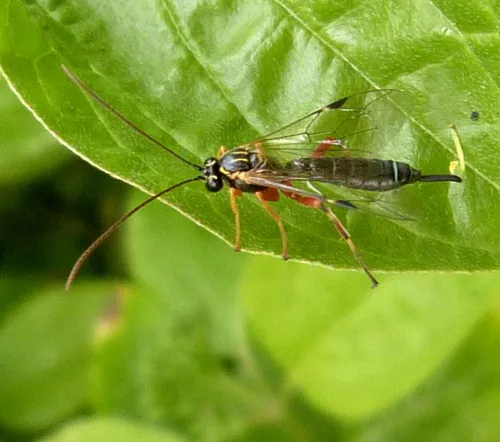
A small to medium (7 to 15 mm) black bodied species. It has orange legs without cream banding on the hind tibia. Similar to Pimpla rufipes but in Apechthis compunctor the female ovipositor has a downward curved tip. Photographs required showing the t
Apechthis rufata
Apechthis rufata
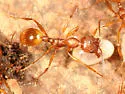
Length up to 15 mm. Quite a striking ichneumon, although there are similar species and expert help is needed with identification. Unless identified by a recognised expert, a photo is required and the specimen should be examined with a microscope. In
Aphaenogaster N22b
Aphaenogaster undescribed-near-rudis
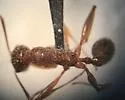
This page is for the undescribed species labeled as "Aphaenogaster N22b" in Dr. Gary Umphrey's 1996 paper on the fulva-rudis-texana complex. Aphaenogaster N22b is similar to Aphaenogaster rudis, but paler and nesting in rocky outcroppings, bluffs, pr
Aphaenogaster ashmeadi
Aphaenogaster ashmeadi
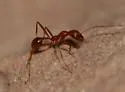
Identification: Most similar to A. treatae but the lobe at the base of scape takes up 1/5 or less of the scape in ashmeadi and 1/4 of the scape in treatae. Both species are arenicolous but A. ashmeadi is relatively constricted to the southeastern Uni
Aphaenogaster boulderensis
Aphaenogaster boulderensis
Identification: concolor, otherwise similar to A. smithi (bicolored)
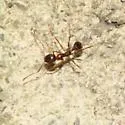
Aphaenogaster carolinensis
Aphaenogaster carolinensis
Identification: Typical color pattern is red-brown with yellow legs
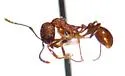
Aphaenogaster mariae
Aphaenogaster mariae
Identification: Striations fanning out from the base of the gaster:
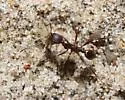
Aphaenogaster treatae
Aphaenogaster treatae
Identification: Large, flat lobe at base of scape of antenna.
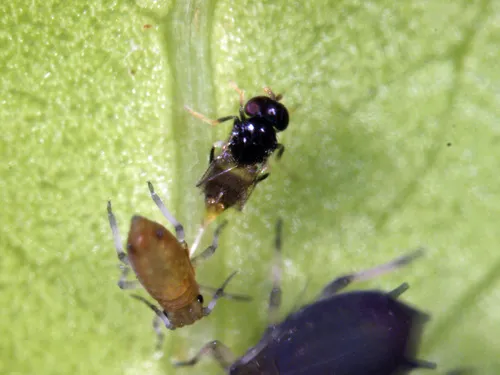
Aphelinus asychis
Aphelinus asychis
A tiny, stocky parasitoid wasp, typically measuring around 0.9 -1.2 mm in length. Typically has a dark brown to black head and thorax. The abdomen is typically yellow, sometimes darkening toward the tip in males. Submarginal vein with only two setae.
Aphelopus rufiventris
Aphelopus rufiventris
Identification: Distinguished from other Nearctic Aphelopus by having indistinct or absent notauli.
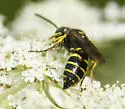
Aphilanthops frigidus
Aphilanthops frigidus
Identification: Males and females similar. Marks, stripes and spots can be either yellow or white. Head: Black with 3 wide yellow stripes: one each along inner eye margin, and one median stripe. Median stripe progressively narrows beyond antenna base
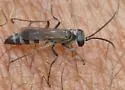
Aporinellus taeniolatus
Aporinellus taeniolatus
Identification: In all the currently existing keys, two principal characters are cited for separating taeniolatus from all other species in the genus: 1) The 2nd submarginal cell is relatively small...less than twice as wide as high (cf. Fig. 245 her
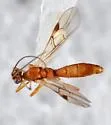
Appleworm Mummy Wasp
Aleiodes nolophanae
Similar to Aleiodes laphygmae . Differs from that species in 39-45 antennal segments, as opposed to 35-39 in A. laphygmae ; females are larger (5-6 mm rather than 4-5 mm in A. laphygmae ); radial cell and basal portion of stigma forming a smaller ang
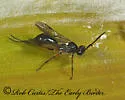
Apsilops hirtifrons
Apsilops hirtifrons
Per Judd, 1953: " Apsilops hirtifrons (Ashm.).-One wasp emerged in Cage 4 on August 9. Hart (1896), referring to the species as Cryptus cyaneiventris Riley, reports that in Illinois it was common in July on floating leaves of Potamogeton natans , ass
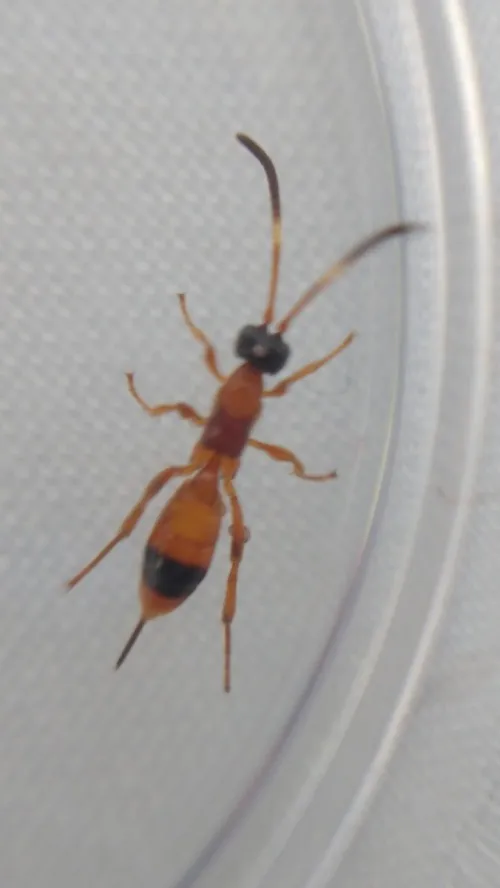
Aptesis nigrocincta
Aptesis nigrocincta
Length 3 to 8 mm. Females are significantly smaller than males and nearly wingless. A distinctive ichneumon, the abdomen and legs are orange, the abdomen has a broad black band. Unless identified by a recognised expert, photos are required from above
Arachnospila arcta
Arachnospila arcta
Identification: The genus Arachnospila is most similar to Anoplius , but they lack strong bristles on the pygidium. However, of all of the genera split from Pompilus , Arachnospila is perhaps the most closely related to Anoplius . This species is ver
Arctic Aerial Yellowjacket
Dolichovespula albida
Identification: Queen (♀♀) Worker (♀) Male (♂) The markings of D. albida are very akin to those of D. norvegicoides apart from being ivory instead of yellow.
Arge abdominalis
Arge abdominalis
Identification: Adult all black with contrasting red abdomen
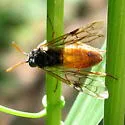
Arge onerosa
Arge onerosa
Identification: "Only Arge I know of with yellow antennae, abdomen, and legs." --Dave Smith
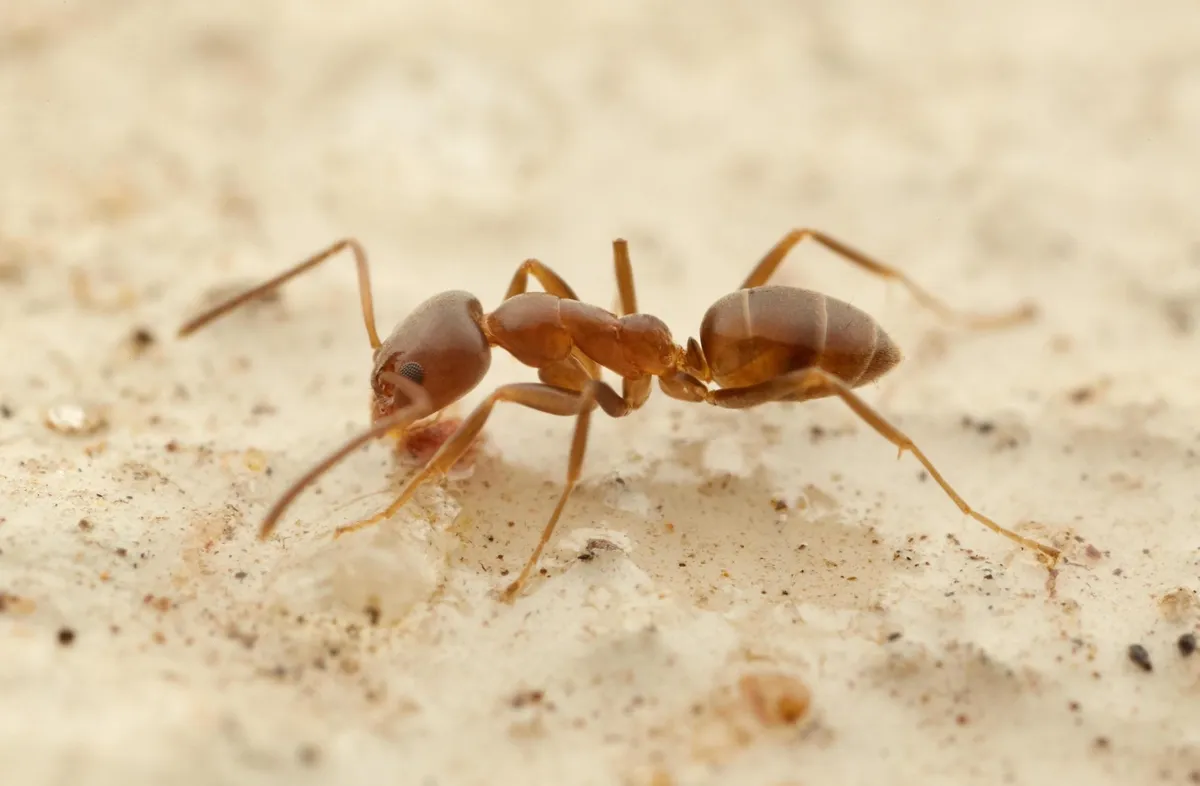
Argentine Ant
Linepithema humile
Identification: worker usually uniformly light to medium brown (can seem almost black if not viewed up close); body slender; head oval to triangular-shaped; mandibles with two large apical teeth followed by series of denticles; alitrunk dorsum normal
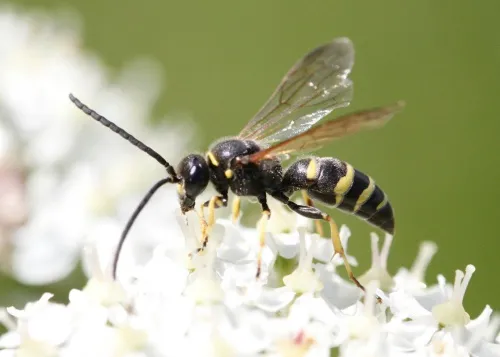
Argogorytes fargeii
Argogorytes fargeii
The scarcer and smaller of our two Argogorytes wasps, but seemingly with a similar biology to A. mystaceus. It is black and yellow banded and care is needed with identification due to similarity with other species. Most solitary bees and wasps are di
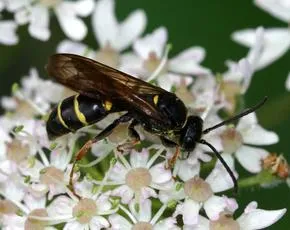
Argogorytes mystaceus
Argogorytes mystaceus
Argogorytes mystaceus is a sand wasp, the male has unusually long antennae for this genus; the female has a short comb. The 1st abdominal segment is almost semi-circular. Most solitary bees and wasps are difficult to identify, and can rarely be ident
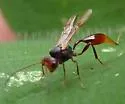
Aridelus nigrithorax
Aridelus nigrithorax
Identification: Black thorax is diagnostic for the species. (Scott Shaw, pers. comm.)
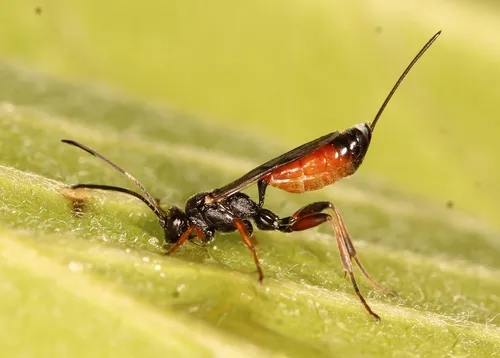
Aritranis director
Aritranis director
Length up to 10 mm. The head and thorax are black. The bulk of the abdomen is orange-red but the final part is black. The female also has a small white band at the tip of the abdomen, immediately before the ovipositor. Unless identified by a recognis
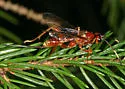
Arotes melleus
Arotes melleus
Identification: The female is largely ferrugineous with stramineous markings on the scutellum, postscutellum, trochanters, tibial bases, tarsi, underneath of the pedicel, and subgenital plate. The wings are hyaline with a black stigma and a broadly c
Arthrolytus fasciatus
Arthrolytus fasciatus
Identification: Distinguished from the other known North American Arthrotylus by range (Eastern) and dark area on wing of female. Biology is unknown but the other North American species, and some European species, are found in galls of Cynipidae on o
Asaphes suspensus
Asaphes suspensus
Identification: Can be determined from other Asaphes species by the all-yellow legs (G. Gibson, personal comm.)
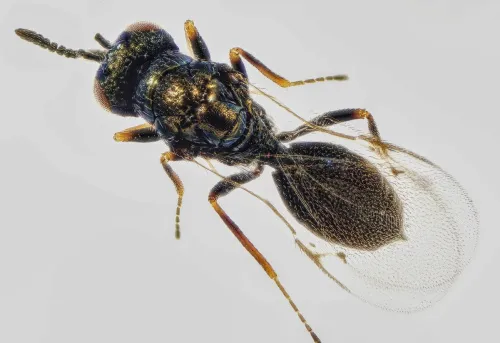
Asaphes vulgaris
Asaphes vulgaris
Length 1.5-2mm. Typically dark, metallic greenish-black sheen across the head and thorax. The petiole ("waist") is longer than broad and obvious from above. Antennae elbowed (geniculate) antennae, with 13 segments including 2 ring segments. Genae bor
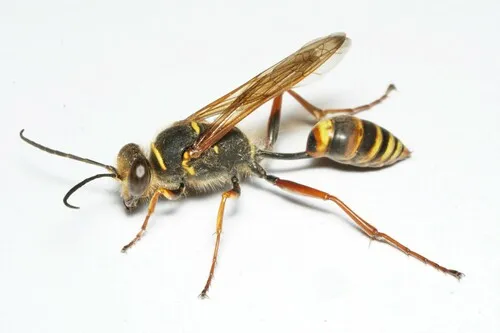
Asian Mud-dauber Wasp
Sceliphron curvatum
Identification: According to Christian Schmid-Egger (Aug 12, 2019: pers. comm. to Matthias Buck), the photos on BugGuide clearly show S. curvatum , not S. deforme (up to this point there was doubt about the species). Schmid-Egger (2005) provides a ke
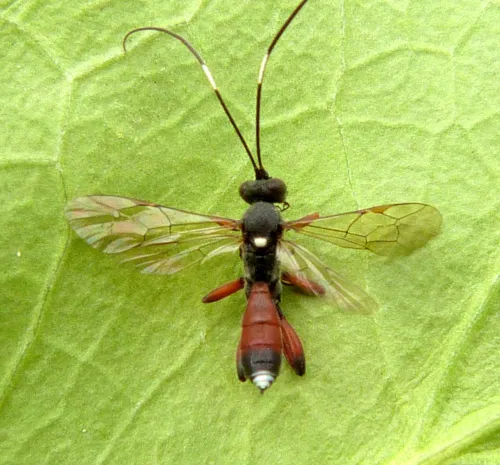
Asthenolabus vitratorius
Asthenolabus vitratorius
A red and black nocturnal wasp with long antennae typical of members of the Platylabini tribe. The red abdomen darkens towards the tip and finishes with white tailstripes which may also be helpful in determining species. Several other members of the
Atanycolus cappaerti
Atanycolus cappaerti
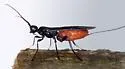
Identification: Head and thorax jet black, abdomen bright red with a pink venter. The related, non-native A. hicoriae has very similar coloration (though with the venter of the metasoma yellow to yellowish red). A. cappaerti also has several of the a
Atrusca brevipennata
Atrusca brevipennata
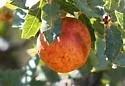
Identification: Induces sphere shaped oak-apple galls on leaves of Quercus turbinella, grisea, gambelli, and Quercus x undulata. The galls are usually light yellow with red vein-like stripes running vertical from the top of the gall. The similar Atru
Atrusca capronae
Atrusca capronae
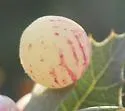
Identification: Galls have thin, pale outer layer with purple or red stripes. Larval chamber floats in the center of the gall, attached to out layer by many radiating fibers.
Atrusca cubitalis
Atrusca cubitalis
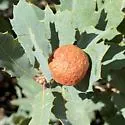
This short-winged species, cubitalis, is the producer of all the oak apples found in Colorado west of the Continental Divide. There is no species of the Atrusca bella complex in that area. On the eastern slopes of the Colorado Rockies oak climbs hard
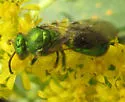
Augochloropsis metallica
Augochloropsis metallica
Identification: Green metallic tegulae; the posterior inner margins project inward. Typical halictine mouthparts: long prementum and short tongue and labial palpi
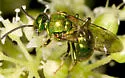
Augochloropsis viridula
Augochloropsis viridula
May prove to be specifically distinct. Treated her as a putative subspecies for purposes of sorting images, pending improved documentation of the status of this genus in North America.
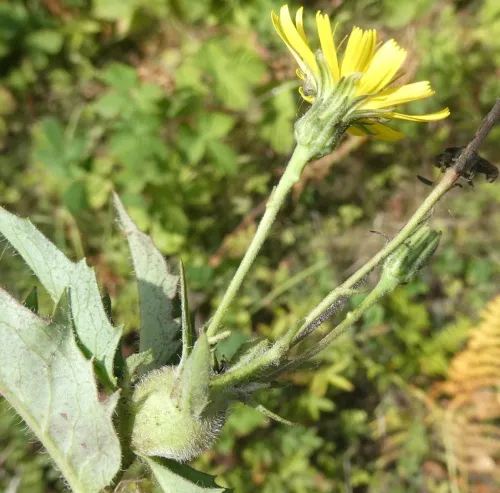
Aulacidea hieracii
Aulacidea hieracii
The larvae of the Cynipid gall wasp Aulacidea hieracii gall the stems of Hieracium species. The galls are rounded swellings up to 4 cm long. The part of the plant above the gall is usually strongly suppressed. The gall may be smooth, but can also be
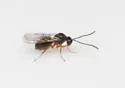
Aulacidea podagrae
Aulacidea podagrae
Identification: best recognized by galls rather than adult wasps. Galls occur on Lactuca canadensis on the stems.
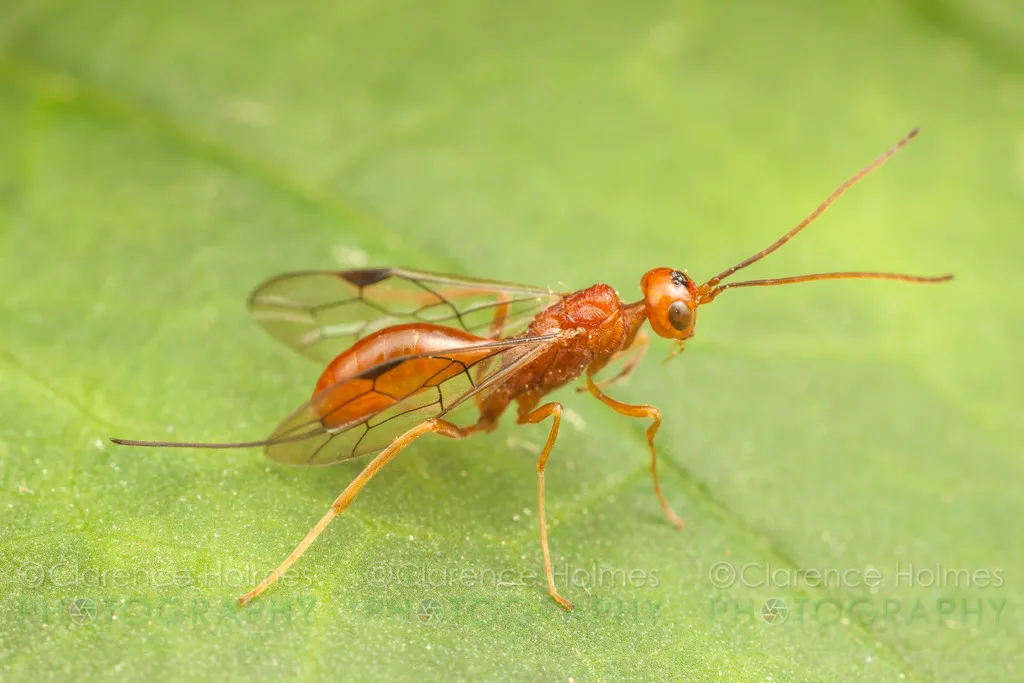
Aulacus burquei
Aulacus burquei
Identification: Apparently the only uniformly orange Aulacus in the eastern US. Parasitic on various Xiphydria species.
Aulogymnus io
Aulogymnus io
Identification: Dark colored, shining metallic on thorax, with extensive yellow markings including a narrow strip behind the ocelli. Two funicular segments, clava about twice as long as wide. Forewing with diffuse dark spot.
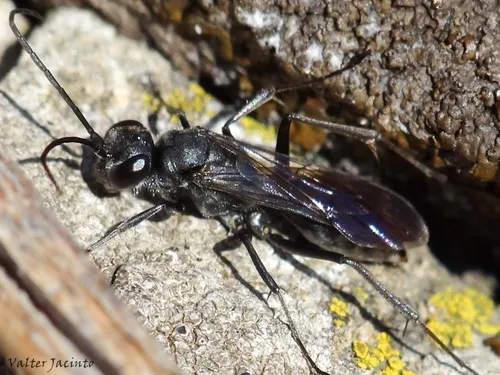
Auplopus carbonarius
Auplopus carbonarius
Most solitary bees and wasps are difficult to identify, and can rarely be identified from photos taken in the field. All red-rated records should include a photo or set of photos of the specimen, illustrating the key characters taken from a standard
Azalea Miner Bee
Andrena cornelli
Identification: A female Andrena in the eastern United States carrying Rhododendron pollen will very likely prove to be this species. The widely spaced scopal hairs of the hind leg are distinctive.
Bahamian Paper Wasp
Polistes bahamensis
Identification: As typical of members of the subgenus Polistes (Aphanilopterus) , the first metasomal segment is slender and slightly elongate, and the antennae are dark with contrasting orange tips. The species has a yellow spot on the mesopleuron,
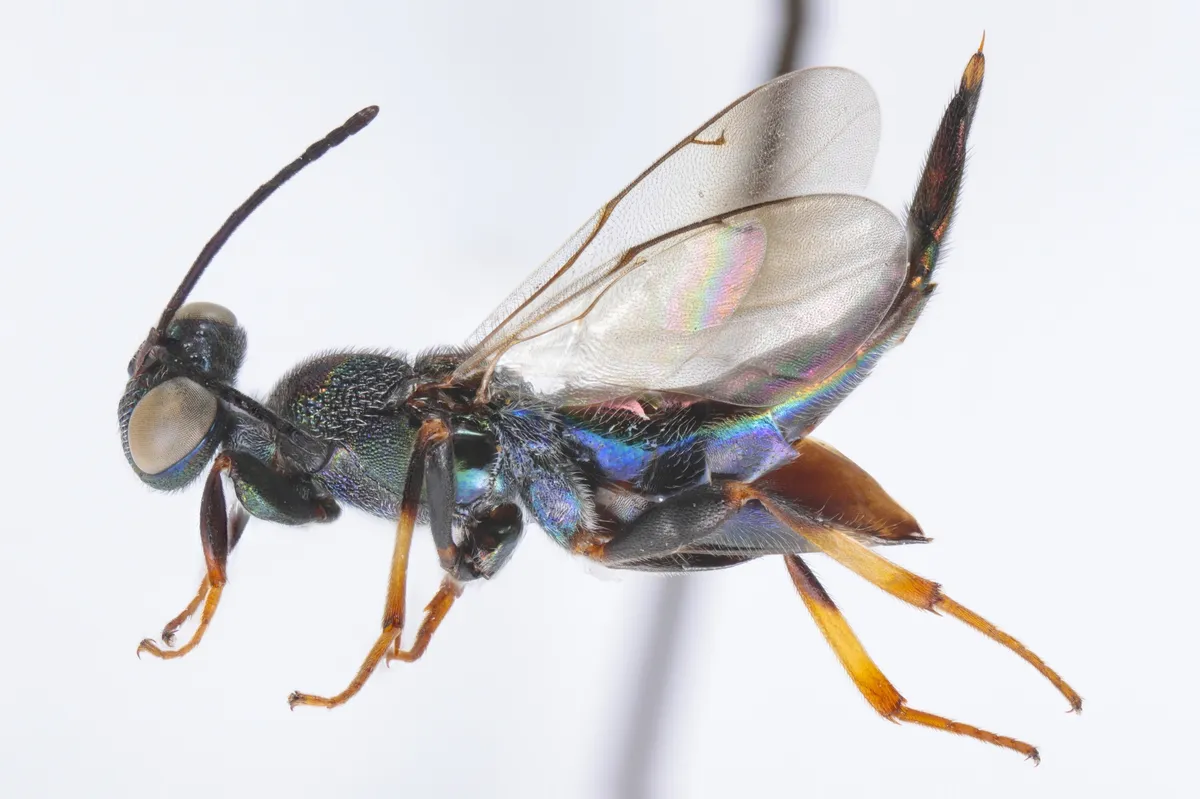
Balcha indica
Balcha indica
Identification: lateral habitus Its possible use as biocontrol of the emerald ash borer is being studied. "Although males are known from the Old World only females have been recovered in North America, indicating a parthenogenetic form was introduced
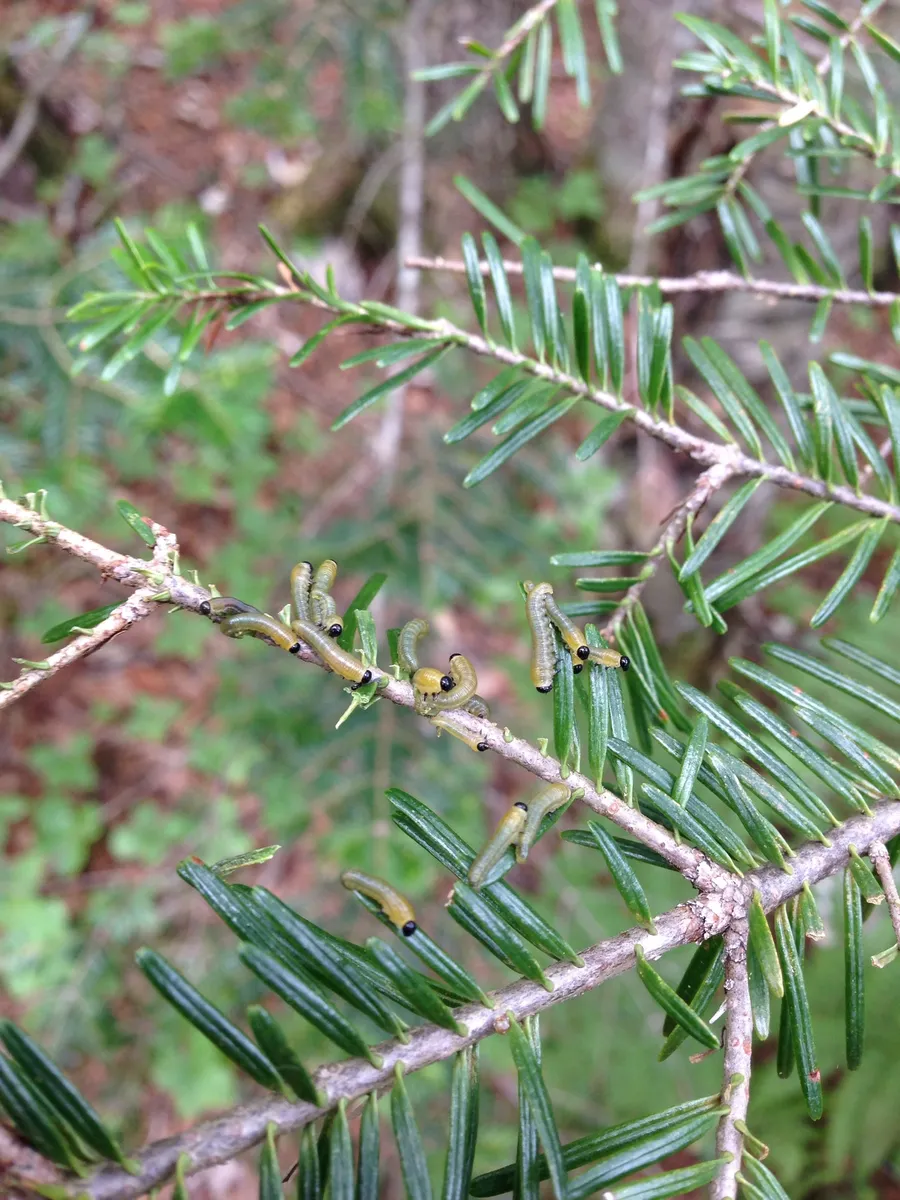
Balsam Fir Sawfly
Neodiprion abietis
Identification: Full-grown larvae are dark green, about 18-25mm long. The head is black and the body is marked with 6 longitudinal dark stripes or bands on the back, the lowest one may be broken up with small dots or spots. The introduced parasite, D
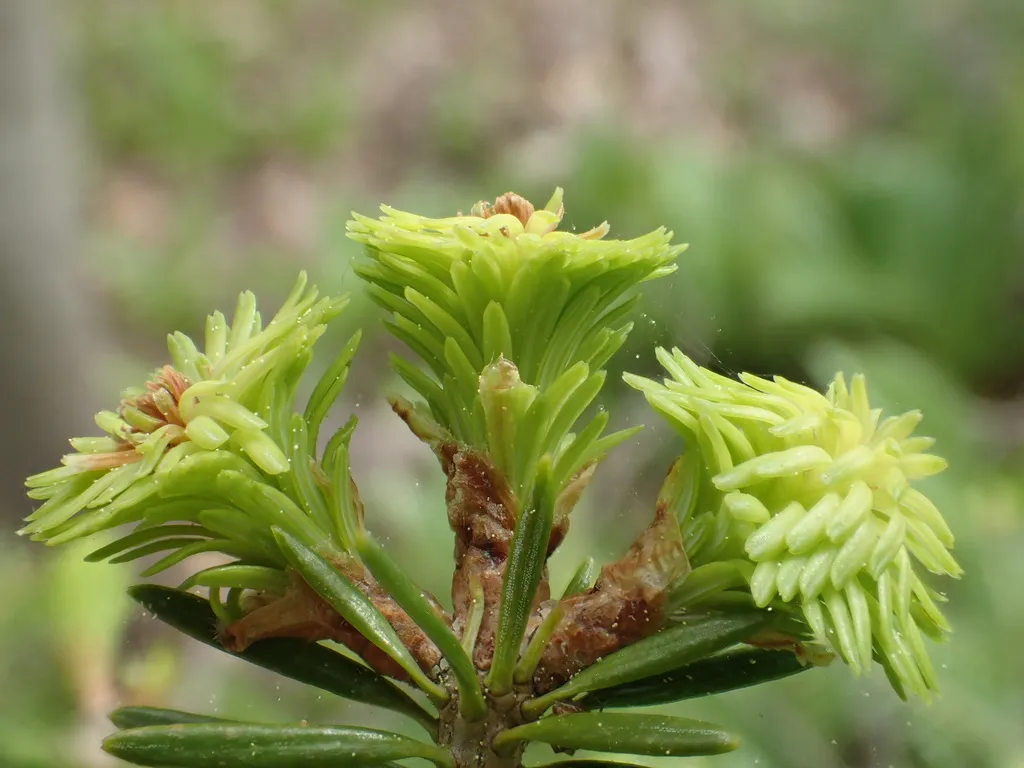
Balsam Shootboring Sawfly
Pleroneura bruneicornis
Damage resembles frost damage, but affected areas pull away easily, revealing larvae or tunnels inside. Damage most visible in summer (June). Prefers young trees under 2 m; potentially damaging to Christmas tree farms. Damage does not kill trees.
Banded Bullet Gall Wasp
Kokkocynips imbricariae
Causes galls on twigs of the red oak group: "Globose, hard, brown or mottled light and dark green, twig galls, diameter 1/4 to nearly 1/2 inch, occurring several together in fissures, on scarlet, black, black jack, blue jack, turkey, pin, willow, shi
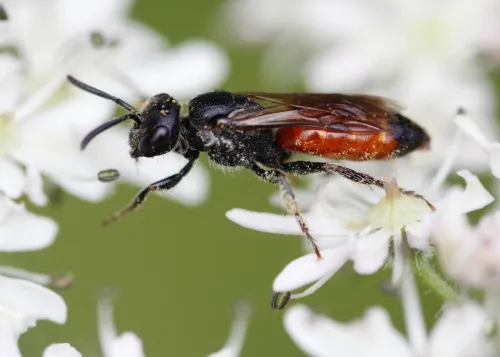
Bare-saddled Blood Bee
Sphecodes ephippius
Similar to several other Sphecodes species and care is needed with the identification. Most solitary bees and wasps are difficult to identify, and can rarely be identified from photos taken in the field. All red-rated records should include a photo o
Barrel Cactus Goblin Bee
Macrotera echinocacti
a member of the subg. Macroteropsis (6 spp., all in our area )
Baryceros candidus
Baryceros candidus
Identification: Our only member of Baryceros with a red abdomen. The white band on the antenna is interrupted below, the coxae and trochanters are white with the fore- and mid- coxae with dark basal and apical marks and the white mark of the hind cox
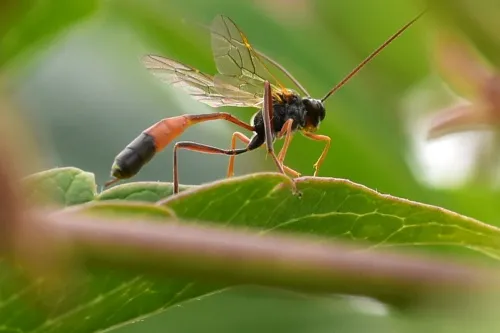
Barylypa propugnator
Barylypa propugnator
13 to 20 mm. Fairly large orange and black Ichneumon. Unless identified by a recognised expert, a photo is required. If the photo doesn't show the key ID features then in the comments box describe the size and identifying characters you have observed
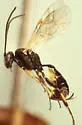
Bathyplectes curculionis
Bathyplectes curculionis
A Paleartic species introduced in NA in 1911 to control Hypera postica , the alfalfa [leaf] weevil and Hypera brunnipennis Egyptian alfalfa weevil.
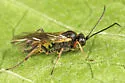
Bathyplectes infernalis
Bathyplectes infernalis
Like its host, the clover leaf weevil, this species is a European immigrant. Although it is generally thelytokous (i.e. females only), I have seen males from NJ, PA, MD, and VA. Males are perhaps even rarer in Europe because in a 1974 revision of t
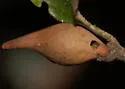
Beaked Spindle Gall Wasp
Heteroecus pacificus
Lyon(1963) noted that the presence of inquilines (e.g. Synergus sp. ) usually deforms the shape of the summer generation galls into a more blunt & swollen-tipped form (e.g. see here and here )...whereas galls free of inquilines typically retain a nar
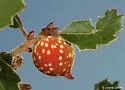
Beaked Twig Gall Wasp
Burnettweldia plumbella
Identification: Larvae make galls in the late spring and summer on blue ( Quercus douglasii ), scrub ( Q. berberidifolia ), shrub live ( Q. turbinella ), and leather ( Q. durata ) oaks. Galls are up to 15mm in diameter and are red or green with yello
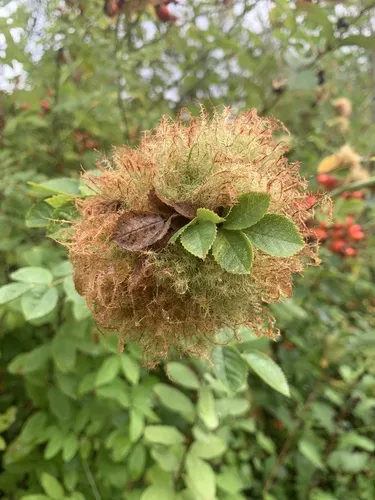
Bedeguar Gall Wasp
Diplolepis rosae
The female insects are about 4 mm long; parts of their abdomens and legs are an amber/chestnut colour, while the rest of the body is black. The male (length of about 3 mm) is very rare. It is black and its legs are bi-coloured. The gall is more likel
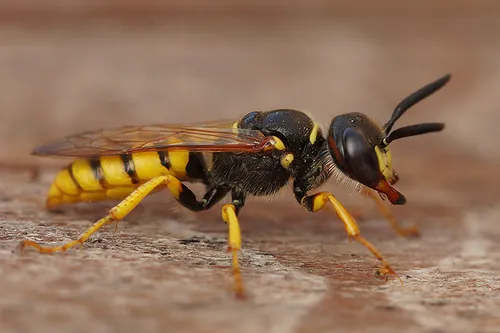
Bee Wolf
Philanthus triangulum
The Bee Wolf is one of the largest (up to 17 mm) and most spectacular solitary wasp species in Britain. It can be distinguished by the unfolded wings and thickened antennae. The abdomen and face are extensively yellow and the back of the head behind
Belonocnema fossoria
Belonocnema fossoria
Identification: Spur on the anterior side of fore tibia longer than basitarsus and tibial spurs. Middle tibia with a smaller spur. Found on Quercus geminata in Georgia and Florida . Similar galls in Georgia/Florida could be from this species (exclusi
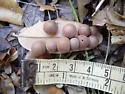
Belonocnema kinseyi
Belonocnema kinseyi
Identification: Spur on the anterior side of fore tibia shorter than basitarsus, approximately the same length as tibial spurs. Middle tibia without a spur. Asexual generation (Antennae with 14 in females or 15 in males with F1 excavated segments) sc
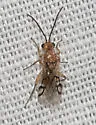
Belonocnema treatae
Belonocnema treatae
Identification: Spur on the anterior side of fore tibia shorter than basitarsus, approximately the same length as tibial spurs. Middle tibia without a spur. Asexual generation (Antennae with 14 in females or 15 in males with F1 excavated segments) sc
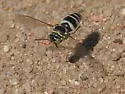
Bembecinus quinquespinosus
Bembecinus quinquespinosus
Identification: Males are highly variable and can range from largely pale to mostly black: Females are always dark
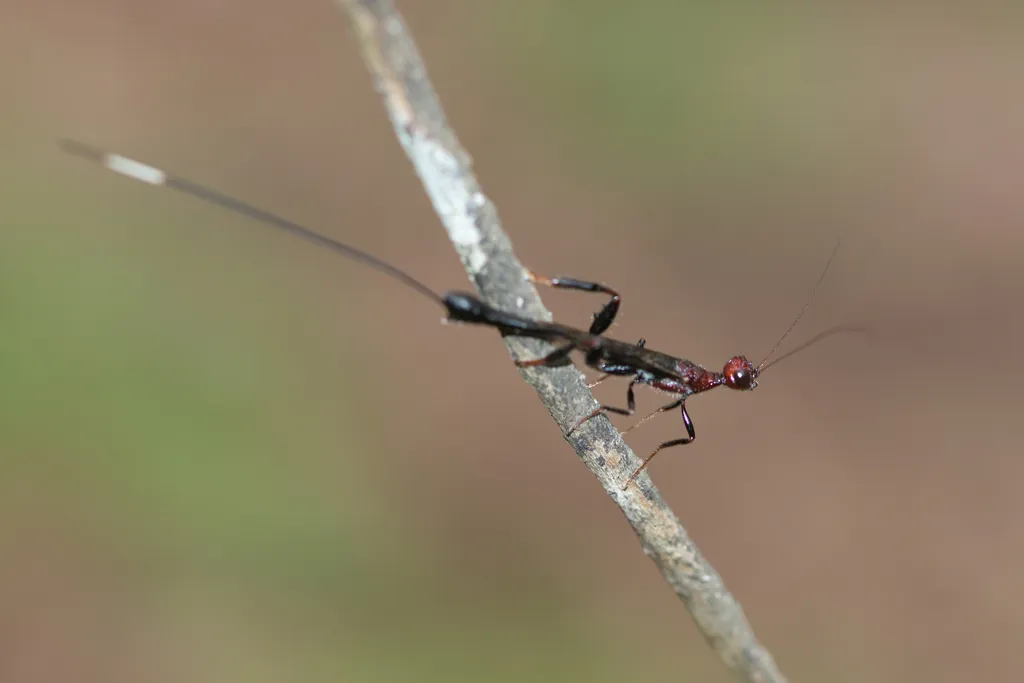
Bicolored Crown Wasp
Megischus bicolor
Identification: Reported to have two morphs, previously described as subspecies: "one with head and pronotum ferrugineous ( M. b. bicolor ) and another uniformly brown or blackish ( M. b. sickmanni )" ( Stephanid home page -Alexandre Pires Aguiar) vs
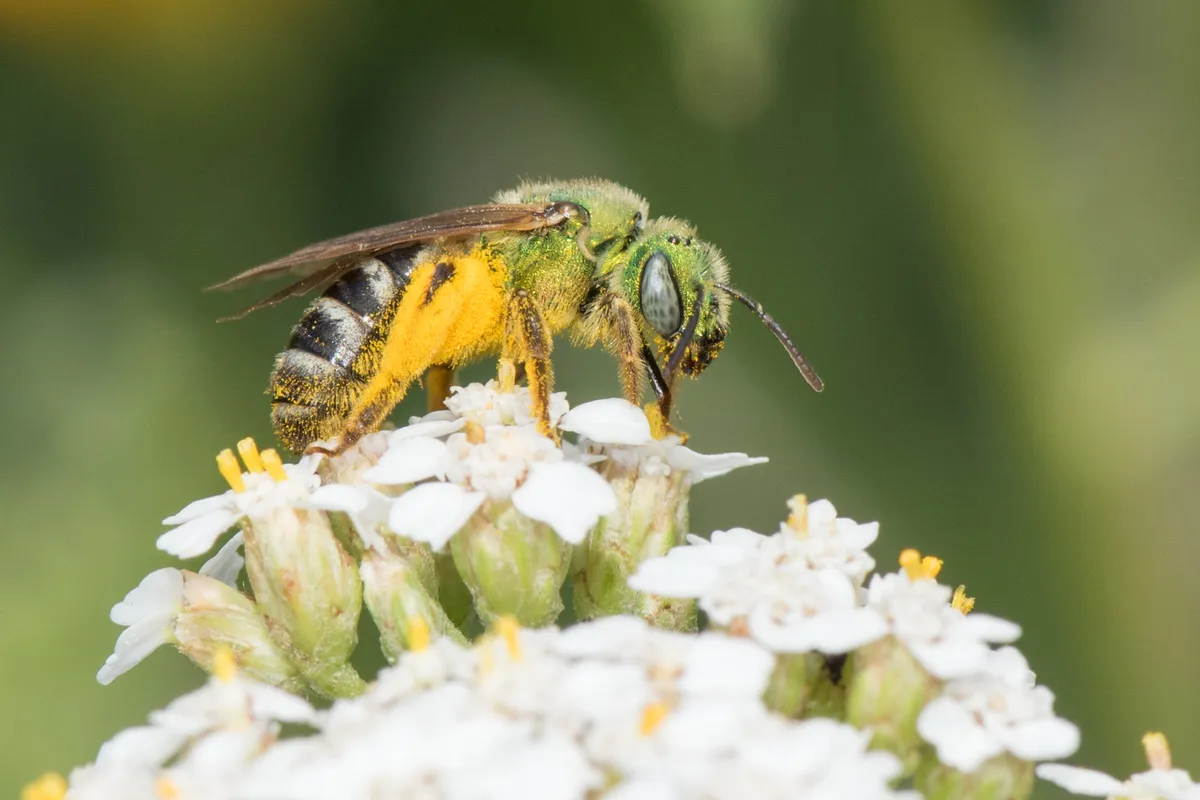
Bicolored Striped Sweat Bee
Agapostemon virescens
Identification: Males: Hind femora slender, fully three times as long as the greatest width. Females: Abdomen black, with pale basal fasciae.
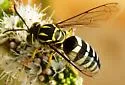
Bicyrtes variegatus
Bicyrtes variegatus
Identification: Scutum with long pale spots. Scutellar spots closely approximated anteriorly. Xanthic B. quadrifasciatus can be similar but have spots on tergum 5 more separated.
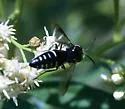
Bicyrtes viduatus
Bicyrtes viduatus
Identification: Submarginal cell 1 conspicuously clouded, wings otherwise largely clear.
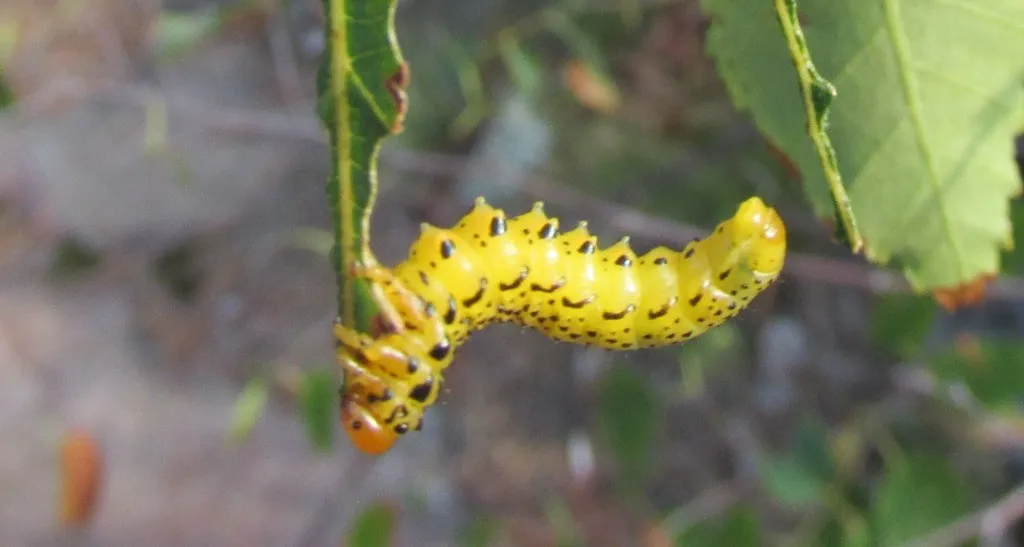
Birch Sawfly
Arge pectoralis
Identification: Adult is said to be blue-black with white markings on legs (Connecticut Agricultural Experiment Station) the most commonly encountered argid ( 3 )
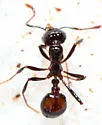
Black Imported Fire Ant
Solenopsis richteri
Introduced from South America, probably Argentina, sometime near 1918. A hybrid of this and S. invicta (also introduced) is becoming very common and displacing this species.
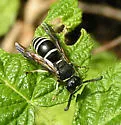
Black-and-White Mason Wasp
Euodynerus leucomelas
Identification: It has a white band on the metanotum and a black scutellum
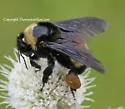
Black-and-gold Bumble Bee
Bombus auricomus
Identification: Mullerian mimic of B. pensylvanicus . Note the following: See detailed descriptions Males with large eyes strongly convergent above and modified antennae. This species is variable in hair color with dark females readily confused with
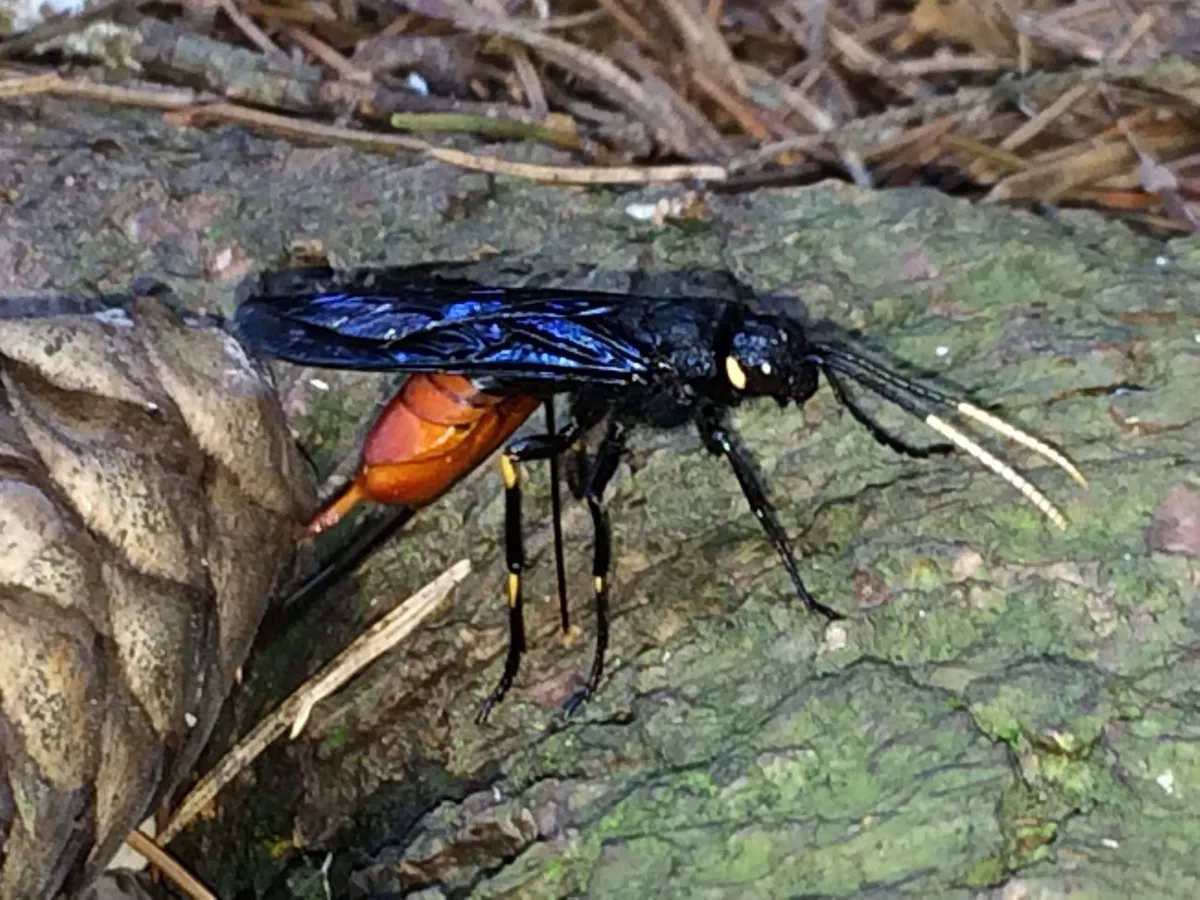
Black-and-red Horntail Wasp
Urocerus cressoni
Identification: head, thorax and wings black, abdomen red (amount of red variable), two pale spots behind the eyes, antennae black with white tips
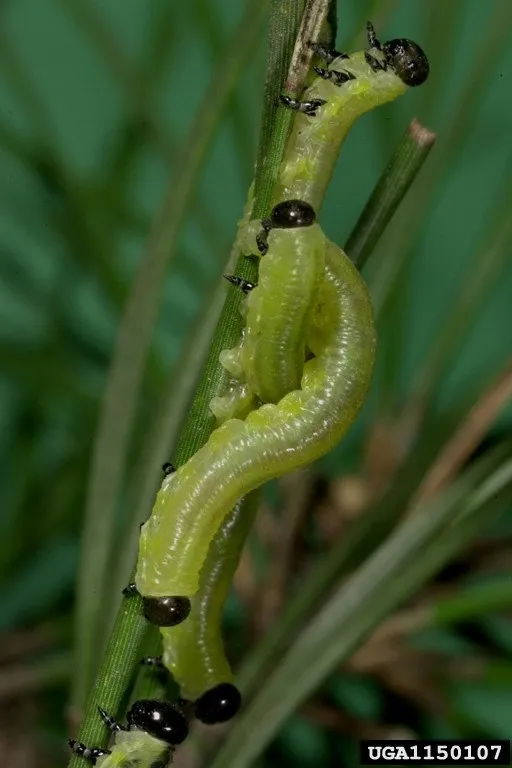
Black-headed Pine Sawfly
Neodiprion excitans
Egg laying begins in March with eggs inserted in slits cut near the base of needles. Needles closest to the tips of exposed shoots are chosen during spring and fall, whereas needles on shaded shoots are chosen during hot weather. Newly-hatched larvae
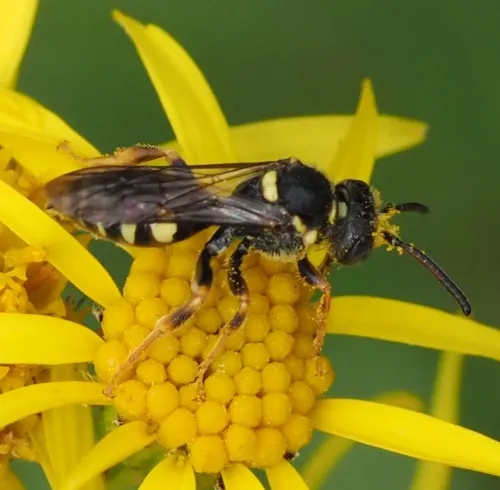
Black-horned Nomad Bee
Nomada rufipes
This is a medium-sized bee which is yellow and black, although some females may be red, yellow and black. For further details see the ‘Further info:’ links below. Most solitary bees and wasps are difficult to identify, and can rarely be identified fr
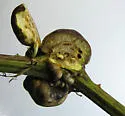
Blackberry Knot Gall Wasp
Diastrophus nebulosus
Induces galls in blackberry stems: "Rounded or long stem swellings, sometimes with 4 or 5 deep longitudinal furrows, length 2 to 6 inches." Parasitoids include this eurytomid: