
Flies
Order Hymenoptera
The Flies (Order Hymenoptera) includes 5,194 species across 102 families and 1,491 genera in our directory.
About Flies
Hymenoptera includes over 150,000 described species of ants, bees, wasps, and sawflies. Earth harbors approximately 20 quadrillion (20×10^15) ants, with a combined biomass of ~12 megatons of dry carbon - exceeding the combined biomass of all wild birds and mammals (PNAS, 2022).
Economic Impact
Pollinators contribute $235-577 billion worth of annual global food production (FAO). In the U.S., bee pollination alone benefits crops valued at $18 billion annually, and honey bees are responsible for $5.4 billion in agricultural productivity. Between April 2023-2024, 55.1% of managed honey bee colonies were lost. The U.S. bee population dropped from 5 million to 2.5 million.
Ecological Role
About 35% of the world's food crops depend on animal pollinators. The chocolate industry, valued at over $100 billion, depends on pollinating flies and midges. Ants are the dominant soil engineers in most terrestrial ecosystems, turning more soil than earthworms in many habitats.
Families in Hymenoptera (102)
Species in Hymenoptera (5,194)
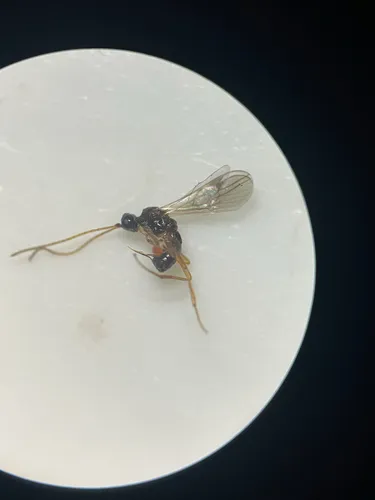
Blacus chillcotti
Blacus chillcotti
Identification: Keys to the genus in van Achterberg and .
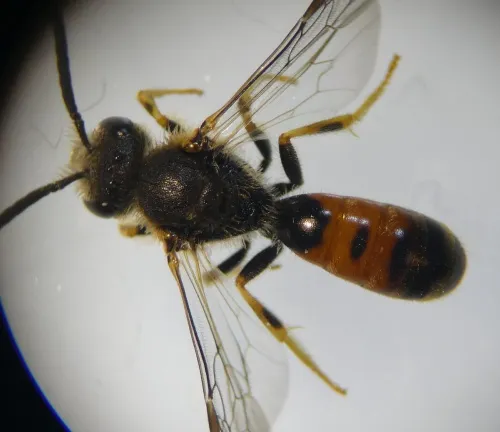
Bloomed Furrow Bee
Lasioglossum albipes
See description here https://www.flickr.com/photos/63075200@N07/albums/72157639213366755/ Closely resembling Lasioglossum calceatum in both sexes, but in L. albipes the labrum is yellow whereas in L. calceatum it is dark. Most solitary bees and wasps
Blue Calamintha Bee
Osmia calaminthae
Currently only known from sandy scrub at four sites in the southern Lake Wales Ridge in Highlands County, Florida
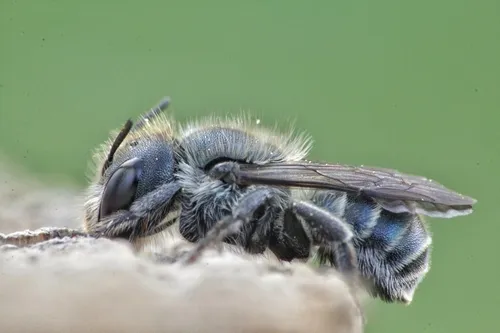
Blue Mason Bee
Osmia caerulescens
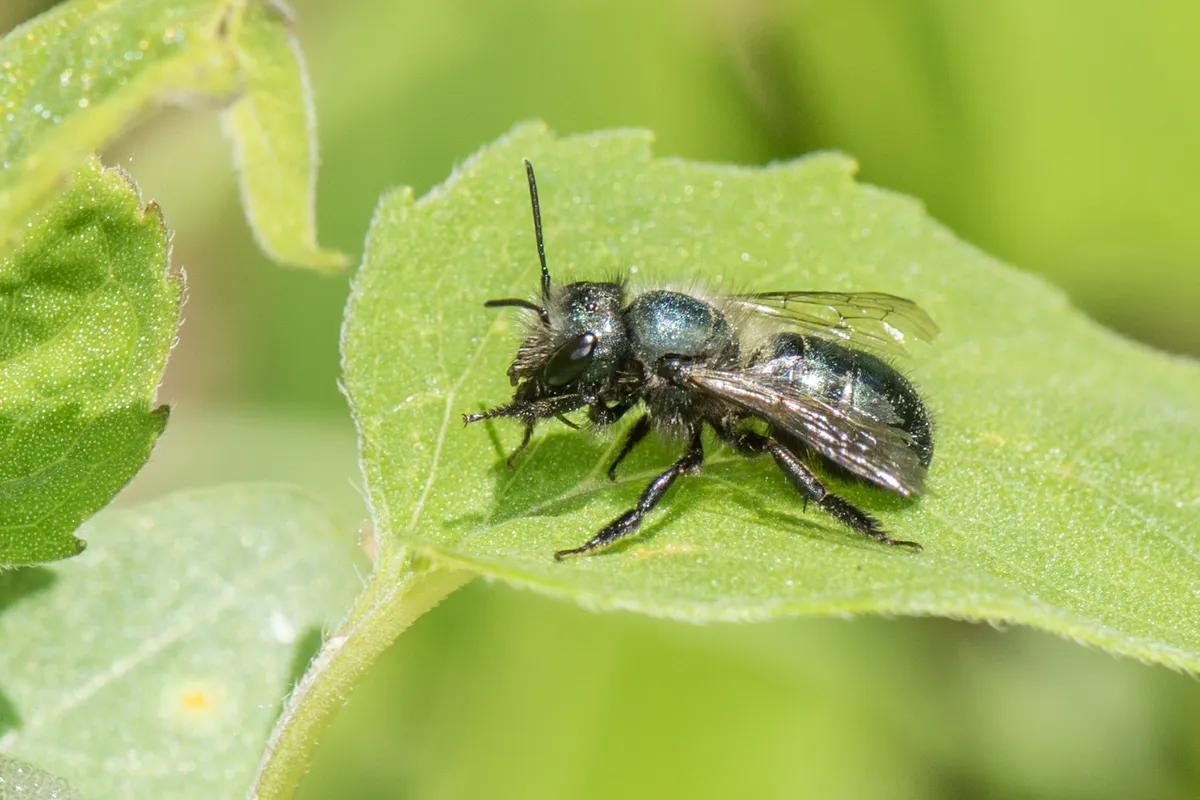
Length 8 to 10 mm. The females have large box-shaped heads and a blue metallic lustre to the abdomen giving rise to its common name, with a black pollen basket on the hind legs. The males are bronze with pale yellow hairs and a shining slope at the f
Blue Orchard Bee
Osmia lignaria
Identification: Metallic blue, almost black. It is being managed and developed for use as fruit trees pollinator. Management of O. lignaria . Field use of an incubation box The clerid Lecontella brunnea (Spinola) was reared from the nest of Osmia lig
Blue-eyed Ensign Wasp
Evania appendigaster
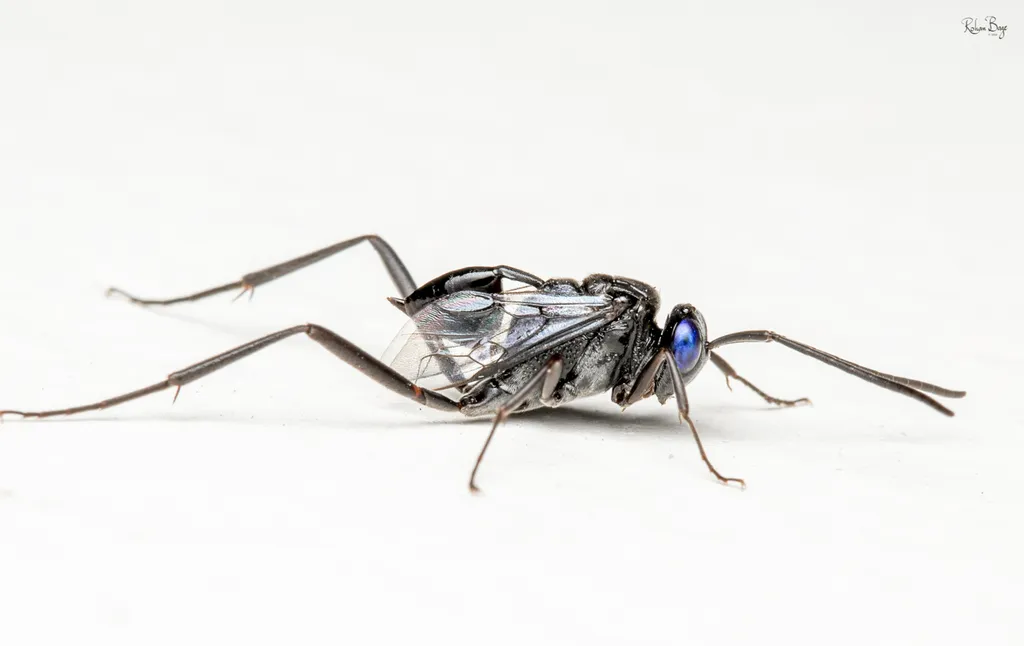
Identification: Most readily identified by its brilliant blue eyes. The only species in our area with all of the coxae evenly spaced. It is one of two large species, the other being the often brown-marked Prosevania fuscipes . Note: additional (rare)
Blueberry Cellophane Bee
Colletes validus
Identification: Malar space unusually long. Otherwise similar to inaequalis in appearance
Blueberry Digger Bee
Habropoda laboriosa
A good pollinator of blueberries. It is estimated that each female visits nearly 50,000 Vaccinium ashei flowers in its lifetime, producing over 6,000 ripe blueberries with a fresh market value of $20 U.S.
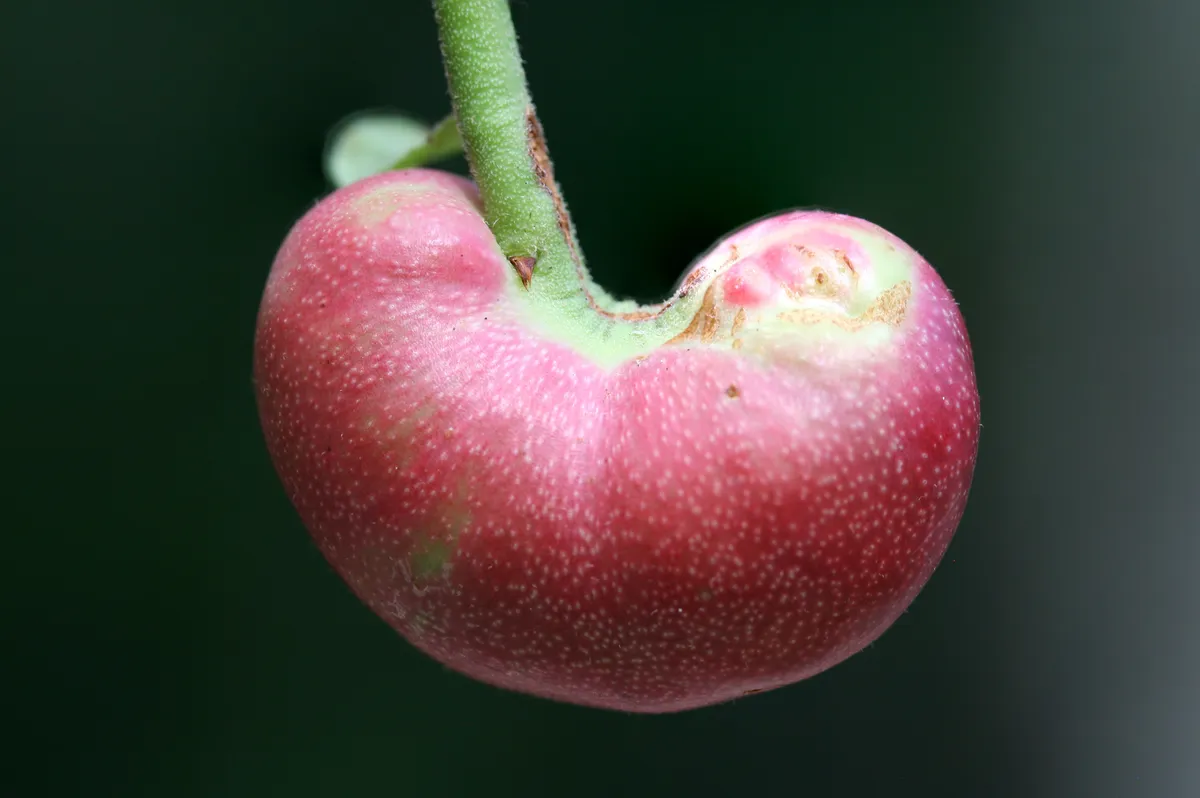
Blueberry Stem Gall Wasp
Hemadas nubilipennis
Causes stem galls on blueberry ( Vaccinium spp.), in which the larvae develop. Adults emerge in the spring. Several other chalcidoids have been reared from these galls, including Ormyrus vacciniicola .
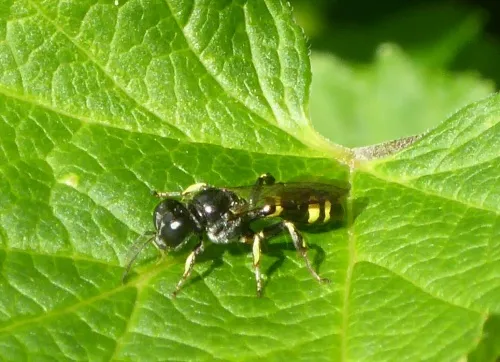
Blunt Tailed Digger Wasp
Crossocerus dimidiatus
One of the larger British Crossocerus with yellow-spotted gasters, resembling Crabro and Ectemnius, rather than the smaller, darker Crossocerus more typical of the British fauna. “Most solitary bees and wasps are difficult to identify, and can rarely
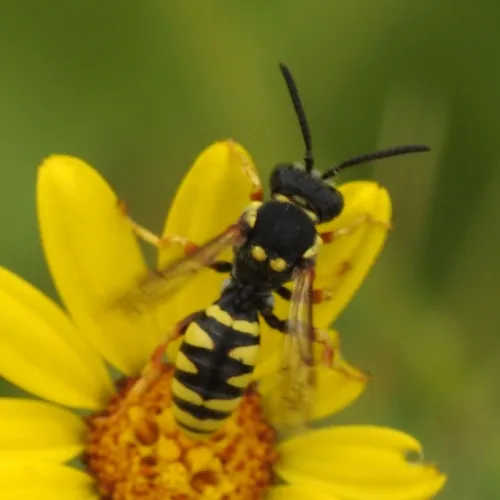
Blunthorn Nomad Bee
Nomada flavopicta
Length 8-11mm. This a medium sized black and yellow Nomad Bee. The abdomen has yellow markings almost merging on T1, then widely separated on T2 and T3. There are two yellow marks on the scutellum, and the tegulae, pronotal turbercles and collar are
Bocchus flavipes
Bocchus flavipes
Identification: Very close to Bocchus hainesi . The key characters are contained in the chela (don't show in photos in the guide). They can however be separated by the presence of a faint infuscated spot in the wing of B. flavipes .
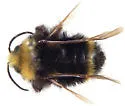
Bombus caliginosus
Bombus caliginosus
Identification: Nearly identical in color pattern to B. vosnesenskii but females usually have lateral pale fringes on S4 and a longer malar space. Males are separated by antennal proportions. Relatively few confirmed recent records reflect in part se
Bombus neoboreus
Bombus neoboreus
now interpreted as a composite of two cryptic species with overlapping distributions (Williams et al. 2015)
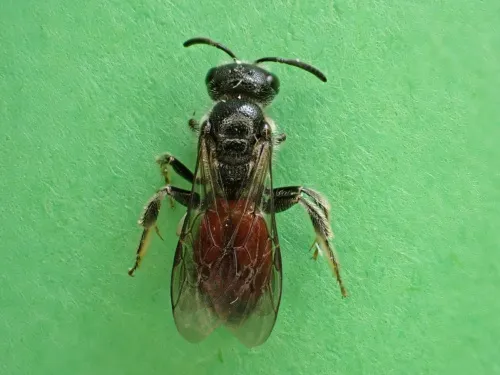
Box-headed Blood-bee
Sphecodes monilicornis
One of three medium-sized to large Sphecodes (Blood-bees), in which females have punctures (rather than just rugosity) behind the ocelli. Males are one of a number of species with somewhat compressed and shiny antennal flagellar segments and are best
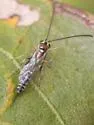
Brachycyrtus pretiosus
Brachycyrtus pretiosus
Identification: Distinguished from allies by its fulvous thorax, white markings, lighter hind trochanter, apex of hind tibia dark, darker-marked hind femur, and dark lines on the tarsi
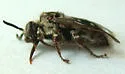
Brachymelecta californica
Brachymelecta californica
Identification: Scopa lacking (as in all Melectini); terga with medially broken bands of appressed white (rarely pale brown) pubescence. See also Internet Reference (DiscoverLife) Parasite of Anthophora
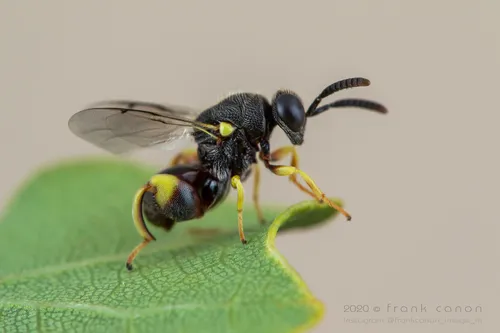
Brachymeria tibialis
Brachymeria tibialis
Length about 5 mm. This is a small black and yellow chalcid wasp. The thighs are very swollen and the hind tibia of this species is all yellow dorsally along the entire length. In grassland where moths of the Burnet family ( Zygaena sp .) are found.
Brachymyrmex depilis
Brachymyrmex depilis
Workers of this species are tiny, about 1.25 mm in length, until they fill up their crops with honeydew from subterranean aphids, etc. and expand to nearly 2.0 mm. [comment by James C. Trager] Queens are much larger, and judging by the number of ima
Brachymyrmex obscurior
Brachymyrmex obscurior
Identification: Very similar to B. patagonicus . The eyes are smaller. Introduced, originally from Central and South America.
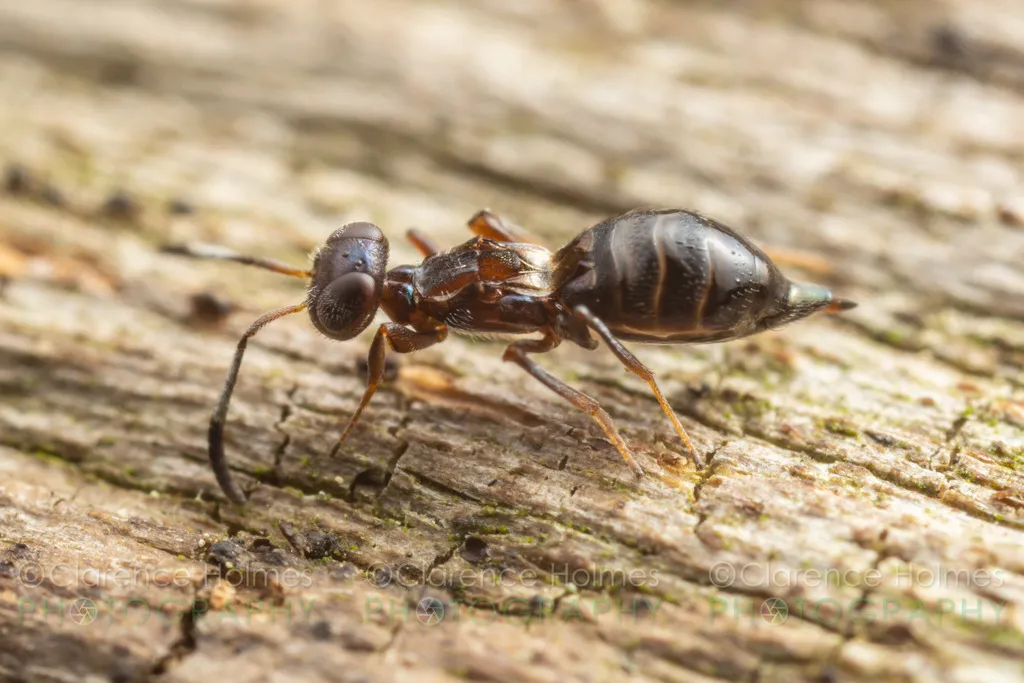
Brasema leucothysana
Brasema leucothysana
Identification: Female with dense, reflective, white setae on base of flagellum.
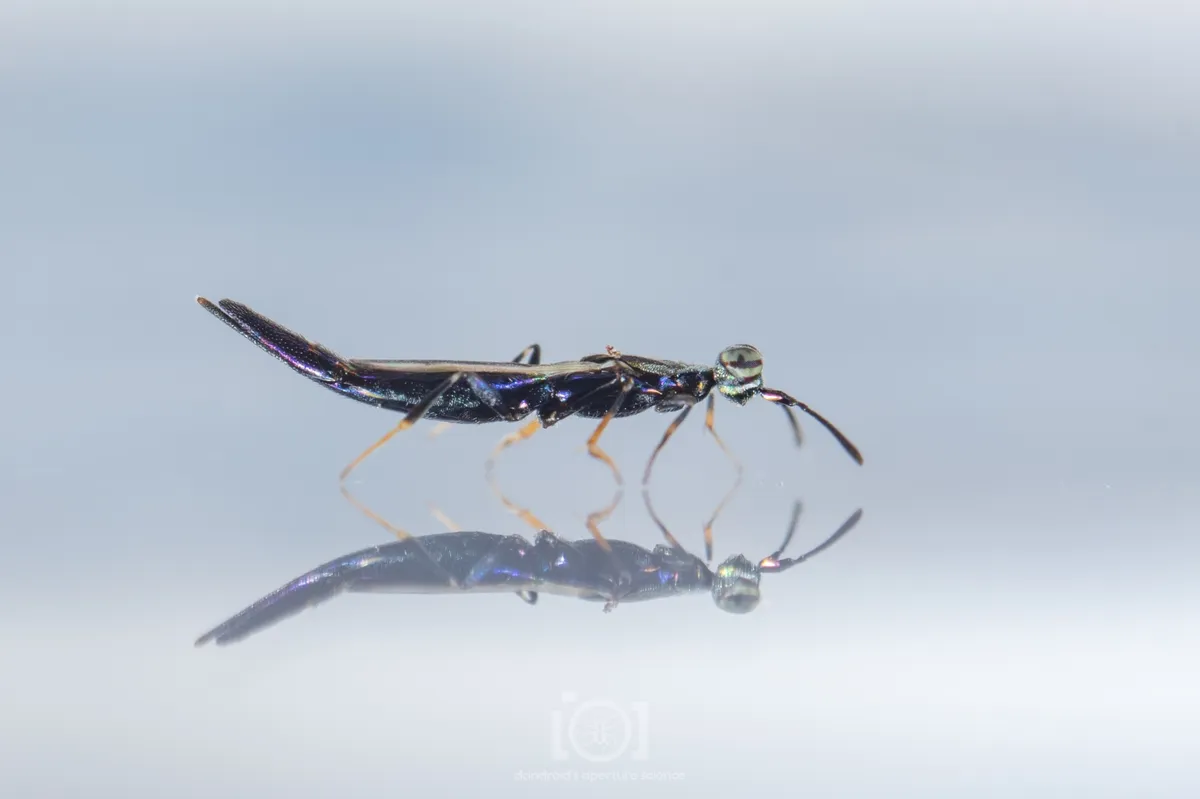
Brasema rhadinosa
Brasema rhadinosa
Identification: "Females of this species are quite easily recognized in the genus based on their elongate-slender habitus and a forewing that has a longitudinal infuscate band (just visible in image)." -- Gary Gibson The species is quite common and w
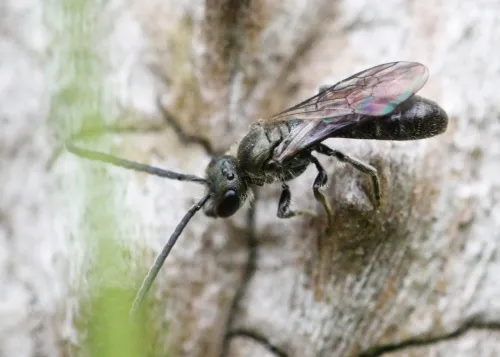
Brassy Mining Bee
Lasioglossum morio
This is the commonest of the four Lasioglossum species with metallic colouration. Both sexes are distinguished from other species by the densely punctate, dull scutum which has clear microsculpture between the punctures. Some females of Lasioglossum
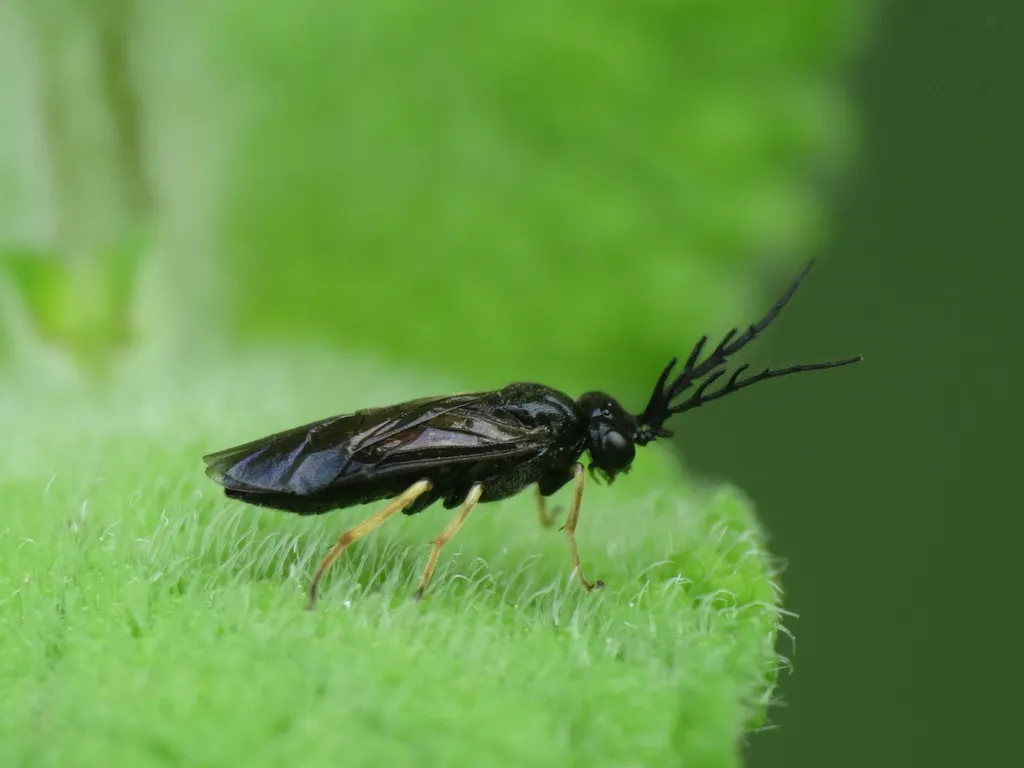
Bristly Roseslug Sawfly
Cladius pectinicornis
Identification: "Few sawflies have hairs such as this. Rather long hairs on body, prolegs on abdominal segments 2-7 and 10, and feeding on rose pretty well narrows this down to the bristly roseslug." --Dr. Smith's comments may damage raspberry and st
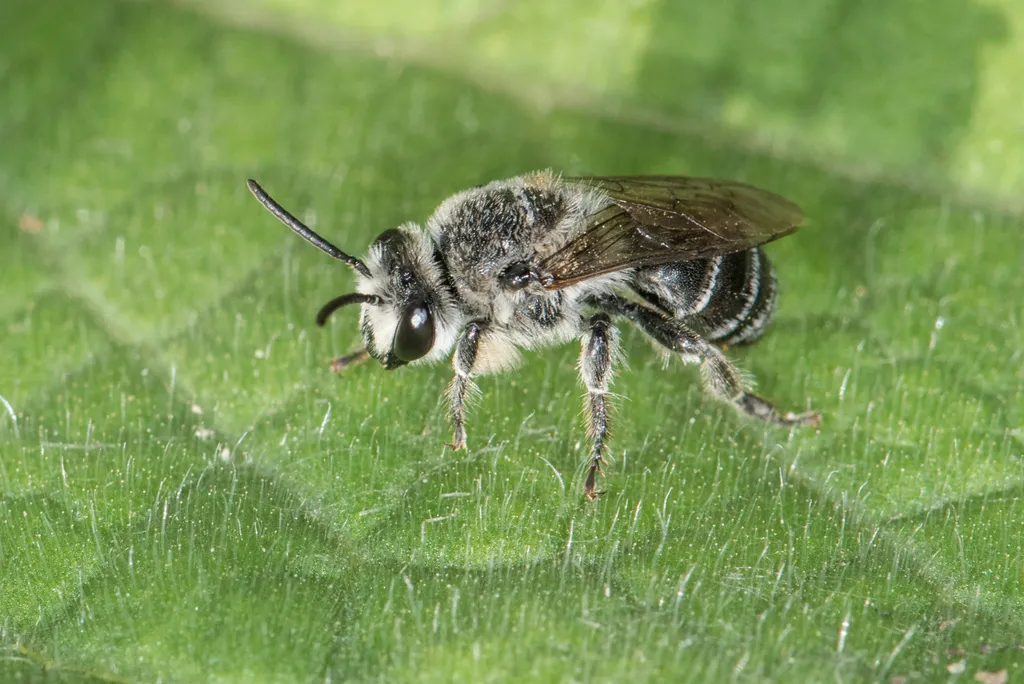
Broad-footed Cellophane Bee
Colletes latitarsis
Identification: To differentiate it from the similar Colletes willistoni : Female: The second trasal segment of the hind legs are short, approximately as broad as long, and the hind basitarsi are two and one fourth (2.25) times as long as broad. Male
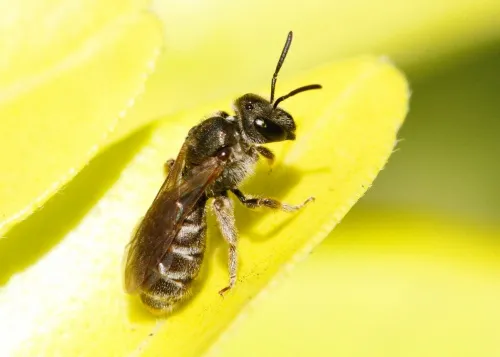
Bronze Furrow Bee
Halictus tumulorum
A rather small, metallic bee, with white tomentose hair bands on the gaster. In females the pale hair band on tergite 3 narrows in the middle. Most solitary bees and wasps are difficult to identify, and can rarely be identified from photos taken in t
Brown-headed Ash Sawfly
Tomostethus multicinctus
sporadic but important early-season defoliator in e. US & CO
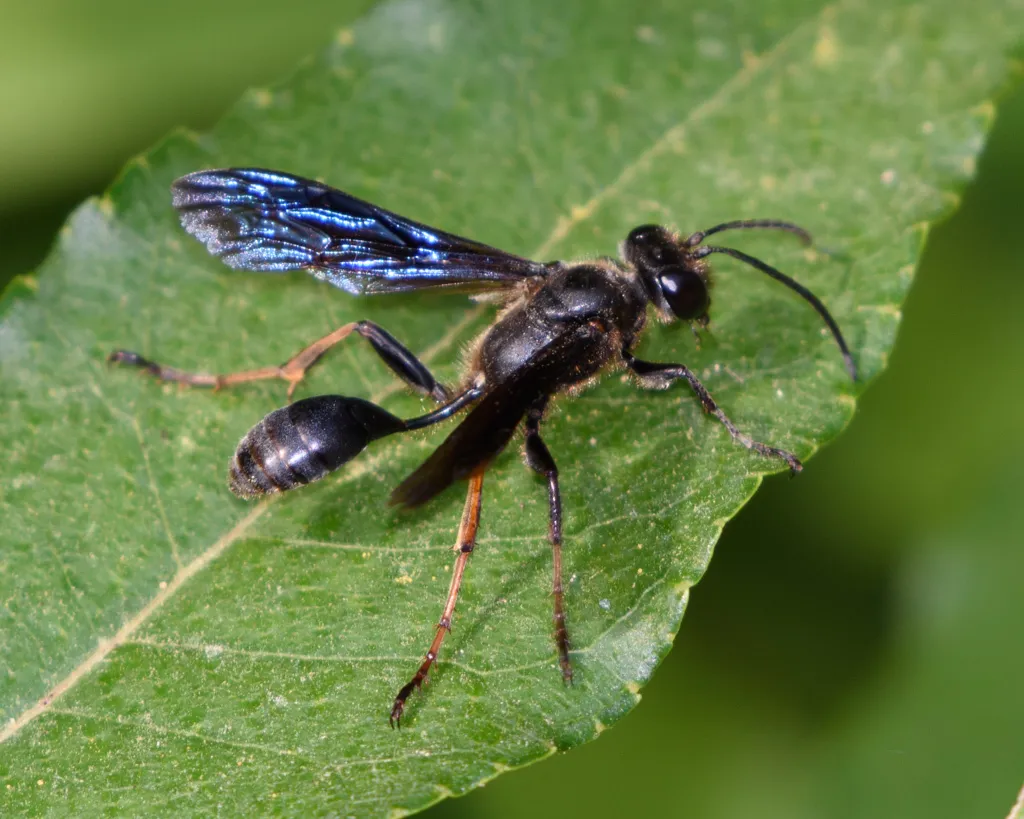
Brown-legged Grass-carrying Wasp
Isodontia auripes
Identification: Brown legs are apparently distinctive, within this genus.
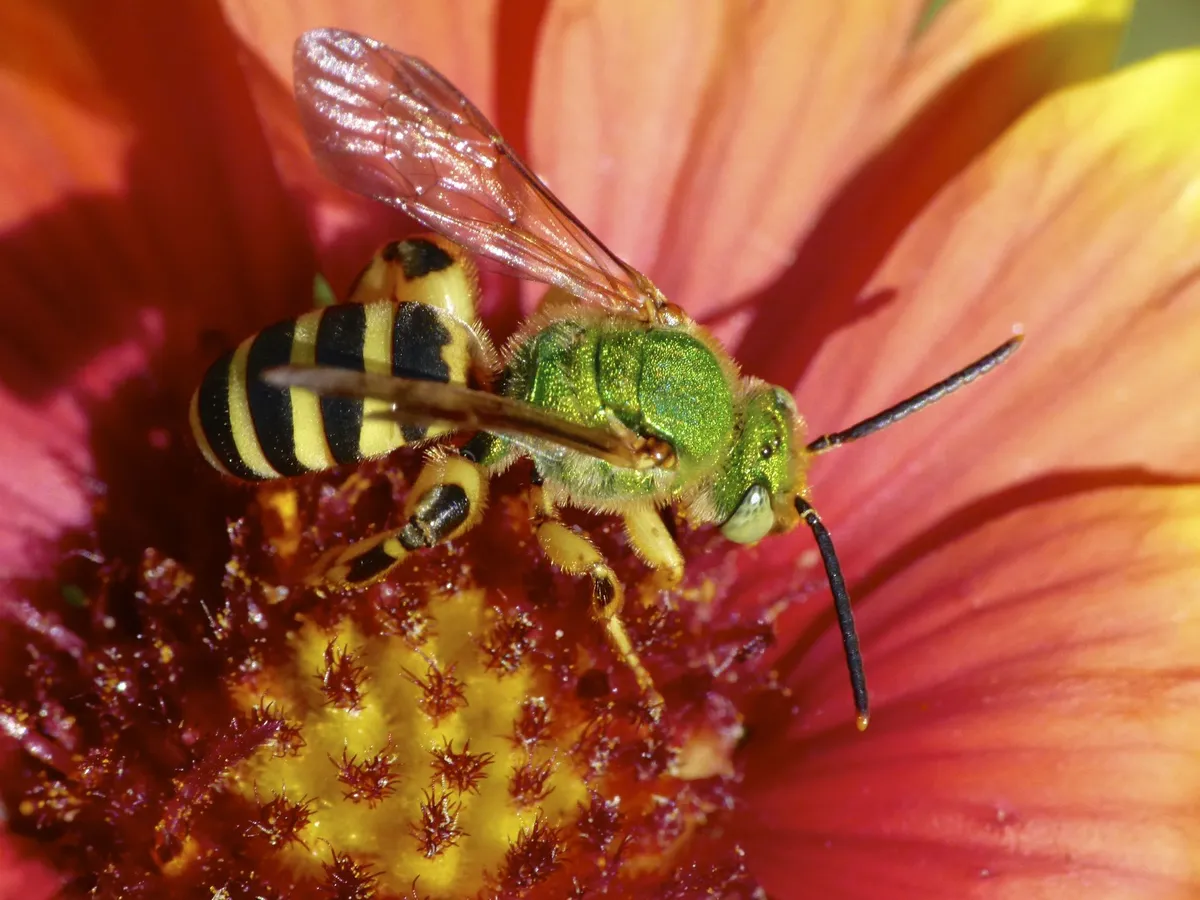
Brown-winged Striped Sweat bee
Agapostemon splendens
Identification: Males: Hind femora robust, thickened, only about twice as long as the greatest width. Females: Abdomen metallic green. Dark wings, not clear.
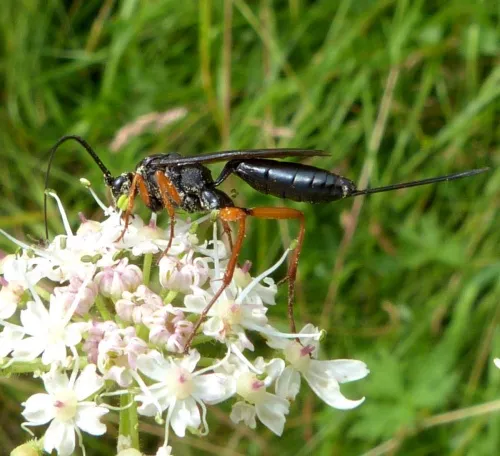
Buathra laborator
Buathra laborator
Quite a large blackish insect with mainly orange legs. There are other similar species and expert help is needed with identification. The images that appear in a red box are representative of this species, but have not been subject to detailed expert
Buathra perplexa
Buathra perplexa
Identification: thorax and abdomen black; coxae and scapes red
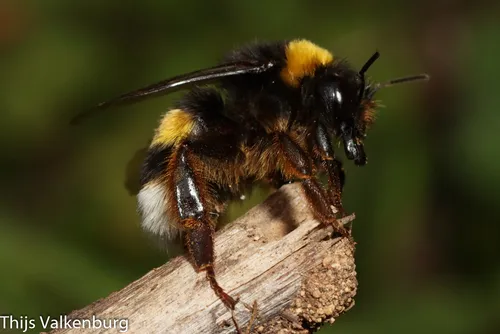
Buff-tailed Bumblebee
Bombus terrestris
Possibly the earliest bee to be seen and the largest to visit gardens. The queen is 2 cm or more, the workers and drones are of a more common bumblebee size: 14 to 17 mm in length. Whilst similar to Bombus lucorum , queens can be distinguished by the
Bufflehead Mason Bee
Osmia bucephala
Identification: Bombus -like color pattern of female. Modified legs of male.
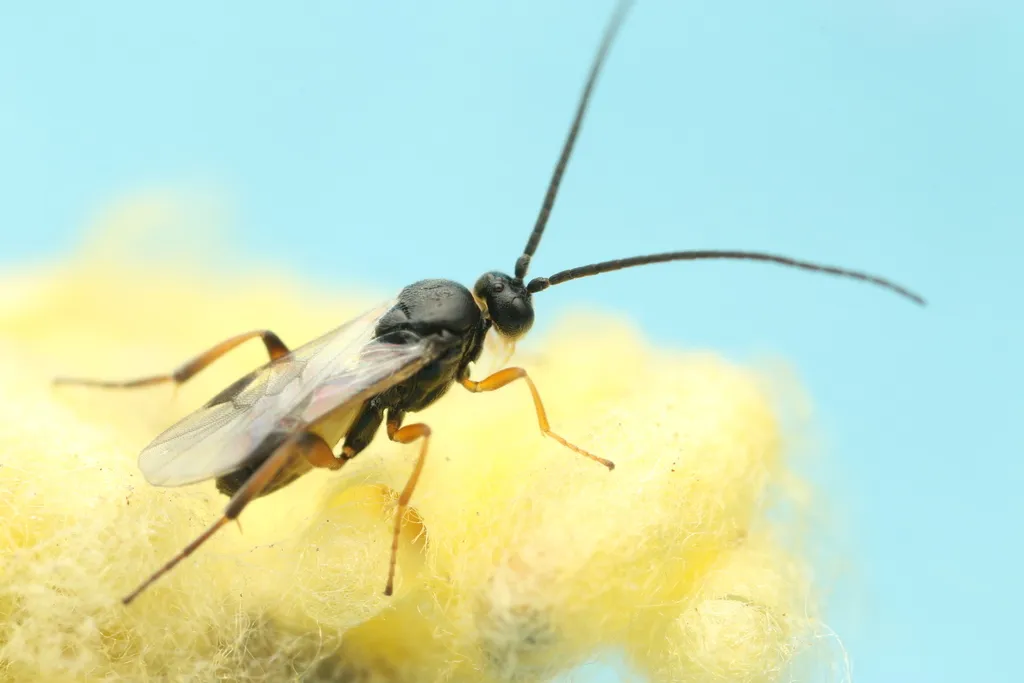
Cabbage White Parasitoid Wasp
Cotesia glomerata
It is most attracted to caterpillar-damaged plants, followed by host larvae and their frass with no plant present, demonstrating the importance of volatiles in parasitoid foraging.
Caenocephus aldrichi
Caenocephus aldrichi
Identification: F1 longer than F2; metatibia without pre-apical spurs
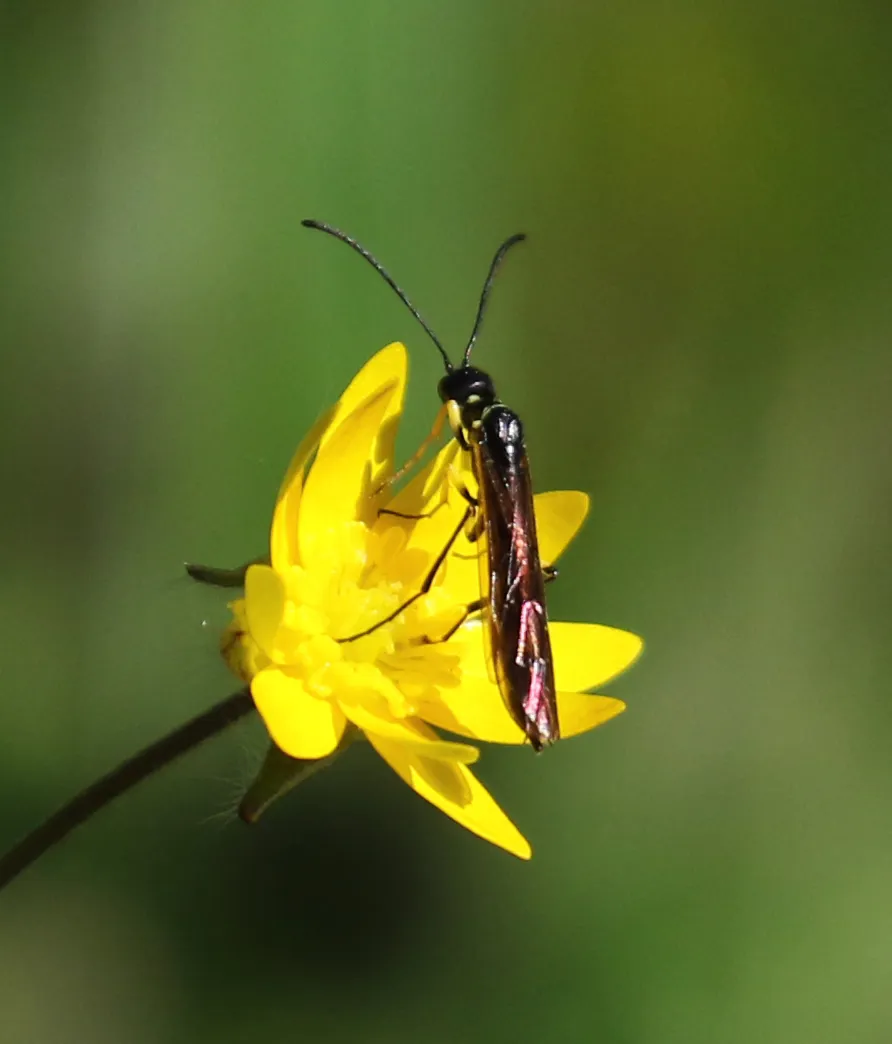
Calameuta clavata
Calameuta clavata
Identification: Distinguishing from the similar Cephus cinctus explained here . Photos of abdomens and heads of C. clavata and C. middlekauffi , the only other known nearctic member of the genus in
Calameuta middlekauffi
Calameuta middlekauffi
Identification: See Smith & Schiff for the detailed original description of this species, and for information and photographic plates helping to distinguish it from the other known nearctic species in the genus, C. clavata .
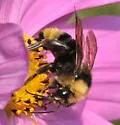
California Bumble Bee
Bombus californicus
Identification: Color pattern of typical Californian females as in vosnesenskii but with all black hairs on head instead of extensive yellow hairs. Also malar space long and legs gangly. In the eastern portion of its range its color converges on ferv
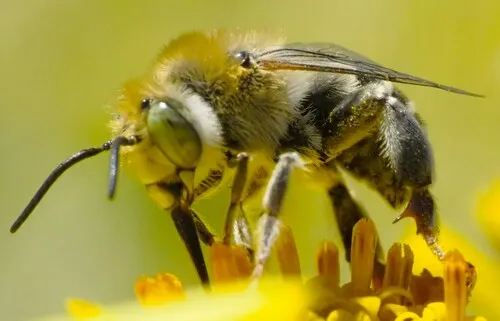
California Digger Bee
Anthophora californica
Identification: White metasomal bands are integumental (vs. white hair bands in A. urbana) Eye color in life usually greenish (vs. blue-gray in A. urbana) Male with hind tibia red and modified, with a projection (vs. unmodified and whitish in color i
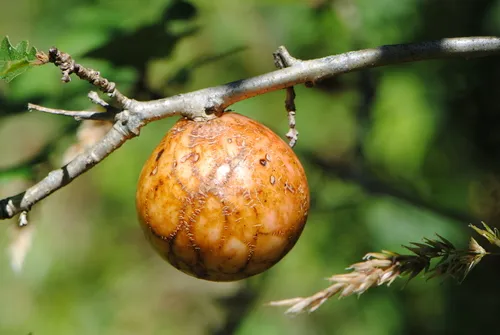
California Gall Wasp
Andricus quercuscalifornicus
Many other insects, especially other wasp species, are parasites, inquilines, and hyperparasites of this wasp.
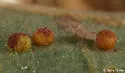
California Jumping Gall Wasp
Neuroterus saltatorius
Identification: Summer/fall unisexual galls of this species occur on the underside of valley, blue, scrub, and Oregon oak leaves. Spring bisexual generation galls are integral leaf galls. Periodic movements of the larvae after the unisexual generatio
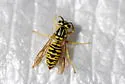
California Yellowjacket
Vespula sulphurea
Identification: Key to eastern Nearctic Vespula species in the Identification Atlas of the Vespidae of the Northeastern Nearctic Region . Key to Nearctic Vespinae genera in the Identification Atlas of the Vespidae of the Northeastern Nearctic Region
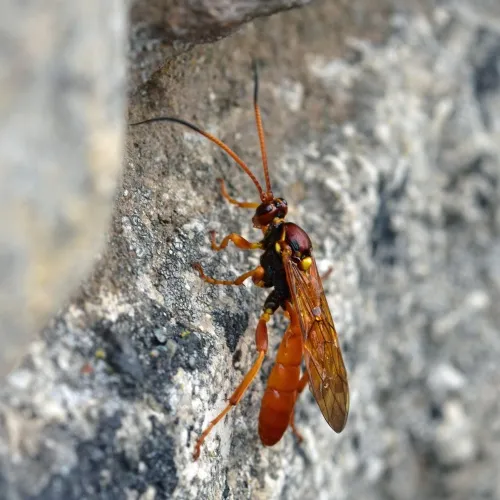
Callajoppa cirrogaster
Callajoppa cirrogaster
Callajoppa cirrogaster is very similar to Callajoppa exaltatoria. They are two of the largest Ichneumonidae in Britain but can be hard to tell apart. Both are similar in coloration and have pale markings at the base of the antennae as well as yellow
Calliephialtes ferrugineus
Calliephialtes ferrugineus
Identification: A brilliantly-colored species of Calliephialtes with a reddish head, thorax, and abdomen and with white legs having minor black markings.
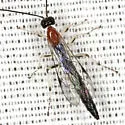
Calliephialtes grapholithae
Calliephialtes grapholithae
Identification: A distinct and prominent species of Calliephialtes with a black head, mostly reddish-orange thorax, black propodeum, white legs with minor black markings, and black abdomen with slight white bands on the apical segments. Female (left)
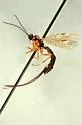
Calliephialtes notandus
Calliephialtes notandus
Identification: Denoted among Calliephialtes by the combination of uniformly fulvous femora, pale fulvous (not white) fore coxa of the female, and entirely black (not white) scape of the male.
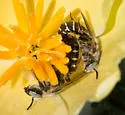
Calliopsis obscurella
Calliopsis obscurella
Regarding flower data, Rozen ( ) writes that "Although this species has been captured on many different kinds of plants, females carrying pollen have been recorded only from Eschscholzia californica . These data are numerous enough to assume that the
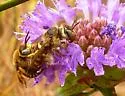
Calliopsis zonalis
Calliopsis zonalis
Identification: unique among Calliopsis (Nomadopsis) in having extremely long mouthparts and preponderance of yellow markings on head, legs, and metasoma of both sexes
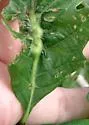
Callirhytis flavipes
Callirhytis flavipes
Forms galls in bur oak ( Quercus macrocarpa ) leaves: "Elongated, bare, fleshy midrib swelling in June, containing several cells." A few Lasioptera gall midges have been reared from similar galls, but they were probably all inquilines in galls initia
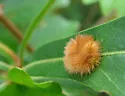
Callirhytis furva
Callirhytis furva
Forms galls on leaves of Quercus nigra and Q. paiustris ; "probably on all the red oaks" : "Small cluster of globular galls, 3-4 mm, each covered with short, straight brown hairs, upper side, fall" . Note from Charley Eiseman, 12/6/2009: The images i
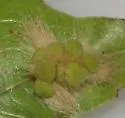
Callirhytis lanata
Callirhytis lanata
Forms woolly, detachable galls on leaves of various species in the red oak group. The galls drop in October and adults may emerge in the second, third, or fourth spring.
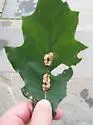
Callirhytis piperoides
Callirhytis piperoides
Images in this section are placed here tentatively; two unrelated species apparently form similar galls on leaves of the red oak group. Callirhytis piperoides forms a "cluster on [the] upper or lower side, each spherical, red, pubescent, 1-4 mm" in d
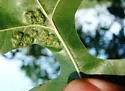
Callirhytis quercusmodesta
Callirhytis quercusmodesta
Forms galls on pin ( Quercus palustris ), red ( Q. rubra ), and black ( Q. velutina ) oaks. , "Hard confluent parenchyma thickenings projecting on both sides of leaf."
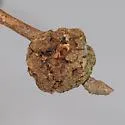
Callirhytis seminosa
Callirhytis seminosa
Identification: Woody stem galls in red oak, "abrupt, surface very irregular, cells near surface and very numerous."
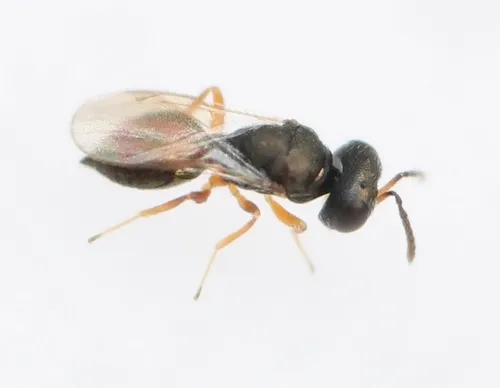
Callitula bicolor
Callitula bicolor
Length ~2mm. Wings fully developed. Head & throrax metallic dark green. Abdomen (gaster) dorsally, usually unicoloured or with a reddish spot in the basal half, rarely the whole basal half reddish. Callitula pyrrhogaster has vestigial wings and more
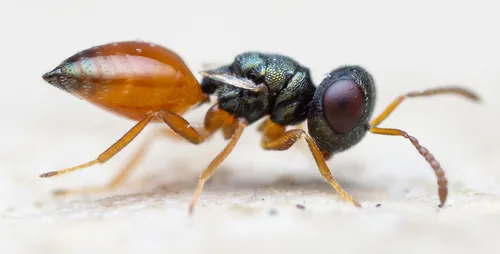
Callitula pyrrhogaster
Callitula pyrrhogaster
Callitula pyrrhogaster is a tiny, flightless parasitic wasp. Wings rudimentary, head in dorsal view only 1.8 to 1.85 times as broad as long. Abdomen (gaster) dorsally with the basal half or more reddish-orange. Callitula bicolor (this has wings fully
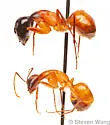
Camponotus acutirostris
Camponotus acutirostris
Identification: One of the US's largest worker Camponotus , similar to C. ocreatus and C. vicinus in size. US queens of Tanaemyrmex however are often slightly smaller than other species in the Camponotus subgenus, even in the largest species. Triangu
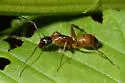
Camponotus americanus
Camponotus americanus
Identification: Tan with a dark head. The abdomen may have mottling or a spot on it unlike the similar C. castaneus, that has a light colored head, and no mottling. Since these ants live in the soil, they aren't considered to be harmful pests.
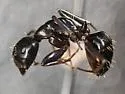
Camponotus caryae
Camponotus caryae
Identification: [OY] In the northeastern US, it is easily distinguishable from its congeners (nearcticus), but where it overlaps with C. discolor it is more difficult to separate and ID relies on coloration and the length of the types of malar setati
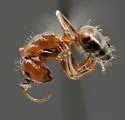
Camponotus essigi
Camponotus essigi
Identification: The yellow coloration on the first (or more) tergite(s) is diagnostic, but in some workers it is not apparent.
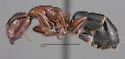
Camponotus hyatti
Camponotus hyatti
Identification: The deeply incised metanotal suture is diagnostic for this species.
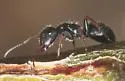
Camponotus mina
Camponotus mina
Identification: One of two Camponotus (Myrmobrachys) in the southwestern US. The similar species Camponotus trepidulus can be distinguished by different head and eye proportions in all castes.
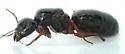
Camponotus modocnr
Camponotus modocnr
Identification: Has shiny queens (head shiny in larger majors, smaller workers apparently identical to modoc)
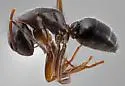
Camponotus nearcticus
Camponotus nearcticus
Identification: small, mostly black and shiny, very few apparent hairs; there is a form with an orange/red mesosoma. in the NE one of 3 spp. with a distinct notch in the clypeus
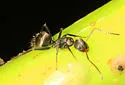
Camponotus novogranadensis
Camponotus novogranadensis
Identification: Similar to Camponotus planatus but usually more darkly colored with light areas around mandible bases and a strongly keeled clypeus. Color can be variable but clypeus trait is distinctive.
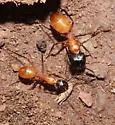
Camponotus ocreatus
Camponotus ocreatus
Identification: Very large major workers, among the largest Camponotus in the US based on worker size. US queens of Tanaemyrmex however are often slightly smaller than other species in the Camponotus subgenus, even in the largest species. Seems to be
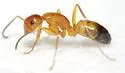
Camponotus snellingi
Camponotus snellingi
Identification: Malar area bare, bright red head and mesosoma, dark gaster with at least the first tergite flavate Author of the species - Bolton 1995
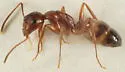
Camponotus subbarbatus
Camponotus subbarbatus
Identification: According to Richard Vernier: "Such a striped gaster is a hallmark for South-Eastern populations of this species of the subgenus Myrmentoma. This distinctive pattern makes it quite unmistakeable." Part of the Subgenus Myrmentoma
Camponotus ulcerosus
Camponotus ulcerosus
Identification: A dark black Camponotus in the Southwest with white hairs. Majors have a truncated yellow colored portion of the head.
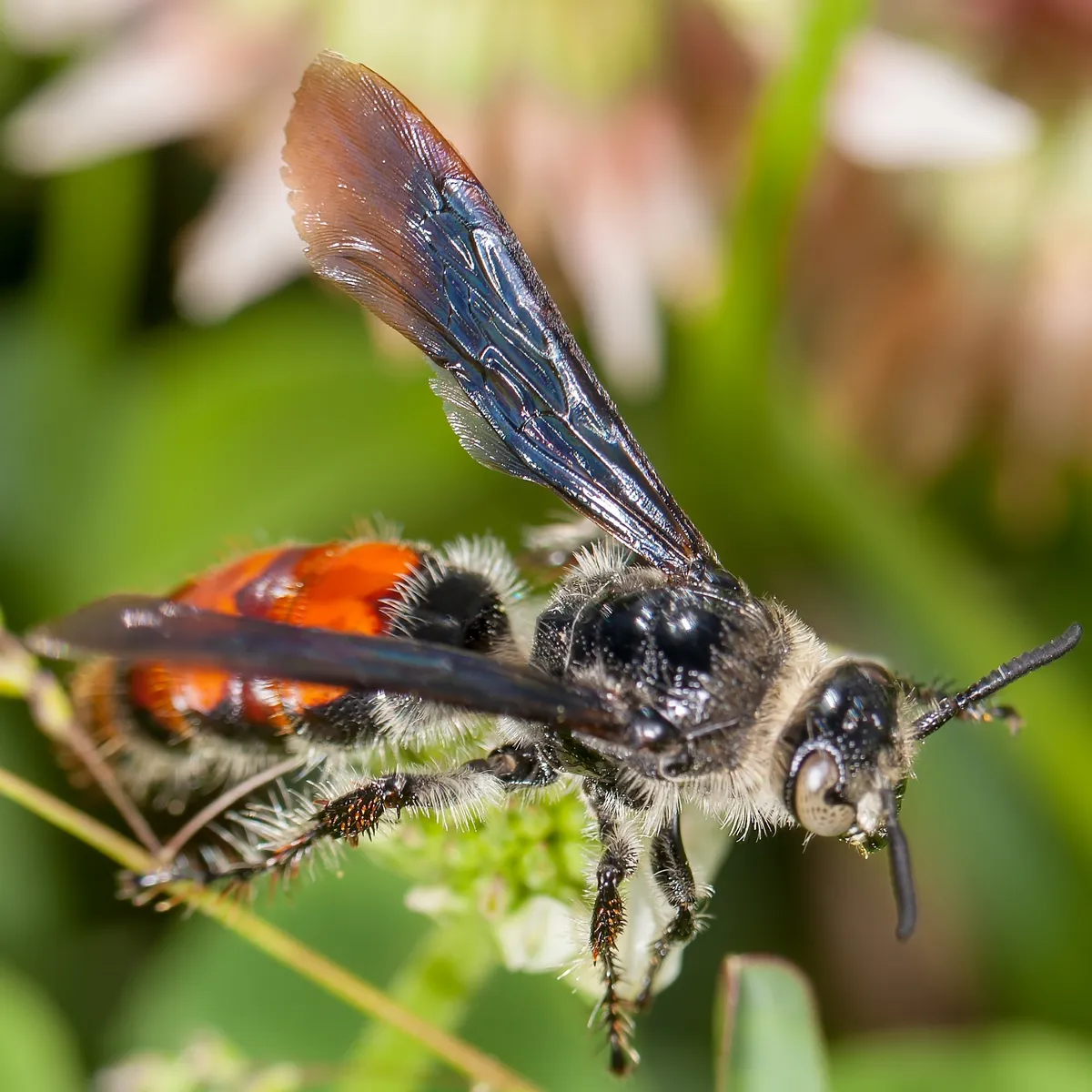
Caribbean Scoliid Wasp
Dielis dorsata
Identification: This is the only species of Dielis in Florida with an orange-marked abdomen. Males have four pale abdominal bands and are separated from the similar D. plumipes by the yellow lateral markings on the clypeus (entirely black in D. plumi
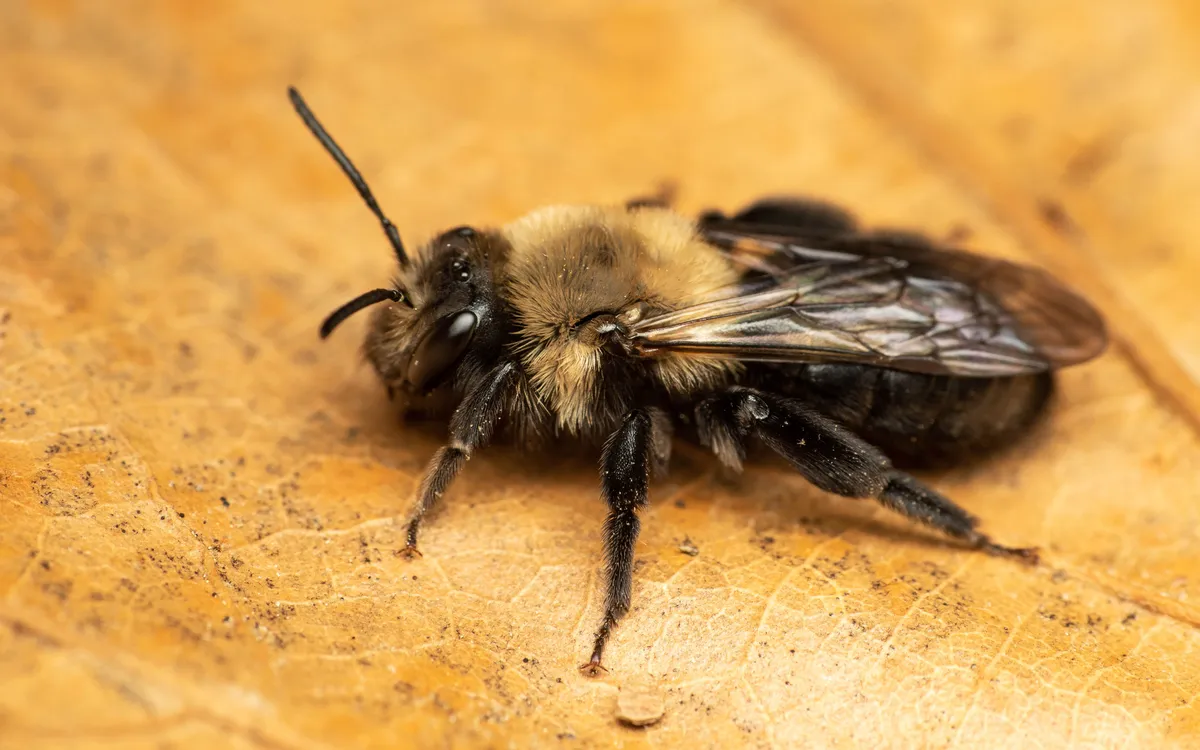
Carlinville Miner Bee
Andrena carlini
Identification: Very similar to vicina which also has a black tibial scopa. In carlini the thoracic hair is longer, denser, and grayer (as opposed to shorter, sparser so as not to fully obscure integument, and more tan in color in vicina). A. carlini
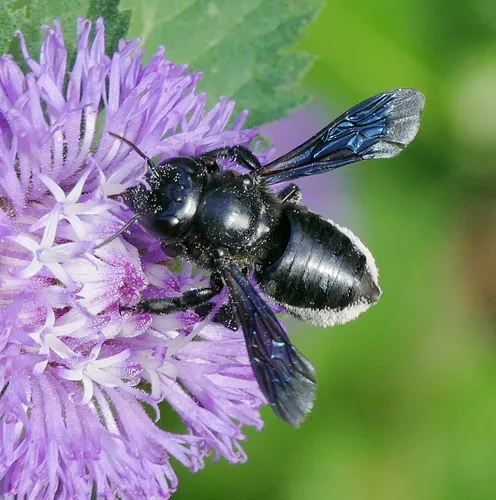
Carpenter-mimic Leafcutter Bee
Megachile xylocopoides
Identification: A very dark Megachile , resembles a Carpenter Bee, Xylocopa , especially such blue-black species as Xylocopa micans . Quoting from Bees of Florida : Subgenus Melanosarus Mitchell, 2 species. A neotropical subgenus with 2 species in th
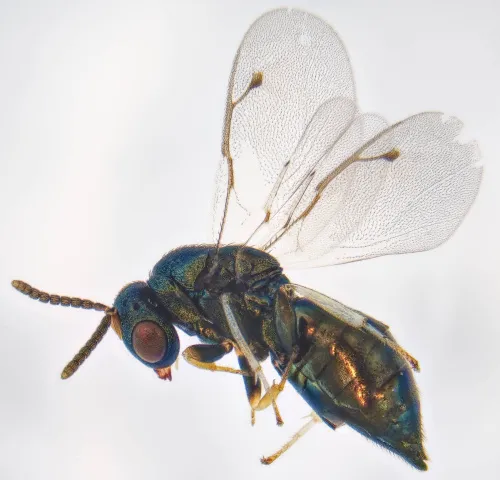
Cecidostiba fungosa
Cecidostiba fungosa
Length 3-4mm. Metallic green. Basal cell of forewing bare or with at most a few hairs distally. Antennae with all funicular segments transverse, combined length of pedicellus and flagellum less than breadth of head. Propodeum very short, medially fro
Centris atripes
Centris atripes
Often the most numerous Centris encountered in SE Arizona during late summer
Centris pallida
Centris pallida
"puts on spectacular displays of mating behavior in the spring around nests in desert washes in Arizona" ( Fact sheet )
Centris rhodopus
Centris rhodopus
Identification: It has red legs. More information here
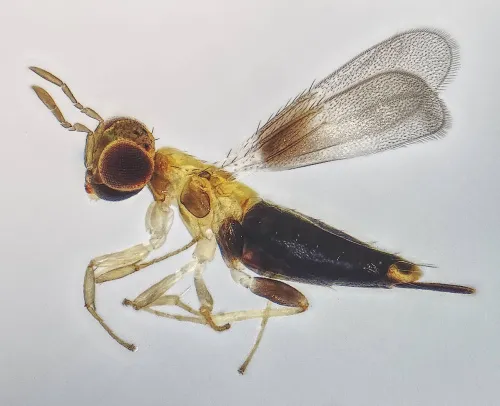
Centrodora amoena
Centrodora amoena
A small wasp (~2mm). Head brownish, thorax yellow, abdomen dark, legs mainly yellow, hind coxa and femur dark. Unless identified by a recognised expert, a photo is required and the specimen should be examined with a microscope. In the comments box, s
Ceranisus americensis
Ceranisus americensis
Identification: Forewing without bare area, base of gaster and femora pale (yellow to light brown)
Ceratina dallatorreana
Ceratina dallatorreana
Introduced, originally from Europe and Middle East. First found in Sacramento Valley of California in 1949. It has spread southward.
Ceratina dupla
Ceratina dupla
Hard to tell apart from C. calcarata from photos and even more similar to the recently described Ceratina mikmaqi Rehan and Sheffield, 2011
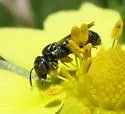
Ceratina strenua
Ceratina strenua
Identification: It has a yellow or white stripe (not spot) on front tibia. Types: Holotype as Ceratina strenua male by Smith, 1879. Type Locality: Texas. In the British Museum of Natural History, London, England. Holotype as Ceratina metallica male b
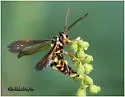
Ceratogastra ornata
Ceratogastra ornata
Mimic of Poecilopompilus . "There is considerable regional variation in color. Specimens from New England and adjacent parts of New York are darkest, from which area the populations are progressively paler toward the west and south. Darker individual
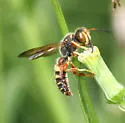
Cerceris bicornuta
Cerceris bicornuta
Identification: Body coloration slightly variable (John Ascher) ♂ ♀ Mating pair:
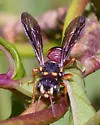
Cerceris blakei
Cerceris blakei
Identification: Note humped tegulae (Matthias Buck) ♂ ♀
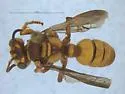
Cerceris californica
Cerceris californica
Identification: Body coloring slightly variable across the range ♂ ♀ Mating pair
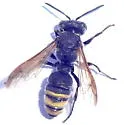
Cerceris dilatata
Cerceris dilatata
Identification: Colour pattern very characteristic. T1 black or brick red.
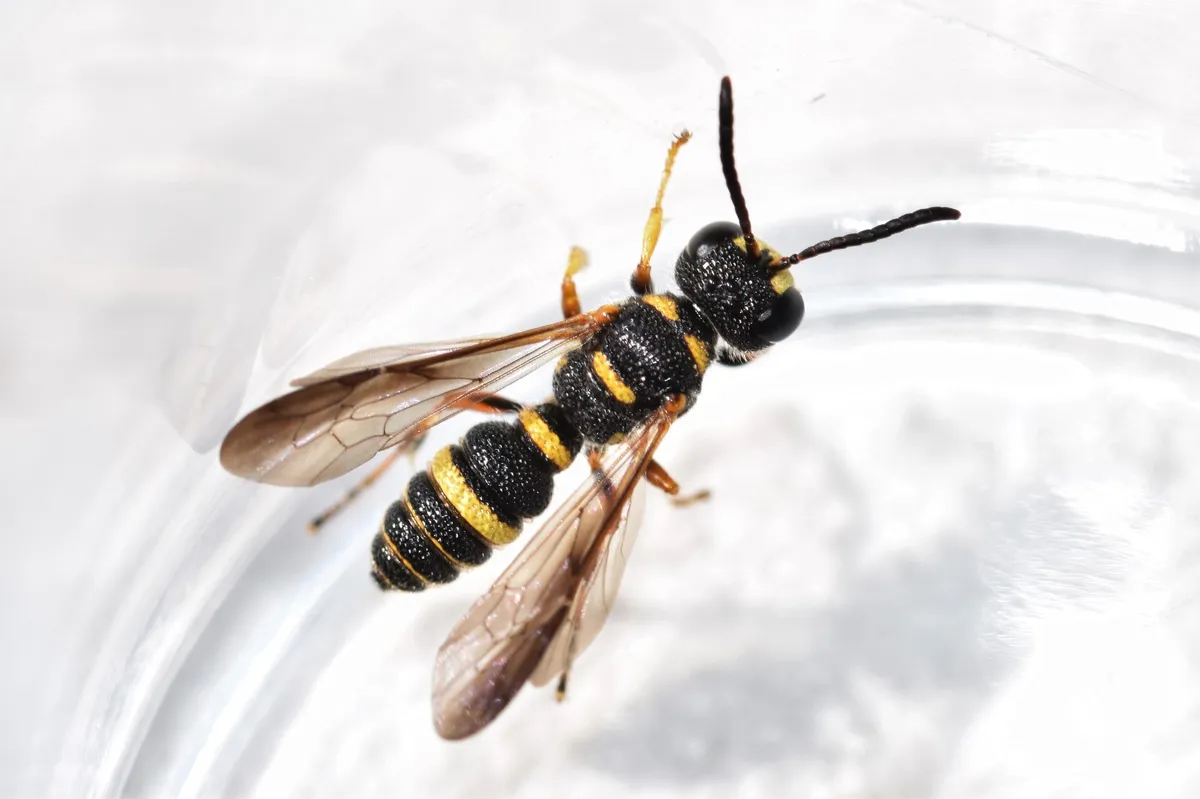
Cerceris insolita
Cerceris insolita
Identification: all-black T2 diagnostic (Matthias Buck) ♂ ♀ Mating
Cerceris kennicottii
Cerceris kennicottii
Identification: abdominal pattern distinctive (interrupted yellow band on T3, complete on T2 and T4). (Matthias Buck) ♂ ♀
Cerceris rufopicta
Cerceris rufopicta
Identification: female clypeal process distinctive; FL specimens marked with red ♂ ♀
Cerceris sextoides
Cerceris sextoides
Identification: pygidial plate nearly parallel-sided; female clypeal projection two-pointed (a feature shared with a few other species) ♀ ♂
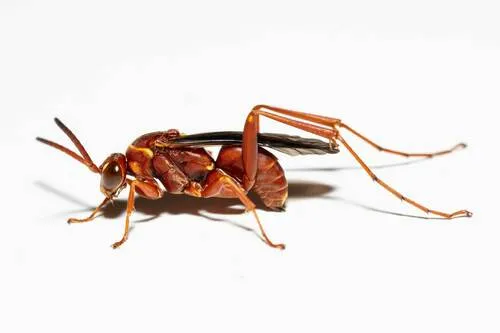
Ceropales elegans
Ceropales elegans
Identification: Overview of Species Second flagellomere 1.8-2.2x as long as wide, pronotum and mesoscutum with inconspicuous hairs, mesopleuron coarsely punctured, second tarsomere of middle leg conspicuously longer than wide, claws of middle and hin
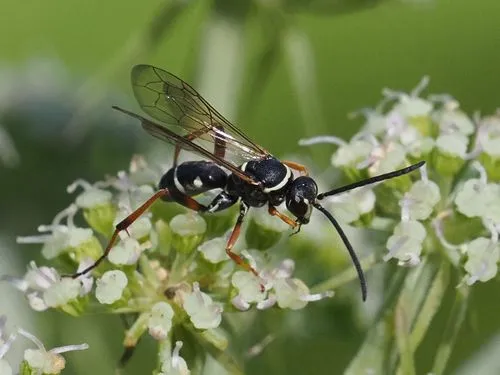
Ceropales maculata
Ceropales maculata
Identification: C. m. caenosa : T3 entirely black; femora black. Range: CA (Sierra Nevada) C. m. fraterna : T3 with apical band; abdominal bands narrow; hind femur with yellow on less than apical third and front face brownish-black. Range: widespread
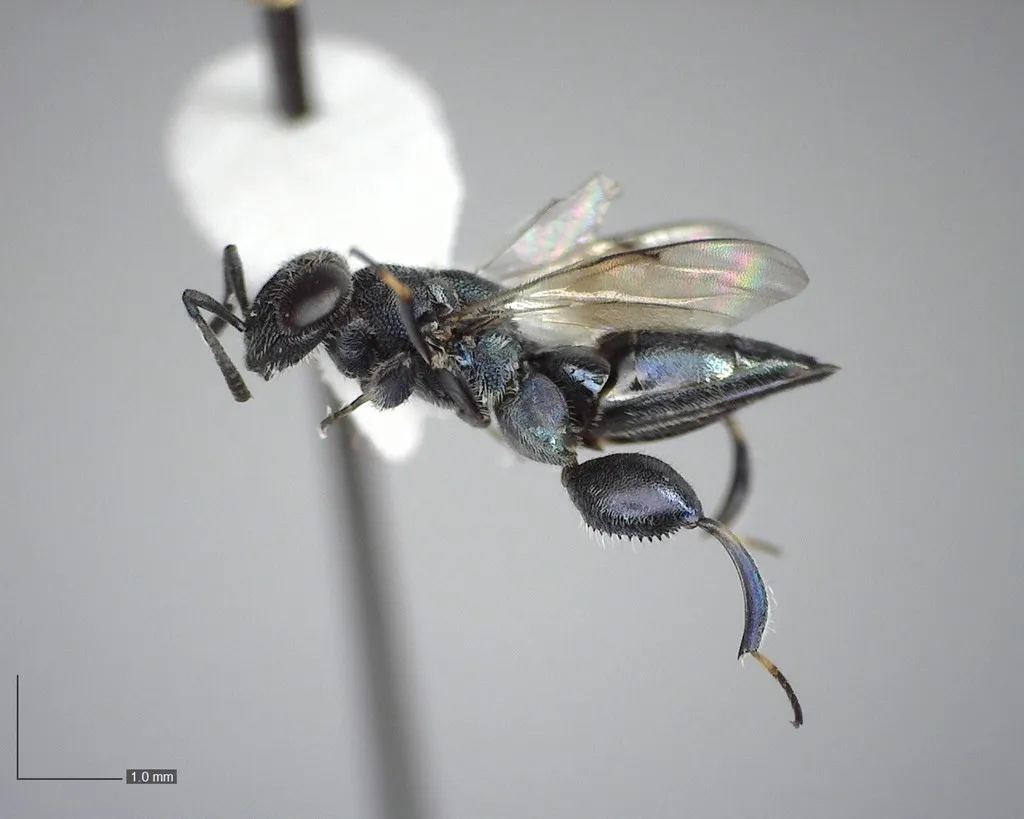
Chalcedectus caelata
Chalcedectus caelata
Identification: Purple or blue metallic highlights, female with deeply emarginated tergite 2, and both male and female with distinct teeth on the inner margin of the hind femur.
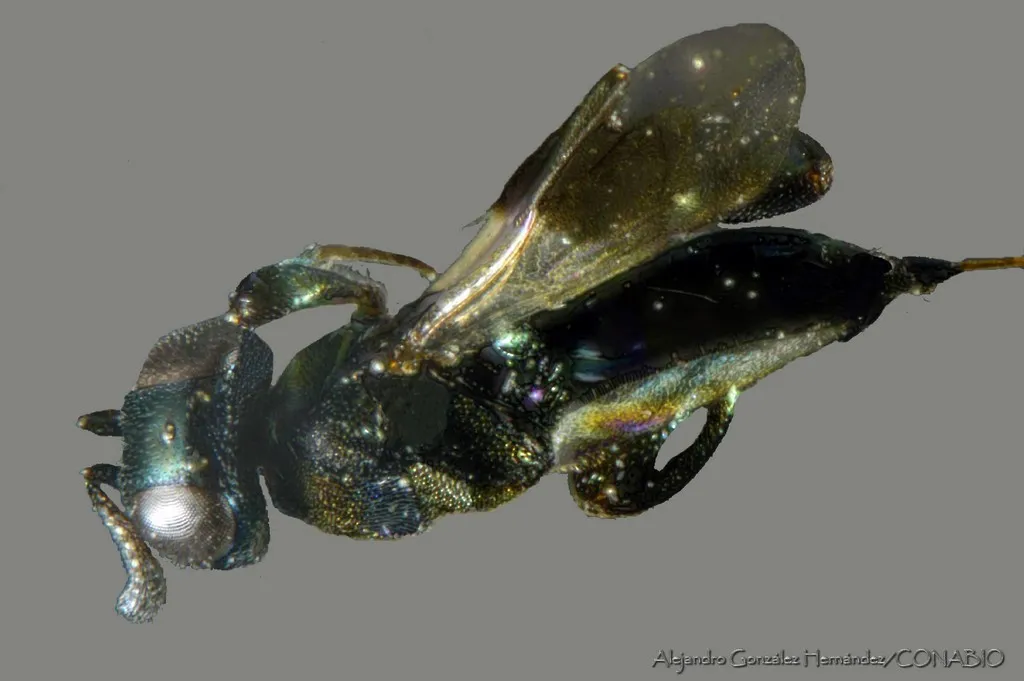
Chalcedectus maculipennis
Chalcedectus maculipennis
Identification: Body metallic green to copper, with a prominent infuscated spot in the wing.
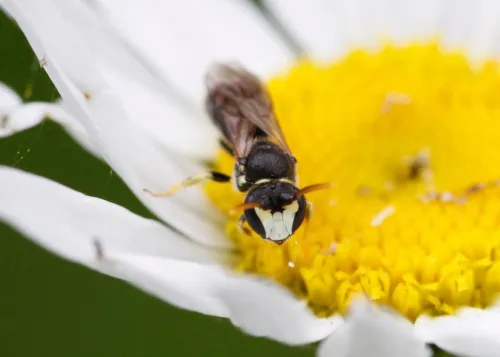
Chalk Yellow-face Bee
Hylaeus dilatatus
British representatives of the subgenus Lambdopsis are restricted to Hylaeus dilatatus and H. annularis (formerly H. spilotus).The females of both differ from other British Hylaeus in the reduced, circular (not wedge-shaped or linear) paraocular mark
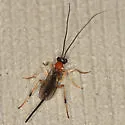
Charmon cruentatus
Charmon cruentatus
Identification: Notauli complete, ovipositor shorter (less than 1.2x forewing), pterostigma and apex of hind tibia yellowish, body dark reddish brown usually with thorax conspicuously reddish (variable)
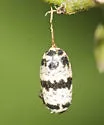
Charops annulipes
Charops annulipes
Type Locality: Missouri. Described from one specimen in the Charles Valentine Riley Collection . (Ashmead 1890)
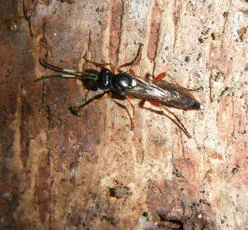
Chasmias paludator
Chasmias paludator
It has a white spot at the base of the thorax and another at the tip of the abdomen but is otherwise mainly black with red legs. The antennae have a broad white band at about halfway. Detailed examination required, or expert assistance with id. True
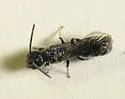
Chelostoma philadelphi
Chelostoma philadelphi
Identification: Chelostoma are longer than most Osmini because of their elongated thorax. Identifying this genus means noticing where the tegula lie in relation to the thorax. Pretend you are drawing a "+" on the thorax. The ends of Chelostoma tegula
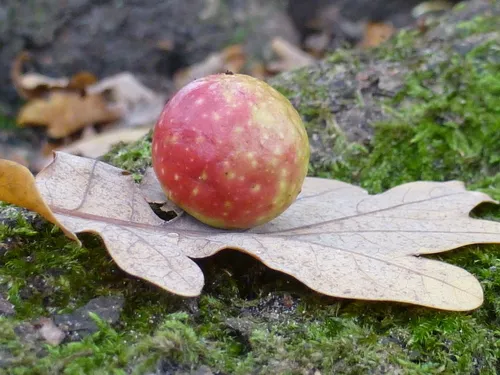
Cherry Gall Wasp
Cynips quercusfolii
Cynips quercusfolii is a small black gall wasp. The agamic generation emerges from cherry galls on the leaves of some species of oak. Asexual wasps emerge form cherry galls in late winter/autumn. No additional images available for this species.