
Belonocnema fossoria
This record describes Belonocnema fossoria (species). Recorded family: Cynipidae. Recorded order: Hymenoptera.
Identification and Appearance
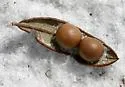
Spur on the anterior side of fore tibia longer than basitarsus and tibial spurs. Middle tibia with a smaller spur. Found on Quercus geminata in Georgia and Florida . Similar galls in Georgia/Florida could be from this species (exclusively on Q. geminata ) or B. treatae (almost exclusively on Q. virginiana , rarely on Q. geminata ) .
Classification
- Kingdom
- Animalia
- Phylum
- Arthropoda
- Class
- Insecta
- Order
- Hymenoptera (Ants, Bees, Wasps and Sawflies)
- Superfamily
- Cynipoidea
- Family
- Cynipidae (Gall Wasps)
- Tribe
- Cynipini
- Genus
- Belonocnema
Imported taxonomy record. Source availability varies; see the source references and editorial policy below.
Habitat and Range
Geographic Range
Georgia and Florida
Diet and Behavior
Diet: Quercus geminata
Life History
Females of the bisexual generation induce leaf galls, from which unisexual females emerge. Unisexual females induce root galls.
About Flies: the wider group
Order-level background for Hymenoptera, the group containing Belonocnema fossoria. Species-specific details appear above.
Group overview
Hymenoptera includes over 150,000 described species of ants, bees, wasps, and sawflies. Earth harbors approximately 20 quadrillion (20×10^15) ants, with a combined biomass of ~12 megatons of dry carbon - exceeding the combined biomass of all wild birds and mammals (PNAS, 2022).
Ecological role of the group
About 35% of the world's food crops depend on animal pollinators. The chocolate industry, valued at over $100 billion, depends on pollinating flies and midges. Ants are the dominant soil engineers in most terrestrial ecosystems, turning more soil than earthworms in many habitats.
Economic and practical significance of the group
Pollinators contribute $235-577 billion worth of annual global food production (FAO). In the U.S., bee pollination alone benefits crops valued at $18 billion annually, and honey bees are responsible for $5.4 billion in agricultural productivity. Between April 2023-2024, 55.1% of managed honey bee colonies were lost. The U.S. bee population dropped from 5 million to 2.5 million.
Recorded sources for this group: FAO, USDA, EPA, PNAS (2022), US Fish & Wildlife Service. Imported estimates may describe particular regions or reporting periods.
Photos of Belonocnema fossoria (5)
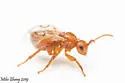
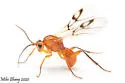
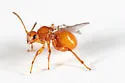
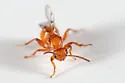
Photo credits: Contributed by Charley Eiseman; Additional contributions by john and jane balaban , mileszhang , PaleoJon
Frequently Asked Questions About Belonocnema fossoria
What is Belonocnema fossoria?
Belonocnema fossoria is a species in the family Cynipidae, within the order Hymenoptera.
How do you identify Belonocnema fossoria?
Spur on the anterior side of fore tibia longer than basitarsus and tibial spurs. Middle tibia with a smaller spur. Found on Quercus geminata in Georgia and Florida .
Where is Belonocnema fossoria found?
Range: Georgia and Florida
What does Belonocnema fossoria eat?
The diet of the Belonocnema fossoria includes Quercus geminata.
What is the life cycle of a Belonocnema fossoria?
Females of the bisexual generation induce leaf galls, from which unisexual females emerge. Unisexual females induce root galls.