
Beaked Spindle Gall Wasp
Heteroecus pacificus
This record describes Heteroecus pacificus (species). Recorded family: Cynipidae. Recorded order: Hymenoptera.
Identification and Appearance
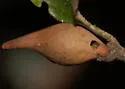
Lyon(1963) noted that the presence of inquilines (e.g. Synergus sp. ) usually deforms the shape of the summer generation galls into a more blunt & swollen-tipped form (e.g. see here and here )...whereas galls free of inquilines typically retain a narrowly-tapered spindle shape.
Classification
- Kingdom
- Animalia
- Phylum
- Arthropoda
- Class
- Insecta
- Order
- Hymenoptera (Ants, Bees, Wasps and Sawflies)
- Superfamily
- Cynipoidea
- Family
- Cynipidae (Gall Wasps)
- Tribe
- Cynipini
- Genus
- Heteroecus
Imported taxonomy record. Source availability varies; see the source references and editorial policy below.
Diet and Behavior
Diet: Recorded host plants are canyon live oak ( Quercus chrysolepis ) and huckleberry oak ( Quercus vaccinifolia ).
Life History
This species is "heterogonous", meaning there are two distinct and alternating generations per year...one of sexually reproducing males & females, and the other consisting solely of parthenogenetic females. The elongate, spindle-shaped, green-to-reddish and pale-yellow mottled terminal stem galls are single-chambered...and formed during summer by larva(e) of the unisexual, parthenogenetic generation from eggs oviposited by the preceding bisexual generation in late spring. The unisexual generation's "beaked spindle galls" develop throughout the summer. In early spring of the following year the unisexual generation pupates and the adult females emerge to oviposit on the nutrient-rich growth of new leaves...with the resulting larvae giving rise to smaller, different-looking, more longitudinally-compressed & darker, wine-red to dark-brownish leaf galls (e.g. see here , here , and here ). This bisexual "spring generation" develops more rapidly than the unisexual "summer generation", soon yielding mature larvae that pupate into both males & females which emerge in late spring, and are similar looking but smaller than the parthenogenetic summer generation adults. The spring generation males & females then mate, and the fertilized females oviposit on stems tips...continuing the cycle. ; Lyon
About Flies: the wider group
Order-level background for Hymenoptera, the group containing Heteroecus pacificus. Species-specific details appear above.
Group overview
Hymenoptera includes over 150,000 described species of ants, bees, wasps, and sawflies. Earth harbors approximately 20 quadrillion (20×10^15) ants, with a combined biomass of ~12 megatons of dry carbon - exceeding the combined biomass of all wild birds and mammals (PNAS, 2022).
Ecological role of the group
About 35% of the world's food crops depend on animal pollinators. The chocolate industry, valued at over $100 billion, depends on pollinating flies and midges. Ants are the dominant soil engineers in most terrestrial ecosystems, turning more soil than earthworms in many habitats.
Economic and practical significance of the group
Pollinators contribute $235-577 billion worth of annual global food production (FAO). In the U.S., bee pollination alone benefits crops valued at $18 billion annually, and honey bees are responsible for $5.4 billion in agricultural productivity. Between April 2023-2024, 55.1% of managed honey bee colonies were lost. The U.S. bee population dropped from 5 million to 2.5 million.
Recorded sources for this group: FAO, USDA, EPA, PNAS (2022), US Fish & Wildlife Service. Imported estimates may describe particular regions or reporting periods.
Photos of Beaked Spindle Gall Wasp (5)
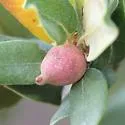
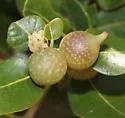
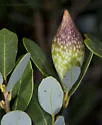
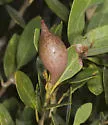
Photo credits: Contributed by Joyce Gross; Additional contributions by Aaron Schusteff
Frequently Asked Questions About Beaked Spindle Gall Wasp
What is Beaked Spindle Gall Wasp?
Beaked Spindle Gall Wasp (Heteroecus pacificus) is a species in the family Cynipidae, within the order Hymenoptera.
What does Beaked Spindle Gall Wasp eat?
The diet of the Beaked Spindle Gall Wasp includes Recorded host plants are canyon live oak ( Quercus chrysolepis ) and huckleberry oak ( Quercus vaccinifolia )..
What is the life cycle of a Beaked Spindle Gall Wasp?
This species is heterogonous, meaning there are two distinct and alternating generations per year...one of sexually reproducing males & females, and the other consisting solely of parthenogenetic females. The elongate, spindle-shaped, green-to-reddish and pale-yellow mottled terminal stem galls are single-chambered...and formed during summer by larva(e) of the unisexual, parthenogenetic generation from eggs oviposited by the preceding bisexual generation in late spring. The unisexual generation's beaked spindle galls develop throughout the summer. In early spring of the following year the unisexual generation pupates and the adult females emerge to oviposit on the nutrient-rich growth of new leaves...with the resulting larvae giving rise to smaller, different-looking, more longitudinally-compressed & darker, wine-red to dark-brownish leaf galls (e.g. see here , here , and here ). This bisexual spring generation develops more rapidly than the unisexual summer generation, soon yielding mature larvae that pupate into both males & females which emerge in late spring, and are similar looking but smaller than the parthenogenetic summer generation adults. The spring generation males & females then mate, and the fertilized females oviposit on stems tips...continuing the cycle. ; Lyon