
Argentine Ant
Linepithema humile
This record describes Linepithema humile (species). Recorded family: Formicidae. Recorded order: Hymenoptera.
Identification and Appearance
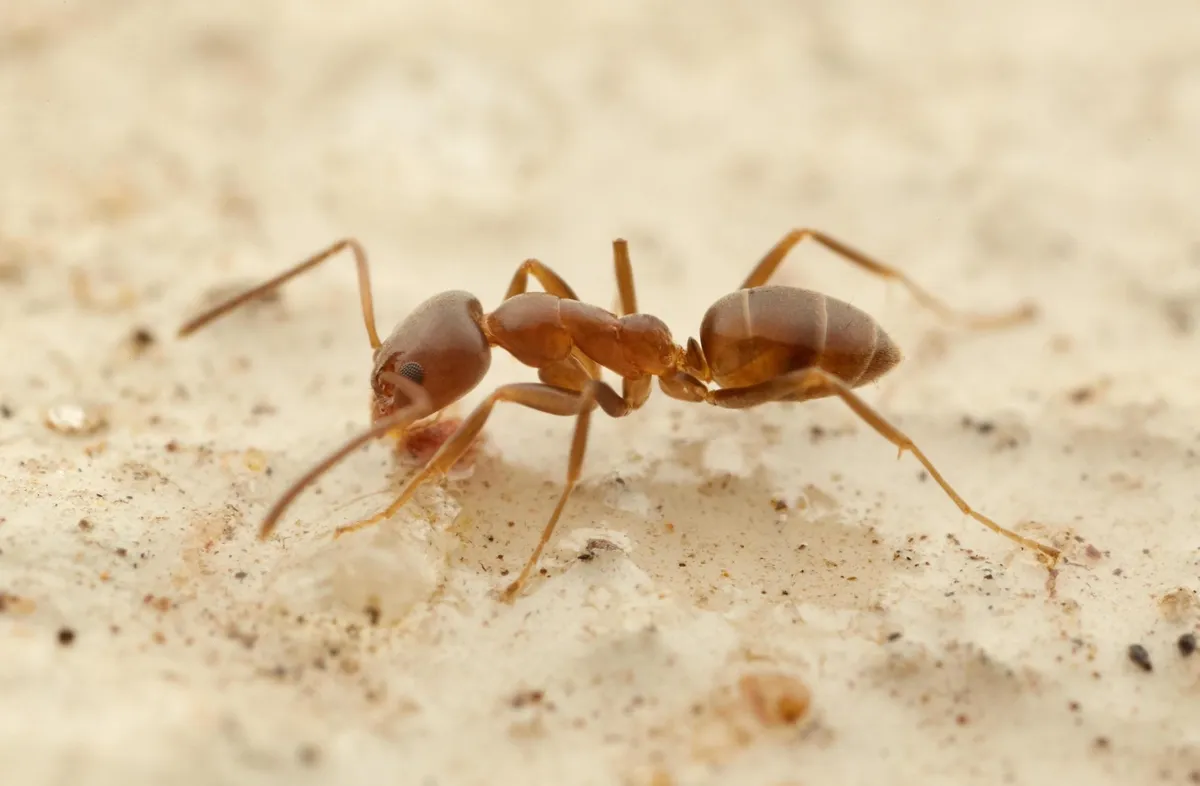
worker usually uniformly light to medium brown (can seem almost black if not viewed up close); body slender; head oval to triangular-shaped; mandibles with two large apical teeth followed by series of denticles; alitrunk dorsum normally lacking erect hairs; petiole erect [adapted from description by Missipppi State U. - see Internet References below] Thought to have first arrived in the United States in coffee shipments in New Orleans around 1891. A major pest in United States for several reasons: able to nest in diverse habitats, produces great numbers of individuals due to many reproductive queens in a colony, eats large variety of food (omnivorous diet), coexists amiably with other colonies of same species, exterminates competing native species of ants wherever they occur, and invades homes in large numbers in search of food and water. When established in an area, the number of individuals is mind boggling, with large files of workers running up and down trees, on fences, on the ground, and everywhere else; considered one of the most persistant and troublesome of house-infesting ants. [adapted from text by Missipppi State U.] This ant once was exceedingly abundant in New Orleans and other Gulf Coast cities, but declined after arrival of Solenopsis invicta . Now, this originally South American species is the most abundant ant in urban and suburban, coastal, southern California, almost to the exclusion of other ant species.
Wikipedia reference for Linepithema humile: http://en.wikipedia.org/wiki/Argentine_ant.
Classification
- Kingdom
- Animalia
- Phylum
- Arthropoda
- Class
- Insecta
- Order
- Hymenoptera (Ants, Bees, Wasps and Sawflies)
- Superfamily
- Formicoidea
- Family
- Formicidae (Ants)
- Subfamily
- Dolichoderinae
- Tribe
- Leptomyrmecini
- Genus
- Linepithema
Imported taxonomy record. Source availability varies; see the source references and editorial policy below.
Habitat and Range
Habitat
nests in soil, rotten wood, standing dead trees, refuse piles, bird nests, bee hives, under pots or stepping stones, and many other places - sheltered or exposed
Geographic Range
across southern United States (from North Carolina to Florida, west through the gulf states to the coast of California. The only limit to their range is freezing temperatures and lack of water. mostly neotropical distribution; native to Argentina and Brazil
Seasonal Activity
Year round. Will often invade homes when weather outside is too cold, too wet or too dry, so may be more obvious at some times than others.
Diet and Behavior
Diet: Omnivorous. Especially fond of sweets, but will eat anything
Life History
Winged queens mate once with a winged male, after which they can continuously produce fertile eggs for as long as 10 years- until death. Unlike most ants, several productive queens of this species can share the same colony, with one or more leaving with some of the workers to form a new colony when it gets crowded (this is known as "budding"). The grublike larvae are fed and tended by the workers, pupate, then emerge to join their sisters in the colony (worker ants are all sterile females).
Additional species information
Species notes from the sources
Etymology: humile: Latin for "low, lowly, small, slight" Humilis also means humble. Most Iridomyrmex , the genus in which this was orginally described, have iridescent green, blue, or purple reflections, so the name may refer to the "humble" (non-reflective) coloring of this species.
About Flies: the wider group
Order-level background for Hymenoptera, the group containing Linepithema humile. Species-specific details appear above.
Group overview
Hymenoptera includes over 150,000 described species of ants, bees, wasps, and sawflies. Earth harbors approximately 20 quadrillion (20×10^15) ants, with a combined biomass of ~12 megatons of dry carbon - exceeding the combined biomass of all wild birds and mammals (PNAS, 2022).
Ecological role of the group
About 35% of the world's food crops depend on animal pollinators. The chocolate industry, valued at over $100 billion, depends on pollinating flies and midges. Ants are the dominant soil engineers in most terrestrial ecosystems, turning more soil than earthworms in many habitats.
Economic and practical significance of the group
Pollinators contribute $235-577 billion worth of annual global food production (FAO). In the U.S., bee pollination alone benefits crops valued at $18 billion annually, and honey bees are responsible for $5.4 billion in agricultural productivity. Between April 2023-2024, 55.1% of managed honey bee colonies were lost. The U.S. bee population dropped from 5 million to 2.5 million.
Recorded sources for this group: FAO, USDA, EPA, PNAS (2022), US Fish & Wildlife Service. Imported estimates may describe particular regions or reporting periods.
Photos of Argentine Ant (3)
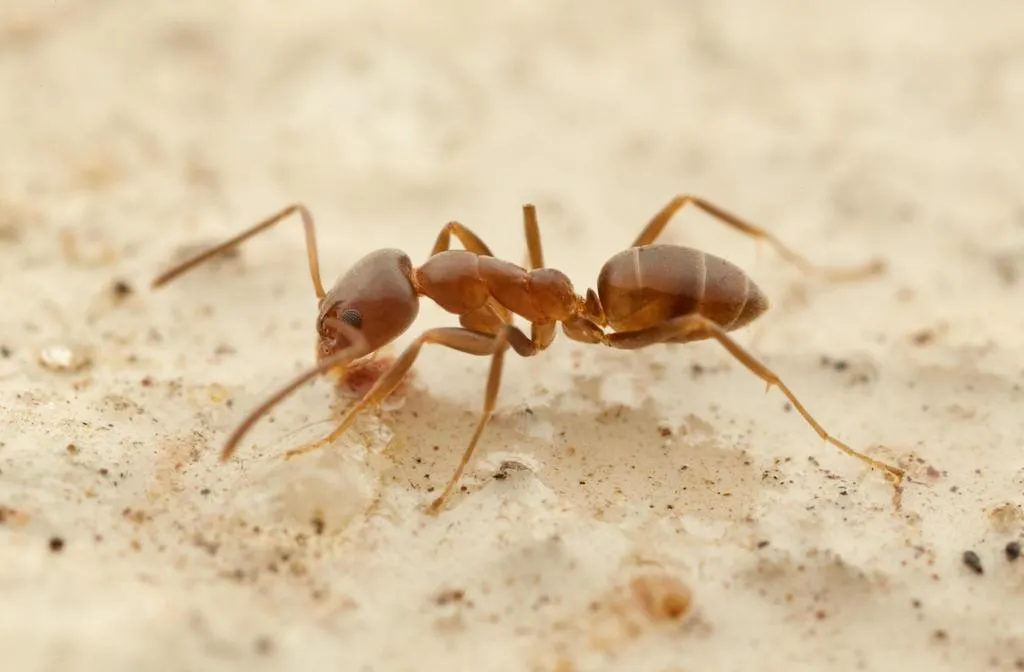
Photo credits: Contributed by Robin McLeod; Additional contributions by cotinis , Chuck Entz , James C. Trager , metrioptera
Frequently Asked Questions About Argentine Ant
What is Argentine Ant?
Argentine Ant (Linepithema humile) is a species in the family Formicidae, within the order Hymenoptera.
How big is Argentine Ant?
worker 2.2-2.6 mm
How do you identify Argentine Ant?
worker usually uniformly light to medium brown (can seem almost black if not viewed up close); body slender; head oval to triangular-shaped; mandibles with two large apical teeth followed by series of denticles; alitrunk dorsum normally lacking erect hairs; petiole erect [adapted from description by Missipppi State U. - see Internet References below]
Where is Argentine Ant found?
| Feature | Details |
|---|---|
| Habitat | nests in soil, rotten wood, standing dead trees, refuse piles, bird nests, bee hives, under pots or stepping stones, and many other places - sheltered or exposed |
| Range | across southern United States (from North Carolina to Florida, west through the gulf states to the coast of California. The only limit to their range is freezing temperatures and lack of water. mostly neotropical distribution; native to Argentina and Brazil |
What does Argentine Ant eat?
The diet of the Argentine Ant includes Omnivorous. Especially fond of sweets, but will eat anything.
When is Argentine Ant active?
Argentine Ant: seasonal activity - Year round. Will often invade homes when weather outside is too cold, too wet or too dry, so may be more obvious at some times than others..
What is the life cycle of a Argentine Ant?
Winged queens mate once with a winged male, after which they can continuously produce fertile eggs for as long as 10 years- until death. Unlike most ants, several productive queens of this species can share the same colony, with one or more leaving with some of the workers to form a new colony when it gets crowded (this is known as budding). The grublike larvae are fed and tended by the workers, pupate, then emerge to join their sisters in the colony (worker ants are all sterile females).