
Arachnospila arcta
This record describes Arachnospila arcta (species). Recorded family: Pompilidae. Recorded order: Hymenoptera.
Identification and Appearance
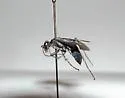
The genus Arachnospila is most similar to Anoplius , but they lack strong bristles on the pygidium. However, of all of the genera split from Pompilus , Arachnospila is perhaps the most closely related to Anoplius . This species is very similar to A. scelesta , but is practically hairless. A. scelesta is rather hairy, particularly on the antennal scape (large segment closest to the face). All of the Arachnospila have strong tarsal and pulvillar combs.
Classification
- Kingdom
- Animalia
- Phylum
- Arthropoda
- Class
- Insecta
- Order
- Hymenoptera (Ants, Bees, Wasps and Sawflies)
- Superfamily
- Pompiloidea
- Family
- Pompilidae (Spider Wasps)
- Subfamily
- Pompilinae
- Tribe
- Pompilini
- Genus
- Arachnospila
Imported taxonomy record. Source availability varies; see the source references and editorial policy below.
Habitat and Range
Habitat
Nests in sandy or gravelly areas but will venture far from nesting areas in search of prey and flowers (often taken on flowers of Daucus carota and Solidago spp.).
Geographic Range
Transcontinental in most of the United States, rare in the extreme south.
Seasonal Activity
Mid-summer to early autumn.
Diet and Behavior
Diet: Adults take nectar from flowers and may drink fluids from their spider prey (personal obs.). Females provision nests with various Lycosids.
Life History
An observation of nesting behavior of Arachnospila arcta -Nick Fensler At 1622 on 31 August 2006 a female Arachnospila arcta was observed dragging a Lycosid across and abandoned sand volleyball court in Pandora, Putnam County, Ohio. The wasp stopped, let go of the spider, circled the area to orient, and walked approximately 18 cm away from it. It then tilted its body at approximately a 45 degree angle and began to dig, removing sand with its forelegs, and occasionally pulling it away from this original hole with both the fore- and middle legs. During construction it would occasionally stop and check on the spider (eight times), circling it and touching it with its antennae and mouthparts, and would also drive away any ants in the area. On two occasions it re-stung the spider in the region of the cephalothorax and on a third the spider almost completely recovered and a chase and grappling ensued. The wasp took approximately 65 minutes to complete its burrow. The wasp then grasped the spider by the second leg near the trochanter and dragged it to the burrow opening. The wasp positioned the spider over the burrow and then grasped it by the spinnerets and backed into the burrow. After 22 minutes the wasp emerged and was collected. I then carefully excavated the burrow. The opening was approximately 8 mm wide and was semi-circular in shape. The burrow was approximately 7 cm long, straight, and oblique with a widened terminal cell. The spider was removed but the egg could not be found and may have been jarred from the spider during my excavation.
About Flies: the wider group
Order-level background for Hymenoptera, the group containing Arachnospila arcta. Species-specific details appear above.
Group overview
Hymenoptera includes over 150,000 described species of ants, bees, wasps, and sawflies. Earth harbors approximately 20 quadrillion (20×10^15) ants, with a combined biomass of ~12 megatons of dry carbon - exceeding the combined biomass of all wild birds and mammals (PNAS, 2022).
Ecological role of the group
About 35% of the world's food crops depend on animal pollinators. The chocolate industry, valued at over $100 billion, depends on pollinating flies and midges. Ants are the dominant soil engineers in most terrestrial ecosystems, turning more soil than earthworms in many habitats.
Economic and practical significance of the group
Pollinators contribute $235-577 billion worth of annual global food production (FAO). In the U.S., bee pollination alone benefits crops valued at $18 billion annually, and honey bees are responsible for $5.4 billion in agricultural productivity. Between April 2023-2024, 55.1% of managed honey bee colonies were lost. The U.S. bee population dropped from 5 million to 2.5 million.
Recorded sources for this group: FAO, USDA, EPA, PNAS (2022), US Fish & Wildlife Service. Imported estimates may describe particular regions or reporting periods.
Photos of Arachnospila arcta (5)
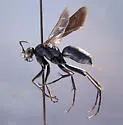
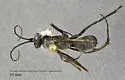
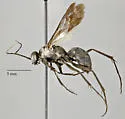
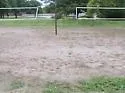
Photo credits: Contributed by Nick Fensler
Frequently Asked Questions About Arachnospila arcta
What is Arachnospila arcta?
Arachnospila arcta is a species in the family Pompilidae, within the order Hymenoptera.
How big is Arachnospila arcta?
Typically 10-20 mm, most are around 15 mm.
How do you identify Arachnospila arcta?
The genus Arachnospila is most similar to Anoplius , but they lack strong bristles on the pygidium. However, of all of the genera split from Pompilus , Arachnospila is perhaps the most closely related to Anoplius . This species is very similar to A. scelesta , but is practically hairless. A. scelesta is rather hairy, particularly on the antennal scape (large segment closest to the face). All of the Arachnospila have strong tarsal and pulvillar combs.
Where is Arachnospila arcta found?
| Feature | Details |
|---|---|
| Habitat | Nests in sandy or gravelly areas but will venture far from nesting areas in search of prey and flowers (often taken on flowers of Daucus carota and Solidago spp.). |
| Range | Transcontinental in most of the United States, rare in the extreme south. |
What does Arachnospila arcta eat?
The diet of the Arachnospila arcta includes Adults take nectar from flowers and may drink fluids from their spider prey (personal obs.). Females provision nests with various Lycosids..
When is Arachnospila arcta active?
Arachnospila arcta: seasonal activity - Mid-summer to early autumn..
What is the life cycle of a Arachnospila arcta?
An observation of nesting behavior of Arachnospila arcta -Nick Fensler At 1622 on 31 August 2006 a female Arachnospila arcta was observed dragging a Lycosid across and abandoned sand volleyball court in Pandora, Putnam County, Ohio. The wasp stopped, let go of the spider, circled the area to orient, and walked approximately 18 cm away from it. It then tilted its body at approximately a 45 degree angle and began to dig, removing sand with its forelegs, and occasionally pulling it away from this original hole with both the fore- and middle legs. During construction it would occasionally stop and check on the spider (eight times), circling it and touching it with its antennae and mouthparts, and would also drive away any ants in the area. On two occasions it re-stung the spider in the region of the cephalothorax and on a third the spider almost completely recovered and a chase and grappling ensued. The wasp took approximately 65 minutes to complete its burrow. The wasp then grasped the spider by the second leg near the trochanter and dragged it to the burrow opening. The wasp positioned the spider over the burrow and then grasped it by the spinnerets and backed into the burrow. After 22 minutes the wasp emerged and was collected. I then carefully excavated the burrow. The opening was approximately 8 mm wide and was semi-circular in shape. The burrow was approximately 7 cm long, straight, and oblique with a widened terminal cell. The spider was removed but the egg could not be found and may have been jarred from the spider during my excavation.