
True Bugs, Cicadas, Hoppers, Aphids and Allies
Order Hemiptera
The True Bugs, Cicadas, Hoppers, Aphids and Allies (Order Hemiptera) includes 7,349 species across 120 families and 1,727 genera in our directory.
About True Bugs, Cicadas, Hoppers, Aphids and Allies
Hemiptera (true bugs) includes over 80,000 described species across cicadas, aphids, leafhoppers, shield bugs, and bed bugs. Aphids alone cost global agriculture an estimated $2.5 billion annually in crop losses.
Economic Impact
The brown marmorated stink bug (Halyomorpha halys) caused $37 million in apple crop losses in a single year in the U.S. Mid-Atlantic region. Bed bug infestations in the U.S. increased by 500% between 2001-2010, costing the hotel industry hundreds of millions annually.
Ecological Role
Many Hemiptera are essential food sources for birds and predatory insects. Cicadas provide massive nutrient pulses during emergence events - a single Brood X emergence can involve trillions of individuals across 15 states.
Families in Hemiptera (120)
Species in Hemiptera (7,349)
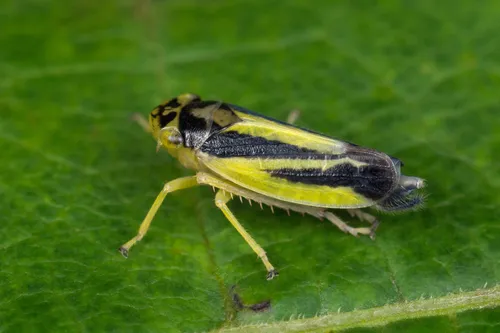
Evacanthus interruptus
Evacanthus interruptus
Identification: habitus characteristic earliest NA record: NF 1965
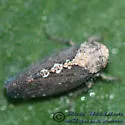
Excultanus excultus
Excultanus excultus
Identification: row of pale spots down the wings where they meet across the back differentiate this genus from Paraphlepsius . - comment per Andy Hamilton, 2008 most common cicadellid at lights in winter in central TX (MAQ, pers. obs. 2021)
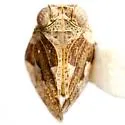
Exortus fuscomaculosus
Exortus fuscomaculosus
Identification: Det. Solomon V. Hendrix, 2024 one of the shortest species (Andy Hamilton)
Fall Southeastern Dusk-singing Cicada
Megatibicen figuratus
Identification: T. figuratus is one of our largest eastern species and appears most closely related to members of the "auletes species group". Tibicen resonans (Walker 1850), "Southern Resonant/Great Southern Pine Barrens Cicada" Tibicen auletes (Ger
False Grass Sharpshooter
Draeculacephala californica
Identification: A relatively nondescript green species with a very pointed head and white wing venation. Its range overlaps with the somewhat similar D. minerva , but this species is often has a longer/slenderer head and has a paler underside. Both c
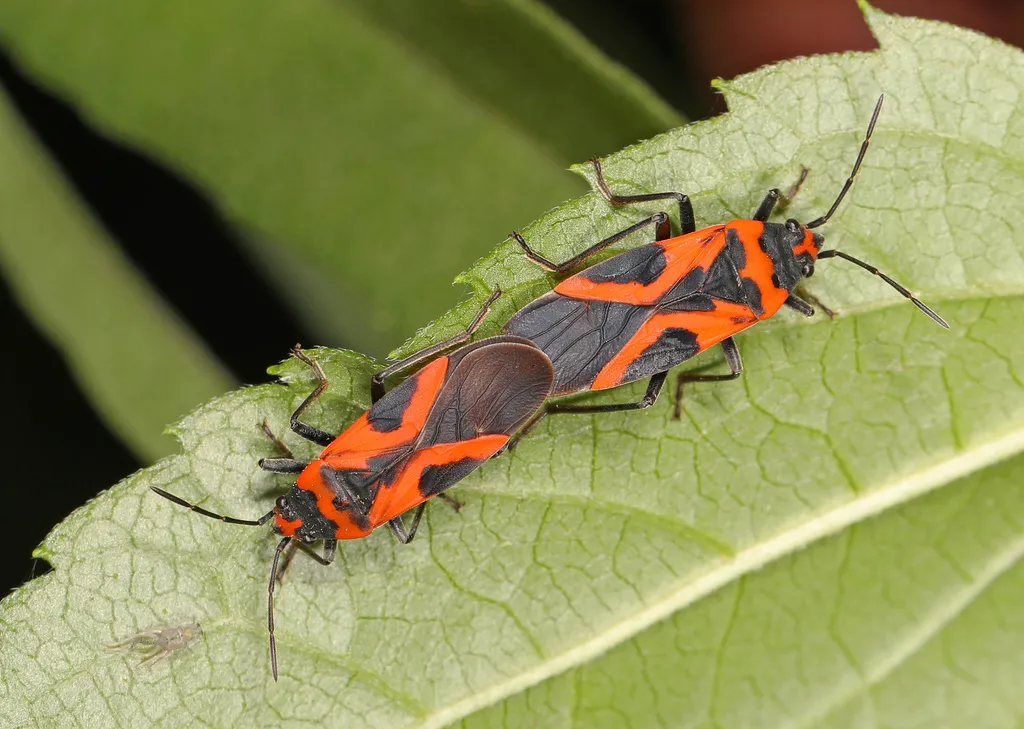
False Milkweed Bug
Lygaeus turcicus
Identification: We're moving all these images to a new page based on the image from Ojibway cited below and the records from the North Carolina State University. Unfortunately we also found online images of the same creature listed as kalmii and imag
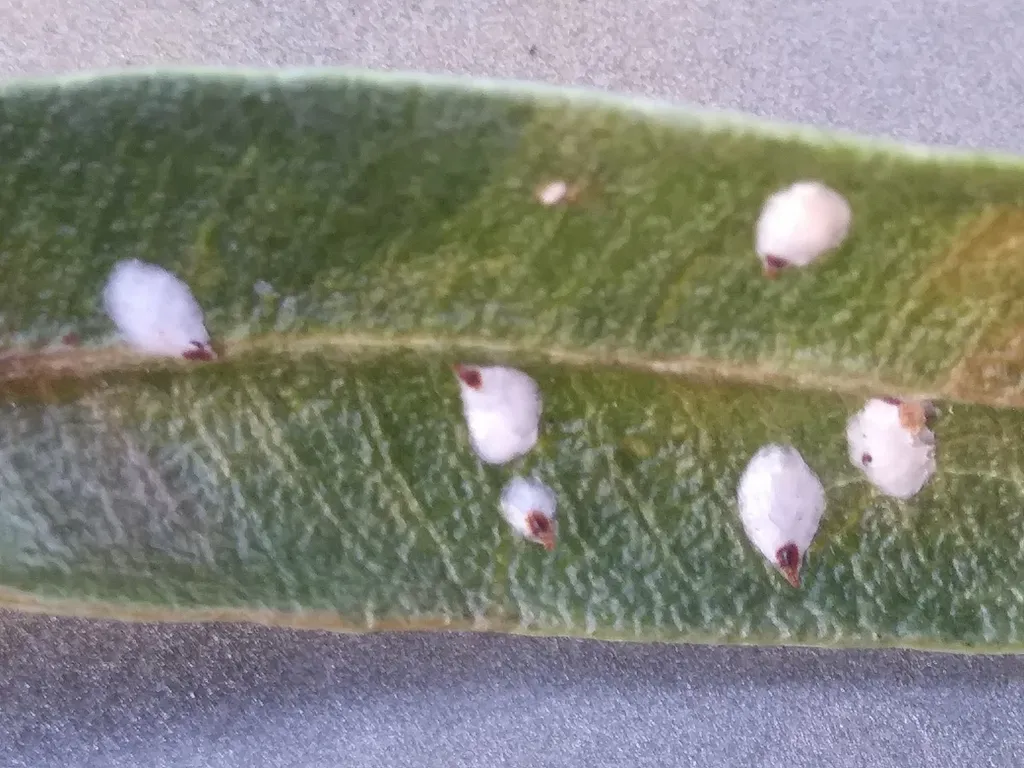
False Oleander Scale
Pseudaulacaspis cockerelli
First reported in California in 1942. Probably introduced with a shipment of palms from China.
Fatsia Psyllid
Cacopsylla fatsiae
Identification: Wings with dark spot on tip of clavus; pterostigma large. Antennae as long as about twice the width of the head, genal cones as long as vertex. Associated with Fatsia japonica
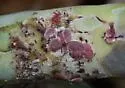
Felt Scale
Ovaticoccus agavium
Identification: Lightly dusted with white mealy wax, pink body shows through wax, with 2 longitudinal lines of brown blotches. Similar to O. californicus Intercepted 13 times at U. S. ports-of-entry between 1995 and 2012, from Mexico and UK.
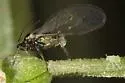
Fenel Aphid
Hyadaphis foeniculi
Identification: Mostly grayish green with dark antennae, legs, cornicles, and cauda (tail-like structure). It may be coated by dusty white wax. Winged forms have green abdomen spotted with darker green and with dark patch around the base of each corn
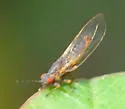
Ficus Leaf-Rolling Psyllid
Trioza brevigenae
Other species, including thrips, mealybugs, and spiders may also induce leaf-rolling on the same plants, though in these cases the leaf is not as tightly rolled. Additionally, nymphs of a second species of psyllid have been discovered in association
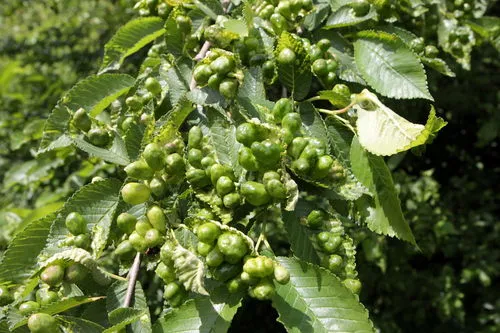
Fig Gall
Tetraneura ulmi
The aphid Tetraneura ulmi causes a fig like gall to be formed on certain species of elm. This is a quite large, solitary, upright, pouch like gall on the upper surface of the leaf. The gall is more often seen than the adult aphid. Anywhere that the h
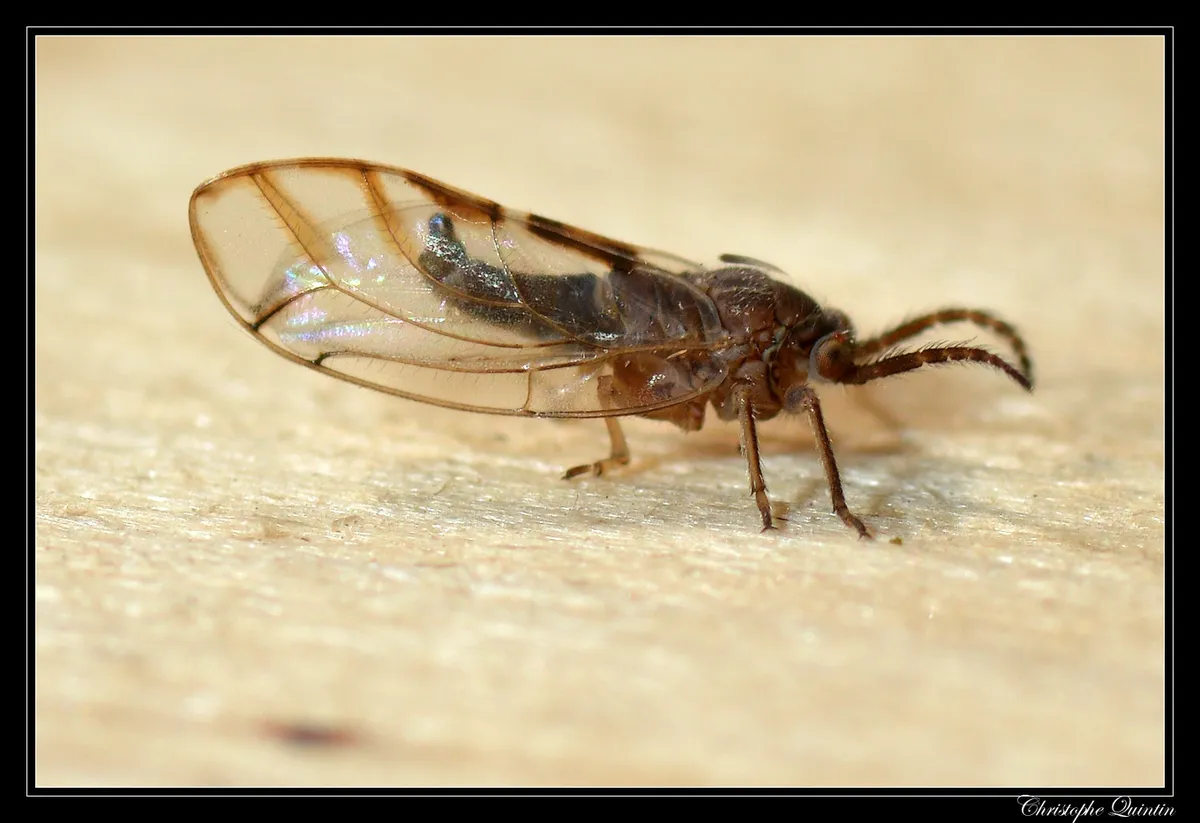
Fig Psylla
Homotoma ficus
introduced outside its native range with cultivated fig trees
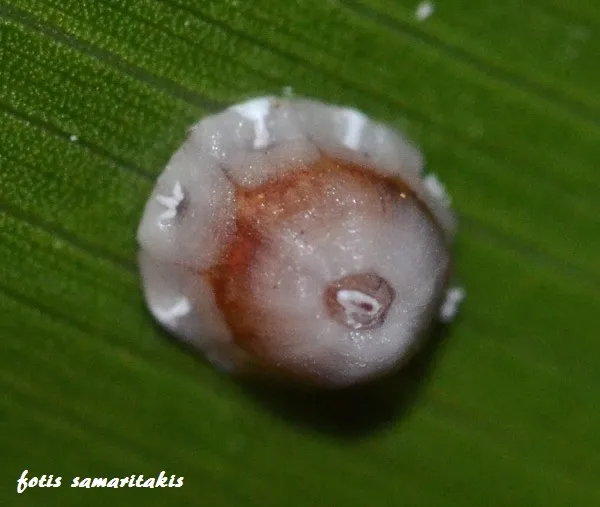
Fig Scale
Ceroplastes rusci
It probably originated in Africa and it has spread by human action.
Fine Streaked Bugkin
Miris striatus
Length 9-11 mm. A distinctively large and well-marked species, which should be unmistakable. The cuneus varies from yellow to orange-red, but is never black-tipped. The rather ant-like nymphs are dark with yellow markings and reddish-brown legs. Rhab
Fitchana vitellina
Fitchana vitellina
Identification: head yellow, moderately pointed, with greenish eyes in live individuals; scutellum yellow centrally, brown laterally; forewing light brown with numerous clear spots; dark oblique band at base, and another near middle of wing (each ban
Fitchia aptera
Fitchia aptera
Fitchia aptera (Fitchia aptera) is a species in the family Reduviidae, commonly known as assassin bugs, belonging to the order Hemiptera (True Bugs, Cicadas, Hoppers, Aphids and Allies). It is classified within the subfamily Harpactorinae, tribe Harp
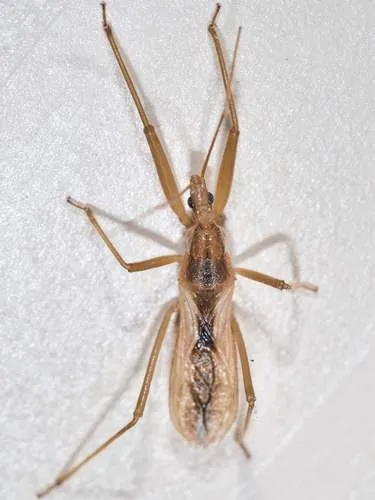
Fitchia spinosula
Fitchia spinosula
Identification: The easiest field character for separating the two species involves the color of the integument surrounding the spiracle: concolorous pale in F. spinosula versus dark brown in F. aptera . Male parameres are distinctly clavate, as opp
Fitchiella albifrons
Fitchiella albifrons
Identification: Front with longitudinal white stripe
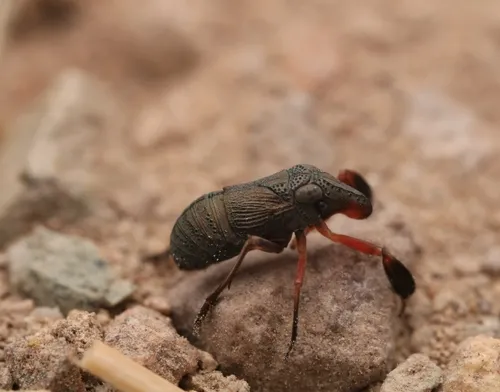
Fitchiella rufipes
Fitchiella rufipes
Identification: venter of head process and most of legs reddish
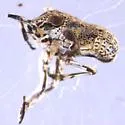
Fitchiella rugosa
Fitchiella rugosa
Holotype (female): Brownsville, Texas, September. Paratype (1 female): Nogales, Arizona, September 24.
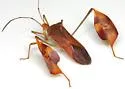
Flag-footed Bug
Anisoscelis affinis
Identification: Hind tibia expansion huge, as wide and almost as long as the bug's body Comes to lights (C. Bordelon, pers. comm., 2009 to MAQ). Sp. not listed in Henry and Froeschner (1988) ( 4 ) Note, George B. Vogt (1920-1990) was an entomologist
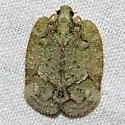
Flataloides scabrosa
Flataloides scabrosa
Identification: The 'spotted' pattern does not occur in this species, and the wings are held flatter and it has a bit of an undulation laterally in the shape of the wing when at rest, whereas Flatoidinus has the edges of the wing more curled under. -
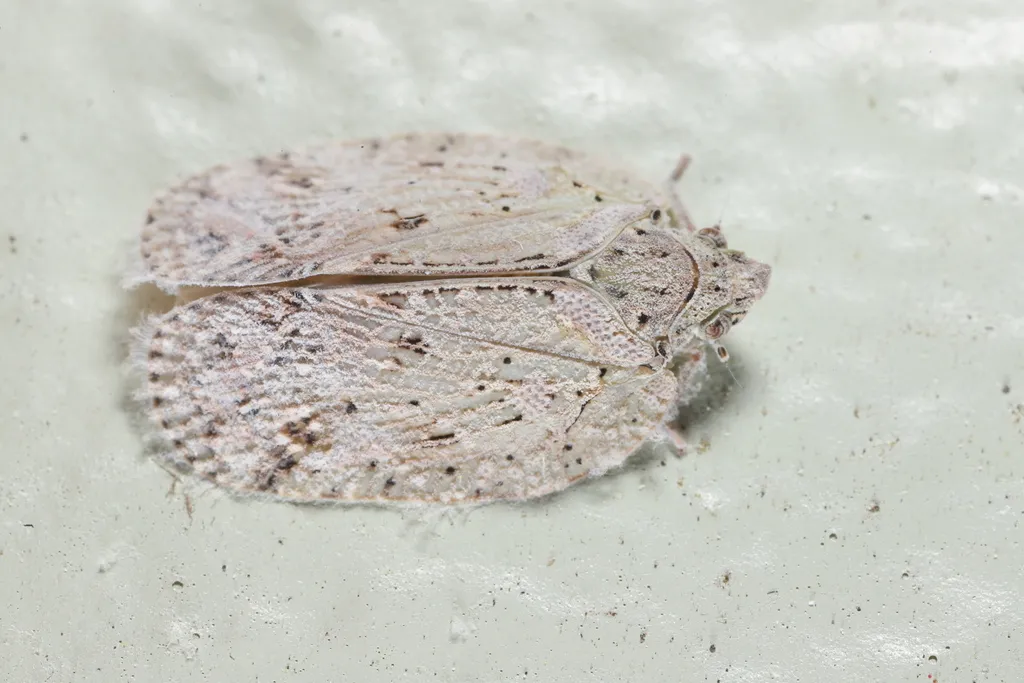
Flatoidinus punctatus
Flatoidinus punctatus
Identification: The broad, pointed head is characteristic of this species. (K.G.A. Hamilton, 2011)
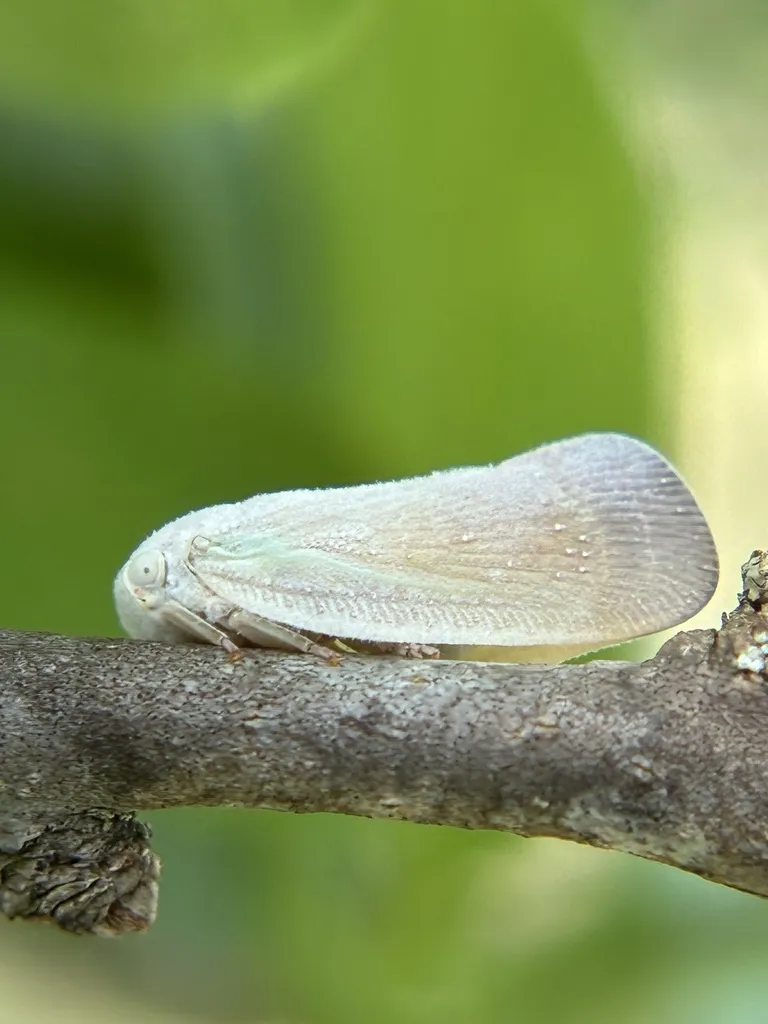
Flatormenis saucia
Flatormenis saucia
Identification: varies in color (greenish to orangish), but is often recognized by the orangish mesonotum. Check the wing veins here: the most common and widespread flatid in the west
Flexamia areolata
Flexamia areolata
Identification: The habitus is unique frequently sits in a head-down position (BG data)
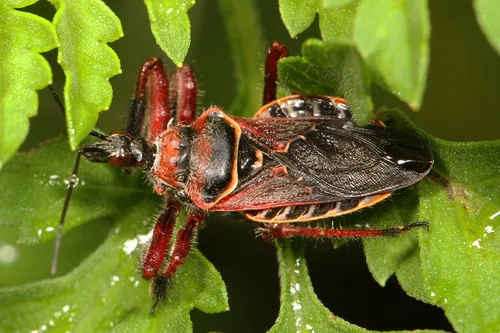
Florida Bee Assassin
Apiomerus floridensis
Identification: Resembles A. spissipes although the two are not sympatric ( A. spissipes may occur in the Florida panhandle). A. crassipes is the only other species found in peninsular Florida and A. floridensis may be distinguished by the reddish co
Florida Big-eyed Bug
Geocoris floridanus
Identification: similar to G. bullatus , but dorsum ivory white, colored punctures dark & distinct over entire surface, smaller, narrower, with antennae differently colored
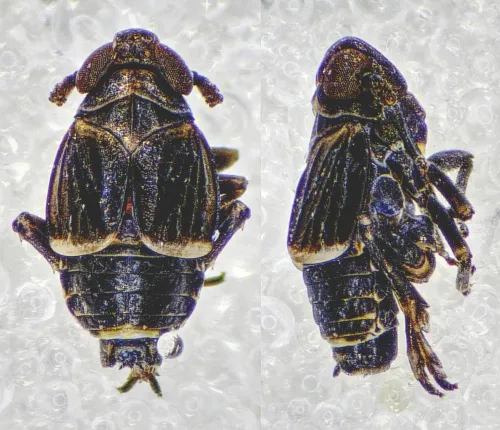
Florodelphax leptosoma
Florodelphax leptosoma
Length 2 to 4 mm, dark forewings with a white apex. Sometimes macropterous. Females have a completely yellow-brown pronotum. Dissection of male genitalia will confirm ID of males. Florodelphax paryphasma. Criomorphus spp . also have white tips to the
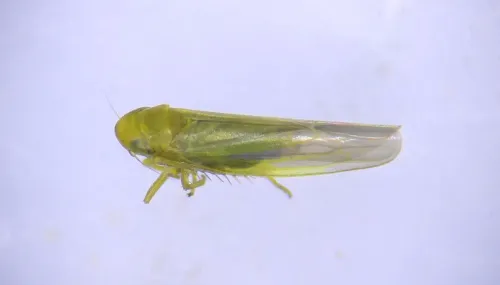
Forcipata forcipata
Forcipata forcipata
A greenish-yellow hopper associated with damp grasslands and sedges, usually in woodlands - especially along rides. The external male genitalia are distinctive, with a pair of genital plates each terminating in two blunt teeth. Females are harder to
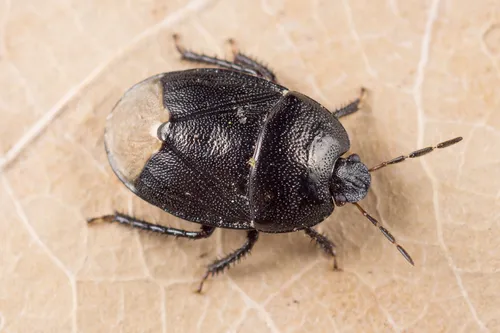
Forget-me-not Shieldbug
Sehirus luctuosus
Length 5-8mm. A completely black shieldbug, sometimes with a bronzy sheen, wing membrane variable, light or dark. Margins of head and pronotum without bristles. There is a closely-related species present in the UK, Sehirus morio , which seems to be t
Four-humped Stink Bug
Brochymena quadripustulata
Identification: juga exceed tylus , usually meet/overlap in front of it (may be very difficult to distinguish from B. sulcata )
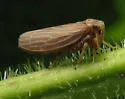
Four-spotted Clover Leafhopper
Agallia quadripunctata
Identification: Stouter than constricta and with four spots: two on the head and two dark on the thorax. "Narrow wings trumps 4 spots!" -- Dr. Hamilton usually parthenogenetic, with a few males found only in spring -- Dr. Hamilton
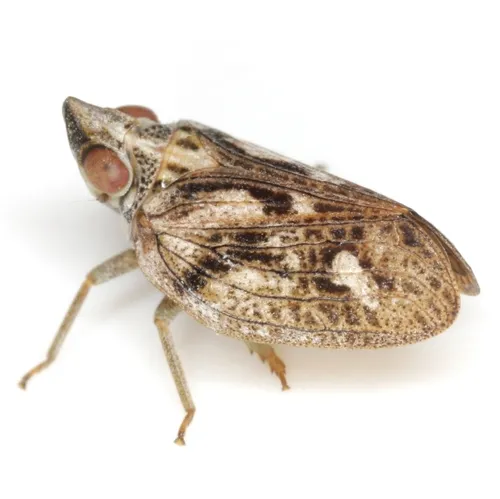
Fowlerium acutum
Fowlerium acutum
Identification: For the complete description of acuta see Doering: p. 463 . Dets. M. A. Quinn, 2010 Type specimens are: Male holotype, female allotype, eight female paratypes and three male paratypes, taken by Mr. Paul Oman at Concan, [Uvalde Co.] Te
Foxglove Aphid
Aulacorthum solani
Non native, a Palearctic species first reported in 1879. A major pest.
Freysuila phorodendri
Freysuila phorodendri
One of two mistletoe psyllids in North America, the other being Trioza phoradendri . That species belongs to a different family and the two are unlikely to be confused.
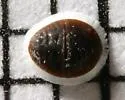
Fringed Orchid Aphid
Cerataphis orchidearum
Non native, from the Orient or the tropics. It is common in green houses.
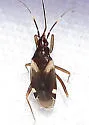
Fulvius anthocoroides
Fulvius anthocoroides
Identification: A2 mostly brown with at least the distal ⅓ pale, scutellum uniformly dark brown, hemelytron dark brown with the basal third of the corium and clavus pale and a large white spot (often tinged with orange) at the apex of the corium bord
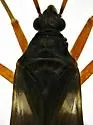
Fulvius atratus
Fulvius atratus
Identification: Black; corium with a subbasal transverse whitish fascia terminating at centre of outer claval margin; cuneus testaceous, inner basal angle and apex black; membrane blackish, its apical half pale fuscous; femora brownish ochraceous, wi
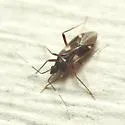
Fulvius imbecilis
Fulvius imbecilis
Identification: Third (?) segment of antennae is black on its proximal half, white distally, with sharp contrast between. In the northeastern US and eastern Canada, the only other species present is F. slateri , in which that segment is typically ent
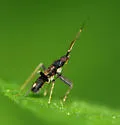
Fulvius slateri
Fulvius slateri
Identification: Third (?) segment of antennae is extensively pale without sharp contrast. In the northeastern US and eastern Canada, the only other species present is F. imbecilis , in which that segment is black on its proximal half, white distally,
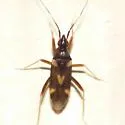
Fulvius subnitens
Fulvius subnitens
Identification: Distinguished by the basally brown A2 with the distal one half to two thirds pale or white, the uniformly dark brown scutellum, and the dark brown hemelytron, including the uniformly dark brown cuneus, with the base of the corium, the
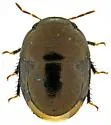
Galgupha diminuta
Galgupha diminuta
Identification: From McAtee & Malloch: Usually completely black, but occasionally with pale spots at lateral margins of abdominal segments. "Sixth [sternite of male] quite sharply angulate in center of anterior margin, and with a dense transverse bru
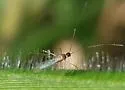
Gampsocoris decorus
Gampsocoris decorus
Identification: live image Type Locality: Two specimens of this interesting species were collected by Mr. H. H. Smith on low swampy land, in an open place, near sea at the south end of [St. Vincent], September 27.
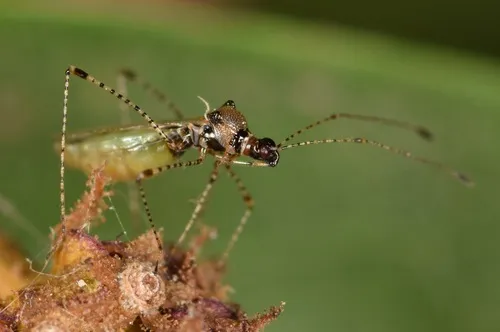
Gampsocoris punctipes
Gampsocoris punctipes
Length 4 to 5 mm. Distinctive bug with a dark head and pronotum, pale annulated legs and a greenish abdomen. There is a long spine on the scutellum. Good photographs showing key features required. Feeds on Restharrow ( Ononis spp.) and is particularl
Ganocapsus filiformis
Ganocapsus filiformis
Identification: "Color pale sanguineous, elytra black, commissural and costal margins and legs pale yellowish."
Garden Fleahopper
Microtechnites bractatus
Identification: Minute, black; antennomere 1 and often the middle of the second and the base of the third pale; patches of silvery scale-like hairs on the front wing. Both macropterous and brachypterous morphs present: males always macropterous, whil
Garganus fusiformis
Garganus fusiformis
Identification: Striking color pattern and slightly swollen second antennal segment that is hairy and black.
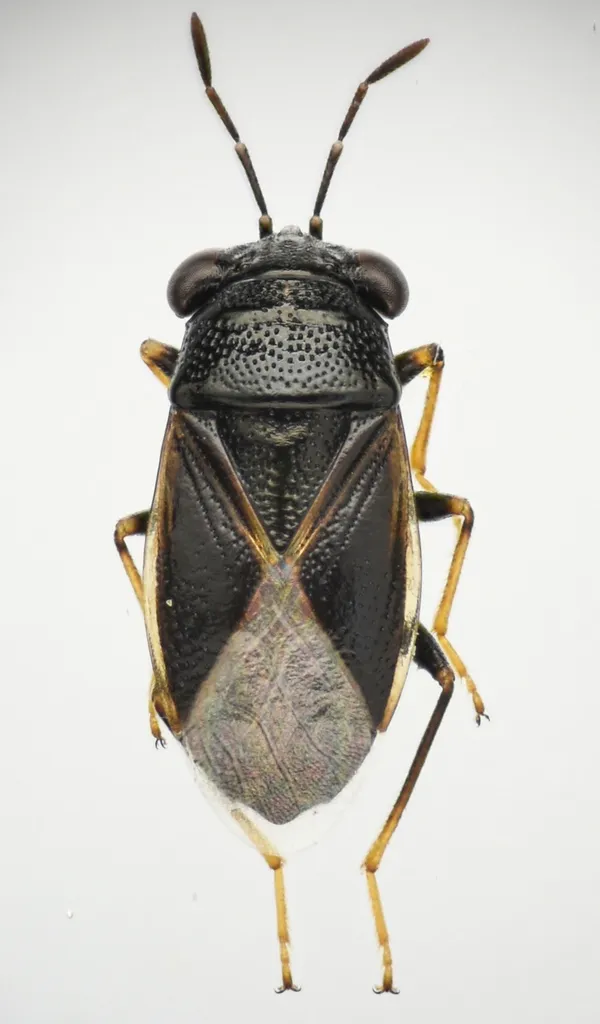
Geocoris atricolor
Geocoris atricolor
Identification: Form more oblong, pronotum more elongate, scutellum narrower; piceous with a steely bluish glint, pale margins of hemelytra usually narrow or lacking. Det. v belov, 2011
Geocoris flavilineus
Geocoris flavilineus
Identification: Black with pale margins and central line, orange head, and pale terminal ant. segment esp. basally Tab 18, Fig. 19 (Distant, 1880-1893) Photo - invasive.org
Geocoris frisoni 0
Geocoris frisoni
Identification: brachypterous, pale yellow, with regular, dense punctures on corium; vertex granulose, scutellum & calli entirely yellow
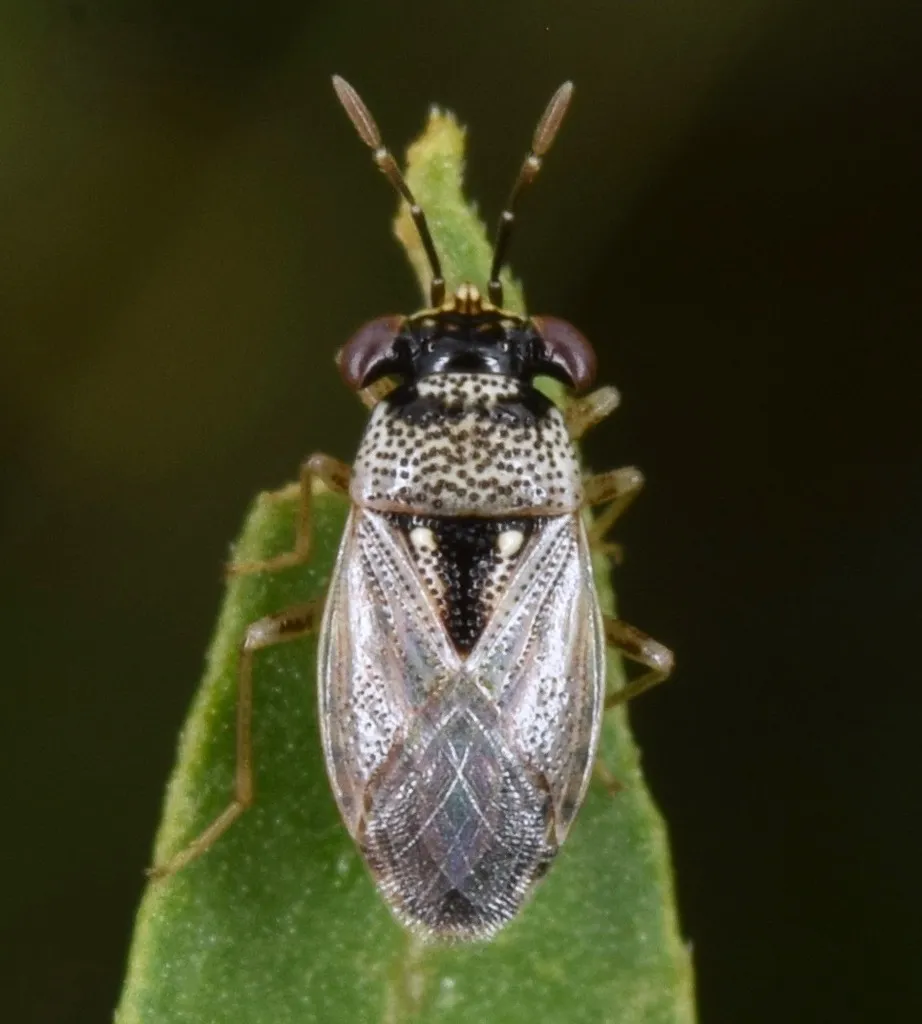
Geocoris punctipes
Geocoris punctipes
Identification: Head with a fine, medial groove extending all the way from base of antennae to hind edge of head (see "lead 1" in key at bottom of page here from Barber ) Scutellum with lateral callosities (emphasis added), which are evident as small
Geocoris thoracicus
Geocoris thoracicus
Identification: The markings of the pronotum are of an extremely variable character. Fieber’s type, or typical specimen, which I have been afforded an opportunity of examining, agrees more closely with my fig. 16, which, with fig. 15, may be taken as
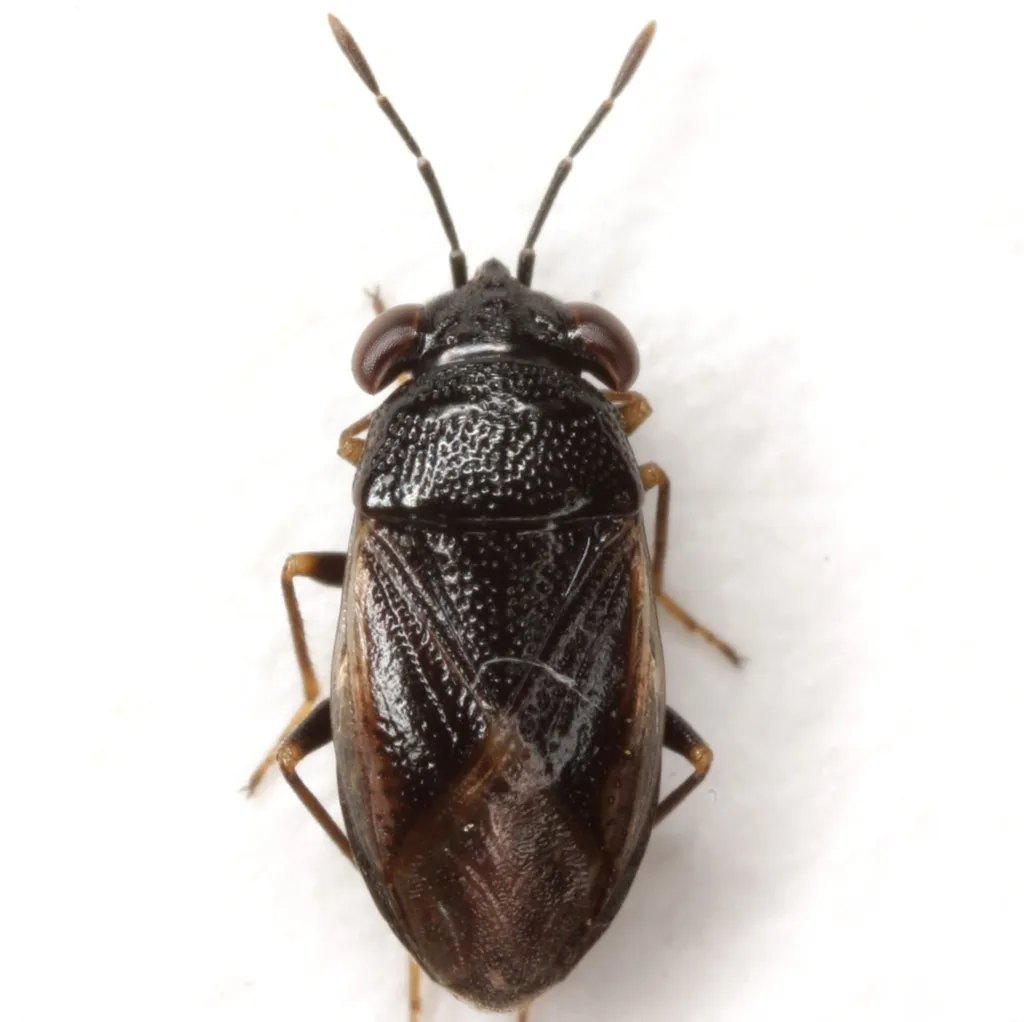
Geocoris uliginosus
Geocoris uliginosus
Identification: color variable; typical form almost uniformly black Form more oval, pronotum more transverse, scutellum strictly equilateral; without steely bluish glint, more or less broad margins of hemelytra pale. Dets. v belov
Gerris buenoi
Gerris buenoi
Identification: body grayish-brown; pronotum with pale middorsal line and conspicuous whitish stripe along lateral margins; second antennal segment slightly longer than third, and segments 2 & 3 (combined) slightly longer than segment 1; adults usual
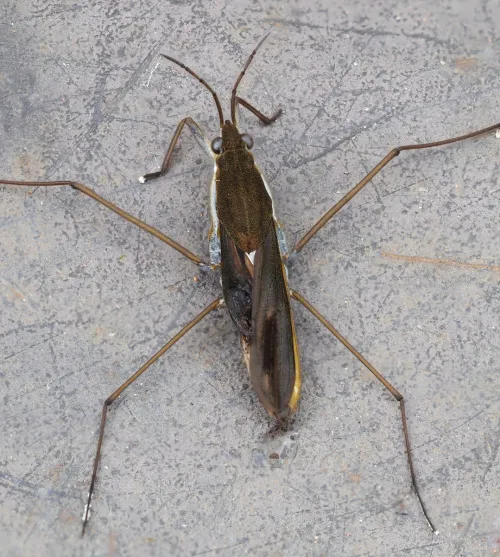
Gerris thoracicus
Gerris thoracicus
10-12mm. Similar to the Common Pondskater, Gerris lacustris , but usually with an orange disc in the centre of the thorax. Two other Gerris species have this but Gerris thoracicus is the commonest of these. It is usually fully winged and able to fly.
Ghinallelia productilis
Ghinallelia productilis
Identification: See remarks under Identification on the genus page.
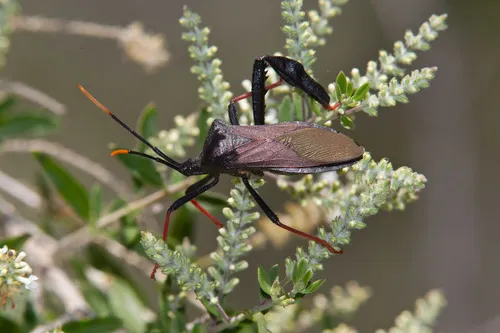
Giant Agave Bug
Acanthocephala thomasi
Identification: Apical segment of antennae bright orange, remaining segments dark; metatibial flange parallel-sided and extending the length of tibia; humeral angles relatively small (greatly expanded in A. declivis ); this combination of 3 character
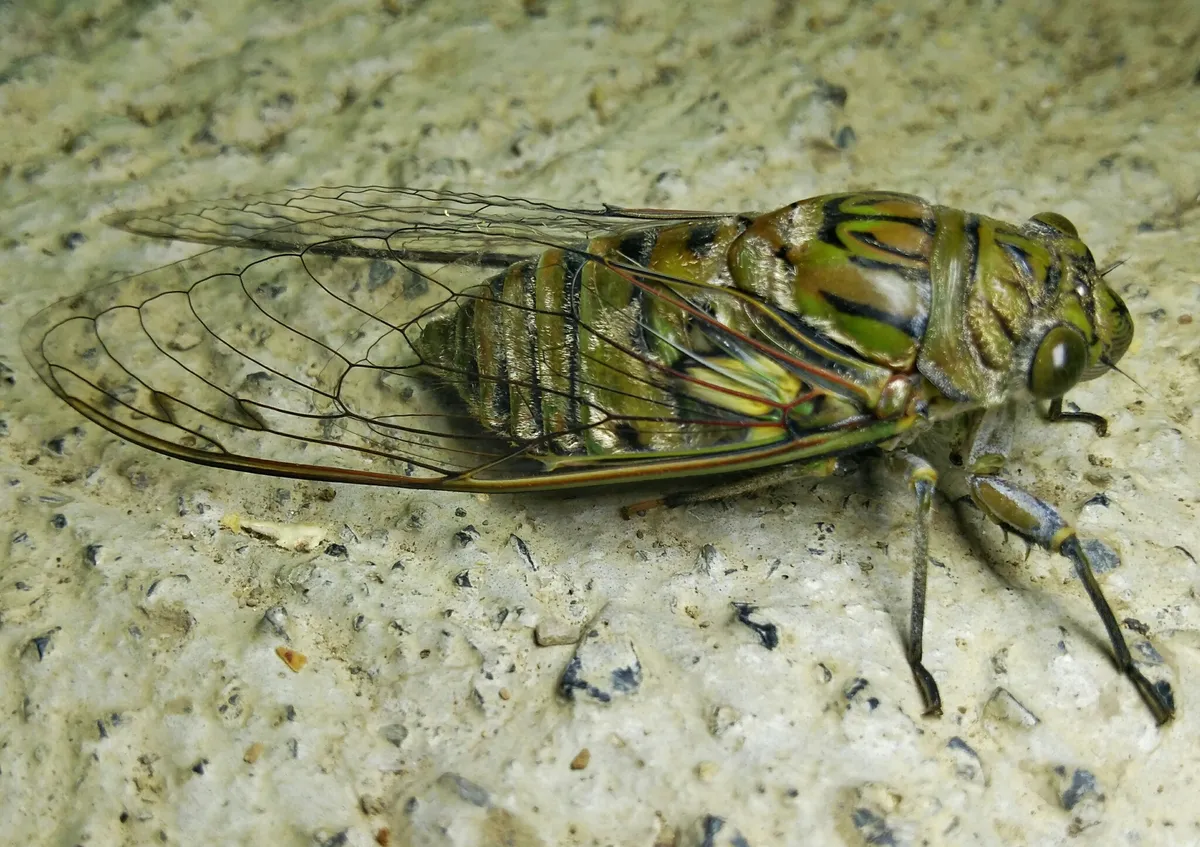
Giant Cicada
Quesada gigas
SONG - Loudest insect in the Western Hemisphere! At the height of the season in s. TX, sings all day (and occasionally through the night). In c. TX, sings primarily at dusk (between 8:37 and 9:04), and less often at dawn (between 6:15 and 6:25). (MAQ
Giant Reed Aphid
Melanaphis donacis
Identification: Purplish brown, coated by whitish waxy secretions. Six segmented antennae. tended by ants
Giant Strong-nosed Stink Bug
Alcaeorrhynchus grandis
Identification: Large, flat, speckled brown, with a short stabbing beak; can be distinguished from Podisus by larger size (>15 mm; Podisus adults reach only 14 mm) and by the double-pointed humeral spines. Instars III‒V are blue-black with red keels
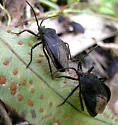
Giant Sweetpotato Bug
Spartocera batatas
Identification: Humeral angles of the pronotum rounded, lateral margins not expanded. Newborn nymphs are red but soon become very dark brown except for the head, the lateral angles of the pronotum and the expanded lateral edges of the abdomen, which
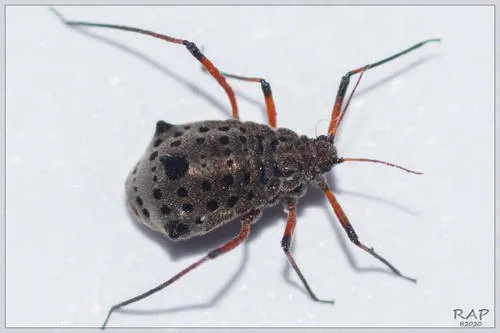
Giant Willow Aphid
Tuberolachnus salignus
Giant Willow Aphids are dark brown with a peppering of black spots but can appear grey from a white dust which forms on them. It is an unusually large aphid, measuring up to 6mm long. Adults of the species have a thorn-like tubercle which protrudes f
Glassy Scale
Pseudokermes vitreus
Identification: Glassy and transparent with a longitudinal ridge Intercepted 16 times on a variety of hosts at U. S. ports-of-entry between 1995 and 2012. From the Caribbean and South America.
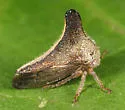
Glossonotus turriculatus
Glossonotus turriculatus
Identification: The "horn" is high and slender, as long as the pronotum behind the "horn".
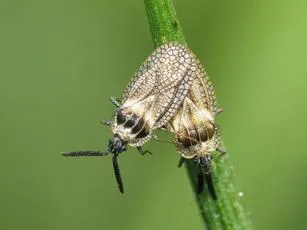
Gorse Lacebug
Dictyonota strichnocera
Length 3.5 to 4.0 mm. Dictyonota species and Kalama tricornis have two rows of meshes at the lateral edges of the forewings and uniformly wide antennae (the 3rd segment is as thick as or thicker than the 4th). In D. strichnocera the antennae are enti
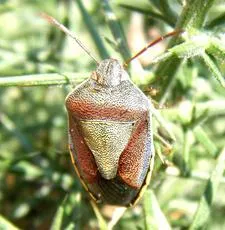
Gorse Shieldbug
Piezodorus lituratus
Length 10-13 mm. A large shieldbug with two adult colour forms which are related to sexual maturity. Those emerging and mating in the spring are predominantly green, whereas the new generation appearing in the late summer have purple-red markings on
Gracilimiris rubrolineatus
Gracilimiris rubrolineatus
Identification: "Superficially similar to G. litoralis and G. strigosus in having distinctly dark-spotted hemelytra with scattered, black, bristlelike setae, but differs from both species in the smaller size, the more sparsely spotted and less-dense,
Grand Western Flood Plain Cicada
Megatibicen cultriformis
Appears to be most closely related to T. pronotalis & T. dealbatus
Grape Mealybug
Pseudococcus maritimus
reported as a pest of grape, pear and apricot in CA
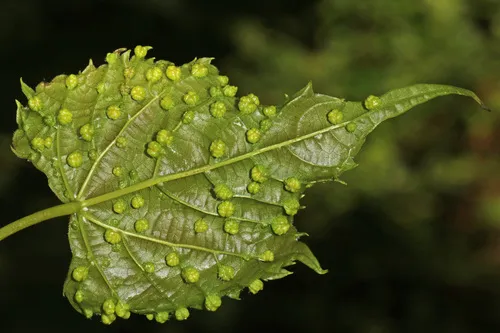
Grape Phylloxera
Daktulosphaira vitifoliae
Identification: Adults of different generations are winged or wingless crawlers. The majority of grape phylloxera adults are wingless females. They can be oval or pear shaped. Serious pest of grapevines worldwide Currently there is no cure for phyllo
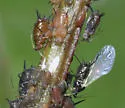
Grapevine Aphid
Aphis illinoisensis
Identification: Hind legs are mostly black, small section at the base of the hind femora may be lighter. Siphunculi are somewhat long compared to other Aphis spp., black, and curve outward slightly. Antennae and cauda are dark or black. Body is gener
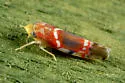
Grapevine Leafhopper
Erythroneura vitis
E. vitis pierce leaf cells to extract the contents, causing odd shapes and discoloured areas. The sticky feces produced by leafhoppers (honeydew) can stain the berries and may cause the development of sooty mold.
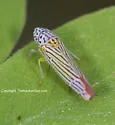
Graphocephala aurora
Graphocephala aurora
Identification: An aptly named and distinctively marked species, it's one of the most colourful members of the genus north of Mexico. The wings are mostly a white when young, with faint gradients of colour varying from violet to green. These colours
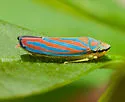
Graphocephala constricta
Graphocephala constricta
Identification: nearly identical to G. coccinea but smaller and more restricted in range. It's crucial to note size and sex of specimens of this gestalt ‒details here "I suspect constricta is probably a synonym [of coccinea ] based on what has been p
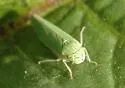
Graphocephala cythura
Graphocephala cythura
Oman redescribed the species, on the basis of the male genitalia.
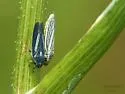
Graphocephala hieroglyphica
Graphocephala hieroglyphica
Identification: Color deeper in males Dark blue to blackish individuals represent "var. dolobrata" which is sometimes considered a separate species by some authors.
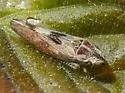
Graphocephala ignava
Graphocephala ignava
Identification: female photo This species has been treated as being within the genus/subgenus Hordnia but is completely unrelated to Graphocephala atropunctata . Its affinities seem to lie with a number of neotropical species with similar head markin
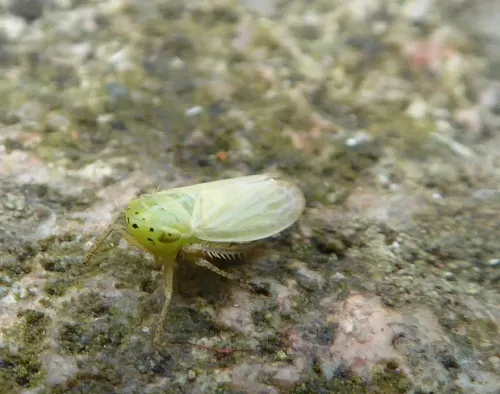
Graphocraerus ventralis
Graphocraerus ventralis
Length 4.5 to 6 mm. A greenish yellow leafhopper with four small black spots in a line running running across the vertex, two small spots on the pronotum, and some markings on the face. Good quality field photos or photos of a specimen, showing black
Graphogonalia evagorata
Graphogonalia evagorata
Identification: Det. Solomon Hendrix, 2020 First US record (Hidalgo Co., TX, July, 2012) Det. Chris Mallory, 2019
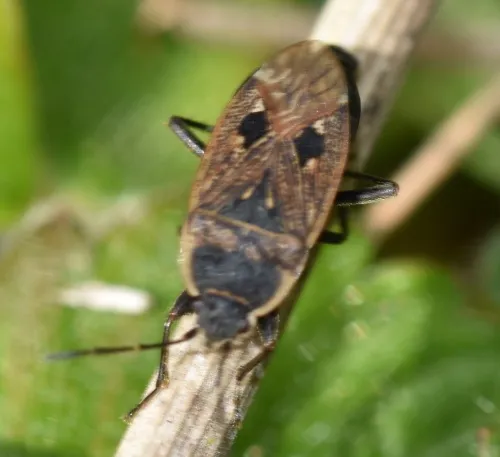
Graptopeltus lynceus
Graptopeltus lynceus
A large ground bug (6 to 7 mm) with a distinctive appearance, mainly associated with Viper's Bugloss. The pronotum has pale margins and there are two pale lines on the scutellum in a V-shape, and a dark spot of the forewings with a smaller pale spot
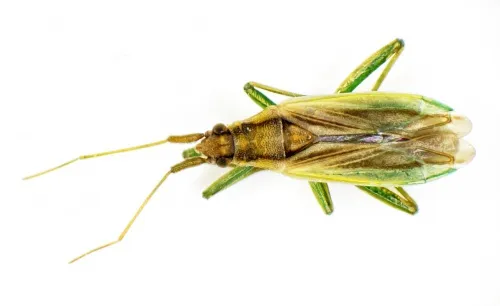
Grass Mirid Bug
Stenodema holsata
6 to 7 mm. Stenodema species are elongate grass bugs with a longitudinal furrow between the eyes. The genus is best distinguished by the coarsely and densely pitted pronotum. Very similar to S. laevigata, but has a much shorter, broader and more roun
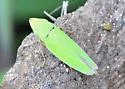
Grass Sharpshooter
Draeculacephala minerva
Identification: This species is generally unmarked green with a somewhat short head and generally green wing venation. This species overlaps in range with D. californica which has nearly identical male genitalia but a longer head. This species can of
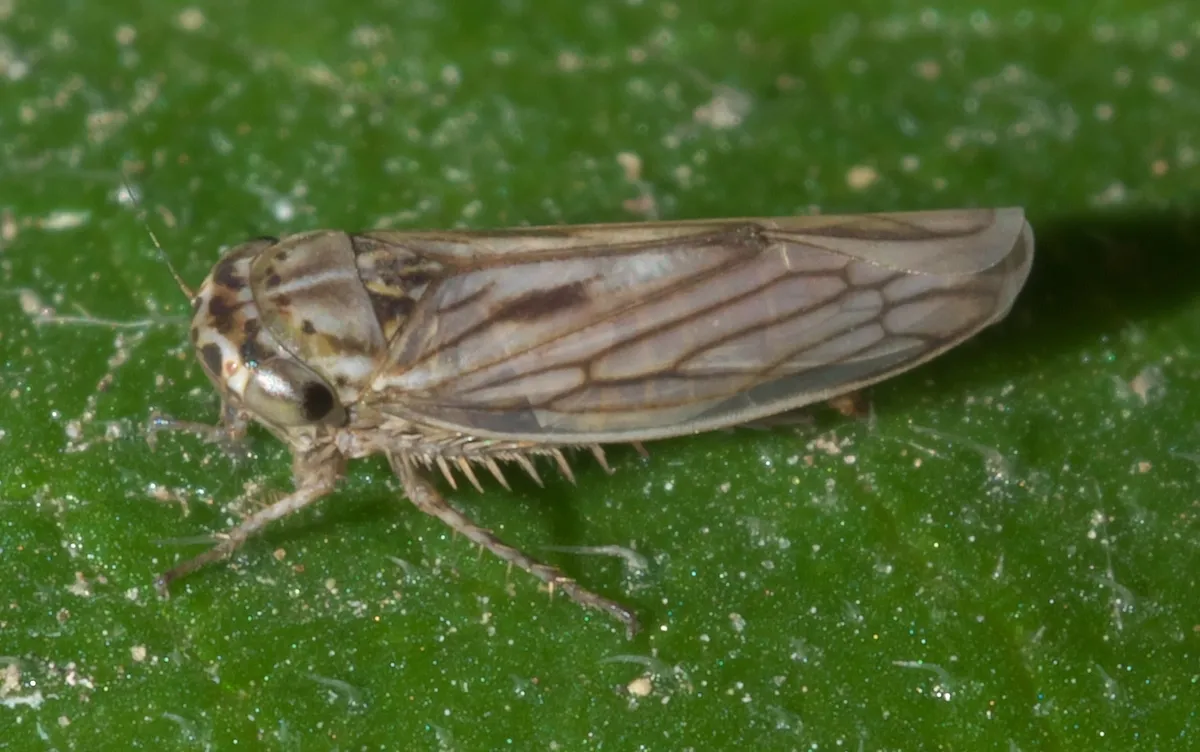
Gray Lawn Leafhopper
Exitianus exitiosus
Identification: Dirty yellow to brown body. Two black spots on top front of head, front of pronotum, and front and rear scutellum. Wings are clear to white with brown veins and usually extend slightly past the abdomen. Det. Ken Childs, 2018
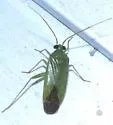
Green Creosote Bug
Phytocoris vanduzeei
Identification: Recognized by the yellowish green to bright green general coloration and short first antennal segment; ratio of segment length to width of head across eyes from 0.40:1 to 0.60:1. The left genital tubercle of the male is well developed
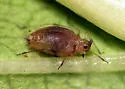
Green Peach Aphid
Myzus persicae
Considered a major pest because they cause damage to vegetables and ornamentals. Can transmit viral diseases. There is a wide variety of predators that are used as biocontrols, ladybugs, syrphid flies, parasitic wasps, etc.
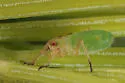
Green Spruce Aphid
Cinara fornacula
Identification: Apterae are pale, translucent green, or sometimes pale brown, with slight pruinosity On small branches and current year's growth of Picea spp., living at the needle bases, not attended by ants
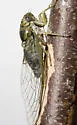
Green Winged Cicada
Diceroprocta vitripennis
Identification: See comments under images. Id. tips D. vitripennis, like many other members of its Genus, lacks the "smoky Z " towards the ends of the forewings typical of many other cicadas (as is typical of most Tibicen species). (The "smoky Z " =
Greenbug
Schizaphis graminum
Identification: Mature female greenbugs are winged or wingless, pear-shaped, about 1/16-inch long, pale green, and marked with a darker green stripe down the middle of the back and black tips on the legs and the two appendages (cornicles) on the back
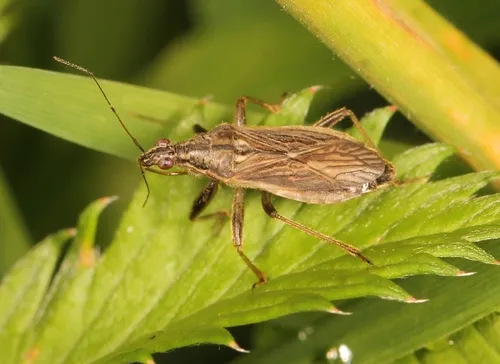
Grey Damsel Bug
Himacerus major
Length 7.5 to 9.0 mm. The long wings and pale connexivum give this species a greater resemblance to some members of the Nabis genus than to other Himacerus species. It is always macropterous. This species is characterised by the markings on the hind
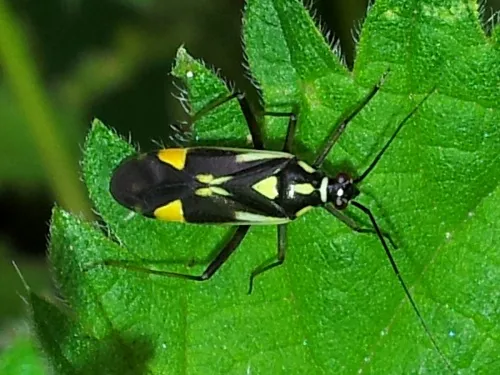
Grypocoris stysi
Grypocoris stysi
Length 6-8 mm. A conspicuous bug. The chequered pattern of light yellow-white areas and striking orange-yellow cuneus make confusion with other species unlikely. Usually on Nettles in woodland, and sometimes umbellifers and White Bryony. Eggs hatch i
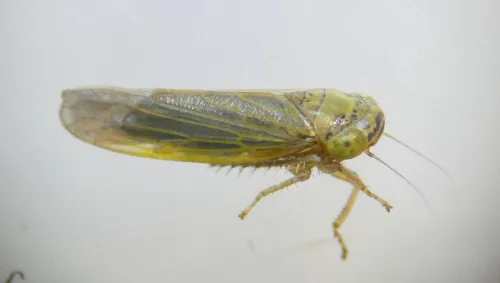
Grypotes puncticollis
Grypotes puncticollis
Length 4 to 5 mm. A brownish or greenish leafhopper associated with pine trees. Coloration is quite variable, and a form with a blue suffusion may be found. The dark wavy line on the vertex and the scutellar markings are diagnostic. Good quality fiel
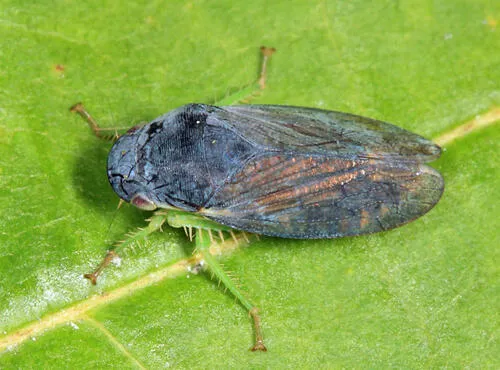
Gypona melanota
Gypona melanota
Identification: "A species with a broadly rounded vertex and dimorphic coloration in the male and female . Vertex broadly rounded, twice as broad between eyes as median length. Pronotum much wider than vertex and more than twice as long. Female yello
Gypona verticalis
Gypona verticalis
Identification: "A yellowish brown to green species, males often smoky to shining black. Vertex produced, apex rounded about half as long at middle as basal width between the eyes, more than half as long as the pronoturn. Female yellowish tinged with
Gypona vexana
Gypona vexana
Identification: "Related to melanota but with more produced vertex and with different genitalia. Vertex produced, apex rounded, more than half as long at middle as basal width between the eyes, and more than half as long as pronotum. Male shining bla
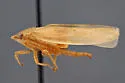
Gyponana angulata
Gyponana angulata
Identification: "A greenish species with an angularly produced vertex. Vertex narrow, bluntly angularly produced, apex rounded, two-thirds as long at middle as basal width between the eyes. Pronotum one-third wider than head. Pale greenish yellow, un
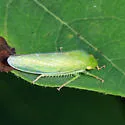
Gyponana cacumina
Gyponana cacumina
"Resembling octolineata in form and general appearance but with distinct male genitalia. Vertex roundedly produced, a little more than half as long on middle as width between the eyes at base. Yellowish tinged with orange which is in the form of long
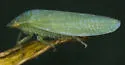
Gyponana cf-salsa
Gyponana cf-salsa
Identification: Adult: the only Gyponana species with reticulate wings in Ontario; further south there are others [comment by Andy Hamilton on this page ] - this is presumably why Andy's identification of specimens from Illinois ( 1 , 2 ) are preface
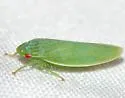
Gyponana cf-serpenta
Gyponana cf-serpenta
Identification: "Length 9-11 mm. Similar to octoliiicnta in form and appearance but each style with a slightly curved apical portion. Vertex strongly produced, broadly rounded, a little more than half as long at middle as basal width between eyes. Pa
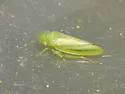
Gyponana elongata
Gyponana elongata
Identification: A distinctive species in the genus in having dark markings on the wings. Head is as wide as the pronotum; uncommon for the genus. "A yellow species with orange markings and brown stripes. Length of male 7 mm, female 7.5 mm. Crown blun