
Green Winged Cicada
Diceroprocta vitripennis
This record describes Diceroprocta vitripennis (species). Recorded family: Cicadidae. Recorded order: Hemiptera.
Identification and Appearance
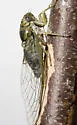
See comments under images. Id. tips D. vitripennis, like many other members of its Genus, lacks the smoky Z towards the ends of the forewings typical of many other cicadas (as is typical of most Tibicen species). (The smoky Z = The radial and radiomedial cross veins of tegmina, forewing, being heavily infuscated or darkened). According to the literature, the black pattern or bar across the face extends from eye to eye in vitripennis but fails to do so in the similar taxon bequaerti. Based on the available literature and associated updates in classification, greater clarification may be needed for better identification and separation of the following: Diceroprocta viridifascia var. bequaerti, Gulf Marsh Cicada Diceroprocta bequaerti Diceroprocta vitripennis Some images currently placed under Diceroprocta vitripennis , may belong to the following taxon: Diceroprocta bequaerti
Classification
- Kingdom
- Animalia
- Phylum
- Arthropoda
- Class
- Insecta
- Order
- Hemiptera (True Bugs, Cicadas, Hoppers, Aphids and Allies)
- Suborder
- Auchenorrhyncha
- Superfamily
- Cicadoidea
- Family
- Cicadidae (Cicadas)
- Subfamily
- Cicadinae
- Tribe
- Fidicinini
- Genus
- Diceroprocta (Scrub Cicadas)
Imported taxonomy record. Source availability varies; see the source references and editorial policy below.
Habitat and Range
Habitat
Seems most common in fields, scrub and early successional woodlands
Geographic Range
Southeastern USA extending north along the Mississippi River. This species extends further north within the US than any other member of its Genus. Recorded from the Following States: AL, MS, LA, TX, AR, OK, MO, TN, KY, IL, & MI (possibly occurs in a few adj. states)
Seasonal Activity
June-Sept
Diet and Behavior
Diet: Likely weedy perenniels
Life History
UNKNOWN (thought to be 2 or 3 seasons with overlapping generations)
About True Bugs, Cicadas, Hoppers, Aphids and Allies: the wider group
Order-level background for Hemiptera, the group containing Diceroprocta vitripennis. Species-specific details appear above.
Group overview
Hemiptera (true bugs) includes over 80,000 described species across cicadas, aphids, leafhoppers, shield bugs, and bed bugs. Aphids alone cost global agriculture an estimated $2.5 billion annually in crop losses.
Ecological role of the group
Many Hemiptera are essential food sources for birds and predatory insects. Cicadas provide massive nutrient pulses during emergence events - a single Brood X emergence can involve trillions of individuals across 15 states.
Economic and practical significance of the group
The brown marmorated stink bug (Halyomorpha halys) caused $37 million in apple crop losses in a single year in the U.S. Mid-Atlantic region. Bed bug infestations in the U.S. increased by 500% between 2001-2010, costing the hotel industry hundreds of millions annually.
Recorded sources for this group: USDA, EPA, University research. Imported estimates may describe particular regions or reporting periods.
Photos of Green Winged Cicada (5)
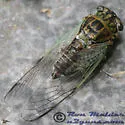
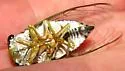
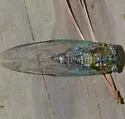
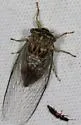
Photo credits: Contributed by William Ericson; Additional contributions by cotinis , David Ferguson , Bill Reynolds
Frequently Asked Questions About Green Winged Cicada
What is Green Winged Cicada?
Green Winged Cicada (Diceroprocta vitripennis) is a species in the family Cicadidae, within the order Hemiptera.
How big is Green Winged Cicada?
circa 25-27 mm
How do you identify Green Winged Cicada?
See comments under images. Id. tips D. vitripennis, like many other members of its Genus, lacks the smoky Z towards the ends of the forewings typical of many other cicadas (as is typical of most Tibicen species). (The smoky Z = The radial and radiomedial cross veins of tegmina, forewing, being heavily infuscated or darkened). According to the literature, the black pattern or bar across the face extends from eye to eye in vitripennis but fails to do so in the similar taxon bequaerti. Based on the available literature and associated updates in classification, greater clarification may be needed for better identification and separation of the following: Diceroprocta viridifascia var. bequaerti, Gulf Marsh Cicada Diceroprocta bequaerti Diceroprocta vitripennis
Where is Green Winged Cicada found?
| Feature | Details |
|---|---|
| Habitat | Seems most common in fields, scrub and early successional woodlands |
| Range | Southeastern USA extending north along the Mississippi River. This species extends further north within the US than any other member of its Genus. Recorded from the Following States: AL, MS, LA, TX, AR, OK, MO, TN, KY, IL, & MI (possibly occurs in a few adj. states) |
What does Green Winged Cicada eat?
The diet of the Green Winged Cicada includes Likely weedy perenniels.
When is Green Winged Cicada active?
Green Winged Cicada: seasonal activity - June-Sept.
What is the life cycle of a Green Winged Cicada?
UNKNOWN (thought to be 2 or 3 seasons with overlapping generations)