
True Bugs, Cicadas, Hoppers, Aphids and Allies
Order Hemiptera
The True Bugs, Cicadas, Hoppers, Aphids and Allies (Order Hemiptera) includes 7,349 species across 120 families and 1,727 genera in our directory.
About True Bugs, Cicadas, Hoppers, Aphids and Allies
Hemiptera (true bugs) includes over 80,000 described species across cicadas, aphids, leafhoppers, shield bugs, and bed bugs. Aphids alone cost global agriculture an estimated $2.5 billion annually in crop losses.
Economic Impact
The brown marmorated stink bug (Halyomorpha halys) caused $37 million in apple crop losses in a single year in the U.S. Mid-Atlantic region. Bed bug infestations in the U.S. increased by 500% between 2001-2010, costing the hotel industry hundreds of millions annually.
Ecological Role
Many Hemiptera are essential food sources for birds and predatory insects. Cicadas provide massive nutrient pulses during emergence events - a single Brood X emergence can involve trillions of individuals across 15 states.
Families in Hemiptera (120)
Species in Hemiptera (7,349)
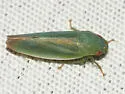
Gyponana geminata
Gyponana geminata
Identification: The wing venation is more diffuse, with larger cells than in similar-looking Gyponana species.
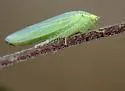
Gyponana germari
Gyponana germari
Photographs of this species were erroneously identified as Gyponana tenella , a native species with non-reticulate wing venation, until late 2024.
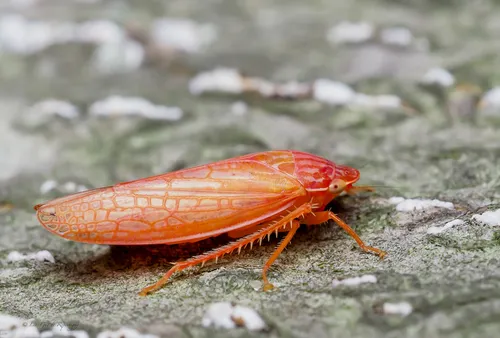
Gyponana gladia (+ cf. gladia)
Gyponana gladia
Identification: "On average, wings more coarsely reticulate than in G. octolineata , color lighter and wings narrower." [comment by Andy Hamilton] G. gladia is typically more uniformly red-orange (emphasis added) than in G. octolineata , which has th
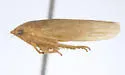
Gyponana hasta
Gyponana hasta
Identification: "Superficially resembling angulata in form and general appearance but distinguished from it by the form of the aedeagus and styles of the male genitalia. Vertex rather strongly produced, about two-thirds as long at middle as basal wid
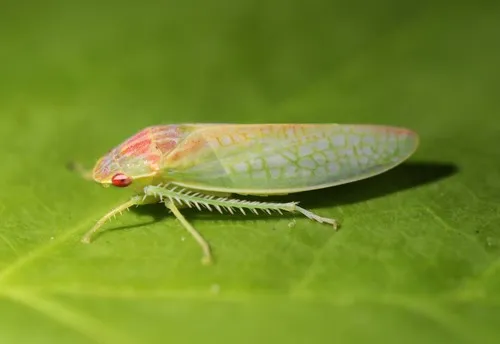
Gyponana octolineata (+ cf. octolineata)
Gyponana octolineata
Identification: Male tends to have the red marks confined to the body and the wing bases, whereas females are generally orange-red all over [per comment from Andy Hamilton]. G. gladia is typically more uniformly red-orange than in G. octolineata , wh
Gyponana omani
Gyponana omani
Identification: Note elongate head and shape of female pregenital sternite. PARATYPE previously placed in its own subgenus, Clovana which was later sunk. pregenital sternite of female is distinctive.
Gyponana ortha
Gyponana ortha
Identification: "Resembling octolineata in form and appearance but with distinct male genitalia. Vertex strongly produced and appearing narrow, about one-half wider between eyes than median length. Yellowish, longitudinal lines on vertex and pronotum
Gyponana parallela
Gyponana parallela
Identification: "A species with produced vertex, resembling octolineata in form and general appearance. Vertex strongly produced, rounded at apex, more than half as long at middle as basal width between eyes. Pale yellow faintly marked with orange on
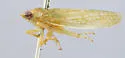
Gyponana pollex
Gyponana pollex
Type Locality: NH: Strafford Co., 5 km SE Dover, Toftree Lane, VII 13-2016, D.S. Chandler, sweep sugar maple
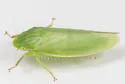
Gyponana praelonga
Gyponana praelonga
Identification: "A large species resembling flavilineata in form and general appearance but with more produced head and distinct male genitalia. Vertex strongly produced and rounded, two-thirds as long at middle as basal width between the eyes. Yello
Gyponana procera
Gyponana procera
Identification: "Superficially resembling Rugosa lora but with structural characters of the Gyponana genus and without the black spots on pronotum. Vertex strongly produced, apex rounded, more than half as long as basal width between eyes. The conspi
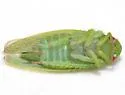
Gyponana protenta
Gyponana protenta
Identification: "In general appearance resembling acia but with vertex more strongly produced and with style long and narrow. Vertex roundedly produced, more than half as long at n1iddle as basal width between eyes. Pronotum a little longer than vert
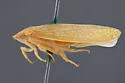
Gyponana pruinosa
Gyponana pruinosa
Identification: Distinctive pregenital sternite of female
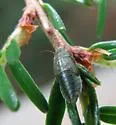
Gyponana striata
Gyponana striata
Identification: G. salsa and G. cacumina are similar but larger, slightly paler, and not found on hemlock
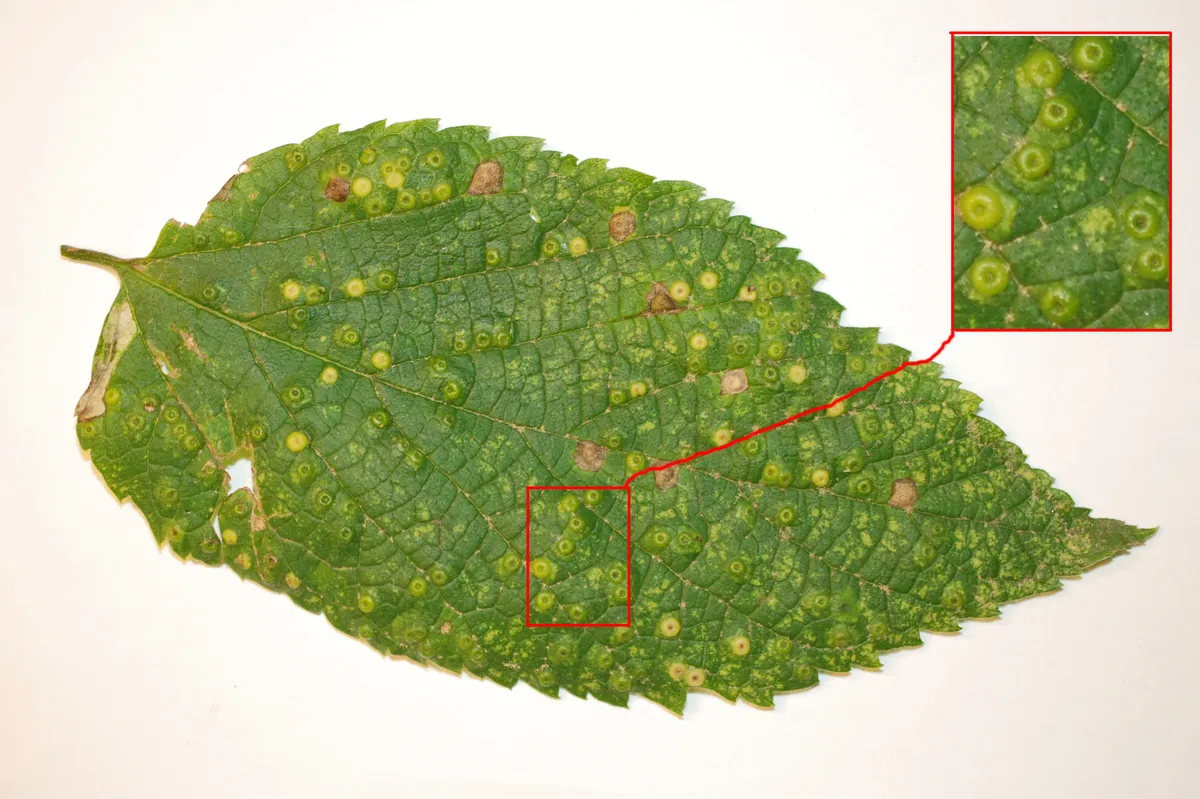
Hackberry Blister Gall Psyllid
Pachypsylla celtidisvesicula
Identification: Galls are blister-like, most prominent on the upper surface of the leaf . Adults are similar to P. celtidismamma but are smaller and with wing pattern usually more diffuse. Tuthill notes that the sudden narrowing midway of the ventral
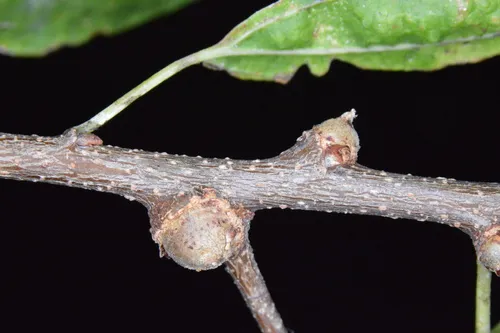
Hackberry Bud Gall Psyllid
Pachypsylla celtidisgemma
Identification: "Among the common, eastern species this can be identified by its lack of dorsal pubescence, generally lighter color and nearly uniformly brownish wings (though I have seen an individual in which the wing coloration was slightly patchy
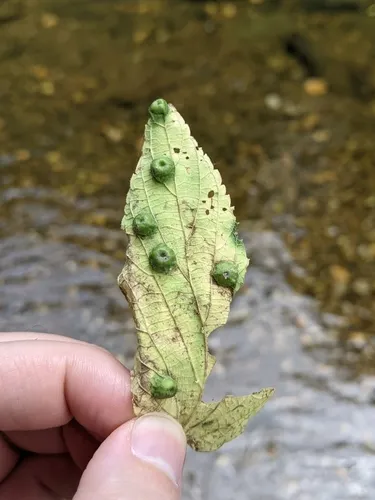
Hackberry Disc Gall Psyllid
Pachypsylla celtidisumbilicus
Identification: Gall on upper surface of leaf circular and abruptly depressed at its outer margin, gradually rising to surface level, with an elongate nipple in the center; ventral surface of the leaf elevated, 2mm in height and 5mm wide, circular, g
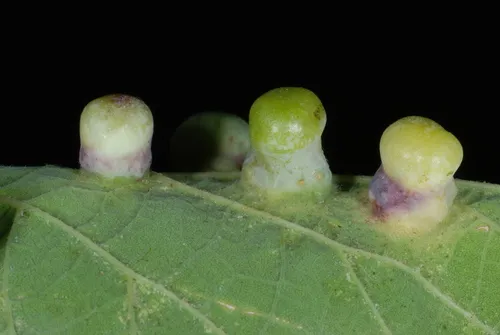
Hackberry Nipplegall Maker
Pachypsylla celtidismamma
Identification: Adults resemble small leafhoppers, mottled light brown with wings held in a tent shape over the back. They can jump great distances . Nymphs (concealed in galls) are rounded and yellowish. Galls are smooth and rounded, projecting from
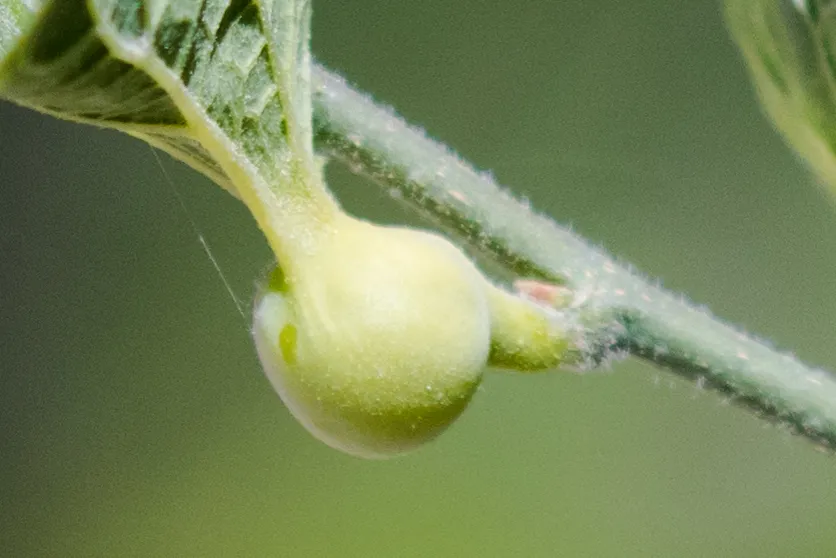
Hackberry Petiole Gall Psyllid
Pachypsylla venusta
Identification: A large and robust species, much larger than other Pachypsylla ; forewings rhomboidal, hyaline with dark maculae. Galls are large (1-1.5cm) and spherical, forming on the leaf petioles
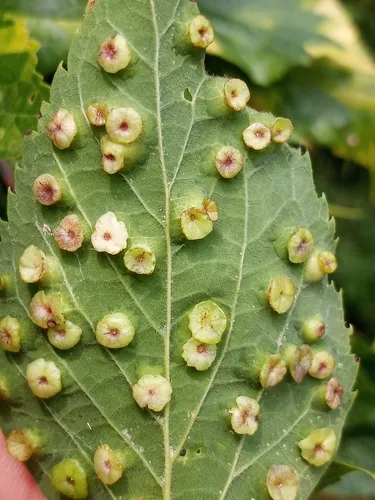
Hackberry Star Gall Psyllid
Pachypsylla celtidisasterisca
Identification: Galls occur on the underside of leaves and resemble a star or a Convolvulus flower, about 2.5mm in diameter . Adults are essentially indistinguishable from P. celtidismamma , but are said to be smaller (under 3mm), and with the male p
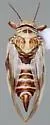
Hackberry Twig Gall Psyllid
Pachypsylla celtidisinteneris
Identification: Forewings hyaline with dark maculae along pterostigma, continuing around the apex to the tip of the clavus and from there extending along the cubital vein; marginal cells relatively short, branches of medial cell sinuate
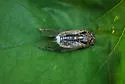
Hadoa bifida
Hadoa bifida
Identification: Described as "similar in appearance to dealbatus but much smnaller". This cicada is said to be very pruinose and to possess a well defined broken pruinose stripe running along the dorsum of the abdomen. Refer to: The Southwestern Natu
Hadoa chisosensis
Hadoa chisosensis
Identification: "Tibicen chisosensis" - if not synonymous with duryi - may be similar in appearance to and sympatric with "Tibicen duryi" ... (??) Tibicen chisosensis info & image
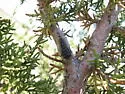
Hadoa inaudita
Hadoa inaudita
Unlike similar species, inauditus calls from an "upside down" (head down) position Song is a continuous, even, high pitched whine and often compared to that of T. canicularis . Similar song in the following species: Tibicen longioperculus Davis 1926
Hadoa longiopercula
Hadoa longiopercula
Song is a continuous, even, high pitched whine and often compared to that of T. canicularis . Similar song in the following species: Tibicen longioperculus Davis 1926 Tibicen inauditus Davis 1917 Tibicen texanus (syn. tigrina Davis 1927)
Hadoa neomexicensis
Hadoa neomexicensis
Identification: Tibicen neomexicensis , a recently described species was separated from Tibicen chiricahua Davis 1923 Very similar to T. chiricahua. Slight physical and call differences. Tibicen chiricahua Davis 1923 ZooKeys 337 (2013) : 49-71 Morpho
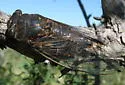
Hadoa parallela
Hadoa parallela
Identification: NOTE - Tibicen parallelus: little if any frosted grey pruinosity black pronotum & pronotal collar slight orange patterning in the mesonotum narrower wing margin than seen in chiricahua dark eyes ("Charcoal to Blackish in color") The c
Hadoa simplex
Hadoa simplex
Refer to: Tibicen simplex The Southwestern Naturalist 56:363-368. 2011 doi: 10.1894/F09-JC-44.1 A relatively small member of the Genus Tibicen and more closely related to members within the western complex of smaller species. Described as similar to
Hadronema bispinosa 0
Hadronema bispinosa
Identification: Recognized by the dark head above with a central pale stripe and two yellowish spots adjacent to eyes (fig. 2); the mostly yellowish pronotum, with black calli (fig. 2); the mostly yellowish scutellum (fig. 2); the yellowish orange fe
Hadronema echinata 0
Hadronema echinata
Identification: Recognized by the nearly straight, rounded, lateral margins of the pronotum (fig. 38A); the prominent transverse posterior protuberance near the posterior margin of pronotum (fig. 38A); the weakly curved mesotibia in males
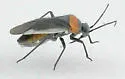
Hadronema pictum
Hadronema pictum
Identification: Recognized by the orange-red posterior lobe of pronotum (fig. 2); the similar length of antennal segments II and III Det. M. A. Quinn, 2013 Lectotype: Garden of the Gods, Colorado city, El Paso Co., Colorado [38.86778uN 104.89056uW],
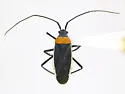
Hadronemidea echinata
Hadronemidea echinata
Identification: From Forero: "Recognized by the nearly straight, rounded, lateral margins of the pronotum...; the prominent transverse posterior protuberance near the posterior margin of pronotum...; the weakly curved mesotibia in males, covered with
Hadrosomus teapensis 0
Hadrosomus teapensis
Identification: Head predominandy yellow or ocher, black anterior mark ±restricted to tylus
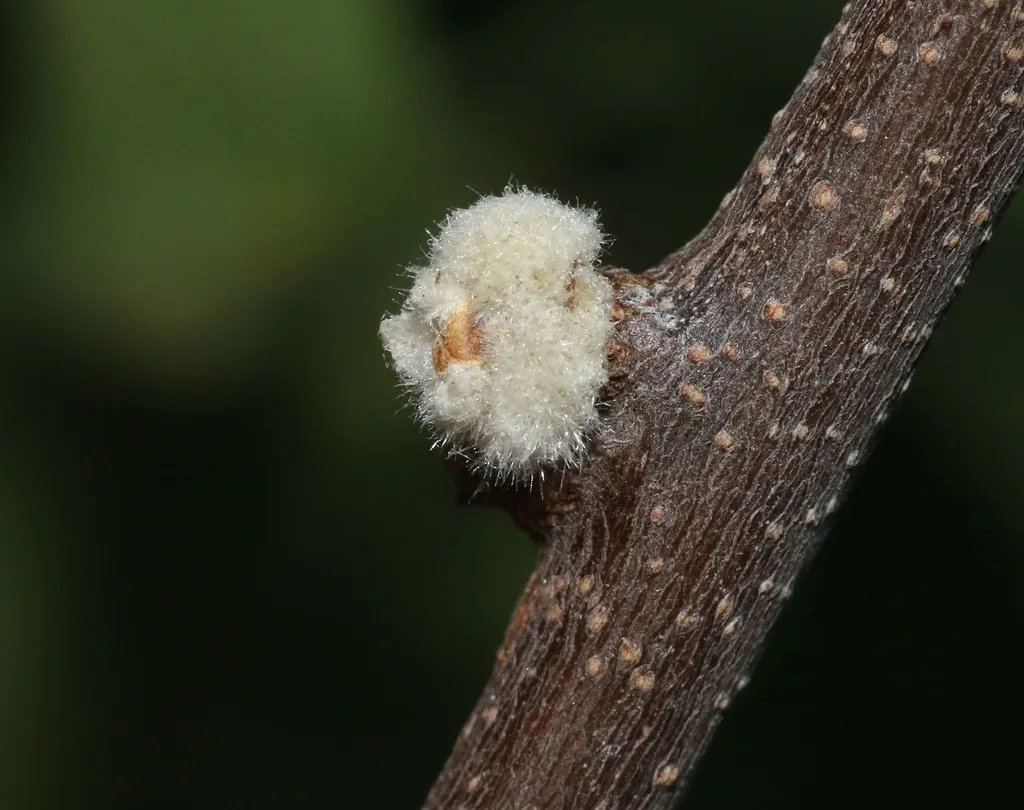
Hairy Bud Gall Psyllid
Pachypsylla pallida
Identification: Adult forewings with marginal cells not particularly elongate, venation similar to P. celtidisgemma but wings definitely maculate, pattern similar to P. celtidismamma . Maculae composing 3 broad transverse bands: one apically, one cro
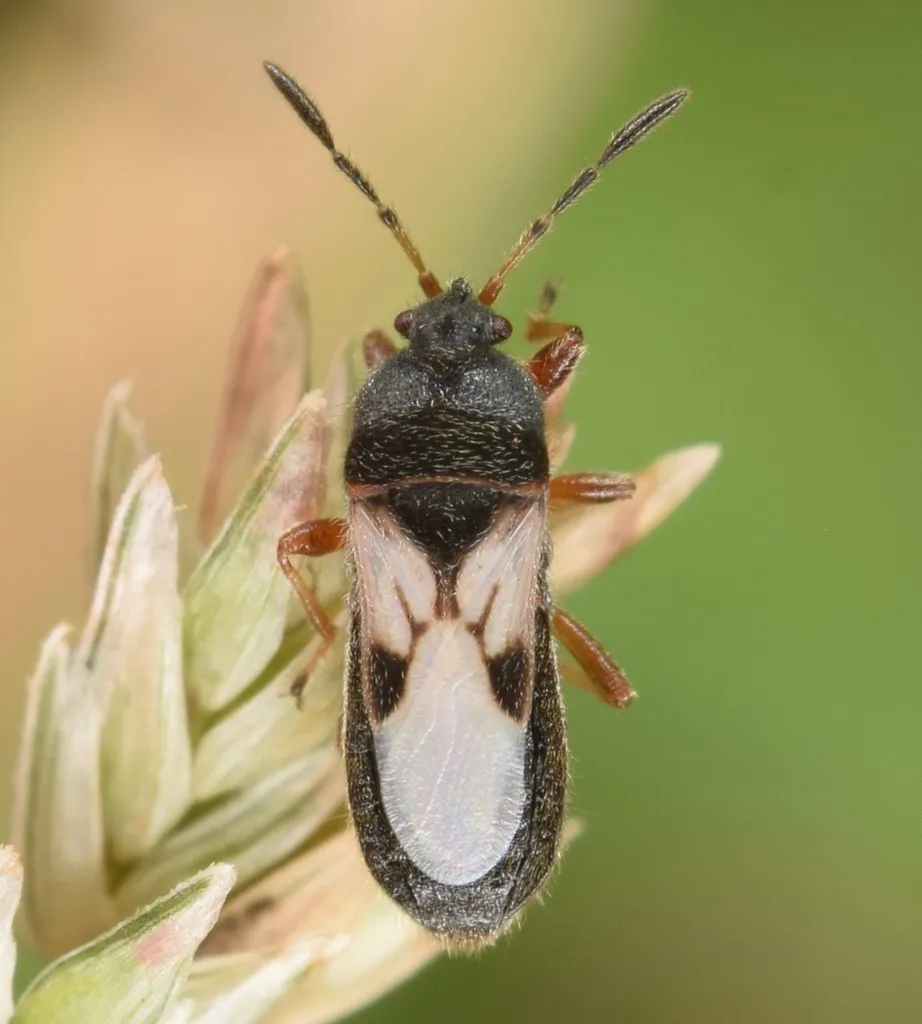
Hairy Chinch Bug
Blissus leucopterus
Identification: Wings vary in length (from as long as the body to ⅓-½ body length) and bear a distinctive triangular black mark. during periods of abundance has caused massive damage to corn and small grains in the midwestem states
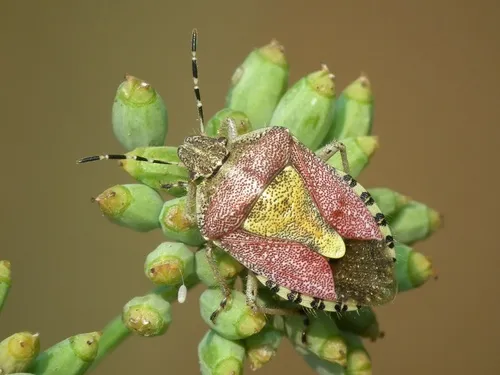
Hairy Shieldbug
Dolycoris baccarum
Length 11-12 mm. A large and distinctive purple-brown and greenish shieldbug which is covered with long hairs (c.f. Brown Marmorated Stink Bug, Halyomorpha halys , which is smooth). The antennae have three white bands (c.f. two in Halyomorpha halys )
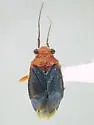
Halticotoma andrei
Halticotoma andrei
Identification: For females, a useful character to separate H. andrei from H. valida is the length of the second antennomere. It's longer than the distance between eyes in the former, and shorter than the distance between eyes in the latter. Det. Jas
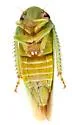
Hamana dictitoria
Hamana dictitoria
Identification: "A large yellow to greenish species often marked with black on scutellum and along claval suture. Crown short, broadly rounded, more than twice as wide between eyes at base as median length. Quite variable [in colour], yellow to green
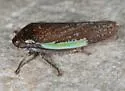
Hamana gelbata
Hamana gelbata
Identification: "In general appearance resembling incita , but with crown almost parallel margined and with a broad yellow marginal band on forewings. Crown less than one-half as long at middle as median width between the eyes, anterior margin foliac
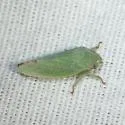
Hamana herbida
Hamana herbida
Identification: "Resembling dictitoria in general appearance but with a more produced vertex and distinct genitalia. Vertex strongly produced and rounded, more than half as long at middle as basal width between the eyes. Bright green. Disc and apical
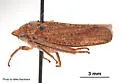
Hamana incita
Hamana incita
Identification: "In form and appearance resembling manifesta, but with a shorter, more rounded crown, and different coloration. Crown foliaceous, slightly upturned at margin, about one-half as long at middle as basal width between eyes, produced and
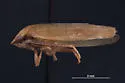
Hamana lekva
Hamana lekva
Identification: "A yellowish species resembling gelbata in general appearance, but with a more produced head and with different male genitalia. Crown roundedly produced, more than twice as wide between eyes at base as median length. Yellow, tinged wi
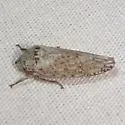
Hamana manifesta
Hamana manifesta
Identification: "Vertex strongly angularly produced, apex rounded and more than half as long as basal width between eyes. Yellow with distinct dark markings. Vertex with a broad median longitudinal stripe, a round black spot behind each ocellus on po
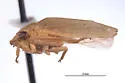
Hamana nelya
Hamana nelya
Identification: "Resembling virescens in general appearance but with foot-like apex of style longer and more curved. Crown broadly roundedly produced, more than twice as wide between eyes at base as median length. Pale dull green without specific col
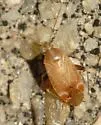
Hamatophylus guttulosus
Hamatophylus guttulosus
Identification: Det. WonGun Kim, 2012 " Hamatophylus guttulosus is not restricted to Quercus virginiana . In Mexico, it is also known from Q. polymorpha and Q. mircrolepis , among others, and Wheeler found it on Q. illicifolia in Pennsylvania. Nevert
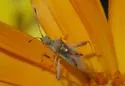
Harmostes angustatus
Harmostes angustatus
Identification: The following characters were gleaned from although not explicitly mentioned as being diagnostic or unique to H. angustatus : Among the species of Harmostes found in the western United States ( angustatus , dorsalis , and reflexulus )
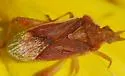
Harmostes dorsalis
Harmostes dorsalis
Identification: The following characters were gleaned from although not explicitly mentioned as being diagnostic or unique to H. dorsalis : Among the species of Harmostes found in the western United States ( angustatus , dorsalis , and reflexulus ),
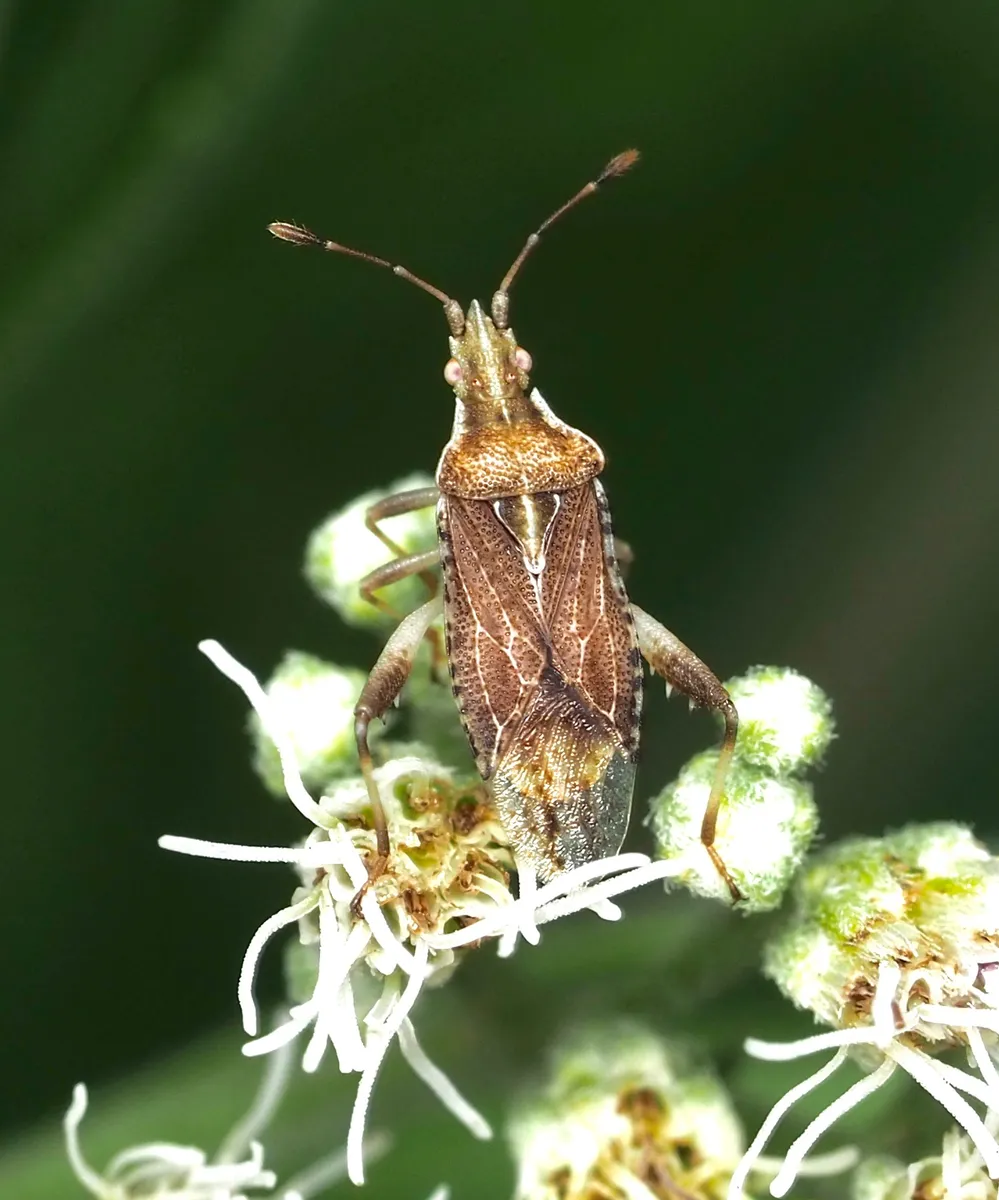
Harmostes fraterculus
Harmostes fraterculus
Identification: Separated from H. reflexulus in having the scape not distinctly surpassing the apex of the head and the speckled costal margin of the hemelytra also, bicolored hind femora and parallel black lines in the hyaline portion of the wings
Harmostes serratus
Harmostes serratus
Identification: distinguished from the nearctic congeners by the serrate lateral margin of the pronotum (other species may have very weakly denticulate margins, but in these species it is restricted to the anterior half of the margin)
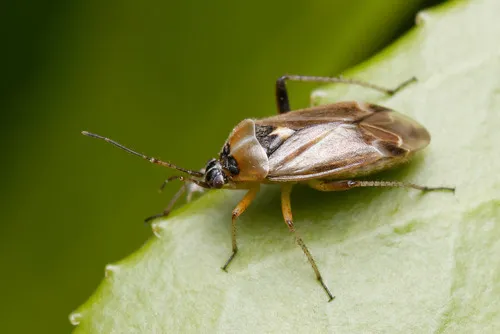
Harpocera thoracica
Harpocera thoracica
Length about 6 mm. A handsome bug. The sexes are dimorphic and very different in appearance; males are more elongate in shape, with longer tibiae and a distinctive inflated 2nd antennal segment. Adults appear in the spring and are short-lived (partic
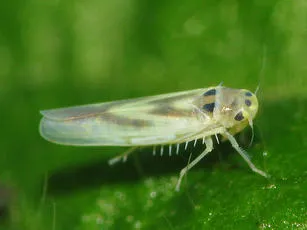
Hauptidia maroccana
Hauptidia maroccana
A small leafhopper, with two dark spots on the vertex and two triangles on the scutellum. The face lacks dark markings, unlike the similar Arboridia , The wings usually have darker streaks, but this is variable. Good photographs of a specimen, includ
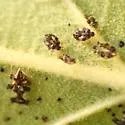
Hawthorn Lace Bug
Corythucha cydoniae
Identification: The straight posterior margin of the apical band on the hemelytra is characteristic, as well as a very elevated hood. ( Laura Miller )
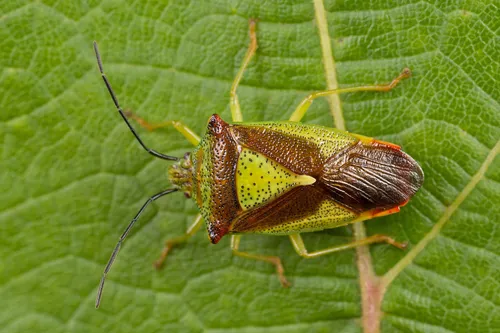
Hawthorn Shieldbug
Acanthosoma haemorrhoidale
Length 13-15 mm. A distinctive species, although confusion with the smaller and less elongate Birch Shieldbug is possible. The lateral extensions of the pronotum are larger in A. haemorrhoidale , and are marked with red, while the scutellum is green
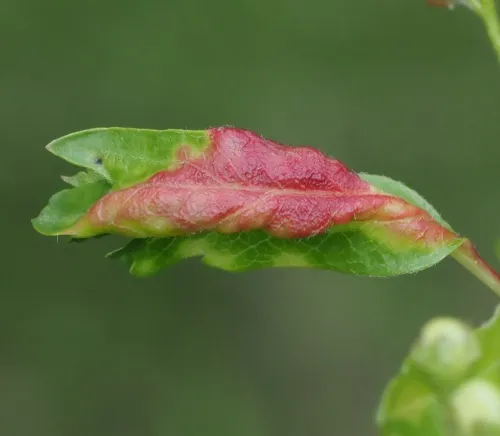
Hawthorn-Buttercup Aphid
Dysaphis ranunculi
The aphid Dysaphis ranunculi causes a gall on the leaves of Hawthorns. These yellowish galls cause the leaf to turn down like an upturned boat, and contain deep grey waxy aphids. The galls may be flushed rosy pink. It alternates its host between Hawt
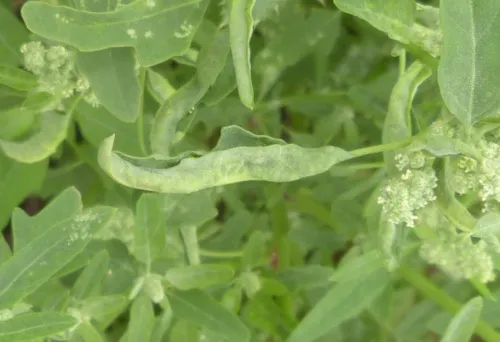
Hayhurstia atriplicis
Hayhurstia atriplicis
The aphid Hayhurstia atriplicis galls the leaves of Fat-hen and Orache, rolling the leaves or bracteoles upwards along the midrib, often several leaves affected. Wherever the host plants occur – often on waste ground or disturbed soil. The galls may
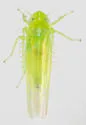
Hebata bifurcata
Hebata bifurcata
Identification: anal hook bifurcated pygofer lateral process distinctly shaped
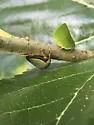
Hebetica sylviae
Hebetica sylviae
Given the South American distributon of the genus, the non-native host plant (+ occurance of native Morus species in South America), and community science observational records expanding from its initial point of discovery, this species is likely int
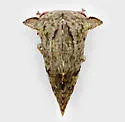
Heliria cornutula
Heliria cornutula
Identification: extremely similar to H. gibberata ; host info may be critical HOLOTYPE Flatbush; Long Island, Kings County, New York September 29, 1913 For some time, the species H. mexicana has been confused with H. cornutula . It is unlikely that t
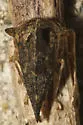
Heliria gibberata
Heliria gibberata
Identification: Very similar to H. cornutula , host record often necessary for determination. TYPE
Heliria molaris
Heliria molaris
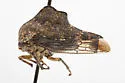
"My current thinking is that many specimens named molaris are misidentified and are either T. dubiosa or Heliria fitchi ." - M. Wallace pers. comm. to S. Hendrix [3/9/21] Holotype male from the British Museum, provided my Matt Wallace:
Hellebore Aphid
Macrosiphum hellebori
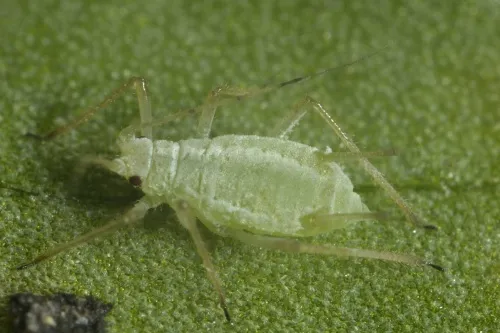
A largely pale green aphid around 3 mm long with black bands above the 'knees' and dark 'feet'. Infests the flowers and foliage of hellebores. A sap feeding aphid and one of the most important pests of hellebores. Widespread in Britain and fairly fre
Helmeted Squash Bug
Euthochtha galeator
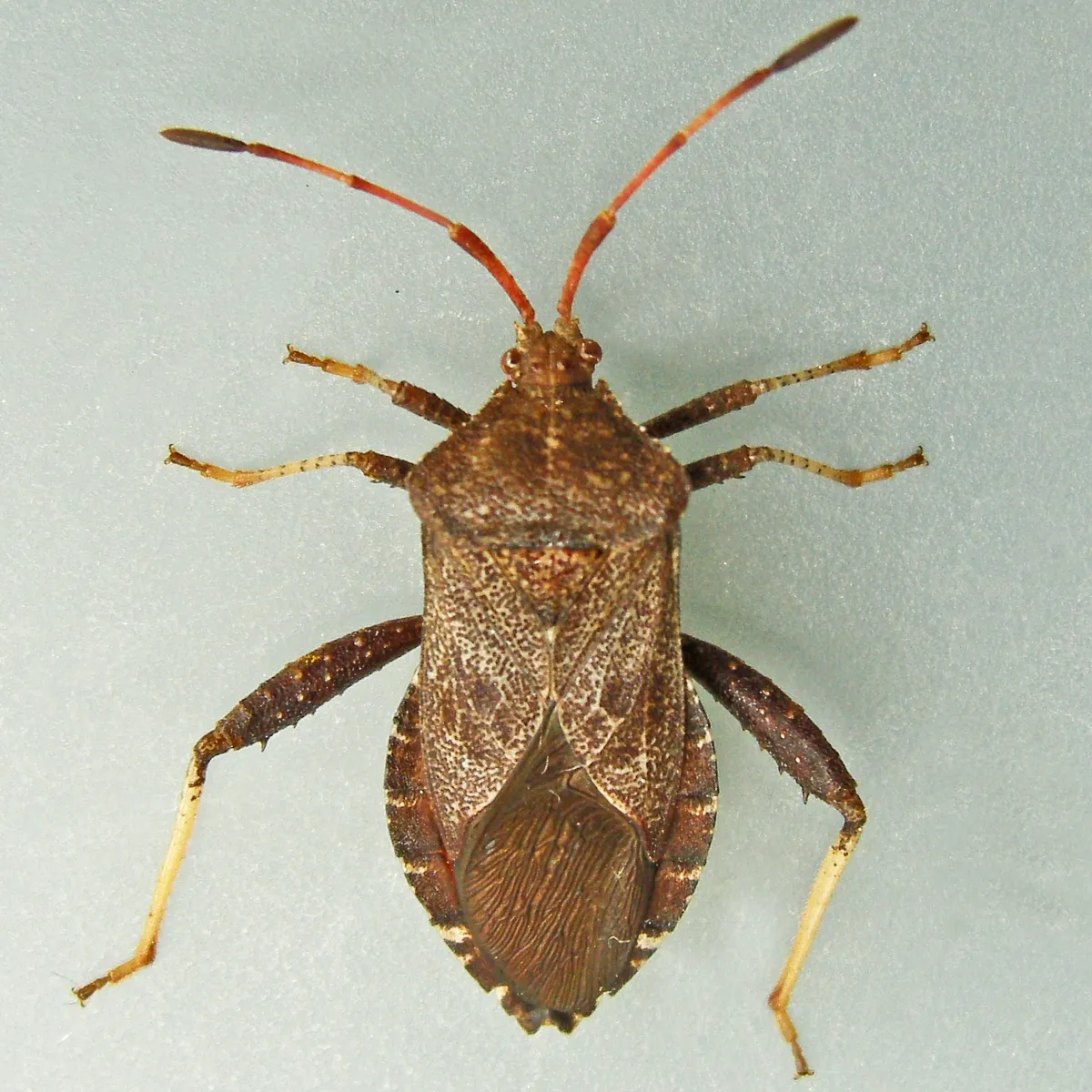
Identification: All five nymphal instars are characterized by spines, mottling, and a dilated 3rd antennal segment; the only e. US coreid whose nymphs have the 3rd antennal segment (only) dilated. Males have a white- or cream-colored spur or flap on
Hemlock Woolly Adelgid
Adelges tsugae
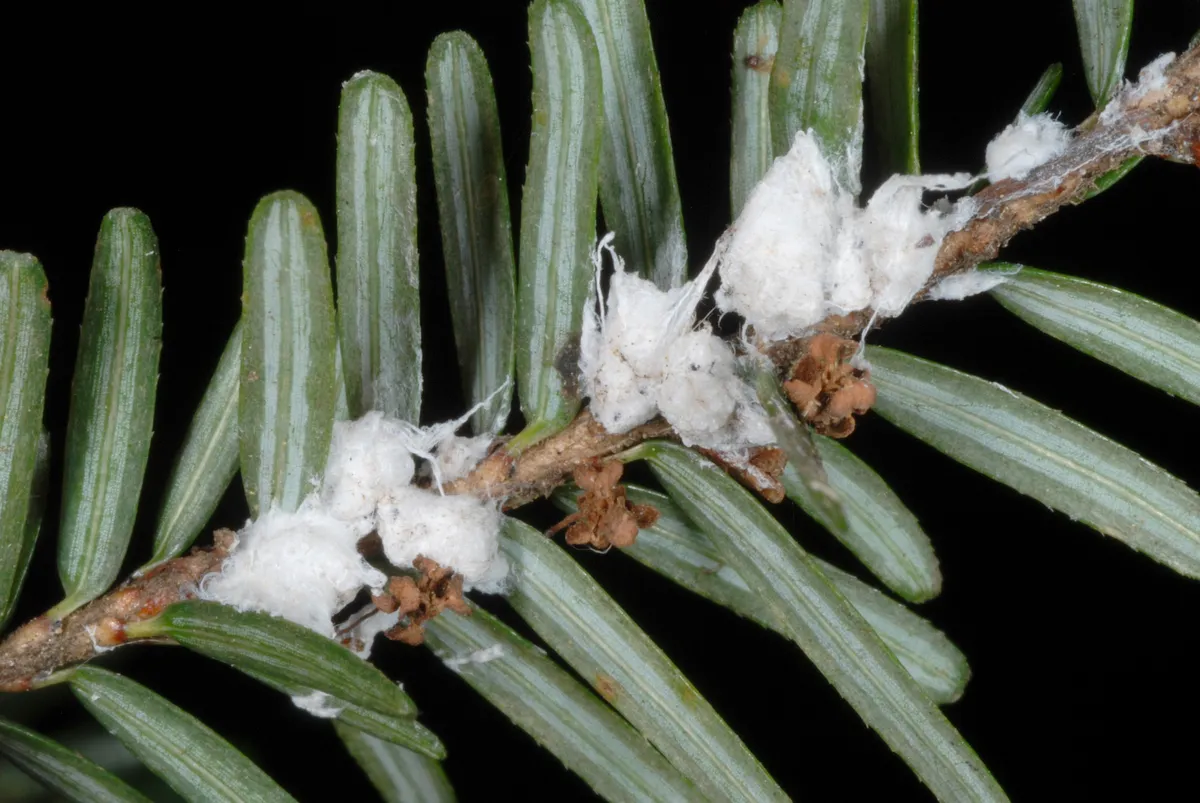
Identification: Red-purple to purple-black. As they mature, they cover themselves with white, cottony wax, becoming much more noticeable. Accidentally introduced to British Columbia and Oregon from Asia in the 1920's or earlier. The first eastern rec
Henrylygus ultranubilus
Henrylygus ultranubilus
Identification: Similar to H. nubilus , but distinguished by 1) posterior margin of eye reflexed posteriorly; 2) apex of clavus white; 3) overall coloration yellow brown with black markings; and 4) base of cunues white.
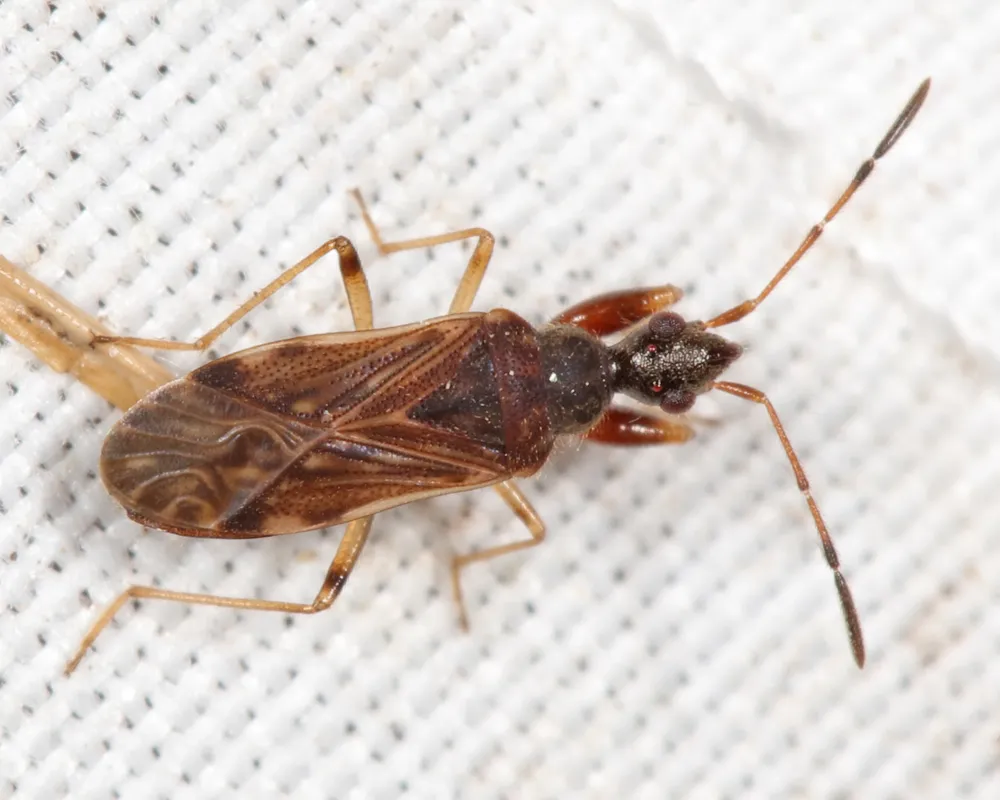
Heraeus plebejus
Heraeus plebejus
Identification: see Dellapé et al. Det. Ken Wolgemuth, 2021 the most widely dist. (common) sp. of Heraeus in the US
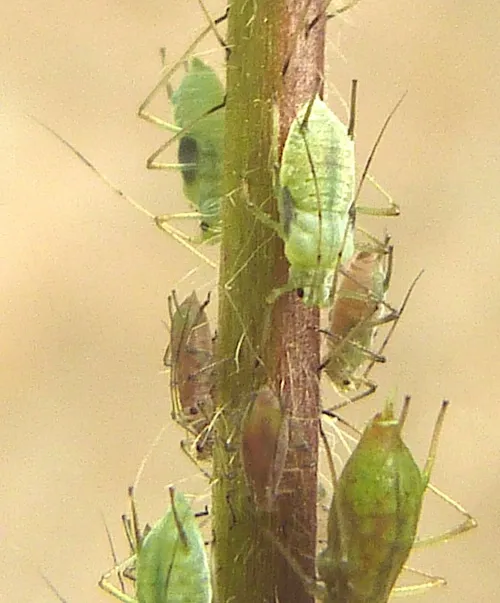
Herb Bennet Aphid
Macrosiphum gei
Macrosiphum gei apterae are spindle-shaped, usually mid-green to bluish green or wine red. Unless identified by a recognised expert, a photo is required and the specimen should be examined with a microscope. In the comments box, state the key or ID m
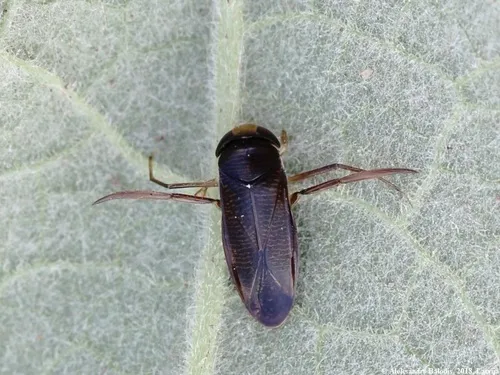
Hesperocorixa linnaei
Hesperocorixa linnaei
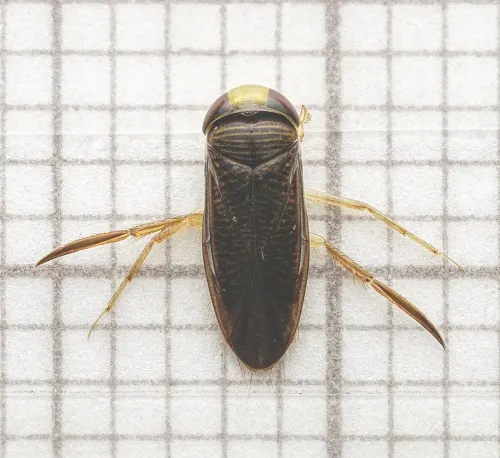
7 to 8 mm. Six pale lines on the pronotum and the pattern of light lines on a dark background extending to the posterior apex of the corium. Please measure length and record dorsal patterning as described. Good quality photographs of dorsal and ventr
Hesperocorixa moesta
Hesperocorixa moesta
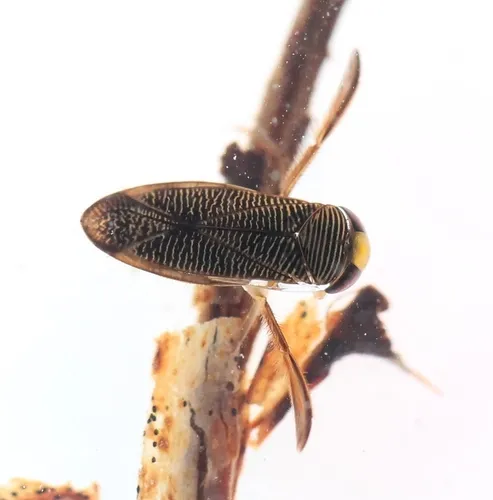
Length 5.2 mm. Mid legs with shorter claws, ≤ tarsus-length. Abdominal segment 7 upperside with middle of hind margin convex & bearing tuft of long hairs. Strigil broad, 6 combs. Photographs showing the key identification features required. In detrit
Hesperocorixa sahlbergi
Hesperocorixa sahlbergi
7 to 8 mm with seven to nine pale lines on the pronotum. The pattern of light lines on a dark background fades to a pale patch near the apex of the corium. Unless identified by a recognised expert, photos of the dorsal and ventral surfaces are requir
Hesperophylum arizonae
Hesperophylum arizonae
Only a few specimens have been collected (and only one male) ( 3 )
Heterocordylus tibialis
Heterocordylus tibialis
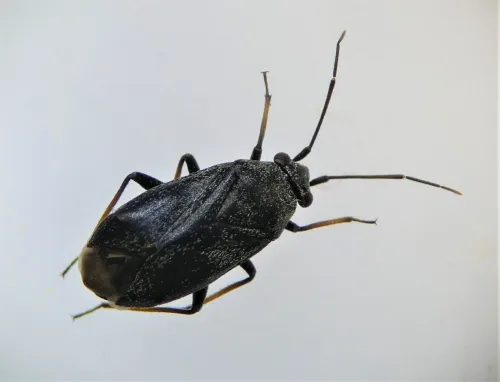
A medium-sized (4.5 to 5.5 mm) black mirid bug covered in flattened scale-like pale hairs which may appear golden. There are two very similar species but they use different host plants, and for that reason it is very important to state the host plant
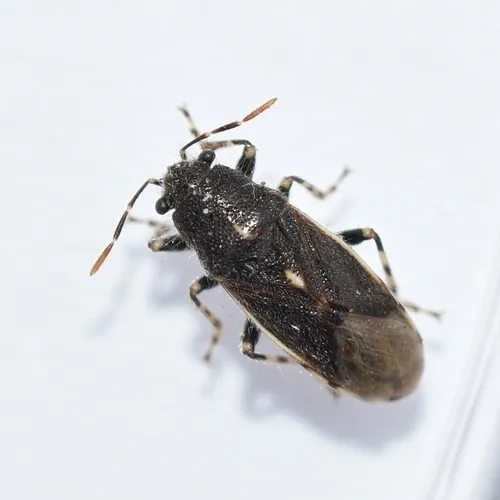
Heterogaster flavicosta
Heterogaster flavicosta
Type Locality : Victoria, Texas, X.5.1908, J.D. Mitchell The remaining paratypes are as follows: Males: 3, Victoria, Tex., February 25, 1913 (J. D. Mitchell) and 1, January 14 (L. L. Scott, Quaintance, No. 6181); 1, Devil's River, Tex., May 2, 1907 (
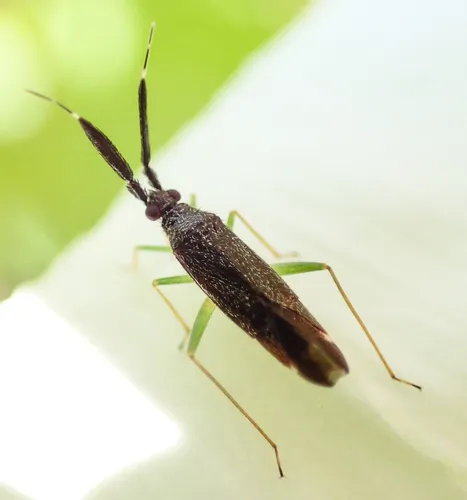
Heterotoma planicornis
Heterotoma planicornis
Length 4.5-5.5 mm. The broad and flattened 2nd antennal segment, dark ground colour and contrasting greenish legs make this species unmistakeable. On various plants and trees, in particular nettles. Both adults and the reddish nymphs feed on small in
Heterotrioza chenopodii
Heterotrioza chenopodii
Identification: The only Triozid recorded from our area that utilizes Chenopodiaceae as a host. Adults extremely variable in color, with younger individuals yellowish with brown markings and green abdomen; older individuals with uniformly dark brown
Hewlettia nigriviridis
Hewlettia nigriviridis
Identification: Green and black pattern is distinctive. Sings for brief periods, falling silent for several minutes after. Unusually docile for an Okanagana, often difficult to disturb. Recently moved from Okanagana .
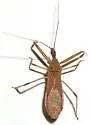
Heza similis
Heza similis
Identification: Mesopleuron plicate as in genus, though smaller. Anterior pronotal disc armed with moderate-sized, blunt tubercles. Posterior pronotal lobe armed with two long discal spines and two long humeral spines. First connexival segment is a
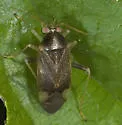
Hickory Plant Bug
Neolygus caryae
Identification: 1) Pronotum, scutellum, and hemelytra uniformly black or dark brown; 2) Cuneus pale; and 2) A2 brown to dark brown.
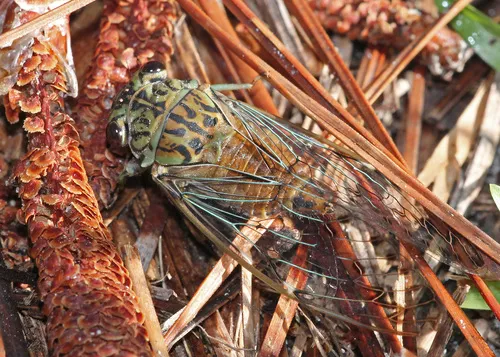
Hieroglyphic Cicada
Neocicada hieroglyphica
Identification: Quoting from Cicadas of Florida : Partial to oaks; first species to be heard in spring; song starts with a sequence of progressively softer whiney bursts and ends with an even whine. Found in small colonies. Starts calling in morning
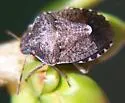
Holcostethus abbreviatus
Holcostethus abbreviatus
Identification: connexivum with alternating dark/pale pattern ; tylus distinctly enclosed by juga
Holcostethus fulvipes 0
Holcostethus fulvipes
Identification: the alternated connexiva, zigzag bands on the abdominal venter, and the gap between jugal apices are diagnostic
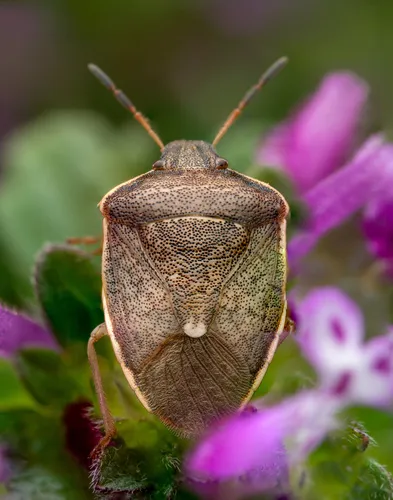
Holcostethus limbolarius
Holcostethus limbolarius
Identification: compact oval body, dark brown dappled with black; small short head; humeral angles rounded; large triangular scutellum w/ pale apical tip; pronotum and elytra with thin cream-colored margin (emphasis added) - BWM dark apical ant. segm
Holcostethus macdonaldi
Holcostethus macdonaldi
Identification: abdominal venter dark brown with a few pale markings , connexivium yellow
Hollyhock Plant Bug
Brooksetta althaeae
Identification: Dosum with black, scalelike pubescence; color chiefly deep apple green; veins green; membrane including larger areoles fuscous.
Homaemus aeneifrons
Homaemus aeneifrons
Identification: ■ SECTION NEEDS REVISION ■ lack of yellowish submarginal stripe on head is diagnostic for eastern specimens. The subspecies restricted to the west, H. aenifrons consors typically has the yellow stripe. H. bijugis is smaller (5.7‒8 mm)
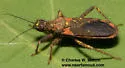
Homalocoris erythrogaster
Homalocoris erythrogaster
Identification: Of the four Homalocoris species potentially found in Arizona, H. erythrogaster is separated from the others by the elongate reddish spots restricted to the posterior lobe of the pronotum. The basal corial spots tend to be smaller in
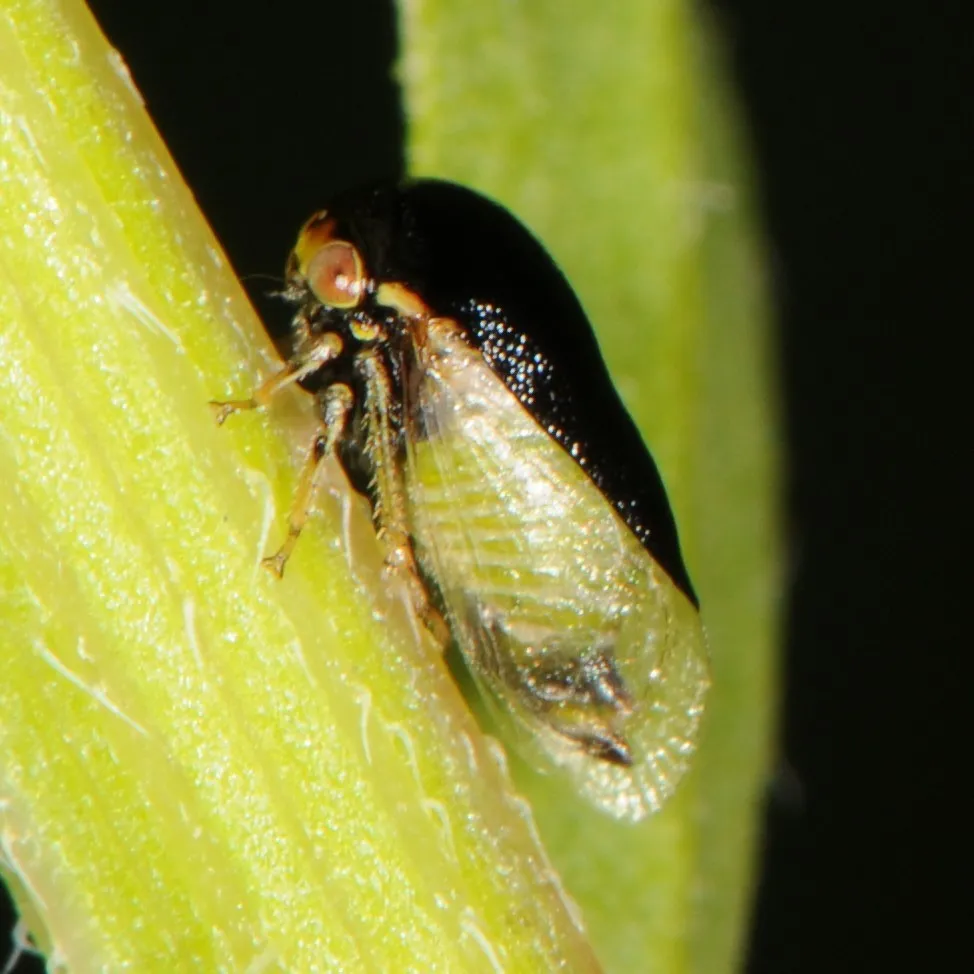
Honeylocust Treehopper
Micrutalis calva
common in FL very long series of Micrutalis spmns in the TAMUIC , but only Micrutalis calva are determined to sp. for Texas...
Honeysuckle Aphid
Hyadaphis tataricae
Identification: Pale green to cream causes stunting of leaves and stems
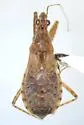
Hoplistoscelis sericans
Hoplistoscelis sericans
Identification: One of four Hoplistoscelis species in the eastern states: H. pallescens (widespread) and H. confusa (southern states) are indistinguishable except for the male and female genitalia . H. hubbelli from Tennessee is also compared to H. p
Hoplochaitophorus quercicola
Hoplochaitophorus quercicola
Identification: Apterae are greenish with dark dorsal markings. Spinelike dorsal setae and the association with oak are distinctive. It occurs on both sides of leaves along the veins.
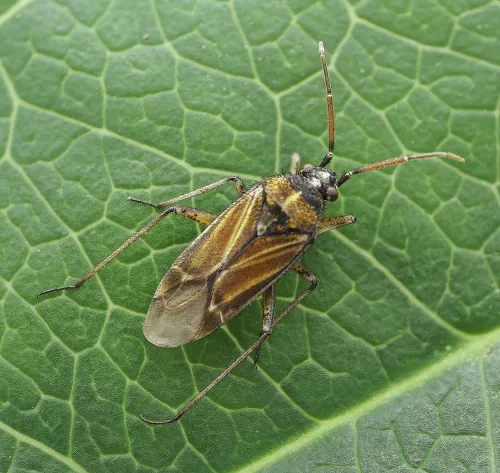
Hoplomachus thunbergii
Hoplomachus thunbergii
Length 4mm. A distinctively marked plant bug. The upper surface is covered in dark hairs. Feeds on Mouse-ear Hawkweed in dry grassland habitats. https://www.britishbugs.org.uk/heteroptera/Miridae/Hoplomachus_thunbergi.html No additional images availa
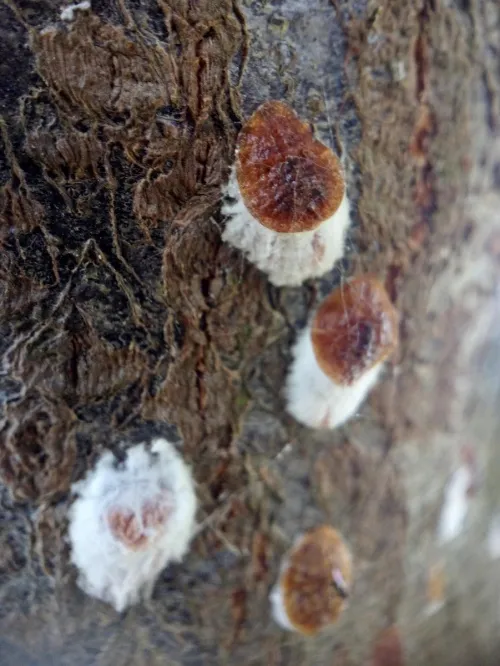
Horse Chestnut Scale Insect
Pulvinaria regalis
P. regalis is most conspicuous in May and June when the scale-like adult females produce large, white, waxy ovisacs in which they lay about 2000 eggs. The adult females die after oviposistion but often remain attached to the trees with their ovisacs
Hortensia similis
Hortensia similis
Identification: distinctive pattern of black dots and lines on top of head; several longitudinal lines run most of length of forewing, with a band of 4 clear or grayish cells at apex; anterior half of pronotum with black markings, posterior half unma
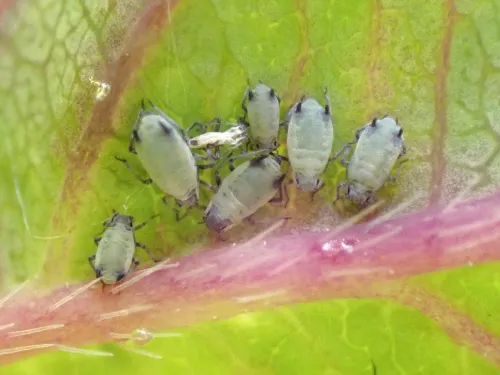
Hyadaphis passerinii
Hyadaphis passerinii
Hyadaphis passerinii apterae are elongate and greyish green with a waxy bloom. The antennae and legs are black as are the siphunculi and cauda. The apterae body length is 1.3 to 2.3 mm. For more detail follow the ' Further Information' link below. Th
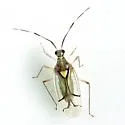
Hyaliodes brevis
Hyaliodes brevis
Identification: A1 is nearly equal to or greater than head width, and the body is shorter and more nearly ovate as compared with H. vitripennis
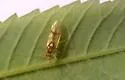
Hyaliodes harti
Hyaliodes harti
Identification: Adults are elongate, hyaline or glassy in appearance, with long slender legs and large reddish eyes. Kelton key features: Collar and calli black. Scutellum black at base. Apical margin of corium red Knight other features: Median prono
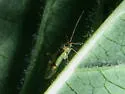
Hyaliodes vitripennis
Hyaliodes vitripennis
Identification: Collar and calli pale green. Scutellum mostly pale green. Apical margin of corium black. H. harti has black collar, red apical margin of corium, and longer first antennomere
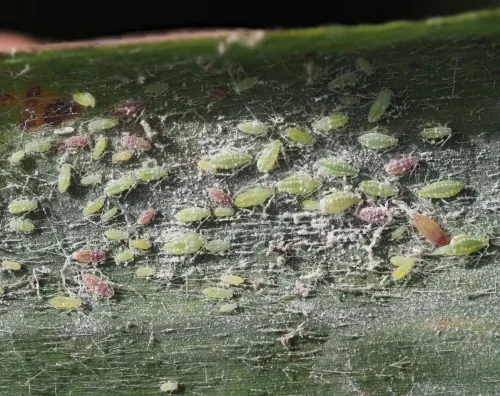
Hyalopterus pruni
Hyalopterus pruni
The Hyalopterus pruni aptera is a small to medium sized aphid, with an elongate shape. It is usually pale green with a fine darker green mottling, covered with wax meal, but on the summer host (reeds) there are dusky red as well as green forms. Aphid
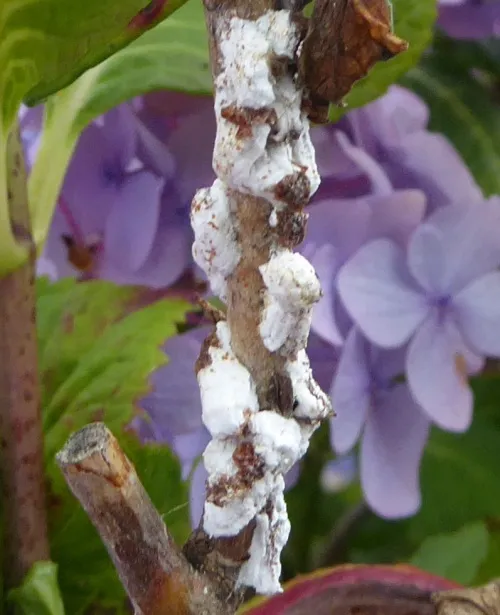
Hydrangea Scale Insect
Pulvinaria hydrangeae
Pulvinaria hydrangeae scales affect a whole range of trees and shrubs and are often found on the underside of leaves. The whitish ovisac, up to 10 mm in length, is formed in the months of June to August and is elongated with three clear furrows. Ofte
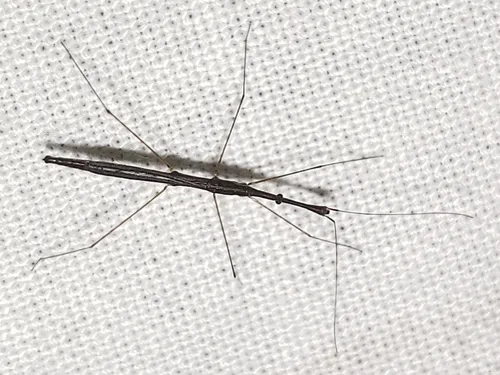
Hydrometra australis
Hydrometra australis
the most common Hydrometra in FL; in earlier keys, the confusion over the identity of H. australis, H. hungerfordi and H. martini led to an incorrect placement for H. australis
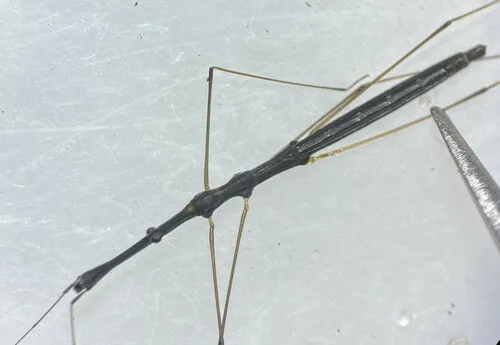
Hydrometra hungerfordi
Hydrometra hungerfordi
Identification: Note none of the photos of this species on this page are accurately identified.