
Garden Fleahopper
Microtechnites bractatus
This record describes Microtechnites bractatus (species). Recorded family: Miridae. Recorded order: Hemiptera.
Identification and Appearance
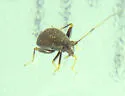
Minute, black; antennomere 1 and often the middle of the second and the base of the third pale; patches of silvery scale-like hairs on the front wing. Both macropterous and brachypterous morphs present: males always macropterous, while females can exhibit either morphology. Black rounded female resembles H. intermedius but the latter is bigger and has a clavus [both spp. illustrated in ]
Classification
- Kingdom
- Animalia
- Phylum
- Arthropoda
- Class
- Insecta
- Order
- Hemiptera (True Bugs, Cicadas, Hoppers, Aphids and Allies)
- Suborder
- Heteroptera
- Superfamily
- Miroidea
- Family
- Miridae (Plant Bugs)
- Subfamily
- Orthotylinae
- Tribe
- Halticini
- Genus
- Microtechnites
Imported taxonomy record. Source availability varies; see the source references and editorial policy below.
Habitat and Range
Geographic Range
e. NA to Brazil - Map ( 3 ) ( 4 ) ( 5 ) ( 6 )
Seasonal Activity
mostly: June-Sept (BG data)
Diet and Behavior
Diet: This fleahopper has a broad host range, but leguminous crops are most frequently damaged. Vegetable crops that host garden fleahopper include bean, beet, cabbage, celery, cowpea, cucumber, eggplant, lettuce, pea, pepper, potato, pumpkin, squash, sweet potato, and tomato. Field crops injured include alfalfa, clover, and sweet clover. Ornamental plants, especially annual and perennial flowering crops such as chrysanthemum, daisy, marigold, and salvia, can be damaged. Some of the common weeds that support garden fleahopper are beggartick, Bidens sp.; bindweed, Convolvulus spp.; burdock, Arctium minus; mallow, Malva spp.; pigweed, Amaranthus spp.; plantain, Plantago spp.; ragweed, Ambrosia spp.; smartweed, Polygonum spp.; prickly lettuce, Lactuca serriola; thistle, Carduus spp.; and wood sorrel, Oxalis stricta. Occasionally it will feed on other insects. (Univ. FL)
Life History
overwinters as eggs in colder regions or as adults in warmer areas
About True Bugs, Cicadas, Hoppers, Aphids and Allies: the wider group
Order-level background for Hemiptera, the group containing Microtechnites bractatus. Species-specific details appear above.
Group overview
Hemiptera (true bugs) includes over 80,000 described species across cicadas, aphids, leafhoppers, shield bugs, and bed bugs. Aphids alone cost global agriculture an estimated $2.5 billion annually in crop losses.
Ecological role of the group
Many Hemiptera are essential food sources for birds and predatory insects. Cicadas provide massive nutrient pulses during emergence events - a single Brood X emergence can involve trillions of individuals across 15 states.
Economic and practical significance of the group
The brown marmorated stink bug (Halyomorpha halys) caused $37 million in apple crop losses in a single year in the U.S. Mid-Atlantic region. Bed bug infestations in the U.S. increased by 500% between 2001-2010, costing the hotel industry hundreds of millions annually.
Recorded sources for this group: USDA, EPA, University research. Imported estimates may describe particular regions or reporting periods.
Photos of Garden Fleahopper (5)
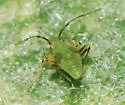
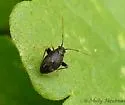
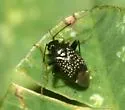
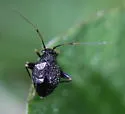
Photo credits: Contributed by Claude Pilon; Additional contributions by Mike Quinn , Matt Bertone , Ron M. , v belov , onegunah
Frequently Asked Questions About Garden Fleahopper
What is Garden Fleahopper?
Garden Fleahopper (Microtechnites bractatus) is a species in the family Miridae, within the order Hemiptera.
How big is Garden Fleahopper?
1.5-2.25 mm
How do you identify Garden Fleahopper?
Minute, black; antennomere 1 and often the middle of the second and the base of the third pale; patches of silvery scale-like hairs on the front wing. Both macropterous and brachypterous morphs present: males always macropterous, while females can exhibit either morphology. Black rounded female resembles H. intermedius but the latter is bigger and has a clavus [both spp. illustrated in ]
Where is Garden Fleahopper found?
Range: e. NA to Brazil - Map ( 3 ) ( 4 ) ( 5 ) ( 6 )
What does Garden Fleahopper eat?
The diet of the Garden Fleahopper includes This fleahopper has a broad host range, but leguminous crops are most frequently damaged. Vegetable crops that host garden fleahopper include bean, beet, cabbage, celery, cowpea, cucumber, eggplant, lettuce, pea, pepper, potato, pumpkin, squash, sweet potato, and tomato. Field crops injured include alfalfa, clover, and sweet clover. Ornamental plants, especially annual and perennial flowering crops such as chrysanthemum, daisy, marigold, and salvia, can be damaged. Some of the common weeds that support garden fleahopper are beggartick, Bidens sp.; bindweed, Convolvulus spp.; burdock, Arctium minus; mallow, Malva spp.; pigweed, Amaranthus spp.; plantain, Plantago spp.; ragweed, Ambrosia spp.; smartweed, Polygonum spp.; prickly lettuce, Lactuca serriola; thistle, Carduus spp.; and wood sorrel, Oxalis stricta. Occasionally it will feed on other insects. (Univ. FL).
When is Garden Fleahopper active?
Garden Fleahopper: seasonal activity - mostly: June-Sept (BG data).
What is the life cycle of a Garden Fleahopper?
overwinters as eggs in colder regions or as adults in warmer areas