
Fall Southeastern Dusk-singing Cicada
Megatibicen figuratus
This record describes Megatibicen figuratus (species). Recorded family: Cicadidae. Recorded order: Hemiptera.
Identification and Appearance
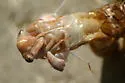
T. figuratus is one of our largest eastern species and appears most closely related to members of the auletes species group. Tibicen resonans (Walker 1850), Southern Resonant/Great Southern Pine Barrens Cicada Tibicen auletes (Germar 1834), Northern Dusk Singing Cicada (our largest). Like Tibicen resonans , these cicadas are colored a deep reddish-brown or rust with the typical black patterning seen in most Tibicen species. T. figuratus specimens are similar to resonans in shape and size, but appear slightly more flattened/dorso-ventrally compressed. Unlike T. resonans, the anterior most basal wing cell is characteristically colored BLACK (may be subject to rare exception! ... the basal wing cell may be dark brown or reddish-brown in coloration - as has been observed in a couple Florida specimens). Tibicen figuratus (Walker 1858), Fall Southeastern Dusk-singing Cicada Compare: Unlike T. figuratus, the anterior most basal wing cell ot T. resonans is characteristically colored taupe (olive-tan) instead of black (SEE IMAGE BELOW). Tibicen resonans (Walker 1850), Southern Resonant/Great Southern Pine Barrens Cicada Song often described as simlar to that of chloromerus or linnei rapid short bursts - Ching.ching.ching.... Video and sound file of T. figuratus courtesy of thelope.com (16 days post emergence) Video and sound file of T. figuratus courtesy of thelope.com (17 days post emergence) T. figuratus calls in Arkansas courtesy of thelope.com Most similar in appearance to T. resonans Tibicen resonans (Walker 1850), Southern Resonant/Great Southern Pine Barrens Cicada ----------------------------------------- Tibicen figuratus is a pine (Pinus spp.) adapted species. It is widely distributed across much of the Southeast, however, may be patchy and localized. This cicada is most common in and adj. to lowland pine forests. Most North American Tibicen species are not thought to be host specific, however, this cicada seems to have a preference for pine and pine habitats. It is a late season species and may be heard on warm Autumn days even after the first few light frosts.
Classification
- Kingdom
- Animalia
- Phylum
- Arthropoda
- Class
- Insecta
- Order
- Hemiptera (True Bugs, Cicadas, Hoppers, Aphids and Allies)
- Suborder
- Auchenorrhyncha
- Superfamily
- Cicadoidea
- Family
- Cicadidae (Cicadas)
- Subfamily
- Cicadinae
- Tribe
- Tacuini
- Genus
- Megatibicen
Imported taxonomy record. Source availability varies; see the source references and editorial policy below.
Habitat and Range
Habitat
Pine woodlands
Geographic Range
Southeastern US Gulf States: FL, AL, MS, LA & e. TX Mid-South: e. OK, AR, s. TN, & se. MO(?) Atlantic: GA, SC, NC & se. VA(?)
Seasonal Activity
Late Season July-November
Diet and Behavior
Diet: prefers Pines
About True Bugs, Cicadas, Hoppers, Aphids and Allies: the wider group
Order-level background for Hemiptera, the group containing Megatibicen figuratus. Species-specific details appear above.
Group overview
Hemiptera (true bugs) includes over 80,000 described species across cicadas, aphids, leafhoppers, shield bugs, and bed bugs. Aphids alone cost global agriculture an estimated $2.5 billion annually in crop losses.
Ecological role of the group
Many Hemiptera are essential food sources for birds and predatory insects. Cicadas provide massive nutrient pulses during emergence events - a single Brood X emergence can involve trillions of individuals across 15 states.
Economic and practical significance of the group
The brown marmorated stink bug (Halyomorpha halys) caused $37 million in apple crop losses in a single year in the U.S. Mid-Atlantic region. Bed bug infestations in the U.S. increased by 500% between 2001-2010, costing the hotel industry hundreds of millions annually.
Recorded sources for this group: USDA, EPA, University research. Imported estimates may describe particular regions or reporting periods.
Photos of Fall Southeastern Dusk-singing Cicada (5)
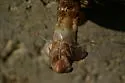
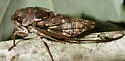
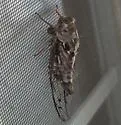
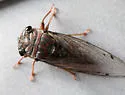
Photo credits: Contributed by john and jane balaban; Additional contributions by Mike Quinn , Bill Reynolds
Frequently Asked Questions About Fall Southeastern Dusk-singing Cicada
What is Fall Southeastern Dusk-singing Cicada?
Fall Southeastern Dusk-singing Cicada (Megatibicen figuratus) is a species in the family Cicadidae, within the order Hemiptera.
How big is Fall Southeastern Dusk-singing Cicada?
Avg. 2.1-2.4 inches in total length (may vary some).
How do you identify Fall Southeastern Dusk-singing Cicada?
T. figuratus is one of our largest eastern species and appears most closely related to members of the auletes species group. Tibicen resonans (Walker 1850), Southern Resonant/Great Southern Pine Barrens Cicada Tibicen auletes (Germar 1834), Northern Dusk Singing Cicada (our largest). Like Tibicen resonans , these cicadas are colored a deep reddish-brown or rust with the typical black patterning seen in most Tibicen species. T. figuratus specimens are similar to resonans in shape and size, but appear slightly more flattened/dorso-ventrally compressed. Unlike T. resonans, the anterior most basal wing cell is characteristically colored BLACK (may be subject to rare exception! ... the basal wing cell may be dark brown or reddish-brown in coloration - as has been observed in a couple Florida specimens). Tibicen figuratus (Walker 1858), Fall Southeastern Dusk-singing Cicada Compare: Unlike T. figuratus, the anterior most basal wing cell ot T. resonans is characteristically colored taupe (olive-tan) instead of black (SEE IMAGE BELOW). Tibicen resonans (Walker 1850), Southern Resonant/Great Southern Pine Barrens Cicada Song often described as simlar to that of chloromerus or linnei rapid short bursts - Ching.ching.ching.... Video and sound file of T. figuratus courtesy of thelope.com (16 days post emergence) Video and sound file of T. figuratus courtesy of thelope.com (17 days post emergence) T. figuratus calls in Arkansas courtesy of thelope.com
Where is Fall Southeastern Dusk-singing Cicada found?
| Feature | Details |
|---|---|
| Habitat | Pine woodlands |
| Range | Southeastern US Gulf States: FL, AL, MS, LA & e. TX Mid-South: e. OK, AR, s. TN, & se. MO(?) Atlantic: GA, SC, NC & se. VA(?) |
What does Fall Southeastern Dusk-singing Cicada eat?
The diet of the Fall Southeastern Dusk-singing Cicada includes prefers Pines.
When is Fall Southeastern Dusk-singing Cicada active?
Fall Southeastern Dusk-singing Cicada: seasonal activity - Late Season July-November.