
Common Pondskater
Gerris lacustris
This record describes Gerris lacustris (species). Recorded family: Gerridae. Recorded order: Hemiptera.
Identification and Appearance
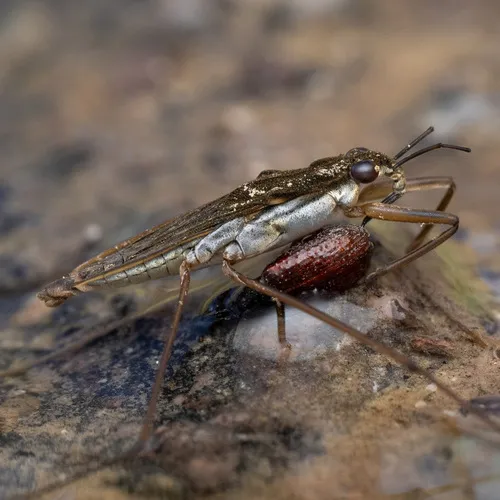
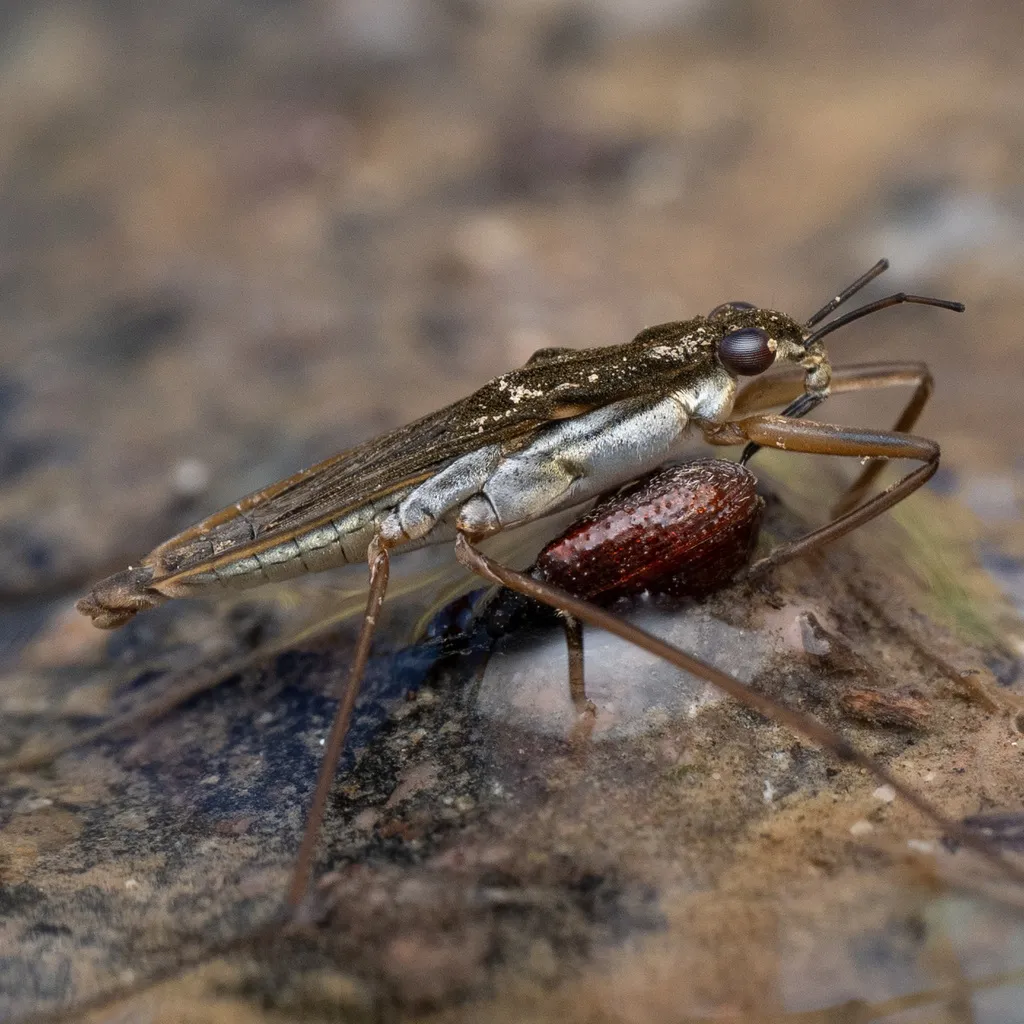
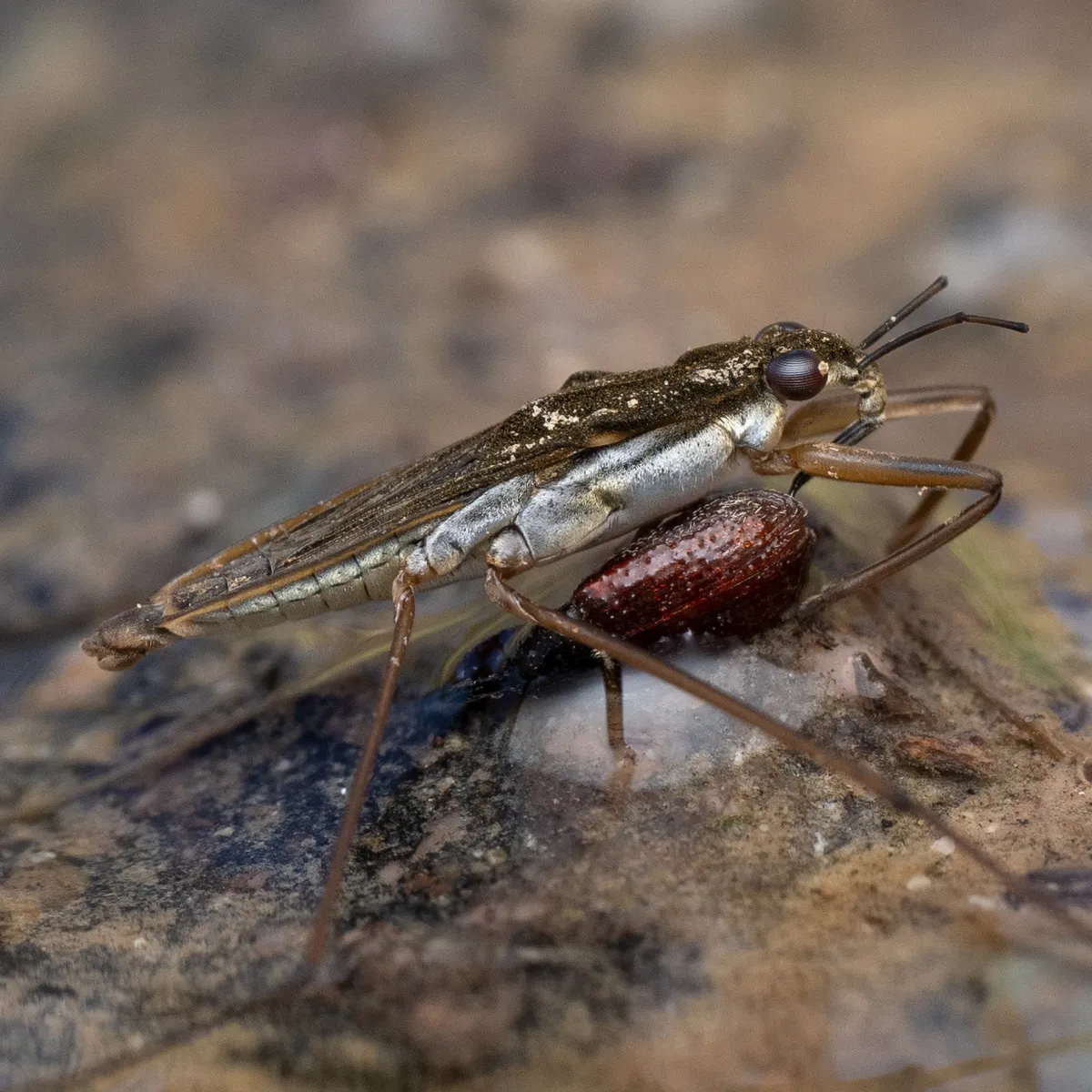
Approximately 8-10mm, generally brown with a black pronotum and black antennae. There are several similar-looking species of pondskaters, of which this is the commonest and most likely to be found in a garden pond, but examination of a specimen is needed to be sure of the species. The key feature to see is extent of the black on the inside of the front femora - it doesn't extend beyond two thirds of the length in Gerris lacustris . Gerris thoracisus has a pale brown pronotum (as do two other Gerris species). G. gibbifer and G. odontogaster share the black pronotum and antennae and look very similar but can be separated by the extent of the black markings on the inside of the front femur (less than two thirds in G. lacustris). A specimen needs to be examined. Please explain how you identified this species. Pools and ponds, including garden ponds. Adults all year round peaking April to October. Pondskaters have very long legs and water-repellent feet which they use to skim across the surface tension 'film' of the water. They are quickly attracted to movement in the surface film, such as the struggles of a non-aquatic insect that has fallen into the water. The pondskater will then 'row' across the water at high speed to investigate and secure its prey, using its front legs to grasp the victim. It flies well as an adult and quickly colonises a newly created garden pond. Nymphs: June to August.
Wikipedia reference for Gerris lacustris: http://en.wikipedia.org/wiki/Gerris_lacustris.
Classification
Habitat and Range
Habitat
Pools and ponds, including garden ponds.
Seasonal Activity
Adults all year round peaking April to October.
Additional species information
Recorded status
Common and found throughout Britain.
About True Bugs, Cicadas, Hoppers, Aphids and Allies: the wider group
Order-level background for Hemiptera, the group containing Gerris lacustris. Species-specific details appear above.
Group overview
Hemiptera (true bugs) includes over 80,000 described species across cicadas, aphids, leafhoppers, shield bugs, and bed bugs. Aphids alone cost global agriculture an estimated $2.5 billion annually in crop losses.
Ecological role of the group
Many Hemiptera are essential food sources for birds and predatory insects. Cicadas provide massive nutrient pulses during emergence events - a single Brood X emergence can involve trillions of individuals across 15 states.
Economic and practical significance of the group
The brown marmorated stink bug (Halyomorpha halys) caused $37 million in apple crop losses in a single year in the U.S. Mid-Atlantic region. Bed bug infestations in the U.S. increased by 500% between 2001-2010, costing the hotel industry hundreds of millions annually.
Recorded sources for this group: USDA, EPA, University research. Imported estimates may describe particular regions or reporting periods.
Photos of Common Pondskater (3)
Frequently Asked Questions About Common Pondskater
What is Common Pondskater?
Common Pondskater (Gerris lacustris) is a species in the family Gerridae, within the order Hemiptera.
How big is Common Pondskater?
Recording advice
Where is Common Pondskater found?
Habitat: Pools and ponds, including garden ponds.
When is Common Pondskater active?
Common Pondskater: seasonal activity - Adults all year round peaking April to October..